Categories
Accountability crime and punishment moral hazard property rights U.S. Constitution

Forfeiting Common Sense

Is it okay to steal if you can get away with it?

A full answer would require a treatise. But most of us common-sensibly understand that evil does not magically become good when perpetrators are not stopped or punished. Thrasymachus was wrong to contend, in Plato’s Republic, that justice is merely the “interest of the stronger.”

When it comes to crimes like bank robberies, muggings and car jackings, we have no doubts about this. In such blatant cases, we suffer nothing like the legitimate confusion to which we may be prone regarding the exact border between adjacent parcels of land or the niceties of intellectual property law.

Well, somebody tell the New Hampshire state police.

Some of them apparently believe it’s okay to steal if you can evade laws against the stealing.

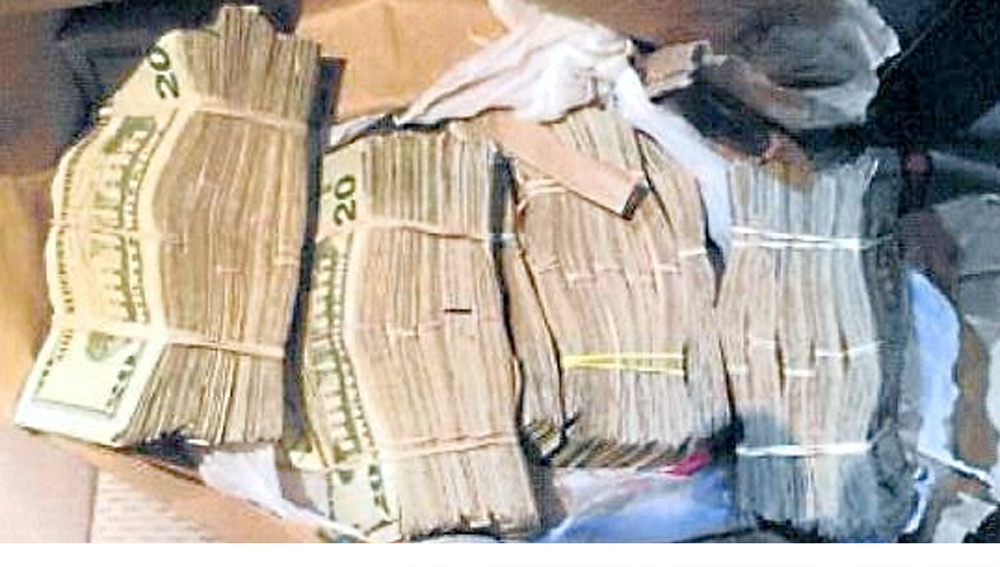
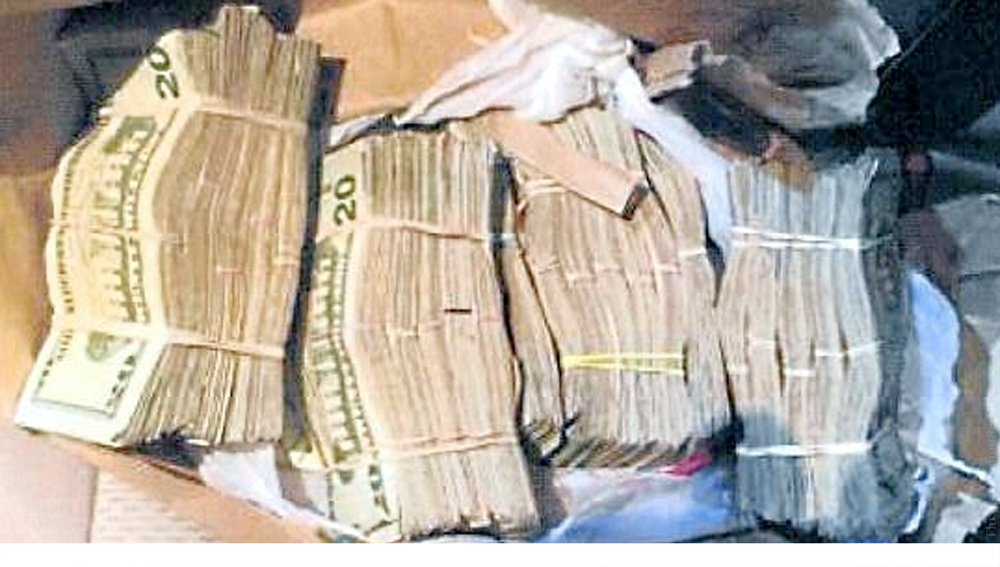
New Hampshire’s recent reform of civil forfeiture laws requires criminal conviction of a person before there can be any forfeiture of his property. But a loophole enabled officers to grab $46,000 of Edward Phipps’s money — from his car, stopped on the road — even though he was never accused of a crime. 

How?

It seems that if state cops collaborate with the feds, safeguards established to prevent such abuse can be evaded.

To retrieve even a little of his money ($7,000), Mr. Phipps was forced to relinquish all claim to the balance ($39,000). Even if lawmakers close the loophole, as they should, the robber-cops will probably get away with this particular larceny. 

They shouldn’t.

That’s injustice, not common sense.  I’m Paul Jacob.


PDF for printing


Photo Credit: N.H. State Police

 

Categories
meme

The Socialist Pledge

What’s yours is mine, and what’s mine. . .

is mine.

Categories
Accountability local leaders moral hazard porkbarrel politics responsibility tax policy too much government

Panic in the Prairie State

When your state has the lowest credit rating in the union, the highest population decline rate, and spends nearly a quarter of its annual budget on an out-of-control government-employee pension system, what do you do?

Raise taxes, of course!

That’s the advice of experts in Illinois, anyway.

You can see why they panic: The unfunded portion of Illinois’s public employee pension system amounts to $11,000 per person in the state. Something extraordinary must be done.

Yet, as Pat Hughes at the Illinois Opportunity Project insists, taxpayers need relief — not a statewide 1 percent property tax increase.

Besides, it is not as if tax hikes could solve the problem. “It was just last year that politicians raised the state income tax by 32 percent in a desperate attempt to balance the budget,” Hughes explains. “Despite over $5 billion in new taxes, the state was back in deficit spending in less than a year.”

Hughes mentions a number of tax limitation measures in the works. More power to them.

But what’s needed even more? Spending limitation measures.

No government can be trusted to offer anything but defined-contribution pensions — and no government, at any level, should ever manage a pension system. Politicians can’t help themselves. They just cannot resist the temptation to buy off the government-worker constituency by promising more in the future than financially feasible (or just plain old politically possible) to pay for now.

Other people’s money is theirs to spend. And a future financial bind? Some other politician’s problem.

This is Common Sense. I’m Paul Jacob.


N.B. Congratulations to the Illinois Policy Institute for its Liberty Center, which won its case against forced unionization, Janus v. American Federation, on June 27. Commentary about this Supreme Court case appeared on this site in early May, “Post Blindfold.”


PDF for printing


Categories
Accountability crime and punishment general freedom moral hazard national politics & policies privacy property rights too much government U.S. Constitution

Guilty of Innocence

If you are innocent of a crime, should you be punished as if guilty? Despite no arrest, no trial, no conviction?

If you say “Yes,” raise your hand.

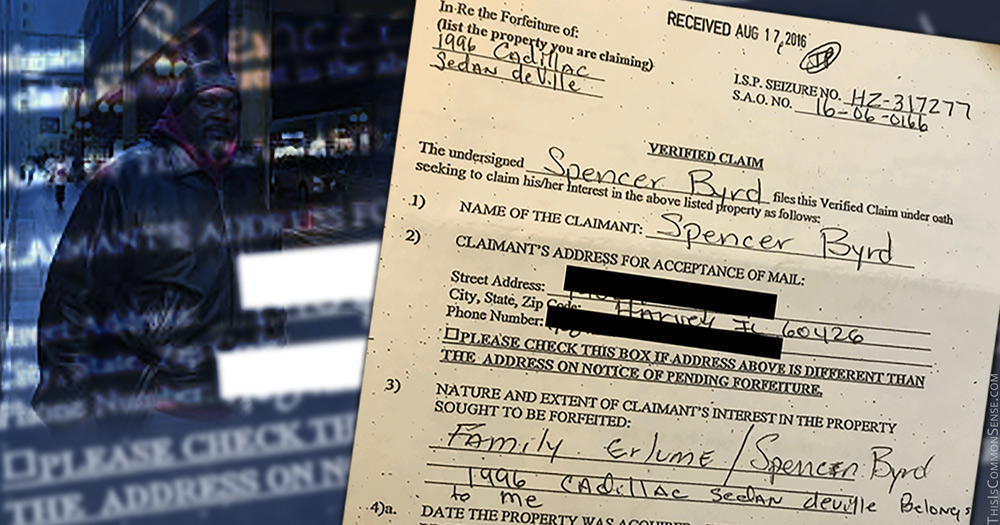
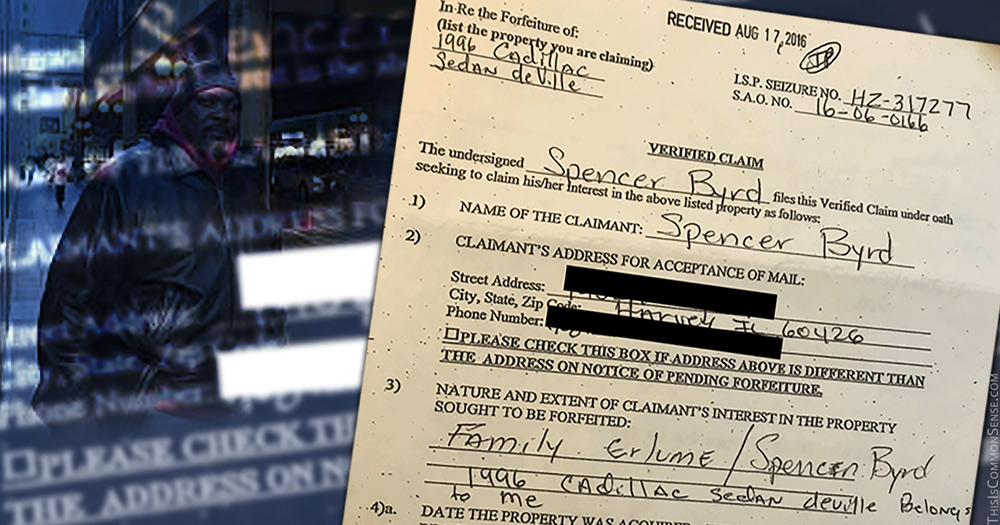
I see no raised hands among my regular readers. But my readers don’t include the wicked Chicago officials who impounded the automobile of Spencer Byrd.

Byrd’s case is reported in a Reason article by C.J. Ciaramella. The author relates how Chicago extracts money by grabbing the vehicles of innocent people. The drug war and asset forfeiture laws help make it possible.

Byrd is a carpenter and auto mechanic who sometimes gives rides to clients stuck without their cars. One night, when he was stopped on the road for an allegedly broken turn signal, police discovered that a new client riding with him was carrying heroin. Byrd was questioned but quickly released. He was never charged with a crime.

But his car was impounded; it’s been impounded for years. This has hurt his business. For one thing, he has $3,500 worth of tools in the trunk.

Byrd persuaded a judge to order that his car be returned to him. But the city still wouldn’t release it unless Byrd paid $8,790 in fees and fines (later reduced to $2,000). He is still struggling to retrieve his car, within a labyrinth the injustices of which I’ve barely touched on.

May I suggest . . . ? If you do ever recover your Cadillac, Mr. Byrd, put pedal to the floor and get the heck out of Dodge.

I mean, Chicago.

This is Common Sense. I’m Paul Jacob.


PDF for printing


Categories
Accountability crime and punishment general freedom government transparency moral hazard national politics & policies privacy property rights too much government U.S. Constitution

Thwarting Cops Who Are Robbers

“Carrying cash is not a crime,” Institute for Justice attorney Dan Alban informs us, “yet too often the government treats it like one.”

Musician Phil Parhamovich learned that the hard way. He was porting his life savings, almost $92,000 — earmarked for a down payment on a recording studio — when cop-robbers of the Wyoming Highway Patrol stopped him for not wearing a seat belt.

It turned out to be an extremely expensive infraction. The officers intimated that it was illegal to travel with so much cash and pressured him to hand it over. Scared and believing that his alternative was jail, Phil signed a preprinted waiver letting them grab his life savings.

Preprinted waiver? This means it’s routine for these guys to try to legitimate their actions as they premeditatedly intimidate and rob people.

The state of Wyoming tried to keep the money. Fortunately, the Institute for Justice took Phil’s case, and a judge accepted the facts presented by Phil and his IJ lawyer. After months of tribulation and suspense, the robbery victim got his money back.

Another win for the good guys.

Thankfully, the Institute for Justice’s freedom-defenders have won a great number of such cases. Yet, IJ lawyers certainly cannot litigate all the forfeiture injustices being committed by government  authorities all across the country.

That’s why the group is pushing to reform civil asset forfeiture laws, requiring a criminal conviction before property can be forfeited. 

And you can help. How? Launch efforts in your town or state, or work to push infant efforts to a higher level. Take the initiative. 

This is Common Sense. I’m Paul Jacob.


PDF for printing


Categories
Accountability crime and punishment free trade & free markets general freedom initiative, referendum, and recall moral hazard nannyism national politics & policies property rights

Good and Bad News

On the issue of “civil asset forfeiture” — police seizing property from folks merely on suspicion, without a criminal conviction — there is good news.

In Idaho, House Bill 202a just passed both legislative chambers overwhelmingly. “Among other changes, HB 202a would no longer allow civil forfeiture of the vehicle of a person who merely possessed a controlled substance,” explained a Spokesman Review report, “without using the vehicle in connection with trafficking offenses or obtaining it with drug-trafficking proceeds. . . .” It also puts off the table “property that’s merely in proximity to illegal drugs” and the mere possession of cash.*

Legislation is moving forward in Arizona, too. House Bill 2477 passed to the Senate Judiciary Committee last week — which unanimously cleared it despite what the Arizona Republic calledstrong opposition from . . . primarily people representing law-enforcement and prosecutors’ groups that benefit from the funds.”

The bill heightens the standard of proof required for making seizures stick from “preponderance of the evidence” to “clear and convincing evidence.” HB 2477 also increases reporting requirements, and creates a process police must follow to spend seized funds.

Unfortunately, there is also bad news.

Even with the new Idaho law and the enaction of the Arizona legislation, police in both states will continue to take people’s stuff without a criminal conviction. The level of abuse would be diminished, but not ended.

Citizens in both states can and should use the ballot initiative process to end this injustice. In total.

We must restore the bedrock principle of innocent-until-proven-guilty.

This is Common Sense. I’m Paul Jacob.


* Other provisions include a court determination on “whether a property seizure is proportionate to the crime alleged,” absolving “innocent owners from having to pay the state’s costs associated with an attempted seizure,” and some required record-keeping.


Printable PDF


Categories
Accountability crime and punishment moral hazard nannyism national politics & policies property rights too much government U.S. Constitution

Watcha Gonna Do?

At a White House meeting last week between President Trump and law enforcement officials, a Texas sheriff raised a concern about legislation introduced by a state senator to require a conviction before police could take someone’s property.

Mr. Trump asked for that senator’s name, adding, “We’ll destroy his career.” The room erupted with laughter.

“That joke by President Trump,” Fox News’s Rick Schmitt said on Monday, “has the libertarian wing of the Republican Party raising their eyebrows, instead of laughing.”

Not to mention the civil libertarians in the Democratic Party and the Libertarian Party itself.

Civil asset forfeiture, as we’ve discussed, allows police to take people’s cash, cars, houses and other stuff without ever convicting anyone of a crime — or even bringing charges. The person must sue to regain their property.

Lawyers aren’t free.

Two bedrock principles are at stake:

  1. that innocent-until-proven-guilty thing, and
  2. Our right to property.

Since police departments can keep the proceeds of their seizures, they’re incentivized to take a break from protecting us — to, instead, rob us.

“Our country is founded on liberties,” offered Jeanne Zaino, a professor at Ionia College. “[G]overnmental overreach is not something that is natural for Republicans to embrace.”

Schmitt acknowledged that “Libertarians would hate this. They don’t want big government. But they don’t have a lot of pull.”

Libertarian-leaning Republicans like Sen. Rand Paul and Rep. Justin Amash are trying to end civil forfeiture, but the president will likely veto their legislation.*

Let’s not wait. Activists in three Michigan cities put the issue on last November’s ballot and won. You can, too.

This is Common Sense. I’m Paul Jacob.


* FoxNews.com reported that, “Trump signaled he would fight reforms in Congress, saying politicians could ‘get beat up really badly by the voters’ if they pursue laws to limit police authority.”


Printable PDF


Categories
Accountability crime and punishment initiative, referendum, and recall moral hazard national politics & policies

Stealing Now Unpopular

Civil asset forfeiture is stealing. So, why is it still happening?

Police seize boats, cars, houses and cash that they allege were used in the commission of a crime or were proceeds from the crime. Sometimes they simply take cash found on a motorist in a normal traffic stop, claiming it’s “drug money.”

Tragically, only 13 percent of forfeiture is criminal, i.e. involving a conviction. The rest is civil, wherein the person hasn’t been convicted of anything. Often not even charged.

When officials confiscate property without due process of law, it’s theft. The legal rationale government uses to snatch our stuff via civil forfeiture is a sick joke. Our property can be deemed “guilty” without enjoying our presumption of innocence. Instead, we have to go to court to prove our stuff is innocent.

Often officials negotiate a large cut, because hiring an attorney to get one’s money back might well cost more than the money itself.

The good news? People are becoming aware of civil asset forfeiture and overwhelmingly oppose it. A Cato Institute/YouGov poll found 84 percent of Americans against taking property without a criminal conviction.

While New Mexico and Nebraska have outlawed civil forfeiture, and some other states have sought to at least minimize its abuse, there is still significant pushback from police and prosecutors, who like getting all that dough. And who often have the ears of decision-makers.

The time has come to short-circuit the watered-down half-measure. Twenty-four states and a majority of cities enjoy the initiative process.

Let’s do it ourselves.

This is Common Sense. I’m Paul Jacob.


Printable PDF

Civil Asset Forfeiture, crime, drugs, marijuana, stealing, theft, police abuse


Categories
Accountability crime and punishment general freedom moral hazard nannyism national politics & policies privacy property rights

A New Way to Steal

The fight against government theft of private property, through “civil forfeiture,” just got a little harder.

There’s a new technology available: ERAD card scanners.

And the Oklahoma City Police Department’s joint interdiction team has them, and can use the scanners to take money from you without your consent.

What money, in particular? The money you have stored in pre-paid debit cards.

ERAD stands for Electronic Recovery and Access to Data, and the ERAD Group, Inc., stands to make a lot of cash from the technology. Police around the country want to be able to take the funds secured in debit cards. It’s the latest thing in the war against the war against the War on Drugs.

Drug traffickers, we’re told, hide dozens of such cards in vehicles transporting drugs.

It’s not enough that police can, in the course of investigating a crime — without conviction, mind you; indeed, without charges being filed — confiscate the cards themselves.

The police also want to be able to siphon the money out of those cards.

Which leads to corruption. Which is already rife in civil forfeiture usage, as a recent Oklahoma state audit found — missing money, misused funds, that sort of thing.

The cavalier way in which government officials defend expropriation by ERAD scanners is chilling. In an Oklahoma Watch article, reporter Clifford Adcock relates the official explanation: “These cards are cash, not bank accounts. . . . Individuals do not have privacy rights with magnetic stripe cards.” Why not? Because the information on the strip “literally has no purpose other than to be provided to others to read.”

That’s so open to logical criticism you could drive a confiscated truck fleet through it.

This is Common Sense. I’m Paul Jacob.


Printable PDF

ERAD, gift card, civil asset, forfeiture, stealing, theft, drug war


Categories
crime and punishment folly general freedom ideological culture meme property rights too much government

Human Interest Story

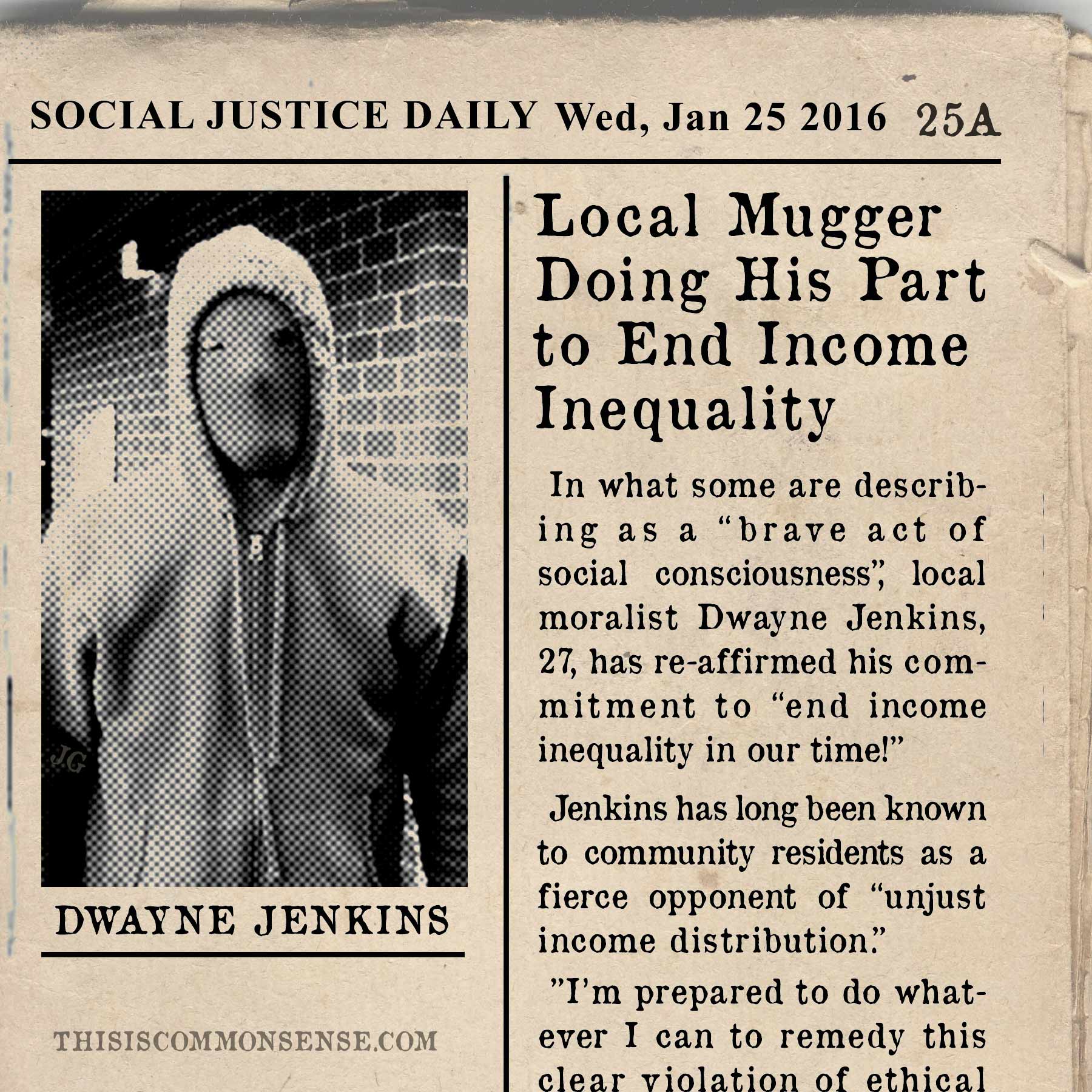
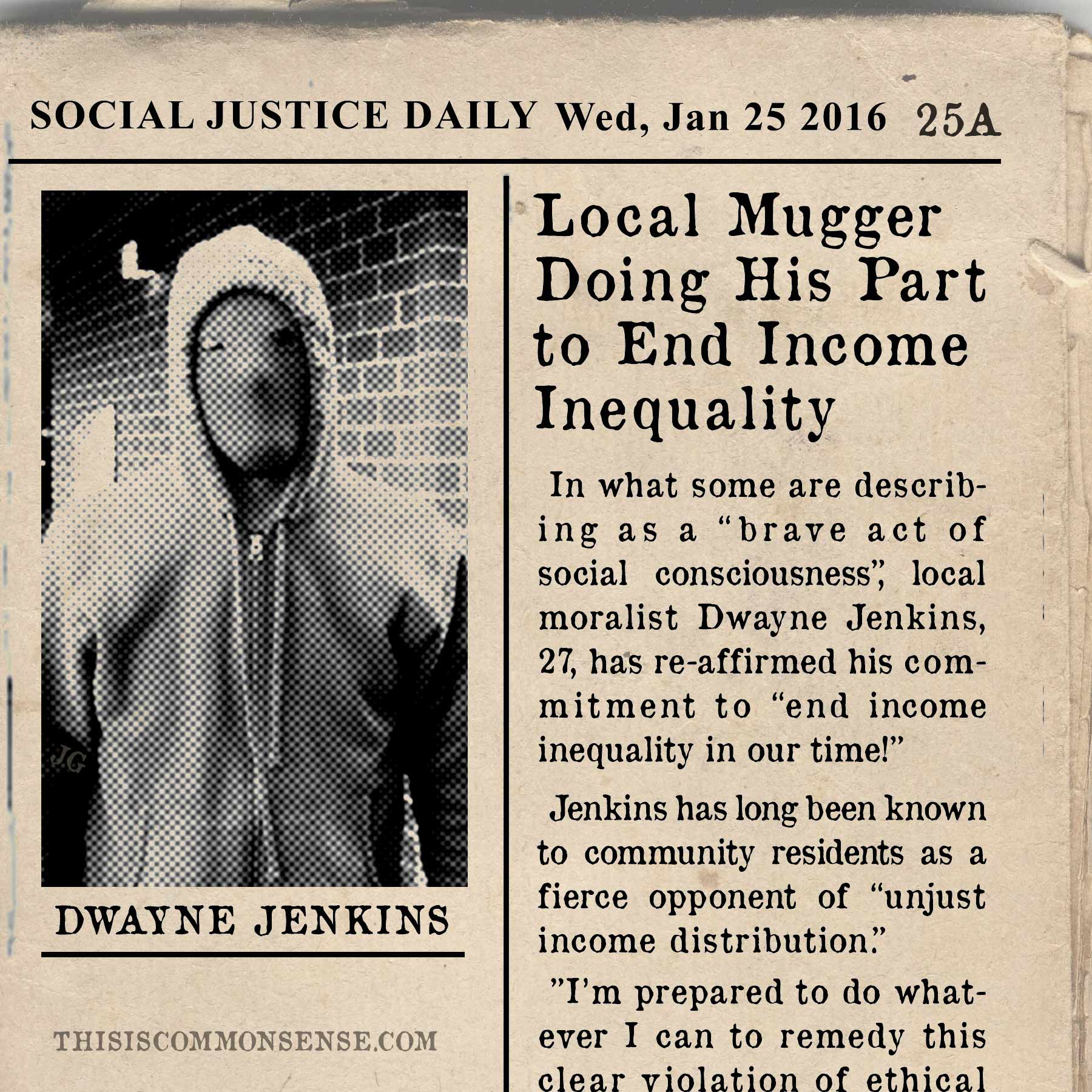
“Local Moralist Doing His Part to End Income Inequality”


Click below for high resolution version of this image:

Income inequality, newspaper clipping, humor, satire, social justice, socialism, Common Sense, meme, illustration, Jim Gill, Paul Jacob


Mugger photo by Flikr user cometstarmoon