Categories
national politics & policies responsibility

On the Government’s Diet

One could argue that our dietary habits are something government shouldn’t be involved in. 

I do. But the federal government taxes, regulates, subsidizes, and researches for food production in these United States “bigly.” 

And then the government taxes, regulates, subsidizes and researches for medical interventions that mitigate the consequences of how we eat. 

Robert F. Kennedy, Jr., and Brooke L. Rollins, the current secretaries of the U.S. Department of Health and Human Services (HHS) and the Department of Agriculture (USDA), respectively, have signed their names to a new set of Dietary Guidelines for Americans — an interesting document

“The message is simple,” it says: “Eat real food.”

The fact that much of our food industry has been constructed in collaboration with the USDA makes this advice … piquant.

While Vitamin D intake was mentioned several times, I notice that the fact that our bodies produce Vitamin D when exposed to sunlight went undiscussed. Also unrecognized? That Vitamin D levels have been shown to be a key indicator of how well people fight off infections … like COVID.

Alcohol use is discouraged. Drinking “water (still or sparkling) and unsweetened beverages,” highly encouraged.

“Pay attention to portion sizes” is just common sense.

The advice to “increase protein consumption” ruffles some feathers, according to The Epoch Timescoverage.

“Since the first edition was published in 1980, the Dietary Guidelines for Americans have provided science-​based advice on what to eat and drink to promote health, reduce risk of chronic disease, and meet nutrient needs,” explained the previous Guidelines

But how science-​based is all this, really? Seems “the Science” in the Guidelines changes with each innovation in political and economic pressure. 

Now and previously.

Most of all, however: Our diets remain our own responsibilities. 

This is Common Sense. I’m Paul Jacob.

PDF for printing

Illustration created with Nano Banana

See all recent commentary
(simplified and organized)
See recent popular posts
Categories
Accountability crime and punishment national politics & policies

Back-​Pedaling at the Speed of Lies

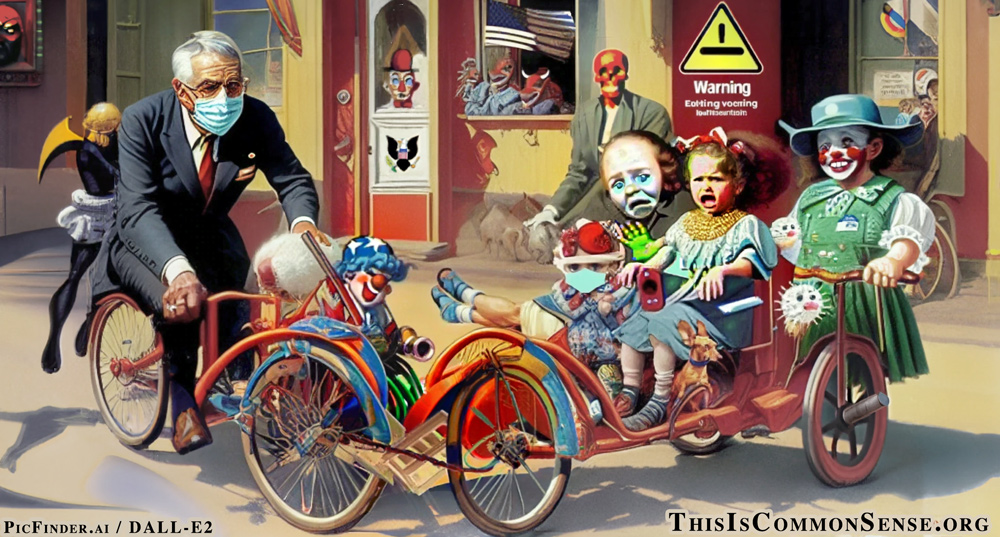
“Show me a school that I shut down and show me a factory that I shut down,” challenges Dr. Anthony Fauci. “Never. I never did,” he told the New York Times last week.

We sure are a long way from the heady days when he proclaimed, “I am the Science.” It’s more like in the book of Genesis, where Cain asks the great rhetorical question, “Am I my brother’s keeper?”

In other words, Fauci’s trying to set the record … crooked.

For Fauci was the Authority that bolstered all the advice from the Centers for Disease Control and elsewhere, urging mask mandates and lockdowns and what-have-you.

Now, he is doing more than back-​pedaling. He is shifting blame. Blame for failed policies.

But he’s not alone in this. For The Epoch Times, Petr Svab notes another famous back-​pedaler: American Federation of Teachers President Randi Weingarten. Watch Ms. Weingarten declare on C‑Span, “We spent every day from February on trying to get schools open,” but click that link and read the Twitter crowd-​sourced fact-​checks, showing how that’s … deceptive:

We still argue about how much COVID leaders lied during the heat of the panic. I advised, at the time, to give them a little leeway.

Regarding policy, that is.

Not lying.

This is Common Sense. I’m Paul Jacob.


PDF for printing

Illustration created with PicFinder​.ai

See all recent commentary
(simplified and organized)
See recent popular posts
Categories
deficits and debt folly national politics & policies responsibility

Biden Blames Business

Inflation’s up, and President Joseph Robinette Biden, Jr., thinks he knows why.

Economist Bruce Yandle, famed for his “Bootleggers and Baptists” theory of regulation, reports in Reason that the aging president blamed “the country’s three largest meatpackers” for contributing to July’s CPI rate of 5.4 percent, and the fuel industry for its part in August’s 5.3 percent annualized rate. 

Profiteering!

I’ve always wondered how anyone can get away with this tired old accusation. Businesspeople aim to profit at all times and in every place. Profit is why they go into business. Are they making too much inflation-​adjusted profit during an inflationary period but not when inflation is low? Seems unlikely.

But Biden’s looking into it! “There’s lots of evidence that gas prices should be going down,” the prez claimed, “but they haven’t.”

What evidence? Biden presented none. 

After throwing so much money into the economy to “stimulate” it after the big hit commerce has taken from state-​perpetrated lockdowns, what could we expect but rising prices? “Inflation is always and everywhere,” a great economist has said, “a monetary phenomenon.”

Bruce Yandle is on that same page. Referring to Mr. Biden’s bizarre blame game, Yandle suggested that maybe — just maybe — Biden “should look inside the halls of the West Wing.”

Specifically at all the spending, like the current “$3.5 trillion spending package.” The puppet masters pulling Biden’s strings must, Yandle asserts, “be aware that calling for more spending to calm inflation is like pouring gasoline on an already smoldering fire.”

The real problem is “too much printing-​press money” backing deficit spending.

Blaming excess profits? A distraction.

A big lie.

This is Common Sense. I’m Paul Jacob.


PDF for printing

See all recent commentary
(simplified and organized)
See recent popular posts

Categories
ideological culture subsidy

Slackers, Unite!

International socialists may once have rallied around “workers, unite!” but today’s young “communists” are embracing a Non-Workers movement, demanding free stuff and/​or a Universal Basic Income (UBI). 

This came to mind reading a recent New York Times’s op-​ed, “Work Is a False Idol,” and an earlier report, “These Chinese Millennials Are ‘Chilling,’ and Beijing Isn’t Happy.” A new movement in China and elsewhere, known as “Lying Flat,” extols indolence.

Instead of a career? Working hard? 

Do nothing!

Sounds like early retirement.

Very early retirement, for this is a young adult malaise.

Cassady Rosenblum, who took the trouble to author the op-​ed, quoted a poem that asked “what is it you plan to do/​ with your one wild and precious life?” and answered: “Sit on the porch.”

This “Lying flat” slacker movement reminds me of a novel I haven’t read, but whose theme has stuck with me, nonetheless: Ivan Goncharov’s Oblomov. It is about a young nobleman who spends the book recumbent, or so I’m told.

“Oblomovism” was a cultural obsession before the Soviet Revolution and a problem afterward. If no one produces, how could anyone consume?

With the character Oblomov, his lethargy merely drained the capital of his family’s aristocratic past.

With the hero of the new “Lying Flat” movement, Luo Huazhong — author of the mortal classic, “Lying Flat Is Justice” — he lives off odd jobs and his savings. So far, at least, self-sufficient. 

With Ms. Rosenblum, it’s her parents’ porch, and, thereby, their savings.

Think of what would happen were a UBI put in place. More horizontal living and less production (for redistribution). 

Oblomovism triumphs and we all lose.

After all, “Lying flat” is the perfect term for the ultimate in do-​nothingism: what you do in a coffin.

This is Common Sense. I’m Paul Jacob.


PDF for printing

See all recent commentary
(simplified and organized)
See recent popular posts
Categories
media and media people

HCQ Blackout

“The race to find vaccines for COVID-​19 has dominated the headlines,” runs the opening of a CBS News story, “but there’s been less news about how to keep people with COVID out of the hospital.”

Accurate, so far as it goes, but something is missing.

The story that follows is about an anti-​depressant developed decades ago, and “a small but ingenious clinical trial and a series of coincidences [that] have led scientists to look closely at fluvoxamine as a possible tool to keep newly diagnosed COVID-​19 patients from becoming severely ill.”

The drug, the story tells, may do what has been claimed for a number of treatments (vitamins, minerals, and the infamous hydroxychloroquine, or HCQ): that is, prevent patients from developing COVID’s severe, deadly respiratory distress.

Yet, in a time of crisis, discussion of such treatments were regarded as “fake news” by social media; doctors and researchers who discussed them online had their videos removed and their posts suppressed. Neil Cavuto and others raised alarms. But now the American Journal of Medicine recommends HCQ, along with “Azithromycin, and Zinc for the treatment of Covid 19 outpatients.” 

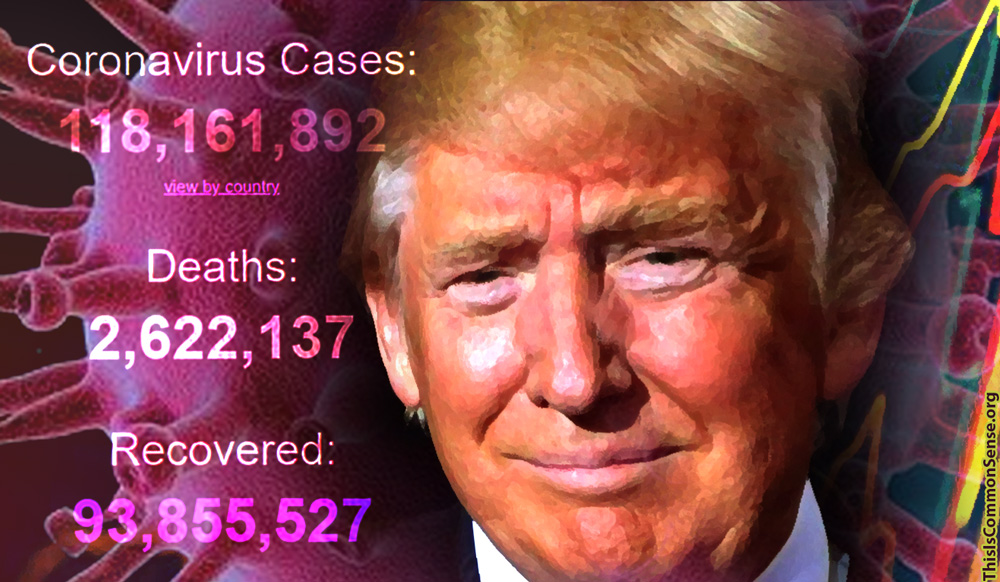
So when CBS tells us that there has “been great caution about recommending repurposed drugs for COVID after the malaria drug hydroxychloroquine was promoted as a potential ‘game-​changer’ by former President Trump — before it was tested in a large clinical trial on COVID patients,” let’s not forget what they are still hiding: that major media along with several governors and many “influencers” suppressed information about drugs that saved some lives and could have saved more.

All while seeking to eradicate the disease they feared most, Trump.

This is Common Sense. I’m Paul Jacob.


PDF for printing

See all recent commentary
(simplified and organized)
See recent popular posts

Categories
general freedom

The Season of Not Demanding

Every day, in tandem with these columns, ThisIsCommonSense​.org provides a bit of history (“Today”) and a wise or significant saying (“Thought”). Christmas Eve’s Thought is worth thinking about again. 

“Liberty is the only thing you cannot have,” wrote William Allen White, “unless you are willing to give it to others.”

While one could argue that trust and love and a number of other important things also require reciprocity, it is true, and profoundly so, that liberty is reciprocal — or non-​existent: if you won’t let others be free, they won’t let you be free, either. 

Further, the responsibility that is freedom’s flip-​side is something we must do together. 

That is where the idea of shared burdens comes in. Freedom is not itself a non-​economic, or free good, in that those who won’t leave us free must be fought, sometimes with a lot of time and effort and resources. And even danger.

The key to not turning the burden of defending freedom into a form of oppression itself is to respect individual liberty in doing so — not turning our wants into commands.

This year, 2020, the challenge has been bigger than usual. Governments’ demands have been breathtakingly extensive: to not work, not trade, to not engage in business or worship or even going to the beach.

That burden has been so oppressive — and so much worse for some (small business folks and their employees, especially, and those with mental health issues) than others (like retirees, people in government, those working from home) — that surely it is too much to demand of others.

That’s something to consider in this “gift-​giving” season: Don’t play the spoiled child, with a gift-demanding attitude toward others.

Freedom is the gift we can all afford to exchange.

This is Common Sense. I’m Paul Jacob.


PDF for printing

See all recent commentary
(simplified and organized)
See recent popular posts

Categories
government transparency ideological culture responsibility

People Power in the Republic of China

Which country has handled this worldwide pandemic best?

The question was asked on Facebook, by one friend, and answered this way by another: 

“Government: South Korea; People: Japan.”

My response?

“Combo of people and government: Taiwan.”

There is a lot in the Taiwanese response to explore. 

“The first cause of Taiwan’s success,” write Javier Caramés Sanchez and William Hongsong Wang on Mises Wire, “is the transparency of information, which stopped the rapid growth of infection.” While on Mainland China the corrupt government was no more transparent than the very murky Yellow River, in the Republic of China (commonly called Taiwan, and once listed on the globe as “Formosa”) the Ministry of Health and Welfare began informing the public as early as December 31.

The second reason? “The type of quarantines established by the Taiwanese government are mostly self-​quarantines. The Taiwanese government acknowledges that it is crucial to rely on people’s voluntary actions to resist the pandemic.” In Japan the people regularly don masks when sick. That kind of compliance is cultural there. In Taiwan, there has been a lot of spontaneous and “all you need to ask” compliance with social distancing and the like.

“The key is that the Taiwanese government and the Taiwanese people understand that the individual’s own responsibility and actions are essential to suppressing the coronavirus pandemic, not a mandatory massive shutdown,” the authors conclude. “This is what the world needs to learn.”

Responsibility is what a free people practice. And learn to master.

This is Common Sense. I’m Paul Jacob.


PDF for printing

responsibility, command, politicians, control, self reliance,

See all recent commentary
(simplified and organized)
See recent popular posts


Categories
Accountability

Sinkhole States

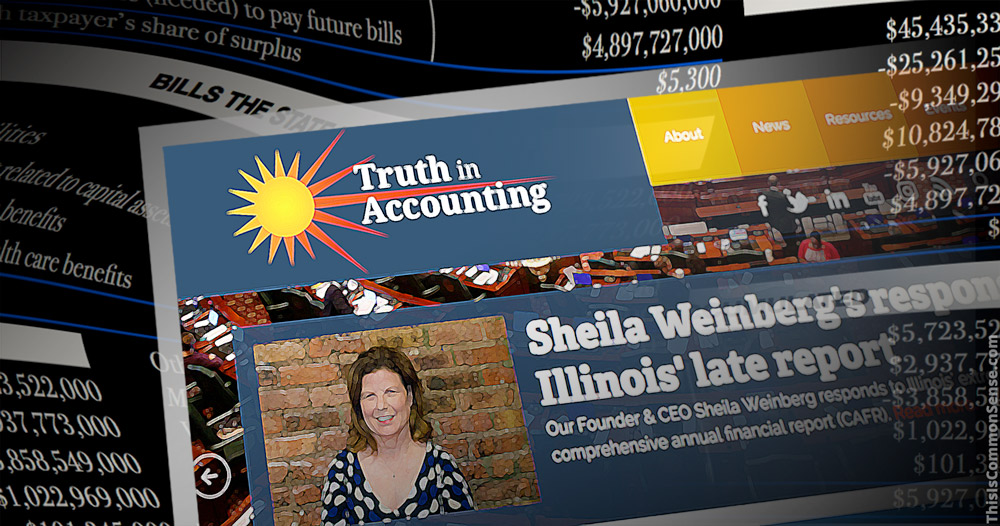
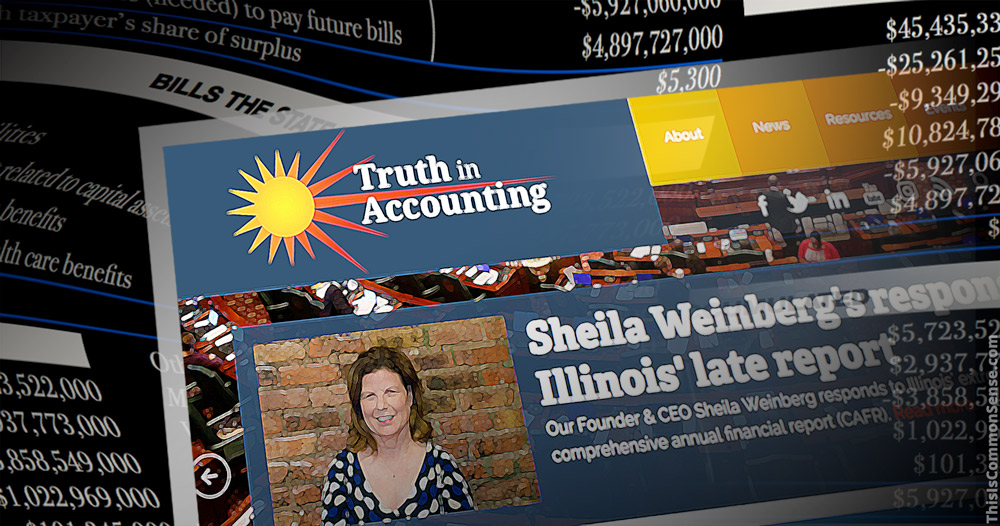
What do citizens lack most at all levels of government? Truth in accounting. 

So Sheila Weinberg really has her work cut out. This very morning, her Chicago-​based research-​tank called, not coincidentally, Truth in Accounting released its annual Financial State of the States report. The new data shows that “the total debt among the 50 states decreased by $62.6 billion in FY 2018 due to a prosperous economy.”

But that’s where the good news ends. “Every state, except for Vermont, has balanced budget requirements,” notes the report, “yet even with these rules in place, states have accumulated more than $1.5 trillion in debt.”

Almost entirely from unfunded pension and employee benefit liabilities. 

“At the end of the fiscal year (FY) 2018, 40 states did not have enough money to pay all of their bills. This means that to balance the budget … elected officials have not included the true costs of the government in their budget calculations and have pushed costs onto future taxpayers.”

Put another way: Your government is lying to you.

One interesting feature of the analysis is its top five “Sunshine States” —

  1. Alaska
  2. North Dakota
  3. Wyoming 
  4. Utah
  5. Idaho 

— and its bottom five “Sinkhole States” — 

  1. Hawaii
  2. Massachusetts
  3. Connecticut
  4. Illinois
  5. New Jersey

Fun fact: It just so happens that all five of the top states have a statewide process of voter initiative and referendum, while none of the “sinkhole states” have this democratic check. 

The new online State Data Lab has the skinny on every state. Compare your state against the rest. 

Be brave.

This is Common Sense. I’m Paul Jacob.


PDF for printing

Truth in Accounting, states, debt,

See all recent commentary
(simplified and organized)
See recent popular posts

Categories
Accountability crime and punishment free trade & free markets general freedom media and media people moral hazard responsibility

Blame the App?

Who spreads “fake news”?

Gossips, politicians, publicity agents, Twitter eggs, partisan bloggers, lying news journalists?

Or … the medium of communication they use? 

Do envelopes, stationery, telephones, email, and messaging apps have moral agency?

And who commits the crimes that news (true or false) is used to rationalize?

A New York Times story discusses “How WhatsApp Leads Mobs to Murder in India,” which is like saying that civilization, flying lessons and boarding passes “led” terrorists to 9/​11.

The Times reports that fake news about children being kidnapped — dramatized by doctored video clips and forwarded via WhatsApp, a messaging app — provoked anger and fear in many Indians. Some were then willing to attack anyone who “seemed” about to kidnap children. 

In recent months, dozens of people have been murdered for being in the wrong place at the wrong time.

Without social media and the mega-​popular WhatsApp, the murders probably would not have happened, at least not the way they happened. That seems certain. But this doesn’t mean that without WhatsApp, nobody in India would spread false stories or assault innocent people. 

Mob violence in the country antedates the Internet.

Perhaps a thousand material circumstances directly or indirectly enable any particular act of wrongdoing. But no such prerequisites “lead to” anything without individual choices.

If someone pretends it’s okay to kill innocent persons — or persons whose guilt or innocence he doesn’t care to know — he, the killer, is the guilty party. The telecommunications network or messenger app used to provide grist for excuse-​making is innocent.

Apps don’t murder people. People murder people.

This is Common Sense. I’m Paul Jacob.


PDF for printing


Categories
Accountability folly free trade & free markets general freedom moral hazard national politics & policies responsibility tax policy too much government

Billionaire Theater

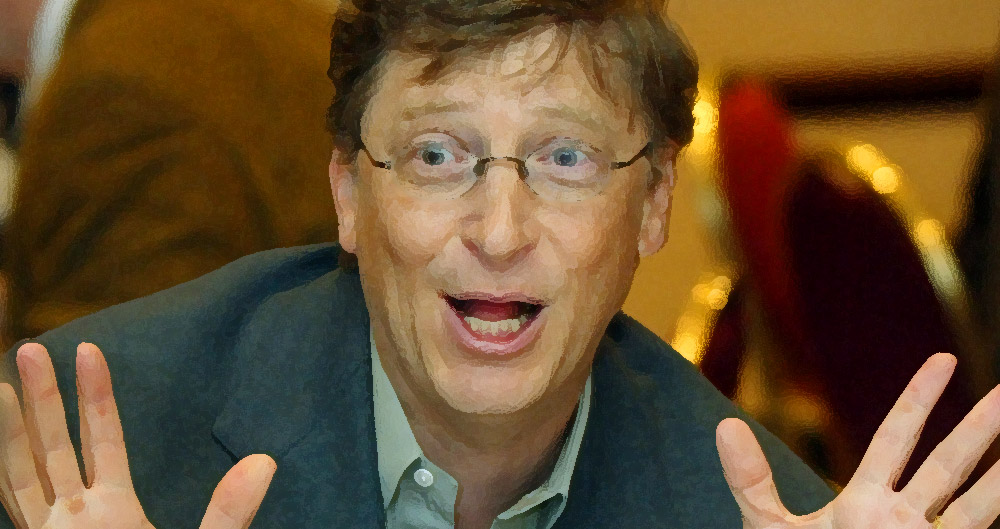
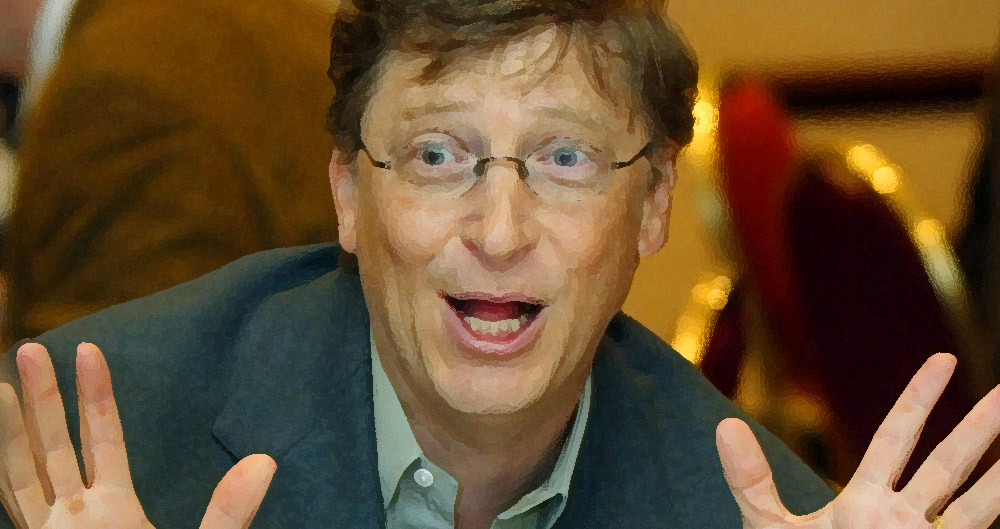
“I need to pay higher taxes,” Bill Gates told CNN’s Fareed Zakaria on Sunday.

He was making a case against Republican tax cuts, but his actual argument? Insignificant. It’s just another unlearned, narrow-​perspective “growing inequality” farrago. But his conclusion intrigues … as a man-​bites-​dog story, because people have this goofy idea that rich people are somehow against government and for reduced taxes. 

They aren’t. Not even most of the richest.

“I’ve paid more taxes, over $10 billion, than anyone else,” says the man worth $90 billion, “but the government should require the people in my position to pay significantly higher taxes.”

Why? To spend his money better than he could? 

Were all the wealth of America’s billionaires confiscated whole and that sum would actually pay off the federal debt (which I doubt), what do you think Washington politicians would do? Go on the straight and narrow and never over-​spend again?

No. Politicians would take the new influx of funds as a signal to go on an even bigger spending binge.

But what about his mere income tax increase notion? What then? As sure as the Blue Screen of Death it would be applied down to millionaires, too. And then rates for less-​than-​millionaires would likely go up. We have a history with this. And what would that do?

It would hit up-​and-​coming entrepreneurs the hardest. It would nip Bill Gates’s company’s competition in the bud. 

But surely Gates wouldn’t be mercenary in his theatrical play for media adoration, would he? 

Not Saint Bill!

This is Common Sense. I’m Paul Jacob.


PDF for printing