Categories
ideological culture partisanship

In Lieu of Good Judgment

Politicians often dare . . . too much. 

But what did Rep. Ted Lieu dare to be last week?

Candace Owens’ appearance before the House Committee on the Judiciary caused quite a stir. The subject was hate crimes and white nationalism, and she offered a wider perspective: “We’re not talking enough about political hatred in this country, we’re not talking enough about conservative activists being attacked. . . .”

Needing to undermine that message, the Representative from California’s 33rd congressional district dared do the dirty deed. 

“Of all the people the Republicans could have selected” to appear before the hearing, Rep. Lieu said, “they picked Candace Owens. I don’t know Miss Owens; I’m not going to characterize her. I’m going to let her own words do the talking.”

By now you’ve almost certainly listened to what he did*: play a 30-second clip from a long interview of the conservative activist then ask some other hearing invitee to explain how dangerous her statement was. The 30 seconds completely elided the original context, implying, absurdly, that the African-American activist was a supporter of Hitler and white nationalism.

Ms. Owens responded in justified high moral dudgeon. And Rep. Lieu came out looking . . . as Owens put it, “unbelievably dishonest.”

What was he thinking?

Scott Adams saw only two possibilities: “What Ted Lieu attempted (and failed) to do Candace Owens is not politics, it’s just despicable.” Lieu is either “one of the worst people who’s ever lived” or he is, in line with so many other #NeverTrumpers, “experiencing actual hysteria.”

Unfortunately, Washington partisans regularly make evil and insanity hard to distinguish.

This is Common Sense. I’m Paul Jacob.


* “The most-watched C-Span Twitter video from a House hearing ever,” says Rush Limbaugh.

PDF for printing

Rep. Ted Lieu, Candace Owens, TDS, Trump Derangement Syndrome, racism, Hitler

See all recent commentary
(simplified and organized)
See recent popular posts
Categories
folly ideological culture media and media people moral hazard Popular

Systemic Refocusing

Everyone comes into this world with advantages and disadvantages. 

In the last century, public morality focused on the disadvantaged. Government policy changed dramatically, aiming to help those lacking many obvious advantages. But that focus got fuzzier and fuzzier as the ranks of disadvantaged people remained, even grew larger. Progress was made on several fronts, sure, but not on all — especially not on the ones most targeted.

We even “lost ground.”

Maybe because of this, the political focus shifted to “privilege” — which often merely means “advantaged” and sometimes means a special license granted by custom or law, which is said to be “systemic.” 

White males, we are told, have the most of it. 

So they must be attacked.

But does “white [heterosexual male] privilege” really exist?

Sure, in some contexts. But so do other “privileges.” Here is a better question: Are there privileges so built in that people try to horn in on them?

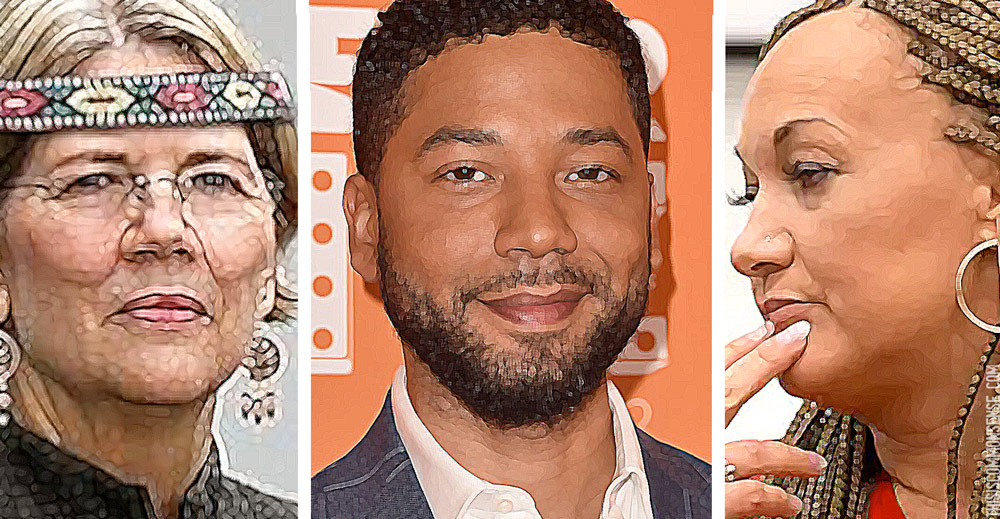
When there really was white privilege, “passing for white” was a thing. Now, we see other directions of racial “passing.” Sen. Elizabeth Warren, 99 and 44/100ths pure white, for example. If white privilege were really systemic, would she have pretended to be a native American? 

If white privilege were significantly at play in the academic world, the issue of Asian students qualifying for (and being accepted into) the country’s most prestigious universities wouldn’t even come up.

And if white people actually enforced their privilege, would the charges against Jussie Smollett for perpetrating a fake racial/ideological hate crime have been dropped

Seems unlikely.

If the results of focusing on advantage and privilege have been so dismal and dismaying, maybe it’s time for a refocus: on simple justice.

This is Common Sense. I’m Paul Jacob.


PDF for printing

white priviledge, Jussie Smollett, Elizabeth Warren, Rachel Dolezal

See all recent commentary
(simplified and organized)
See recent popular posts

Categories
ideological culture Popular

Pigment Politics

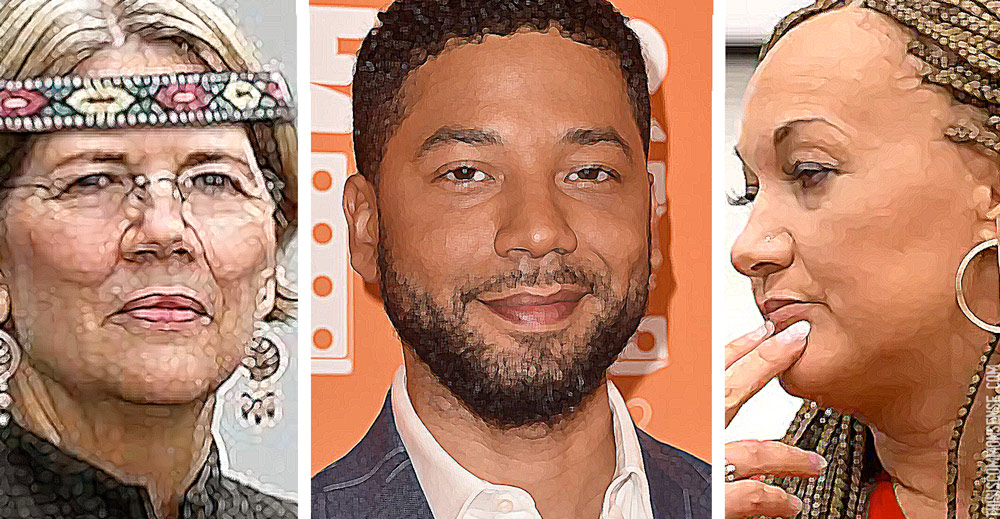
“VOTE LIKE YOU,” read the Election Day sign from last November, pictured above Dan Balz’s Sunday Washington Post column about identity politics.

The implication is clear: one should vote for the candidate with the same skin color, of the same race as your own.

Uh, really?

We do want our elected officials to be “like us.” But in terms of values. Not pigment.

Race is completely meaningless in judging a prospective candidate. I want my candidate to think like me, not win the Paul Jacob Lookalike Contest.

On the other hand, those seeking a new cultural revolution — like the Chinese Cultural Revolution, but based on racial and gender and sexual orientation grievances — think it’s fine to push race-based voting, so long as you aren’t pushing whites and . . . it helps Democrats.

The latest real “culprit” in Hillary Clinton’s 2016 defeat appears to be a lack of enthusiasm and turnout among black voters. Black turnout dropped eight percent from 2012, when President Obama was running for re-election as the first black president, to 2016, when Hillary Clinton, a white woman, was the Democratic standard-bearer.

Balz looked at the 2018 gubernatorial races in Florida and Georgia, where Democrats Andrew Gillum and Stacey Abrams, respectively, both African American, lost but performed far better than Democrats have in recent years in those states in such races.

“Would a white candidate have done better?” he asked.

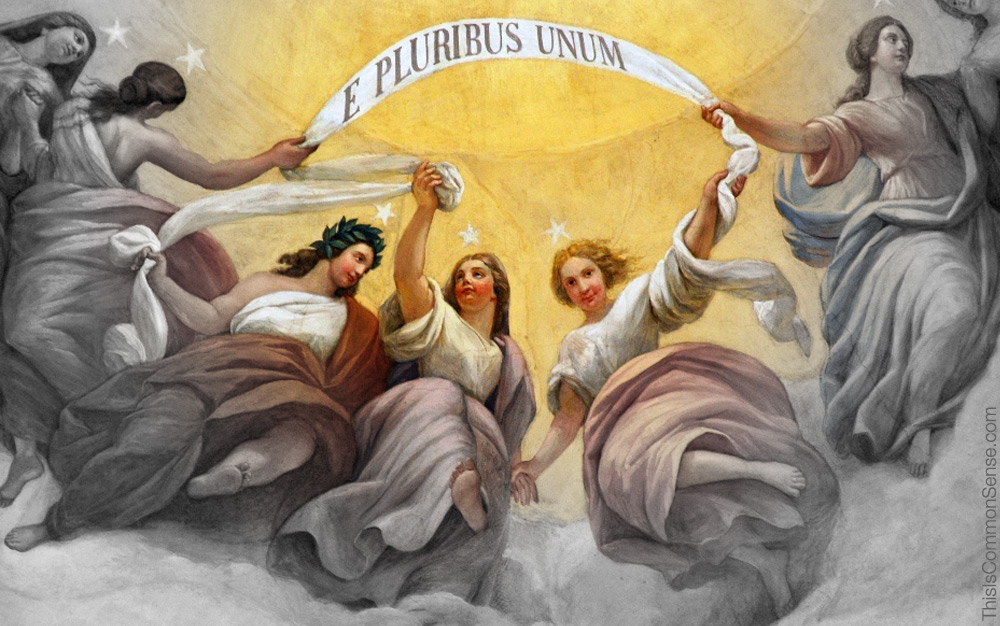
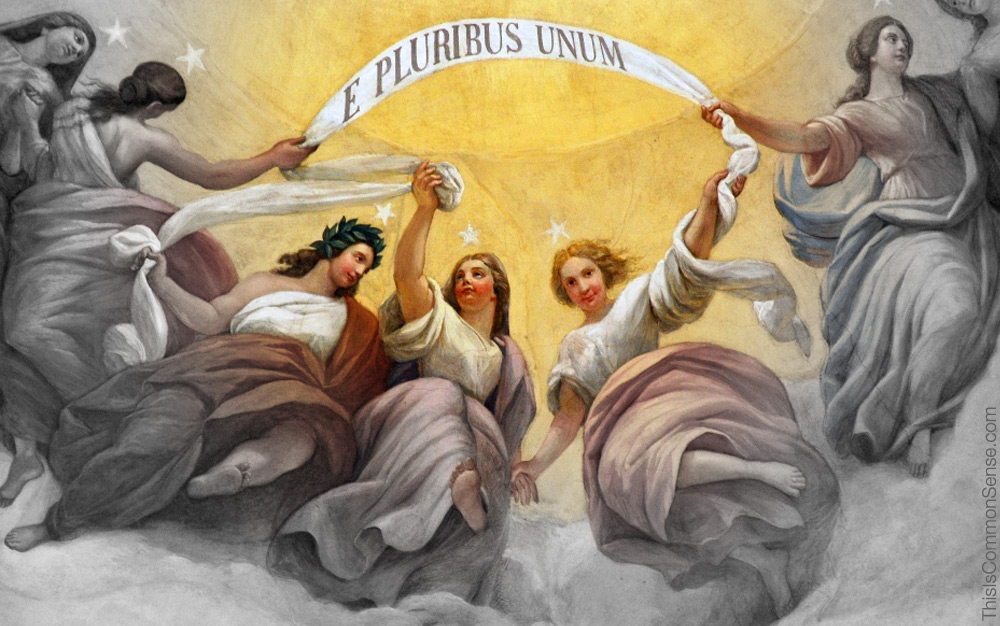
Perhaps not. But the whole approach stinks. Identity politics is openly the politics of division. Surely “e pluribus unum” must not be replaced with “ex uno plures.”

This is Common Sense. I’m Paul Jacob.


N.B. For the Latin, which is not straightforward, see Google Translate.

PDF for printing

e pluribus unum, democracy, racism, collectivism, individualism

Photo Credit: detail from US Capital Building Dome

See all recent commentary
(simplified and organized)
See recent popular posts
Categories
incumbents political challengers term limits

Old Dominions

A photo, found on Virginia Governor Ralph Northam’s 1984 medical school yearbook page, went viral. It was of a person in black-face next to another in a Ku Klux Klan sheet. In almost no time at all, Democrats and others quickly demanded that the governor resign.

Why the speed? 

The already-started presidential campaign? 

Or the likelihood that Democrats would experience no disadvantage should their governor step down?

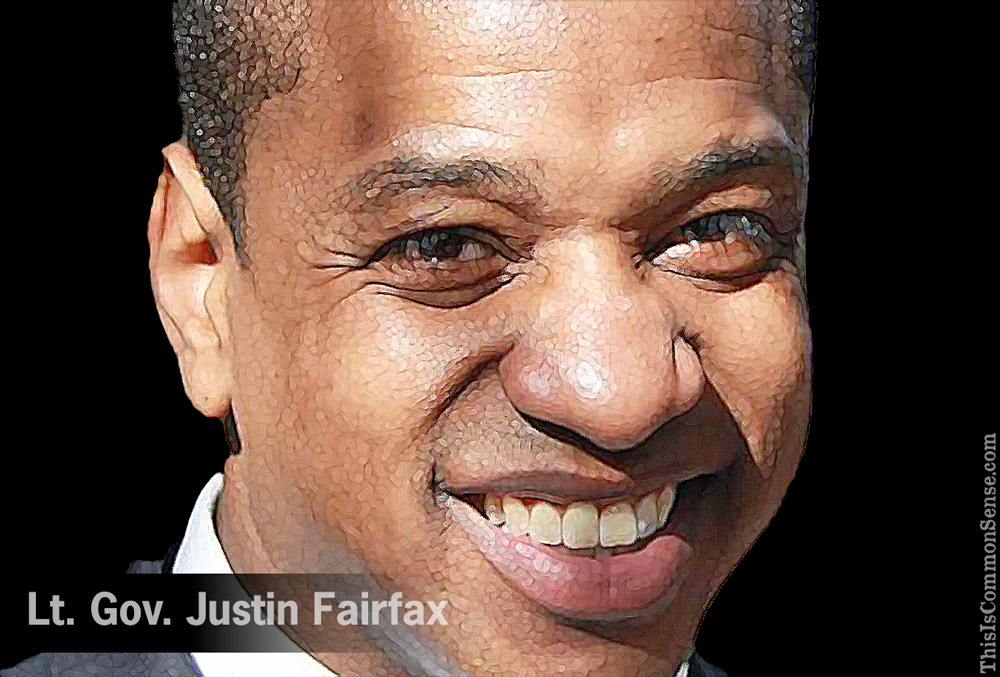
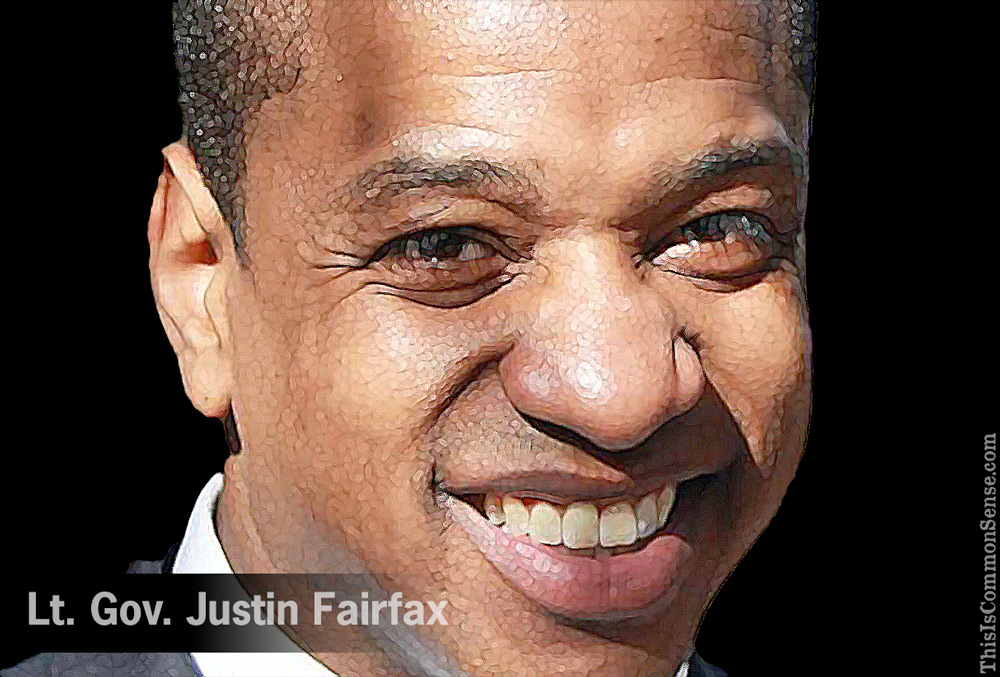
Lt. Gov. Justin Fairfax, an up-and-comer in the Democratic Party, would take Northam’s place. And under Virginia’s gubernatorial term limits, Fairfax could run again for a full term after finishing the rest of this current term. 

With Virginia’s one-term limit, it would allow a rare option to run as an incumbent.

There’s a speed bump, though. Not necessarily the sexual assault allegation lodged against Fairfax, which he denies . . . and about which we know little. What’s certain? Fairfax is positioned far to the left of Northam — in a state that is still more purple than blue. 

A bitter feud with Laborers’ International Union of North America illustrates the problem. Mr. Fairfax has long opposed two pipelines that the union desperately desires. The union — a donor of $600,000 to Democrats in 2017 — demanded that candidate Northam remove Fairfax’s name and picture from mailers to union households. 

Northam complied

And got hit by charges of racism.

You see, Fairfax is black. 

Playing down the dis, Fairfax called it a “mistake”; others chose “mindboggling,” a “slap in the face,” and a signal that blacks “are expendable.”

Northam still won . . . with 87 percent support from black voters.

Should Northam finish his term, Lt. Gov. Fairfax would remain well positioned, but the race would be wide open. If Fairfax becomes governor, however, no Democrat will challenge him for fear of splitting the party.

Yet, come 2021, Fairfax is too far left to defeat a decent Republican . . . should one appear.

This is Common Sense. I’m Paul Jacob.


PDF for printing

Lt. Gov. Justin Fairfax

See all recent commentary
(simplified and organized)
See recent popular posts

Categories
education and schooling ideological culture

Why Fire the Dean?

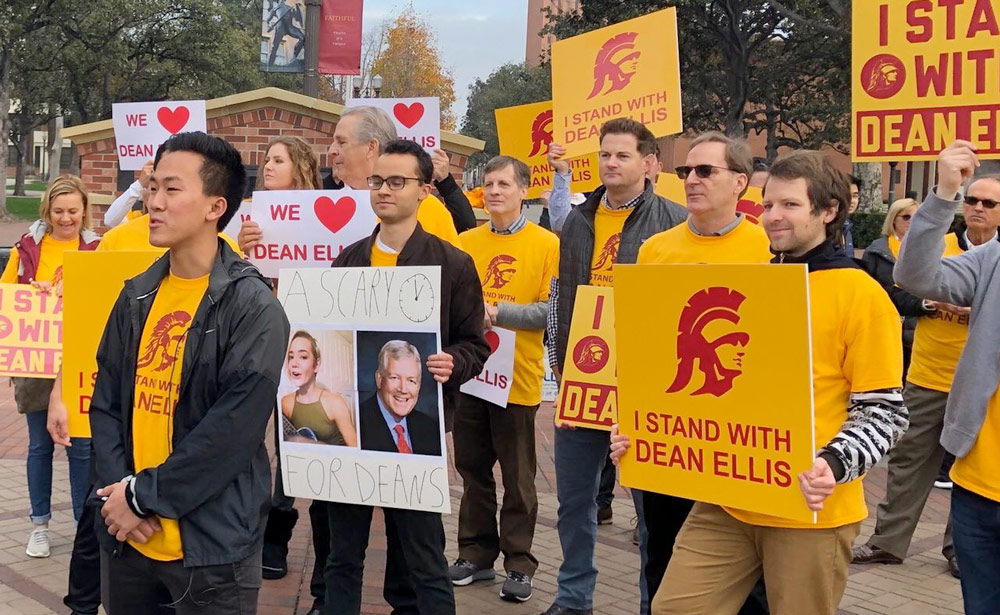
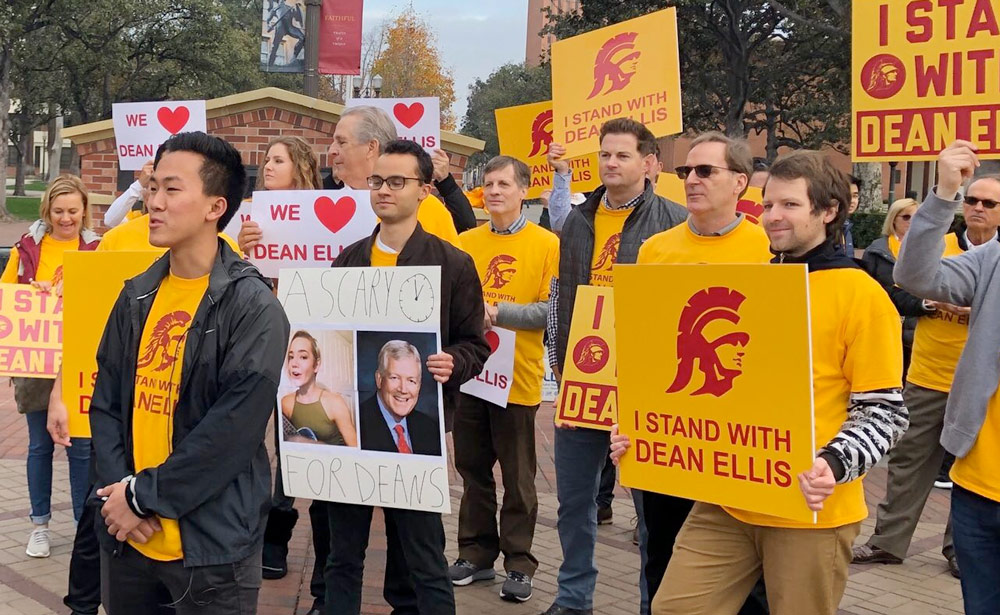
Students and faculty at the University of Southern California are upset because a popular dean of the Marshall School of Business, James Ellis, has been fired by interim USC President Wanda Austin. Hundreds have rallied in protest and petitioned for his reinstatement.

Why the ouster? 

The administration has offered a vague indictment about “lack of diversity” and problematic handling of racial- and gender-bias complaints. There’s apparently a commissioned report, the Cooley report, about the complaints. But few have seen it.

 “Jim has not been allowed to see the Cooley report, despite repeated requests to do so by him, his legal counsel, a trustee, and me,” says donor and USC board member Lloyd Greif. “Nobody has seen it.” 

Greif argues that no complaint dealt with by Ellis’s office “alleged any egregious conduct, and none of them involved inappropriate behavior by Jim.”

Was old white male Ellis expelled for presiding over a too-little-diverse student body (and perhaps for being inadequately “diverse” himself), as determined by an arbitrary standard?

Without transparency or due process, who could know? 

But lack of any official accountability suggests some warped notion of “diversity justice” is being applied here, a notion that dismisses rational goals and relevant facts to focus only on whether the ethnic/gender/other-unchosen-trait makeup of a sub-population sufficiently mirrors that of the general population. 

If so, is this a standard that should be applied universally? 

No matter how you answer that question, note what is not being focused upon: providing a good education.

This is not Common Sense. 

I’m Paul Jacob.


PDF for printing

Dean Ellis, diversity, racism, quotas, protest, blacklisting

See all recent commentary
(simplified and organized)
See recent popular posts

Categories
general freedom property rights

And So It Begins

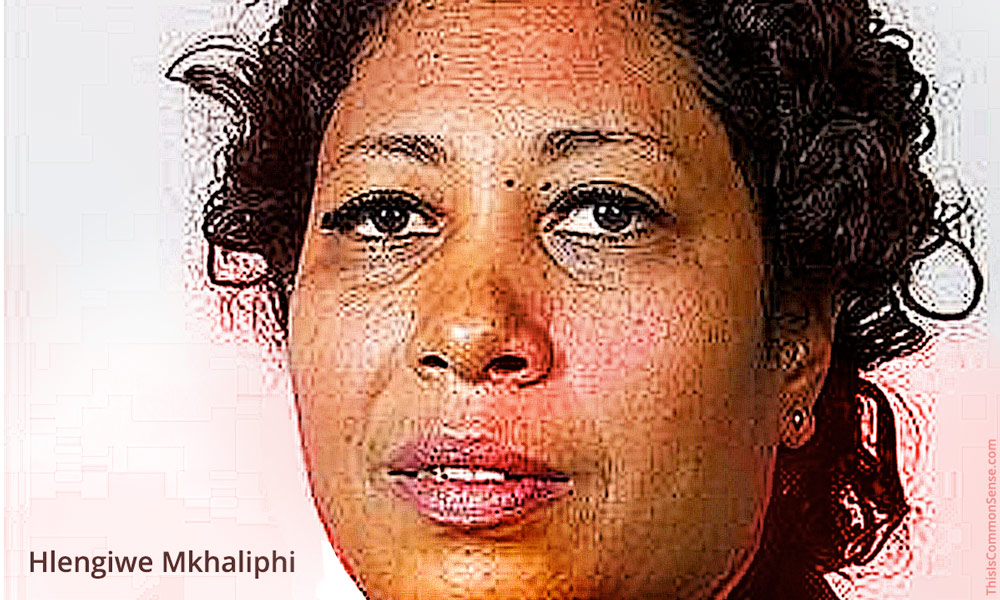
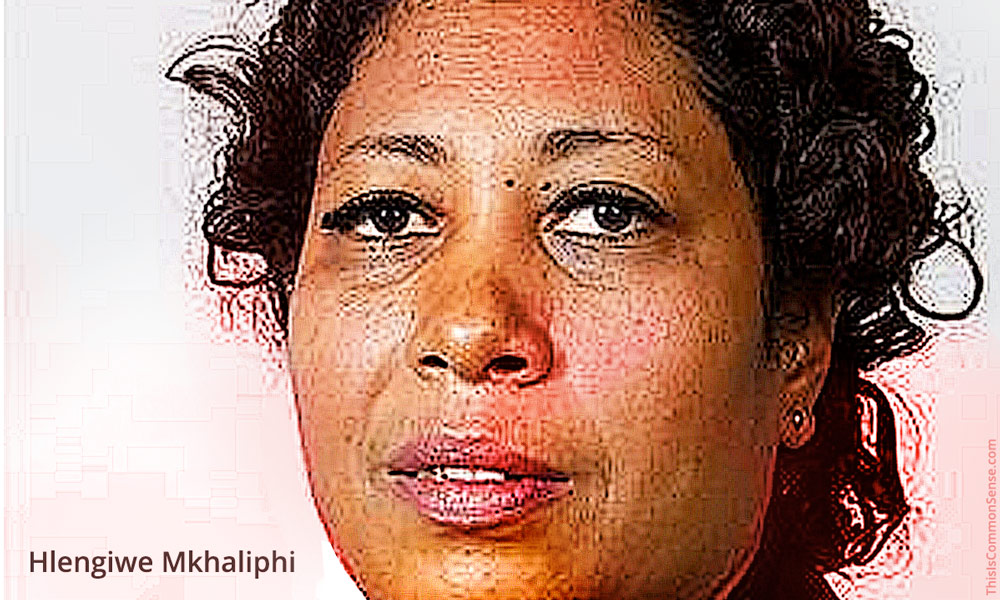
“Your time is up, white people,” South African politician Hlengiwe Mkhaliphi offered.

This woman, who belongs to the Economic Freedom Fighters, a “far left” political party, is defending something Frédéric Bastiat would have dubbed the very worst kind of “legal plunder”: in this case, a land grab from white farmers to give to (some) blacks, without compensation.

“White South Africans could be forced to give up their own homes from next year as the nation’s government steamrolls through plans for land expropriation,” Zoie O’Brien reports for Britain’s Daily Mail. Why? Well, “over claims ‘Africa’s original sin’ must be reversed.”

There will be no reversal, of course. Not of “Africa’s original sin,” which, I dare suggest, mischaracterizes the problems of South Africa.

And yes, I know, it is complicated, since “many in the nation see the move as retribution.” For past white supremacist racial policies.

But justice simply cannot be two wrongs. For what is happening in South Africa is the gearing up for a mass crime. 

They call it “land reform,” of course. Lots of tragedies begin that way. Ask the people of the country formerly called Rhodesia

I’ve referred to South Africa’s gross dysfunction before. There appears to be an instinctive media downplaying of this matter, largely because of past racism and the “white people bad” mentality now too common.

Your time is up, white people. Racism. Sure. (No point in just calling it “reverse racism.”) A crime against the owners of property. The wrong way to address problems, surely.

And ominous, for rarely does an enormity like this stop just there.

This is Common Sense. I’m Paul Jacob.


PDF for printing

Hlengiwe Mkhaliphi

See all recent commentary
(simplified and organized)
See recent popular posts

Categories
crime and punishment media and media people Popular

What’s Up With Hate?

Reported hate crimes are up.

Last year, you may remember, major media outlets noted an alarming pattern, quoting the work of a “nonpartisan researcher” who seemed more intent on linking Donald Trump to the perceived trend than anything else.

This year’s increase?

Well, the most recent FBI report shows hate crimes for 2017 up a whopping 17 percent!

Sounds alarming.

But is it? I mean, really?

Maybe. CNN offers a fascinating investigation of several rather big-story hate crimes that did not make it into the statistics. Yes, disturbing.

But what did CNN not report?

YouTuber Matt Christiansen drilled down, focusing on several aspects of the FBI report that are missing from accounts brought to us by major news outlets.

The uptick in sheer numbers of hate crimes may be mostly the result of the increased number of law enforcement agencies that have been brought into the data-collecting project. How many new agencies? One thousand.*

And consider the demographics changes year-to-year as well. Religious-based crimes saw a small increase in the number of anti-Jewish events and a similar decrease in anti-Muslim ones. All in all, notes Christiansen, there has been little change in the proportions of the statistical categories — which would not be what one would expect if Trump were the Malign Influence.

Also bad for that narrative? The biggest detectable change in the distribution of race-based crimes — more than twice the increase in numbers of crimes against Hispanics — was against (get ready for it) whites.

This is Common Sense. I’m Paul Jacob.


* That is from the FBI press release; oddly, I did not find that statement when looking directly at the report.

PDF for printing


» See popular posts from Common Sense with Paul Jacob HERE.


Categories
education and schooling ideological culture moral hazard responsibility too much government

An Expert Explains Failure

The failures of the public high schools in the District of Columbia go on an on. It is quite a scandal, as I explained this weekend at Townhall.

And yet some “charter schools that serve large populations of children from low-income families,” notes the Washington Post, after providing much detail about the massive failures, “recorded big increases in scores.”

What hint about improving education does that fact give?

Well, Kevin Welner, a professor who heads the National Education Policy Center at the University of Colorado, has an interesting thought: “People want to read into these test scores lessons about what the schools are doing. But these scores, even the growth scores, depend a great deal on students’ opportunities to learn outside of school. If we address the poverty and racism, then we will see these test scores increase.”

Hmmm. Let’s review: (a) the problem is at home and (b) it cannot be overcome by the schools. Moreover, the esteemed professor perceives the cause of these detrimental home environments to be “racism and poverty.” 

Once upon a time, public education was proclaimed to be the great equalizer, allowing the disadvantaged to climb the economic ladder, and, if not wipe out poverty completely, to certainly dramatically reduce it. 

Now, we discover from a certified education expert that we had it backwards.

So maybe it is time to chuck the whole experiment and just try to educate kids.

Not “save” them, or society.

This is Common Sense. I’m Paul Jacob.


PDF for printing


Categories
Accountability general freedom ideological culture media and media people

Transcendent Gray Lady

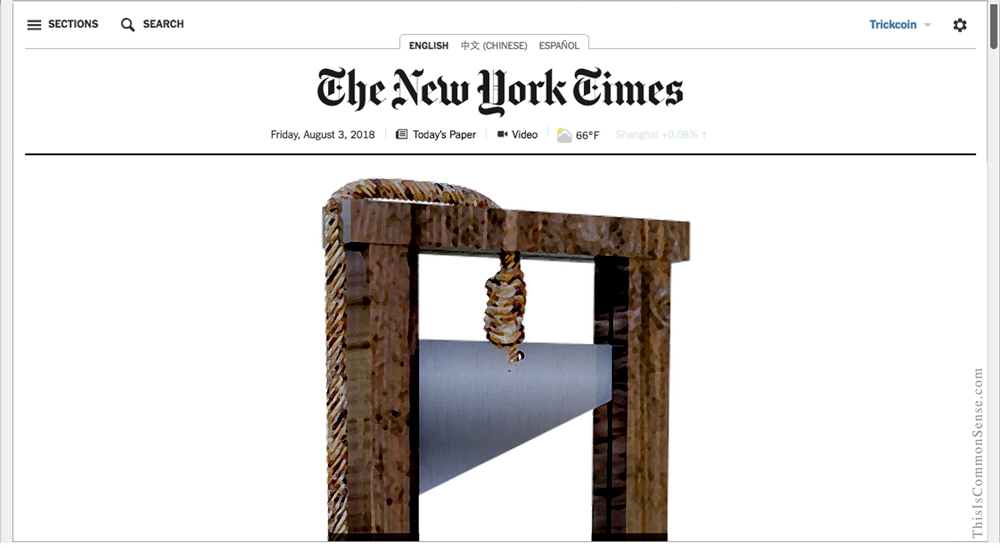
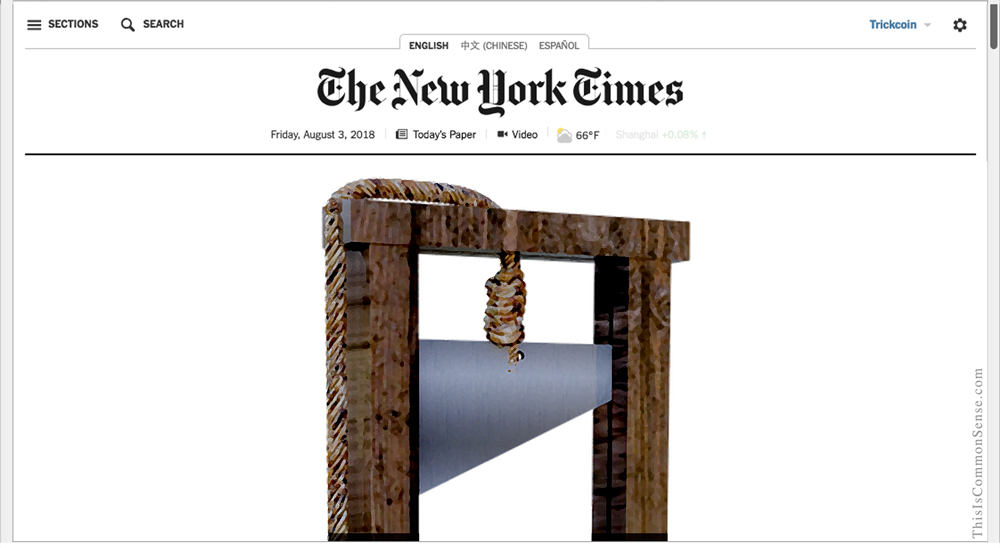
How far are we away from a completely vindictive, murderous madness like The Terror of revolutionary France?

I know, almost no one is talking of guillotines. 

But a lot of people seem determined to destroy others’ lives publicly. We are all too familiar with Twitterstorms where worked-up outrage forces someone out of a job or a deal  — usually for making jokes.

But it’s not just jokes. Not long ago an actor got in trouble for Tweeting that commentator and Daily Wire host Ben Shapiro seems a nice, honest person on the right that a leftist might listen to. The actor was forced to recant, and then Shapiro himself publicly recanted from some past putatively “dumb” things he “did” or “said.” Or something.

Since we’re talking about Mr. Shapiro, his commentary on the Sarah Jeong case is not irrelevant. The New York Times hired Ms. Jeong despite her past racist tweets. 

Well, racist-against-whites. 

“By the rules of the left,” says Shapiro, “this person should now be excised from polite society.”

But the Times is keeping her.

Shapiro finds this “indicative” of more than just the Times. The left at large seems OK with anti-white racism but not anti-any-other-race.

It’s indicative of a lot more, though, not just racism and anti-racism and anti-anti-racism. 

Outrage and the Twittermob may be fun. But it’s time to stop.

Is the Times leading the way?

Only when the decrepit old rag defends someone not on its own ideological side. Transcending partisan mob mania means first transcending partisanship. 

This is Common Sense. I’m Paul Jacob.


PDF for printing


Categories
general freedom U.S. Constitution

Why We Fought

When I was young, we were instructed to revere the men dubbed by President Warren Harding as “the Founding Fathers.” Reverence has since gone out of fashion.

Even today’s freedom-minded often express a general iffiness about America’s separation from England.

Now, I’m so deep-seatedly anti-monarchical, so resolutely anti-royal that I tend to shake my head at this sort of stuff. Yet people I very much admire might be called Revolution Liberty Skeptics.

“Can anyone tell me why American independence was worth fighting for?” asks economist Bryan Caplan. He says “it’s hard to get a decent answer” on specific policies improved by the secession from the Empire, at least liberty-wise.

He speculates, for example, that separation “allowed American slavery to avoid earlier — and peaceful — abolition.”

Historian Jeffrey Rogers Hummel ably answers him, noting that before “the American Revolution, every New World colony, British or otherwise, legally sanctioned slavery, and nearly every colony counted enslaved people among its population. As late as 1770, nearly twice as many Africans were in bondage throughout the colony of New York as within Georgia, although slaves were a much larger percentage of Georgia’s population.” Vermont, which did not join the union until 1791, abolished slavery in 1777. By 1804, gradual emancipation had begun in all the remaining northern states that had not abolished slavery outright.*

Do we really think all this would’ve happened under British rule?

As Hummel reminds us, “emancipation had to start somewhere.”

It started in the country that put liberty up front.**

Scoffing at the Revolution now won’t put liberty further forward.

This is Common Sense. I’m Paul Jacob.


* New York’s gradualist plan declared all children of slaves born after July 4, 1799, to be free after ages 25 and 28 years, female and male, respectively.

** Hummel makes good points on other freedoms, too.