Categories
crime and punishment property rights U.S. Constitution

Injustice Blocked

Civil asset forfeiture is one of those government practices that good people, when informed of it, often express, at first, incredulity. How can something like that exist in these United States?!?

Good question.

One reason seems to be that very incredulity. Normal Americans trust their government not to be evil. When shown that it regularly engages in actual highway robbery, then denial — ‘this cannot be happening.’

But it is.

Another reason it exists? It is so profitable. 

For those in government, anyway. They get to fill their department coffers without having to ask for tax hikes. They — and by ‘they’ I mean ‘the police’ and government attorneys at state and local levels — just take the wealth. 

Indeed, police routinely “keep whatever they can grab off anybody they arrest, claiming it’s all proceeds or property connected to criminal activities,” writes Scott Shackford at Reason, “and using it to line their own pockets. This incentivizes police to look for people who have assets that can be seized.” 

In South Carolina, Shackford reports, police agencies “across the state had seized more than $17 million in assets across three years. In one-fifth of the cases, nobody was charged or even arrested for a crime.”

Fortunately, there is good news. “Circuit Judge Steven H. John has ruled that the South Carolina’s civil asset forfeiture regulations violate the Fifth, Eighth, and Fourteenth Amendment rights of the citizens.” 

Unfortunately, the fight against this evil practice is far from over. 

But maybe the judge’s ruling will inspire citizens to petition their government and place politicians’ greed into check.

And might not this judge inspire other judges around the country?

This is Common Sense. I’m Paul Jacob.


PDF for printing

asset forfeiture, theft, police, corruption,

See all recent commentary
(simplified and organized)
See recent popular posts

Categories
general freedom international affairs Popular

Protests and Propaganda

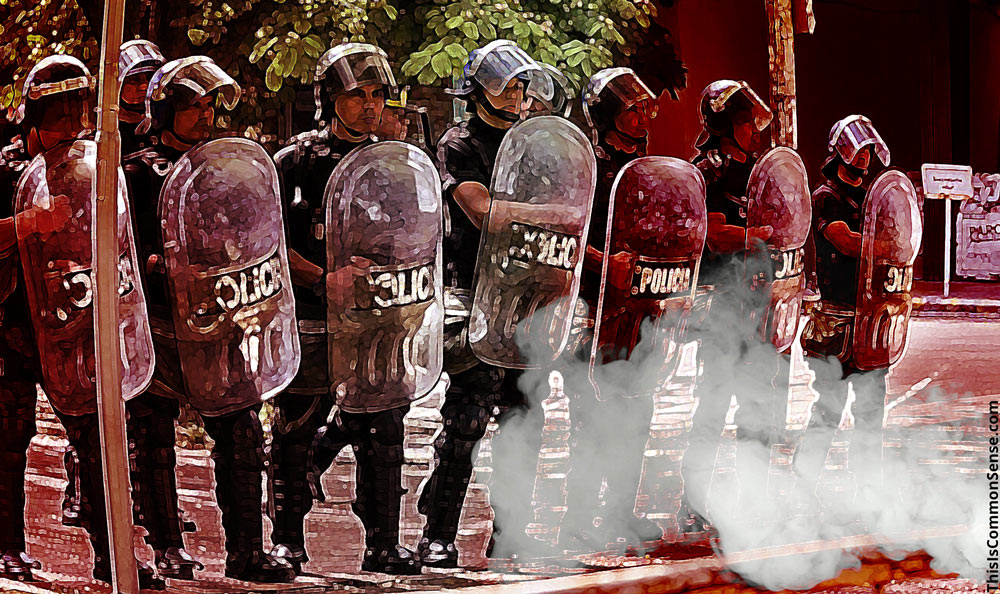
Poised to gobble up Hong Kong whole, completing the process Britain began when it ceded the colony back to China in 1997, the government of China remains concerned about world opinion, for it engages in massive propaganda.

“When a projectile struck a Hong Kong woman in the eye this week as protesters clashed with the police, China responded quickly,” explains an article in the New York Times. “Its state television network reported that the woman had been injured not by one of the police’s bean bag rounds, but by a protester.”

But that’s not the only kind of propaganda. If you have spent any time on Instagram, for example, you have probably seen the posts of Chinese people decrying the scandal and shame of how Hong Kongers resist government efforts at hegemony.

There is a name for this latter form of propagandist, “the fifty cent party” because the Communist Party is said to pay social media users for each pro-government post . . . though almost certainly not 50¢.*

The basic idea, according to General Secretary Xi Jinping, is to “to strengthen media coverage … use innovative outreach methods … tell a good Chinese story, and promote China’s views internationally.”

And managing its own population, as when, according to the Times, state media “posted what it said was a photo of the woman counting out cash on a Hong Kong sidewalk — insinuating, as Chinese reports have claimed before, that the protesters are merely paid provocateurs.”

These young street protestors are almost certainly not mercenaries, though they have sometimes faced what appear to be hired thugs. 

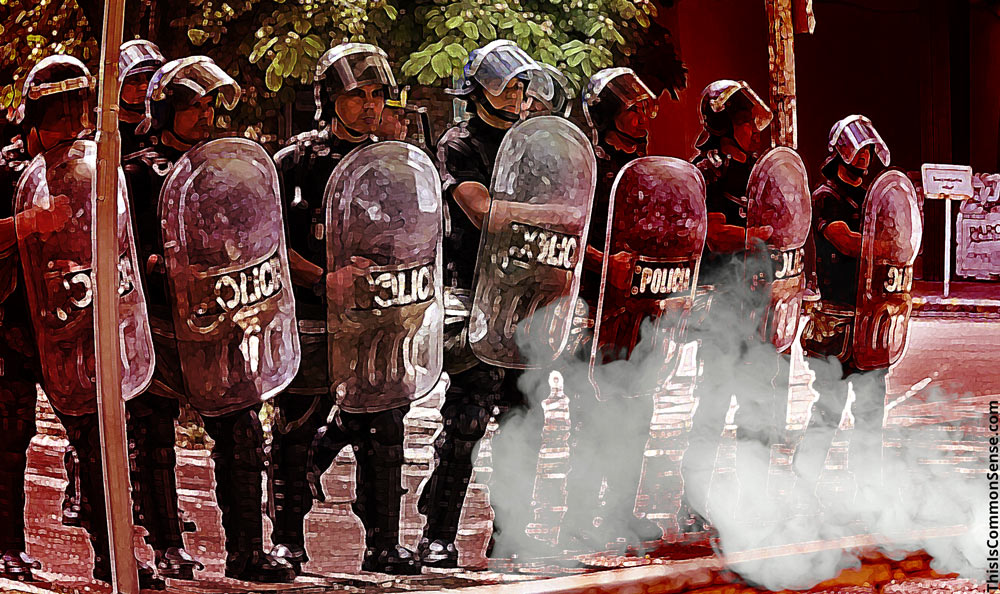
The protests are a kind of insurrection. Strong resistance, at least, to being totalitarianized.

This is Common Sense. I’m Paul Jacob.


PDF for printing

Hong Kong, police, riots, protests, violence,

See all recent commentary
(simplified and organized)
See recent popular posts

Categories
free trade & free markets general freedom too much government

Don’t Follow the Feds

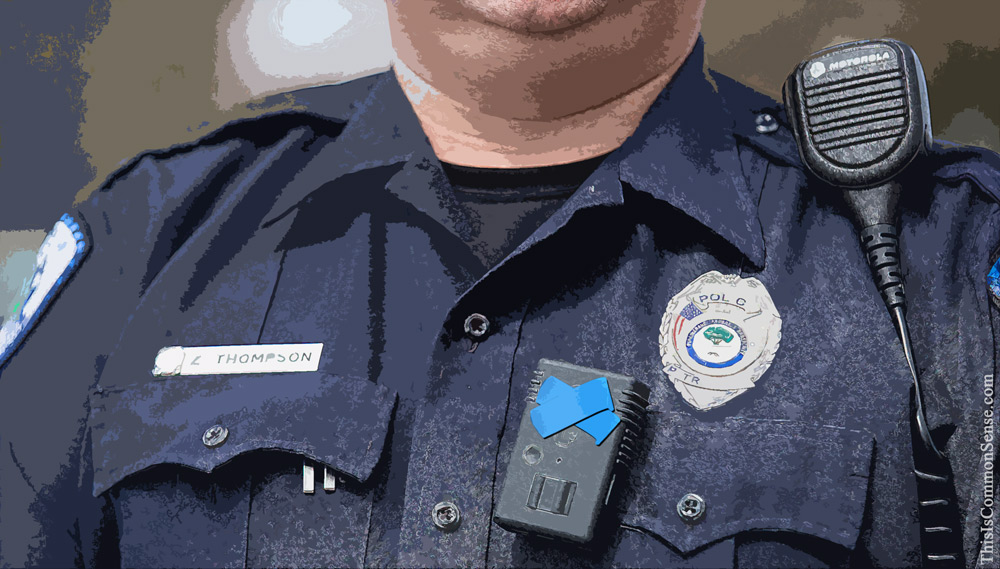
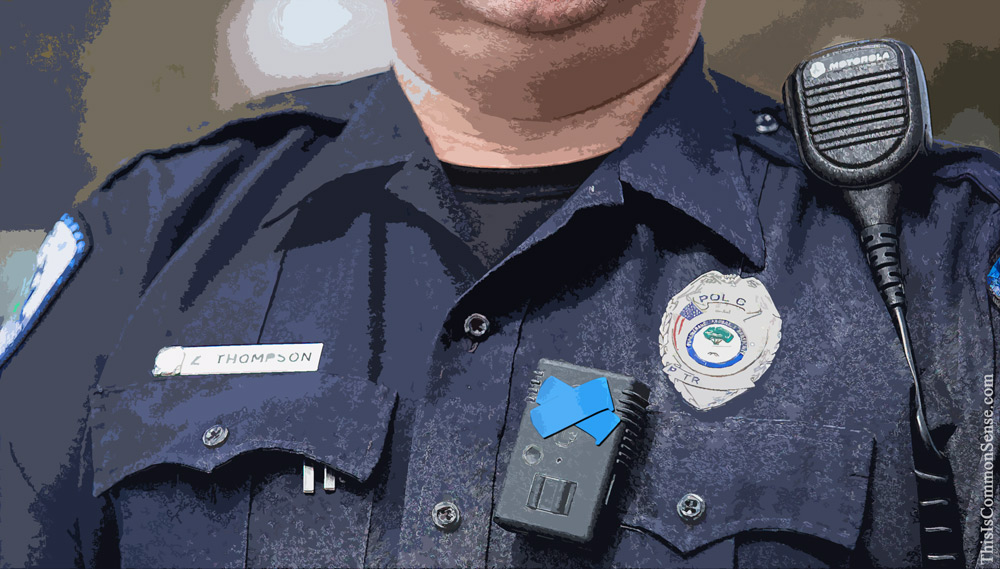
“Federal agents never wear body cameras,” The Washington Post reports, “and they prohibit local officers from wearing them on their joint operations.”

That’s why a growing number of local law enforcement agencies are doing what Atlanta’s police chief and mayor “decided late last month,” pulling “out of joint task forces with the Drug Enforcement Administration, the FBI and the U.S. Marshals Service.”

The Justice Department supplies the usual excuses for their lack of transparency: they are “protecting sensitive or tactical methods” and “concerned about privacy interests of third parties.” But as Houston Police Chief Art Acevedo reminds, “if there’s a legitimate need to redact any [footage], there’s a process available for that through the courts.”

It is the height of hypocrisy, for the use of body cams has been “what they’ve been preaching,” St. Paul (Minn.) Police Chief Todd Axtell argues, referring to the Justice Department’s funding and training of local police forces in body-camera usage. “It’s ironic they aren’t complying with what they preach to be so important in policing.”

Ironic? Sure. 

Par for the course? Indeed.

The bad example federal police agencies set is hardly limited to body-camera use. In states where legislation has reduced or ended the outrageous practice of civil asset forfeiture — whereby police can take and keep cash and property from people never accused or convicted of any crime — the Feds are there again to facilitate the thievery known as “equitable sharing.”  

“Federal forfeiture policies are more permissive than many state policies,” a 2016 Post report explains, “allowing police to keep up to 80 percent of assets they seize.”

Make sure your local and state police don’t follow the Feds.

This is Common Sense. I’m Paul Jacob.


PDF for printing

body cam, camera, police, feds, federal, crime, law,

Photo credit: North Charleston

See all recent commentary
(simplified and organized)
See recent popular posts


Categories
crime and punishment Popular property rights

Of Loot and Leverage

Without a special kicker, why should police bother to do their jobs?  

The subject is civil asset forfeiture. This legal procedure makes it easy to take property from criminals. For the War on Drugs, civil forfeiture was so loosened as to allow police to take property from anyone . . . without due process.

No wonder citizens in a number of states have demanded limits upon the practice. 

But since police departments get to keep the loot they “interdict” — spending it on better cars, weapons, office furniture, plush employee lounges, drug-sniffing dogs — law enforcement personnel aren’t exactly always on board with citizens’ concerns.

Jarrod Bruder, South Carolina Sheriff’s Association executive director, defends the sorry practice, as quoted by Greenville News. He asks what, sans civil forfeiture’s profit motive, could be a cop’s “incentive to go out and make a special effort?” 

Dollars to donuts, this will not play well with those who distrust the police already. 

And note the biggest incentive police face: to take property away from innocent people. Easier pickin’s. No surprise, then, that in “19 percent of cases, there is no criminal arrest.”*

Meanwhile, Senator Ted Cruz (R-Tex.) has suggested that President Trump take the confiscated billions from the accounts of drug kingpin El Chapo to “build the Wall.”

Genius? 

Regardless, this mere suggestion could add incentives for pro-Wall Republicans to go soft on civil asset forfeiture.

There is no point in being secure within our borders if we are not secure within our homes and wallets and cars and . . . any other place jeopardized by this police-state practice.

This is Common Sense. I’m Paul Jacob.


*Blacks represent 71 percent of cases, while only 28 percent of the state population.

PDF for printing

civil asset forfeiture, police, corruption, theft

Photo Credit: Chase Carter on Flickr

See all recent commentary
(simplified and organized)
See recent popular posts

Categories
crime and punishment general freedom insider corruption

Puppycide

The cost of the War on Drugs is not to be reckoned just in dollars. Or in that more serious accounting index: lost lives. The hit to our civil liberties has been enormous, too, and instrumental in setting up the modern Surveillance State.

But beyond these, there is a stranger result: the War on Drugs is also, de facto, a War on Dogs.

“Detroit police officers shot 54 dogs last year, according to public records obtained by Reason,” writes C.J. Ciaramella. “That’s a marked increase over the number reported by the department in 2016 and 2015, and more than twice as many as Chicago, a city with roughly 2 million more people.”

Reason magazine has been covering the War on Dogs by police forces across the country — identified in Ciaramella’s article as “puppycide” — for years, and I’ve mentioned it here on Common Sense, too. The problem is not dogs shot because they are wild, or have rabies, or the like. One expects that sort of thing.

What is problematic is that a third of the Detroit shootings took place in the course of no-knock raids and other common police actions entailed by contraband interdiction. The Detroit number turns out to be “more animal shootings than the entire Los Angeles Police Department performed — 14 total — in 2016,” Ciaramella relates.

Excessive shooting of dogs is costly to cities, of course — to taxpayers, to be precise — in terms of civil lawsuits filed and settled. And to families, some of them quite innocent of any crime, who lose their pets. 

It is a sign of a police culture corrupted by . . . the War on Drugs.

This is Common Sense. I’m Paul Jacob.


PDF for printing


Categories
Accountability crime and punishment moral hazard property rights U.S. Constitution

Forfeiting Common Sense

Is it okay to steal if you can get away with it?

A full answer would require a treatise. But most of us common-sensibly understand that evil does not magically become good when perpetrators are not stopped or punished. Thrasymachus was wrong to contend, in Plato’s Republic, that justice is merely the “interest of the stronger.”

When it comes to crimes like bank robberies, muggings and car jackings, we have no doubts about this. In such blatant cases, we suffer nothing like the legitimate confusion to which we may be prone regarding the exact border between adjacent parcels of land or the niceties of intellectual property law.

Well, somebody tell the New Hampshire state police.

Some of them apparently believe it’s okay to steal if you can evade laws against the stealing.

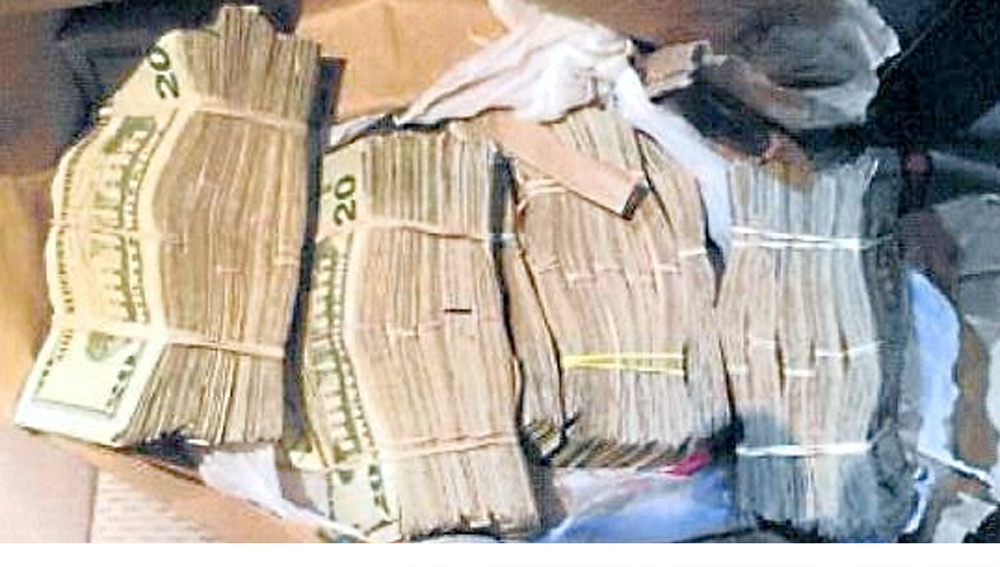
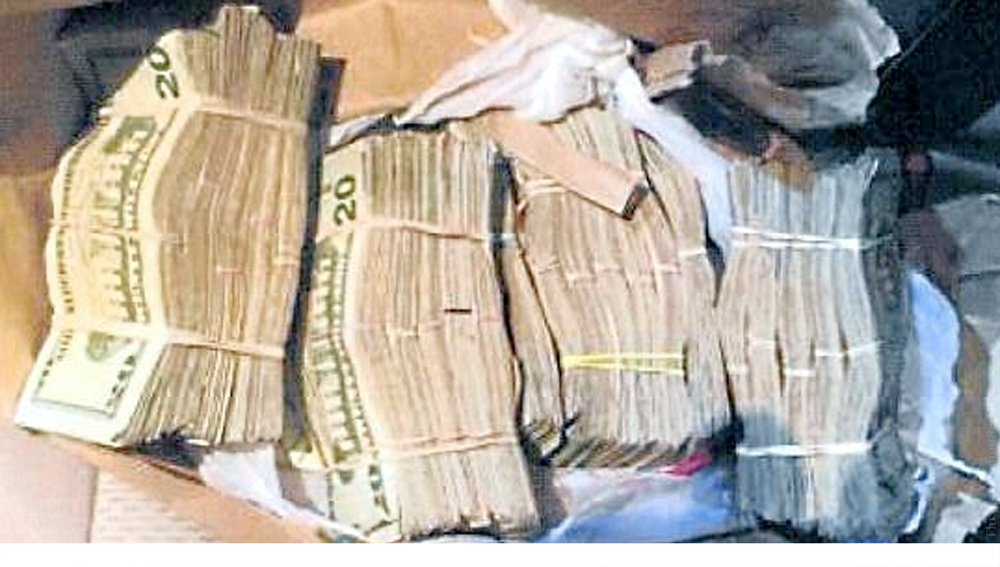
New Hampshire’s recent reform of civil forfeiture laws requires criminal conviction of a person before there can be any forfeiture of his property. But a loophole enabled officers to grab $46,000 of Edward Phipps’s money — from his car, stopped on the road — even though he was never accused of a crime. 

How?

It seems that if state cops collaborate with the feds, safeguards established to prevent such abuse can be evaded.

To retrieve even a little of his money ($7,000), Mr. Phipps was forced to relinquish all claim to the balance ($39,000). Even if lawmakers close the loophole, as they should, the robber-cops will probably get away with this particular larceny. 

They shouldn’t.

That’s injustice, not common sense.  I’m Paul Jacob.


PDF for printing


Photo Credit: N.H. State Police


Categories
Accountability crime and punishment education and schooling ideological culture national politics & policies responsibility Second Amendment rights

Cowards All Around

Just-retired Scot Peterson is a millionaire, thanks to the generous taxpayers of Broward County, Florida.

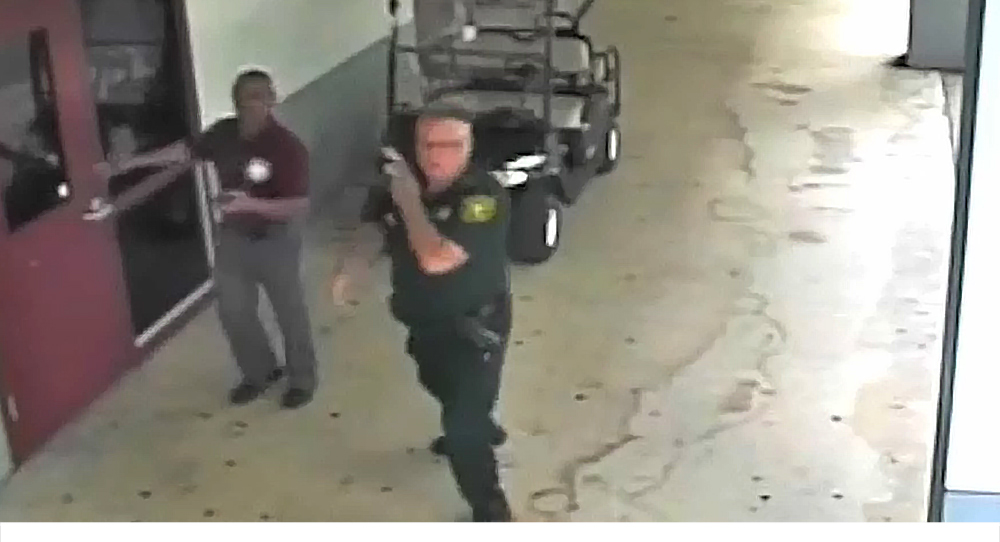
You know Peterson as the sheriff’s deputy assigned to protect students at Marjorie Stoneman Douglas High School, who, instead of entering the building where the shooter was mowing down 17 unarmed students and teachers, protected himself by waiting outside.

Peterson claimed “he remained outside the school because he didn’t know where the gunfire was coming from,” noted BuzzFeed. But “[r]adio transmissions from the day of the shooting have since contradicted Peterson’s defense . . .”

Following the cowardly non-performance of his duty, Peterson promptly retired and began drawing his pension. As the Sun Sentinel newspaper reported Tuesday, his monthly check is for $8,702.35 — an annual salary of $104,428.20.

Should the 55-year-old live to the age of 75, he’ll draw more than $2 million.

In fact, the cowardly Peterson is being further rewarded with a $2,550 annual raise — earning more in retirement than he was earning while actually working.

I use the word “earning” and the phrase “actually working” loosely.

Reacting to the news, the father of one of the murdered students called Peterson’s lavish pension “disgusting” and “outrageous.”

Recoil at the thought of this derelict policeman raking in such mega-moolah during decades of retirement — but that isn’t the only outrage.

How can Broward County afford to pay even their bravest police officers millions of dollars in retirement?

They can’t . . . for much longer.

Regardless, elected officials dare not do anything about it. They fear incurring the wrath of public employee unions . . . and risking their own pension windfalls.

This is Common Sense. I’m Paul Jacob.


PDF for printing


Categories
Accountability crime and punishment general freedom moral hazard national politics & policies privacy property rights too much government U.S. Constitution

Guilty of Innocence

If you are innocent of a crime, should you be punished as if guilty? Despite no arrest, no trial, no conviction?

If you say “Yes,” raise your hand.

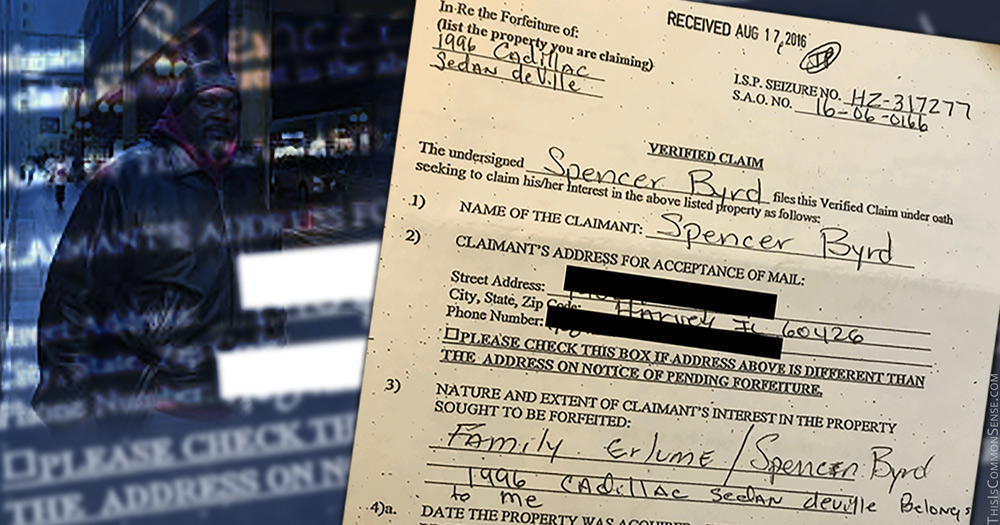
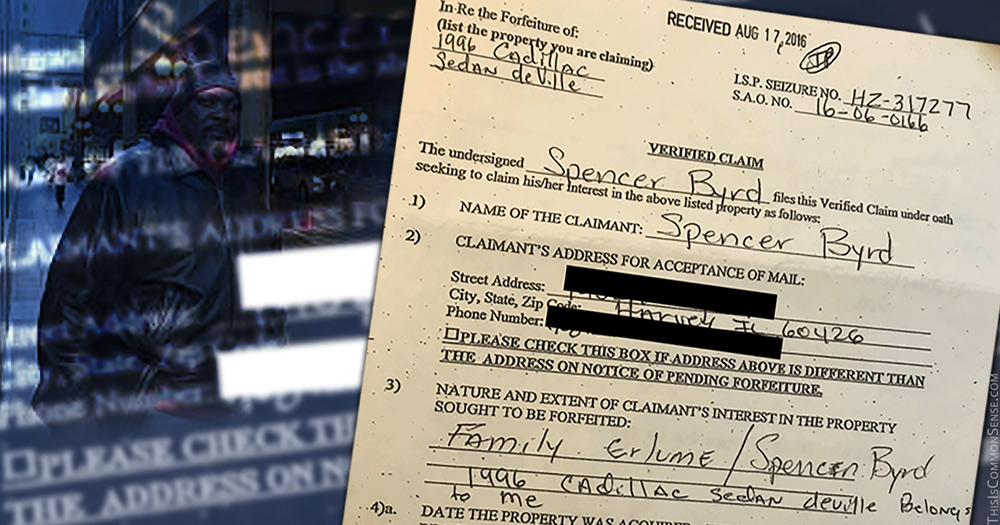
I see no raised hands among my regular readers. But my readers don’t include the wicked Chicago officials who impounded the automobile of Spencer Byrd.

Byrd’s case is reported in a Reason article by C.J. Ciaramella. The author relates how Chicago extracts money by grabbing the vehicles of innocent people. The drug war and asset forfeiture laws help make it possible.

Byrd is a carpenter and auto mechanic who sometimes gives rides to clients stuck without their cars. One night, when he was stopped on the road for an allegedly broken turn signal, police discovered that a new client riding with him was carrying heroin. Byrd was questioned but quickly released. He was never charged with a crime.

But his car was impounded; it’s been impounded for years. This has hurt his business. For one thing, he has $3,500 worth of tools in the trunk.

Byrd persuaded a judge to order that his car be returned to him. But the city still wouldn’t release it unless Byrd paid $8,790 in fees and fines (later reduced to $2,000). He is still struggling to retrieve his car, within a labyrinth the injustices of which I’ve barely touched on.

May I suggest . . . ? If you do ever recover your Cadillac, Mr. Byrd, put pedal to the floor and get the heck out of Dodge.

I mean, Chicago.

This is Common Sense. I’m Paul Jacob.


PDF for printing


Categories
Accountability crime and punishment general freedom government transparency moral hazard national politics & policies privacy property rights too much government U.S. Constitution

Thwarting Cops Who Are Robbers

“Carrying cash is not a crime,” Institute for Justice attorney Dan Alban informs us, “yet too often the government treats it like one.”

Musician Phil Parhamovich learned that the hard way. He was porting his life savings, almost $92,000 — earmarked for a down payment on a recording studio — when cop-robbers of the Wyoming Highway Patrol stopped him for not wearing a seat belt.

It turned out to be an extremely expensive infraction. The officers intimated that it was illegal to travel with so much cash and pressured him to hand it over. Scared and believing that his alternative was jail, Phil signed a preprinted waiver letting them grab his life savings.

Preprinted waiver? This means it’s routine for these guys to try to legitimate their actions as they premeditatedly intimidate and rob people.

The state of Wyoming tried to keep the money. Fortunately, the Institute for Justice took Phil’s case, and a judge accepted the facts presented by Phil and his IJ lawyer. After months of tribulation and suspense, the robbery victim got his money back.

Another win for the good guys.

Thankfully, the Institute for Justice’s freedom-defenders have won a great number of such cases. Yet, IJ lawyers certainly cannot litigate all the forfeiture injustices being committed by government  authorities all across the country.

That’s why the group is pushing to reform civil asset forfeiture laws, requiring a criminal conviction before property can be forfeited. 

And you can help. How? Launch efforts in your town or state, or work to push infant efforts to a higher level. Take the initiative. 

This is Common Sense. I’m Paul Jacob.


PDF for printing


Categories
Common Sense

Corruption Beyond Imagination

“Two Baltimore detectives were convicted Monday of robbery and racketeering,” the Washington Post reported, “in a trial that laid bare shocking crimes committed by an elite police unit and surfaced new allegations of widespread corruption in the city’s police department.”

Assistant U.S. Attorney Leo Wise presented the jury with “things more horrible in some cases than you ever could have imagined.”

Test your imagination:

  • Four police officers, already convicted, testified to routinely violating the rights of citizens in order to steal cash and property worth hundreds of thousands of dollars.
  • Officers left the scene of an accident they caused without summoning assistance for those injured, and then covered up their involvement.
  • Detectives “doubled their salaries by lying to claim extravagant overtime when they were actually at bars or . . . out of the country on vacation.”
  • There was an allegation of murder against one policeman and a charge that another high police official covered it up.

A total of eight officers of the Gun Trace Task Force have now been convicted of or pleaded guilty to felonies.

Where was Internal Affairs? “The head of internal affairs has been transferred” the Post informed, after he was “implicated in misconduct during trial testimony.”

We could sic the feds on them! Oh, wait, “[m]ost of the behavior charged in the case took place even as the [Baltimore police] department was already under federal investigation by the Justice Department . . .”

Prospects for reform?

Last Wednesday, Mayor Catherine Pugh claimed to having been “too busy to follow the trial closely or read Baltimore Sun coverage…”

Baltimore, we’ve got a problem.

This is Common Sense. I’m Paul Jacob.


PDF for printing