Categories
Accountability ideological culture local leaders moral hazard nannyism national politics & policies responsibility too much government

Minimum Wage Laboratory

Not every popular idea about government policy is good. Or bad. How do we tell the difference?

One way is evidence.

The modern administrative state was promoted heavily by social scientists who thought that piecemeal social engineering should be tested. A few even thought that the older experiment in limited-​government federal republicanism gave Americans a near-​ideal testing ground: “the laboratory of democracy.”*

Activists and politicians have been pushing big increases in the minimum wage in cities around the country. Seattle, Washington, has been one of those, establishing an $11.00/hour legal minimum in April of 2015, then raising that limit by two dollars in 2016. Now the results are in. 

The City of Seattle commissioned a study of “the wage, employment, and hours effects of the first and second phase-​in of the Seattle Minimum Wage Ordinance,” and it shows clear results:

  1. The first hike led to “modest reductions in unemployment” but scant change in over-​all low-​wage employment.
  2. The second hike led to a 9 percent reduction in hours worked at wages below $19/​hour;
  3. a reduction of over $100 million per year in total payroll for low-​wage jobs; and
  4. total payroll losses average about $125 per job per month.

Jonathan Meer, an economist teaching at Texas A&M University, calls this an “unmitigated disaster.” But he notices that a backlash against it was immediate.

To those who object: do you object to the method or the conclusions?

The only halfway plausible rationale for social engineering of this kind — top-​down interventions into markets — has been “social science.” Rejecting evidence is to reject science, which is to reject … the minimum wage idea itself. 

This is Common Sense. I’m Paul Jacob.


* The idea is to test policy tried in one location against its goals. What works should be mimicked, but only after the evidence is in and results accepted as good. And dropped in cases where not.

Printable PDF


Categories
Accountability folly free trade & free markets general freedom initiative, referendum, and recall nannyism national politics & policies property rights responsibility too much government

Minimum Shock

“Three restaurants vacated the Bay this week, with Berkeley’s Bistro Liaison getting the most attention,” the San Francisco edition of Eater informs us. “It’s a bittersweet exit for the owners, who plan to start new careers.”

The week in question was in February. But this was not an isolated event. Sixty-​four Bay-​area restaurants and fast food joints closed their doors this last winter.

That is a lot of closures.

Why?

Every eatery has a different story, but the entry December 17* provides a big clue: minimum wage hikes.

Citizens should hardly be surprised. They got what they asked for. The minimum wage went up to $13.00 per hour last July, and will go up another two bucks next year. And this was the result of a citizen initiative. “On November 4, 2014, San Francisco voters passed Proposition J, raising the minimum wage to $15.00 by 2018,” the City Office of Labor Standards and Enforcement tells us. 

And the thing about minimum wage laws is that they do not — either by magic or by law — directly raise any wages. They, by law and quite directly, prohibit wage contracts below the minimum established. 

Businesses then react, struggling to accommodate the newly imposed costs. Sometimes they keep all their employees and economize on other inputs, but often they must re-​arrange hours and workers and whole production schemes.

If hemmed in elsewhere, they just go out of business.

Just as one should expect, according to the law of supply and demand.**

Citizens might wish to reconsider. That is, initiate a measure to repeal a previously successful initiative … that gave us this unsuccessful policy.

This is Common Sense. I’m Paul Jacob.


* The entry reads thusly: “OAKLAND — alaMar Kitchen and Bar as you know it is shuttering on December 17, but will reopen in the new year with a fast casual format. The owner points to minimum wage raises and the cost of doing business in the Bay Area as the reasons cited for the closure/​change.”

** It is often said that businesses just “raise prices” and “pass along the costs” to consumers in general, but, for reasons of supply and demand, they cannot do this without decreasing sales and thus revenue.


Printable PDF


Categories
Accountability folly national politics & policies responsibility

Greedy Union Bosses

Since the Service Employees International Union (SEIU) is a union, you might assume it holds that workers should be unionized.

Or, at the very least, that workers should have a right to unionize, if they so choose.

But you would be mistaken.

Similarly, many unions, most notably the SEIU, have been quite vocal in urging — demanding — that cities and states and the federal government require businesses to pay their employees a minimum wage of $15 an hour. The “Fight for 15” is their fight, no?

No.

Well, yes and no. It may be a fight they’ve picked, but unions such as the SEIU are on both sides of it. They’re fighting mighty hard to make other employers pay at least $15 an hour to employees, sure, but they’ve apparently not got an ounce of fight left to muster up the $15 an hour in pay for their own employees.

Last month, the pro-​labor In These Times covered the struggle between the SEIU and those working for the SEIU’s “Fight for $15” campaign to form their own union as well as to receive an hourly wage of $15.

“We don’t have the right to join a union that we’re fighting for other workers to have,” one worker explained. “When we’re fighting for everyone to have $15 an hour, we should have it ourselves.”

“It is true that over the labor movement’s long history,” confirmed David Moberg, senior editor at In These Times, “many unions have fought with their staff over whether staff could or should organize.”

“Practice what you preach,” Moberg admonished the unions.

And if that’s so difficult for the SEIU, maybe what it preaches is the problem.

This is Common Sense. I’m Paul Jacob.


Printable PDF

union, labor, hypocrites, SEIU, Service Employees International Union, illustration


Categories
education and schooling folly free trade & free markets general freedom ideological culture national politics & policies responsibility too much government

Miseducated and Unemployed

The persistence of the issue of raising the minimum wage is an indictment of public education, for at least two reasons:

  1. It shows that “our” schools are not teaching basic economics. Generally, those who think minimum wages help the poor do not understand what wages are (price of labor), why they are paid (worker productivity bolstering the bottom line) and what a minimum wage law is (a prohibition on contracting for work below the arbitrary government-​prescribed rate).
  2. It shows that schools aren’t preparing the young for real-​world activity. Wages track productivity. If disturbingly large numbers of people are affected by the minimum, that means they haven’t been adequately trained in the skills they need.

Bernie Sanders wanted a 15-​buck minimum. Hillary went on record supporting a 12-​buck rate. Donald Trump would prefer that the minimum wage regulations be enacted by the states, though he says a hike to ten dollars per hour would really help the less fortunate.

It wouldn’t.

That is the tacit theme in a Wall Street Journal piece on the recent minimum wage rate hikes in 14 American cities, including the nation’s capital. A classic, succinct article on BET makes the point even more stark: a duo of economists from Trinity University “report that when a state, or the federal government, increases the minimum wage, Black teens are more likely to be laid off. The duo analyzed 600,000 data points, which the Employment Policies Institute says included ‘a robust sample of minority young adults unprecedented in previous studies on the minimum wage.’”

Just as theory predicts.

Could it be that politicians promise a raise because they believe government-​schooled Americans too miseducated to know better?

This is Common Sense. I’m Paul Jacob.


Printable PDF

minimum wage, illustration, money, economics


Categories
Common Sense folly free trade & free markets general freedom national politics & policies too much government

Fifteen or Fifty or Zero?

Washington Post columnist Catherine Rampell just stumbled into a truth. Raising minimum wages could be disastrous. Depending on the rate.

While “Bernie Sanders, Martin O’Malley and a host of other well-​intentioned liberals want to hike the federal minimum wage to $15 an hour,” she calls the proposal “badly misguided.”

And yet she says that the current federal wage floor, at “just $7.25 an hour … is absurdly low.”

Why, this Friday, she notes, marks six years since the last minimum wage hike!

Rampell recognizes that raising the minimum wage to $50/​hour would cause unemployment, massively. She also realizes that, in many low-​wage states, the mere $15 rate would do the same. But raising “the federal minimum wage to $10.10”? Might work! “This is a trade-off …”

Yes. Stop right there. Trade-​offs, indeed.

She wants us to think about getting the rates right.

Employers and job-​seekers do that already, in the marketplace. If businesses don’t pay enough, the workers will move on to employers who will. Force businesses to hire workers for more than their productivity? Unemployment results.

A minimum wage rate helps some and hurts others. Rampell admits that, appearing to “accept” 500,000 people losing their jobs as collateral damage to boost wages for others.

Her proposed fine-​tuning of rates supposes that politicians have greater knowledge about the “proper” price of labor than employers and job-​seekers. Moreover, she ignores the inevitable political game, whereby politicians take credit for rewarding some, while hiding the costs imposed on others.

Finding the “right minimum wage” rate is mainly about hiding the victims … so voters won’t notice.

This is Common Sense. I’m Paul Jacob.


Printable PDF

Finding the Right Balance


Categories
links

Townhall: The Cynics and the Minimum Wage

This weekend at Townhall, a recurring subject, but with a British twist: why support a minimum wage if it doesn’t do the good claimed for it? Maybe the backers don’t uniformly want the good. Could they want the bad?

Which brings up the question of cynicism. We who aim to help the poor, as opposed to those who advocate policy just make themselves feel good, should be immune from the charge of “cynicism.”

Even if we are often very skeptical of the politics and rhetoric surrounding “the minimum wage.”

Click on over, then back here for more reading:

  • Minimum Wage, Maximum Damage, by Jim Cox
  • Reich is Wrong on the Minimum Wage,” by Donald Boudreaux
  • A Simple Question for Minimum Wage Advocates,” by Donald Boudreaux
  • Last week’s Common Sense, “A British Puzzle,” that gave the short version of this weekend’s Townhall lesson.
  • For an overview of the main economic theories of wage-​rate determination over the last 300 years, an economicconcepts​.com article goes into some detail. It is better than Britannica’s account, for example, in that it does not give any credence to “the bargaining theory,” which, too often, assumes that prices do not really matter, are infinitely malleable by powerful negotiators. That just cannot be true. Prices have consequences. Wage rates do, too. They should reflect real supplies and real demands, so we can adapt ourselves to real human needs and not phantom wishes and hopes and dreams that can come to nothing.
Categories
folly free trade & free markets general freedom national politics & policies too much government

A British Puzzle

Most folks think minimum wage laws are there to help the poor in particular and everybody in general. But economist Scott Sumner, exploring “Britain’s new minimum wage: Is there a hidden agenda?” finds Britain’s new Tory double whammy of decreasing welfare payments while hiking mandatory minimum wage something of a mystery:

Why would a Conservative government sharply increase the minimum wage, in a budget that in many other respects favored small government? The minimum wage is currently 6.50 pounds/​hour, and 9 pounds/​hour is almost $14/​hour in US terms. Also recall that average incomes in the UK are lower than in the US.

He finds a possible reason: to dissuade immigration. Migrants usually have low skills, in part because of language difficulties, so they cannot command high wages — market wages, of course, being defined by worker productivity.

Could the new minimum wage be there to influence migration without doing so directly?

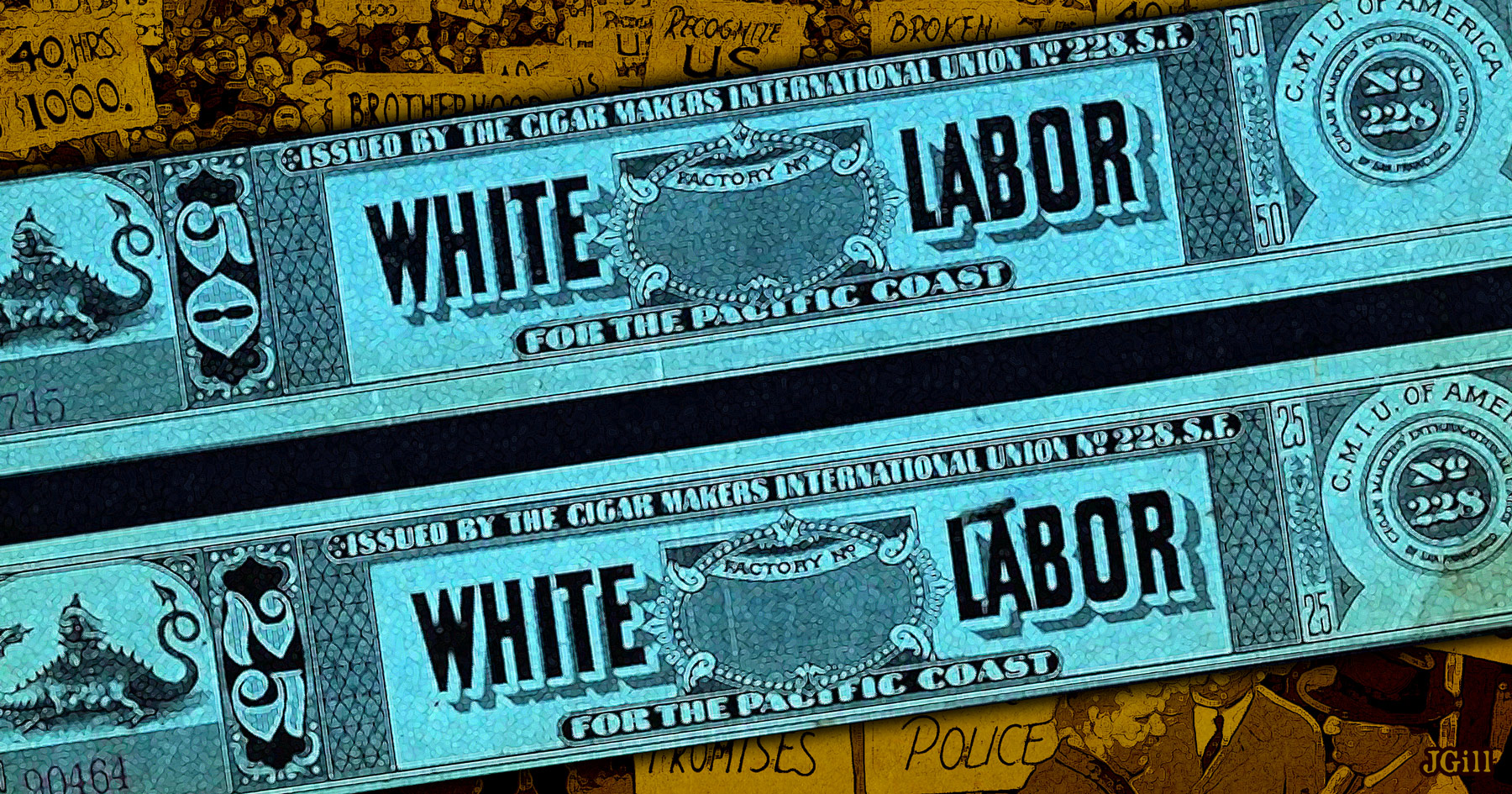
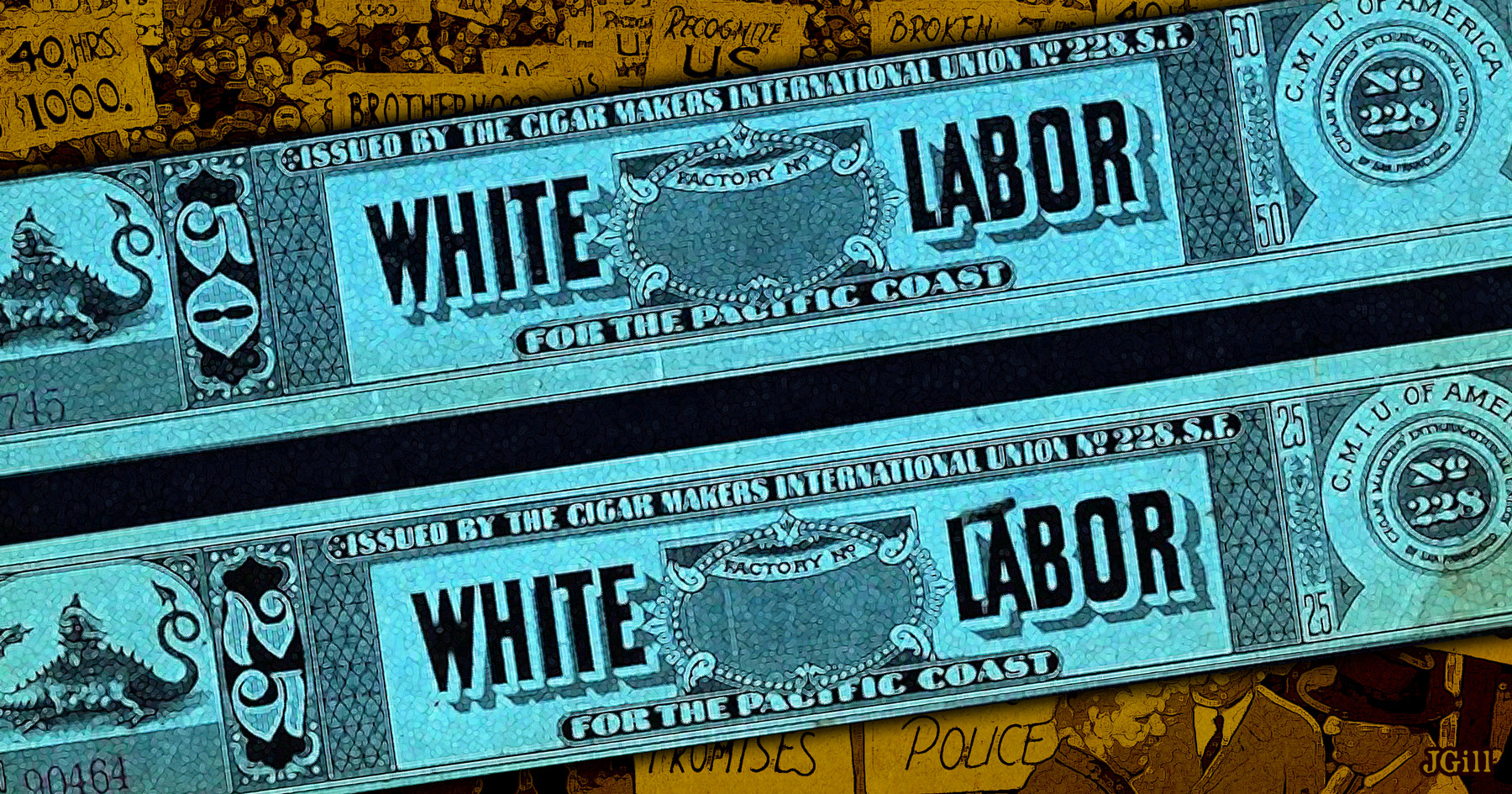
Sumner goes on to discuss the racist origins of the minimum wage in America, Australia, and South Africa. The purpose was pretty clearly to hurt poor workers. Minimum wage laws were established to protect white workers from cheap competition by darker skinned folk.

Sumner’s postscript is interesting: “The [American] Democratic surge of interest in the minimum wage occurred soon after the GOP surge of interest in immigration restriction. Let’s see if the GOP jumps on the minimum wage bandwagon.”

Of course, for every advocate of a class-​based, favoritist policy who argues deceptively, there are dozens who are merely mistaken.

This is Common Sense. I’m Paul Jacob.


Printable PDF

White labor and minimum wages


Categories
nannyism national politics & policies

For and Against?

Bad ideas take a person only so far.

Proponents of a widely destructive policy may be loath to relinquish it altogether when destructive consequences loom. Yet they may also loathe to see it applied consistently — because of the pain it’ll cause their particular gang.

Harm to others inflicted by lousy ideas? Fine!

Harm to yourself? Not fine!

Hence the semi-​reversal by Los Angeles union officials of their demand for a minimum wage of $15 an hour, recently approved by LA’s city council. Union leaders have been among the most ardent proponents of the new minimum, which until now they’ve insisted must be imposed equally, no exemptions for special hardship.

But now union reps like Rusty Hicks want exemptions for unionized companies so that unions are free to negotiate an agreement that, as Hicks puts it, “allows each party to prioritize what is important to them.” Wow! Sounds like he might favor free markets, in which parties to a trade participate, voluntarily, only when priorities are aligned and each expects to gain.

Many motives for Hicks’s contradictory stance are plausible. One is that the requested exception would encourage companies to unionize to escape burdensome new costs. Accept one burden to escape a worse one.

Instead of letting unions cripple all workplaces but their own, let’s “allow each party to prioritize what is important to them” across the board, by letting employers and employees negotiate without any political interference whatever.

This is Common Sense. I’m Paul Jacob.


Printable PDF

Labor Union Logic


Categories
Common Sense national politics & policies too much government

Chimps, Chumps, and the Minimum Wage

It’s time to talk minimum wage laws again!

Confession: I tend to understand some issues on the level of logic — of, even, common sense. A prohibition (which is what a minimum wage law is, forbidding payment at a rate below the “minimum”) doesn’t spur productivity, and it’s from increased productivity that we get general higher wages and wealth and progress itself.

Sure, there are “studies” that indicate otherwise. But, we don’t conduct field studies amongst chimps arranging their bananas to prove 2 + 2 = 4. If an experiment of chimp-​arranged bananas comes up with 3, I look for the chimp with the banana-​eating grin.

Anyway, there’s this new study about employment from 2007 – 2009, when the economy went into the toilet, and right after the national minimum wage was upped from $5.15 to $7.25 per hour.

The study’s authors look at employment broadly. They pride themselves on their careful assessment of “the minimum wage from an anti-​poverty perspective” and “its effects on the broader population of low-​skilled workers.…”

Off the top of my head, I marvel that anyone can distinguish one cause for unemployment (financial crash) from another (minimum wage law), but the authors make a pretty convincing case.

Their conclusion? “Our best estimate is that these minimum wage increases reduced the employment-​to-​population ratio of working age adults by 0.7 percentage points. This accounts for 14 percent of the total decline over the relevant time period.”

So, yes, they say, the last minimum wage hike led to higher unemployment.

Which is what I would suspect. Because of, you know … Common Sense.

I’m Paul Jacob.


Printable PDF

Unemployment Chimp


Categories
free trade & free markets too much government

Experience Denied

Jan Ellison is grateful for the low-​wage jobs she had as a kid.

“The difference from the way my own children are being raised is that I was acutely aware of the financial burden of these [educational and other] pursuits. . . . I made money of my own from age 11 onward. I had a paper route. I cleaned houses and swimming pools. I took clerical temp jobs. . . . I can’t say that any of this was important work, but the act of doing it mattered.”

She learned to “work for the ticket” that would take her to better things.

That minimum wage laws make it harder to gain such experience is a problem raised not by Ellison but by a Cafe Hayek reader, Mike Wilson, who calls her memoir “as powerful a case against raising the minimum wage as I have encountered.” (Strictly speaking, against establishing or enforcing any wage-​rate floor.)

Wilson’s sensible point is that when you’re just starting out in the work force, you must develop the habits and skills needed to do a job well and to then go beyond it. These include punctuality, mastering procedures, accepting corrections with grace, being civil, staying productive and careful when you’re tired, and more.

What you can bring immediately to a job is willingness to learn what’s necessary. But the higher your pay must be before you’ve made yourself worth that pay, the harder for employers to give you the chance to make yourself worth it.

This is Common Sense. I’m Paul Jacob.