Categories
obituary term limits

Ed Crane’s Beautiful Panacea

“A great light has gone out,” offered my friend Tom Palmer.

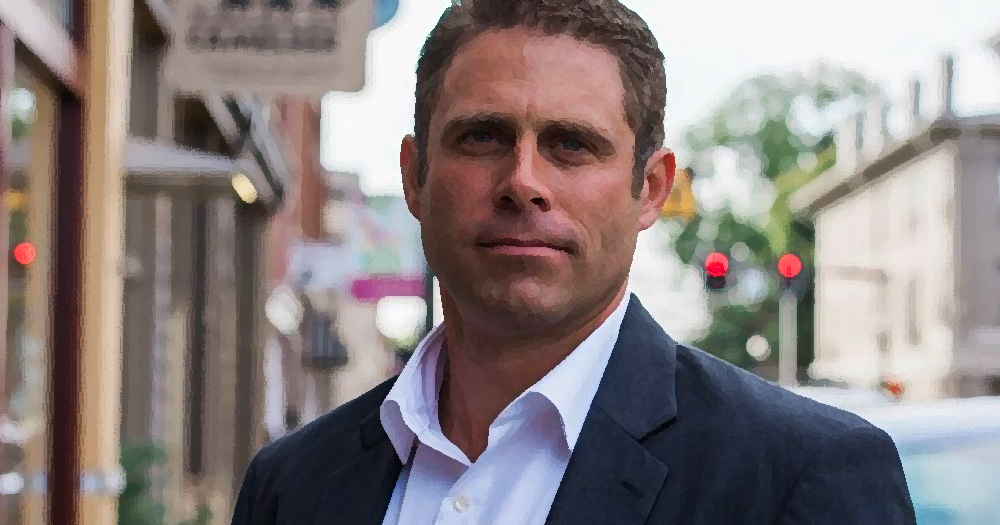
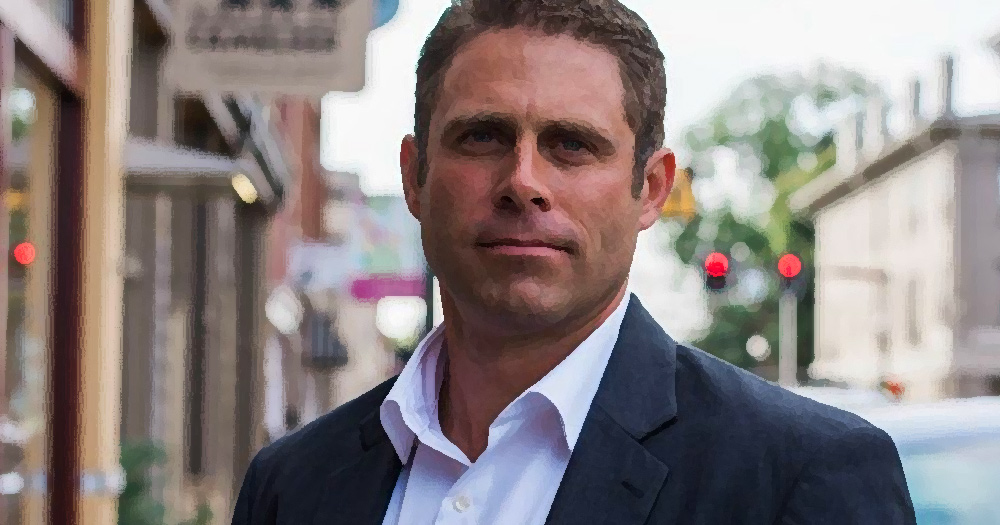
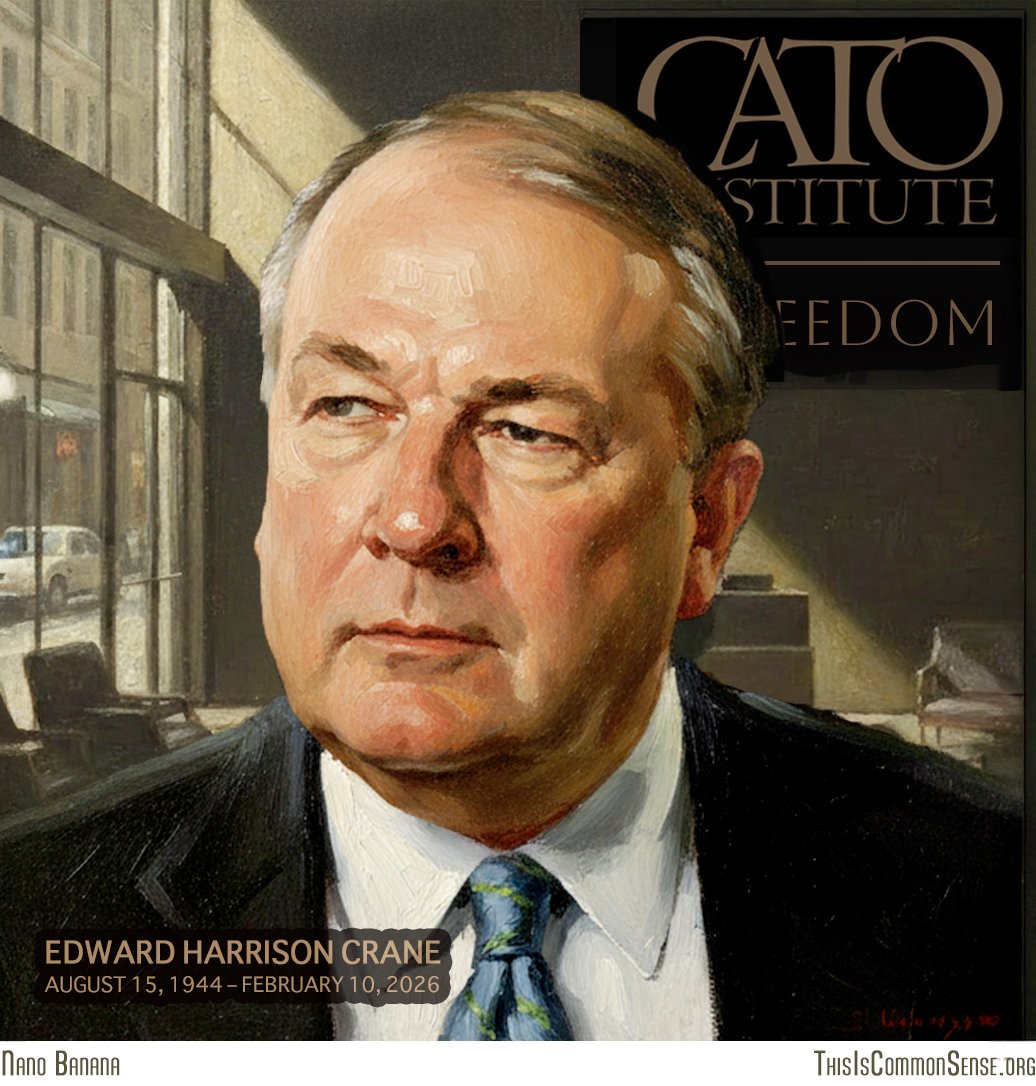
Ed Crane, the most important libertarian in my lifetime, passed away earlier this week, at age 81. 

“On the exclusive list of persons who have had the greatest impact on the pro-​liberty movement, Ed Crane’s name is preeminent,” wrote Bob Levy, chairman emeritus of Cato. “He built the Cato Institute from an inconspicuous, small-​scale operation into a public policy powerhouse — the world’s foremost proponent of individual liberty and limited government.” 

Years ago, my wife worked as Ed’s assistant and in other roles at the Institute. She even convinced him to give me a job in the mailroom. When I left Cato (and my mailroom career), I marched into his office and deadpanned: “Ed, I think I’ve taken Cato just as far as I can.” 

We both laughed. He seemed to have it well in hand from there.

Crane had already put the Libertarian Party on the map with Ed Clark’s impressive 1980 presidential run. That’s how I first got to know both Eds, serving (at age 19) as the chair of the Arkansas Libertarian Party and the Clark campaign. So glad to have been part of it; sad that it remains the high-​water mark for the party.

In his tribute, Bradley Smith, the former FEC Commissioner and now chairman and founder of the Institute for Free Speech, noted that “Ed was instrumental in helping to found the Institute for Free Speech — originally called the Center for Competitive Politics, a name Ed came up with (nobody’s perfect).”*

Still, as I told U.S. Term Limits head honcho Howie Rich, what comes to mind when I think about Ed is the fact he was the only person who loved term limits even more than we do.

Ed was a tireless advocate and Cato a leading producer of good information on the issue. Speaking about term limits, Ed would repeat the common refrain, “Folks say term limits are not a panacea.”

Only to counter: “Yes, they are.”

Thank you, Ed. 

This is Common Sense. I’m Paul Jacob.


P.S. Love and condolences to Kristina, Ed’s wife, who is spectacularly wonderful. I remember especially the early 1980s when she was the den mother to a motley crew of young libertarian activists and intellectuals then descending upon Washington, D.C. 


*  Smith tells an interesting story about Ed Crane: “In fact, it is often forgotten that he was one of the original plaintiffs in the landmark campaign finance case, Buckley v. Valeo (he often expressed, with his typical sarcasm, his disappointment that the case had not been captioned Crane v. Valeo.)”

PDF for printing

Illustration created with Nano Banana

See all recent commentary
(simplified and organized)
See recent popular posts
Categories
Common Sense individual achievement media and media people

Hate in Plain Sight

“Classy guy,” won’t be the moniker afforded comedian Bill Maher when his time on Earth comes to an end.

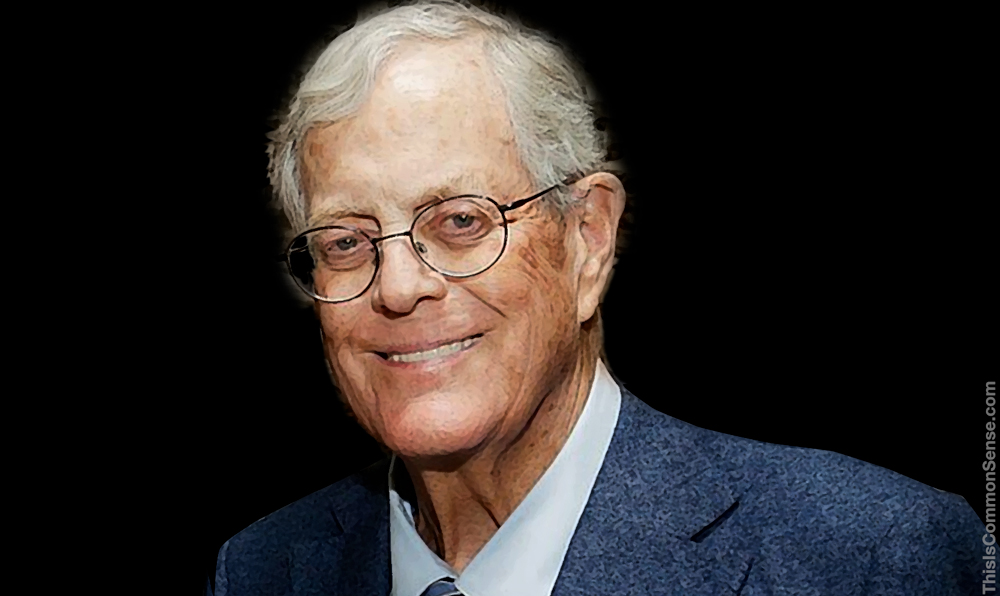
“I guess I’m going to have to reevaluate my low opinion of prostate cancer,” Maher told his HBO audience regarding the death of libertarian billionaire David Koch at 79.

“As for his remains,” continued Maher, “he has asked to be cremated and have his ashes blown into a child’s lungs.”

You get the tenor of his “humor.”

“[David Koch] and his brother have done more than anybody to fund climate-​science deniers for decades, so f — k him!” Maher argued. “I’m glad he’s dead, and I hope the end was painful.”

The HBO celeb likely hoped his crass takedown of the already deceased would go viral. “I know these seem like harsh words and harsh jokes,” Maher conceded, “and I’m sure I’ll be condemned on Fox News …”

But perhaps not reprimanded more universally, since such political viciousness has become ubiquitous. For instance, when a questioner at the Minnesota State Fair mentioned Koch’s passing, applause erupted. 

“I don’t applaud, you know, the death of somebody,” Sen. Bernie Sanders chided the crowd (to his credit). “We needn’t do that.”

Celebrating someone’s demise is sickening. Moreover, in the case of David Koch, and brother Charles, so many of the non-​stop political attacks have been erroneous — condemnation for positions they do not hold, for things they have not done. Not to mention ignoring all the wonderful benefits they have provided our society.

Bill Maher is a professional punk, so I’m not shocked. But David Koch was a hero.

This is Common Sense. I’m Paul Jacob.


N.B. Lovers of liberty lost another champion last week: Eric Dixon. For years, Eric has been a huge help to Common Sense in a myriad of important ways. He also assisted a number of other liberty-​oriented and free-​market groups, including U.S. Term Limits, the Cato Institute, Missouri’s Show Me Institute, the Atlas Network, the Libertarian Party, and more. A lot of people will miss Eric, not the least of whom will be me.

PDF for printing

David Koch

See all recent commentary
(simplified and organized)
See recent popular posts
Categories
free trade & free markets media and media people too much government

A Former Economist

Paul Krugman, New York Times columnist and former economist, tested our patience last week with “Trump’s Big Libertarian Experiment.” How many non sequiturs will squeak past the Gray Lady’s editorial department? 

Loads — and all about how the federal government shutdown gives limited government folks what they want: less government.

Subsidy checks to farmers aren’t going out, as “libertarian organizations like Cato” have long advocated. Sure. But it’s no policy change.

As soon as there’s a budget deal, those checks will be made up.

Further, “businesspeople are furious that the Small Business Administration isn’t making loans.” 

Well, it’s high time businesses were weaned off the SBA teat — and a few whiners do not a case for subsidy make.

And then there’s the Food and Drug Administration, which can no longer inspect foods. Since “there’s a long conservative tradition, going back to Milton Friedman, that condemns the F.D.A.’s existence as an unwarranted interference in the free market” libertarians must be pleased, eh?

There is also a long tradition among economists that says businesses don’t get rich poisoning their customers, and that there are many mechanisms in place — and, barring the FDA, more would be in place — to ensure customers that they won’t be infected by eating … Romaine lettuce.

Which then Krugman admits … as if he had belatedly recalled Friedman’s lesson in Capitalism and Freedom. He concedes that the shutdown is not the way Friedman would go about limiting government. Besides, “libertarian ideology isn’t a real force within the G.O.P.”

So what’s the point?

Krugman ends with talk of a smell test: does lack of food inspections smell like freedom?

Something stinks here. But it isn’t spoiled food. Or freedom.

This is Common Sense. I’m Paul Jacob.


PDF for printing

Paul Krugman, libertarianism, libertarian, freedom, shutdown

See all recent commentary
(simplified and organized)
See recent popular posts

Categories
general freedom initiative, referendum, and recall political challengers Popular

Spoiler Season

“Libertarians poll high enough to tip key races,” informs The Washington Times — citing contests for governorships and both houses of Congress.*

Libertarian Lucy Brenton is one example, running for U.S. Senate in Indiana. She grabbed 7 percent in a recent poll, greater than the margin between incumbent Democratic Sen. Joe Donnelly, who had 44 percent, and Republican challenger Mike Braun with 40 percent. The Times says Brenton is just one of “a number of Libertarians whose poll numbers are high enough to more than account for the difference between Republicans and Democrats in key midterm races.” 

She had garnered 5.5 percent in 2016, when she sought the state’s other U.S. Senate seat. 

There is disagreement over whether Libertarians help or hurt Republicans. Most folks suspect that Libertarians take votes away from Republicans, but polling appears to show Libertarians snagging more otherwise Democrat-​inclined voters.

No matter. As often discussed here, enacting Ranked Choice Voting is the rational institutional solution to the so-​called spoiler effect Libertarians present. It’s a win-​win for both so-​called major and minor political parties. 

“Libertarians bristle at the term ‘spoiler,’” the newspaper notes, “saying it’s a belittling term for a party that presents a viable option to voters.”

Which brings me to a second solution to Libertarians luring away your voters. Steal their issues. Take them and make them your own.

There’s no law against it.

No reform required.

“Libertarians are running against President Trump’s tariffs, immigration policy and record on spending …” explains The Times, and “are embracing … less taxation as well as marijuana legalization, criminal justice reform and ending the war on drugs.”

Fresh elections. Happy voting.

This is Common Sense. I’m Paul Jacob.


* It won’t change the outcome, but on Monday the Boston Globe endorsed Libertarian Dan Fishman for state auditor, writing: “An auditor without any partisan axes to grind could shake up the state.” That’s a different kind of spoiler.

PDF for printing


Categories
Common Sense

The Not-​Saint Timothy

Some people believe that aggression is physical force and nothing else. From this they derive the notion that only physical violence should be prosecuted — or, more generally, retaliated against with force. 

But it is obvious that some invasions of private property or personal space, with malice and anger and alarming unhinged-​ness, are aggressive.

And should be prosecuted in law.

Take the current case of Timothy Trybus, who is testing a further point of law that especially concerns those of us strongly motivated to focus on initiated force.*

“It is pretty clear,” writes Jacob Sullum in Reason, that the man “broke the law when he harassed Mia Irizarry for wearing a T‑shirt featuring the Puerto Rican flag at a park in Chicago last month.”

Mr. Trybus was drunk, and he “got in her face,” so to speak, challenging her in a not-​unusual nationalistic/​pseudo-​patriotic/​jingoistic fashion that seems old-​fashioned and up-​to-​date Trumpian:

  • “Why are you wearing that?”
  • “This is America!”
  • “If you’re an American citizen, you should not be wearing that shirt in America.”

Puerto Rico may not be a state, but … the proper reaction might have been to challenge the not-​Saint Timothy to a bit of patriotic one-​upmanship: “How can you be so un-​American as to object to an American commonwealth flag?”

He’s now being prosecuted for a hate crime as well as assault. Though he may never have touched the woman, his aggressiveness is legally regarded as a threat of force.

Understandably. But if the hate crime thing sticks, will antifa and other obvious anti-​American thugs be given that extra legal consideration in similar situations?

This is Common Sense. I’m Paul Jacob.


* Which, I confess, I like to think of as “all civilized people.” But I may be optimistic. Reducing violence is an almost universal desire, and the question of who started violence is nearly universal. But the focus is, well, in our times called “libertarian.”

PDF for printing


Photo from Max Pixel


Categories
general freedom individual achievement local leaders political challengers responsibility

Liberty Rising?

“Let me make something very clear,” Nick Freitas stated unequivocally. “I don’t have a political career.”

Freitas, a Republican member of Virginia’s House of Delegates announcing his candidacy for the United States Senate, was responding to advice that running against incumbent Sen. Tim Kaine “could hurt [his] political career.”

It’s music to my ears. And to Matt Kibbe’s. The leader of Free the People calls Freitas “the most interesting liberty Republican you’ve never heard of.” 

Yet, in Virginia’s conservative networks, Freitas has made quite a name for himself, defending the Second Amendment and fighting Medicaid expansion in a one-​seat GOP-​majority House. 

“You can’t fix everything through government force and coercion,” he explained to Kibbe. “If the path we’re going down, which is just ‘let us manage the federal government as it continues to expand, as it continues to increase debt,’ that’s just not a Republican Party I’m interested in.”

Del. Freitas added that the American people seem similarly uninterested.

Perhaps he is simply telling us what we want to hear. He wouldn’t be the first bait-​and-​switch politician. But Freitas isn’t exactly playing for the bleachers by naming Calvin Coolidge rather than Ronald Reagan as “the best president of the 20th century.”

And he talks about individual liberty, which, he explains, is “based off the premise that I have a right to pursue happiness in accordance of what my definition of happiness is, so far as it doesn’t infringe on your right to do the same thing.”

He had me with “I don’t have a political career.”

This is Common Sense. I’m Paul Jacob.


PDF for printing


Categories
Accountability ballot access folly media and media people moral hazard national politics & policies political challengers term limits

If This Be Blackmail…

The Republican Party now boasts of more positions of power than … ever? And yet the GOP is in danger of falling apart.

The Democrats, now forced to endure Hillary Clinton’s new absurdity, What Happened, appear at wits’ end. They just do not “get it.”

Alas, “not getting it” is not limited to the major parties. The Libertarian Party (which is my subject this week) has been around since 1972 … doing the same things over and over … with spectacular lack of electoral success.*

Sure, the party has had no small subtle influence — perhaps most notably the change in marijuana policies. Yet it could have even more. Without electing anybody, as I argued yesterday.

But that’s just the tip of the Titanic-killer. 

Not only could party organizers threaten the major parties with running — and taking away votes — based on their candidates’ positions, Libertarian organizers could also threaten to run against candidates who will not publicly take up the cause of electoral reform.

Particularly, ranked choice voting.

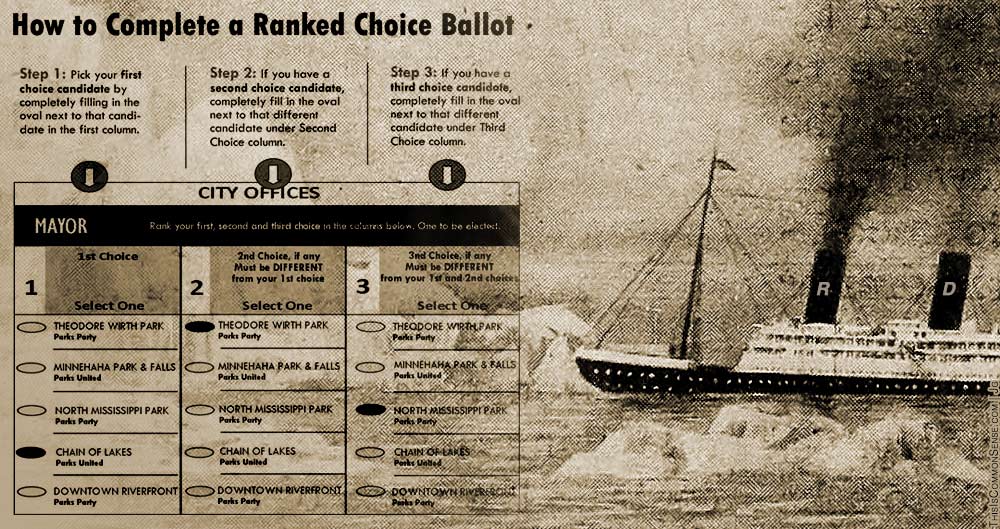
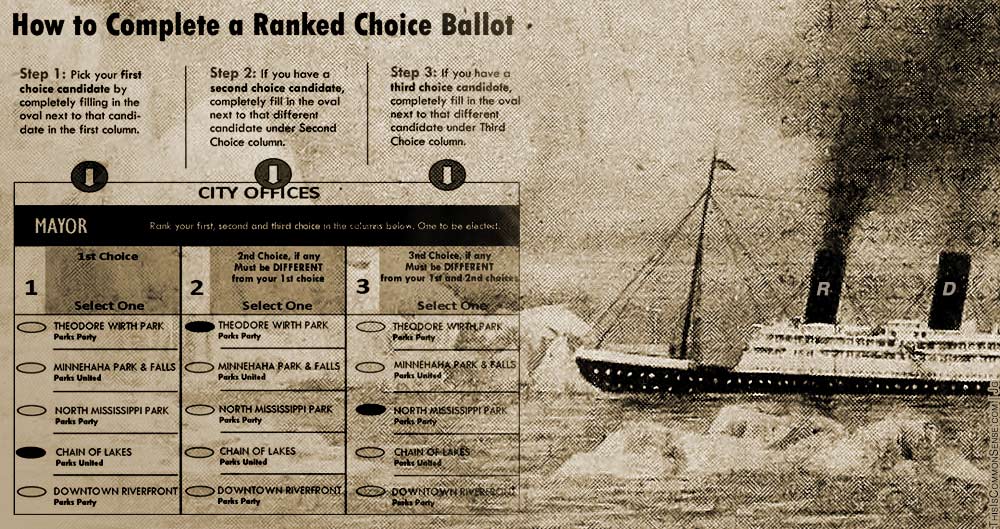
Because of our first-​past-​the-​post elections, Libertarians tend to take away votes from those most similar to themselves. With ranked choice voting (see a sample ballot), a voter whose favorite is a Libertarian will have his second-​favorite choice count** towards that candidate; minor party candidates would no longer work as spoilers. 

And that would allow voters to embrace their real preferences, not pretend to like candidates they actually distrust.

Since major party candidates would, in most circumstances, be hurt less by those closest to them, they should be willing to be “blackmailed” on this.

Jumping into the briar patch of supporting fresh reform to stop the spoilers.

This is Common Sense. I’m Paul Jacob.


*  The 3 million odd votes for the Johnson/​Weld presidential ticket, though a leap ahead from previous outings, was seen by many as a disappointment: that’s all the dynamic duo of former governors could do in a year with the unpopular duo of Trump and Clinton as R and D standard-bearers? 

** That is, in cases where only a small percentage of the vote favors the Libertarian most.


PDF for printing


Categories
general freedom incumbents local leaders national politics & policies political challengers

The Reverse of the “Spoiler Effect”

“Voter surveys have found the GOP-​controlled Congress,” I wrote last weekend at Townhall, “to be more popular among self-​described Democrats than self-​described Republicans.”

Why? Because Republican politicians are proving themselves unable — even unwilling — to legislate as they have promised. One word: Obamacare. And few dare actually cut spending on anything … though they campaign on something (mythical?) called “fiscal responsibility.”

This leaves the GOP open to challenge. By the party I mentioned yesterday on this page.

And that can prove disastrous for the Republicans, for our elections in these United States are not run, on the whole, on reasonable grounds. They are “first past the post” elections, where, if enough people vote for their most favorite candidate it ensures that their least favorite candidate wins.

In those races where allegedly “small government”/“fiscally responsible” Republicans are challenged by serious budget-​slashing Libertarians, the Libertarian candidacy can have the effect of electing a Big Government/​Pro-​Debt Democrat.*

Yet the actual political outcome of these challenges could be positive — yes, for the GOP. As I wrote yesterday, the Virginia Libertarian gubernatorial candidate seems to be influencing the Republican to be less of a “jail ’em all” Drug Warrior. 

When Republicans adopt pro-​freedom positions they’ll win more votes.

Moreover, this influence need not be ad hoc.

State Libertarian Party officials could identify the most critical issues and negotiate directly with state GOP officials: “These are our issues — if your incumbents vote correctly on these issues, we will not challenge them. But if not, we will take them out.

“And if we help elect Democrats, that’s on your head.”

This is Common Sense. I’m Paul Jacob.


* There may be cases where the Libertarians — when focusing on issues such as drug legalization and peace — have cost Democrats elections. If so, Libertarians ought similarly leverage Democrats in those areas to improve their positions on those issues.


PDF for printing


Categories
Accountability media and media people national politics & policies political challengers

Remember the Rigged Election?

Remember the 2016 presidential election?

You know, the contest that still bedevils us? The one allegedly rigged by the Russians and fake news? The one the outcome of which Michael Moore (and others) suggested, even this week, should be overturned by “the courts” simply by installing Hillary Clinton as president?

Turns out one major element of the election process was rigged: the debates run by the Commission on Presidential Debates.*

At least, U.S. District Judge Tanya Chutkan has ruled** that, “In sum, with respect to Plaintiffs’ allegation that the FEC acted arbitrarily and capriciously and contrary to law when it dismissed their two administrative complaints, this court agrees.…”

The plaintiffs*** are Level the Playing Field (LPF), the Green Party, the Libertarian National Committee, and Dr. Peter Ackerman. They sued the Federal Election Commission because the FEC, as the judge wrote, “stuck its head in the sand and ignored the evidence.” Prior to the lawsuit, LPF and others had filed complaints and asked the FEC to establish fair rules. They were told to go play in — er, far away from — traffic.

“The FEC was the defendant in the case,” explained IVN News, “but the real villain in the story is the Commission on Presidential Debates (CPD), a private organization … dominated by Democratic and Republican party stalwarts.”

Under federal law, the FEC, itself organized along bipartisan lines, is charged with ensuring that the CPD is using “objective” criteria, which doesn’t arbitrarily exclude independent and minor party candidates.

Now, thankfully, the court has ordered the FEC to come back, by April 3, with new thinking on how to ensure fair and open presidential debates.

This is Common Sense. I’m Paul Jacob.


* The problems with the presidential debate rules and the CPD itself were covered extensively last year in these four commentaries: “Smash the Duopoly,” “The Media’s Job,” “The Stupidity of 15,” and “The Two-​Product Economic System.”

** Tellingly, there’s been scant news coverage of the court decision except by IVN News, the Independent Voter Network website, and … RT, the Russian government’s TV channel.

*** The case is Level the Playing Field, et al v. Federal Election Commission.


Printable PDF


Categories
general freedom meme nannyism too much government

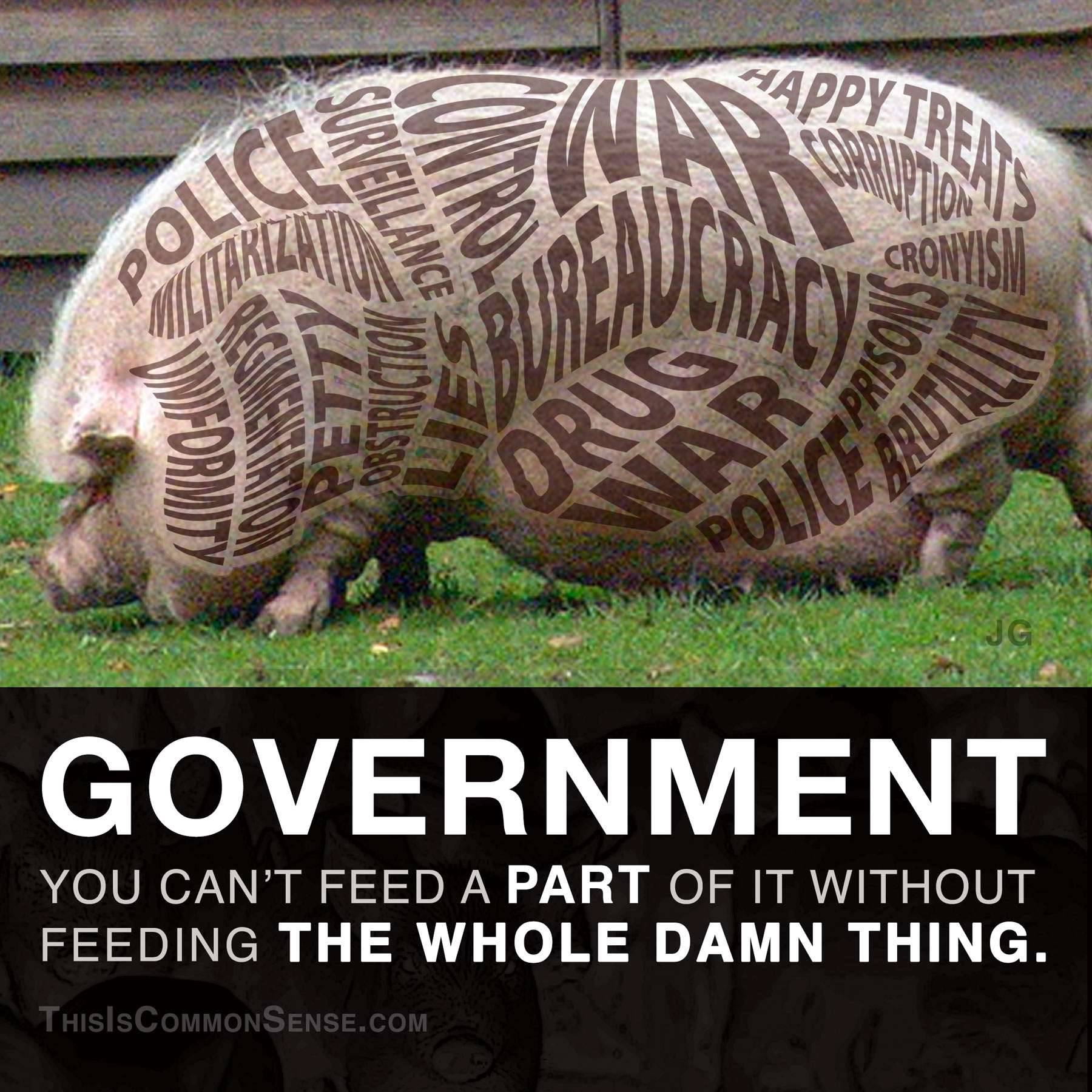
Government

You can’t feed a part of it without feeding the whole damn thing.


Click below for a high resolution version of this image:

big government, abuse, war, drug war, bureaucracy, libertarian, libertarianism, liberty, statism, statists, meme, illustration, Common Sense, James Gill, Paul Jacob