Categories
crime and punishment general freedom moral hazard nannyism national politics & policies privacy responsibility too much government U.S. Constitution

Too Healthy to Play

Cannabis oil can prevent the seizures of at least some victims of epilepsy. But the hope this medicine provides is too often undercut by fear.

I discussed, a few days ago, the case of 15-year-old David Brill, whose life is in danger because officials forcibly removed him from the care of his parents. His mom and dad had (illegally) let him smoke pot — which stopped his seizures. Now they’re fighting to recover custody of David and save his life.

Somewhat different is the plight of an aspiring football player at Auburn University.

Early in 2017, the would-be safety in question, C.J. Harris, began taking cannabis oil to stop epileptic seizures. He has suffered no seizures in all the months since. And he’s in no legal trouble.

But Auburn University’s football team has rescinded its offer to join the team. Exactly why he won’t be allowed to play is unclear. One would guess it is because of the National Collegiate Athletic Association’s ban on cannabis oil, even if prescribed. But the team’s medical personnel says they’re only concerned about his health given his history and the roughness of football.

Does Auburn apply the same standard to all players who have recovered from major physical setbacks? Or, rather, does the team typically let players return to play as soon as they’re ready and able?

Whatever is keeping him off the field, the factors that should decide the question are being shunted aside.

One, is C.J. Harris healthy enough and skilled enough to play for Auburn?

Two, is C.J. Harris willing to accept the risks involved?

This is Common Sense. I’m Paul Jacob.



PDF for printing


Categories
crime and punishment education and schooling folly general freedom moral hazard privacy responsibility too much government U.S. Constitution

Ecstatic with Independence

Utah’s legislature unanimously passed it; the governor signed it — the nation’s first measure protecting what’s become known as “free-range parenting.”

It was once known simply as “parenting.”

Certain activities are now exempt from a state law criminalizing child neglect. Children may legally “walk, run or bike to and from school, travel to commercial or recreational facilities, play outside and remain at home unattended” — thereby allowing “a child, whose basic needs are met and who is of sufficient age and maturity to avoid harm or unreasonable risk of harm, to engage in independent activities . . .”

Back in the day, we apparently played outside in a sort of statutory limbo.

Do we really need a law saying kids can walk on a public street?

Sadly, yes: government agencies across the country are grossly violating the most basic rights of parents to rear independent children.

Regular readers may recall my 2015 defenses* of the Meitiv parents against the absurd charge of “unsubstantiated neglect” leveled against them by Montgomery County (Maryland) Child Protective Services. Ultimately, Maryland authorities acknowledged that permitting one’s kids (in the Meitivs’ case, a 10- and a 6-year-old) to walk on a public sidewalk (from a local park) wasn’t prima facie evidence of a crime. 

The current free-range parenting movement was launched in 2008 when Lenore Skenazy publicly admitted — to mass shock and condemnation — to allowing her 9-year-old son to take a trip alone on New York City’s subway.

“My son got home,” she wrote in the New York Sun, “ecstatic with independence.”

Notice how rare it is to find anyone ecstatic with dependence.

Lesson? An old one: Happiness must be pursued with freedom.

This is Common Sense. I’m Paul Jacob.

 

* My writings on the Meitivs’ battle to keep their kids:


PDF for printing


Categories
crime and punishment folly general freedom local leaders moral hazard nannyism privacy responsibility too much government

The Winds of Regulation

Among the many goofy occupational licensing laws in these United States, Arizona’s licensing for professional blow-drying services is up there with the silliest. 

“Under current law, using a blow-dryer on someone else’s hair, for money, requires more than 1,000 hours of training and an expensive state-issued license,” we learn at Reason. “Blow-drying hair without a license could — incredibly — land you in jail for up to six months.”

This came into the news because of a campaign to deregulate the cosmetology industry — just a bit, anyway. Gov. Doug Ducey, in his recent State of the State address, “mocked the state agency that licenses stylists, barbers, nail technicians and affiliated professionals in Arizona, and endorsed legislation to remove training requirements for those who simply wash, brush and blow-dry customers’ hair.”

Licensed cosmetologists — well, at least some organized ones — have gone into a tizzy.

Hardly surprising, since occupational licensing, though usually argued for on consumer safety grounds, rarely finds consumers clamoring for it. 

It’s groups of established businesses, professionals.*

Brandy Wells, the sole non-cosmetologist on the state board overseeing the regulation of the industry, supports the liberalizing bill. So of course she has been called every name in the book. But even she was amused by one stylish denigration: “your logic on deregulation of cosmetology is much like your hair, dull and flat.”

The issue may seem trivial, with not all that much on the line — though jobs are . . . and freedom is

But it doesn’t lack for hot air.

This is Common Sense. I’m Paul Jacob.

 

* As Adam Smith argued, whenever businessmen (“dealers”) in the same industry group together, their proposals should be listened to “with great precaution.”


PDF for printing


Categories
crime and punishment folly free trade & free markets general freedom nannyism too much government

Beaver State Bliss

The Great State of Oregon is not at DEFCON 1. Nor are Beaver State residents gnashing their teeth over a new law that went into effect earlier this week.

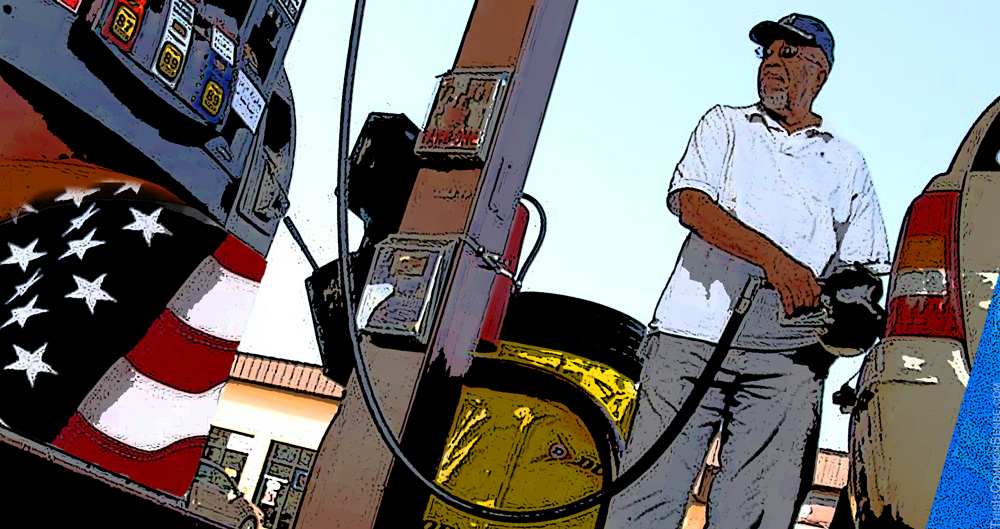
News reports proclaimed: “People in Oregon are freaking out about the thought of pumping their own gas under a new law.” But don’t believe everything you read.

For starters, Oregon’s new law doesn’t actually force anyone to do anything. It merely allows “retailers in counties with a population of less than 40,000 . . . to have self-service gas pumps.”

But a Facebook post by KTVL CBS 10 News in Medford took it an apparently frightening step further, asking, “Do you think Oregon should allow self-serve gas stations statewide?” The post went viral nationwide because of responses such as this:

I’ve lived in this state all my life and I REFUSE to pump my own gas . . .

This [is] a service only qualified people should perform. I will literally park at the pump and wait until someone pumps my gas.

Oregon is one of only two states — New Jersey, the other — where gas stations are banned from permitting customers to put gas in their own cars. Folks in the other 48 states have managed, as one Facebooker explained, “to pump gas without spilling the whole tank and triggering a Star Wars-style explosion.”

Still, if Oregonians so revere their regulatory regime, protecting them from the indignity of pumping gas, why change the law even partially?

Well, for economic reasons. As you might expect, gas stations across rural Oregon were closing at night, stranding many motorists.

Freer markets offer greater protection for real people . . . those not too perplexed by the prospect of pumping their own petrol.

This is Common Sense. I’m Paul Jacob.


PDF for printing


Categories
crime and punishment folly general freedom ideological culture moral hazard nannyism

Loco Micro Repression

Close but no cakewalk prize.

Modern social justice advocates sometimes come up with legitimate complaints . . . only to wander off terra firma and into cloud-cuckoo land.

“Microaggressions” is one of these airy wanderings, and Katherine Timpf has spotted another in the ever-growing catalog of social justice beefs:

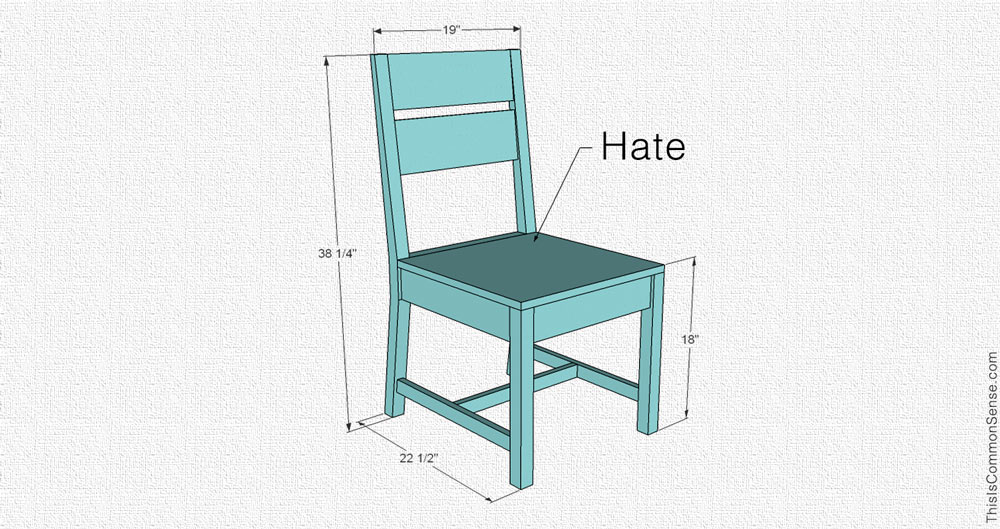
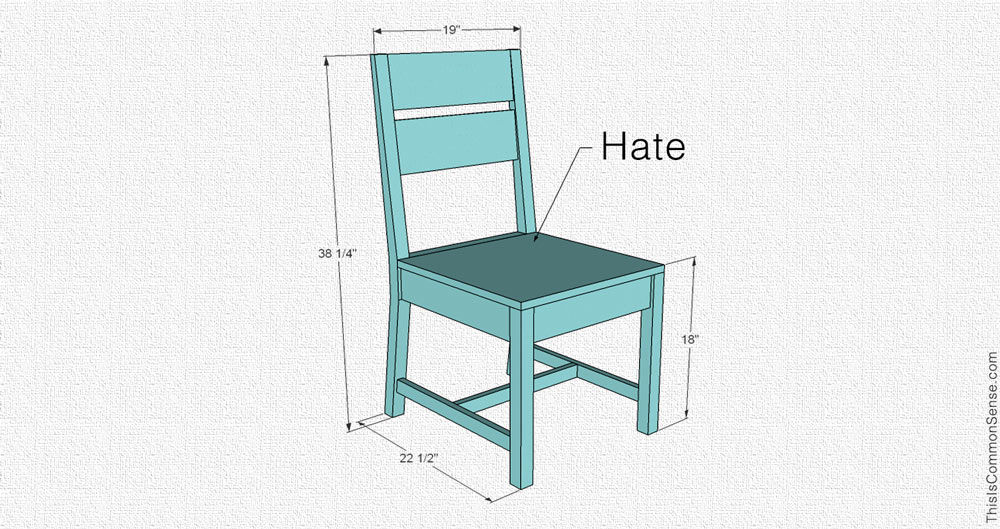
The size of our society’s chairs is now being considered a “microaggression” against overweight people, according to a guide released by The New School, a private college in New York City.

Proponents of this cause, Timpf notes, insist that “Microaggression is not ‘Micro’ in Impact,” and that the best response to faux pas, slights, indelicacies, and what-have-you is snitching to the administration and intervention from same. Quite overbearing, if you ask me. During my too brief college stint it would have been considered an insult — a microaggression? — to think that young adults could not handle minor affronts such as so helpfully listed at The New School.

But let’s get real here. Microaggressions do not justify treating adults as children and setting up college administrators as in loco parentis tribunals — much less Molotov cocktails, sucker punches or bike locks in socks. At best, as has been pointed out elsewhere, Ned’s microaggression justifies Zed’s microretaliation. Nothing more.

So how does one micro-respond?

Manners; etiquette.

In olden times, a well-mannered person, when snubbed or otherwise insulted had the option of responding with a cutting remark . . . without any actual cutting, without even raising the tone of his or her voice.

Activists and collegians really should look into it.

And not bring up chair size: the micro-chair/macro-posterior issue has too many “microaggressive” jokes built into it.

This is Common Sense. I’m Paul Jacob.


PDF for printing


Categories
crime and punishment general freedom local leaders moral hazard nannyism responsibility too much government

Decriminalizing Balloon Release

I’m sure I disagree with most of the policies California Governor Jerry Brown seeks to propose and impose. But let’s give credit where credit is due. He’s right that people should not be treated like criminals when in a burst of celebratory excess they commit the sin of unleashing helium balloons.

California lawmakers thought it would be smart to make criminals out of toddlers and other Snidely Whiplashes who “willfully release” helium balloons made of electrically conductive material.

The potential problem is real enough. When the balloons collide with power lines, they may cause power surges or brief power outages. Squirrels and birds can also cause power outages, and are far more likely to do so. Luckily, though, nobody (so far) has thought of prosecuting wayward warblers.

In vetoing the legislation to criminalize balloon release, Governor Brown said he didn’t believe “that expanded criminal liability is the best solution to the problem of electrically conductive balloons interfering with power lines. As I have said before, our Penal Code is already far too complex and unnecessarily proscriptive. Criminal penalties are not the solution to every problem.”

Correct.

Brown’s veto message may seem like simple common sense. But in an age in which kids can be suspended from school for doodling a gun or carrying a maple leaf, we have learned that rudimentary reasonableness is not necessarily standard operating procedure.

Hence, any instance of firmly refraining from lunacy must receive our heartfelt thanks and appreciation.

This is Common Sense. I’m Paul Jacob.


PDF for printing


Categories
general freedom local leaders national politics & policies political challengers U.S. Constitution

Wag that Tail, Dog

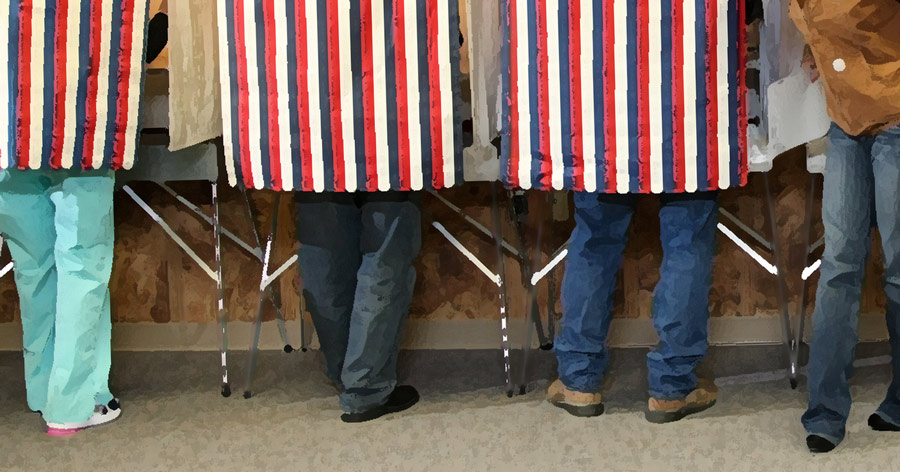
Last November, Maine voters passed a ballot measure, Question 5, to begin electing their federal representatives to Congress, and their governor and state legislators, using Ranked Choice Voting. This selection mechanism allows voters to rank their choices, thereby removing the “spoiler effect” that often pushes citizens to support the lesser of two popular evils.*

Last month, Maine’s State Senate submitted advisory questions to the Maine Supreme Court about the new law’s constitutionality.

It is indeed constitutional. “Those who argue that ranked-choice voting conflicts with the Constitution,” explained Marshall Tinkle** in the Bangor News, “seem to be reading things into it that simply are not in the text.”

Last week, the Maine Supreme Court heard oral arguments. Justices Donald Alexander and Joseph Jabar seemed concerned about ranked-choice voting making it easier to vote for the person and not the party.

That’s not unconstitutional. But is it somehow bad?

“We are going to have a lot of people abandoning the political parties if ranked-choice voting remains,” argued Alexander. Or perhaps the parties might better serve voters?

The attorney representing the Committee for Ranked Choice Voting, James Kilbreth, reminded the justices that the voters have spoken, and as to the resistance by legislators in implementing their will, he remarked, “This is the tail-wagging-the-dog kind of problem.”

The courtroom broke out in laughter when Chief Justice Leigh Saufley responded, “Mr. Kilbreth, it’s a fairly large tail.”

I’m a big fan of ranked choice voting***, but the court’s decision is not about the policy. It’s about whether the dog (the people) will wag the tail (the legislators) or vice-versa.

This is Common Sense. I’m Paul Jacob.

 

* Portland, the state’s largest city, has used ranked choice voting since 2011.

** And Tinkle should know, since he “wrote the book” on the subject — the reference book, The Maine Constitution.

*** I serve on the Board of Directors of FairVote, an organization that promotes ranked choice voting and other methods to make every person’s vote count.


Printable PDF


Categories
crime and punishment free trade & free markets general freedom meme moral hazard national politics & policies too much government

Which is more dangerous?

Corporations cannot and do not tax, conscript, and kill under claim of legal authority to do so.
Only governments do that. 

Click below for a high resolution version of the image:
corporations, government, power, danger, government vs. corporation, which is more dangerous, law, corruption, meme, illustration, Jim Gill, Paul Jacob, Common Sense
Categories
crime and punishment folly general freedom media and media people national politics & policies too much government

Not Buying a Stairway to Riches

I am not a writer by trade. I don’t make a living off of these daily and weekly writing gigs. I give this stuff away, for free. The donations I ask for are there to cover bandwidth, website expertise, artwork, etc. They don’t cover my contributions.

But that doesn’t disqualify me from my occasional wonder and amazement (and worse) at how intellectual “property” is handled in America.

This week a Los Angeles jury found that the great rock band “Led Zeppelin did not plagiarize the opening chords of the rock epic Stairway to Heaven from the U.S. band Spirit,” the BBC reports. “It said the riff Led Zeppelin was accused of taking from Spirit’s 1967 song Taurus ‘was not intrinsically similar’ to Stairway’s opening.”

So, my surprise, and perhaps yours too, is that a riff, a mere riff, taken from one song and put into another, could be actionable at law. It seems to me that this would be like suing over an essay title (one has no private property rights to your headlines, no matter how original), or clever turn of phrase. Writers copy this stuff all the time. Even more commonly, they inadvertently regurgitate these writerly “riffs” from the far corners of their minds, or even think up these things separately.

But honestly, I didn’t think one could sue over a riff. Riffs and chord progressions vary in originality, but some of the best songs use the same three chords, so there is a lot of apparent “stealing” going on.

Thankfully, the jury wisely knew the difference between What Is and What Should Never Be.

This is Common Sense. I’m Paul Jacob.


Printable PDF

Led Zeppelin, copyright, lawsuit


Categories
Accountability crime and punishment general freedom nannyism national politics & policies

Beggar Thy Philanthropist

Making up petty rules and enforcing them is one thing governments do well.

On Monday I warned about the dangers of asking too much from government. I think, today, I’ll make the opposite warning: of not asking enough.

Mandatory seatbelt laws were enacted (sometimes by citizens initiative and referendum) to save people’s lives. But the reason many police and local jurisdictions like these laws is that it gives them a chance to engage in shakedowns, entrapping citizens into non-compliance, and then socking them with fines.

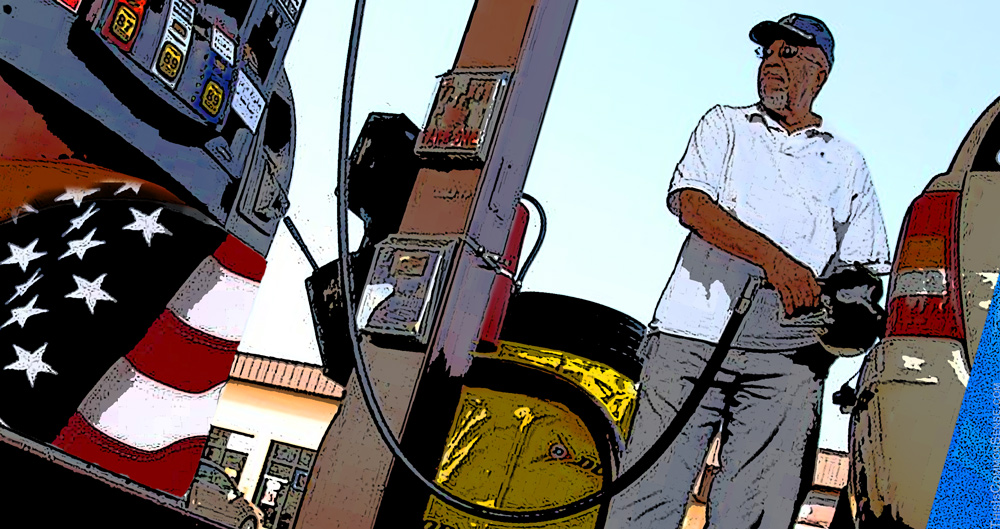
In Regina, Saskatchewan, a man pulled up to an intersection and saw a down-and-outer with a sign. He felt sorry for him, so, as he pulled up, he unbuckled his seat belt and pulled three bucks in change out of his pocket. And dropped the three dollars on the curb.

A few moments later, police stopped him, and handed him a ticket. The “homeless guy” with the sign turned out to have been an undercover cop, and the few moments without a seat belt was enough to charge our philanthropist $175 Canadian.

Though an obviously preposterous misuse of police time and attention, and an abuse of the citizenry, Regina’s police force remains adamantine, claiming that “this is nothing new. It’s part of a project that has police watching for traffic violations at intersections.”

Because this sort of thing only hits people almost at random, but the benefits are concentrated on police coffers, it’s hard to organize against such nonsense. Which is precisely why such nonsense goes on.

Still, we must prevent such abuse at the local level, if we’re ever to control the federal leviathan.

This is Common Sense. I’m Paul Jacob.

Printable PDF

seatbelt, trap, police, Regina, Saskatchewan, illustration