Categories
Accountability deficits and debt national politics & policies subsidy

What a Relief

Based on a quick look at the Edward M. Kennedy Institute for the United States Senate’s splash page, I wasn’t immediately sure what, precisely, the institute’s raison d’être might be. On the top menu bar there’s a slogan: “Just Vote.” Big clue? 

On the About page, though, we are told its mission: “educating the public about the important role of the Senate in our government, encouraging participatory democracy, invigorating civil discourse, and inspiring the next generation of citizens and leaders to engage in the civic life of their communities.”

As for the vision thing, that’s supplied by its namesake, Ted “I Survived Chappaquiddick” Kennedy: “To preserve our vibrant democracy for future generations, I believe it is critical to have a place where citizens can go to learn first-hand about the Senate’s important role in our system of government.”

I guess that explains why the institute’s Boston location sports a replica room of the U.S. Senate chambers.

Which costs serious money, of course.

Paid for entirely by the ultra-rich Kennedys?

Fact check: no. 

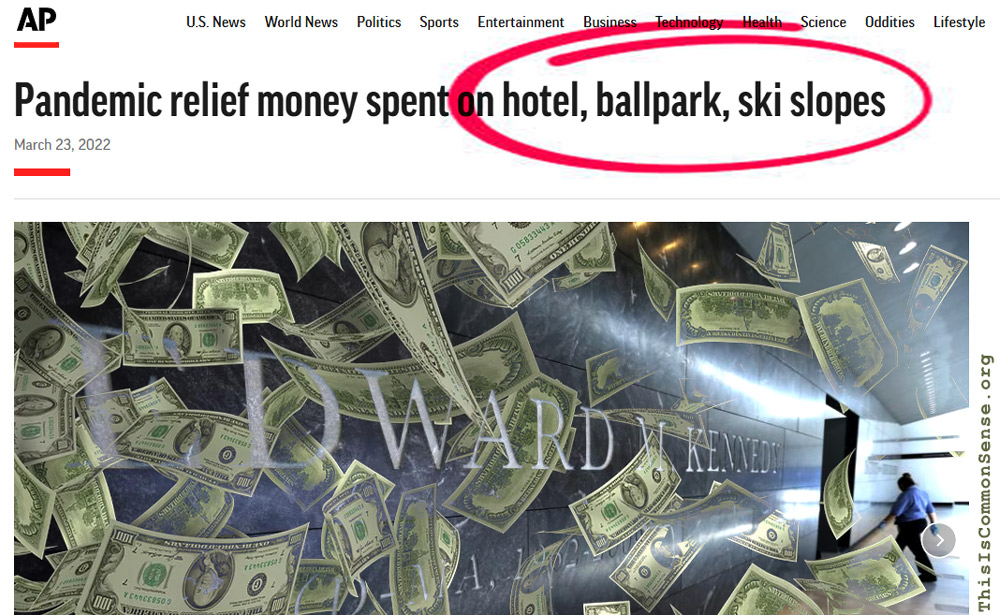
Some of it is paid for by you and me — courtesy of Congress and COVID!

You see, part of last year’s $350 billion in pandemic relief went to Boston’s memorial outfit for its once-favored now-deceased multi-millionaire politician. Five million bucks, it turns out, was used (the AP tell us) to pay off the institute’s debt. 

But don’t worry: the Kennedy Institute wasn’t singled out. Relief funds — which you might think would focus on struggling local libraries, community centers, and the like — also went to building a posh hotel and a minor league baseball stadium. And much, much more.

While politicians are good at spending money, especially for “emergencies,” they aren’t good at spending it well.

This is Common Sense. I’m Paul Jacob.


PDF for printing

See all recent commentary
(simplified and organized)
See recent popular posts

Categories
porkbarrel politics subsidy too much government

Up-to-Date in Kansas City?

Eight-hundred million bucks. 

That’s the investment that “Meta” — the umbrella outfit that owns Facebook, Instagram and WhatsApp — has agreed to invest in a patch of land in Kansas City’s Northland. The plan is to build a data center at an 882-acred development site. 

“Political leaders who gathered at Union Station heralded the news as a major development for Kansas City and the state.” This private investment “would far surpass the scale of recent projects in the region . . . said Missouri Gov. Mike Parson,” The Kansas City Star relates.

But there’s more.

“Meta spokeswoman Melanie Roe said the company could invest as much as $40 billion at the site in land acquisition, construction, and development of a larger data center.” This is to be a “long term partnership.”

Make that a Big Business/Big Government partnership. The biggest ever, perhaps.

The Kansas City Council had unanimously approved a development plan for the site last April, with data centers there enabled to access to more than $8 billion in local tax incentives. “Incentive watchdog group Good Jobs First says such an incentive award would be the largest ever in American history,” The Kansas City Star explains.

Take it as a word of caution. This is not laissez faire capitalism. This is not “the free market.” It is favoritism. It unites big business and big government.

And even as an investment in future taxes — which is the ostensible justification for the subsidies — the data complex is slated to employ about a hundred workers.

Politicians don’t make the best investors. But they do make easy marks for big corporations.

This is Common Sense. I’m Paul Jacob.


PDF for printing

See all recent commentary
(simplified and organized)
See recent popular posts

Categories
Accountability folly free trade & free markets local leaders moral hazard nannyism porkbarrel politics responsibility too much government

Small Target, Big Subsidy

Something has gone wrong when, to get a tenant to move into an empty space in your prime-location building, you need a $4 million subsidy.

And when I say “prime location,” I’m not engaging in Trumpian over-statement. The downtown Denver, Colorado, property location sees over 35,000 pedestrians per day . . . and that’s with the primo slot empty.

But to get that slot filled, the owners have negotiated with the city government to nab a $2 million “incentive” to fix the place up for Target, which is thinking of leasing the location to put up a smaller-than-usual “flexible-format” store. Oh, and another $2 million for “operational” costs, which seems to be some kind of a loan to be paid back from taxes to be collected — and shared by the city for 20 years with the owners.

In other words, it’s the darnedest business deal you’ll ever see (and never get): up-front money not from a bank or investors, but from Denver’s city government “BIF” — Business Investment Fund — which is obviously part of a convoluted scheme fed by taxes and devised by . . . people I wouldn’t trust with my money.

Structuring deals like this is how modern cronies — er, cities — operate, I know. Am I alone in judging it corrupt on the surface and corrupting in the details?

If prime commercial property has gone unused for about a decade — as this three-storied mall space has — I’d think that maybe the owners have set the rents too high or the city has been a bit too greedy with taxes.

Or both.

This is Common Sense. I’m Paul Jacob.


Printable PDF


Categories
Accountability government transparency insider corruption local leaders responsibility

Of Protests & Politicians

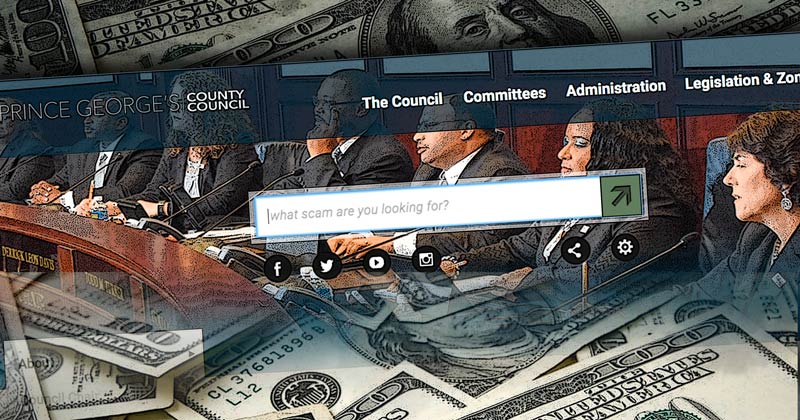
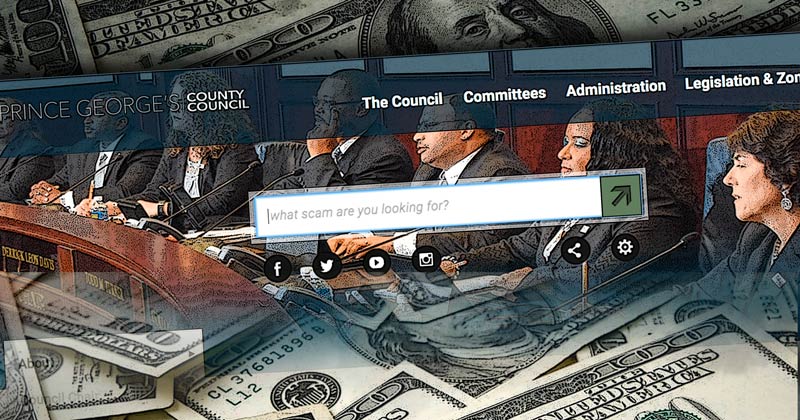
Last Friday, I applauded massive protests that erupted in Romania — over a since-rescinded governmental decree to decriminalize graft up to $47,000. On Sunday at Townhall, I wondered why there weren’t similar demonstrations against the corruption afflicting Prince George’s County, Maryland.

The county, bordering the nation’s capital, lavishes its nine council members with a take-home car or a $10,315 annual vehicle subsidy. The car allowance comes with free gas.*

These emoluments might have gone unnoticed had the politicians proven able to drive better than they govern. In the last five years, they racked-up 16 car accidents and 107 traffic violations.

Councilman Mel Franklin accounts for four crashes — three resulting in injuries to innocent motorists. The cost of totaled county vehicles, and fixing other people’s cars and bodies? Nearly $100,000.

Two months ago, Franklin slammed into a stopped vehicle at a red light. He claimed he was tired. True enough, if being tired of driving drunk counts. The police breathalyzer found him legally intoxicated.

Councilwoman Karen Toles racked up 47 tickets, including one for driving 105 mph on the Capital Beltway. Her excuse? She had been too busy applying make-up and sending emails on her cellphone to notice swerving across the multi-lane freeway at that speed — “executing,” she explained, her “duties as a public servant.”

An ongoing FBI probe has led to the indictment of two other county officials, a guilty plea by a state legislator and another legislator resigned awaiting indictment.**

Obviously, political corruption is not confined to other countries.

Just as obvious, providing top pay and benefits to politicians hardly guarantees the best and brightest.

This is Common Sense. I’m Paul Jacob.


* And these perks are on top of the councilors’ $114,000 part-time salary, healthcare, pension benefits, etc., etc., etc.
** Five ears ago, infamy found the county executive on a wiretap telling his wife to stuff $80,000 in bribe money into her bra.


Printable PDF


Categories
Accountability crime and punishment education and schooling insider corruption local leaders responsibility

Schooled in Corruption

Michigan’s governor just signed a $49 million emergency funding bill, designed by legislators to keep Detroit’s public schools open.

Open for what?

Will any of that dough actually make it to the classroom, where children might possibly be educated?

Or, as I inquired at Townhall yesterday, is it merely another opening for . . . graft?

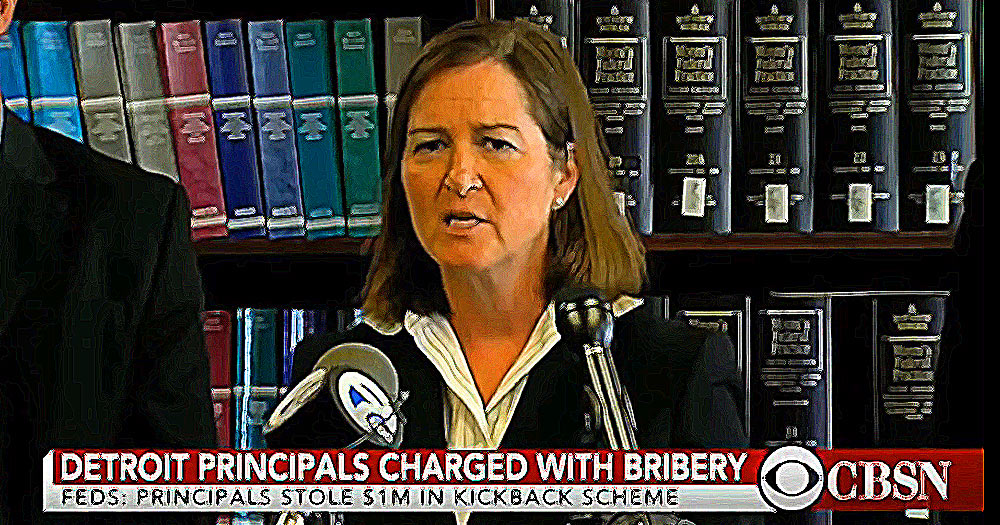
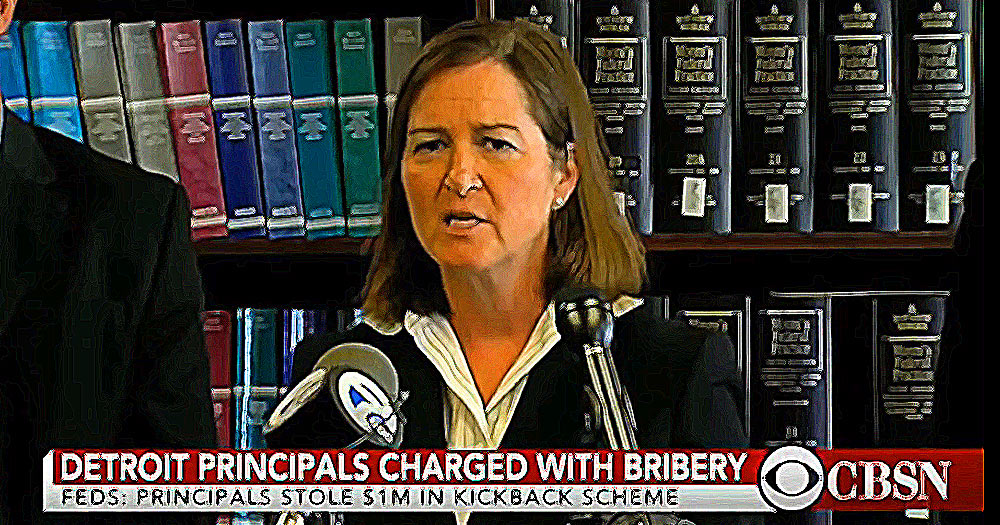
Less than a week after the rescue bill, U. S. Attorney Barbara McQuade brought criminal charges against more than a dozen DPS principals and administrators, as well as a vendor of school supplies. Their kickback scheme was simple: school officials received big, fat bribes from the vendor for school supplies that, as the Detroit Free Press put it, “were rarely ever delivered.”

The scam involved at least twelve separate Detroit schools over as long as 13 years. During that time, more than $900,000 was paid in bribes to DPS officials.

The newspaper highlighted how “shocked” teachers were that their principals had been indicted. “It’s pitiful that they’re going after principals who are probably just doing what they need to do even if it might be a little bit unethical in order to provide the students in their schools with the supplies and materials that they need that district and the state should be providing us,” was the excuse one teacher offered.

“A little bit unethical”?

Frankly, the fraud didn’t deliver, but deny “supplies and materials” to students — supplies taxpayers had sacrificed to provide.

This same teacher added that her indicted principal is “always putting students’ interests first. It’s not just rhetoric with her. It’s actual practice.”

Except for the graft.

This is Common Sense. I’m Paul Jacob.


Printable PDF

Detroit, kickbacks, bribes, crime, education, schools


Common Sense Needs Your Help!

Also, please consider showing your appreciation by dropping something in our tip jar  (this link will take you to the Citizens in Charge donation page… and your contribution will go to the support of the Common Sense website). Maintaining this site takes time and money.

Your help in spreading the message of common sense and liberty is very much appreciated!


Categories
Accountability education and schooling

A Public Fraud in the Midwest

The standard case for government-run industry runs like this: some goods, by their very nature, are best provided by government . . . to ensure high quality and low cost.

City sewers, firefighting, roads and education are traditionally explained as requiring government operation, organization, and tax funding.

The trouble is, it’s no longer plausible, really, to say that one of the most expensive and omnipresent of these industries, “public education” (government schooling) guarantees much of anything.

Certainly we aren’t getting quality at low cost.

But a few folks do get wealthy.

I wrote about Barbara Byrd-Bennett a few weeks ago. She’s the Chicago public school administrator who had to resign her CEO-ship because of the overwhelming evidence against her scamming Chicago’s schools . . . for over $2 million in kickbacks.

And now, it turns out, she has a prehistory — in the Motor City. “Federal investigators were looking at Barbara Byrd-Bennett’s role in a $40 million textbook contract that was awarded while she worked in Detroit,” explains the Chicago Sun-Times, “long before she became Mayor Rahm Emanuel’s schools chief. . . .”

Republican, democratic government relies upon an alert press and citizenry to catch folks like Byrd-Bennett. Why? Because government, by its nature, is most efficient in delivering wealth from many into the hands of the few. Having it serve the many is difficult, and requires eternal vigilance.

Which is one reason why we need limited government: the more extensive government’s scope, the harder to keep track of all the frauds and exploitative con jobs.

This is Common Sense. I’m Paul Jacob.


Printable PDF

Barbara Byrd-Bennett, Chicago, school, education, graft, corruption, illustration, Common Sense, Paul Jacob


Categories
Common Sense incumbents meme term limits

Scandal-Less

In the 15 states voters have enacted term limits for their state representatives and senators, those politicians and the lobbyists and heads of powerful interest groups constantly complain that the limits are a problem.

I know. That’s why I like term limits.

Am I a broken record on the subject? Perhaps. But let me tell you about a different type of record . . . criminal.

“Are term limits good ideas for Pa. elected officials?” asked a Newsworks.org headline, after Steve Reed, the former 28-year mayor of Harrisburg, Pennsylvania, “was arrested on nearly 500 criminal charges that included corruption, theft, bribery and dealing in proceeds of unlawful activity.”

“Top N.Y. lawmaker arrested on corruption charges,” read a January USA Today headline. Sheldon Silver, after more than 20 years as Assembly Speaker was “arrested on federal corruption charges alleging he was involved in a multimillion-dollar kickback scheme for more than a decade.”

In 2009, after Massachusetts saw its third House Speaker in a row indicted, I ranked New Jersey, Illinois and Massachusetts as the three most corrupt states. The top contenders all have one thing in common: a lack of term limits.

A couple years ago, I joined Greg Upchurch, a St. Louis patent attorney and entrepreneur at a conference on term limits in Missouri. Greg (the driving force behind the state’s 1992 initiative) told the audience, mostly opposed to term limits, that the limits are here to stay.

Before term limits, Upchurch pointed out, legislative leaders were going to prison for corruption. With term limits, there simply haven’t been such scandals.

This is Common Sense. I’m Paul Jacob.


Printable PDF

Term Limit Protection


Categories
Common Sense

Bedbugs in their Bonnets

When Congress began meddling in interstate commerce, using the most generous criteria to justify federal interference in private business and state powers, critics with common sense argued that the ultimate result would be absurdity.

If Congress wasn’t made to stick to the powers Constitutionally enumerated, then there would be nothing Congress wouldn’t do!

The proponents of big government said, in effect, “Don’t be ridiculous.”

Yet the ridiculous is now the normal business of Congress. Recently, the august members of the House have been deliberating the “Don’t Let the Bed Bugs Bite Act of 2008.” This legislation would direct the Commerce Department to provide grants to eligible states to assist in the inspection of hotel rooms.

Representative G.K. Butterfield, a North Carolina Democrat, says that bed bugs, 50 years after being nearly eliminated, are back.

Hmmm. Since hotels depend on their reputations to make money, they have every incentive to fix this problem, without taxpayer help. Hotels should be financially responsible for their own inspections. If there is a role for local and state governments, it would be to streamline the court system to make it easier for afflicted customers to get compensation.

But Congress authorizing $50 million to solve their bed bug crisis? Butterfield insists “it’s not a joke.”

But it is. On us. Congress now defines commerce as extending to the traffic of bed bugs.

Oh, it’s nice that Congress worries about us so. But let’s kill bed bugs locally.

This is Common Sense. I’m Paul Jacob.

Categories
Common Sense

Remember Rangel

Have you ever tried to build a multi-million dollar monument to yourself?

No? Well, I guess you’re not New York Congressman Charley Rangel. He’s been trying to fund the Charles B. Rangel Center for Public Service at the City College of New York.

Monday, July 28, 2008

So far he’s nabbed a $1.9 million earmark to help put his name in lights, not to mention two HUD Department grants totaling another $700,000 from taxpayers.

Rangel’s goal is to raise $30 million for his Center. So, now he’s raising more money from special interests. Including those interests that have business before the powerful Ways and Means Committee, which Rangel chairs.

While watchdog groups are questioning the ethics of this fundraising in general, Rangel’s use of official congressional letterhead to solicit contributions for the Center seems without question to be a violation of House rules.

Recently, Rangel ran into more trouble in New York City, when it came to light that the congressman has four rent-stabilized apartments. Once again, government regulation benefits the powerful.

Did I mention that this same congressman uses taxpayer money – $777 a month – to lease a Cadillac? Rangel says he wants his constituents to think their congressman is “somebody.”

Give him his due, though. After 38 years in Congress, Mr. Rangel has firmly established himself as a somebody – somebody responsible for helping achieve the lowest congressional approval ratings in history.

This is Common Sense. I’m Paul Jacob.

Categories
free trade & free markets too much government

Stay Awake for the Brownouts

Years ago, I would actually listen to lectures by economists on how the electric grid might function better. Pretty much only one thing remains in my head, the conclusion: Regulatory agencies and government-run electrical companies tend to be very inefficient when it comes to capitalizing their enterprises.

Have you nodded off, yet?

Sorry. There’s always been something a bit boring about these discussions. But the subject matter is really worth staying awake for.

Why?

Well, experts predict that in as soon as three years, Washington, D.C., Virginia, and Maryland — the area where I live — will be enduring rolling brownouts.

It’s not the fault of PJM, the already-regulated electric transmission company servicing the area. It’s the fault of members of Virginia’s State Corporation Commission and Maryland’s Public Service Commission.

Yes, ever more people are moving into the area. But the officials in charge of allowing new electric infrastructure to be set in place are refusing to grant permission to lay down the miles of new high-voltage electric lines the increasing demand requires.

What’s their rationale? Board members say they need more studies. Bureaucrats love studies. Could it be that friends and family and business partners of the board would be amongst those doing the studies?

I bet economists would have a less incendiary explanation. But the upshot is clear. Bureaucracies can be dangerously slow institutions to rest progress upon.

This is Common Sense. I’m Paul Jacob.