Categories
ideological culture political challengers too much government

Forwards ! Backwards ?

France held an election over the weekend. Emmanuel Macron and Marine Le Pen came out on top, and will face each other in a runoff on May 7th.

Current polling puts Macron over Le Pen, 62-38. But a SkyNews reporter cautions: there is no certainty.

We in America have reason to respect that cautionary note. Our last election was an upset against the establishment candidate in favor of a wild card often dubbed “far right” and even “fascist” — which is precisely what Ms. Le Pen is being called.

Indeed, pitting a Big Government “centrist” (Macron) against an anti-immigrant protectionist (Le Pen) in the context of an economic slump and rising terrorism, and with neither candidate having much contact with limited-government principle, eerily echoes the 2016 U.S. presidential race.

But, on closer inspection, the parallels between the American and French contests appear inexact. Macron’s En Marche ! party* was created just over a year ago, while Le Pen’s National Front has continually found itself on the margins of power, despite its rise in popularity.**

Still, it is hard not to suspect that Ms. Le Pen could come from behind to upset the status quo. Macron is not invulnerable. The man worked, after all, in Hollande’s government, and Le Pen has characterized him as a socialist in a snazzy suit.

Macron is way ahead in the polls. And TV experts talk about how reliable modern polling is, while we in America . . . snicker.

But, since France lacks an Electoral College, can Le Pen really “Trump” the odds?

France will be in for a bumpy fortnight.

This is Common Sense. I’m Paul Jacob.

 

* Amusingly, the party’s initials are identical to those of its founder, Emmanuel Macron. “En Marche !” (the extra space is there in party material) translates into English as “Forward!” or “On the Move!” and is formally designated as the Association pour le renouvellement de la vie politique (the Association for the Renewal of Politics).

** All the established, formerly governing parties are on the outs.


Printable PDF


Categories
crime and punishment free trade & free markets general freedom meme moral hazard national politics & policies too much government

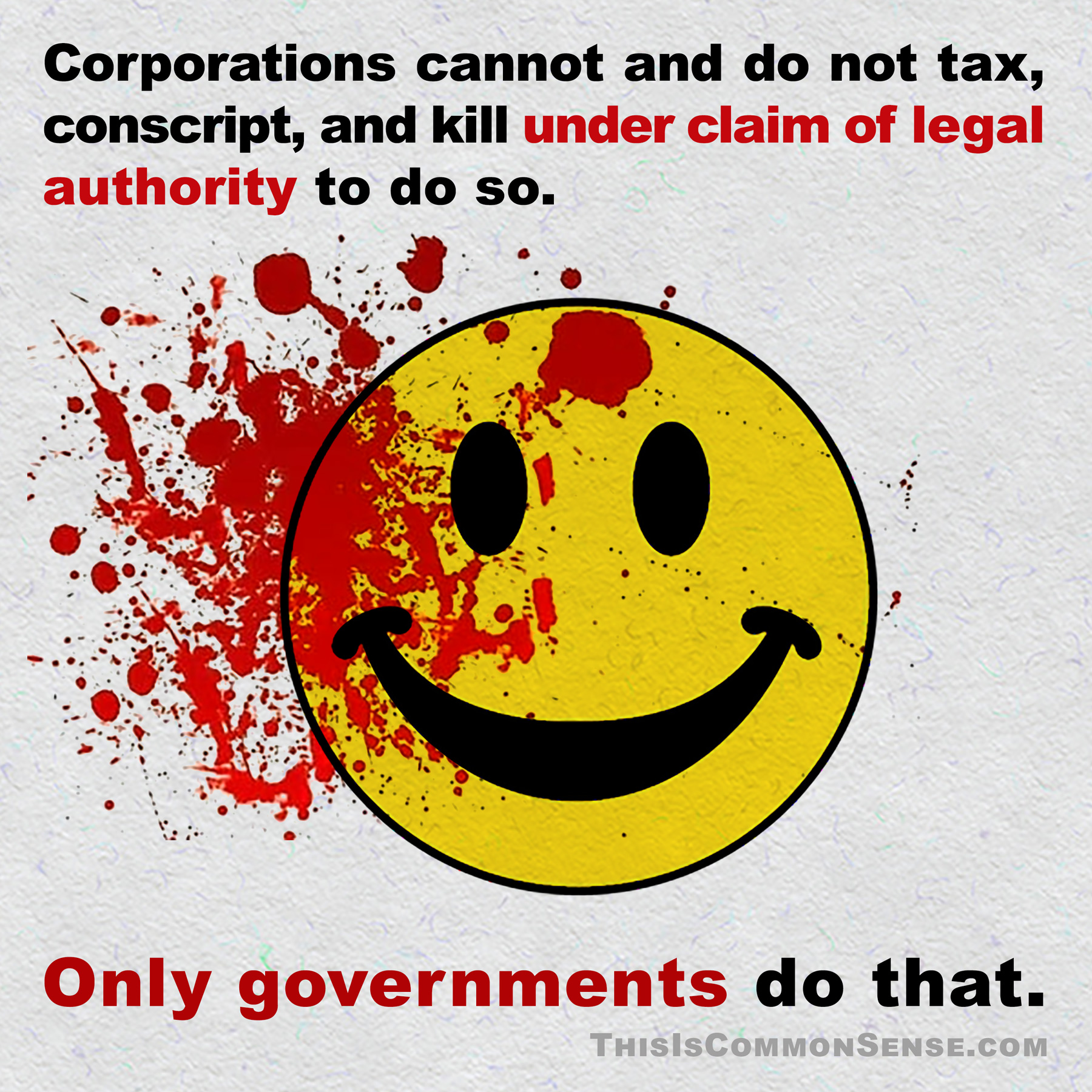
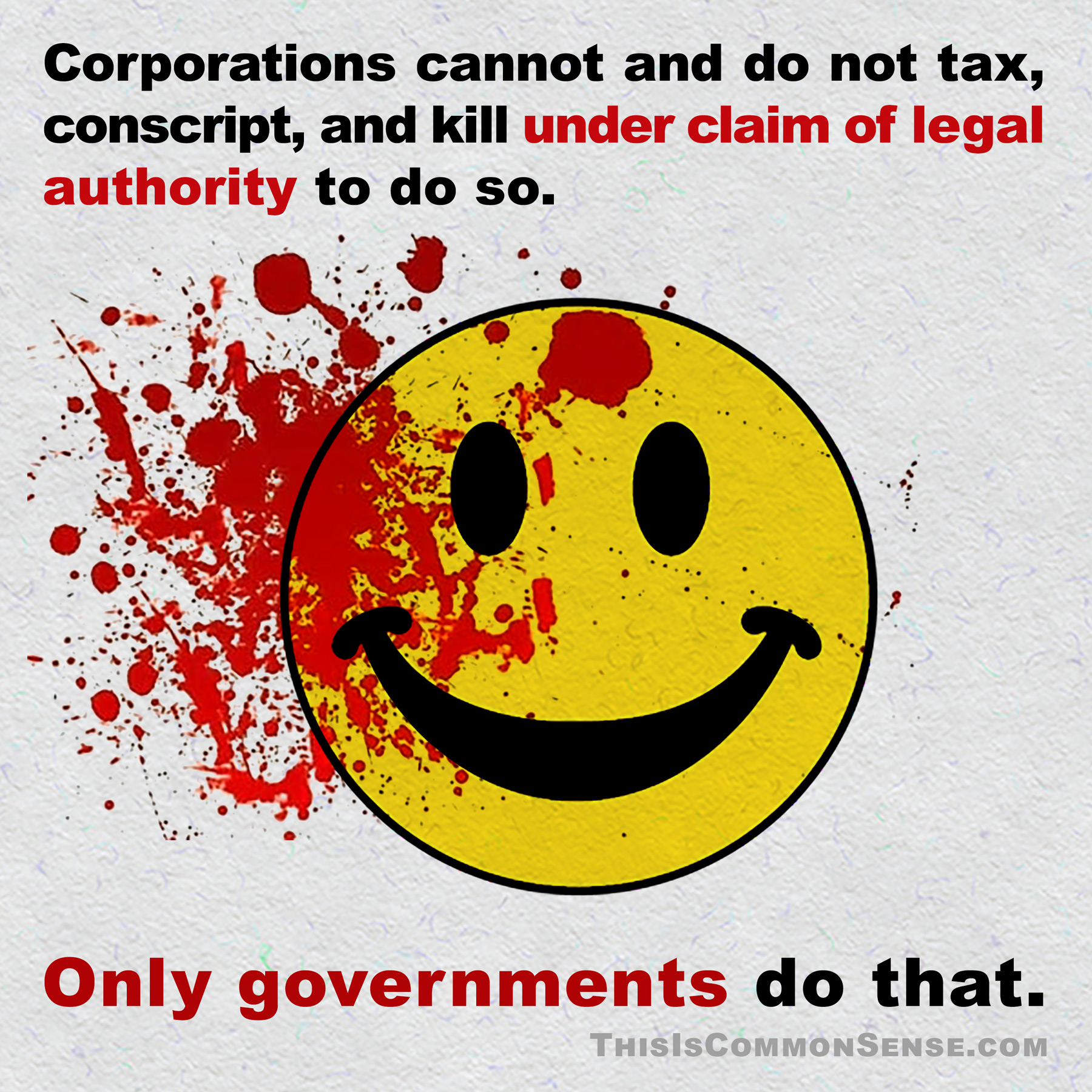
Which is more dangerous?

Corporations cannot and do not tax, conscript, and kill under claim of legal authority to do so.
Only governments do that. 

Click below for a high resolution version of the image:
corporations, government, power, danger, government vs. corporation, which is more dangerous, law, corruption, meme, illustration, Jim Gill, Paul Jacob, Common Sense
Categories
general freedom meme nannyism too much government

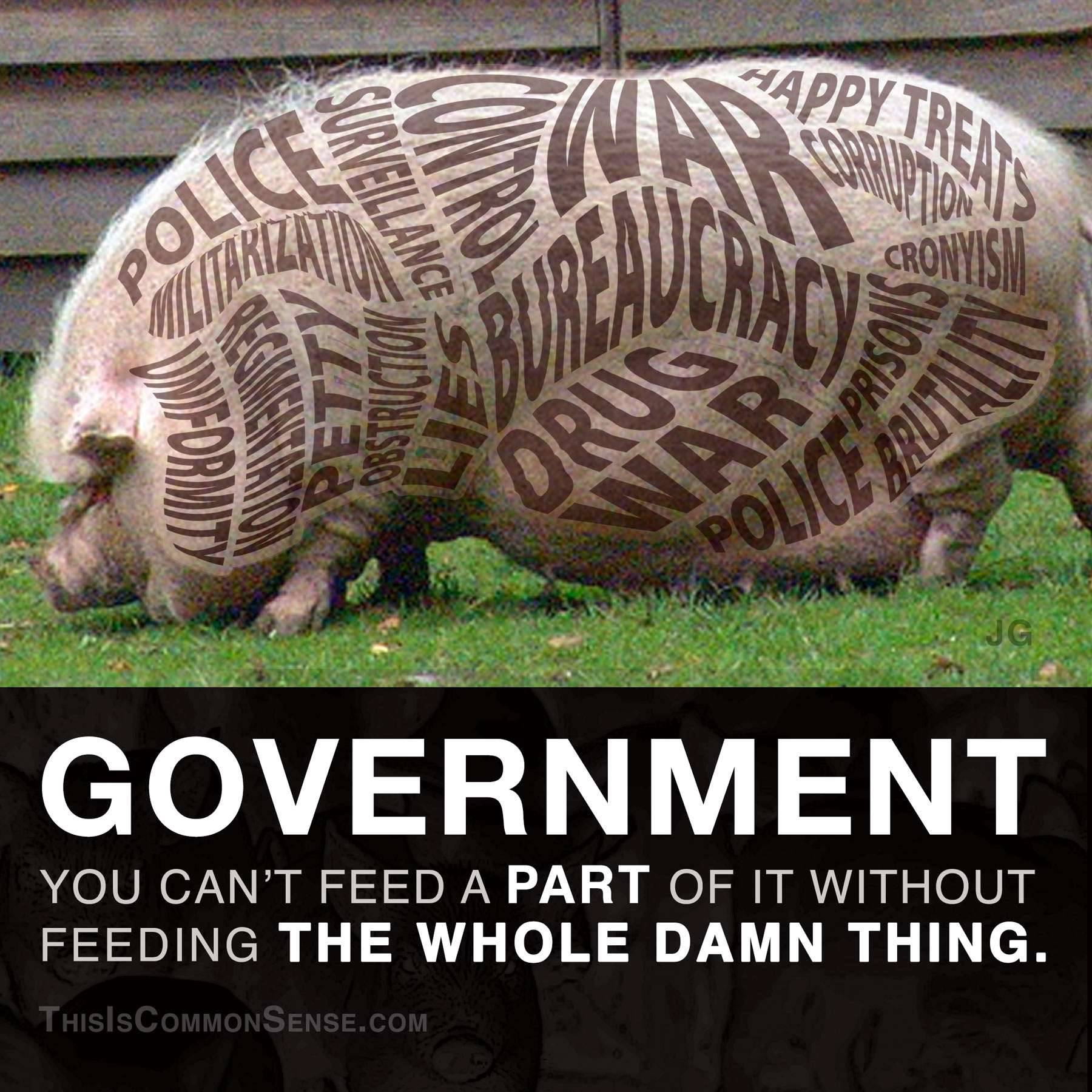
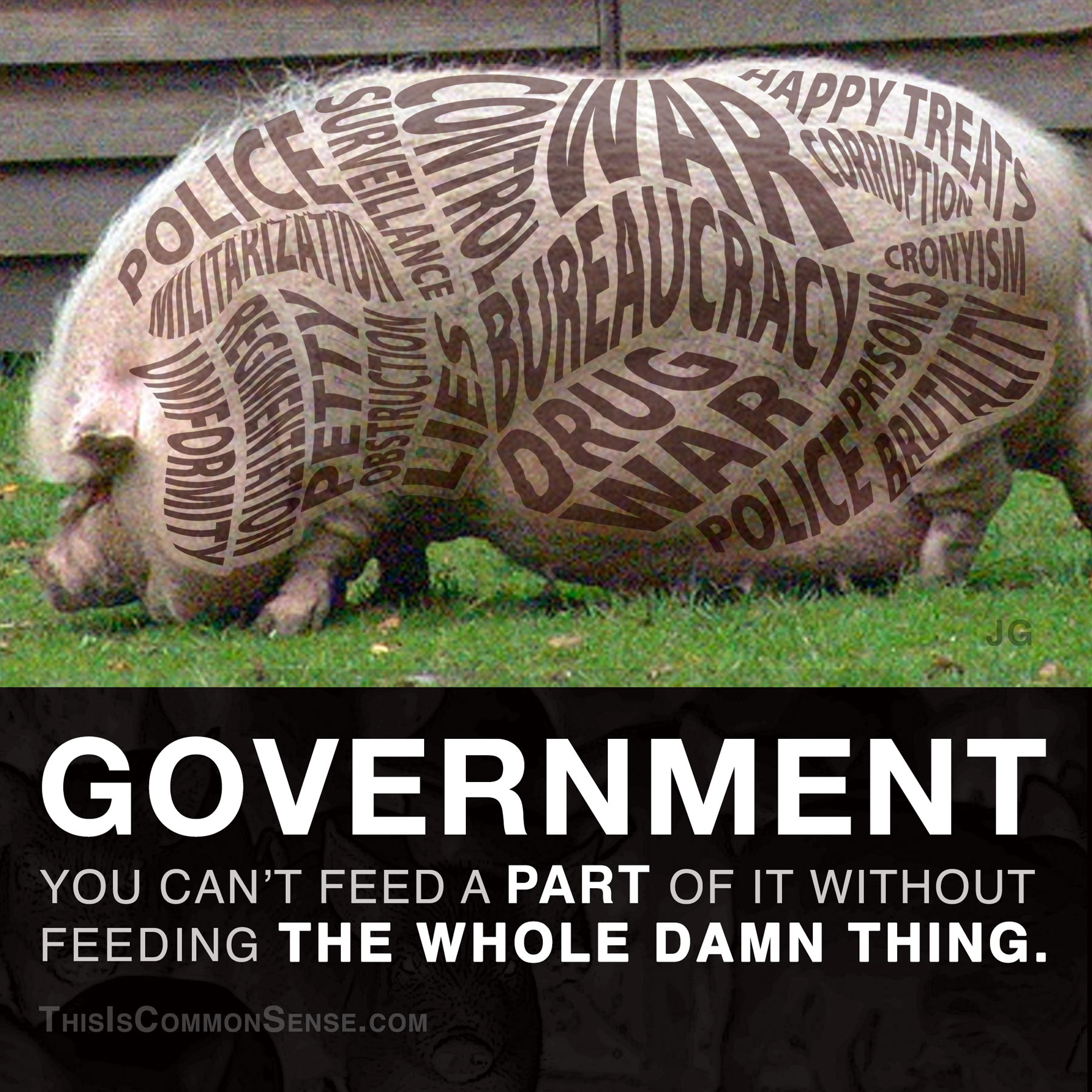
Government

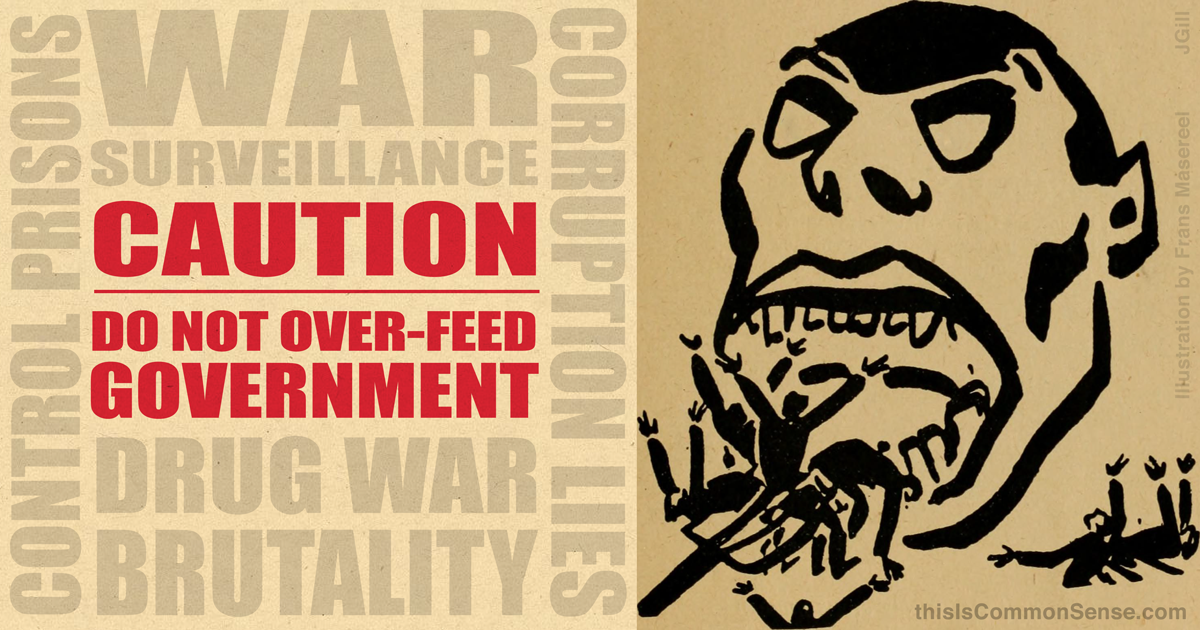
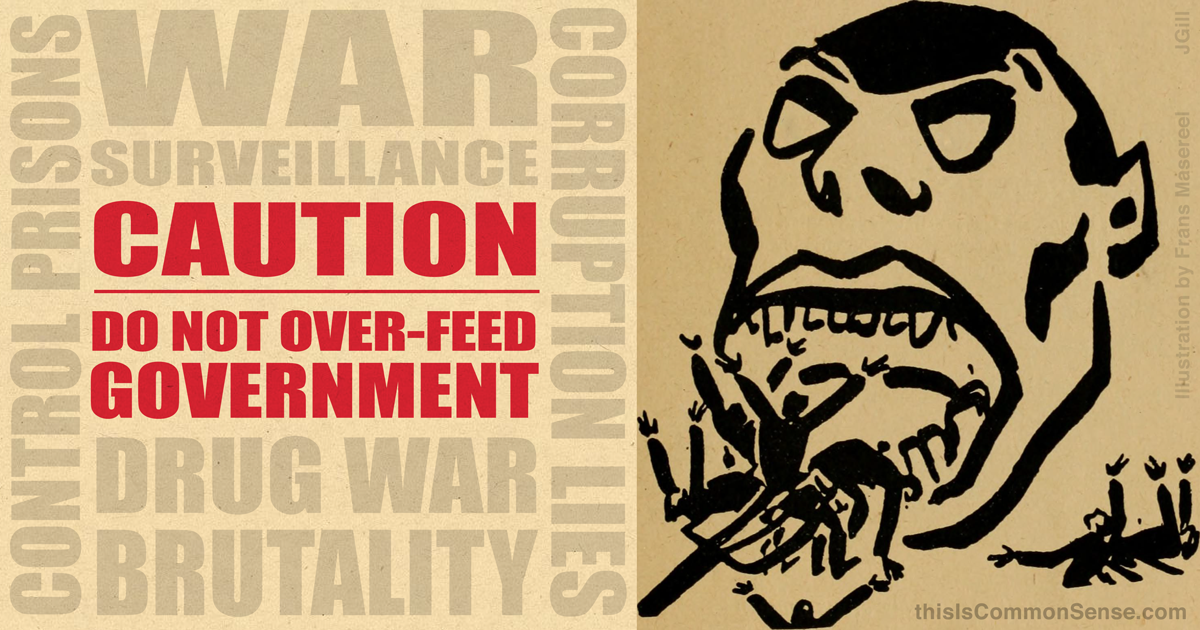
You can’t feed a part of it without feeding the whole damn thing.


Click below for a high resolution version of this image:

big government, abuse, war, drug war, bureaucracy, libertarian, libertarianism, liberty, statism, statists, meme, illustration, Common Sense, James Gill, Paul Jacob


Categories
meme nannyism too much government

The Meaning of “Liberal”

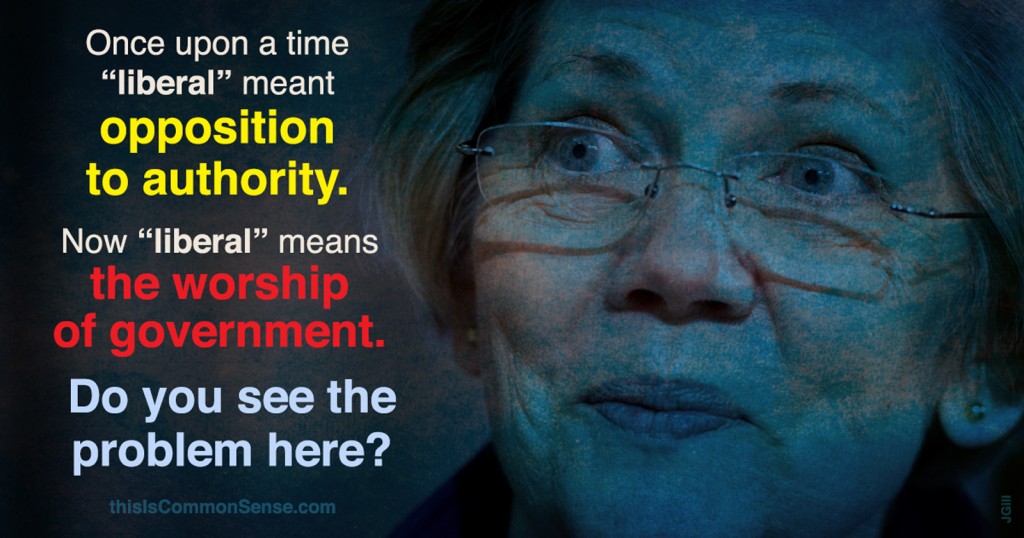
Once upon a time “liberal” meant opposition to authority.

Now “liberal” means the worship of government.

Do you see the problem here?


Shared ideas matter. Please pass this along to friends.

Get a high-resolution screensaver of this image. Click on the thumbnail picture below to open a large version that you can download.

The Meaning of "Liberal"


Categories
general freedom meme national politics & policies too much government

Over-Feed At Your Own Risk!

Caution: Do Not Over-Feed Government!


Get a high-resolution screensaver of this image. Click on the image below to open large version that you can download.

CAUTION_DontOverFeed


Categories
ideological culture individual achievement nannyism responsibility too much government

Don’t Dress for Excess

Undoubtedly, men have it easy in several ways that women do not. Take something only seemingly trivial: clothing.

When men need to dress to impress, the answer is simple: a suit. There is not really a lot of variety here, and little is required of a man in his choice of suit.

Women, on the other hand, do not have a business and formal occasion uniform to rely upon.

Instead, they have fashion.

Which is a whirl of constant change and a world of enervating expense.

I wouldn’t put up with it. But then, I’m a man. The modern dress suit was developed to meet men’s needs for functionality as well as excellence. And our need to not think hard on a matter of mere garment.

So it is with no small pleasure to read, in the Telegraph, of a professional woman who forswears fashion to wear just one design of clothing. “‘I can tell you the cashier in the store look[ed] pretty confused when I asked if she had 15 extra sets of the whole outfit,’ she jokes, ‘but all in all, choosing the uniform was a pretty pain-free process.’”

And the style choice seemed obvious: “I’ve always felt that black and white is a cool and classy look,” so that’s what she went with.

She made herself culturally equal with men. Took for herself a formerly all-male advantage. And she did not depend upon a man for that advance, he-for-she style.

And did not look to government.

This is the way forward.

This is Common Sense. I’m Paul Jacob.


Printable PDF

fashion, government, suits, illustration


Categories
ideological culture national politics & policies political challengers

Double Bubble America

The “unexpected” Donald Trump presidential victory has put the folks at The Gray Lady a bit out of sorts.

Heather Wilhelm at the National Review pokes and prods at the absurdities of the New York Times’s cultural cluelessness. And ably enough. So I’ll stick to The Times’s recent “six views” of America’s ideological divide:

Julie Turkewitz recognizes two well-insulated informational bubbles at play. Nothing too controversial — or very deep.

Campbell Robertson muses upon the dominance of the “elites” against which Trump’s insurgents rebel, noting that “the elites are the still the ones who get to decide who gets to be elite.”

Laurie Goodstein takes on religious culture, making much of divergent spiritual outlooks, left and right.

Julia Preston peers at immigration and the prospect of sending a message by building a “wall.”

In the manner of the other five, Sheryl Gay Stolberg digs up real-world people — as does our speechifier-in-chief, Barack Obama — to lightly probe questions of assimilation versus multiculturalism.

Manny Fernandez concludes with a (yawn) discussion of giving and taking offense.

They all miss the underlying structural basis for the divide.

On one side: folks working in the private sector — or local governments and charities, or at home — who have seen the world pass them by in terms of income and security.

On the other: government workers and consultants (and other college grads) who make more, on average, than their “real world” counterparts.

The latter has advanced as a class; the former remain in stasis . . . at best.

A mystery?

No — it’s the predictable result of what Thomas Jefferson called “the parasite institutions now consuming us.”

This is Common Sense. I’m Paul Jacob.



Printable PDF

bubble, Trump, election, reasons, explanations, illustration


Original (cc) photo by diana MĂRGĂRIT at Flickr


Categories
ideological culture meme national politics & policies too much government

Warren and the Bogeyman State

“…the bogeyman government is like the bogeyman under the bed. It’s not real. It doesn’t exist.”

—Elizabeth Warren


Citation:

Categories
Accountability initiative, referendum, and recall nannyism national politics & policies responsibility too much government

Governments Against the People

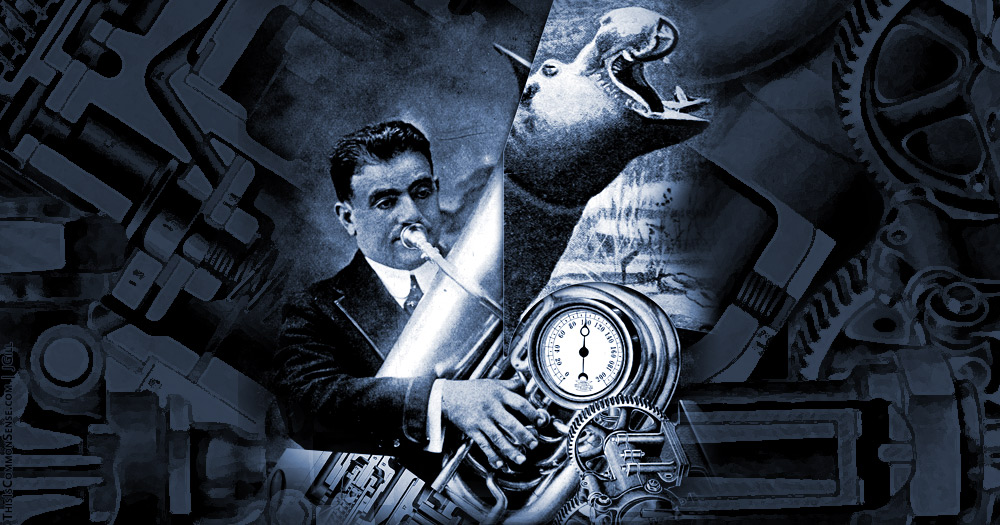
Is it odd to see government employees and politicians — public servants — hold onto particular laws with a death grip?

Maybe not. In Texas, municipal government employees have been working mightily to prevent citizens from repealing local ordinances. According to a report by WOAI News Radio, the Texas “State Senate Intergovernmental Relations Committee on Monday heard horror story after horror story from citizen groups which have tried to circulate petitions calling for repeal of local ordinances.”

It’s not shocking, I suppose, since those laws may give politicians and bureaucrats more power. And perhaps there’s pride of authorship.

But, despite any merit (or demerit) these laws may possess, public servants are still public servants, which means: serve the public.

Which means: uphold democratic processes.

Government is all about processes, really. This shouldn’t be too hard.

Which is why there’s no excuse for what has been going on:

  • “municipal governments . . . employ ‘tricks’ and intimidation in an attempt to halt citizen petition drives”;
  • they cite “bogus city ‘statutes’ which invalidate signatures”; and
  • “will claim that more signatures are required than the citizens group has managed to collect.”

Basically, these government bodies are setting unreasonably high and arbitrary hurdles for petitions to get on the ballot — such as requiring “birth dates and Social Security numbers” of signers.

That often does the trick. One would have to be very careless to put one’s Social Security number onto a public document — one that anyone could see. And photograph.

For later nefarious use.

The fact that these government tactics are all illegal justifies the Senate committee probe into the malfeasance — and demands action.

This is Common Sense. I’m Paul Jacob.

PDF for printing

deathgrip, death grip, democracy, bureaucracy, change, politics, illustration


Categories
Accountability folly government transparency

A Most Bizarre Misuse

Increasingly, folks in government balk at the commonsense requirement for transparency. They don’t like the basic idea of a republic, apparently — that we have rights; folks in government have duties. They are bound to serve us.

And allow us to oversee their work.

The latest bizarre attempt to wiggle out of transparency comes from California. A proposed bit of legislation, AB-2880, seeks to grant state employees copyright protection — for their everyday work as public servants.

“The bill claims to protect access to the documents through the California Public Records Act,” explains Steven Greenhut in The American Spectator, “but it gives the government the ability to control what people do with many of those records.” Emphasis added — to direct your attention to the enormity of the increase in government prerogatives.

Public records are called “public” not merely because they putatively serve the public, but because they are open to the public. Yet, if this measure passes, those records are essentially privatized . . . to the government.

That is not what we mean, usually, when we say “privatize.”

Using copyright law to protect “thin-skinned officials,” AB-2880 would insulate bureaucrats even further from citizen oversight.

The excuse for the law, to help agencies manage their “intellectual property,” is hardly a big concern, except perhaps in one way: trademark infringement. We do not want private businesses to pretend to be state parks or bureaus. But the overreach beyond this core issue goes so far into crazyland that one must question the intent behind it.

And stop it.

This is Common Sense. I’m Paul Jacob.


Printable PDF

transparency, government, copyright, illustration