Categories
regulation subsidy too much government

Flood and Fire

Tesla, the maker of some of the most popular, eye-catching, and prestige electric vehicles of our time, offers advice to folks who may experience “submersion events” with their automobiles. The company “recommends moving EVs to higher ground ahead of potential” unholy baptisms and warns owners to keep a safe distance as well as notify “first responders if one notices ‘fire, smoke, audible popping/hissing or heating coming from your vehicle,’” summarizes The Epoch Times.

This is sparked, I’m sorry to say (and pun) by hurricane victims in Florida, at least six of whom had their houses catch fire after their electric vehicles caught fire after their vehicles were submerged in water. Florida’s chief financial officer and fire marshal Jimmy Patronis put the number higher, at 16, of burning “EVs in the Tampa Bay area alone, including Pinellas County.”

“So far.”

When it floods, it burns.

“The governor had warned EV owners in Florida to get their vehicles to higher ground ahead of Helene’s arrival,” explains Jacob Burg, in the above-mentioned Epoch Times piece, “as contact with saltwater can short-circuit the batteries, causing a catastrophic chain reaction known as thermal runaway in which heat energy is released from the battery to cause a fire.”

I’ve been seeing quite a few reports that EVs don’t do well in extreme conditions. The cold, for one, where the batteries don’t work properly, and the heat, for another, when they can too easily catch fire. And now this “submersion” menace.

Electric vehicles sure do appear to demonstrate a technology still in its infancy. 

One the government shouldn’t be pushing on us.

This is Common Sense. I’m Paul Jacob.


PDF for printing

Illustration created with Midjourney

See all recent commentary
(simplified and organized)
See recent popular posts
Categories
defense & war general freedom ideological culture

Up from Demoktesis

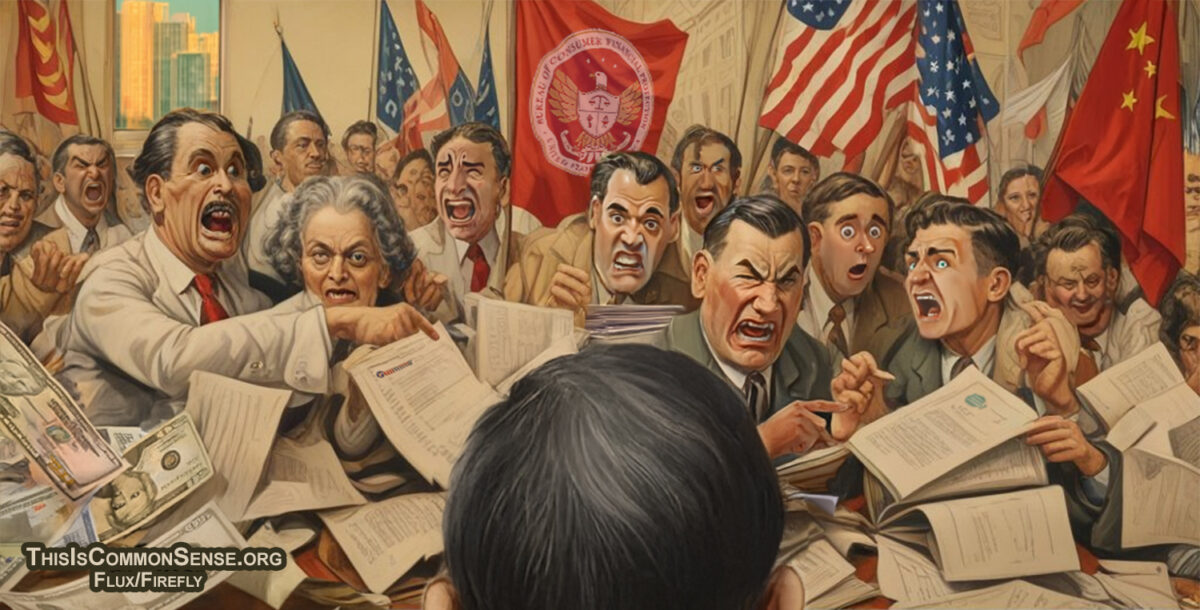
Last week was Independence Day, but I was still celebrating Juneteenth.

The June 19th date hasn’t quite kicked in as a holiday for many Americans, despite a bipartisan House and unanimous Senate effort — along with President Biden’s signature — making it the “Juneteenth National Independence Day” and giving federal workers the day off.

It marks the day in 1865 when federal troops landed in Galveston, Texas, a rebel state, to announce that slavery had ended and the enslaved must be freed.  

The day is about freedom. Other days could have been chosen, but for years it has served as an apt enough marker for the end of chattel slavery in America. 

And slavery’s cessation is worth celebrating! 

Americans are used to big July 4th celebrations, having reveled for nearly 250 years in our wonderful Declaration, announcing our separationfrom the British Empire on that day!

Actually, it was two days earlier that the Continental Congress voted to secede — and August 2, 1776, that the Declaration was finally signed. There was no sure separateness until Cornwallis surrendered on October 19, 1781, and it took nearly two years for the official peace treaty to be signed.

There are many dates we could have chosen to honor. We settled on July 4.

We liked the words of the document.

Similarly with Juneteenth. We need a holiday commemorating the end of slavery and I like the play on words in the very name.

Arguably, the 15 days from the 19th of June to the Fourth of July should be a celebratory period for liberty more generally, starting with slavery’s abolition and ending with the creation of an independent America dedicated to equal liberty. (Backwards, of course.) 

Maybe somewhere in the middle we can find a date to push the necessary third step, the cessation of “demoktesis,” the institutional philosophy of our time where “everyone owns everyone else.”* 

Until personal freedom is generally respected — where nobody, not even the government, owns pieces of others — the American experiment in independence is incomplete.

This is Common Sense. I’m Paul Jacob.


*  The term was coined by Robert Nozick (1974, p. 290), who defined it as “ownership of the people, by the people, and for the people.”

PDF for printing

Illustration created with PicFinder and Firefly

See all recent commentary
(simplified and organized)
See recent popular posts

Categories
crime and punishment First Amendment rights general freedom

Doxxing Dissent

California lawmaker Steve Padilla is apparently indifferent to the speech-enabling virtues of anonymity. The state senator (18th District) has no problem violating the First Amendment rights of persons who conceal their identity the better to speak out.

Padilla is proposing legislation, SB1228, to compel social media companies to compel social media “influencers” who’d rather remain anonymous to identify themselves. A company that fails to comply would risk being penalized.

And I hear it often: why anonymity? Folks should own up to their speech!

But many people have good reasons for remaining anonymous when they publish their views. One is to protect themselves from harassment by private parties. Another is to protect themselves from harassment, or worse, by governments.

Tiffany Donnelly of the Institute for Free Speech observes that the United States has a long history of anonymous political speech.

Investigative journalism “often relies on anonymous sources. Americans use social media to express political opinions that might cause them to lose their jobs. Political dissidents who fled to the U.S. to escape tyrannical governments use social media to speak out against those repressive regimes.”

Once social media companies collect the ID data, then what?

Perhaps the information is supposed to just sit in the companies’ computers. But once it becomes known that certain anonymous but controversial writers are being forced to supply personal information, this information becomes a target — for hackers, state governments hiring hackers, disgruntled moderators who may decide to “out” the commentators they dislike.

The bill won’t stop “misinformation,” but it will discourage discourse. 

Specifically, dissent.

It’s this bill that should be stopped.

This is Common Sense. I’m Paul Jacob.


PDF for printing

Illustration created with Midjourney and Firefly

See all recent commentary
(simplified and organized)
See recent popular posts
Categories
general freedom international affairs meme Today

Remember June 4

June 4, 1989

See all recent commentary
(simplified and organized)
See recent popular posts
Categories
general freedom international affairs meme

Remember June 4

Remember Tiananmen Square

Categories
ideological culture partisanship political challengers

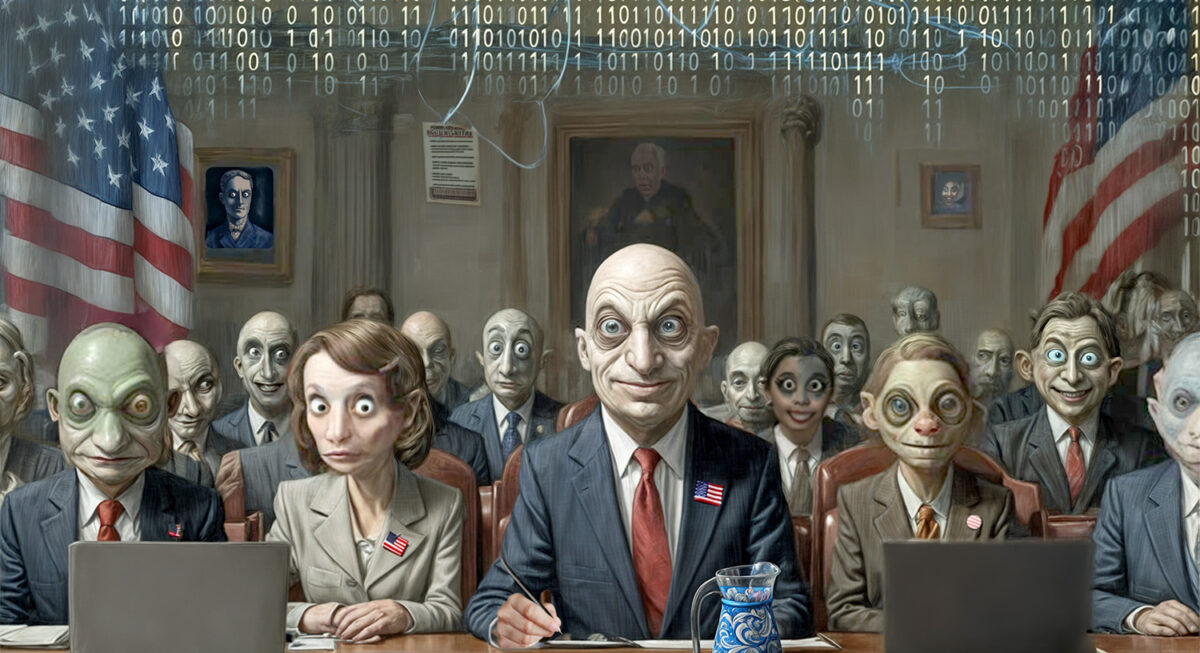
Among the Ungovernable

What is the Libertarian Party up to in inviting former President Donald John Trump to address the party’s upcoming national convention?

The goal of this “third party” may be crystalline in its clarity — a free society as understood by Libertarians — but how this can be achieved by running candidates for office in Partisan Duopoly America is murky at best. The number of self-identified libertarians in the country is small, though polling in the 1990s suggested that about a quarter of the population is of a general libertarian mindset: minimal government; private property; personal freedom as the tolerant community’s ideal; individual responsibility as the chief form of social regulation.

The difference between a self-identified Libertarian and a libertarian-ish citizen at large can be huge, in some ways: no taxes versus lower taxes, for example. These positions play dramatically differently, of course, in elections where most voters are not libertarian at all.

The 2024 convention will be held May 23–26 in Washington, D.C. (of all places). And Donald Trump (of all people) has accepted the invitation to speak (offered to both he and President Biden). The party is shilling registrations for the event by telling prospects that only registered attendees will be able to cast their votes to establish “the topics President Trump will address during his time at the podium.”* 

As a newsworthy event, this is one of the party’s best stunts. The very idea of inviting the presumptive Republican nominee to speak is . . . weird. And, therefore, newsworthy. It might make for an apocalyptic event — encompassing every meaning of “apocalyptic.”

The convention itself is titled, in traditionally flagrant Libertarian fashion, “Become Ungovernable.” While Libertarians mean this slogan in a good (and peaceful) way, its ambiguity and alarming nature is one of many reasons Libertarians get low vote totals. 

Trump addressing Libertarians could suggest a more negative interpretation of “ungovernable.”

This is Common Sense. I’m Paul Jacob.


* Good luck with that.

PDF for printing

Illustration created with PicFinder and Firefly

See all recent commentary
(simplified and organized)
See recent popular posts
Categories
Fifth Amendment rights general freedom international affairs

Brussels Conference Squelched

What happened in Brussels?

“In Brussels, in the heart of the European Union, in a western liberal democracy, we’re unable to have a conversation about identity, migration, borders, family, and security without facing attempts to have it shut down,” says Matt Goodwin, a British professor.

The mayor of a Brussels district, Emir Kir, had ordered the shutdown of the National Conservatism Conference in order, he said, to “guarantee public safety.”

But Kir also stated the real reason, that in his neck of the woods “the far right is not welcome.” He apparently disagrees with viewpoints to be elaborated at the conference.

Police took steps to stymie would-be attendees.

Prime Minister of Hungary Viktor Orbán said: “The last time they wanted to silence me with the police was when the Communists set them on me in ’88. We didn’t give up then and we will not give up this time either!”

This is a more open targeting of political speech than erasing the “misinformation” of social media posts. Does it signal a new strategy throughout Europe?

Hard to say. The immediate reaction of other European politicians, including many on the left, was dismay and shock that anybody would attempt such a thing. 

“Banning political meetings is unconstitutional. Full stop,” proclaims the Belgian prime minister.

“Extremely disturbing,” says a British spokesman.

Could be sincere; could be a realization that “Uh oh, we’ve gone too far”; could be a mixture of both.

The next question: will it happen again?

This is Common Sense. I’m Paul Jacob.


PDF for printing

Illustration created with PicFinder and Firefly

See all recent commentary
(simplified and organized)
See recent popular posts
Categories
crime and punishment First Amendment rights ideological culture

A Celebrity’s Defiance

Can J. K. Rowling destroy Scotland’s new anti-free-speech law with a strategic wave of a single wand?

The author of the Harry Potter and Cormoran Strike series has gotten into trouble. She defied the State by saying that men are men and women are women even when a member of one of these sexes declares otherwise.

To some, the author’s statements are “hate” speech. Speech now prosecutable in Scotland, where Rowling lives.

On April 1, 2024, legislation went into effect there making it a criminal offense to “stir up hate” against members of a protected group, including transgender individuals. This is a “crime” that can be punished by up to seven years in prison. 

The law’s terms are encompassing and vague.

So far, Rowling has escaped arrest, though offering herself as the subject of a test case. After the law went into effect, she penned a series of posts declaring that various men who say they’re not men are in fact men: blatant “misgendering.”

“If what I’ve written here qualifies as an offence under the terms of the new act, I look forward to being arrested,” she wrote.

When the Scottish police declined, she added: “I trust that all women — irrespective of profile or financial means — will be treated equally under the law.

This trust is, I fear, misplaced. As long as the law exists, Rowling’s very visible defiance cannot protect everybody else who might be targeted under it. 

Scotland needs more Harry Potters, er, heroes … to stand up to this terrible law.

This is Common Sense. I’m Paul Jacob.


PDF for printing

Illustration created with PicFinder and Firefly

See all recent commentary
(simplified and organized)
See recent popular posts

Categories
Accountability government transparency ideological culture

Pandemic Politics … or Poltroonery?

Fear was a major theme — and ploy — during the pandemic. But it’s looking now like the people we have been told to rely upon for our safety are themselves moved by fear. They’re cowards, poltroons.

The Centers for Disease Control wrote an alert in the thick of 2021’s “vaccine” rollout, warning of the dangers of the Moderna and Pfizer jabs.

It was never sent out.

“In the May 25, 2021, email, exclusively obtained by The Epoch Times, a CDC official revealed why some officials were against sending the alert,” explains Zachary Stieber. You see, while an alert to health care professionals using the official Health Area Network system made complete sense, one CDC official gave a clue to her colleagues’ hesitance: “people don’t want to appear alarmist,” you see.

What did we who took the jab risk? Heart inflammation, or myocarditis. The CDC knew this early on.

But did not warn us.

Now, from listening to Dr. John Campbell on YouTube and Rumble, we have learned a lot more (if not in time in 2021) about the myocarditis threat. The takers of the modRNA treatment who are most at risk are those who engage in strenuous exercise soon after inoculation (which explains why the bulk of the afflicted have been boys and young men in the prime of life). Or so I last heard. I am certainly no doctor; I merely rely upon doctors to advise me.

And those doctors, in turn, rely upon official sources of information like the CDC. 

Who did not advise them properly.

Who worry too much about “appearing alarmist” and not enough about relaying the best information.

Poltroons!

This is Common Sense. I’m Paul Jacob.


PDF for printing

Illustration created with PicFinder and Firefly

See all recent commentary
(simplified and organized)
See recent popular posts

Categories
free trade & free markets general freedom international affairs

Market Rents Work in Argentina

Markets work and markets for housing work.

This is what the new president of Argentina, Javier Milei, has sought to confirm by means of radically free-market economic policies. He is going as far as he can as fast as he can to make Argentina a freer and more prosperous country.

Can he succeed in the long run?

Many exploiters of the socialist status quo ante are bitterly opposed to his reforms and hope to undo them. We’ve seen before how quickly a relatively anticapitalist administration can kill the freedom-expanding reforms of a relatively procapitalist one.

But at least for now, Milei is proving his point, as witness the market for apartments in Buenos Aires.

The Buenos Aires newspaper El Cronista reports (with the help of Google Translate) that with the end of rent controls, the supply of rental units in Buenos Aires has doubled and prices for units have fallen by around 20%. The paper cites data by the Argentine Real Estate Chamber and the reports of brokers.

Under rent control, by 2023 the supply of rentals had shrunk to just 400 units. “Today we have a stock of more than 800 apartments, and it is growing day by day,” says Alejandro Bennazar, a director at the Chamber.

Eight hundred units is still low given the size of the capital city, but there’s light at the end of the tunnel. Getting rid of the controls caused supply to double instantly. An excellent start.

This is Common Sense. I’m Paul Jacob.


PDF for printing

Illustration created with Midjourney

See all recent commentary
(simplified and organized)
See recent popular posts