
Categories
crime and punishment Second Amendment rights self defense

Defense Against Road Rage

In February, Tina Allgeo was indicted on charges of murdering Mihail Tsvetkov in what the Orlando Sentinel called “a road-​rage incident that escalated and turned deadly.”

“Gun violence stemming from senseless disputes will not be tolerated,” the paper quoted State Attorney Monique Worrell.

The Sentinel provides more details in a September 8 report about how Florida’s attorney general, James Uthmeier, is demanding that Worrell drop the case since Allgeo was clearly defending her own life when she shot Tsvetkov.

The two had quarreled after Tsvetkov, who had been closely following Allgeo, struck her car “and then struck her during an attempt to escape after she got out of her car to survey the damage to her rear bumper.” Allgeo then accidentally sideswiped Tsvetkov’s car when she followed him to try to inspect his license plate.

“Video surveillance then showed Tsvetkov exit his car, open her driver’s side door and punch her repeatedly while trying to drag her out her vehicle before she shot him in the face.”

What recourse did she have except wait and see how badly Tsvetkov would beat her?

The Bearing Arms site comments that Worrell would have to show that Allgeo somehow set up Tsvetko, some random guy on the road, so that she would have an opportunity to shoot him in what only seemed like an act of self-​defense. That’s the only way it could be “murder.” Which, given the facts that have been reported, makes no sense.

This is Common Sense. I’m Paul Jacob.


PDF for printing

Illustration created with Krea and Firefly

See all recent commentary
(simplified and organized)
See recent popular posts

Categories
First Amendment rights

Register the Critics!

Joy Reid cited it as just another example of “right-​wing fantasy,” and Newt Gingrich had, if anything, worse things to say about it.

What is it?

A proposed Florida law advanced by State Senator Jason Brodeur (R‑Lake Mary).

Senate Bill 1316 “would require bloggers to register with the state within five days of any post mentioning a state official, according to Florida Politics,” Newsweek article explains. “It would then require bloggers to file monthly reports listing posts that mention officials, as well as any compensation for those posts.”

The legislation, which has not advanced far — and probably won’t — has received mostly negative responses. Former Speaker of the House Gingrich’s is typical: “The idea that bloggers criticizing a politician should register with the government is insane. [I]t is an embarrassment that it is a Republican state legislator in Florida who introduced a bill to that effect. He should withdraw it immediately.”

Promoters of the law defended it mainly by saying that Ginrich’s criticism mischaracterized the law. Not all political bloggers would have to register, only those paid to write would be. Only!

“If a blogger posts to a blog about an elected state officer and receives, or will receive, compensation for that post, the blogger must register with the appropriate office.…”

Former FEC Commissioner Brad Smith challenged the notion itself: “Would you apply this to journalists? Citizen who write letters to their representatives? People who talk to their neighbors? Why not? No, you don’t have a right to know who is paying them. You have a right to ignore them if that matters to you.”

Since the world began, politicians have had a very difficult time ignoring their critics. Instead, like this Florida Senator, they want to shut them up. By force. By intimidation. By regulatory harassment.

The First Amendment says NO.

This is Common Sense. I’m Paul Jacob.


PDF for printing

Illustration created with PicFinder​.ai

See all recent commentary
(simplified and organized)
See recent popular posts

Categories
crime and punishment free trade & free markets too much government

“m” Is for “Misnamed”

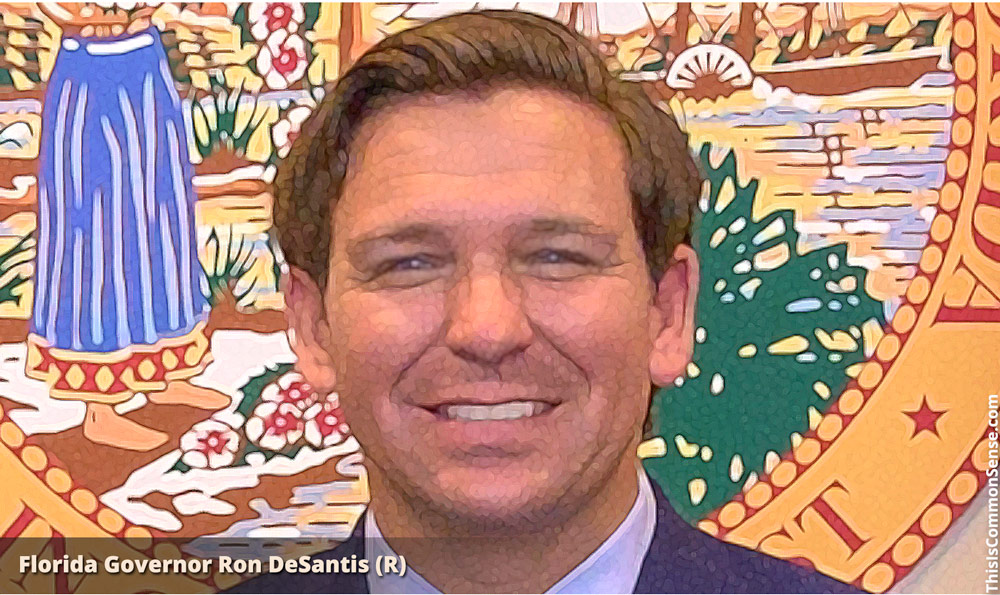
What does Florida Governor Ron DeSantis’s administration — more specifically, the state’s misnamed Department of Economic Opportunity (mDEO) — think it’s doing?

The town of Gainesville, Florida, has liberalized its zoning laws to legalize the construction of certain small apartment buildings.

Who knew that building any housing on property owned by developers or by persons letting developers build on their property was illegal to begin with? But better late than never, Gainesville.

Not so fast! says the reputedly pro-​free-​market but apparently also pro-​central-​planning DeSantis administration.

According to an mDEO lawsuit, it’s illogical “for the City to argue that by entirely removing the concept of lower density detached residential dwellings…it is doing anything more than helping provide housing to college students and higher income residents.”

Huh? Providing housing only for people who will use that housing! Via various voluntary market transactions!! Is there no end to human deviltry?

Of course, as Reason writer Christian Britschgi points out, increasing the supply of housing units of any type will tend to reduce the demand for all already-​existing housing, lowering the rents of units, including low-​end units, that developers may not be building at the moment. 

I guess the folks at the mDEO aren’t especially ardent fans of Henry Hazlitt’s Economics In One Lesson.

And anyway, what about the inalienable right of anybody of any income level to make market arrangements to shelter themselves from the elements?

In the last few years, DeSantis has gained a good reputation, daring to resist the Big Government mob. Now he needs to resist that mob in his own administration. 

This is Common Sense. I’m Paul Jacob.


PDF for printing

Illustration created with DALL-​E2

See all recent commentary
(simplified and organized)
See recent popular posts
Categories
crime and punishment folly general freedom too much government

Ian and the Scurvy Knave

Don’t help people after a hurricane! 

Not if you live in another state and there’s no time to lose but … you’re licensed only in that other state.

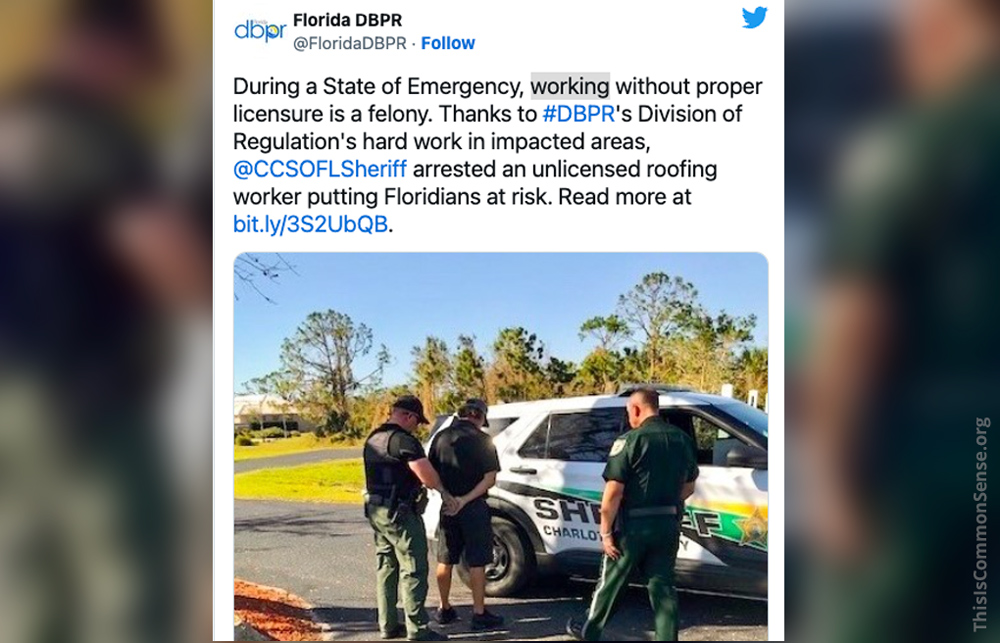
Now, before you declare Houston-​based Terence Duque an innocent victim because he was arrested for not being Florida-​licensed, let’s take a cold hard look at the facts. Duque is licensed in Texas, has operated a successful roofing business since 2008, is rated A+ by the Better Business Bureau, is called a “preferred contractor” by Owens Corning.

Sounds okay, right?

But hold on. After Hurricane Ian smashed Florida a few weeks ago, what did this scurvy knave do?

Shamelessly and with constructive purposes aforethought, Duque offered his services to residents of hard-​hit Charlotte County, Florida!!!! No, seriously. Simply because homeowners had had their roofs ripped up, Duque offered to repair them!!!!! Yet this man calls himself a roofer!!!!!!!!!

Arrested by the Charlotte County sheriff, who says “I will not allow unlicensed contractors to further victimize [sic]” hurricane victims, Duque is charged with “conducting business in Charlotte County without a Florida license.” He faces one to five years in jail.

He says he thought he’d been allowed to help Floridians because licensing regulations had been loosened due to the emergency. 

No.

Justin Pearson, an attorney with Institute for Justice, says Duque was punished for “doing the right thing.”

The right thing??? The man was honestly trying to help people recover from a terrible personal setback and fully qualified to do so!!!!!!! Look at the facts!!!!!!!!!

Throw away the key?

This is, er, Common Sense. I’m Paul Jacob.


PDF for printing

See all recent commentary
(simplified and organized)
See recent popular posts
Categories
initiative, referendum, and recall

Good News … For Now

For now.

One must always add that proviso — at least with respect to constitutional provisions like term limits and citizen initiative rights, which limit the power of lawmakers and expand that of citizens. For these, incumbents’ hostility never ends.

But for now? The news is good. 

The Florida House of Representatives website reports that HJR 1127 “Died on Second Reading Calendar” in mid-​March. The same fate is reported for the companion senate bill.

The measure would have amended the constitution to limit citizen-​initiated amendments “to matters relating to procedural subjects or to structure of government or of State Constitution.”

Citizen initiatives would have been prohibited from dealing with policy matters, including legislatively enacted (or citizen-​enacted) policy that voters seek to reverse.*

During the battle over the measure, Kara Gross of the ACLU observed that some lawmakers “continue to find new ways to make the already-​stringent citizen initiative process even more challenging.”

One legislator who challenged the Republican-​sponsored measure was Democratic Representative Andrew Learned.

“Is it really best that the legislature make decisions and not the citizens of Florida on the ballot?” he asked. “If the people of Florida at the ballot aren’t a check on the legislature, I don’t know what is.”

No matter how unpopular such a bill might be with mere constituents, many lawmakers would have had no problem imposing it. As a constitutional amendment, though, such a change must be approved by voters. 

And that proved a bridge too far.

This is Common Sense. I’m Paul Jacob.


 * Florida politicians cry crocodile tears over citizen initiatives amending the constitution instead of merely changing a statute. Those same legislators refuse to establish a path for citizens to petition statutory changes onto the ballot.

PDF for printing

See all recent commentary
(simplified and organized)
See recent popular posts
Categories
education and schooling term limits

Term Limits for School Boards

Statewide term limits on Florida’s school boards are finally here.

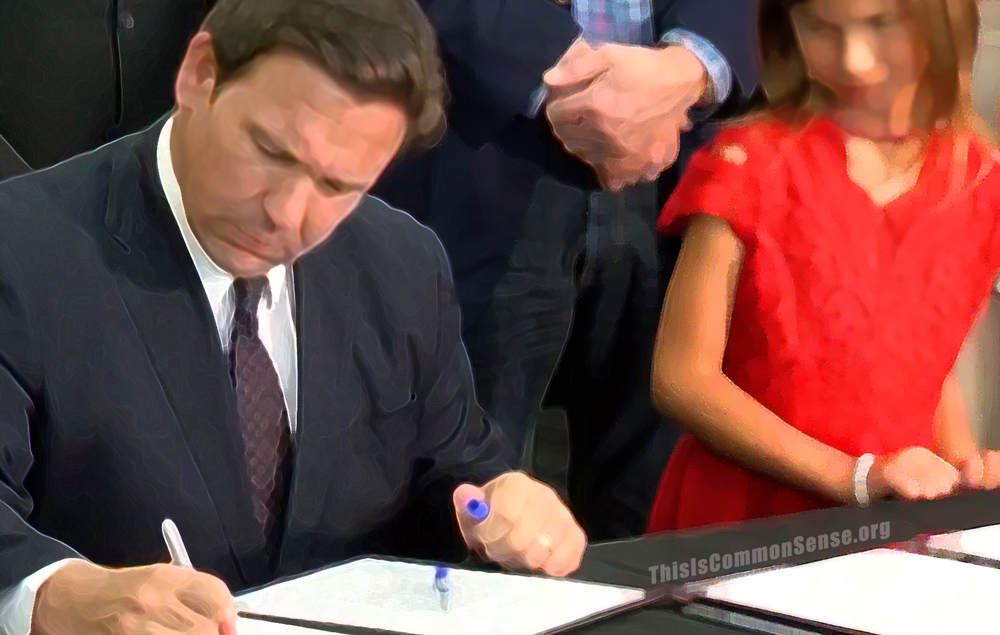
The limits passed by Florida’s legislature and signed into law by Governor Ron DeSantis are not the best one could hope for. State senators pushed for and got a 12-​year limit rather than the eight-​year limit preferred by house members.

Regardless, parents and children are better off with at least some legal limit on the tenure of board members and on their opportunity to abuse power — some curb in addition to the possibility of surmounting the overwhelming electoral advantages that incumbents typically enjoy.

Governor DeSantis agrees that the legislation reaching his desk should have been an eight-​year limit.

“They did three terms . . . and I wouldn’t veto the bill just over that. But if it were a standalone measure, I would have insisted on just two terms for school board members because I think that’s enough time to go, serve, get stuff done.”

In 2018, the Florida Constitutional Revision Commission sent eight-​year limits on school-​board tenure to the voters as Amendment 8. But the Florida Supreme Court knocked the question off the ballot because the limits were combined with other measures to reform education, like more freedom for charter schools.

It is a near-​certainty that voters would have passed the measure — a prospect that terrified those who benefit from rampant school-​board corruption.

Sure, what has now been enacted is only a partial remedy. But it’s something.

I’m a firm believer in the philosophy that something good is better than nothing good.

This is Common Sense. I’m Paul Jacob.


PDF for printing

See all recent commentary
(simplified and organized)
See recent popular posts
Categories
education and schooling general freedom too much government

The Young and the Unmasked

It wouldn’t surprise me if Tiffany McHugh, former director of the Foothills Christian Church Preschool in San Diego, wishes now that she had been running a preschool in a slack state like Florida.

Florida doesn’t penalize such malefaction.

It doesn’t even prohibit it. Yes, things have gotten pretty bad in states like Florida. They let the two-​year-​olds breathe: unthinkable! The policymakers in these states apparently labor under the presumption that the COVID-​19 pandemic is not Bubonic Plague 2.0 and that, for kids, the risk of serious COVID-​19 disease has always been very low.

Well, in California they take these risks seriously!!!!!!!

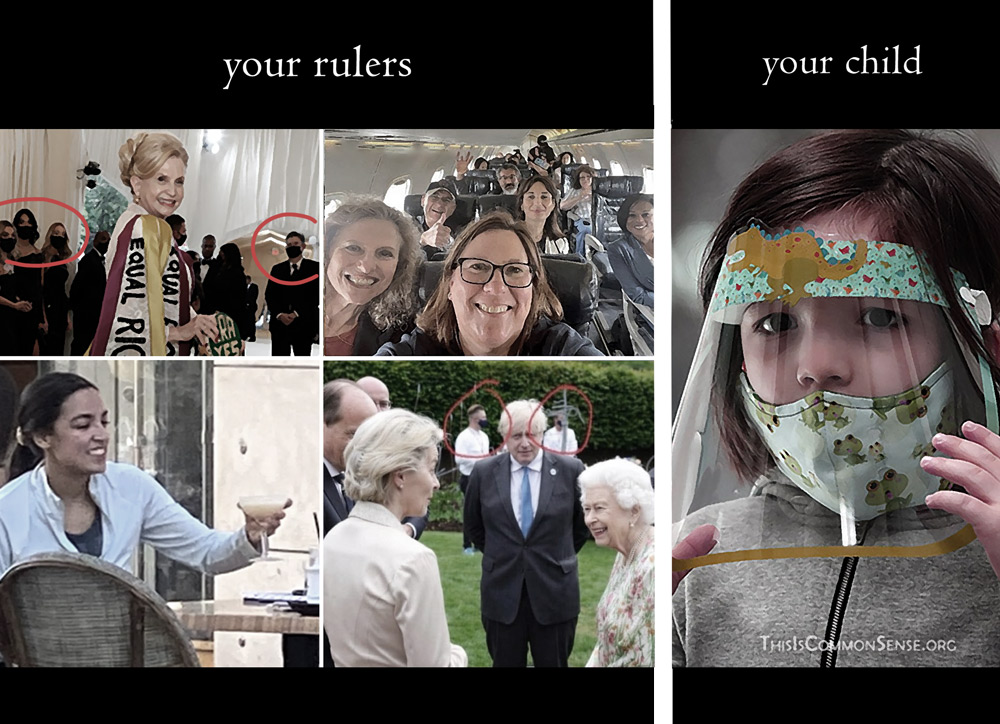
The Golden State’s Department of Social Services has shut down the preschool McHugh was directing and pulled her license. The problem? She couldn’t get the tykes to stay masked.

“There were a lot of children who were just too young to wear masks,” McHugh confesses,“they pull them off. It’s really difficult.”

This makes it sound as if she didn’t even try handcuffing the kids so that they could not remove their masks. Talk about dereliction of duty.

Other area preschools have not been similarly targeted, and so many suspect selective enforcement. But hold on. When you’re going after flouters of regulations, somebody has to be brought to book first. 

Rest assured, all other San Diego and California preschools will be outlawed momentarily.

McHugh’s school has appealed the decision to ban her forlife from working with children. The hearing will be held on February 11.

This is Common Sense. I’m Paul Jacob.


PDF for printing

See all recent commentary
(simplified and organized)
See recent popular posts

Categories
initiative, referendum, and recall

Shanghaied in Tallahassee

How to prevent citizen control of government?

The democracy-​loathing Chinese Communist Party (CCP) is not merely wiping out Hong Kong’s civil liberties, but also aggressively undercutting the limited democratic input citizens previously had. You see, in December of 2019, in the last local elections before the pandemic proscribed the city’s protest movement, fledgling pro-​democracy candidates won an incredible 87 percent of the seats

So the Chinazis postponed the next election, just to be safe.*

Never a full-​fledged one-​person/​one-​vote democracy, Hongkongers only voted for 35 of the 70 Legislative Council seats. But now the CCP is increasing legislative seats to 90 while reducing to just 20 those that voters choose.**

While tyranny may seem another growth industry where China outpaces us, don’t count out our politicians just yet.

Last November, Florida voters decided four citizen initiatives, passing two and defeating two others — including one to make it tougher to pass constitutional amendments. Such “direct democracy” isn’t easy — almost 900,000 Sunshine State voters must sign. Then to pass, Florida amendments require a 60-​percent vote.

Yet for the third consecutive session the unfriendly Florida Legislature, dominated by Republicans, wants to make it even more difficult for regular people to communicate, associate, organize and petition an amendment onto the ballot, bypassing the pols:

♦ House Joint Resolution 61 would hike that 60-​percent supermajority for passage to 66.7‑percent. Should a measure that receives 66.5 percent of the vote lose

♦ Senate Bill 1890 would outlaw contributions of greater than $3,000 to the petition phase of the campaign, which usually costs upwards of $5 million. It’s campaign finance “reform” specifically designed to silence citizens by blocking their ability to successfully place an issue before fellow voters.

“[I]t should not be an impossible process,” offered Trish Neely with the League of Women Voters …

… of Florida, that is. Not Hong Kong.

This is Common Sense. I’m Paul Jacob.


* Not to mention the police arresting aspiring pro-​democracy candidates.

** The police must now first approve all candidates as being sufficiently pro-​China, as well.

PDF for printing

Photo by Elizabeth Jenkins

See all recent commentary
(simplified and organized)
See recent popular posts
Categories
initiative, referendum, and recall

Swampy Moves

Late Friday, in the closing hours of Florida’s legislative session, an amendment “was thrown onto the lifeboat of a different, unrelated bill in a last-​ditch effort,” reported the Miami Herald, “to limit citizen-​driven ballot initiatives.” 

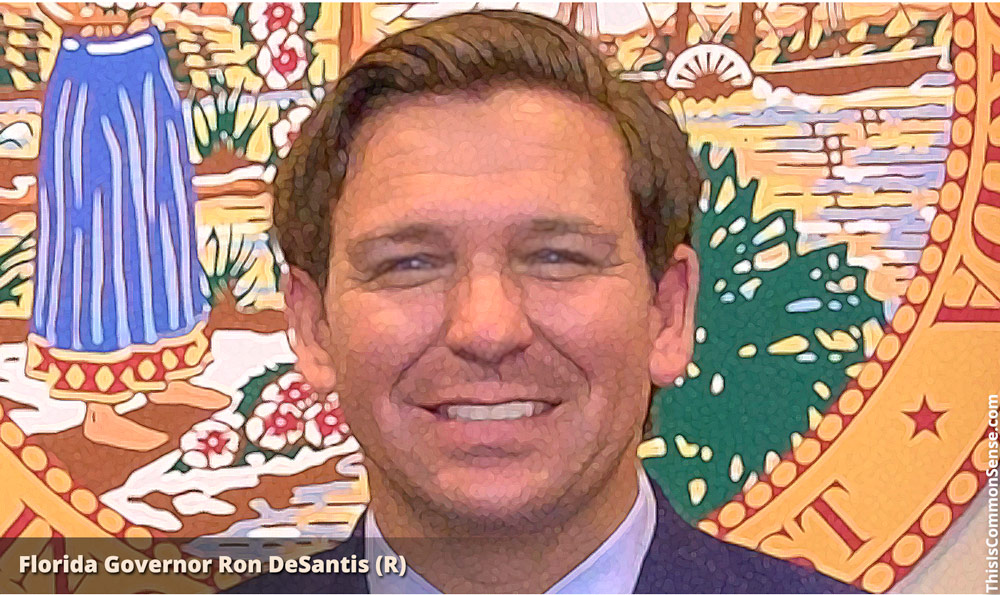
With poisonous provisions appended, House Bill 5 rushed through both chambers in mere hours with party-​line GOP support. It’s now headed to the desk of Republican Governor Ron DeSantis ® for a signature.

Or, better yet, a veto.

The legislation forbids campaigns from paying more to petition circulators who work harder and gather more voter signatures. Years ago, California Governor Jerry Brown vetoed an identically ridiculous and mean-​spirited prohibition passed by that state’s Democratic-​dominated legislature, writing: “It doesn’t seem very practical to me to create a system that makes productivity goals a crime.”

Surely, Gov. DeSantis is as adverse to government regulations and red-​tape as was Governor Moonbeam. 

HB 5 also mandates that a bold statement be placed on the ballot next to any measure estimated to have “increased costs, decreased revenues, a negative impact on the state or local economy, or an indeterminate impact for any of these areas.” Wait … if this information is so important to voters, why only inform them when the message is “negative” or “indeterminate,” but not when positive

The sneaky maneuver “goes to show,” Florida Conservation Voters Director Aliki Moncrief noted, “how little respect [legislators] have for Florida voters.” The leader of one ballot measure effort called it the “ultimate of swampy moves.”

Ask Gov. DeSantis to defend the voters by vetoing HB 5 — call (850) 488‑7146 or email him.

This is Common Sense. I’m Paul Jacob.


PDF for printing

Florida, Governor, Ron DeSantis, initiative, referendum,

See all recent commentary
(simplified and organized)
See recent popular posts

Categories
Accountability crime and punishment education and schooling national politics & policies responsibility U.S. Constitution

Will Feds Foil Foolish Licensing?

It would be nice if the federal government used its often-​abused authority over state and local governments to outlaw various forms of state and local oppression. 

In his book Leviathan: The Growth of Local Government and the Erosion of Liberty, Clint Bolick argues that the federal government is not alone in hugely violating individual rights. Eminent domain, asset forfeiture, zoning, and occupational licensing are among the modes of sub-​federal assault on the innocent. Even as policymakers in various regions of the land act to stop the worst of these abuses, they proceed unchecked elsewhere. 

U.S. Senators Marco Rubio and Democrat Elizabeth Warren are the unlikely duo who may interrupt the now-​common practice of depriving delinquent borrowers of student loans of their right to earn a living from certain trades. Rubio recently admitted on Twitter that as a Florida lawmaker, he once voted to allow the state “to suspend professional licenses of those who defaulted on student loans. I WAS WRONG.… How can they pay back if they can’t work?” 

Yes, Rubio was wrong. 

Senator Warren, for her part, agrees that the practice is “wrong and counterproductive.”

The bi-​partisan duo’s bill would prohibit states from denying driver’s licenses and occupational licenses to borrowers who default on student loans. 

I don’t think the legislation goes as far as it should, even in the delimited area of occupational licensing. The absurdities of occupational licensing go way beyond the scope of the proposed remedy. 

But it’s a start.

This is Common Sense. I’m Paul Jacob.


PDF for printing


Photos by Gage Skidmore and Edward Kimmel