Categories
First Amendment rights national politics & policies too much government

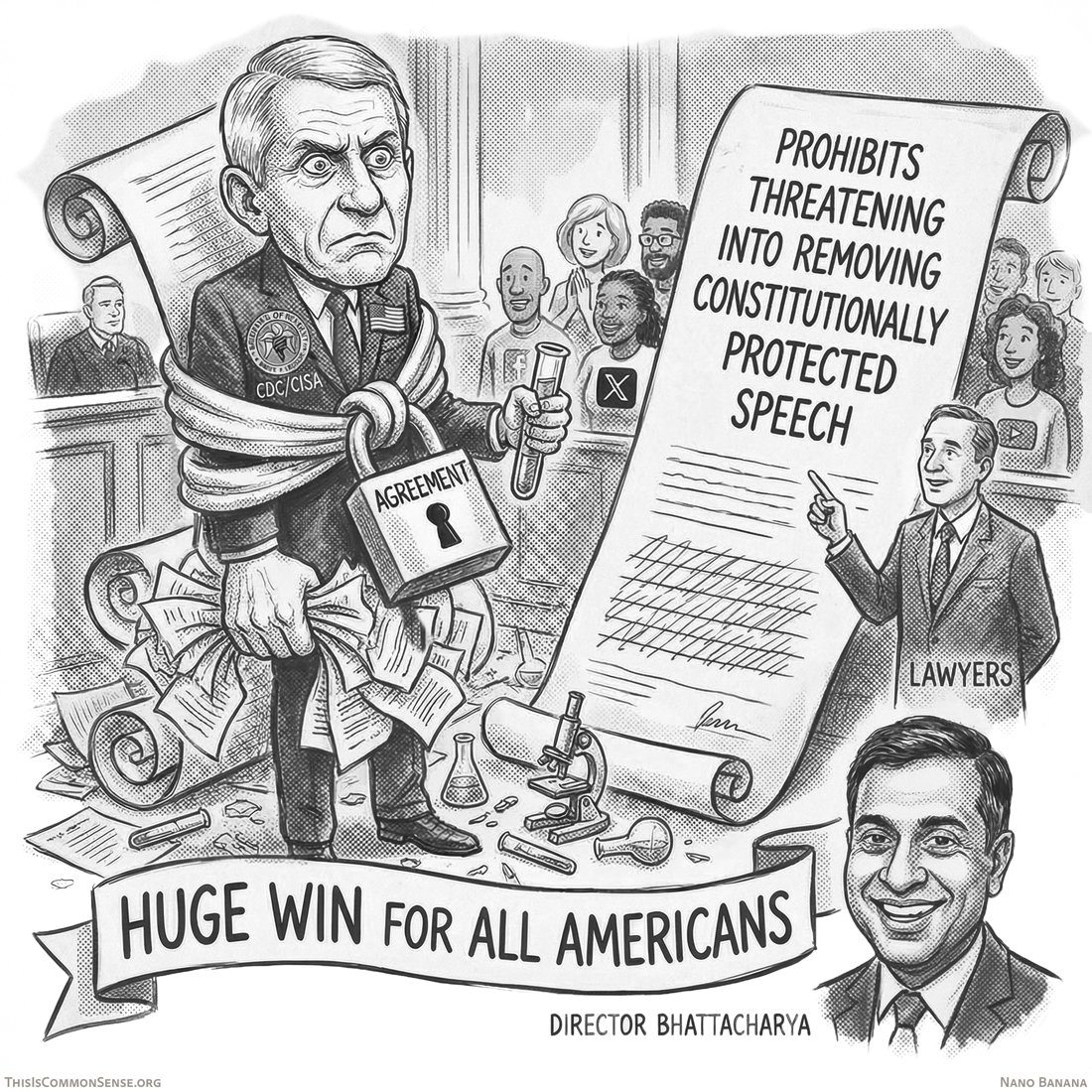
The FCC’s Press Bias Fix

You are operating a newsroom or, let’s say, a commentary room. Somebody accuses you of bias in how you decide what to publish.

You deflect: Of course different media organizations have different perspectives; each to its own. Sometimes, too, we choose what to run less rationally than the Platonic philosopher-​journalist would demand.

Bias is everywhere, inevitable.

Which makes the only cure maximal freedom of speech and openness of discourse. The answer to deficient speech is better speech, not either direct or indirect government censorship.

Nevertheless, the FCC has proposed to “investigate” the selection process of newsrooms.

Any such investigation is necessarily biased from the get-​go against freedom of speech and press. Even if it never gets to the regulation stage, the investigation itself constitutes interference. It is impossible for anyone being asked formal investigatory questions by the FCC to be unaware that the questioner has the power of government behind him.

How, for example, is a conscientious employee who respects the rights of his boss supposed to answer this loaded question: “Have you ever suggested coverage of what you consider a story with critical information for your customers that was rejected by management?”?

FCC commissioner Ajit Pai reports that this is one query being considered as part of a “Critical Information Needs” study to determine how stories are selected, “perceived bias,” and how responsive a newsroom is to “underserved populations.”

Pai, who opposes the project, says: “The government has no place pressuring media organizations into covering certain stories.”

Or not covering others.

This is Common Sense. I’m Paul Jacob.


PDF for printing

Illustration created with Nano Banana and Firefly

See all recent commentary
(simplified and organized)
See recent popular posts
Categories
First Amendment rights insider corruption local leaders

Vindictiveness vs. the First Amendment

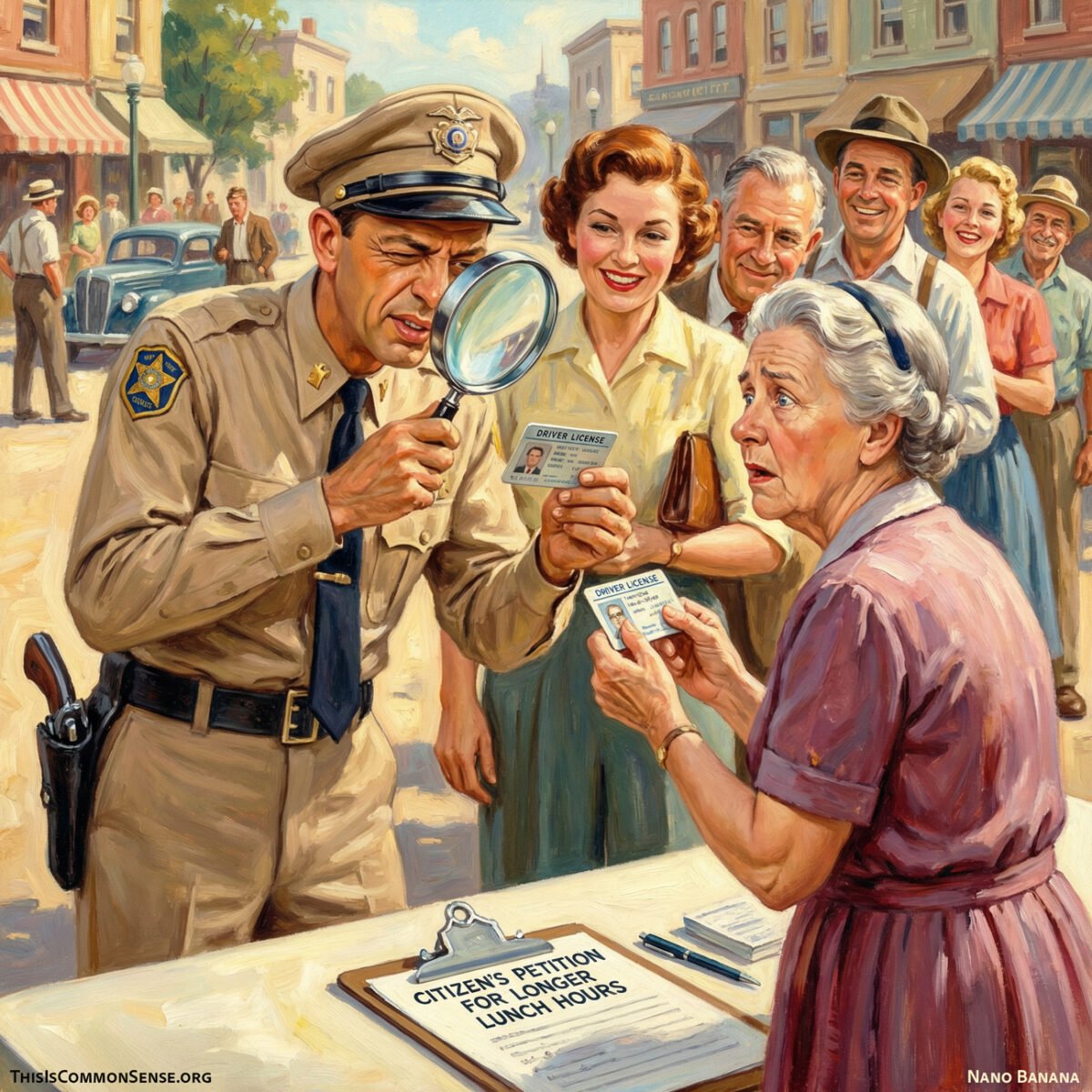
Finally, the city council of Castle Hills, Texas, is doing the right thing by Sylvia Gonzalez, accepting a settlement to resolve years of litigation against the city for violating her First Amendment rights.

In 2024, the U.S. Supreme Court ruled in her favor, agreeing that courts may properly consider evidence that an arrest is retaliatory.

According to Gonzalez’s lawsuit, in 2019 city leaders had lashed out against the councilwoman for her support of a nonbinding petition to remove a city manager. The city’s weapon? A rarely used law that it wielded against her for “briefly and inadvertently having the petition among her papers” during a heated council meeting; she allegedly tried to “steal” her own petition.

Gonzalez was arrested and spent a day in jail — the real reason, according to her lawsuit, being her criticism of local leaders.

The settlement means that statewide training on “First Amendment retaliation” (presumably, how to avoid engaging in it) will be offered throughout Texas and, for Castle Hill officials, will be mandatory.

The city must also pay $500,000 in damages to Gonzalez.

Anya Bidwell, an attorney for the Institute of Justice, which represented Gonzalez in the suit, observes that the First Amendment “doesn’t come with handcuffs. This outcome sends a message to officials everywhere: if you retaliate against critics, you can be held to account.”

Let’s hope that not a whole lot of training is needed to safeguard local freedom of speech. The issue is not that complicated.

This is Common Sense. I’m Paul Jacob.


PDF for printing

Illustration created with Krea and Firefly

See all recent commentary
(simplified and organized)
See recent popular posts

Categories
First Amendment rights

Campaign Finance Folly Foiled

The Institute for Free Speech and its clients, Connecticut State Senator Rob Sampson and former Connecticut State Senator Joe Markley, have won a long-​awaited judicial victory.

The Connecticut Supreme Court affirmed that it was okay for the senators to criticize the state’s governor at the time, Dannel Malloy, in a campaign mailer. The State Election Enforcement Commission had contended otherwise.

In 2014, Markley and Sampson had collaborated on a mailer to defend their anti-​big-​spending, anti-​big-​taxing views against those of the governor. According to the Commission, the mailer thereby violated the state’s campaign finance law. The reason: it benefited the governor’s political opponent. 

That opponent supposedly should have paid a third of the cost of the mailer.

By the agency’s anti-​speech reasoning, any statements in any campaign mailer that might somehow benefit some political candidate in the state — even a citation of the Declaration of Independence or a logic- (as opposed to fact-) check — would violate campaign finance law. 

Certainly, were the principles of logic widely disseminated in the state, this would pose a grave danger to a huge majority of candidates.

The SEEC fined Sampson and Markley. 

Now the state supreme court has ruled that doing so violated the First Amendment; “candidates must be able to communicate where they stand on issues in relation to other candidates and public officials.…”

Good. But couldn’t the judgment have come quicker? The same court issued an interim ruling back in 2021. The justices could have clobbered the SEEC’s lunatic presumption back then.

Freedom of speech delayed is freedom of speech denied. 

This is Common Sense. I’m Paul Jacob.


PDF for printing

Illustration created with PicFinder and Firefly

See all recent commentary
(simplified and organized)
See recent popular posts

Categories
crime and punishment First Amendment rights judiciary

States Without Standing

Friends of freedom of speech had been looking forward to a certain U.S. Supreme Court decision, Murthy v. Missouri.

The Biden administration has for years worked to suppress social-​media speech that disputes official government doctrines about biology, pandemic policy, elections, and other controversial matters. In short, the kind of speech the First Amendment was designed to protect.

Several suits have been launched against the federal government’s censorship. This one had been brought by Louisiana, Missouri, and other states, abundantly proving that administration officials actively pressed social-​media companies to suppress speech.

By a 6 – 3 vote, the court tossed lower-​court rulings that favor the states’ position. According to the decision’s coiled reasoning, the states lack legal right to sue. They lack standing.

Dissenting: Justices Alito, Gorsuch, Thomas.

The majority made a big point of ruling only on this question of “standing” — which none of us speakers of speech have, apparently — and not on the main question. We can hope, I guess, that some other case will someday be brought by plaintiffs whose rights the majority will concede have been infringed by the government’s infringing actions, which by their nature assault the right of freedom of speech of all Americans.

Meanwhile, in the words of Louisiana Attorney General Liz Murrill, the court’s decision “gives a free pass” to the government’s efforts to “threaten tech platforms into censorship and suppression of speech that is indisputably protected by the First Amendment.”

This isn’t a minor procedural setback.

This is Common Sense. I’m Paul Jacob.


PDF for printing

Illustration created with ChatGPT4o and Firefly 

See all recent commentary
(simplified and organized)
See recent popular posts
Categories
crime and punishment First Amendment rights general freedom

Doxxing Dissent

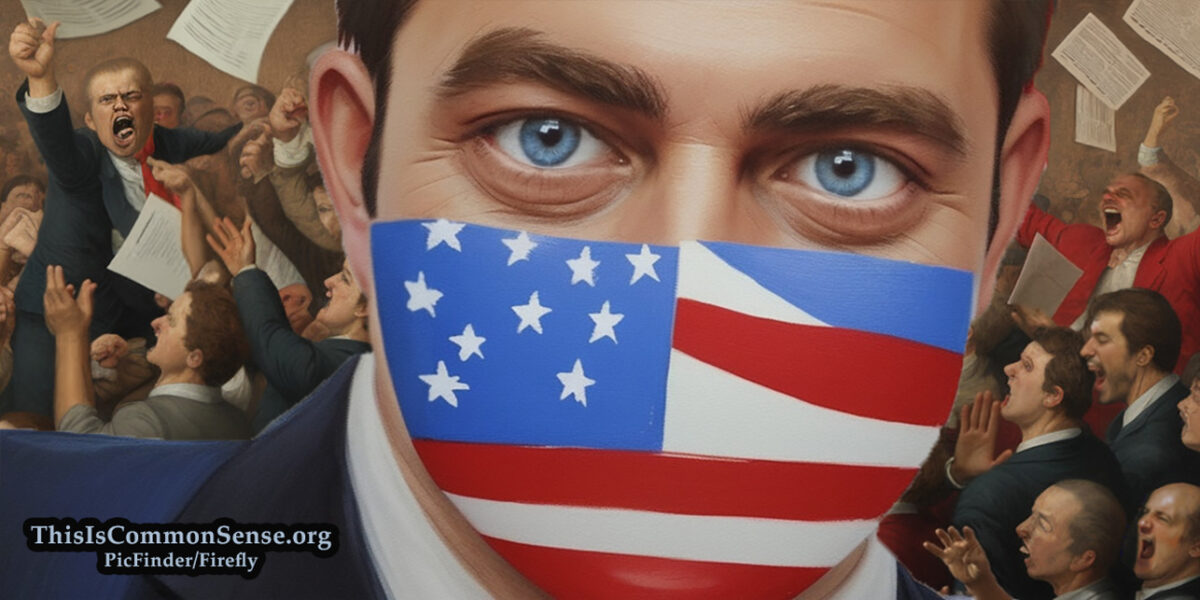
California lawmaker Steve Padilla is apparently indifferent to the speech-​enabling virtues of anonymity. The state senator (18th District) has no problem violating the First Amendment rights of persons who conceal their identity the better to speak out.

Padilla is proposing legislation, SB1228, to compel social media companies to compel social media “influencers” who’d rather remain anonymous to identify themselves. A company that fails to comply would risk being penalized.

And I hear it often: why anonymity? Folks should own up to their speech!

But many people have good reasons for remaining anonymous when they publish their views. One is to protect themselves from harassment by private parties. Another is to protect themselves from harassment, or worse, by governments.

Tiffany Donnelly of the Institute for Free Speech observes that the United States has a long history of anonymous political speech.

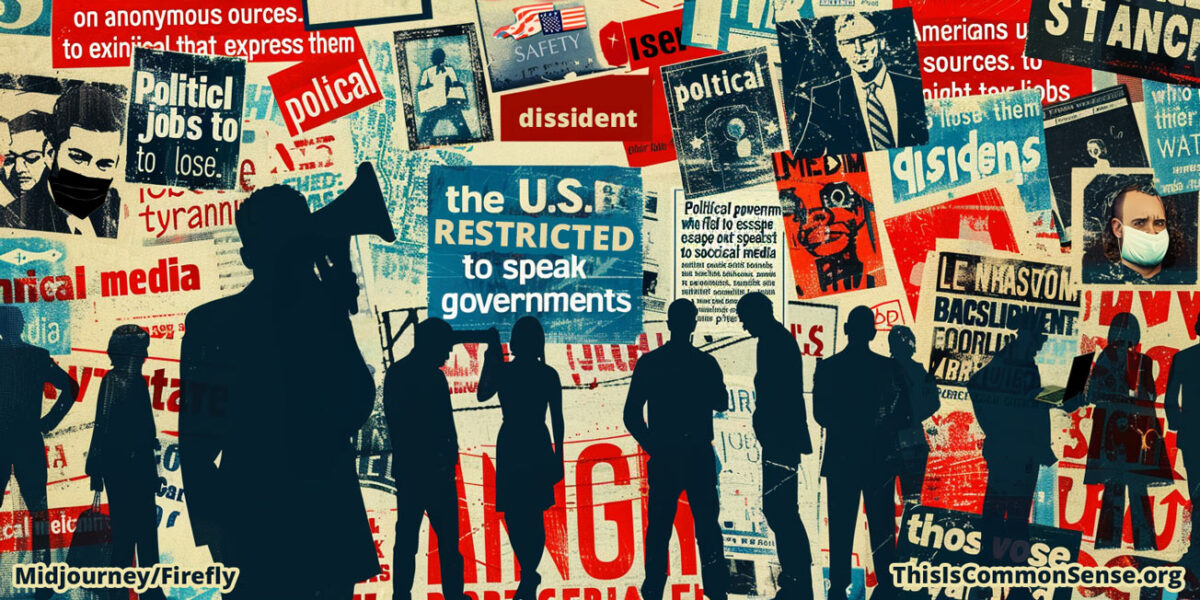
Investigative journalism “often relies on anonymous sources. Americans use social media to express political opinions that might cause them to lose their jobs. Political dissidents who fled to the U.S. to escape tyrannical governments use social media to speak out against those repressive regimes.”

Once social media companies collect the ID data, then what?

Perhaps the information is supposed to just sit in the companies’ computers. But once it becomes known that certain anonymous but controversial writers are being forced to supply personal information, this information becomes a target — for hackers, state governments hiring hackers, disgruntled moderators who may decide to “out” the commentators they dislike.

The bill won’t stop “misinformation,” but it will discourage discourse. 

Specifically, dissent.

It’s this bill that should be stopped.

This is Common Sense. I’m Paul Jacob.


PDF for printing

Illustration created with Midjourney and Firefly

See all recent commentary
(simplified and organized)
See recent popular posts
Categories
crime and punishment First Amendment rights judiciary

Most Important Time Periods

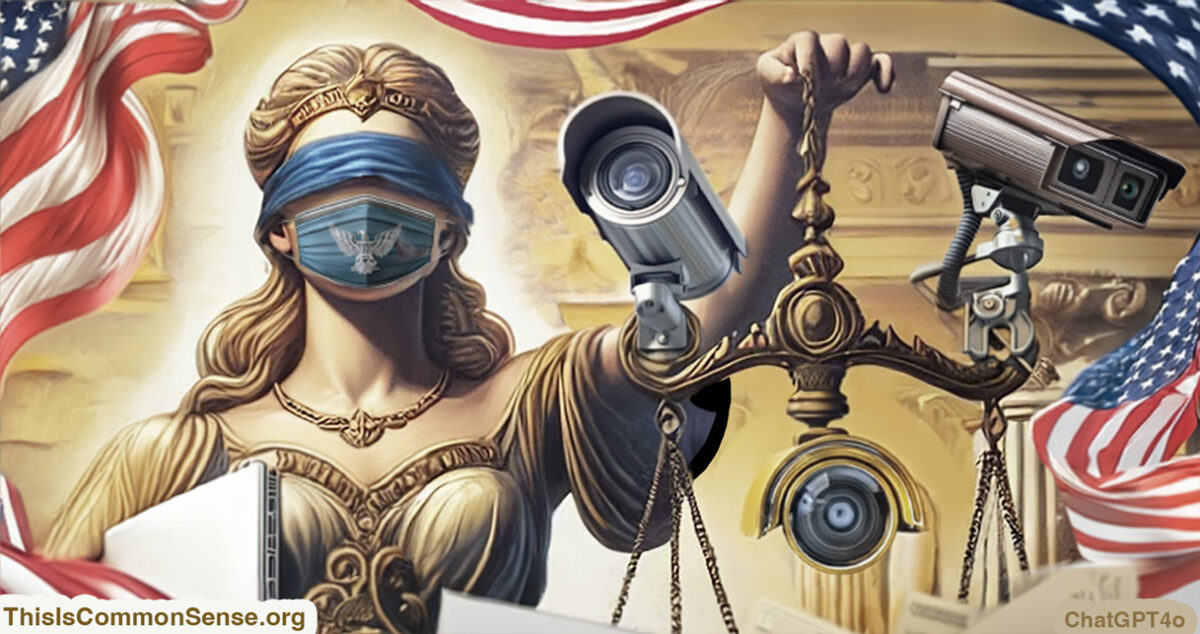
The attorneys general of a few states, a few activist groups, and a few congressmen have acted to bring to light a mass of eyewitness and documentary evidence that the federal government has been working hard, behind the scenes, to censor our speech.

The guilty parties have been caught red-handed.

Now that the matter is before the U.S. Supreme Court, reports on oral arguments suggest that not every justice is as acquainted with the point of the Bill of Rights as we’d like.

Its function is to stop government from doing various rights-​violating things at will. But Justice Ketanji says: “Your view has the First Amendment hamstringing the government in significant ways in most important time periods.”

Justice Kagan, chiming in: “I’m really worried about that.”

Tyrants worry about having too little flexibility to stomp our speech “in most important time periods,” prevention of which stomping is the very purpose of the First Amendment.

We, for our part, worry about having our speech stomped.

Some of the justices also seem not to grasp that when government officials contact you and ask you to do this and that, no overt threats are necessary for officials to rely on the threat of governmental power.

The bossing is not always subtle, though. Perusing the evidence, Justice Alito says he couldn’t imagine officials “taking that approach to the print media.” The federal speech police treat “Facebook and these other platforms like they’re subordinates.”

Are they?

This is Common Sense. I’m Paul Jacob.


PDF for printing

Illustration created with Firefly

See all recent commentary
(simplified and organized)
See recent popular posts
Categories
First Amendment rights Fourth Amendment rights media and media people national politics & policies political challengers

The Citizen Threat

“The Republicans,” said Tucker Carlson — speaking of elected Republicans — “who really do hate their own voters in a way that’s pathological, are just re-​upping the spy laws to allow the Biden Administration to spy on their voters.”

Mr. Carlson is not wrong, at least about Republican leaders aiding Democrats in spying on conservatives and others who sometimes vote GOP.

Yes, the federal government’s surveillance and criminal “justice” apparatus has been directed by Democrats — the Biden Administration specifically, and whoever runs that — to target, as The Enemy, conservatives and others associated with (or merely adjacent to) the Republican Party.

This cannot be dismissed as a conspiracy theory. Democratic thought leaders pushed this new anti-​terrorism paradigm from the first moments of the Biden Administration, in public

Or at least on MSNBC, where John Brennan clearly reconceived opposition to his Democratic Party as a movement looking “very similar to insurgency movements that we’ve seen overseas.” 

“Even libertarians,” he said, constituted “an insidious threat” to, not the Democratic Party, but “our Democracy.”

This perspectival shift, of seeing policy and political opposition as “insurgency,” is key to the new anti-​democratic mindset.

And very real. It could end our small‑r republican experiment.

Which brings us back to Republican politicians and their willingness to let Democrats institute a permanent pogrom against all who oppose Democrats’ big government programs.

Why do this? Out of hatred? Disdain? Fear?

Let’s not ignore the age-​old impulse of politicians to squelch the speech of opponents. The longer in office, the more these careerists tend to view their own constituents as threats. After all, anyone might freely offer a complaint that emboldens or comforts the opposition. This is a bipartisan principle.

Better an enforced silence about the dictates of Washington, sadly, if you are a Washingtonian delivering dictates.

This is Common Sense. I’m Paul Jacob.


PDF for printing

Illustration created with PicFinder and Firefly

See all recent commentary
(simplified and organized)
See recent popular posts
Categories
Accountability First Amendment rights government transparency

Overly Broad Stonewalling

How specific do requests for records of unconstitutional activity have to be?

In February, the Federal Bureau of Investigation pretended an inability to fulfill America First Legal Foundation’s freedom-​of-​information request for documents about the FBI’s pre-​election efforts to censor Twitter users. The agency declared the request to be “overly broad.”

What’s been “overly broad” is the policy of censorship, disinformation, and more by the Deep State using private partners. Meaning their real problem is doubtless that the requested documents are “overly incriminating,” too unmistakably what AFL wanted.

So the FBI stonewalled. 

And AFL has sued, in its complaint concluding that the agency’s “blanket denial of AFL’s FOIA request is contrary to law and should not stand.”

Thanks to evidence brought to light by other litigation and by Matt Taibbi’s reporting on Twitter’s internal records, none of us is just guessing that the FBI has acted to censor constitutionally protected discourse. We know that the FBI’s National Election Command Post flagged at least 25 Twitter accounts for “misinformation.”

But the only party to the censorship revealing relevant information voluntarily is Twitter itself, thanks to decisions by Twitter’s new management under Elon Musk.

With respect to everybody else colluding to censor social media — the FBI, the DOJ, the White House, Google, Facebook, etc. — looks like it’ll have to be lawsuits every step of the way.

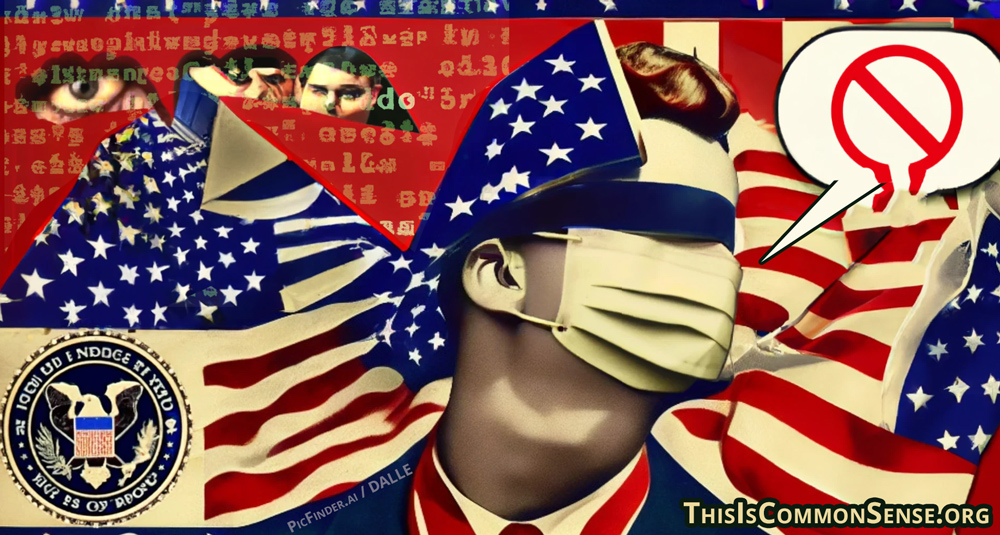
The First Amendment’s stricture upon Congress to “make no law” abridging our “freedom of speech, or of the press,” does not allow the FBI, the CIA, the NSA, and other agencies to simply subcontract. Nor are they free to mold public opinion. 

A government-​controlled “press” is not a free press.

This is Common Sense. I’m Paul Jacob.


PDF for printing

Illustration created with PicFinder​.ai and DALL-E2

See all recent commentary
(simplified and organized)
See recent popular posts
Categories
education and schooling First Amendment rights general freedom

Students Strike Back

In November 2021, at taxpayer-​funded Clovis Community College, the group Young Americans for Freedom requested permission to post flyers. College officials assented.

The flyers attacked socialism. Uh oh. This was a grave violation of the alleged inalienable right of socialist students on the campus to never be exposed to disagreement with their views.

Some of the aggrieved students complained. We are offended, they told the school.

Administrators furrowed their brows and quickly determined that the school could not permit such offensive speech.

Suddenly censored, the YAF students who had posted the flyers went to court, represented by the Foundation for Individual Rights and Expression (FIRE). They quickly won a district court victory that has now been affirmed in the Ninth Circuit Court of Appeals.

According to the court’s ruling, “The district court did not abuse its discretion when it concluded that [the students] were likely to succeed on the merits of their claim that the ‘inappropriate or offens[ive] language or themes’ provision was facially overbroad.”

This means that the case can continue.

Clovis YAF Chair Juliette Colunga hopes that in response to the ruling, Clovis will finally decide “to explicitly protect the constitutional rights of its students to speak freely.”

The school has tried to forestall further litigation to require it to set forth an unambiguous policy protecting freedom of speech by conceding that the students may post the anti-​socialist flyers.

That’s not enough for FIRE, though, which is proceeding with the litigation.

This is Common Sense. I’m Paul Jacob.


PDF for printing

Illustration created with PicFinder​.ai and DALL-​E2

See all recent commentary
(simplified and organized)
See recent popular posts
Categories
First Amendment rights general freedom ideological culture

It’s His Party

If you’re a fan of freedom of speech, you’re probably also a fan of the First Amendment of the United States’ Constitution.

Unfortunately, governments keep trying to evade it.

When their censorship can’t itself be evaded, often the only thing to do is go to court. 

Merely showing a copy of the Constitution to the offending officials rarely suffices.

That’s why Kells Hetherington teamed up with the Institute for Free Speech to overturn a Florida statute requiring that “a candidate running for nonpartisan office may not state the candidate’s political party affiliation.” In a 2018 campaign for Escambia County School Board, Kells had been fined for calling himself a “lifelong Republican” as part of his candidate statement on the county’s website. In a later campaign, he kept silent to avoid another fine.

The Institute points out that in violating the First Amendment rights of candidates, Florida’s don’t‑say-party law has especially hurt challengers. It has deprived them of a valuable shorthand way of indicating the tenor of their political views, a shorthand that incumbents have many more ways of communicating to voters outside the context of campaign statements.

Kells and IFS have won. Late last year, a district judge in Florida ruled that the First Amendment does indeed protect his right, as a candidate, to mention his political party.

Kells says that “hopefully, this will never happen again to any other candidates.” 

In any case, it’s clear that the Institute for Free Speech will never be out of a job. That First Amendment won’t enforce itself.

This is Common Sense. I’m Paul Jacob.


PDF for printing

Illustration created with Midjourney

See all recent commentary
(simplified and organized)
See recent popular posts