Categories
education and schooling judiciary

School Choice Rescued

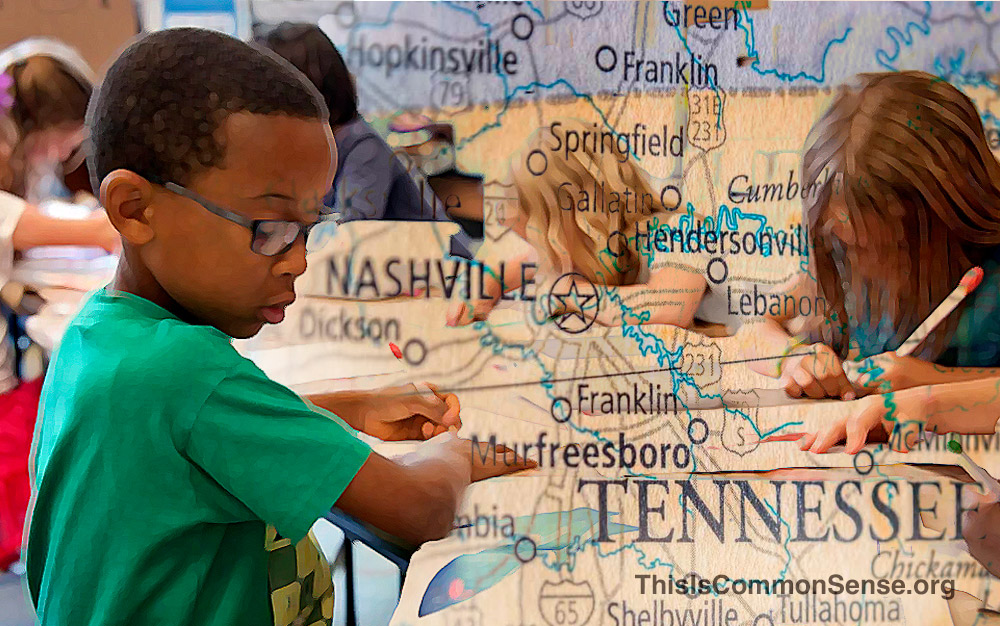
Though not yet a complete victory for school choice, a recent decision by the Tennessee Supreme Court constitutes a big win for the Tennessee Education Savings Account Pilot Program.

The court rejected a major claim in a lawsuit filed by Nashville County and Shelby County to challenge the constitutionality of the program, which awards scholarships up to $7,300 to qualifying students so they can escape failing public schools.

The lawsuit contends that the program flouts a rule prohibiting the state legislature from passing local laws that are “applicable to a particular county . . . either in its governmental or its proprietary capacity.”

Judging that school districts aren’t counties and that the ESA program does not impair the ability of counties to govern themselves, Tennessee’s highest court threw out a determination to the contrary by lower courts and sent the case back down for review of other claims in the lawsuit.

The Institute for Justice and the Beacon Center of Tennessee, which have been working together on the case, are optimistic about the final outcome.

According to IJ attorney Arif Panju, the ruling means that “thousands of Tennessee parents and children trapped in failing school districts can look forward to seeking a better education this fall at a school of their choice.”

In its description of the program, the Tennessee government mentions the lawsuit and expresses the hope that the state will “succeed on appeal” and begin enrolling students in 2022.

This is Common Sense. I’m Paul Jacob.


PDF for printing

See all recent commentary
(simplified and organized)
See recent popular posts
Categories
Accountability education and schooling

Grading on a Skewed Curve

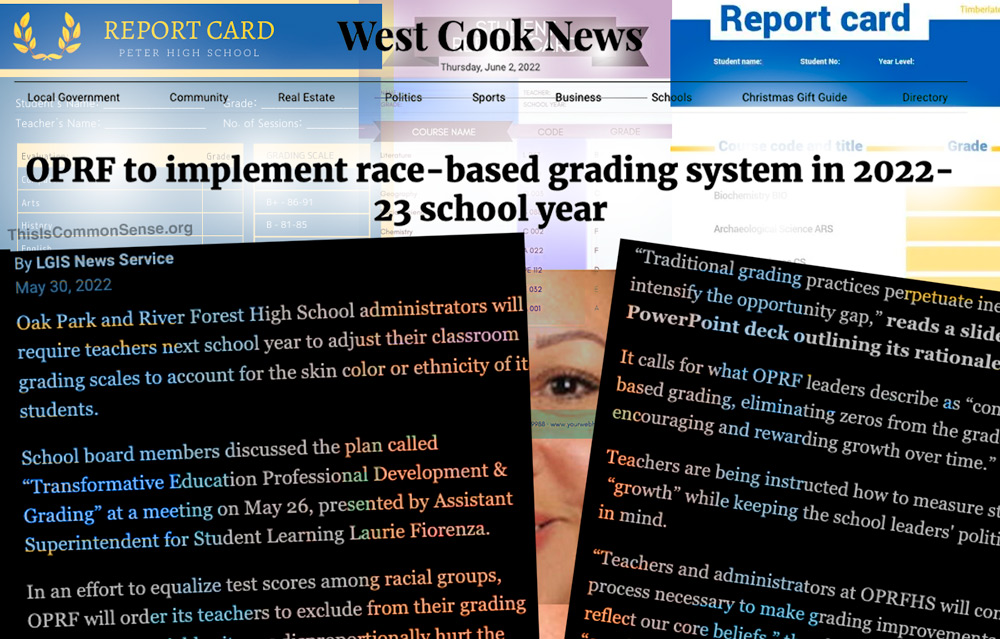
Oak Park and River Forest High School, a Chicago-area school, is imposing standards of grading designed to equalize academic performance among races.

According to a plan discussed at a recent school meeting, “Traditional grading practices perpetuate inequities and intensify the opportunity gap.”

Teachers must now ignore whether, for example, students miss class, misbehave, or fail to promptly submit homework. It seems that students of certain races commit such lapses, on average, more often than students of other races.

It’s not the first major step taken at the school to promote “diversity, equity, inclusion and justice [sic].” Last year, a teacher there adopted a grading scale under which students had to score as low as 19 percent to get an F and could get an A with 80 percent, a B with 65.

Students who conscientiously try to learn despite the fact that excellence and conscientiousness are no longer being appropriately recognized may do okay despite the perverse incentives being pushed.

But what about students on the margin who need to be rewarded for their efforts? Might they not slide into apathy if, no matter what they do, they’re treated like anybody else? Grades, after all, are there to serve as feedback — signalling successes and failures in learning, rewarding for excellence and warning for error. Take that away and one incentive to adjust studying habits flies out the window.

Even under the new plan, there will perhaps be some remnant of recognition of actual individual performance at Oak Park and River High. But precedents have been established that pave the way to further erosion of standards.

Unless the whole noxious egalitarian approach is repudiated, things there can only get worse.

This is Common Sense. I’m Paul Jacob.


PDF for printing

See all recent commentary
(simplified and organized)
See recent popular posts

Categories
education and schooling ideological culture

The Enforcers of Conformity

In the American academe of 2022, you never know who will be next on the chopping block for disputing the latest insanities. At the moment, that someone is former Princeton University classics professor Joshua Katz.

Katz is supposedly being fired for a relationship he had with a student 15 years ago and for which he was penalized in 2017. Actually, it’s for exposing the racist assumptions of so-called antiracism in a 2020 article.

It seems Princeton has been itching for an excuse to can him. Last year, the university found its excuse when the student involved in the older controversy, provoked by the new one, revived the old complaint.

Katz’s lawyer, Samantha Harris, says “the message to would-be dissenters is clear: the price of speaking out is having your personal life turned inside out looking for information to destroy you.”

Only a few colleagues have publicly supported Professor Katz.

Or even still talk to him. 

More have joined the bandwagon against him. When it’s been most urgent to profess the truth, these professors have preferred a “safer” path.

In 2020, Katz wrote: “The pressure to apologize . . . to appease one’s tormentors can be tremendous, but do not give in to the pressure. If you feel you did no wrong, do not apologize.”

If Professor Katz wants to put this nightmare behind him, I’d understand. If he wants to sue Princeton for a billion dollars or so, well, I’d understand that too.

This is Common Sense. I’m Paul Jacob.


PDF for printing

See all recent commentary
(simplified and organized)
See recent popular posts

Categories
education and schooling subsidy

Education Fraud

It’s a mess.

Families are often sold a bill of goods regarding higher education.

Unless a student pursues a subject like computer science, architecture, engineering, or medicine, it may take decades to pay off student loans.

Graduates who specialized in Advanced Basket Weaving, the Sociology of Postmodern Literary Stylings, and Marxist Techniques for Making White People Feel Guilty just might snag a high-paying job as an Ivy League professor or senior manager of a corporate “antiracism” task force. But beyond those few spots, opportunities are scant.

And, of course, many people who pursued legitimate studies in the liberal arts or technical subjects also don’t make enough to emerge from massive debt any decade soon. Nor does every STEM grad necessarily cash in. Individual results vary.

What to do?

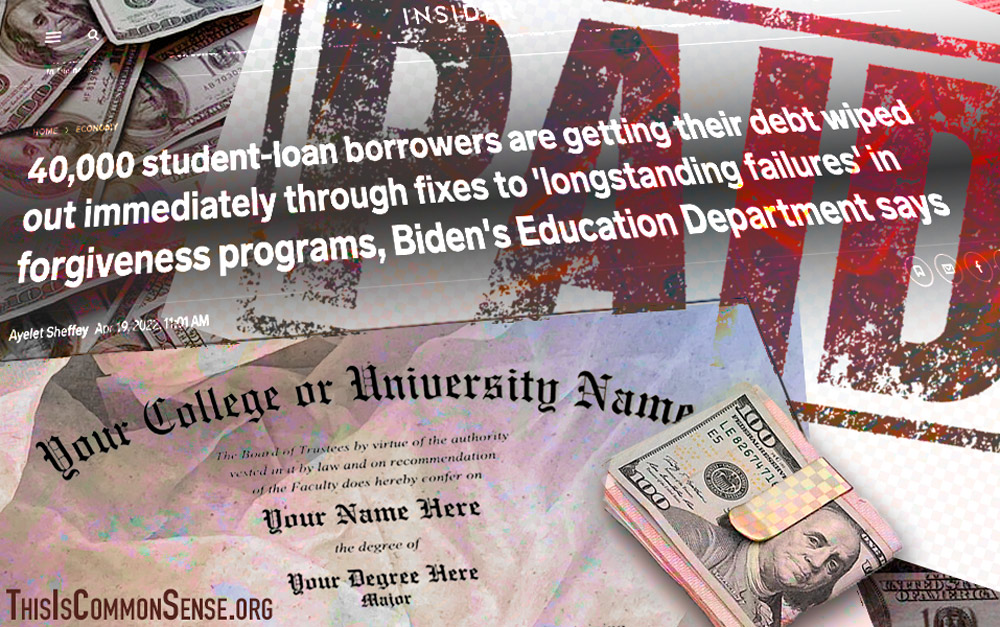
The Biden administration has decided to wipe out student debt en masse, expanding the Public Service Loan Forgiveness Program so that about 40,000 student-loan borrowers escape debt immediately and the debt of millions of others is slashed.

But is forcing others to pay this debt through their taxes — parents and children who perhaps carefully avoided taking out student loans — a just and practical answer to the problem?

The long-term solution is to get the government out of the business of subsidizing higher education in any manner, whether in the form of direct payments to schools or loans to students. Without the massive subsidies, tuition costs would decline.

The short-term solution? Launch an investigation into whether the U.S. Department of Education, colleges and universities — along with both Republican and Democratic administrations — have engaged in fraud against those who took out the loans. 

If students were defrauded, first seek redress from the perpetrators. Not the taxpayers.

This is Common Sense. I’m Paul Jacob.


PDF for printing

See all recent commentary
(simplified and organized)
See recent popular posts

Categories
education and schooling insider corruption

Principal Gets F and Payoff

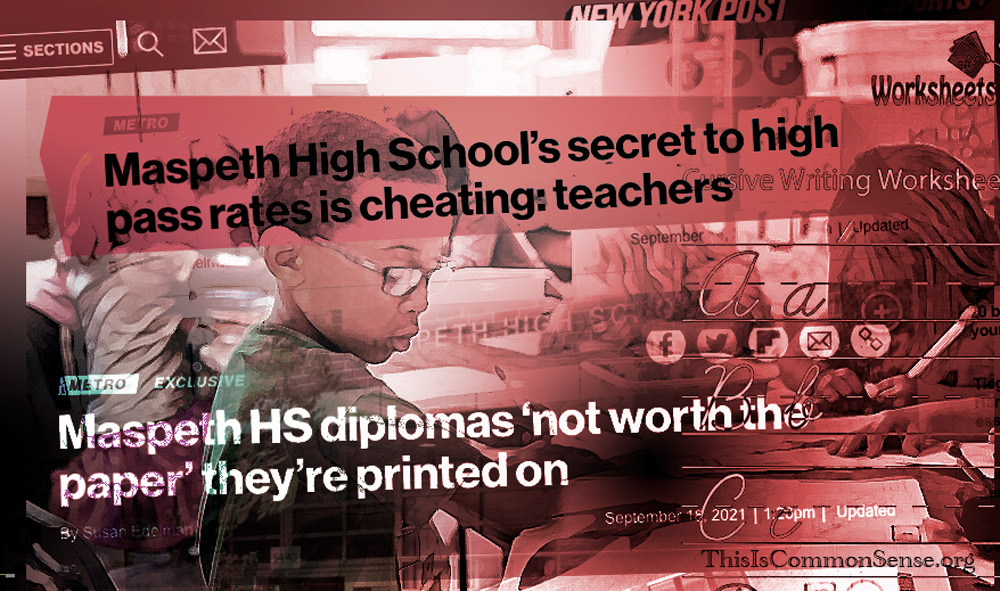
Former principal of Maspeth High School, Khursid Abdul-Mutakabbir, exemplifies the who-gives-a-crap approach to education.

After a foot-dragging investigation, the New York City Department of Education finally fired the man for urging staff to concoct fake grades, fake classes, fake graduation rates.

His attitude: “I don’t care if a kid shows up at 7:44 and you dismiss at 7:45, it’s your job to give that kid credit.”

An official report outlines the many derelictions at this public school. Yet when the local DOE removed the principal, it also gave him a seven-year sinecure paying $260,000 a year.

Wha—? Why? 

Well, they’re all members of the same club.

Such nihilism and grift are rampant, if not universal.

Calling the settlement a “deeply symbolic insult” to taxpayers and students, columnist Bob McManus wants Mayor Eric Adams to “claw back” the payoff to prove that he really does mean to “fight for public education.” 

Frankly, the conduct of everyone involved is life-destroying — not just a matter of insults and symbolism. 

The minds and futures of young people are at stake.

In many schools, things only get worse. Maybe your kids are stuck in a public school that cannot be reformed, with perverse ideological agendas displacing reading, ’riting, and ’rithmetic, never mind how to learn and think. Maybe homeschooling isn’t an option.

Glenn Reynolds advises shutting down the imploding public schools and replacing them with “universal vouchers, in the name of public health.”

Regardless of what specific reform we take to this mess, remember the goal: a learning lifeline to every kid who wants better. A choice. A chance.

This is Common Sense. I’m Paul Jacob.


PDF for printing

See all recent commentary
(simplified and organized)
See recent popular posts
Categories
education and schooling First Amendment rights

Don’t Ask, We Won’t Sue

Uh oh. Haul out the armament and load and aim — at least if you’re responsible for educating the young daughter of Nicole Solas.

Solas is among the many parents who missed the memo about how sinful it is to have some idea of and influence on what their kids learn in public schools.

She’d heard about how public schools have been indoctrinating kids with a noxious ideological brew about race and gender. So she asked the principal of her daughter’s school in the South Kingstown School District of Rhode Island whether collectivist critical race theory and gender theory were any part of the curriculum.

The principal give hints that this was indeed happening. But then the school stopped talking. Instead of elaborating, school officials told Solas to instead send formal public record requests to learn what was happening at the school.

Which she did. Then the school district began publicly harassing her for being a “threat to public education” (as we all should be, given such doings). The Rhode Island branch of the National Education Association even went so far as to sue this mom.

Nicole Solas could easily have been swamped by litigation costs. Fortunately, the Goldwater Institute stepped in to defend her against the lawsuit and help her pursue her inquiries about the school.

As for her little girl, she’s doing fine. In a private school that is open about what it teaches, which doesn’t include any corrosive political agenda.

This is Common Sense. I’m Paul Jacob.


PDF for printing

See all recent commentary
(simplified and organized)
See recent popular posts
Categories
education and schooling general freedom national politics & policies

The Explosion in Alternatives

“Across the country, we’re in the midst of an unprecedented explosion in homeschooling and alternative education,” Sharyl Attkinson reported last Sunday on her weekly news program, Full Measure, citing a “mass exodus from America’s public schools.”

And it’s not just about pandemic measures like mask mandates. In February, San Francisco voters overwhelmingly recalled three school board members over their fixation on wokeness to the exclusion of in-person education. And the school board’s antics in liberal Loudoun County, Virginia, turned last year’s race for governor into a referendum on whether parents have any say-so at all. 

They do, apparently

Though I have covered the enormous growth of alternative education during the pandemic — here and here, for instance — I have been looking for more specifics. 

“Relative to pre-pandemic levels,” Corey DeAngelis with the American Federation for Children told Attkisson, “homeschooling has at least doubled,” and now accounts for “closer to 4 million students.”

Too good to be true? I double-checked. The U.S. Census Bureau used the same language as Attkisson and DeAngelis: “the global COVID-19 pandemic has sparked new interest in homeschooling and the appeal of alternative school arrangements has suddenly exploded.”

At the end of the 2019-2020 school year, “about 5.4% of U.S. households with school-aged children reported homeschooling,” according to their Household Pulse Survey. “By fall, 11.1% of households with school-age children reported homeschooling.”

The increase was five-fold for “respondents identified as Black or African American,” with 16.1% homeschooling.

“Still more students have left for religious schools,” reminds DeAngelis, “or other private schools.”

Attkisson also pointed to a jump in support for school choice.

Parents of the world unite. 

This is Common Sense. I’m Paul Jacob.


PDF for printing

See all recent commentary
(simplified and organized)
See recent popular posts
Categories
education and schooling term limits

Term Limits for School Boards

Statewide term limits on Florida’s school boards are finally here.

The limits passed by Florida’s legislature and signed into law by Governor Ron DeSantis are not the best one could hope for. State senators pushed for and got a 12-year limit rather than the eight-year limit preferred by house members.

Regardless, parents and children are better off with at least some legal limit on the tenure of board members and on their opportunity to abuse powersome curb in addition to the possibility of surmounting the overwhelming electoral advantages that incumbents typically enjoy.

Governor DeSantis agrees that the legislation reaching his desk should have been an eight-year limit.

“They did three terms . . . and I wouldn’t veto the bill just over that. But if it were a standalone measure, I would have insisted on just two terms for school board members because I think that’s enough time to go, serve, get stuff done.”

In 2018, the Florida Constitutional Revision Commission sent eight-year limits on school-board tenure to the voters as Amendment 8. But the Florida Supreme Court knocked the question off the ballot because the limits were combined with other measures to reform education, like more freedom for charter schools.

It is a near-certainty that voters would have passed the measure — a prospect that terrified those who benefit from rampant school-board corruption.

Sure, what has now been enacted is only a partial remedy. But it’s something.

I’m a firm believer in the philosophy that something good is better than nothing good.

This is Common Sense. I’m Paul Jacob.


PDF for printing

See all recent commentary
(simplified and organized)
See recent popular posts
Categories
education and schooling ideological culture

Cowardice 101

An anonymous author at Quillette reports a 2017 conversation between the author, a professor, and a student, Daniel. Daniel had carefully analyzed abundant evidence of race-based “affirmative action” policies at their university and the destructiveness of those policies.

The author says he stressed that “it would be unwise for Daniel to launch a campaign against the admissions committee,” no matter how solid the data.

Bury the findings, was his advice. The campaign would fail and “probably” do no long-run good. (Implying that bad cultural trends are not even partly reversible, or at least “probably” aren’t; ergo, good men, do nothing.)

Also, publishing “would probably end up hurting him rather than helping him.”

Suppose a scholar like Thomas Sowell, who has compiled massive evidence contradicting the assumption that racism or the legacy of slavery “explains” all economic patterns and disparate outcomes, had followed such vicious advice when starting out?

“Don’t do it! Don’t report your research and conclusions, Mr. Sowell! You’ll never advance by pursuing the truth! Just go along to get along. Like me.”

According to the professor, Daniel was not entirely consistent in his indictment of quotas. The professor could have encouraged him to be more consistent. Instead, he encouraged him to give up.

Our quisling Quillette academic could have told Daniel: “You’re right, and I can help you to strengthen your argument. Why don’t we co-author something about this so that you won’t have to deal with the flak alone?”

Did the possibility even occur to him?

What an education.

This is Common Sense. I’m Paul Jacob.


PDF for printing

See all recent commentary
(simplified and organized)
See recent popular posts
Categories
education and schooling initiative, referendum, and recall

Woke Board Broke

The pro-education, anti-indoctrination counterrevolution is chalking up a major win in . . . San Francisco?

Homeschooling — or at least private-school schooling — sounds better every day. Pandemic-rationalized permanent shutdowns of classrooms, along with the accelerating ideological assaults that many school boards are waging on behalf of gender fluidity, racist “antiracism,” regimented speech, etc., do more than merely suggest we find alternatives.

Yet, for one reason or another, many families are stuck with public schools.

But they are apparently not stuck with the very worst that public schools can impose. Last Tuesday, in the first recall election in San Francisco in some 40 years, fed-up parents threw giant butterfly nets over three local school-board malefactors and dragged them off stage: Alison Collins, Gabriela López, and Faauuga Moliga.

Instead of working to reopen schools, the board’s been busy these last couple of years killing merit-based admissions at the magnet school Lowell High, scrubbing the names of dozens of schools to get rid of such blighted appellations as “Abraham Lincoln” and “George Washington,” and spending a million bucks to repaint a mural of the life of Washington. Last year, the district’s budget deficit swelled to around $125 million.

After the votes came in, other educrats in town scurried to the defense of the downfallen trio and prayed that their replacements would consist of more of the same.

But what parents can do once, they can do again, and not just in San Francisco. 

Kids, shake their hands. Your moms and dads are cool.

This is Common Sense. I’m Paul Jacob.


PDF for printing

See all recent commentary
(simplified and organized)
See recent popular posts