Categories
ideological culture media and media people national politics & policies partisanship

Not This King?

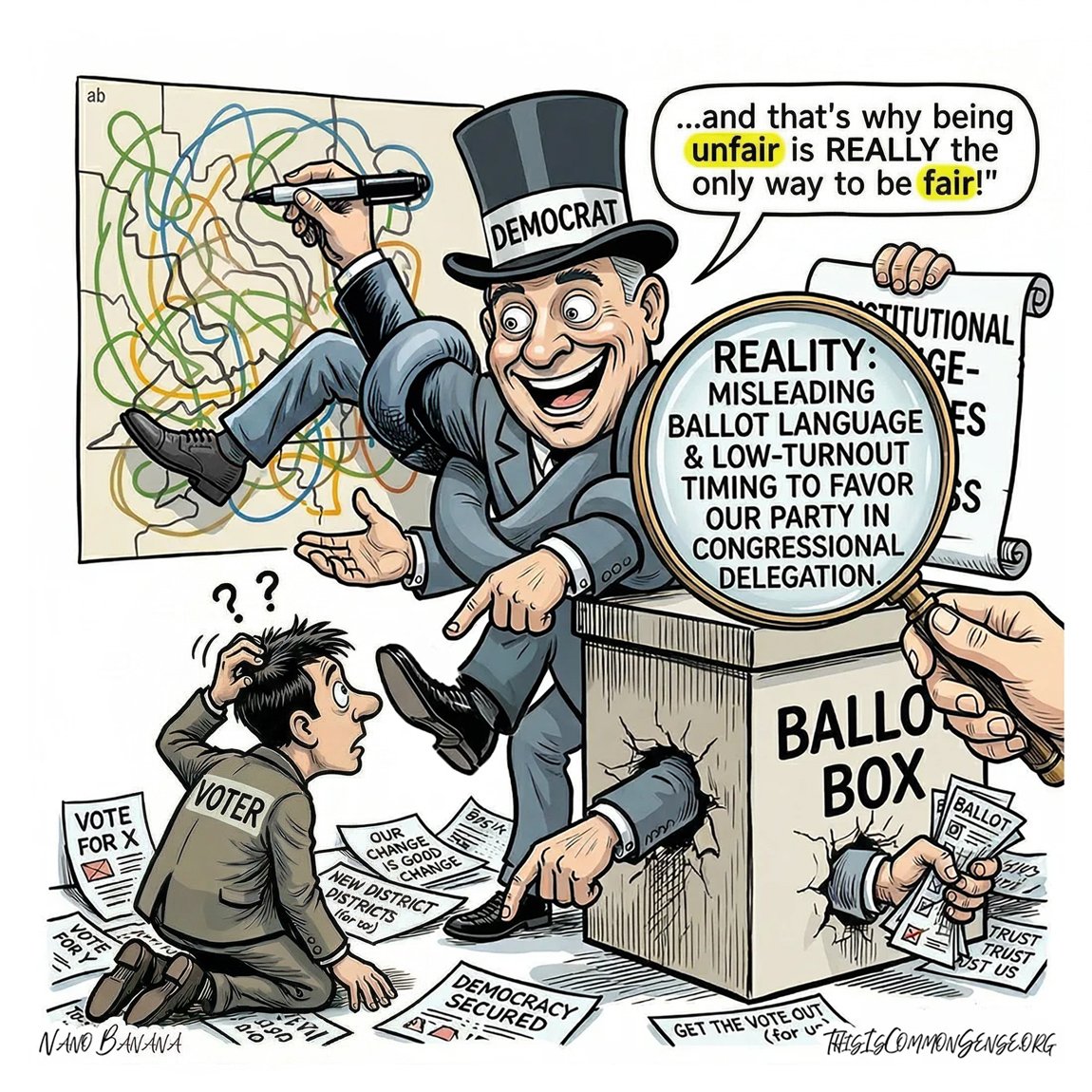
“This is why more Americans today identify as an independent than a Republican or a Democrat for the first time in American history,” argued Sarah Isgur during a panel discussion on ABC’s This Week program, the day after another fatal shooting by ICE agents in Minnesota. “Because no one actually believes that either side believes what they’re saying.”

Isgur, a writer and podcaster for The Dispatch, has worked on both Democratic (2016) and Republican (2012) presidential campaigns and even landed a job at the Department of Justice during President Trump’s first term, only later to be fired. 

“Look, honestly,” Isgur continued, “if Barack Obama’s federal officers had killed a member of the Tea Party, who had shown up, who had a concealed-​carry permit, who was disarmed before he was shot, that [the protester was armed] would not be what the Right is saying.”

She went on: “And, frankly, the left was all for big executive power, as long as it was Joe Biden. They’re not ‘no kings.’ They just don’t like this king.”

Throughout President Donald Trump’s first term, I recall shouts that he had overstepped his authority under the law only to discover, oftentimes, that the power he was wielding had been bestowed upon our president by a feckless Congress. What I found even more disconcerting was that at no time did those complaining seek to limit these excessive presidential powers.

It appears, as Sarah Isgur suggested, that their concern was not with an imperial presidency, only with this current person as that imperial president.

“If you actually want to do something about the problems, both sides need to actually say, presidents shouldn’t have this power,” Isgur explained. “The federal government shouldn’t have this power.”

Wise government depends on limiting power … no matter who is president.

This is Common Sense. I’m Paul Jacob.


PDF for printing

Illustration created with Nano Banana

See all recent commentary
(simplified and organized)
See recent popular posts
Categories
initiative, referendum, and recall

A Place Without Hope?

“Don’t lose hope.”

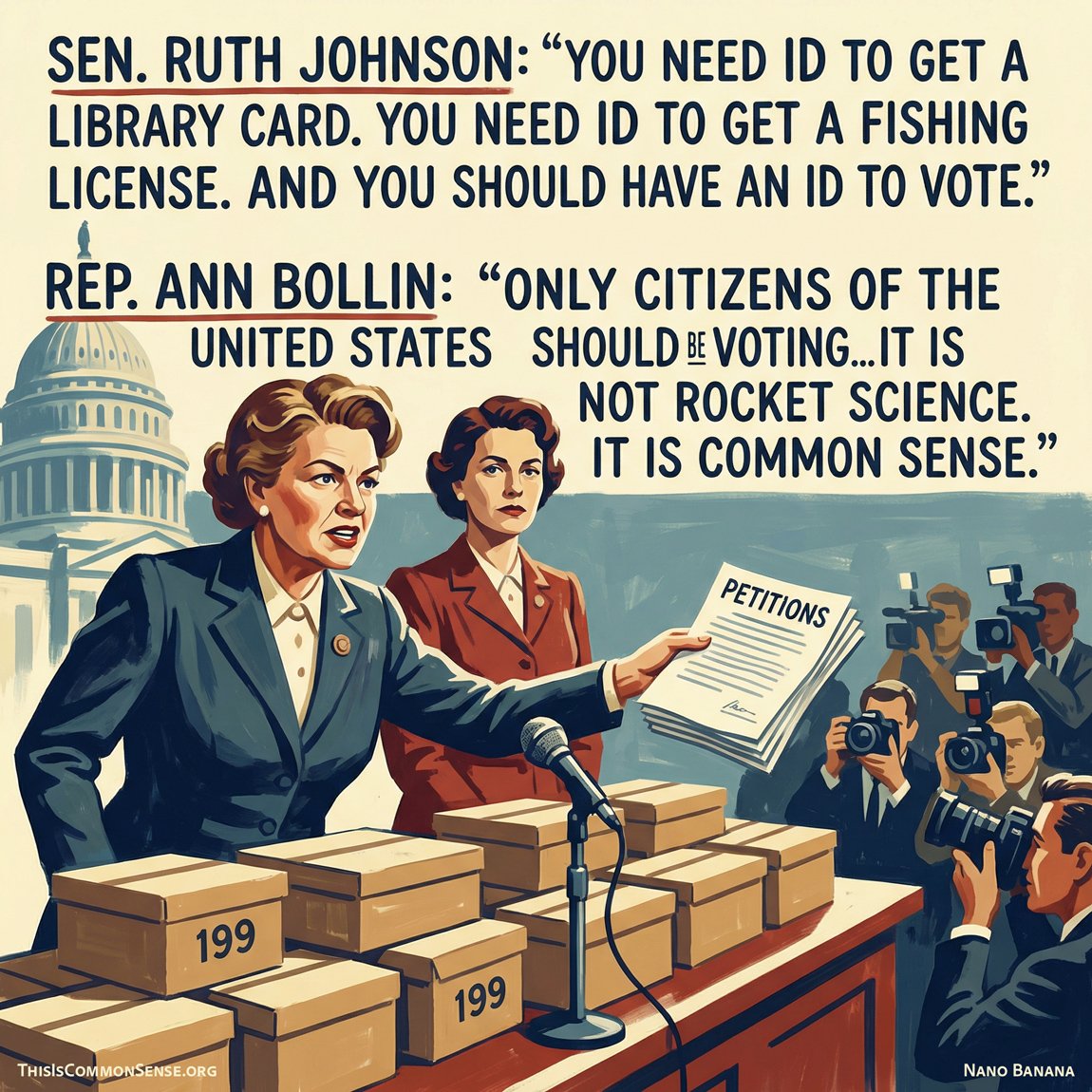
That’s what Bonnie Miller, president of the League of Women Voters of Arkansas, told her fellow Arkansans after the state’s highest court overturned a 74-​year precedent. The justices ruled that constitutional amendments passed by citizens’ initiative can be amended or repealed by legislators with a two-​thirds vote of both chambers. 

Without the issue ever going back to voters.

Sure, this might seem to follow from a constitutional provision: “No measure approved by a vote of the people shall be amended or repealed by the General Assembly … except upon a yea and nay vote on roll call of two-​thirds of all the members elected to each house of the General Assembly …”

But in 1951, the Arkansas Supreme Court declared it “inconceivable” that “the General Assembly could amend or repeal a constitutional amendment initiated by the people,” concluding that the term “measure” simply did not apply to a constitutional amendment. Today’s Supremes reversed this bedrock understanding, thereby empowering the legislature. (Note that the legislature is not seeking to overthrow their own constitutional amendments.)

For more than a decade, the Natural State’s solons have passed statute after statute — and even proposed several constitutional amendments — designed to destroy the citizen initiative process. Their attempts have been consistently defeated by voters at the polls. In addition, last month a federal judge finally struck down several burdensome restrictions that legislators had passed on petitioning.

Now there are also two ballot initiatives — one by Protect AR Rights and another by the League of Women Voters — petitioning for a vote next November to restore the state’s once fair and accessible ballot initiative process.

How long can politicians thwart the will of the people and get away with it? The people of Arkansas are finding out.

This is Common Sense. I’m Paul Jacob.


PDF for printing

Illustration created with Nano Banana

See all recent commentary
(simplified and organized)
See recent popular posts

Categories
election law Voting

A Puzzling Protest

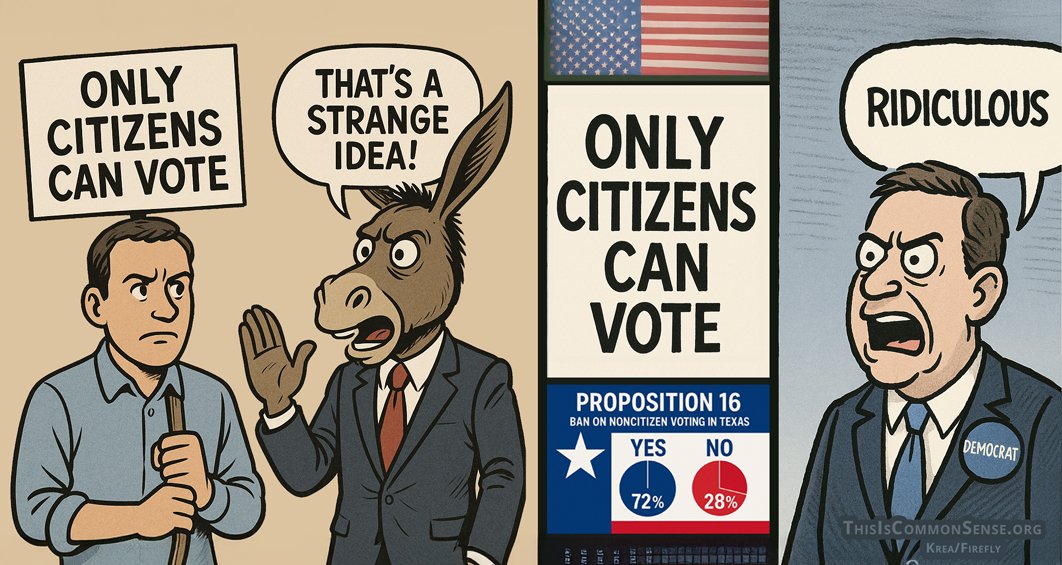
Talk about a blowout: a few days ago, Texans overwhelmingly supported Proposition 16 to amend their state constitution to clarify that noncitizens cannot vote in state and local elections in Texas. The vote: Yes, 72%; No, 28%.

Not everybody is happy.

Jeff Forrester, who happens to be running against Rep. Candy Noble, a major sponsor of this very amendment — just a coincidence I’m sure — professes confusion about why anybody would care about this question. He asserts that the state constitution already prohibits noncitizen voting and has flung himself into a major Twitter‑X tussle over the matter with the group I lead, Americans for Citizen Voting.

Per Forrester, the Texas constitution “already states that no one other than U.S. citizens can vote” in Texas elections.

But as we point out, prior to passage of the present amendment, the state constitution only explicitly protected the rights of U.S. citizens to vote. It did not “reserve the right to vote to only [U.S.] citizens.… It didn’t prohibit Dallas from giving the right to noncitizens to vote in local elections.”

Similarly deficient provisions in the constitutions of other states have also failed to prevent cities from allowing noncitizen voting on local matters. Now, with passage of Prop 16, there is no way for noncitizens to legally vote in Texas.

Those who assert that the Prop 16 amendment is pointless protest too much. If it’s so durn redundant, why isn’t the response to this voter-​endorsed clarification simply a shrug?

Instead, we get finger-​wagging opposition.

Very “mysterious.”

This is Common Sense. I’m Paul Jacob.


PDF for printing

Illustration created with Krea and Firefly

See all recent commentary
(simplified and organized)
See recent popular posts

Categories
crime and punishment ideological culture initiative, referendum, and recall

Mostly Democratic

An email from Voters Not Politicians (VNP) predicts that if a certain popular ballot measure gets enough signatures “it’s likely to pass.”

Great! Wonderful to see democracy in action, eh?

Not so much for this leftwing political action committee, however. “We have to keep this proposal off of Michigan’s ballot in 2026,” the email went on.

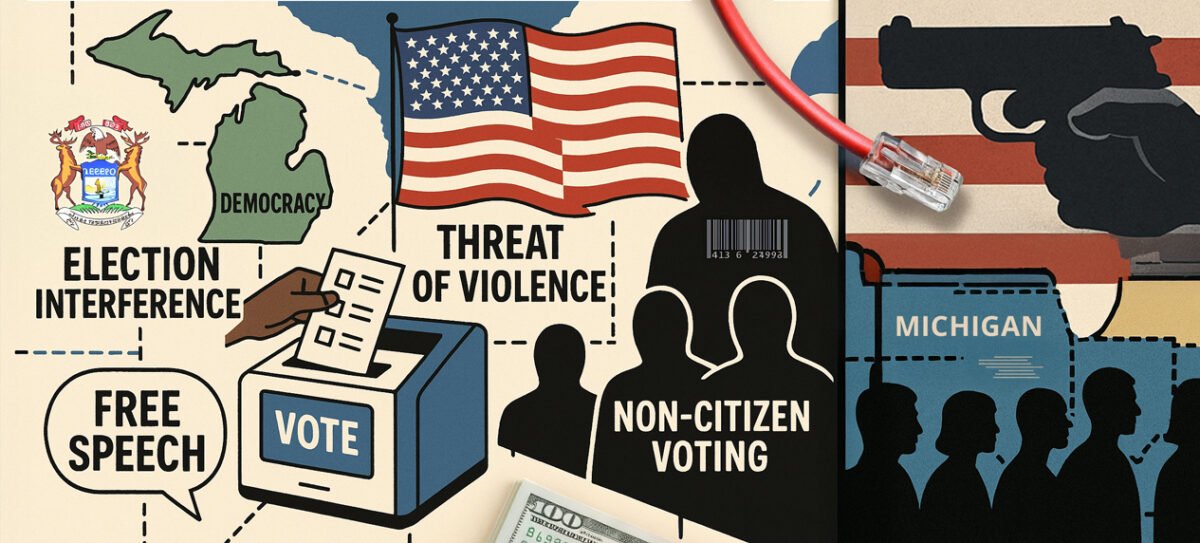
The initiative petition in question is Michigan’s Citizen Only Voting Amendment, which (1) clearly establishes that “only” U.S. citizens are eligible voters in all state and local elections, (2) mandates that the Secretary of State check the voter rolls for citizenship status, and (3) requires photo ID to vote. 

Polls have shown upwards of 80 percent of Michigan voters support the measure. Perhaps spurred on by the noncitizens who were shown to have voted unimpeded in last November’s presidential election.

How will VNP honchos accomplish their mission of suppressing a petition for a public vote on this ballot initiative? They urge folks to “learn how to peacefully disrupt circulation.” 

“Disrupt”? That doesn’t quite go with “peacefully.” 

Last month, Charlie Kirk was assassinated speaking on a college campus. According to a recent poll,* the percentage of Democrats who believe “Americans may have to resort to violence” to achieve political goals has doubled this year. Back in April, a survey found that a majority of self-​identified “left-​of-​center” respondents agreed it was “somewhat justified to murder President Trump.” The same survey found that 15 percent found it “completely justified.”

Destroy democracy to save it? 

As chairman of Americans for Citizen Voting: We won’t let you. Stop trying to block us and others from speaking. Instead, speak out against our measure to your heart’s content. 

I also suggest looking for a rallying slogan that fits better with “peacefully.” 

This is Common Sense. I’m Paul Jacob.


* From 12 percent of Democrats saying so in May of 2024 to 28 percent this year. The percentage of Republicans believing violence may become necessary is higher still — 29 percent in 2024 and 31 percent in 2025. A whopping 77 percent of the public cited political violence as “a major concern.”

PDF for printing

Illustration created with Krea and Firefly

See all recent commentary
(simplified and organized)
See recent popular posts
Categories
election law

Over-​Regulated or Regulations Over?

Critiques of campaign finance regulations (CFR) often focus on particularly egregious applications or expansions of the regulations.

That’s fine. When somebody who is hammering us on the head starts hammering even harder, it’s okay to object. 

We should make clear, though, that we object to being head-​bashed at all, not just the latest intensification.

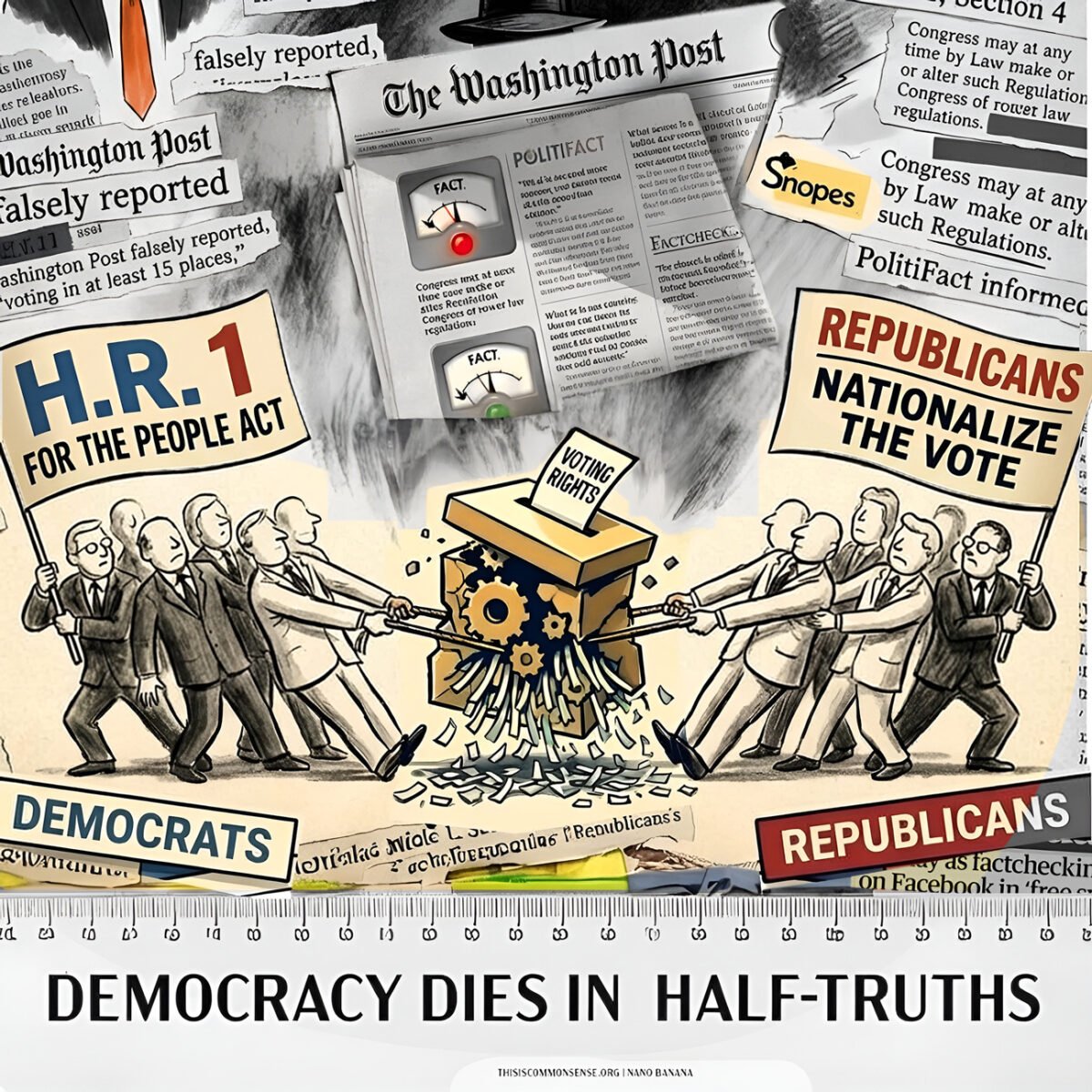
In an amicus brief submitted to the Supreme Court National Republican Senatorial Committee v. FEC, the Institute for Free Speech and the Manhattan Institute are tackling CFR-​rationalized repression of speech (CFRRS) as such.

“By conflating election campaign speech with the mechanics of running elections,” IFS says, “the Supreme Court has allowed the government to trample the First Amendment through campaign finance laws.”

This has been going on at least since the Supreme Court’s 1976 ruling in Buckley v. Valeo.

The current case, NRSC v. FEC, pertains to federal limits on coordinated spending by political parties, which is allowed in many states. IFS punches holes in the excuses for this instance of CFRRS but also stresses the bottom line.

“The brief argues that the federal government lacks the power to regulate this type of speech in the first place.… The Constitution grants Congress the power to regulate the times, places, and manner of electing federal officials. But … speech about candidates is not the same thing as the election itself, and the Elections Clause does not give Congress authority to regulate core political speech.”

Obviously. May at least five out of nine justices grasp this also.

This is Common Sense. I’m Paul Jacob.


PDF for printing

Illustration created with Krea and Firefly

See all recent commentary
(simplified and organized)
See recent popular posts

Categories
crime and punishment Voting

The Dog That Didn’t Vote

“Ruff! Ruff ruff ruff! Ruff ruff! Ruff ruff ruff! Growl!”

Translation: “I’m just a dog! I was framed! I had nothing to do with it! I oppose fraudulent voting on principle! Growl!”

The culprit is the dog’s owner, an Orange County, California woman, Laura Lee Yourex.

In 2021, Yourex mailed in a ballot in the name of her dog — not Lucky or Fluffy but “Maya Jean Yourex,” which cognomen the canine, no longer with us, is also on record as disavowing. We’ll call the dog MJ for short and leave your ex out of it.

In 2021, the MJ ballot was accepted. When Laura Lee tried the same thing in 2022, the ballot was rejected. The 2021 election was state level. For state elections, California eschews the voter-​verification requirements of federal elections.

According to a local official: “Proof of residence or identification is not required for citizens to register to vote in California elections nor is it required to cast a ballot in state elections. However, proof of residence and registration is required for first-​time voters to vote in a federal election.”

You see the problem.

Laura Lee Yourex faces up to six years in prison.

Voter fraud doesn’t exist, we’re told whenever there’s another report of such fraud — except maybe just a little. 

But if we keep adding up documented instances, we’ll come up with a bigger number than “just a little” (I’ll let mathematicians notate that in symbols) and that’s not counting legalized voter fraud and fraud that people got away with.

This is Common Sense. I’m Paul Jacob.


PDF for printing

Illustration created with Krea and Firefly

See all recent commentary
(simplified and organized)
See recent popular posts
Categories
election law national politics & policies Voting

Lost Their Bearings

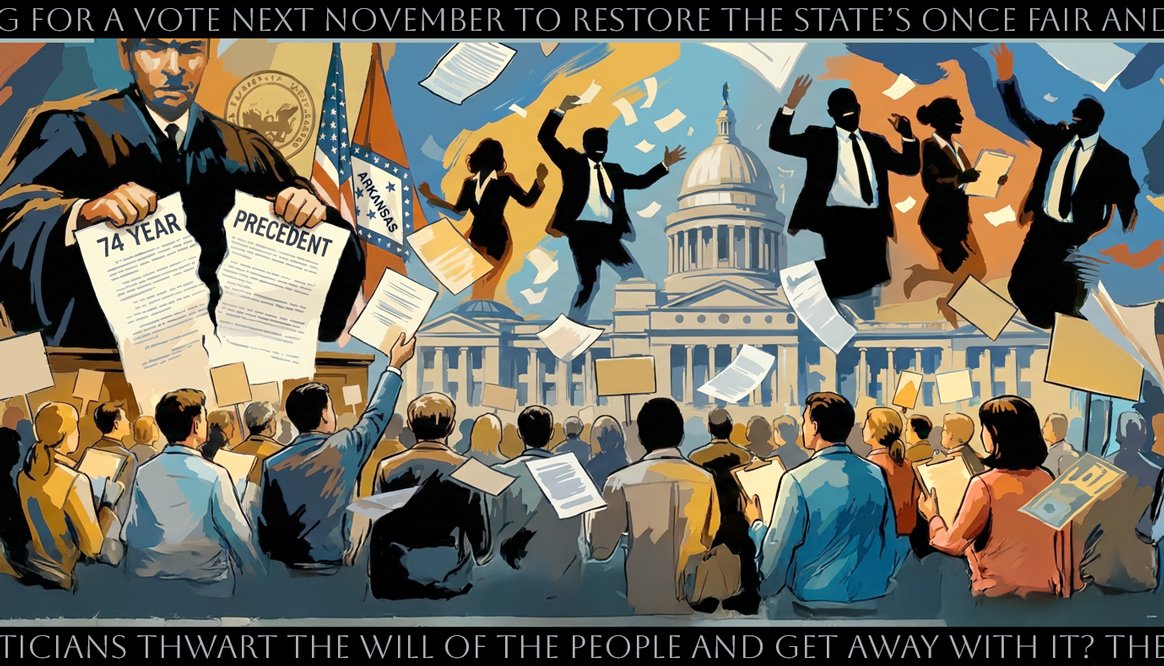
“Washington, D.C. should have every right to set its own rules and policies, just as Vermont does,” argues Sen. Peter Welch (D‑VT). “The micromanagement by congressional Republicans and Trump must end.”

First, the District of Columbia is not a state. Vermont is, if you’re playing at home. 

Second, Congress and the President have constitutional authority and responsibility for our nation’s capital. Article 1, Section 8, Clause 17 of the U.S. Constitution specifically empowers Congress “To exercise exclusive Legislation in all Cases whatsoever, over such District (not exceeding ten Miles square) as may, by Cession of particular States, and the Acceptance of Congress, become the Seat of Government of the United States …”

Sen. Welch’s comments above, from last week’s Washingtonian magazine article, were in defense of the noncitizen voting law passed by the D.C. City Council, which every Republican in the U.S. House — joined by 56 Democrats — voted to repeal. (Senate action awaits.) The Vermont senator was featured because three Vermont cities also allow noncitizens to vote.

I oppose the laws in those three Vermont cities as well as in our nation’s capital. But Washington, D.C.’s law is the worst. 

Why? It allows noncitizens in the country illegally to vote. It offers the vote even to foreign nationals working in the embassies of hostile powers. For instance, China’s and Russia’s ambassadors could decide who the next mayor is … or pass or defeat ballot measures. 

Make any sense? Not a lick.

One new local D.C. officeholder is Mónica López. She is not really a “noncitizen,” just a citizen of Mexico. And one of three non‑U.S. citizens who were elected to Washington’s powerless neighborhood advisory council.

“It’s incredibly local,” López offers. “It has no bearing over anything federal.”

Really? None? She’s in a federal enclave, where the feds do their million-​billion things, and what she’s up to has no bearing on it?

This is Common Sense. I’m Paul Jacob.


PDF for printing

Illustration created with Krea and Firefly

See all recent commentary
(simplified and organized)
See recent popular posts
Categories
election law term limits

Texas Range War

Fifty-​one Democrats have left the Republic — er, State — of Texas.

Well, 51 Democratic state legislators have run past the border, all to prevent a redistricting scheme. They constitute a minority in the House, but without them a quorum cannot be reached. 

Think of it as a form of filibuster.

Or “voting with their feet.”

“Texas House Speaker Dustin Burrows announced that a quorum had not been met after roll call,” an Epoch Times article tells us, going on to say that “House members then approved a motion for the speaker to sign warrants ‘for the civil arrest’ of the members who said they would not be there.”

Since the fleeing pols are in other states, I don’t see how that can work out.

Meanwhile, New York Governor Kathy Hochul has taken her fellow Democrats’ side and said that she would re-​district New York in favor of Democrats. “We’re not going to tolerate our democracy being stolen in a modern-​day stagecoach heist,” she said, using a colorful metaphor.

Other Democratic states have fallen in line, upgrading the gerrymandering crisis from heist to feud.

Twenty-​five years ago I wrote that “courts have struck down districts drawn to get a certain racial outcome, but have turned a blind eye to districts that arbitrarily favor one party over another. The solution to incumbents monopolizing our elections is term limits. But another key factor in promoting democracy is to stop the politicians from drawing rigged districts that squelch competition.”

Term limits sure would help, by de-​stabilizing the “property rights” the two parties feel in their favored districts with old hands firmly tied to their estates.

It’s the wild, wild worst out there.

This is Common Sense. I’m Paul Jacob.


PDF for printing

Illustration created with Krea and Firefly

See all recent commentary
(simplified and organized)
See recent popular posts
Categories
initiative, referendum, and recall international affairs

Democracy Defending Democracy

This year’s most important election takes place tomorrow. 

On Saturday, in Taiwan — Asia’s most democratic nation — more than 20 percent of the country’s unicameral legislators serving in the Legislative Yuan will face the voters in a massive, multi-​step, typhoon-​size recall campaign. 

Coinciding with a real typhoon striking this island nation. 

Which could impact turnout. 

Which matters. 

To successfully oust each officeholder, both a majority of the turnout must agree as well as for that majority to equal 25 percent of all the registered voters in the district. 

“Supporters of the recall movement have portrayed their campaign as ‘anti-​communist,’” reports CNN, “seeking to get rid of ‘pro-​China’ opposition KMT lawmakers they perceive as collaborators of Beijing’s ruling Communist Party, which vows to ‘reunify’ Taiwan, by force if necessary.” 

Taiwan has divided government. President Lai Ching-​te heads the Democratic Progressive Party (DPP), which does not desire reunification with Chinese Communist Party-​ruled China, either by force or surrender, and has been working to improve Taiwan’s military posture. The 113-​seat Legislative Yuan, controlled by a coalition between the Kuomintang (KMT) and the smaller Taiwan’s People Party (TPP), has “undermined democratic institutions and national security by obstructing Lai’s administration,” including “freezing defense spending” when China’s military threats are escalating.

The KMT has 24 legislators up for recall tomorrow and another seven in a recall election next month. Meanwhile, KMT efforts to respond by launching recalls against DPP lawmakers completely fizzled. 

Taiwanese billionaire Robert Tsao, a major backer of the recall effort, labeled the 31 KMT lawmakers being recalled “China’s ‘Trojan Horse’ in Taiwan.” 

A KMT official recently called the recall “totally unconstitutional and undemocratic.”

Really? The main point of democracy is to allow the peaceful removal of government officials.

This is Common Sense. I’m Paul Jacob.


PDF for printing

Illustration created with Krea and Firefly

See all recent commentary
(simplified and organized)
See recent popular posts

Categories
defense & war public opinion

Iran: What Next

The Iran Question dominates the news.

Most papers and programs have numerous takes at the top of the page or the hour devoted to Israel’s attack on Iran’s nuclear program; President Trump’s demand that Iran unconditionally surrender, and the government of Iran’s defiance; and Trump’s latest statements vaguing up “his decision” to bomb Iran.

And in a man-​bites-​dog angle, I’m going to agree with The New York Times.

Specifically, the editorial board’s “America Must Not Rush Into a War Against Iran,” run yesterday.

Where the Times is right regards not the disputed facts and theories about the conflict, but whether the United States military, under direction of its Commander-​in-​Chief, should bomb Iran.

That is not merely open to debate but must be debated.

Many in Trump’s base oppose any involvement: Trump was voted into office to stop the endless wars.

But it’s not just the matter of politics. It’s a constitutional issue: “An unprovoked American attack on Iran — one that could involve massive bombs known as bunker busters — would not be a police action or special military operation,” the Times declares. “It would be a war. To declare it is not the decision of Mr. Netanyahu or Mr. Trump. Under the Constitution, Congress alone has that power.”

And if we wince at the idea of our dysfunctional Congress grandstanding and bloviating about such a weighty matter, consider this: the congressional debate must occur in a context where Americans debate. We debate; the People.

After all, we end up playing lots of heavy roles in these things. 

This is Common Sense. I’m Paul Jacob.


PDF for printing

Illustration created with Krea and Firefly

See all recent commentary
(simplified and organized)
See recent popular posts