Categories
Today

Well, That Was Quick!

This week, the official public debt of the federal government of the United States hit $38 trillion. Many reports noted that it came quickly after hitting the $37 trillion mark, that it came during the federal shutdown, and that only during the pandemic did debt accumulate faster:

Reports were widely published, but were they widely read? Is this just ho hum?

This space last hosted news on debt accumulation markers in the trillions in mid-June. About two months later, the U.S. gross national debt surpassed $37 trillion (August 11, 2025), according to the U.S. Treasury Department’s daily financial report. This milestone came years earlier than the Congressional Budget Office’s 2020 projections, which had anticipated it after fiscal year 2030.

Seeking to illustrate the increased frequency of debt accumulation milestones, we offer this (with help from Grok):

The Peter G. Peterson Foundation has a number of graphs related to the subject:

Categories
Thought

Fernando Pessoa

A essência do universo é a contradição.

Contradiction is the essence of the universe.

Fernando Pessoa, “A Nova Poesia Portuguesa no Seu Aspecto Psicológico,” A Águia, Porto (September 1912).
Categories
Today

Max Stirner

On October 25, 1806, German philosopher Max Stirner was born. Stirner was known for his radical individualism, which under the name of “egoism” became culturally chic in the late 19th and early 20th centuries. In addition to Der Einzige und sein Eigentum, a major work that was famously attacked by Karl Marx, he translated into German Adam Smith’s Wealth of Nations (from its original English) and J.-B. Say’s A Treatise on Political Economy (from its original French).

Der Einzige und sein Eigentum has been translated into English as The Ego and Its Own and The Ego and His Own.

“Max Stirner” is a nom de plume, his birth name being Johann Kaspar Schmidt. He died in 1856, and his biography by John Henry Mackay, Max Stirner — sein Leben und sein Werk, was published in German in 1898 (enlarged 1910, 1914), and finally translated into English in 2005.

The only image we have of him was sketched by Karl Marx’s comrade, benefactor and abuse-buddy, Friedrich Engels. The portrait above has been adapted from that drawing.

Categories
crime and punishment First Amendment rights international affairs social media

Quit Banging on Brits

We hear so much bad news about censorship coming out of the United Kingdom that it’s almost shocking when something good happens instead.

That good news is a retreat from harassing innocent people for posting online too freely for the taste of British police enforcers.

In the big picture, the change in policy by the Metropolitan Police Service is but a minor tactical withdrawal in the pursuit of a censorship agenda that is otherwise proceeding on all fronts. It’s not so minor for people like, say, comedy writer Graham Linehan.

Several weeks ago, Linehan was arrested at Heathrow Airport by five armed officers.

“I was arrested at an airport like a terrorist, locked in a cell like a criminal, taken to hospital because the stress nearly killed me, and banned from speaking online.” His sin was posting a few tweets critical of transgender activists.

The charges against Linehan have been dropped. 

And from now on, says the Met, it will stop investigating “non-crime hate incidents.” A spokesperson explains that the commissioner “doesn’t believe officers should be policing toxic culture war debates. . . .” 

The “non-crime hate incidents” will still be logged, though.

The policy of harassing Britons for cranky words has been softened before, by the Tories. When Labour came in, the new government promptly hardened things again.

And further caution: Met policy is not government policy. 

So this particular hammer for banging upon speakers daring to offend the easily offendable could come swinging down again at any moment.

This is Common Sense. I’m Paul Jacob.


PDF for printing

Illustration created with Krea and Firefly

See all recent commentary
(simplified and organized)
See recent popular posts
Categories
Thought

George Santayana

It is war that wastes a nation’s wealth, chokes its industries, kills its flower, narrows its sympathies, condemns it to be governed by adventurers, and leaves the puny, deformed, and unmanly to breed the next generation.

George Santayana,  The Life of Reason: Reason in Society, (1905), p. 82.

Categories
Today

Thirty Years’ End

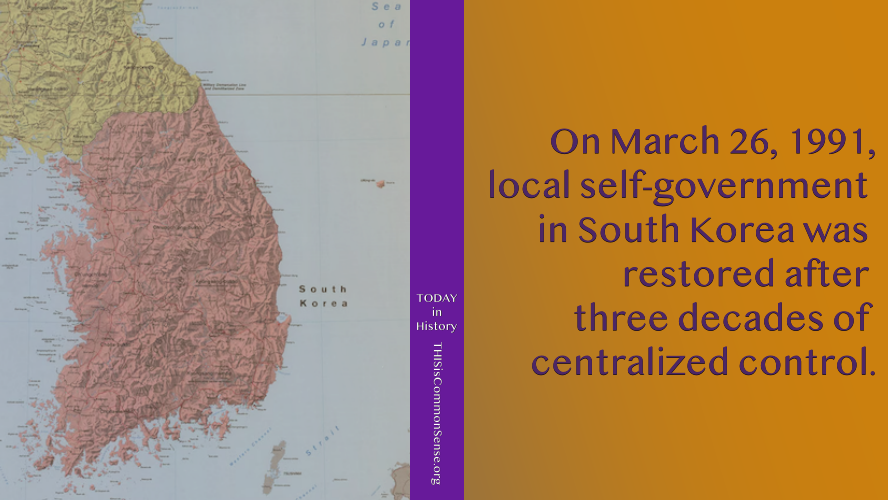
On October 24, 1648, the Peace of Westphalia was signed, marking the end of the Thirty Years’ War.

Categories
First Amendment rights general freedom ideological culture

Two Ways of Walking Away

“The First Amendment prohibits the government from restricting free speech,” explained Michael J. Reitz in The Detroit News. But what about individuals and non-government groups? 

“Free speech doesn’t compel you to listen. You can walk away,” Mr. Reitz goes on to say.

In the piece, reprinted by the Mackinac Center for Public Policy, Reitz wonders, however, whether this “agree to disagree” attitude is enough to keep free speech alive. He believes that “as a society, we show our commitment to free speech through our willingness to listen, discuss and debate. It’s not consistent to say I value another person’s right to speak if I refuse to engage.”

A liberal attitude — in a social, perhaps non-political sense — is what Reitz advises: tolerant of differences; not prone to anger at hearing an opposing view; engaging logically and fairly with differing opinions; but free to take it or leave it without fearing recrimination, retribution or retaliation.

This right to walk away may define free speech, but Reitz argues that we mustn’t all walk to our bubbles in anger.

An old saw, recently popularized, insists that “we have freedom of speech, but we don’t have freedom from the consequences of speech.” In a free society, you may say what you like on your property, on your dime, but some people may shun you. Or fire you. And that’s OK.

What’s not an acceptable “consequence” of freedom of speech? Being silenced by the government, or the mob, either with petty violence or maximum force. Too many people use the “no freedom from consequences” cliché as an excuse to harass people at their work. Or bank. This is where it gets difficult. 

Since one neither has a right to a specific job nor to force a bank to accept one’s money on account, purely social pressure to de-bank, de-platform, or get someone fired, fits in a free society. But is Reitz correct that, legality aside, when such social pressure is common, and one-sided, free speech is doomed?

Perhaps society is doomed, in multi-lateral wars of us vs. them. 

This is Common Sense. I’m Paul Jacob.


PDF for printing

Illustration created with Midjourney and Firefly

See all recent commentary
(simplified and organized)
See recent popular posts
Categories
Thought

Gene Wolfe

People who get eyeball arthritis see only what they’re supposed to see, like that TV screen.

Gene Wolfe, in ”Hunter Lake,” The Magazine of Fantasy & Science Fiction, October/November 2003; reprinted in Gene Wolfe, Starwater Strains (2005).
Categories
Today

An Uprising

Budapest (10/23/1956) — The Hungarian Uprising begins when a delegation of students enter the building of Magyar Rádió to broadcast their demands for political and economic reforms to civil society, but are detained by security guards.

Categories
First Amendment rights privacy

Permit to Harass, Interrupted

Minnesota’s permit to harass has been interrupted — not halted, because a federal court has granted only a preliminary injunction.

Nancy Brasel, the district judge, has for now blocked Minnesota’s law requiring grassroots advocacy groups to publicly disclose the names and addresses of their vendors because she expects that this requirement will indeed be ultimately thrown out.

Violating, as it does, freedom of speech.

One of the targets of the law is Minnesota Right to Life. One of its vendors dropped MRL with a thud in the middle of a campaign. As MRL’s executive director, Ben Dorr, notes, the challenged law mostly hands “a ready-made ‘enemies list’ to our political opponents.” He counts seven vendors who refused to work with his organization after being harassed by abortion rights proponents.

This harassment is the apparent reason for the disclosure regulation’s existence. When the names and locations of vendors who facilitate spread of political messages is forcibly disclosed, this allows opponents of the message to stoop to any low, such as harassing companies that provide services to organizations trying to get the word out.

What the harassers hope to accomplish, and sometimes do, is frighten vendors into dropping clients who engage in advocacy.

The thugs who would impede speech any way they can sometimes speak of “transparency” as if it were an end in itself. Whether transparency is desirable depends on the context. Citizens have every right to know how much government spends, and on what, and why — transparency is necessary there, because governments belong to citizens. But no crook or bully has an inalienable right to all the information about innocent people that he needs in order to go after them.

This is Common Sense. I’m Paul Jacob.


PDF for printing

Illustration created with Krea and Firefly

See all recent commentary
(simplified and organized)
See recent popular posts