Categories
political economy property rights regulation too much government

Too Damn High?

It’s getting tougher to rent a place to live.

Applications now often entail fearsomely intrusive scourings of financial history. And, writes Jeffrey Tucker, “if you are unbanked or missed a payment at some point, you can forget it.”

This is about more than digital intrusiveness or the end of privacy. It’s about aversion to risk. 

The aversion may have many causes. Tucker stresses a factor that’s pretty glaring once you think about it: the federal government’s assault on private property rights during the COVID-​19 pandemic. Some tenants eagerly exploited a federally imposed moratorium on rent payment — plus ban on evictions — only finally stopped by a 5 – 4 decision by the Supreme Court. 

At the state level, evictions continued to be outlawed until 2022.

So property owners assume that they cannot at all count on government to be in their corner. If a tenant fails to pay rent, folks in government (who include the ones with guns) protect the person who cannot or will not pay his or her bills. 

The concern must be even more intense if an owner’s property is located in a town with a track record of demonizing landlords and in the process of launching further assaults on property rights. (Example: New York City, where high rents are now officially called rip-​offs.)

Landlords want to avoid tenants who would use any law or bureaucratic tendency to rationalize skipping rent payment. Since owners can’t count on government to protect their property rights, they are becoming ultra-cautious. 

That is why conscientious prospective tenants who may have a blot or two in their financial history are paying the price.

This is Common Sense. I’m Paul Jacob.


PDF for printing

Illustration created with Nano Banana

See all recent commentary
(simplified and organized)
See recent popular posts
Categories
Thought

Dunoyer

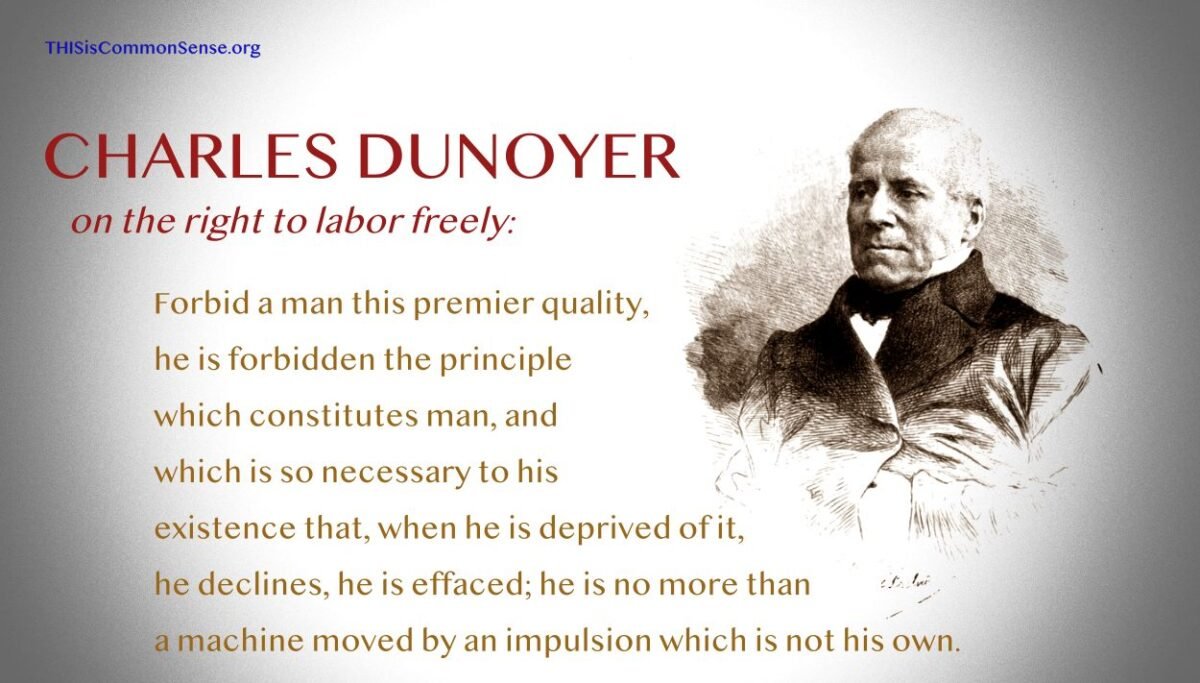
Forbid a man this premier quality [the right to labour freely], he is forbidden the principle which constitutes man, and which is so necessary to his existence that, when he is deprived of it, he declines, he is effaced; he is no more than a machine moved by an impulsion which is not his own.

Charles Dunoyer, De la liberté du travail (1845), David M. Hart, translator.
Categories
Today

Balloon & Autogyro

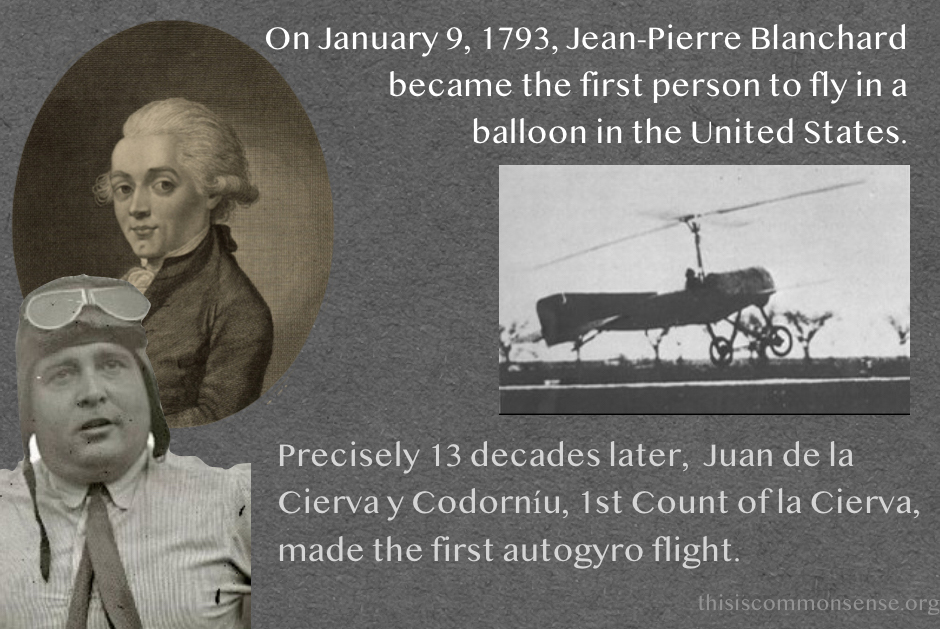
On January 9, 1793, Jean-​Pierre Blanchard became the first person to fly in a balloon in the United States.

Precisely 13 decades later,  Juan de la Cierva y Codorníu, 1st Count of la Cierva, made the first autogyro flight.

Categories
Common Sense meme Thought

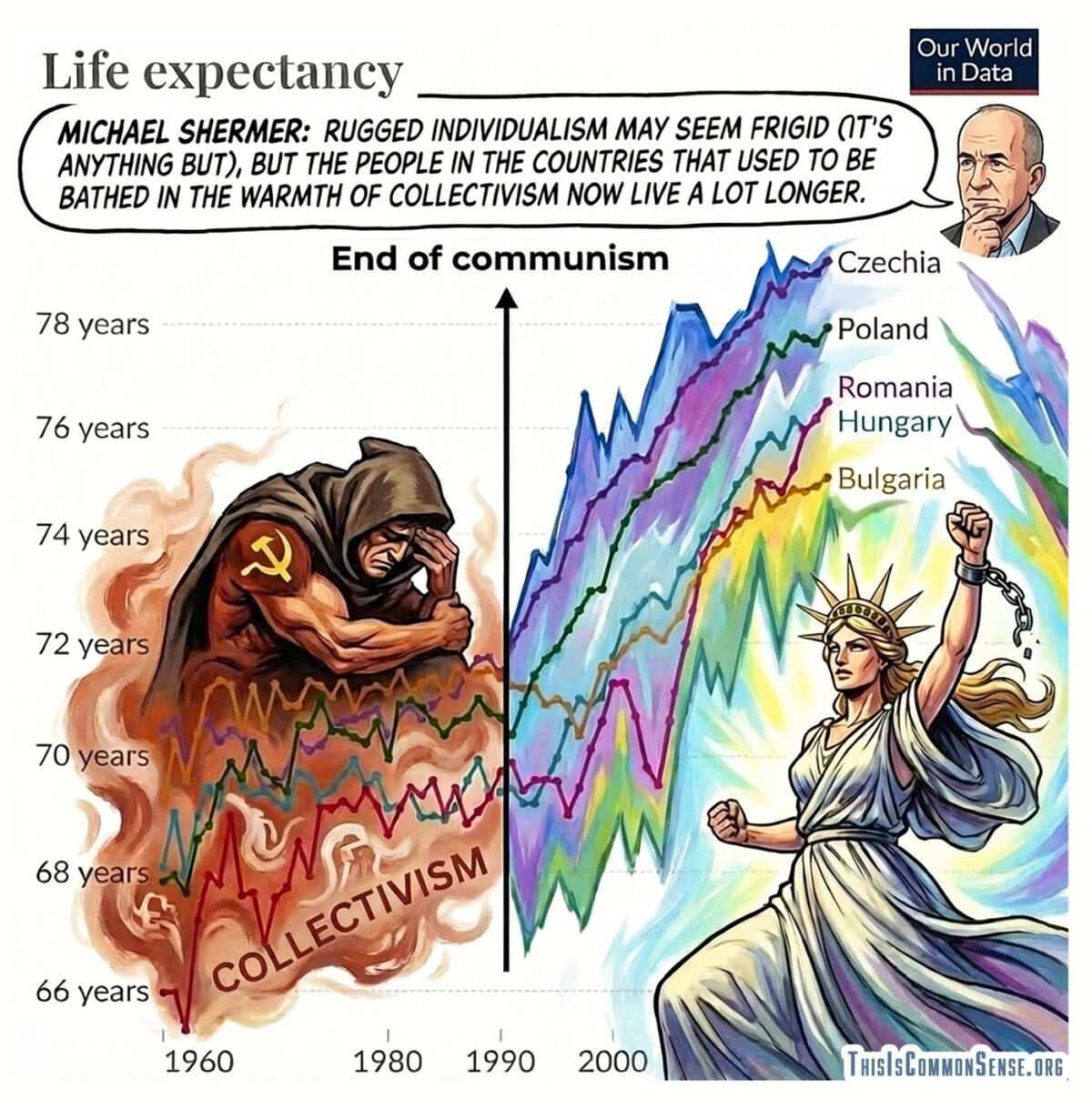
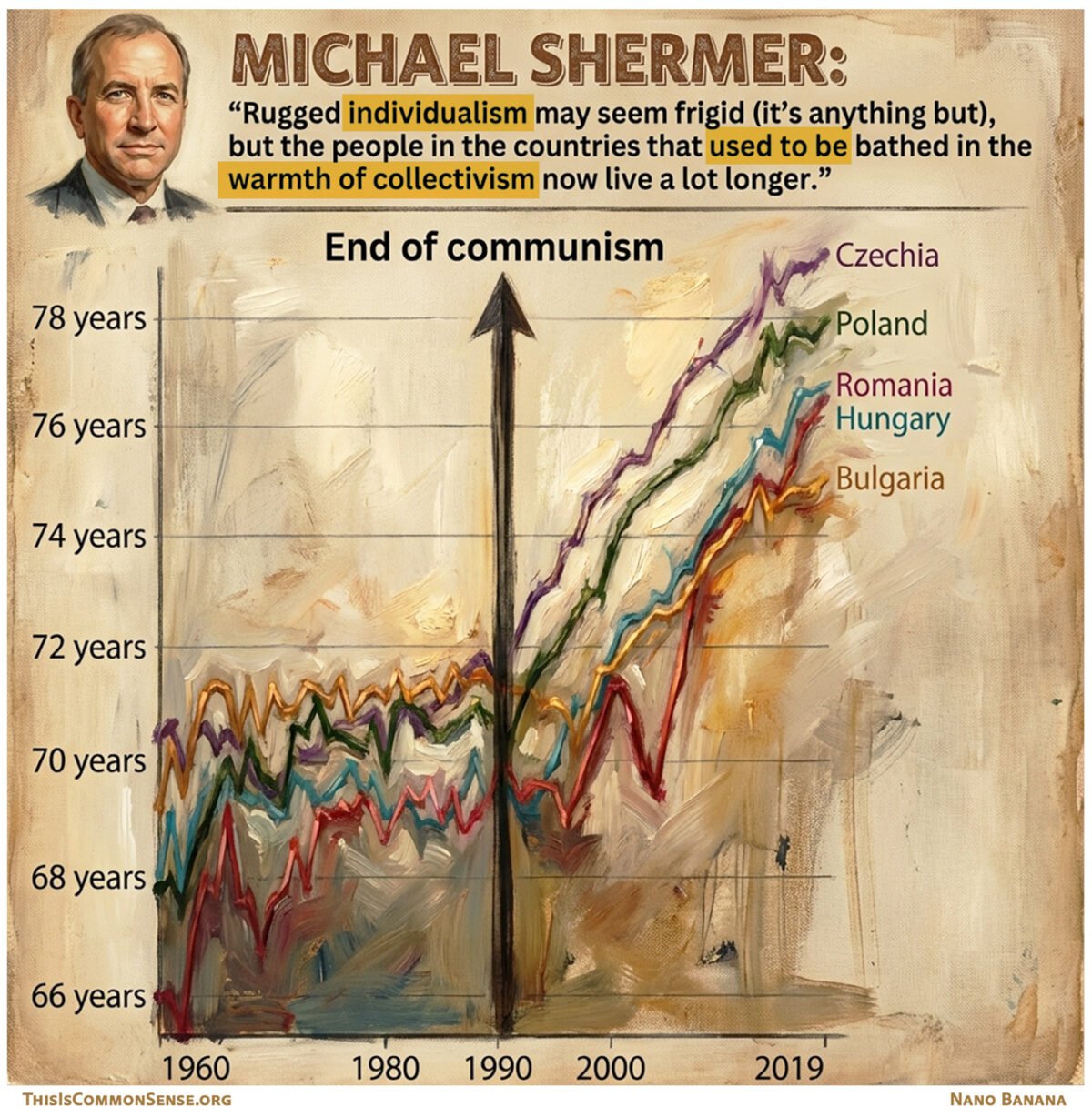
Individualism & Collectivism

“Rugged individualism may seem frigid (it’s anything but), but the people in the countries that used to be bathed in the warmth of collectivism now live a lot longer.”

Michael Shermer (an American science writer, historian of science, executive director of The Skeptics Society, and founding publisher of Skeptic magazine, a publication focused on investigating pseudoscientific and supernatural claims)

Categories
Common Sense meme Thought

Warmth of Collectivism

“Rugged individualism may seem frigid (it’s anything but), but the people in the countries that used to be bathed in the warmth of collectivism now live a lot longer.”

Michael Shermer (an American science writer, historian of science, executive director of The Skeptics Society, and founding publisher of Skeptic magazine, a publication focused on investigating pseudoscientific and supernatural claims)

Categories
national politics & policies responsibility

On the Government’s Diet

One could argue that our dietary habits are something government shouldn’t be involved in. 

I do. But the federal government taxes, regulates, subsidizes, and researches for food production in these United States “bigly.” 

And then the government taxes, regulates, subsidizes and researches for medical interventions that mitigate the consequences of how we eat. 

Robert F. Kennedy, Jr., and Brooke L. Rollins, the current secretaries of the U.S. Department of Health and Human Services (HHS) and the Department of Agriculture (USDA), respectively, have signed their names to a new set of Dietary Guidelines for Americans — an interesting document

“The message is simple,” it says: “Eat real food.”

The fact that much of our food industry has been constructed in collaboration with the USDA makes this advice … piquant.

While Vitamin D intake was mentioned several times, I notice that the fact that our bodies produce Vitamin D when exposed to sunlight went undiscussed. Also unrecognized? That Vitamin D levels have been shown to be a key indicator of how well people fight off infections … like COVID.

Alcohol use is discouraged. Drinking “water (still or sparkling) and unsweetened beverages,” highly encouraged.

“Pay attention to portion sizes” is just common sense.

The advice to “increase protein consumption” ruffles some feathers, according to The Epoch Timescoverage.

“Since the first edition was published in 1980, the Dietary Guidelines for Americans have provided science-​based advice on what to eat and drink to promote health, reduce risk of chronic disease, and meet nutrient needs,” explained the previous Guidelines

But how science-​based is all this, really? Seems “the Science” in the Guidelines changes with each innovation in political and economic pressure. 

Now and previously.

Most of all, however: Our diets remain our own responsibilities. 

This is Common Sense. I’m Paul Jacob.

PDF for printing

Illustration created with Nano Banana

See all recent commentary
(simplified and organized)
See recent popular posts
Categories
Thought

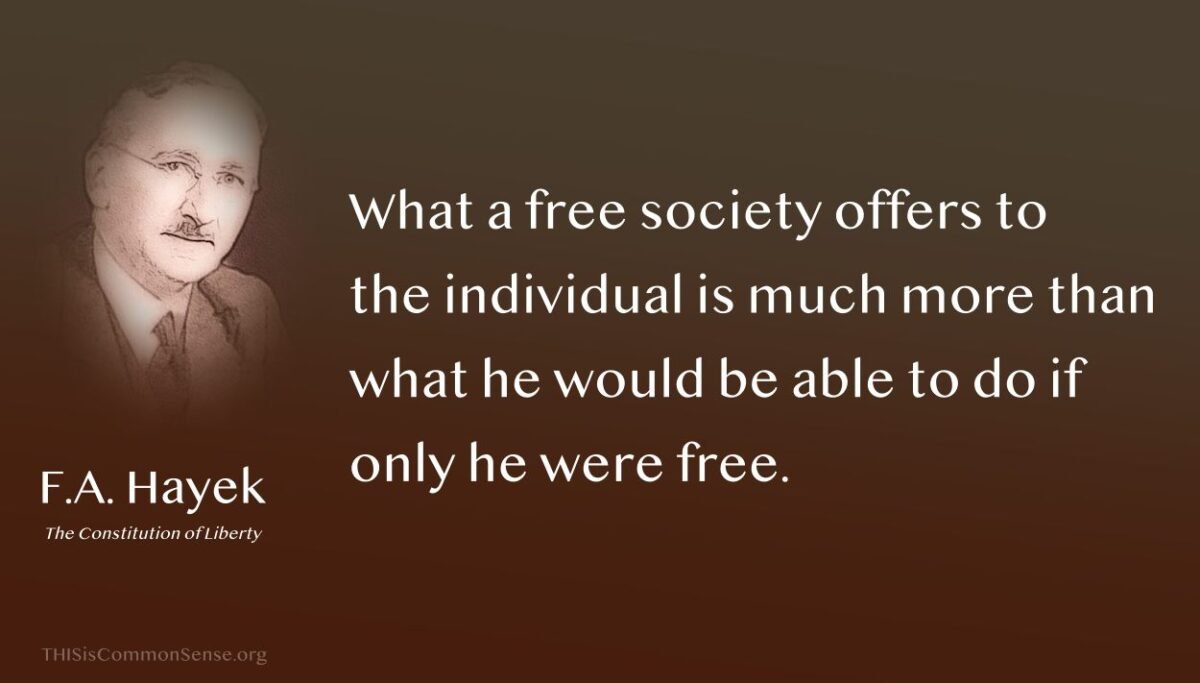
F. A. Hayek

What a free society offers to the individual is much more than what he would be able to do if only he were free.

F. A. Hayek, The Constitution of Liberty (1960).
Categories
Today

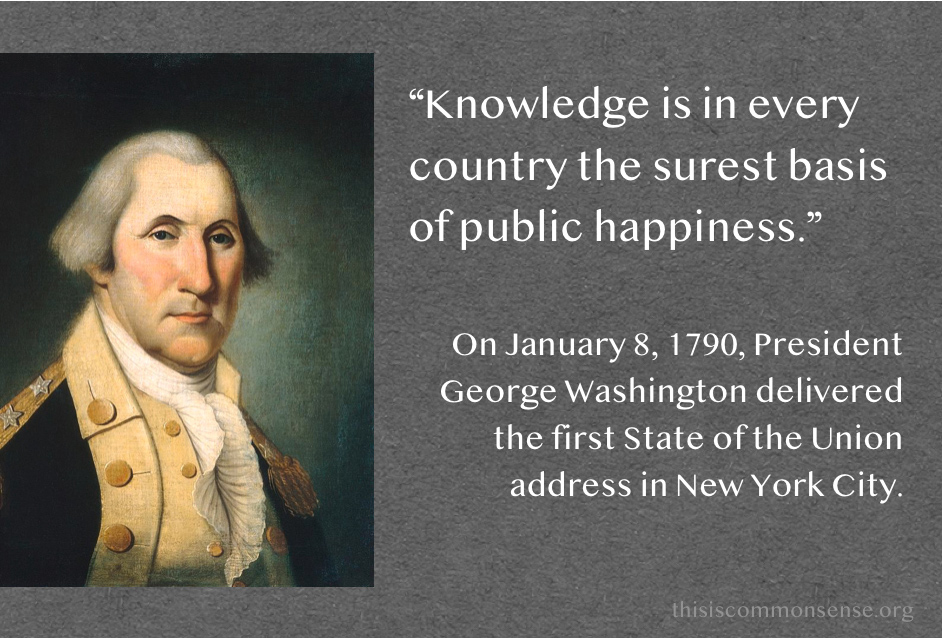
Washington’s First

Knowledge is in every country the surest basis of public happiness.

On January 8, 1790, President George Washington delivered the first State of the Union address in New York City.

Categories
ideological culture media and media people tax policy

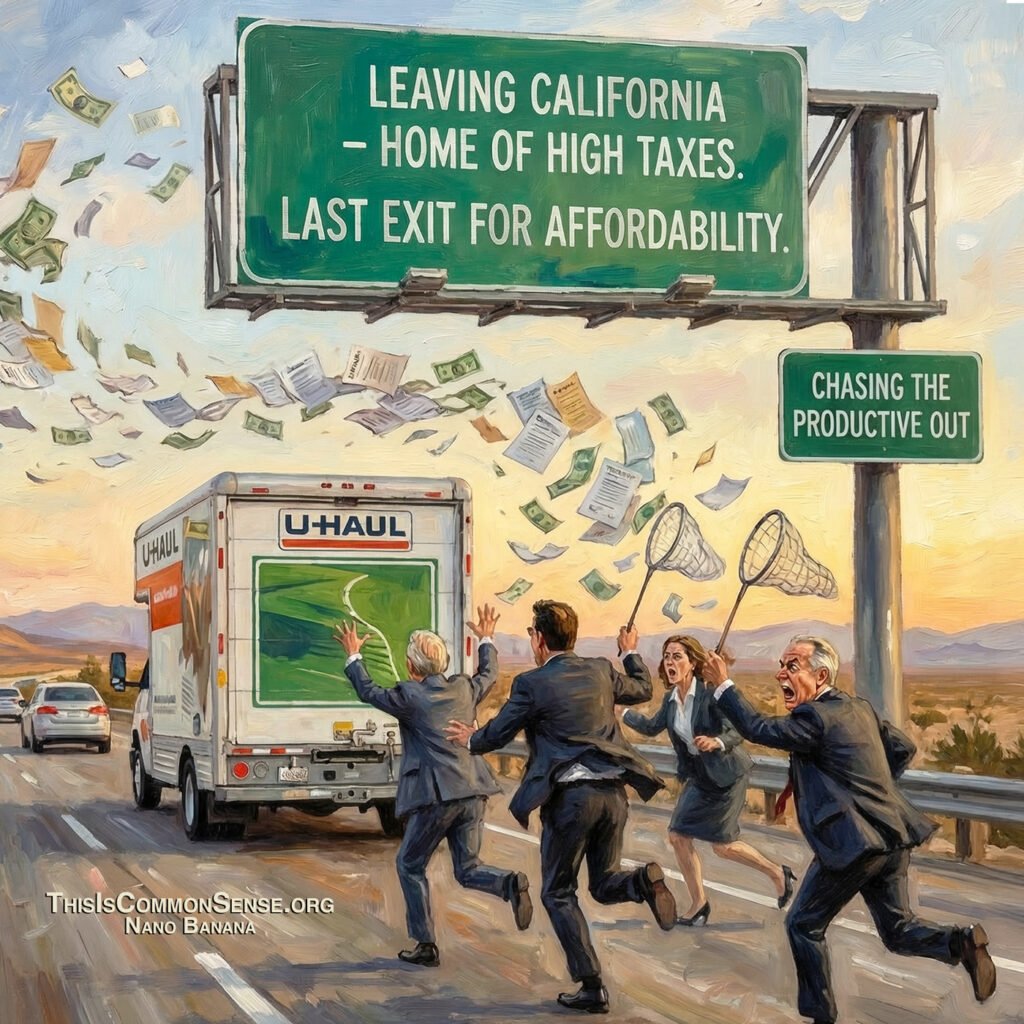
Post California Soaking

Rumors that Washington Post owner Jeff Bezos has been pushing the Post in a more commonsensical editorial direction could very well be true.

A recent Post editorial slams progressives who “think of taxation the way teenage boys think about cologne: if some is good, more must be great.”

I’m no fan of even a moderate amount of that brand of cologne. But anyway. The Post is discussing a proposed ballot measure backed by the ultra-​lefty Service Employees International Union.

SEIU troops are currently collecting signatures. And before they’ve even gotten enough to post it to ballot, the people being targeted have started moving. 

Out of state.

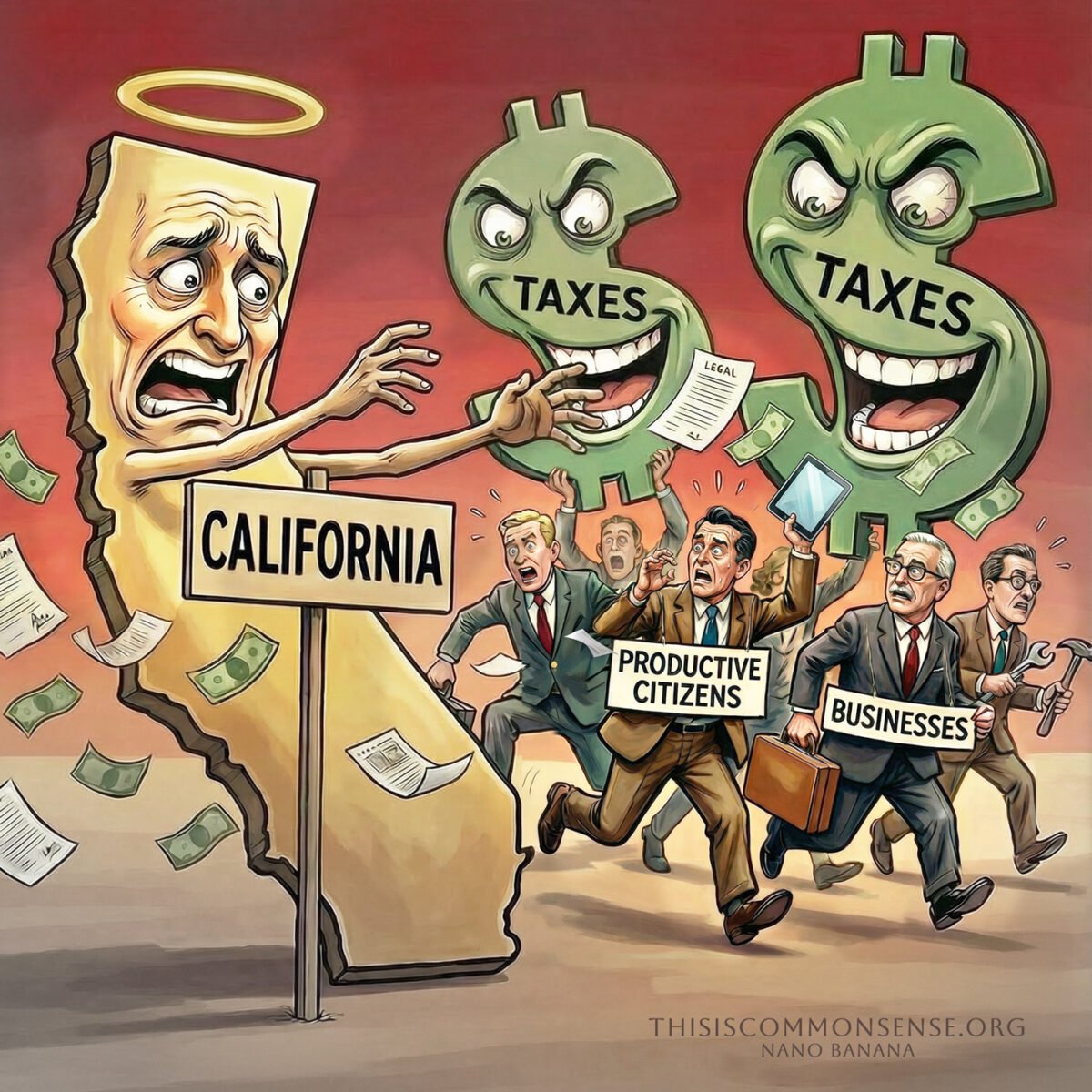
The measure would impose a new 5 percent tax on billionaires. Some of the state’s billionaires, including Google cofounder Larry Page and Palantir cofounder Peter Thiel, aren’t willing to wait and see whether it actually reaches the ballot and passes in November. Why? The measure would apply retroactively “to those who were California residents on January 1, 2026.”

Some Democratic lawmakers are saying “good riddance,” as if it’s possible to loot billionaires who don’t wait around to be looted. Or that it’s good for state coffers to lose their billionaire entrepreneur “contributors.”

The Post says the retroactivity would open the measure to legal challenges, but that if it gets passed and survives litigation, “it’s a safe bet this won’t be a one-​off. Funding ongoing expenses like health care with one-​time taxes isn’t sustainable. Progressives will want to return to the well until they’ve sucked it dry.”

And no one should know better than Californians how dangerous dry wells are.

This is Common Sense. I’m Paul Jacob.

PDF for printing

Illustrations created with Nano Banana

See all recent commentary
(simplified and organized)
See recent popular posts
Categories
Thought

F.A. Hayek

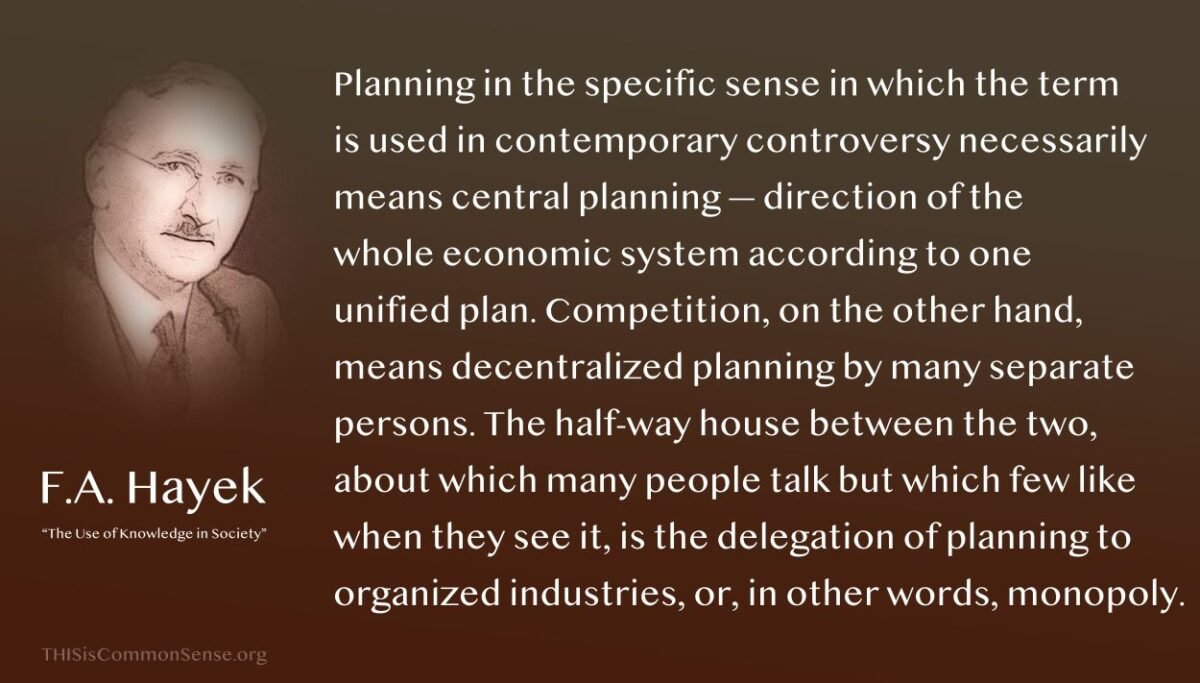
Planning in the specific sense in which the term is used in contemporary controversy necessarily means central planning — direction of the whole economic system according to one unified plan. Competition, on the other hand, means decentralized planning by many separate persons. The half-​way house between the two, about which many people talk but which few like when they see it, is the delegation of planning to organized industries, or, in other words, monopoly.

F.A. Hayek, “The Use of Knowledge in Society,” 35 American Economic Review 519 (September 1945), included as Chapter V in Individualism and Economic Order (1948).