Categories
general freedom judiciary too much government

The Vaxxers’ War on Truckers

It’s always good when a federal court tells a federal government that it shouldn’t have done some horrible autocratic thing.

Much better had it never been done in the first place — but at least now there is official acknowledgement and, hope against hope, a chance that it won’t recur. 

Hey, a guy can dream.

According to a ruling by Canadian Federal Court Justic Richard Mosley, although truckers’ protests a few years ago against insane pandemic mandates “reflected an unacceptable breakdown of public order” (he seems to be forgetting that the government unacceptably broke things first), invoking of an Emergencies Act “does not bear the hallmarks of reasonableness — justification, transparency and intelligibility.”

No, it doesn’t bear those hallmarks. There “was no national emergency justifying invocation of the Emergencies Act.”

The truckers were clogging traffic to bring attention to a plight caused by the government. That’s it. The truckers weren’t nuking cities or anything. But in reply, the government nuked the rights of truckers by, among other things, freezing their bank accounts and even penalizing people who had donated five bucks to help the truckers out.

Truckers were protesting the fact that they were not being allowed to decide for themselves whether to risk an experimental vaccine. The government banned them from crossing the Canada–U.S. border unless they got the shot.

Luckily, Canada’s federal government has announced that it has seen the error of its ways and — ah, who am I kidding? It is appealing the decision.

This is Common Sense. I’m Paul Jacob.


PDF for printing

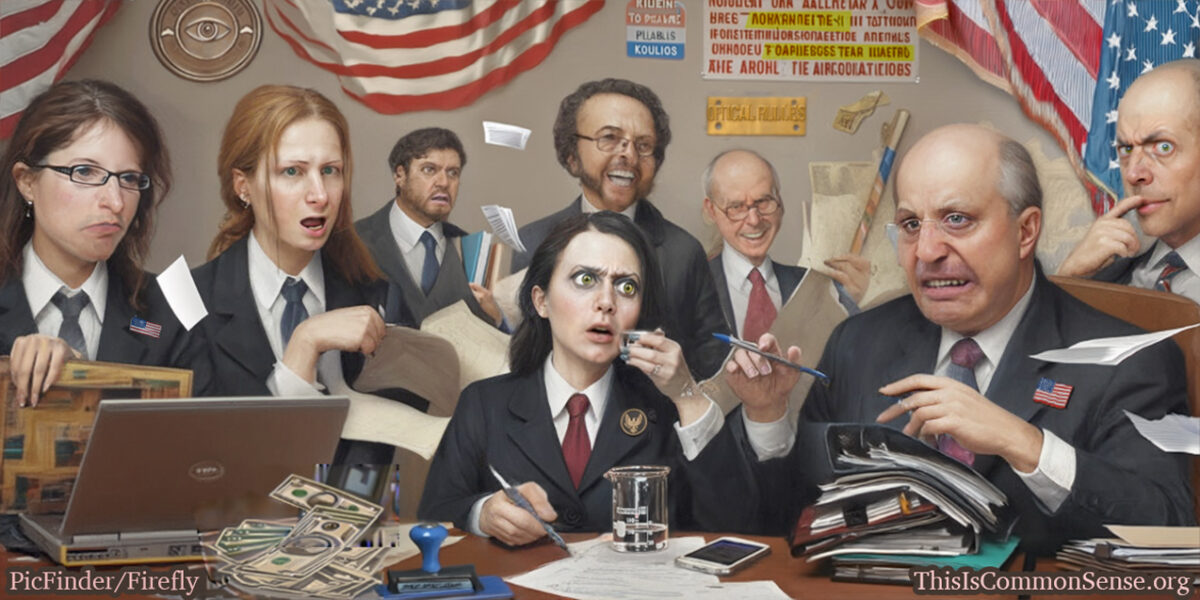
Illustration created with Midjourney and Firefly

See all recent commentary
(simplified and organized)
See recent popular posts
Categories
Thought

Walter Bagehot

[T]here is a tendency in descendants to be like their progenitors, and yet a tendency also in descendants to differ from their progenitors. The work of nature in making generations is a patchwork — part resemblance, part contrast. In certain respects each born generation is not like the last born; and in certain other respects it is like the last. But the peculiarity of arrested civilisation is to kill out varieties at birth almost; that is, in early childhood, and before they can develop. The fixed custom which public opinion alone tolerates is imposed on all minds, whether it suits them or not.

Walter Bagehot, Physics and Politics (1872).
Categories
Today

Sir Robert Peel

On February 5, 1788, Robert Peel was born. He would become one of the United Kingdom’s most important prime ministers, ushering in some reforms that led to the liberalization of England in the 19th century.

Peel is also regarded as the father of the modern British police — the popular term “bobbies” refers to “Bob” Peel — and as one of the founders of the modern Conservative Party.

Robert Peel died in 1850.

Categories
Thought

Simone Weil

The human soul has need of truth and of freedom of expression. 
The need for truth requires that intellectual culture should be universally accessible, and that it should be able to be acquired in an environment neither physically remote nor psychologically alien.

Simone Weil, Draft for a Statement of Human Obligation (1943).
Categories
Today

First President

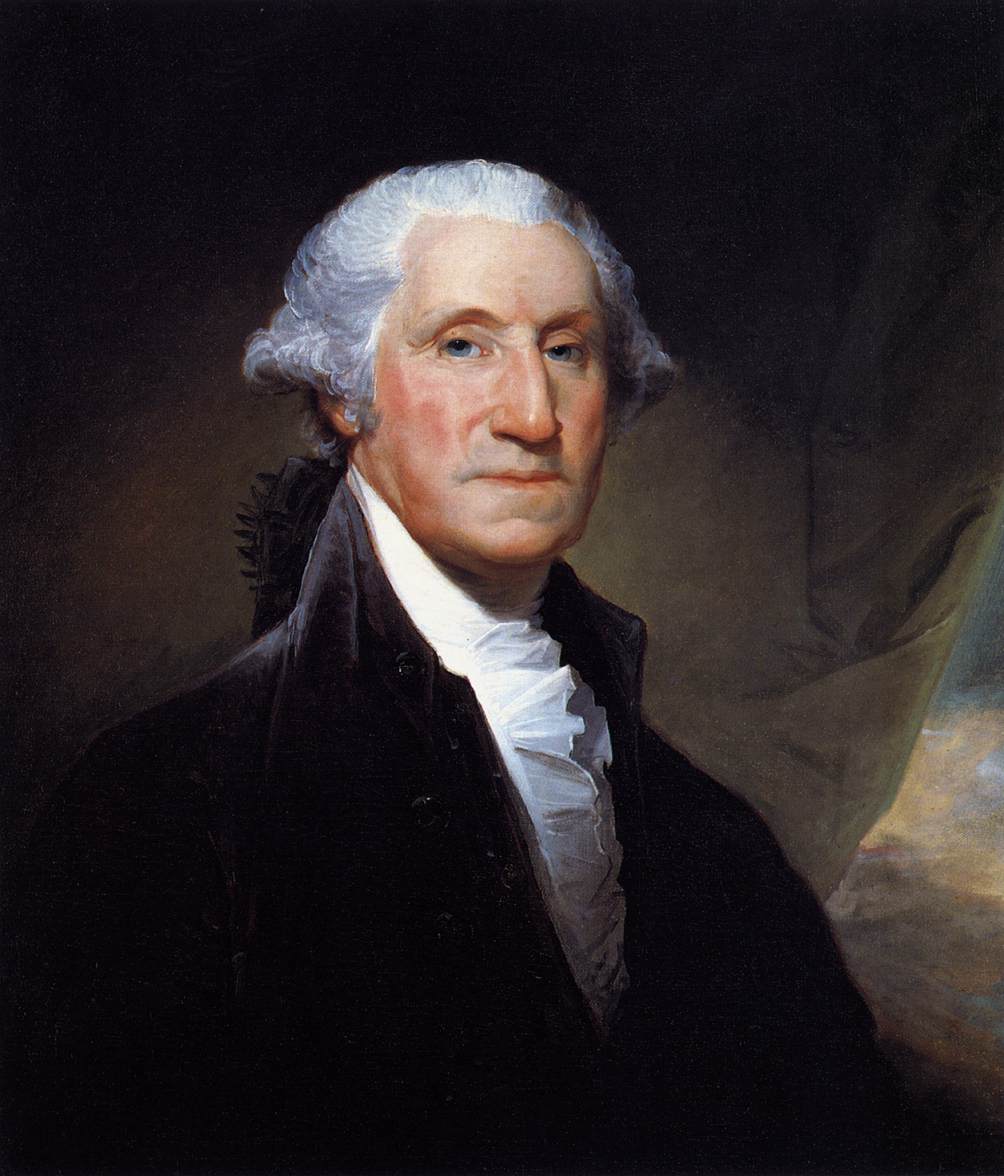
On February 4, 1789, George Washington was unanimously elected as the first President of the United States, under the new Constitution, by the U.S. Electoral College.

On the same date five years later, the French legislature abolished slavery throughout all territories of the French Republic.

Categories
Thought

Walter Bagehot

The great difficulty which history records is not that of the first step, but that of the second step. What is most evident is not the difficulty of getting a fixed law, but getting out of a fixed law; not of cementing (as upon a former occasion phrased it) a cake of custom, but of breaking the cake of custom; not of making the first preservative habit, but of breaking through it, and reaching something better.

Walter Bagehot, Physics and Politics (1872).
Categories
Today

Spain & Bagehot

On February 3, 1783, Spain recognized the independence from Britain of the United States of America.

Walter Bagehot (pronounced “badge-it”; pictured), famed editor of The Economist and author of Lombard Street, was born on this date in 1826.

Categories
Accountability crime and punishment too much government

Stop Causing the Next Pandemic

A lab in Wuhan, China was fiddling with the coronavirus that causes COVID-19 when that virus was accidentally or intentionally released into the world.

I would like such a thing not to happen again. I adhere to the radical political doctrine that the world should not be repeatedly ravaged by avoidable pandemics. I especially don’t want to see a pandemic considerably worse than the COVID-19 pandemic.

But politicians and scientists continue to make pandemics more likely by permitting, paying for (with our money), and even defending the gain-of-function research that weaponizes viruses. 

Why, oh why? I hear you ask. The reason, they say, is so they can learn how to better combat these more virulent forms.

And if somebody happens to unleash a lab-enhanced virus capable of killing a third of the human race, will words like “sorry” and “oops” and “now we know how to stop it better the next time” undo the damage?

This danger is one theme of a talk given by U.S. Senator Rand Paul last November. As Paul, author of Deception: The Great Covid Cover-Up, puts it, “To think that we can prevent future pandemics even as we continue to seek, catalog, and manipulate dangerous viruses is the height of hubris. . . . We must reform government and rein in out-of-control scientists and their enablers.”

Senator Paul echoes MIT biochemist Kevin Esvelt, who says “Please stop.” 

Let us have no more experiments “likely to disseminate blueprints for plagues.”

Policymakers and investigators have no inalienable right to threaten the well-being of us all.

This is Common Sense. I’m Paul Jacob.


PDF for printing

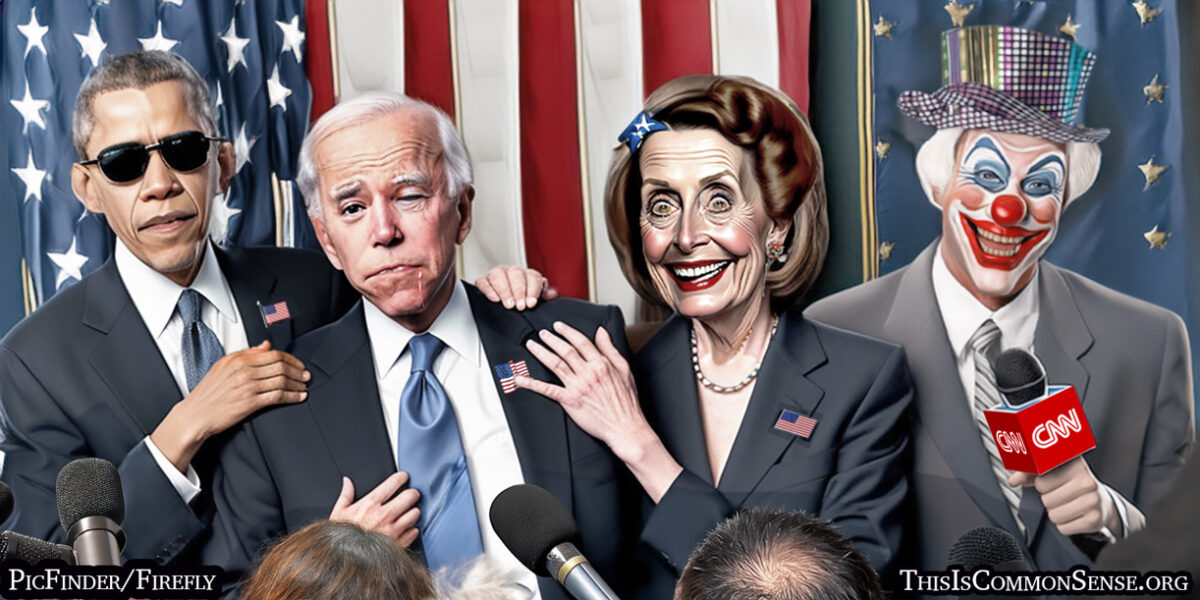
Illustration created with PicFinder and Firefly

See all recent commentary
(simplified and organized)
See recent popular posts
Categories
Thought

George Santayana

To know how just a cause we have for grieving is already a consolation.

George Santayana, The Life of Reason: The Phases of Human Progress; Vol. IV, Reason in Art (1906).
Categories
Today

Groundhog!

On February 2, 1887, Punxsutawney, Pennsylvania, celebrated the first Groundhog Day. On the same day in 1976, the Groundhog Day gale hit the north-eastern United States and south-eastern Canada.

In 2009, the Reserve Bank of Zimbabwe officially devalued the Zimbabwean dollar for the third and final time, making Z$1 trillion now only Z$1 of the new currency, equivalent to Z$10 septillion before the first devaluation. Politicians in Zimbabwe looked up, saw their shadow, and realized that they had only a couple months more of their inflation binge. Indeed, the legalization of trading currencies, the previous month, had sealed the fate of Zimbabwe’s independent dollar. The Zimbabwean dollar was abandoned officially on the 9th of April, 2009.