
Categories
Accountability ballot access general freedom government transparency ideological culture initiative, referendum, and recall insider corruption local leaders national politics & policies property rights Regulating Protest responsibility too much government U.S. Constitution

The Great Faction

Politics isn’t a pretty business.

Frédéric Bastiat called the beast it serves “that great fiction” not because it doesn’t exist — intrusive state power sure persists — but rather because what it promises cannot really happen: “everyone living at the expense of everyone else.”

What can we do? How do we counteract a game that is rigged to increase the insanity, not reduce it?

Last week I indicated one thing a minor party with that goal in mind could do: use its power of spoiling elections to change major party behavior, and thus give citizens a fighting chance to restrain governmental metastasis.

Cancer.

I also suggested “blackmailing” the major parties into setting up a system of voting that . . . ends the power to blackmail! I believe that system — ranked choice voting — holds many positives, not the least of which is ending strategic voting, wherein voters are tempted to “falsify” their own preferences and support candidates they might dislike. This is as corrupting to the citizenry as the Great Fiction itself.

Let’s hope a savvy minor party leverages the major parties, gaining reforms to improve the system. Regardless, we can all — independently — push two other limits on political power:

  1. term limits at all levels, and
  2. initiative and referendum rights in all the states, not just the 26 that have it now.

Initiative and referendum rights would give ordinary citizens the leverage to possibly restrain the mad rush to live at each others’ expense. With the initiative, citizens can gain term limits, which produce more competitive legislative elections and lead to fewer legislators captured by the interests loitering in the capitol.

This is Common Sense. I’m Paul Jacob.


PDF for printing


Categories
Accountability folly general freedom ideological culture media and media people moral hazard nannyism national politics & policies too much government U.S. Constitution

Statues and Limitations

“Should they take down the Jefferson Memorial?”

That is what PBS’s Charlie Rose asked Al Sharpton. Now, the “Reverend” is not my go-to source for political insight, but his answer* caught my attention.

“I think that people need to understand that, when people that were enslaved and robbed of even the right to marry and had forced sex with their slave masters, this is personal to us,” replied Rev. Sharpton. “My great-grandfather was a slave in South Carolina . . . Our families were victims of this.”

Asked if this precluded “public monuments” for “everyone associated with slavery,” Sharpton argued: “When you look at the fact that public monuments are supported by public funds, you are asking me to subsidize the insult to my family.”

One can attack the messenger, Sharpton, sure. But what if we instead think of him as our neighbor? I certainly wouldn’t want to insult a neighbor, much less make him pay for the privilege.

Notably, the Reverend embraced privatization, suggesting, “You have private museums.” Privatizing controversial monuments would certainly solve Sharpton’s stated problem.

Of course, the logic behind taking down statues or dismantling the Jefferson Memorial — or merely privatizing them — might also lead to changing the names of cities, counties and states, rivers and mountains. And it’s not just Washington and Jefferson — twelve presidents were slave owners, including Union General U.S. Grant.

Who knows how many are undeservedly memorialized?

Frankly, I’ve never liked the name of my Virginia county: Prince William. A liberty-loving people ought not be stuck with such a monarchial brand.

Let the people decide.

But by vote, not street brawl.

This is Common Sense. I’m Paul Jacob.
 

* This exchange begins at the 15:22 mark in the interview.


PDF for printing


Categories
ideological culture moral hazard national politics & policies U.S. Constitution

The Great Diversion

Though the breakdown of civil debate seems new, the subjects are old. We are actually talking about Nazis, again. Nazi death counts. And the Confederacy. The former defeated by my father’s generation, the latter defeated several generations earlier.

Why?

Because talking about the future would require actual thought. It’s easier to fight over the past, over symbols of the past.

That is why there was a Charlottesville debacle. It is about a statue, a monument to dead soldiers featuring the Confederacy’s General Robert E. Lee. And what it means. The “Unite the Right” rally was set in Charlottesville because of the city council’s decision to remove it.

It is interesting, though, that the event did not unite “the Right.” Conservative and even many alleged “alt-right” groups refused to participate.

But “the Left” seems more united than before. If you focus on past racism and the persistence of Nazi and Confederate symbology, it’s pretty easy to agree. I agree.

And yet, I take a step back, and remember that those monuments do not have the univocal racist meaning attributed to them. They were intended to heal wounds.*

Now they open up old ones.

And yet this is all a diversion. We are facing a major set of crises that could lead to war, depression, chaos, and (possibly) worse. But we are not now handling them because we are fighting over symbols of the past.

This may be a very human thing to do.

But it is not smart.

This is Common Sense. I’m Paul Jacob.
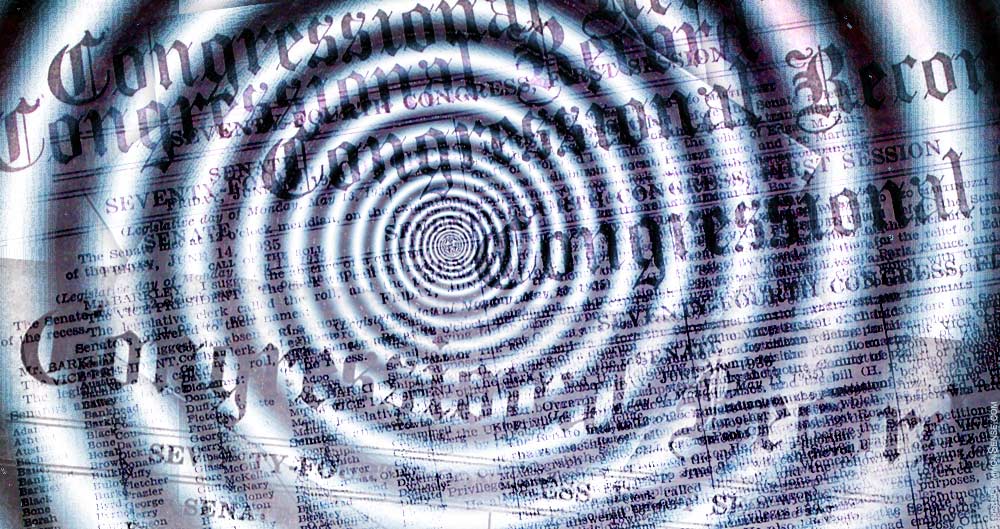
* At least 350,000 young American men died wearing Confederate uniforms in the Civil War, and half a million Union soldiers are believed to have died directly from their war wounds. Today’s population is ten times greater, so adjusted for today it would be eight million deaths. That is a lot of searing wounds.


PDF for printing


Categories
Accountability crime and punishment general freedom ideological culture moral hazard national politics & policies Regulating Protest responsibility U.S. Constitution

Saturday’s Violence

After delivering the final address at the Liberty International World Conference in Puerto Rico, Friday night, I learned that there had been violent clashes between white nationalists and counter-demonstrators in Charlottesville, Virginia.

A dozen people required medical treatment after being sprayed with mace.

Then, after traveling to the airport with new friends from Kazakhstan, China, and socialist-torn Venezuela, I began my eight-hour trek home. I had the subject for my weekend column, I decided: the lack of reports of even one arrest.

Last I checked, dousing folks with a chemical agent was a crime.

“Men in combat gear, some waring [sic] bicycle and motorcycle helmets and carrying clubs and sticks and makeshift shields,” the Washington Post reported as I landed for my connecting flight home, “fought each other on the downtown streets, with little police interference.”

By the time I touched down in Washington, DC, James Field had driven his car into a crowd of counter-protesters, killing Heather Heyer and seriously wounding many others. A searing and sobering event.

My column, mostly written in transit, focused on the police response to political violence. From Trump rallies last year to the events at UC-Berkeley that “shut down” planned speeches . . . to attacks on Charles Murray and others at Middlebury College . . . to this Saturday’s events in Charlottesville, policing has been tepid at best.

People have a right to speak, to assemble, to protest, to let out a primal political scream. Our governments must protect that right, without regard to viewpoint, by preventing and policing against acts of violence.

When violence succeeds without consequences — garnering tons of attention for its perpetrators — we are likely to see more violence.

Government is not doing job one.

This is Common Sense. I’m Paul Jacob.


PDF for printing


Categories
Accountability ballot access initiative, referendum, and recall local leaders national politics & policies political challengers U.S. Constitution

Free to Choose

“I think that the most effective way one could possibly move toward greater freedom in the United States, toward a smaller role of government, would be if we could only have a more democratic society.”

Who said that? A Democrat?

No.

The speaker quickly added, “I don’t mean a capital-D, I mean a small-d.”

“That is, I mean if we could have referenda,” the late Milton Friedman explained back in 1987.

The Nobel Prize winning economist — and co-author with wife Rose of the bestselling Free to Choose* — was referring to the initiative and referendum process, whereby citizens vote on laws, and in the case of initiatives directly place measures onto the ballot.

Citizens enjoy initiative and referendum rights in twenty-four states and roughly 60 percent of cities throughout the country.

“The public at large has always shown itself,” Dr. Friedman observed, correcting himself, “has almost always shown itself to be more libertarian in its views than have their elected representatives.”**

Friedman was not suggesting that a bad law becomes good because it was passed at the ballot box. He simply weighed the odds between two distinct sets of voters. Legislators are a small group, the personal power of each one so closely tied to government that politicians’ personal interests often compete against the public’s. Conversely, the much larger group of voting citizens almost defines the public interest.

Perhaps I was channeling the great doctor of economics when I was once asked, “Do you trust the people?”

My reply?

“No. But I trust the people a whole lot more than I trust the politicians.”

This is Common Sense. I’m Paul of Jacob.


* The book was first published in January 1980, in tandem with PBS’s airing of the popular “Free to Choose” series.

** He spoke this at a California Libertarian Party conference. Tough crowd.


PDF for printing


Categories
Accountability crime and punishment general freedom local leaders moral hazard nannyism national politics & policies privacy property rights responsibility too much government U.S. Constitution

The Minimal Use of a Finger

Drivers in Washington State have a new law to . . . swerve from?

“New distracted driving law starts Sunday, July 23,” the Washington State Department of Transportation (WSDOT) tweeted last week. “The law forbids,” Washingtonians were told,  “virtually all use of handheld gadgets such as phones, tablets, laptop computers and gaming devices while driving.”

The idea is to prevent accidents. Though distracted driving’s danger has been contested, texting while driving certainly seems a kind of crazy.  

Thankfully, it’s possible to talk “hands free.”

Which, it turns out, the new law does allow. Drivers may activate and de-activate hands-free devices (and apps) with the “minimal use of a finger.”

Eating and drinking while driving are also disallowed, but those are “secondary offenses,” which police are not allowed to pull you over for.

At this point, another meaning of “minimal use of a finger” may occur to some readers. What starts out as secondary offenses have been known to be upgraded, legally and practically, to primary offense status.

Does a shiver runs down your back?

Yet another rule! More fines!

More interactions with police.

And if all this doesn’t feel “police state-y” enough for you, there is argument in Seattle about whether pedestrians should be prohibited from “distracted walking.”

Yes, some are actually considering that.

I’m reminded of an argument against socialism: government-run enterprises tend to be run “ruthlessly and with special attention to prosecution (and overburdening) of the poor.” Why would anyone want such techniques writ society-wide, in every sector?

Meanwhile, we apparently must live and drive with more rules and more fines and more harassment.

This is Common Sense. I’m Paul Jacob.


Printable PDF


Categories
education and schooling free trade & free markets general freedom ideological culture media and media people national politics & policies privacy property rights responsibility too much government U.S. Constitution

According to Economics

“Everywhere you look, economics is despised,” writes Tom Woods in his Tuesday email letter.

You know what isn’t despised? A daily email letter.*

But I digress; back to economics.

“The gimme-free-stuff people hate it because they don’t like being told that there might be undesirable side effects from seizing other people’s things.”

Well, true enough. But turn it around: many people demand free stuff at least in part because they do not understand the bigger picture . . . which Mr. Woods ably provides in his daily podcast and on his weekly Contra Krugman podcast with economist Bob Murphy.

“Politicians hate it, because it imposes logical constraints on what political activity can accomplish.”

True, but, like many in the general public (from whence they come), politicians’ prior lack of economic knowledge also leads, in part, to their hubris.

“Even some folks in the business world hate it, because (1) they’d rather agitate for special privileges than hear the case for free markets, and (2) they’d rather have low interest rates than be warned about the causes of the business cycle.”

Yes, too true. But, again, business people are generally just people, most of whom haven’t even been exposed to something beyond boring and misleading textbook econ, if that. Mr. Woods knows that, since that’s what his mission is, exposing more folks to ideas beyond what he calls “the index card of allowable opinion.”

Well, I’m all about allowing the unallowable — if it’s right!

This is Common Sense. I’m Paul Jacob.
 

* Historian Woods is now doing what I’ve been doing since 1999, providing a daily common-sense thought that is short and easy-to-read and dropped into your email box every weekday. Mine goes up online at ThisIsCommonSense.com; I don’t see his on his website . . . but I do see a lot of books and podcasts!


Printable PDF


Categories
Accountability folly free trade & free markets general freedom moral hazard nannyism national politics & policies responsibility too much government U.S. Constitution

According to Logic

“Polling on every possible option confounds all logic,” or so writes Tiana Lowe about ObamaCare and its repeal, at National Review.

“Americans overwhelmingly dislike the individual mandate and prioritize lowering the cost of health care over all other health problems in the country,” Ms. Lowe elaborates, “but a majority of Americans do not want to roll back Obamacare’s guaranteed coverage of pre-existing conditions. Just a quarter of Americans are happy with Obamacare as-is, but a mere 12 percent favor the now-dead Senate health-care bill.”

Perceptively, she notes that the situation is as bad or worse for politicians, who want to “have their cake and eat it too.” The problem with politicians is pretty obvious: they lie because they are afraid of confronting the truth.

But it seems to me, on the evidence Lowe herself provides, Americans mostly have it right.

We want to lower costs of health care. Well, that should be the first priority. It should’ve been government’s highest priority, since government caused our predicament.

A huge supermajority is unhappy with ObamaCare, which makes sense. The Affordable Care Act is not affordable. But the Senate health-care bill was worse than ObamaCare, so folks were right to oppose it.

The only real issue? Many Americans don’t seem to understand that the “pre-existing coverage” mandate necessarily raises costs. Forcing insurance companies to pay for non-eventualities* requires them to pass those extras onto customers in general. Here is where leadership would be of help.

And where it has failed, our President most of all.

Lowe criticizes Trump for not pushing the Senate’s bill more effectively. I’m thankful for that.

This is Common Sense. I’m Paul Jacob.
 

* Insurers wager against unpredictable future illness or accident, not the sucker’s bet of paying for an existing predicament.


Printable PDF


Categories
Accountability crime and punishment government transparency moral hazard national politics & policies property rights responsibility too much government U.S. Constitution

The Police State Is in Sessions

U.S. Attorney General Jeff Sessions threatens to make himself one of the biggest threats to your liberty.*

President Donald Trump’s pick for Attorney General just promised to encourage police departments to seize the personal property (cars, houses, cash) of criminal suspects.

The practice is called asset forfeiture. It comes in two forms, criminal and civil. Compelling objections have been raised against civil forfeiture, which accounts for nearly 90 percent of all forfeitures. Abuse is rampant in cities, counties and states around the country, routinely used against people who have not even been charged, much less prosecuted and convicted. (Often not really even suspected of criminality.)

“No criminal should be allowed to keep the proceeds of their crime,” he told conference attendees in Minneapolis, Minnesota, on Monday.** But how can our top federal law enforcement officer ignore the profound difference between a suspect and a criminal?

No one is a criminal, before the law, until proved in court. Taking away property to make it harder for suspects to defend themselves — which is what RICO laws and other Drug War reforms intended to do — is obviously contrary to the letter of the Fourth and Fifth Amendments as well as the spirit of the U.S. Constitution.

Sessions announced he’ll soon offer a “new directive on asset forfeiture — especially for drug traffickers.” Unless he clearly indicates that it will only be used against the property of persons legally convicted of crimes, Sessions will be merely making charges of an “American Police State” stick.

America’s top lawman argues completely contrary to American principles of justice.

This is Common Sense. I’m Paul Jacob.

 

* Bigger than Eric Holder was. Bigger than Loretta Lynch.

** Sessions also went on to say that “sharing with our partners” — local police departments around the nation — is a good thing. This is, systemically, the most dangerous aspect of it all, for it encourages police departments to take things for their own benefit.


Printable PDF


Categories
general freedom initiative, referendum, and recall national politics & policies responsibility tax policy term limits U.S. Constitution

Brexit 1776-2017

These united States* got their start, officially, on July 2, 1776.

That’s when the Second Continental Congress voted to separate from King George’s government across the water. But it was two days later when that same Congress approved its formal Declaration, and it was the wording of that Declaration that impressed everybody — including folks back in England.

July Fourth, not the Second, became “Independence Day.”

Today, the English are insisting on independence. Last year’s referendum to exit the European Union was a major step in throwing off the abusive relationship from Brussels and the central government there.

The Brits have every right to their “Brexit,” since, as our Congress argued so persuasively, governments “deriv[e] their just powers from the consent of the governed,” which entails that “whenever any Form of Government becomes destructive of these ends, it is the Right of the People to alter or to abolish it.”

Americans have never had more cause for fellow-feeling with the British. Not only are they copying us, we are copying us.

To gain anything like control over what has become a runaway central government in Washington, D.C., Americans in the states will have to continue to (in effect) nullify federal law regarding marijuana and take the lead on criminal justice reforms and improving government ethics and accountability. More work must be done, fighting for free speech and against corruption. And overbearing taxation and regulation and cronyism And insane debt accumulation.

Across the pond, it’s Brexit. Here, it’s just our continuing Revolution.

This is Common Sense. I’m Paul Jacob.

 

* For just today I’ll use the odd, old capitalization, just as it was used in the Declaration of July 4, 1776.


Printable PDF