Categories
Accountability free trade & free markets general freedom national politics & policies property rights responsibility

Juicer Choosers

We all have our complaints about this company or that, this product or that.* And it is popular to rag on “consumerism” and the emptiness of “capitalism.” But put it into perspective: me “wasting money” on, say, an expensive juicer is nowhere near as offensive — that is, worth a rant, an excoriation, a philippic — than the government wasting money on . . . anything else.

Or, for that matter, on juicers.

At this point, you may be wondering, “what’s with this juicer business?”

Well, it is all about the hullabaloo regarding, er, a juicer business!

Juicero, to be precise.

The well-funded-at-startup Silicon Valley biz makes the expensive Juicero Press. And news. Newsweek and Washington Post were just two major media outlets to lay into the company. They characterized Juicero and its product as a symbol of all that’s wrong with Silicon Valley.

Wow. What weight for one niche-market company to bear.

While journalists in print and online fret over how Silicon Valley offers up empty gewgaws and gadgets for the “temporarily rich” — a few decades ago members of this class were excoriated as Yuppies — over at Star Slate Codex Scott Alexander reminds us that Silicon Valley does all sorts of things.

One juicer cannot stand for everything else.

Besides, when “Capitol Hill screws up, tens of thousands of innocent Iraqis get killed,” Alexander writes. When “Silicon Valley screws up, people who want a pointless Wi-Fi enabled juicer get a pointless Wi-Fi enabled juicer.”**

Forcing many people to pay for dubious-at-best products, or enticing a few people to pay for harmless luxuries? You see why I prefer the latter.

This is Common Sense. I’m Paul Jacob.


* You should listen to me curse my computers! Or, on second thought, no. You shouldn’t.

** “Which by all accounts,” Alexander concludes, “makes pretty good juice.” Even if squeezing the company’s frozen packets yourself works just as well.

Printable PDF


Categories
Accountability folly general freedom moral hazard porkbarrel politics property rights responsibility tax policy too much government

No Rich No More

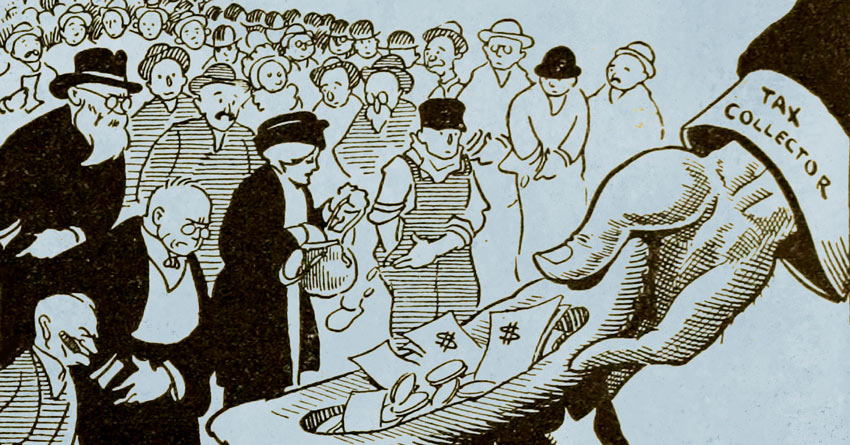
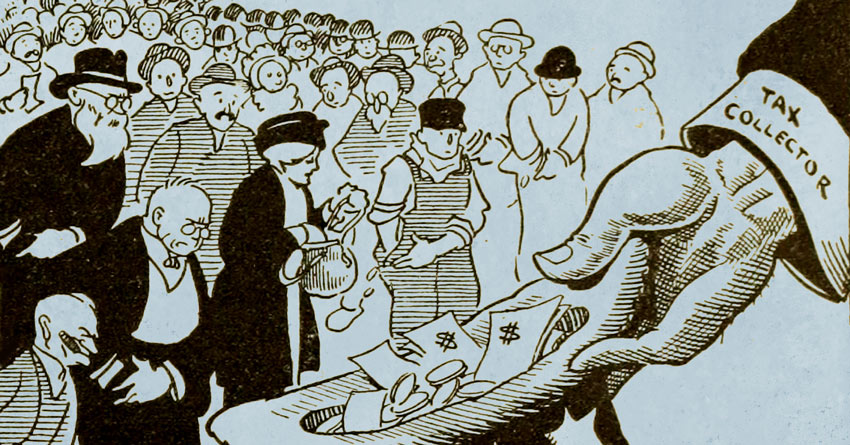
Connecticut has a budget problem. There’s not enough money to spend.

WTNH-TV in New Haven paraphrased the situation along with the response of Connecticut’s very progressive governor: “Income tax revenue collapses; Malloy says taxing the rich doesn’t work.”

The news story explains, “Connecticut’s state budget woes are compounding with collections from the state income tax collapsing, despite two high-end tax hikes in the past six years.”

Hmmm. Despite the tax increases? Or . . . “because the state of Connecticut depends too much on its wealthy residents,” as the report continued, “and wealthy residents are leaving . . .”

A Yankee Institute report notes that “the exodus of wealth from the state as top earners and businesses relocate to more tax-friendly states” is a major problem. Institute President Carol Platt Liebau calls it a “terrible cycle of tax increases followed by deficits followed by even more tax increases.”

Yet, state legislative Democrats are back pushing more tax hikes on “the rich.” Senate legislation would jack up the tax rate — retroactively — on those with income of $500,000 or more. House legislation would slap a 19 percent surcharge on some hedge fund earnings. In response, the head of the Connecticut Hedge Fund Association testified that his “industry is populated by exactly that type of person that will move based on tax policy.”*

A song by Ten Years After comes to mind:  

Tax the rich, feed the poor
Till there are no rich no more

Doesn’t sound like a good idea even in song.

This is Common Sense. I’m Paul Jacob.


* It’s worth noting that Gov. Malloy is now “against raising taxes again to fill the deficits and is instead focusing on spending cuts . . .”


Printable PDF


Categories
Accountability folly general freedom ideological culture media and media people moral hazard nannyism political challengers responsibility too much government

French Beacon

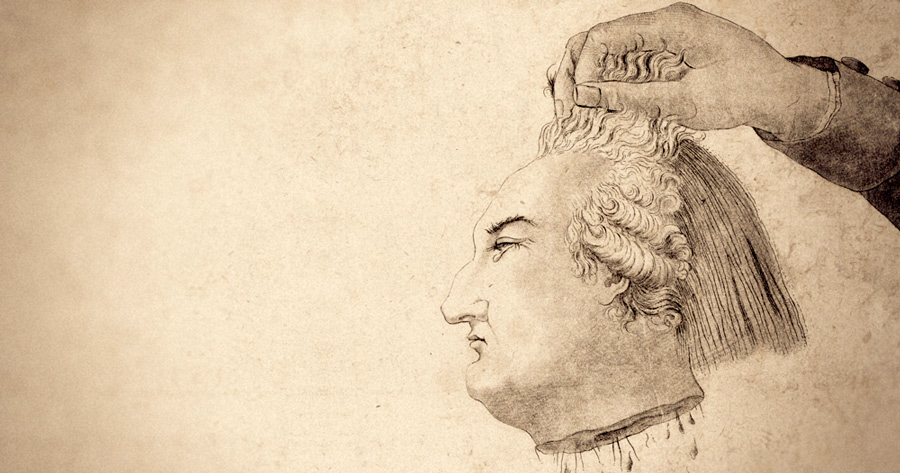
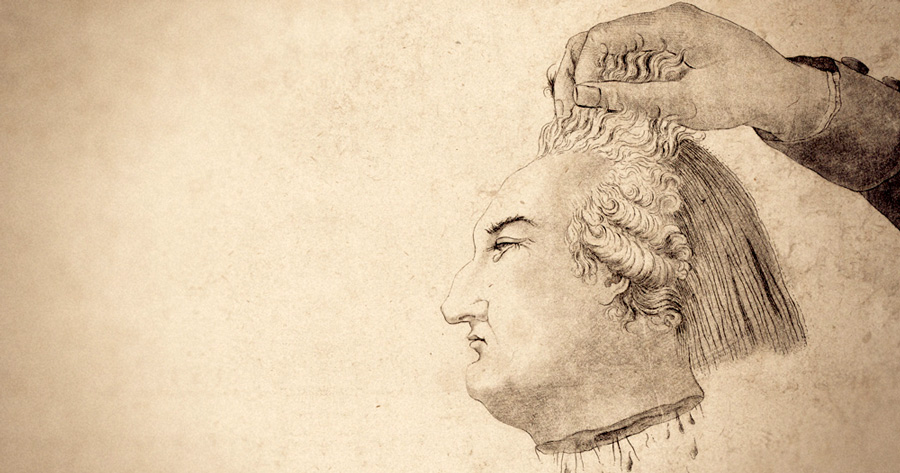
“Since the French Revolution,” the New York Times pontificated online, “the nation has often been viewed as a beacon of democratic ideals.”

Really? Can a nation of constitutional turnovers — kings and republics and revolutions and foreign occupation — be a beacon? Most often we in America compare our Revolution to France’s, focusing on The Terror: mob rule and proto-totalitarianism.

On Friday, “the staff of the centrist candidate Emmanuel Macron said… that the campaign had been targeted by a ‘massive and coordinated’ hacking operation, one with the potential to destabilize the nation’s democracy before voters go to the polls on Sunday.” A few minutes later, the campaigns fell under the country’s election gag rule, unable to debate immediately prior to the voting. The government told the media not to look at what was dug up in the “hack” (which everybody said was by Russians). Though Macron’s putative Islamization plan is worth looking at, surely.

Much talk (at the Times and elsewhere) of how the hack destabilized democracy. No talk, for some reason, about how the election regulation gag rule did.

The idea that information might destabilize democracy? Awkward.

Still, we can see how an info-dump’s timing might destabilize an election.

But since Macron won by a large margin, the Late Exposure Strategy may have backfired, Russians or no.

The most obvious oddity in reportage? The continued reference to former Socialist Party hack Macron as “centrist” while Le Pen is called “far right” ad nauseam. Macron is pro-EU; Le Pen is nationalist. Neither are reliably for freedom. The fact that Macron packaged his En Marche ! Party as centrist doesn’t make it so.

This is Common Sense. I’m Paul Jacob.


Printable PDF


Categories
folly ideological culture media and media people national politics & policies political challengers responsibility

The Women-Haters

“You’ve just spoken eloquently about the sexism, the misogyny and inequity around the world,” CNN anchor Christiane Amanpour said* to defeated presidential candidate Hillary Clinton, “but do you believe it exists here still?”

The audience at Tuesday’s Women for Women International luncheon in New York City erupted in laughter, cutting Amanpour off. A second round of chortles ensued when Hillary Clinton touched the side of her face in wonderment, uttering, “Hmmm?”

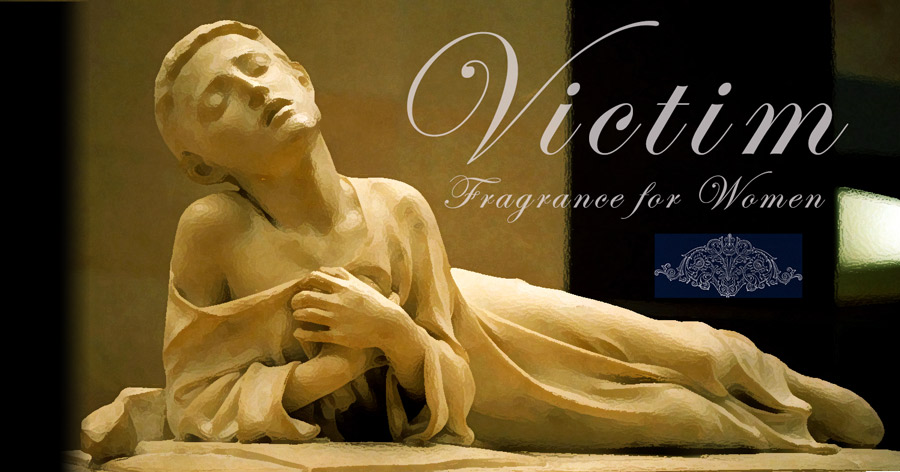
“Were you a victim of misogyny?” Amanpour continued. “And why do you think you lost the majority of the white female vote. . . ?”

“Well, the book is coming out in the fall,” Hillary joked. “Yes,” she went on, turning serious, “I do think it played a role.”

Noting that “other things did, as well,” Mrs. Clinton decried Russian interference. Back to misogyny, however, she added: “It is real. It is very much a part of the landscape politically, socially and economically.”

Hmmm, indeed. So, most white women didn’t vote for Hillary Clinton because they hate women . . . per se?

All women?

Simply because they’re women?

“An example that has nothing to do with me, personally,” explained Mrs. Clinton, “is this whole question of equal pay. We just had Equal Pay Day in April, which is how long women have to work past the first of the year to make the equivalent of what men make the prior year in comparable professions.”

Hillary is mistaken about the Gender Pay Gap, which compares completely dissimilar professions (and hours worked, qualifications, etc.). Plus, this same gender pay gap was found at the Clinton Foundation, her U.S. Senate staff, her State Department and among her campaign staff.

Hillary Clinton — misogynist?

This is Common Sense. I’m Paul Jacob.


* The full interview is here. But you can cut to the chase here.


PDF for printing


Categories
folly general freedom ideological culture responsibility too much government U.S. Constitution

UN-appealing

Like E.F. Hutton, when the United Nations’ Office of the High Commissioner for Human Rights “Special Rapporteur on the right of everyone to the enjoyment of the highest attainable standard of physical and mental health” talks, people listen.

In disbelief, perhaps. Or amusement. But they listen. Well, at least Washington Post columnist Dana Milbank does, anyway.

Unfortunately, Milbank couldn’t get Dainius Puras — the Lithuanian doctor serving as the U.N.’s Special Rapporteur on the right of everyone to blah, blah, blah — to talk. Milbank did, however, uncover an “urgent appeal” sent by Puras to the U.S. State Department, with instructions to pass it along to congressional leaders.

Puras won’t discuss his confidential February letter until June, when “it becomes public at the next session of the Human Rights Council.” But the “leaked” letter announces the U.N. has launched an investigation to determine whether repealing the Affordable Care Act (Obamacare) violates international law.*

“The letter urges that ‘all necessary interim measures be taken to prevent the alleged violations’” Milbank further explains, “and asks that, if the ‘allegations’ proved correct, there be ‘adequate measure . . . to guarantee the accountability of any person responsible.’”

Should Congress repeal Obamacare, will U.N. troops occupy Washington, arresting congressmen for voting against its mandate?

The international body has no way “to impose its will,” Milbank acknowledges, seeming to wish it did and complaining that folks just “scoff at lectures from U.N. bureaucrats.”**

Taking solace, Milbank declares: “[T]he U.N. letter is at least a bit of moral support for those defending Obamacare.”

Moral support? From the U.N.? Now, you’re pulling my leg.

This is Common Sense. I’m Paul Jacob.


* Along with other U.N. gobbledygook, the letter cites Article 25 of the Universal Declaration of Human Rights, which proclaims, “Everyone has the right to a standard of living adequate for the health and well-being of himself and of his family” etc. etc. Standard U.N. speak: flowery, vague and unenforceable.

** People throughout the world and across the political spectrum — from the UK’s Daniel Hannan to Chelsea Clinton — scoff at the U.N. for being incompetent and corrupt. Not to mention thoroughly socialist.


Printable PDF


Categories
general freedom media and media people responsibility

Less Innocent Times?

Many years ago, waiting for coffee at a vendor in front of the Washington Post building and across the street from my U.S. Term Limits office, I often exchanged friendly banter with the Posts Dan Balz.

Coffee in hand last Sunday, I read Balz’s column, “A scholar asks, ‘Can democracy survive the Internet?’”

In more innocent times, the rise of the Internet was seen by many people as a boon to democracy,” Balz began, adding that “the Web broadened the flow of information, introduced new voices into the political debates, empowered citizens and even provided a powerful fundraising tool for some lesser-known candidates such as Barack Obama and Bernie Sanders.”

Obama, Sanders . . . all to the good!

“Now, in what are clearly less innocent times, the Internet is viewed as a far less benign force,” he continues, next to a picture of President Donald Trump’s Twitter feed.  “It can be a haven for spreading fake news and rewarding the harshest and most divisive of political rhetoric.”

Mr. Balz’s time continuum is faulty. The “innocent times” when Bernie Sanders used the Internet to raise money were the same “clearly less innocent” times when voters elected President Trump.

“Neither the legacy media nor the established political parties,” Balz bemoans, “exercise the power they once had as referees.”

Nathaniel Persily, the scholar cited by our legacy-media columnist, shares Balz’s anti-Trump bias. But he makes an important point, writing that the Trump campaign “could only be successful because established institutions — especially the mainstream media and political party organizations — had already lost most of their power.”

People voted against the less-than-innocent political (and media) establishment.

This is Common Sense. I’m Paul Jacob.


Printable PDF


Illustration based on original artwork by PRO With Associates


Categories
Accountability moral hazard nannyism national politics & policies responsibility term limits too much government

Ida-Heave-Ho

“Is there any chance the vetoes can be overridden?” asked a reader in response to yesterday’s commentary on Idaho Gov. Butch Otter’s veto of two pieces of common-sense legislation.

It’s a good question, because the bill reforming civil asset forfeiture and the bill easing regulations that block employment in cosmetology both passed by wide margins. Unfortunately, the answer is NO. 

According to the Gem State’s constitution, the governor has ten days after legislation reaches his desk or, at the session’s end, ten days after the legislature adjourns to decide whether to sign or veto a bill. If he vetoes after adjournment, it cannot be overridden — unless the legislature comes back into session.*

Only the governor can call legislators back into session, which is exceedingly unlikely if a new session would entail a veto override.

It turns out that Idaho is one of only six states where legislators are unable after adjournment to override a veto. Still, the problem’s simple enough to solve: legislators could propose a constitutional amendment changing the process.

Senator Steve Vick did just that, in 2014 and again in 2016. But though his amendment garnered the two-thirds majority needed in the Senate, the House never took it up. He plans to reintroduce it next year.

There’s another constitutional change needed: term limits for the governor. A 2015 poll found a whopping 84 percent of Idahoans favor such limits. Yet, legislators may be squeamish, knowing that those same voters (by that same margin) also want legislators term-limited.

Sometimes it is amazing,” Idaho Politics Weekly’s Bob Bernick explained, “how elected officials can just ignore the will of voters.”

This is Common Sense. I’m Paul Jacob.


* Gov. Otter also vetoed the legislature’s repeal of the state sales tax on groceries, the timing of which legislators are challenging in court.


Printable PDF


Categories
Accountability general freedom local leaders moral hazard national politics & policies property rights responsibility too much government U.S. Constitution

A Bad Haircut

Eric Boehm over at Reason excoriated Idaho Gov. Butch Otter for giving libertarians “the double bird salute.” Boehm wondered if the governor, in vetoing two bills earlier this month, had been merely “trying to make libertarians mad.”

That’s not exactly fair.

The two blocked bills, one reforming unjust civil asset forfeiture and the other easing pernicious regulation of cosmetology, did certainly appeal to libertarians. But they also appealed to conservatives and liberals. And both passed with bipartisan support.

House Bill 139 would have reduced the number of training hours for a cosmetology license and allowed folks to fix hair at special events like weddings without a license, etc. “The fact that many lawmakers, Republicans and Democrats, liberals, moderates and conservatives, are working together to advance legislation in the interest of economic opportunity and prosperity,” argued Wayne Hoffman of the Idaho Freedom Foundation, “is a thing of beauty for a profession that’s all about beauty.”

But beauty is in the eye of the beholder. Those who run cosmetology schools probably like more mandated hours and folks in the profession might wish for less competition. Governor Otter said as much, complaining that HB 139 was written “without input from interested parties or due regard for the health, safety and welfare of the public.”

Just how dangerous is a bad haircut?

Putting safety in context, Hoffman explained that the current mandated hours of training for a cosmetology license “is more than is required to become an EMT in Idaho.”

Gov. Otter vetoed HB 202, the civil asset forfeiture reform, at the behest of “law enforcement” — the very interested parties who gain from taking people’s stuff without bothering to charge or convict them of a crime.

That makes no sense . . . according to Common Sense. I’m Paul Jacob.


Printable PDF


Categories
Accountability general freedom moral hazard responsibility term limits

Trouble Over Term Limits

Americans are hardly alone in strongly supporting term limits. All over the world, people who care about limited government also care about limited terms for officials wielding government power.

Especially the people of Paraguay, who remember all too well the dictatorship of General Alfredo Stroessner. He seized power in 1954, securing it with fraudulent elections and the arrest, torture and murder of thousands of political opponents, until being removed by a 1989 military coup.

After that ugly 35-year episode, strict term limits were established in the Paraguayan Constitution: one five-year term for the president — no re-election possible.

Fast-forward to the last few weeks, when the country’s Senate violated its own rules by holding a secret session — of which even the head of the Senate was unaware — and approved a constitutional amendment allowing re-election of the president. Under Paraguay’s constitution, amendments can be enacted by the House and Senate — without a vote of the people.

Before the House could vote, however, protests erupted against the deeply unpopular term limits change. (A recent poll showed 77 percent of Paraguayans opposed the amendment.) Angry crowds battled police on the streets of Asunción, the capital, after trashing and setting fires in the National Congress building. Meanwhile, police killed one demonstrator when they attacked the Liberal Party headquarters, prompting Pope Francis to urge dialogue in this 90 percent Roman Catholic country.

Yesterday, President Horacio Cartes announced he would not seek re-election in 2018, whether the constitution is changed or not.

The head of Cartes’s Colorado Party, which was associated with Stroessner decades ago, told Reuters that any change is now “practically impossible.”

This is Common Sense. I’m Paul Jacob.


Printable PDF


Categories
Accountability government transparency incumbents local leaders national politics & policies responsibility

A+ in Arrogance

The folks in Congress represent ‘We, the People’ . . . well, theoretically, at least. They’re supposed to work for us. We are their bosses. We pay their salary.

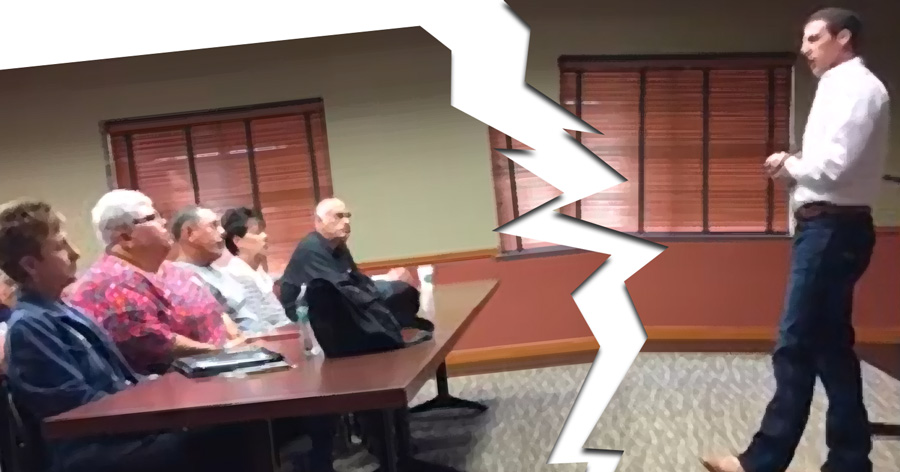
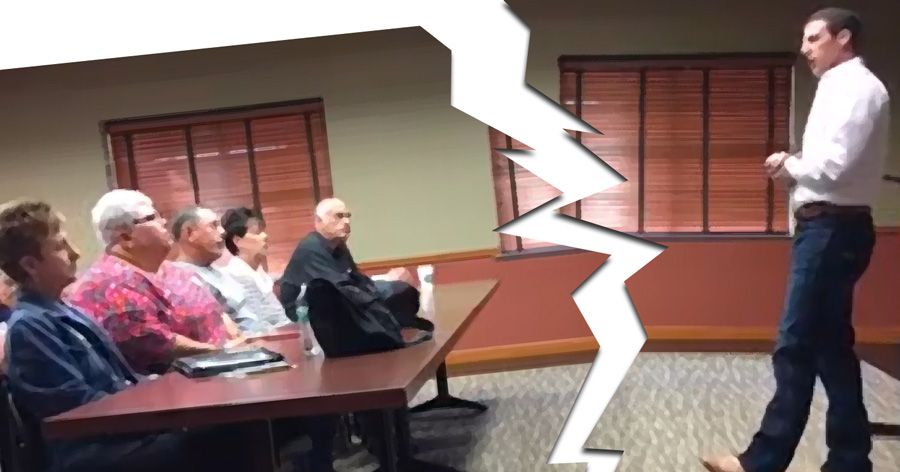
But not U.S. Rep. Markwayne Mullin, the third-term Republican from the rural Second District of Oklahoma. At two recent town hall meetings, the former professional mixed martial arts fighter responded to comments that the people pay his salary and health insurance with a sort of verbal karate-chop.*

“You say you pay for me to do this. Bullcrap,” he aggressively retorted. “I pay for myself. I paid enough taxes before I got there and continue to through my company to pay my own salary. This is a service. No one here pays me to go.”

Mullin’s taxpayer-funded PR professional, Amy Lawrence, was nice enough to explain the prickly, arrogant ranting of her boss, noting that, “Like all business owners, Congressman Mullin pays his taxes, which contribute to congressional salaries.”

Which means — yes sirree! — that of course his constituents pay his salary, when they also “contribute” their taxes. The fact that Rep. Mullin pays taxes, too, doesn’t change that fact.

And, though Mullin claims being a member of Congress is not how he makes “his living,” he does, nonetheless, deposit into his bank account a not inconsequential $174,000 a year in congressional salary.

Moreover, as a member of Congress, Mullin also gets to flout the Obamacare law with a special health insurance deal.

A town hall set for Tahlequah was canceled . . . for security reasons.

This is Common Sense. I’m Paul Jacob.


* His comments in Jay, Oklahoma, are available here; his Okemah comments, here. An entire hour video of his Okemah remarks are here (the portion about his pay begins at 24:48).


Printable PDF

Rep. Markwayne Mullin, Oklahoma, salary, congressional, pay, representation, representative