Categories
Accountability crime and punishment government transparency moral hazard national politics & policies property rights responsibility too much government U.S. Constitution

The Police State Is in Sessions

U.S. Attorney General Jeff Sessions threatens to make himself one of the biggest threats to your liberty.*

President Donald Trump’s pick for Attorney General just promised to encourage police departments to seize the personal property (cars, houses, cash) of criminal suspects.

The practice is called asset forfeiture. It comes in two forms, criminal and civil. Compelling objections have been raised against civil forfeiture, which accounts for nearly 90 percent of all forfeitures. Abuse is rampant in cities, counties and states around the country, routinely used against people who have not even been charged, much less prosecuted and convicted. (Often not really even suspected of criminality.)

“No criminal should be allowed to keep the proceeds of their crime,” he told conference attendees in Minneapolis, Minnesota, on Monday.** But how can our top federal law enforcement officer ignore the profound difference between a suspect and a criminal?

No one is a criminal, before the law, until proved in court. Taking away property to make it harder for suspects to defend themselves — which is what RICO laws and other Drug War reforms intended to do — is obviously contrary to the letter of the Fourth and Fifth Amendments as well as the spirit of the U.S. Constitution.

Sessions announced he’ll soon offer a “new directive on asset forfeiture — especially for drug traffickers.” Unless he clearly indicates that it will only be used against the property of persons legally convicted of crimes, Sessions will be merely making charges of an “American Police State” stick.

America’s top lawman argues completely contrary to American principles of justice.

This is Common Sense. I’m Paul Jacob.


* Bigger than Eric Holder was. Bigger than Loretta Lynch.

** Sessions also went on to say that “sharing with our partners” — local police departments around the nation — is a good thing. This is, systemically, the most dangerous aspect of it all, for it encourages police departments to take things for their own benefit.


Printable PDF


Categories
Accountability folly general freedom ideological culture moral hazard nannyism national politics & policies property rights responsibility too much government

The Worst Is the Enemy of the Cure

You’ve heard the adage: “the perfect is the enemy of the good.” This can be true in politics, where opposing an ameliorating reform because it is not ideal means, sometimes, getting stuck with unmitigated policy disasters.

But there’s a corollary: in politics the worst is likely to emerge . . . when practiced compromisers succumb to fearing the best, because unpalatable, or perhaps not in line with political interests.* Trying to avoid the “best is the enemy of the good,” we’re left with the outrageously awful.

Cures worse than the disease are not uncommon. The Democrats’ “Affordable Care Act” (ObamaCare) was a clumsy, badly drafted hodgepodge designed to fix problems by doing the opposite of what made sense.

And it immediately started having ill effects, pushing up costs for many, many health-care and medical insurance consumers.

No wonder Republicans ran year after year promising repeal.

But now that Republicans have the chance for a real cure, they’re chickening out. The Senate just debuted their ObamaCare replacement. And Senator Rand Paul (R-Ky) calls it “worse than ObamaCare.”

Why worse?

Because Republican politicians are better at promising than delivering. Fearing how those who directly benefited from ObamaCare might squawk, and how badly the GOP would be treated in the media because of this, moderates went with what they know: snake oil.

Fortunately, Rand Paul’s opposition may kill the bill. If one other senator joins Dr. Paul — and Sen. Susan Collins (R-Maine) who announced her opposition for other reasons — in not voting for the monster, it will not pass.

Which is great, because going for a cure worse than the previous cure leaves us all with the worst possible outcome.

This is Common Sense. I’m Paul Jacob.


* Like many cures. Politicians these days no longer have the knack for the necessary “spoonful of sugar” to help medicine go down. They prefer distributing just sugar pills.


Printable PDF


Categories
Accountability folly local leaders moral hazard porkbarrel politics responsibility term limits too much government

Most Messed Up

“Politicians are notorious for making promises they can’t keep,” Matt Egan reports at CNN Money. “But they really outdid themselves in Illinois — and now the state is paying for it.”

Egan dubs the state “America’s most messed-up.”*

No wonder the state has the worst outbound migration in the nation — or, as Egan puts it: “people are leaving in droves.”

On June 1, Moody’s and S&P Global Ratings downgraded the state’s credit rating to one notch above so-called “junk bond” status. “Illinois has suffered 21 downgrades from the three major ratings agencies since 2009,” the Illinois Policy Institute informs, and now has the lowest credit rating of any state, making it more expensive to borrow. Even with passage of a budget — finally, after three years of the legislature failing to fulfill its constitutional duty — the threat of a further downgrade still looms.

“After decades of historic mismanagement, Illinois is now grappling with $15 billion of unpaid bills and an unthinkable quarter-trillion dollars owed to public employees when they retire,” the article explains.

Decades of mismanagement? Perhaps the problem was inexperienced legislators, lacking the necessary expertise to do their crucial jobs, because of term limits. Except that Illinois doesn’t have term limits.

In fact, Illinois sports the nation’s longest-serving Speaker of the House in modern times. Mike Madigan has been speaker for 32 of the last 34 years, since 1983. Call him “Mr. Experience.” Madigan is recognized as the most powerful man in state government.

All that leadership experience . . . leading citizens to experience much pain and suffering.

This is Common Sense. I’m Paul Jacob.


* That’s in the headline. In the article, Egan explains the mess as “the inevitable result of spending more on pensions and services than the state could afford — then covering it up with reckless budget tricks.”


Printable PDF


Categories
free trade & free markets general freedom nannyism national politics & policies property rights responsibility

Mr. Jetson, Call Your Office

Increasingly, people are worrying about robots.

They’re taking our jobs, we’re told. Soon, all we’ll have left are robots. Massive unemployment!

While some find this scenario utopia and bliss,* it sounds dreadful to me.

Silver-plated lining is, I doubt it. This kind of worry about technology making laborers obsolete has been around at least since Ned Ludd, who broke factory machinery to save jobs back in 1779.

How is this next wave of technology any different? If technology destroyed jobs on net, we’d all be unemployed now.

Economist Deirdre McCloskey takes this historical view. Writing in Reason, she says today’s high-tech “innovations have actually raised real wages, correctly measured, because a human supplied with a better tool can produce more outputs. And the point of an economy is production for consumption, not protection of existing jobs.”

We’ve always been losing jobs. And new ones are created. Our worry shouldn’t be the jobs lost to new tech, but the lack of new ones coming into existence because of the oldest tech of all: government.

But you know what industry is least resistant to jobs vanishing to robots? Government itself. Sure, some reductions in public sector jobs have occurred, mainly as a result of decreased revenues in the recent “recession.” The job losses there have not been filled by robots, though. Permanent employee positions have been destroyed . . . too frequently replaced by outsourced consultants.

Could robots replace large swaths of public employees? Maybe that wouldn’t be good, actually. The worst-case scenario might be this: government becoming efficient.

We don’t want bad and efficient government.

Kludge may be better.

This is Common Sense. I’m Paul Jacob.


* Some even see in this development a sort-of science-fiction rationale for making socialism at long last plausible — robots as the new slave class; all the humans in the leisure class! Yeah, right.


Printable PDF


Categories
general freedom initiative, referendum, and recall national politics & policies responsibility tax policy term limits U.S. Constitution

Brexit 1776-2017

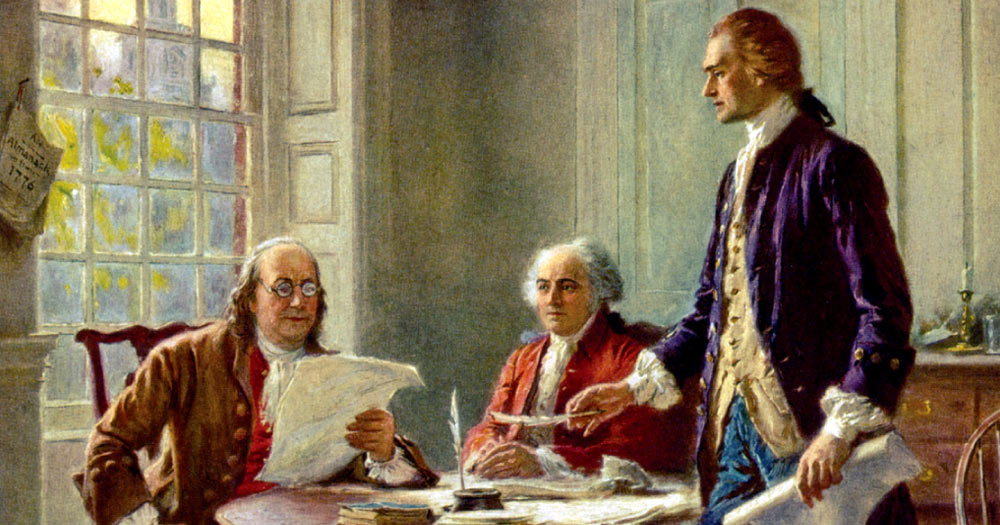
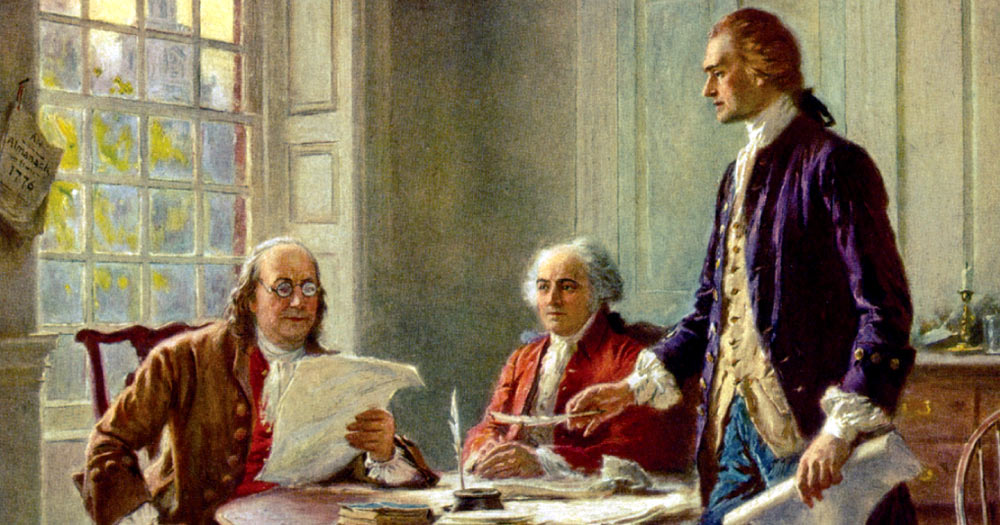
These united States* got their start, officially, on July 2, 1776.

That’s when the Second Continental Congress voted to separate from King George’s government across the water. But it was two days later when that same Congress approved its formal Declaration, and it was the wording of that Declaration that impressed everybody — including folks back in England.

July Fourth, not the Second, became “Independence Day.”

Today, the English are insisting on independence. Last year’s referendum to exit the European Union was a major step in throwing off the abusive relationship from Brussels and the central government there.

The Brits have every right to their “Brexit,” since, as our Congress argued so persuasively, governments “deriv[e] their just powers from the consent of the governed,” which entails that “whenever any Form of Government becomes destructive of these ends, it is the Right of the People to alter or to abolish it.”

Americans have never had more cause for fellow-feeling with the British. Not only are they copying us, we are copying us.

To gain anything like control over what has become a runaway central government in Washington, D.C., Americans in the states will have to continue to (in effect) nullify federal law regarding marijuana and take the lead on criminal justice reforms and improving government ethics and accountability. More work must be done, fighting for free speech and against corruption. And overbearing taxation and regulation and cronyism And insane debt accumulation.

Across the pond, it’s Brexit. Here, it’s just our continuing Revolution.

This is Common Sense. I’m Paul Jacob.


* For just today I’ll use the odd, old capitalization, just as it was used in the Declaration of July 4, 1776.


Printable PDF


Categories
Accountability folly general freedom ideological culture moral hazard nannyism national politics & policies privacy responsibility too much government

UK Death Panel

Six days ago, the European Court of Human Rights sided against the parents of Charlie Gard, a severely ill boy, refusing to allow them to take their infant son to America where he could receive full (and privately funded) experimental treatment. The court ruled that removing the child from the hospital would cause him “significant harm” — and authorized the termination of life support.

Yesterday, this site quoted Ben Shapiro on the case. Shapiro sees this sad story as a grand demonstration of what is wrong with government-funded and -managed health care:

Bernie Sanders tweets about how nobody should be denied care because they can’t afford it? But that’s what happens all the time under socialized medicine — the difference being, it’s not about you not being able to afford it, it is about the government not being able to afford it.

Economists tell us that, in a world of scarcity, there will be rationing, willy nilly: either by price (according to consumer and producer choices) or else by government diktat.

Last week, the European Court of Human Rights did its due diligence to ration resources — serving as a Death Panel.

The scheduled to pull the plug on Charlie last Friday, but there’s been a last-minute reprieve — no doubt a result of pressure from America and the Vatican.

Though the doctor who testified before the court insisted that any American medical institution would have provided the treatment he offers, the best the Gards can apparently hope for, now, is to be allowed to take Charlie home to die.

Think of it as socialized medicine in action.

This is Common Sense. I’m Paul Jacob.


Printable PDF


Categories
Accountability crime and punishment government transparency media and media people national politics & policies responsibility

A Handy Evasion

Susan Rice, National Security Advisor in President Barack Obama’s administration (2013 – 2017), is being picked on, she speculates, for reasons pertaining to her race and gender.

Handy evasion.

At issue is not her infamous prevarication in the Benghazi affair. We are used to being lied to about foreign policy, so that was barely a shock.

What is news now? The Trump-Russia story.

Background: Ever since her defeat to Donald Trump, former Secretary of State Hillary Clinton has provided the very model of how to deflect attention from one’s own defects. She’s blamed FBI Director James Comey, the vast right wing conspiracy, and, of course, Russia.*

Amusingly, the Russia biz still boils down to how Russian hackers, apparently directed from high in the hierarchy of the Eastern warlord state, illegally liberated information from private servers. Those revealed emails showed Mrs. Clinton and her campaign in a negative light. Excuse-makers call this “hacking the election.”**

It turns out, the biggest crimes committed during the campaign, and somewhat regarding Russia, were engaged in by the Obama Administration, perhaps especially by Rice herself. She is accused of illegally surveilling the Trump campaign and those around it by “unmasking” their identities in the course of surveillance reports, which are legally required to be anonymous . . . when catching in the net folks tangential to the target.

The law requires FISA court go-aheads for such identifications. And the Obama administration was roundly reprimanded by a FISA court for not following protocols.

In any case, the idea that only women and African-Americans are hounded by opposition parties and the press does not hold up to scrutiny.

Nixon, anyone?

This is Common Sense. I’m Paul Jacob.


* Her team has also blamed President Barack Obama

** A private server was hacked, not an election.


Printable PDF


Categories
Accountability folly free trade & free markets general freedom local leaders moral hazard nannyism national politics & policies property rights responsibility too much government

Against Flexibility?

Do politicians have any idea what they are doing?

In Oregon, Senate Bill 828 just passed the Senate and is now being favorably reviewed in the House. The law would require “large employers in specified industries to provide new employee[s] with estimated work schedule and to provide current employee with seven days’ notice of employee[’s] work schedule.”

But will the measure help employees? Really?

The notion is called the “Fair Work Week.” Pushed by Democrats, it has gained bipartisan support. The basic idea: allow time (under full force of law) for workers to manage their own schedules and personal economies.

Trouble is, in the name of making work easier to manage, it attacks flexibility.

Which is something many workers want. More than notification.

Indeed, the study commissioned by the City of Seattle for their similar regulatory scheme acknowledged that reducing flexibility is not necessarily a godsend for workers.

“A more predictable schedule,” the report noted, “is not always one that an employee would prefer. A schedule known with certainty is a cold comfort if it yields too little income to survive.”

The report went on to explain that many of the labor market’s scheduling inconveniences are themselves the result of other government regulations, such as ObamaCare.

Christian Britschgi, writing at Reason, predicts that passing the Oregon law would mean “a fairer worker week” for some, but for others, “no work week at all.”*

Meanwhile, the Seattle study noted that it was workers in small businesses who are most likely to be discomfited by last-minute scheduling changes. The Oregon law applies only to big businesses.

This is Common Sense. I’m Paul Jacob.


* A standard, negative consequence of most “well-intended” legislation.


Printable PDF


Categories
folly free trade & free markets general freedom ideological culture moral hazard nannyism national politics & policies property rights responsibility too much government

Minimally Mugged By Reality

It should shock no one: forcing businesses to pay steep minimum wages ends up pushing some businesses out . . . of business. Yesterday I looked at what minimum wage laws can do to low-skilled workers. Today, consider the employers. When we make it harder to turn a profit, it becomes harder to profit. Businesses that can’t at least break even close their doors.

Many business owners are inclined to promote, politically, politicians who in turn support minimum wage hikes. Do they change their minds when mugged by reality? Alas, the trauma alone won’t convert a person to principled allegiance to free markets.

I was reminded of this fact by a story about business owners in Minneapolis who stress their Sandernista credentials.  

“I’m a bleeding-heart liberal and I’m a big Bernie Sanders supporter,” says businesswoman Jane Elias, an art store owner. “But this whole flat-out, $15, one-size-fits all is just wrong.” Another victim, restaurant owner Heather Bray, says she’s a “proud, proud progressive.” But: “The arithmetic doesn’t work. People will not continue to go to budget-conscious restaurants when they’re no longer budget-conscious.”

So . . . arbitrary minimum-wage demands don’t add up in light of the demands of running their businesses under their particular circumstances. Well, no disagreement here. But take it further, please. Keep doing the math. The bottom line is that everybody, not just you — and always, not just sometimes — has the right to make his own decisions about his own life and property.

And profit by it.

This is Common Sense. I’m Paul Jacob.


Printable PDF


Categories
Accountability ideological culture local leaders moral hazard nannyism national politics & policies responsibility too much government

Minimum Wage Laboratory

Not every popular idea about government policy is good. Or bad. How do we tell the difference?

One way is evidence.

The modern administrative state was promoted heavily by social scientists who thought that piecemeal social engineering should be tested. A few even thought that the older experiment in limited-government federal republicanism gave Americans a near-ideal testing ground: “the laboratory of democracy.”*

Activists and politicians have been pushing big increases in the minimum wage in cities around the country. Seattle, Washington, has been one of those, establishing an $11.00/hour legal minimum in April of 2015, then raising that limit by two dollars in 2016. Now the results are in.

The City of Seattle commissioned a study of “the wage, employment, and hours effects of the first and second phase-in of the Seattle Minimum Wage Ordinance,” and it shows clear results:

  1. The first hike led to “modest reductions in unemployment” but scant change in over-all low-wage employment.
  2. The second hike led to a 9 percent reduction in hours worked at wages below $19/hour;
  3. a reduction of over $100 million per year in total payroll for low-wage jobs; and
  4. total payroll losses average about $125 per job per month.

Jonathan Meer, an economist teaching at Texas A&M University, calls this an “unmitigated disaster.” But he notices that a backlash against it was immediate.

To those who object: do you object to the method or the conclusions?

The only halfway plausible rationale for social engineering of this kind — top-down interventions into markets — has been “social science.” Rejecting evidence is to reject science, which is to reject . . . the minimum wage idea itself.

This is Common Sense. I’m Paul Jacob.


* The idea is to test policy tried in one location against its goals. What works should be mimicked, but only after the evidence is in and results accepted as good. And dropped in cases where not.


Printable PDF