
Categories
free trade & free markets regulation

Regulating Restrooms

Perhaps you remember the good old days — when men were men, women were women, and private establishments could maintain men’s restrooms and women’s restrooms for the men and the women without worrying about totalitarian edicts from a Human and Civil “Rights” Commission.

Those days may not be gone forever. But it sure must feel like it to the owners of the Hideout Arcade Bar & Grille in Rehoboth Beach, Delaware.

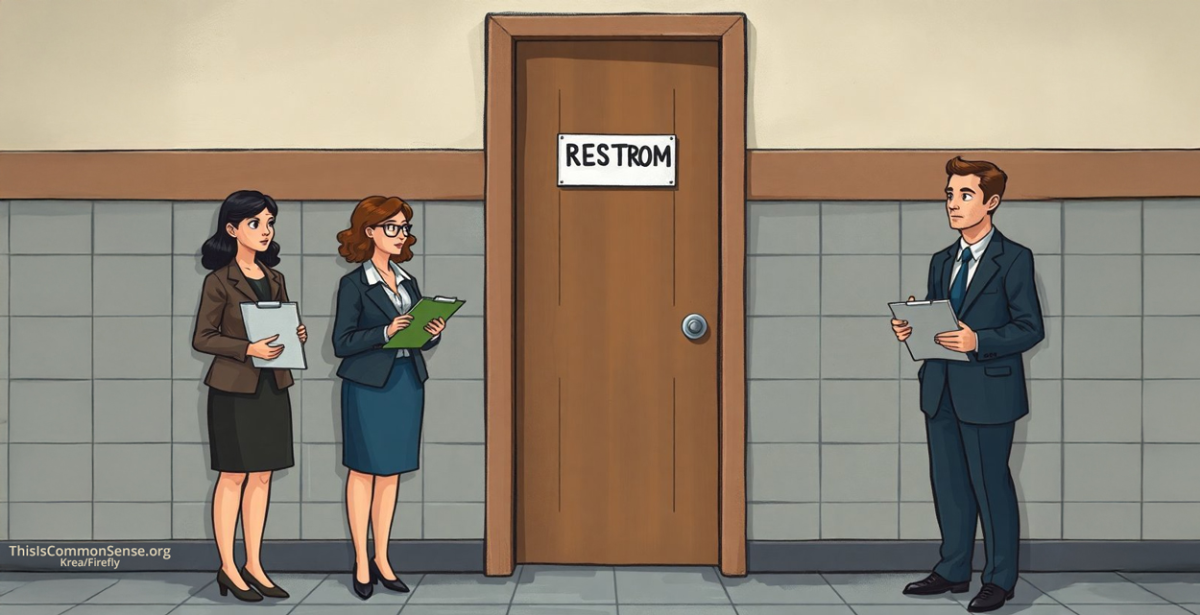
The restaurant refused the request of a man, what news reports call a “biological man,” who wanted to use the woman’s bathroom at the restaurant. His reason was that — well, I’m not sure his exact rationale matters. Anyway, the restaurant said no, doubtless feeling that it had a right to protect the sensibilities of the women using its bathrooms and to establish rules for their use.

He must have complained, because the Delaware Human and Civil “Rights” Commission got involved and, ignoring any common-sense defense the restaurant offered, has fined the restaurant $2,000 and imposed “anti-discrimination training” — i.e., reeducation — on its employees. 

No word on whether they’ll be forced to wear dunce caps, as were some unfortunates during China’s Cultural Revolution.

Commission members might say they’re merely following the law — they just work there. Delaware enacted an Equal Accommodations Law mandating that “All persons within the jurisdiction of this state are entitled to full and equal accommodations, facilities . . . regardless of . . . sex.”

Notice that the law did not say “heedless” of sex, however.

This is Common Sense. I’m Paul Jacob.


PDF for printing

Illustration created with Krea and Fireflly

See all recent commentary
(simplified and organized)
See recent popular posts

Categories
free trade & free markets regulation

Regulating Refineries to Death

Punish them! 

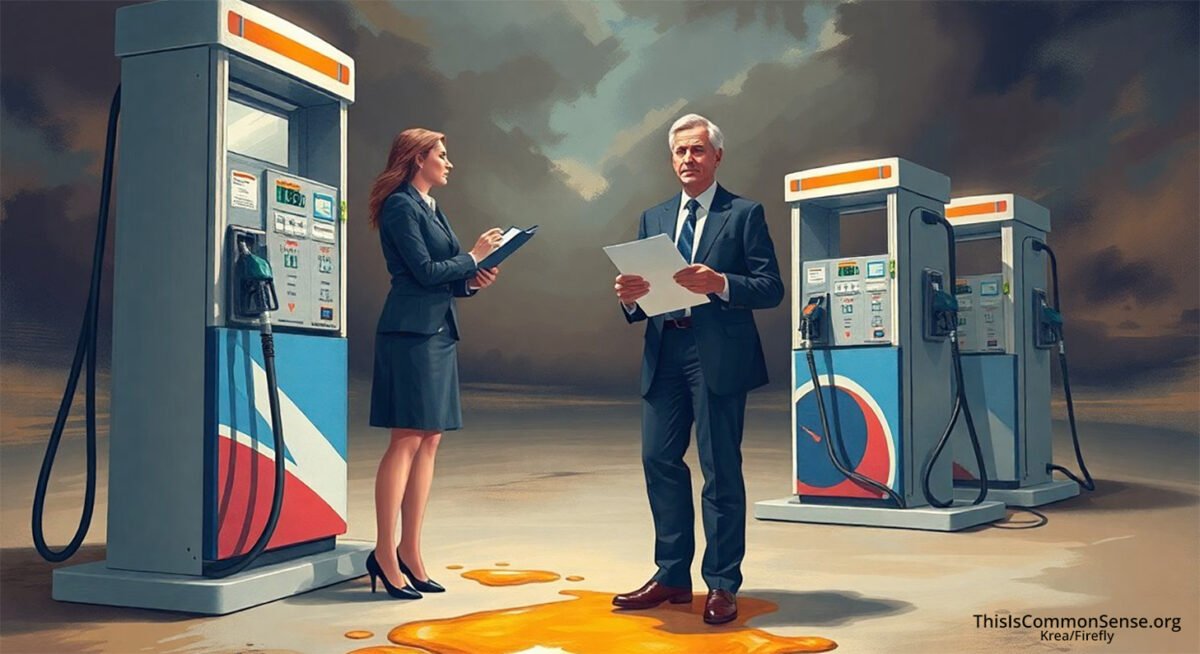
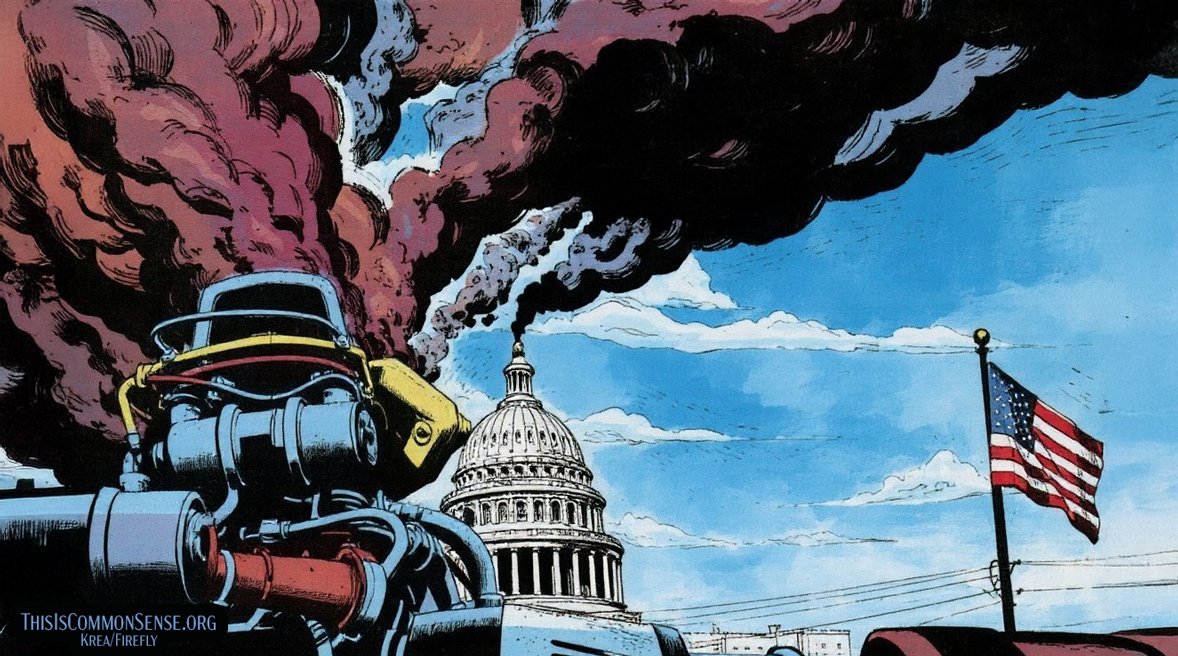
That might as well be the explicit goal of California’s regulators and politicians — and all too many voters — for the results are clear enough. All who refuse to use electric cars and solar energy must suffer . . . with ever-higher gas prices, at the very least.

Two major oil refineries that provide gas for California as well as a few neighboring states have announced that they are closing their doors. They can’t hack it.

One analyst predicts that in consequence of these closures and related destruction of production, the price of gas will shoot up to $8 per gallon.

Lane Riggs, CEO of Valero Energy, which is closing a refinery near San Francisco, says the state’s tough “regulatory enforcement environment” is to blame for the loss of the sixth-largest refinery in the state.

Also throwing in the towel is a Los Angeles refinery, this one the state’s seventh-largest, operated by Phillips 66.

Brittany Bernstein notes that Phillips announced the closure “just 72 hours after California passed ABX-2, which requires refineries to hold additional inventories of finished stocks.” Yet another arbitrary burden on a company’s ability to function.

Last year, Chevron moved its headquarters from California to Texas because of the toxic environment for producers in California.

The researcher who’s predicting $8 per gallon gas, USC Professor Michael Mische, says Californians have “legislated ourselves into a situation where the costs are extraordinarily high and the political environment is extraordinarily harsh.”

Solution: reverse and undo. Please permit me to assume that this is possible.

This is Common Sense. I’m Paul Jacob.


PDF for printing

Illustration created with Krea and Firefly

See all recent commentary
(simplified and organized)
See recent popular posts
Categories
First Amendment rights free trade & free markets national politics & policies regulation

Banks Not the Only Debankers

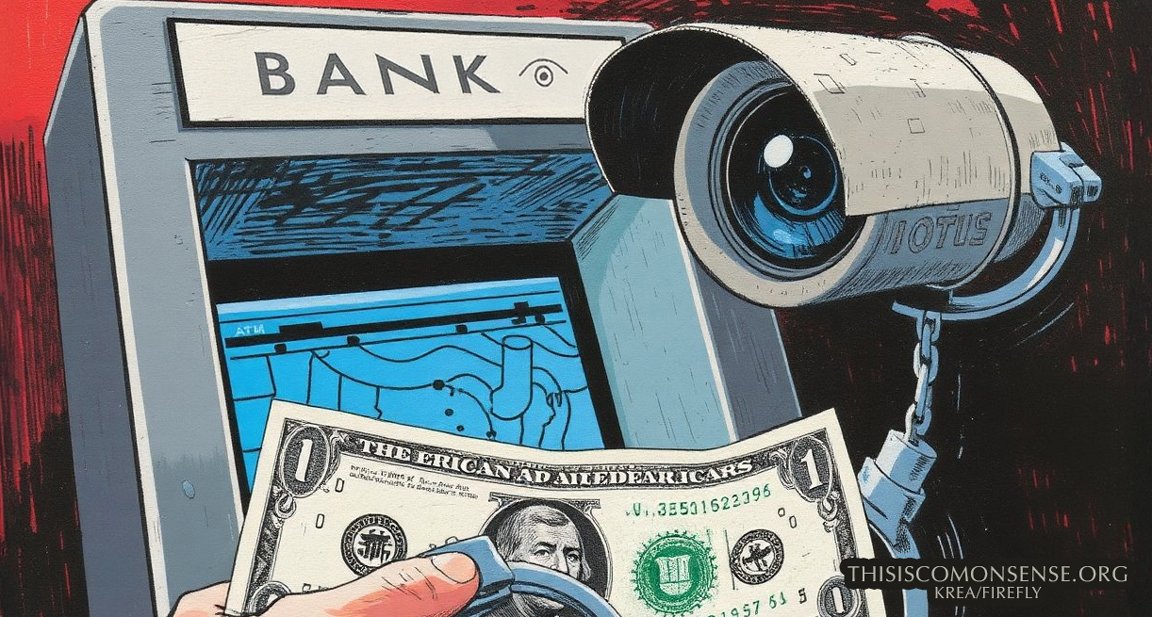
A recent executive order that President Trump issued to stop regulators from abetting and even compelling the “debanking” of bank customers for their political views is clear and on-target.  

On-target as far as debanking by banks goes.

But Reclaim the Net notes a glaring omission. The order’s identifies financial institutions willing to blacklist customers for possessing the “wrong” political opinions or missions. (“Wrong” here means not too pro-criminal or pro-terrorist but too constitutionalist, too much in favor of individual rights of the First or Second Amendment variety.)

The problem is that the order says nothing about major payment processors like Visa and PayPal.

Now, perhaps a penumbra of the new regulatory marching orders would influence the policies of the credit-card companies, whose cards are after all typically issued in cooperation with banks. But this is highly uncertain.

And Reclaim the Net thinks that Visa and Mastercard, “the twin tollbooth operators of the global payments highway,” are, like PayPal and Stripe, untouched by Trump’s order. Yet all of these payment processors have in recent years been blacklisting individuals and organizations that the processors happen to disagree with.

The practice goes back at least to the Obama administration, which instructed regulators that it could regard something called “negative public opinion” as a legitimate risk factor. 

This doctrine “quickly turned into a permission slip for politically driven account closures.” 

The government shouldn’t be issuing such “permission slips” — or implicit instructions — to banks, payment processors, or anybody.

This is Common Sense. I’m Paul Jacob.


PDF for printing

Illustration created with Krea and Firefly

See all recent commentary
(simplified and organized)
See recent popular posts
Categories
free trade & free markets regulation

Debanking Disallowed

President Trump has issued an executive order telling banking regulators to cut it out already.

The order, “Guaranteeing Fair Banking for All Americans,” takes aim at Biden-era regulations that pushed banks to “debank” clients who had the “wrong” political viewpoints: supporters of the First Amendment, the Second Amendment, or whatever aspect of individual rights and freedom the Biden administration was most insistently opposed to.

One key passage requires regulators to “remove the use of reputation risk or equivalent concepts that could result in politicized or unlawful debanking . . . from their guidance documents, manuals, and other materials . . . used to regulate or examine financial institutions over which they have jurisdiction. . . .”

The order also takes aim at banks. It requires regulators to identify financial institutions that have engaged or still engage in “politicized or unlawful” debanking practices and “to take appropriate remedial action” against the banks, including possibly “levying fines, issuing consent decrees, or imposing other disciplinary measures.”

Overall, the order represents a welcome 180 turnabout in very recent policy. The one problem I see, though, is that no clear attempt is made to distinguish between banks that were gung ho about clobbering politically unhip account holders and those that went no further than what they were pushed by Biden regulators to do.

Of course, one could always take a stand and do the right thing despite being threatened. Like the way the debanked individuals and institutions fought for what they believed in despite the risk of being debanked.

This is Common Sense. I’m Paul Jacob.


PDF for printing

Illustration created with Krea and Firefly

See all recent commentary
(simplified and organized)
See recent popular posts
Categories
crime and punishment local leaders regulation

Free Troy Lake

Colorado mechanic Troy Lake, former and (we hope) future operator of Elite Diesel, was incarcerated by the Biden administration.

The 65-year-old fixed diesel vehicles. Unfortunately for him, he did so by removing EPA-mandated emissions systems that supposedly help keep the air clean. By forcing vehicles to recirculate exhaust, the systems also make it harder for them to function properly.

“I was just trying to help people. And the word got out all over the country that I could do it right.”

One customer was hauling calves when his truck almost caught on fire because of the EPA-mandated system. He removed the filter himself and paid Troy to fine-tune the engine.

Troy has seen school buses unable to move for hours because of problems caused by the filter.

He wasn’t fixing these vehicles “out of malice,” he protests. “I think all of us want cleaner air. [At this cost? No.] But when we’re putting people out of business, there’s got to be a common ground.”

In December 2024, a judge sentenced Troy to 12 months in prison and fined him $52,500 for “conspiracy to violate the Clean Air Act.” It could have been worse: up to five years and $250,000.

Now Troy and his friends want President Trump — who has been working to undo some of the worst regulatory impositions of the Obama and Biden years — to pardon Troy so he can get back to his life and business. 

How about it, Mr. President?

This is Common Sense. I’m Paul Jacob.


PDF for printing

Illustration created by Krea and Firefly

See all recent commentary
(simplified and organized)
See recent popular posts

Categories
regulation

Ban Banning Gas Stoves

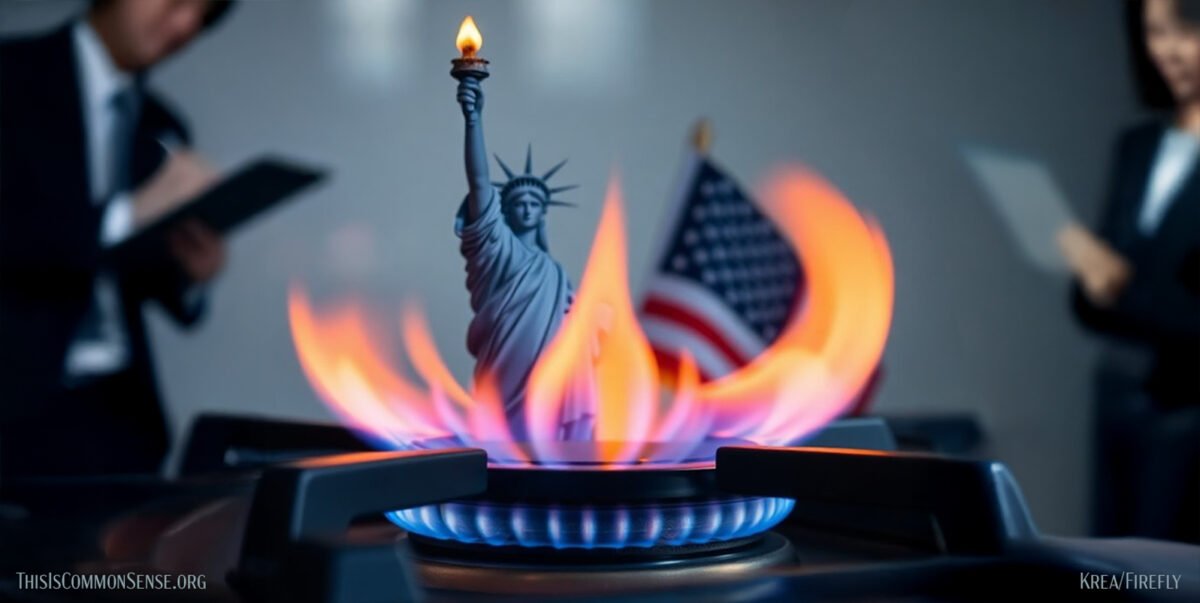
Not long ago, you would’ve been labeled a conspiracy theorist if you suggested that a government report about how terribly unhealthy gas stoves are and how they ought to be banned meant that plans were in the works to ban gas stoves. 

“No, the government’s not taking your stove,” CNET said in January 2024.

What were we all worried about?

Tightening regulations, that’s what.

Absent a Trump administration, we would have witnessed a long series of ever-stricter regulations — always ratcheting up — to save us from the horrors of gas stoves.

Though we have been reprieved from many anti-energy Biden administration initiatives, a gas-stove ban may yet be coming to a state near you. 

Do you live in New York State? Well, your anti-gas-stove politicians want to ban installation of new gas connections. You need a connection to the gas to get the gas into the stove.

It’s being litigated right now. An Empire State regulation forbidding new gas infrastructure will take effect next January unless a court challenge succeeds. Even though it’s all just a conspiracy theory. . . .

Judge Glenn Suddaby is giving plaintiffs, who argue that the impending regulation imposes arbitrary hardships, time to submit new arguments. Then, if he’s not persuaded, he’ll dismiss their challenge. 

Unfortunately, the facts being promoted in New York State aren’t enough by themselves to motivate this judge to make a rational ruling.

No, government isn’t going to take your stove. But politicians and activists do seek to force you to give up your stove in the future. For want of fuel. Or because they’ve added sin taxes on the fuel or the stoves. Or both. 

Or something else.

That’s how the progressive regulatory agenda works.

This is Common Sense. I’m Paul Jacob.


PDF for printing

Illustration created with Krea and Firefly

See all recent commentary
(simplified and organized)
See recent popular posts

Categories
free trade & free markets regulation tax policy

The New Old Coke

The President of these United States famously drinks Diet Coke.

Despite his preference, however, it’s regular Coca-Cola he’s making waves about.

“I have been speaking to Coca-Cola about using REAL Cane Sugar in Coke in the United States, and they have agreed to do so,” Donald Trump wrote on Truth Social last week. 

The Atlanta-based company has confirmed the story, but it will not be removing High Fructose Corn Syrup (HFCS) Coke from the market. 

What will change? 

“Mexican Coke” (made from refined cane sugar) is available in glass bottles right now, for a premium, in many venues. In effect, Trump is merely helping promote this currently U.S.-made product, allowing it to sit next to regular Coke just as aspartame-sweetened Diet Coke competes on the shelf with Coke Zero, which is made with a blend of artificial sweeteners, including aspartame and acesulfame potassium (Ace-K).

Maybe all Coca-Cola will really do is re-brand Mexican Coke.

To “Trump Coke”?

“I’d like to thank all of those in authority at Coca-Cola,” added the president. “This will be a very good move by them — You’ll see. It’s just better!”

Matters of taste aside, cane sugar may be marginally healthier for you than HFCS. Invented in the Fifties and Sixties in labs, it has been pushed by the USDA, which regulates its prices (as Matt Damon’s 2009 comedy The Informant! makes clear). But both are sugar, if slightly different, chemically.

Behind the proposal to switch to HFCS lies a broader reality: domestic refined cane sugar production from states like Hawaii, Florida, and Louisiana falls short of U.S. consumption needs, while protectionist policies keep its price significantly above global market levels.

For some reason, Donald Trump hasn’t been talking about reducing the sugar tariff!

This is Common Sense. I’m Paul Jacob.


PDF for printing

Illustration created with Krea and Firefly

See all recent commentary
(simplified and organized)
See recent popular posts
Categories
national politics & policies political economy regulation

Ultra-Absurd?

Sen. Josh Hawley (R-Missouri) is oh-so-ultra.

USA Today dubs him a “conservative” in the title of a recent article on a proposed minimum wage hike, and then an “ultraconservative” (emphasis added) in the first word of the article itself

Why does this “ultraconservative” join a Democratic senator in raising the federal minimum wage to $15? They both seem to assume that minimum wage laws raise wages.

For hundreds of years, economists have argued they don’t. On the face of it, these laws merely prohibit jobs paid below a certain rate. They disemploy. 

When the government prohibits low-wage compensation, businesses shift productive processes to keep afloat; when a factor is suddenly made more expensive, they adjust. With more automation, for example.

At least, the USA Today article mentions, briefly, that the Congressional Budget Office forecasts that some individual workers and families would see their livelihoods diminished by the higher minimum — which is the only part of the coverage of the new, more restrictive (higher) minimum wage regulation that gets to the meat of the issue: what minimum wage laws actually do. 

A related article back home in the Springfield News Leader (a member of the “USA TODAY NETWORK”) explores the question of Missouri’s minimum wage and what activist economists call the state’s “minimum living wage” — and it is relevant at least to this extent: states have different economic climates, and wage rates differ region to region in the United States, so it’s very relevant to a senator from his state affecting his state’s economy with a regulation applying equally to all states.

Which is to say that the minimum wage issue should be a state issue.

If an issue at all.

“Ultraconservative” Hawley’s bill is ultra-misguided.

This is Common Sense. I’m Paul Jacob.


PDF for printing

Illustration created with Krea and Firefly

See all recent commentary
(simplified and organized)
See recent popular posts
Categories
national politics & policies regulation

If This Be Price Control

In the recent pandemic, we learned that government and pharmaceutical companies do not have the least bit of an antagonistic relationship. It’s all buddy-buddy, a Big Gov/Big Pharma partnership.

And an expensive mess, sadly, in which Americans routinely pay prescription prices many times higher than folks around the world.

Now that President Donald Trump has signed an executive order aimed at “Delivering Most-Favored Nation Prescription Pricing to American Patients,” you have probably heard complaints that Trump’s plan amounts to “price controls,” which Republicans say they are against, and Trump, too, says he adamantly opposes. 

But the The Wall Street Journal editorial that mounted this case, and Joe Lancaster’s argument in Reason, assume that the current order makes sense. The present system is in no way a free market in drugs. It’s the result of patent policy, massive subsidies to consumers, an insane approach to insurance regulation, and abridgements to free trade.

“There are many good reasons why we should pay more for earlier access to new medications than our trading partners,” write Darius Lakdawalla and Dana Goldman, quoted in Lancaster’s Reason article.  

And then they go on to recommend an elaborate government scheme that itself is more a form of price controls than Trump’s workaround.

While I doubt that all of Trump’s boasted benefits will pan out, the status quo is a rigged market, and Congress — which could debate and fix it, theoretically — does nothing to restore a free market, thereby earning its low ratings from the public.

Leaving it to the executive branch. 

Which is not supposed to legislate this sort of thing at all.

This is Common Sense. I’m Paul Jacob.


NOTE: Jeffrey Tucker wrote a much longer piece defending Trump’s plan — arguing that in a rigged system such as ours, calling Trump’s most-favored-nation policy a form of price regulation, and the status quo not, is witless.

PDF for printing

Illustration created with Krea and Firefly

See all recent commentary
(simplified and organized)
See recent popular posts
Categories
free trade & free markets national politics & policies regulation

Egg Prices Crisis

“Get used to high egg prices,” The Atlantic blurbed Annie Lowry’s February 27 article, “it was a miracle they were low in the first place.” 

Titled “It’s Weird That Eggs Were Ever Cheap,” it appears to have an agenda: prepare us for yet higher prices, or worse: no eggs.

“Consumers are furious,” explains Ms. Lowry, emphasizing that eggs are a very, very popular food. “Or at least they were, until a highly pathogenic form of bird flu spread to American flocks in 2022. Today, the Department of Agriculture is tracking 36 separate outbreaks across nine states. The disease has led to the death or culling of 27 million laying hens — nearly 10 percent of the nation’s commercial flock — in the past eight weeks alone.”

The culling of flocks — and which birds are selected — could potentially be the most controversial element of the story. Donald Trump, on the campaign trail last year, complained about the cull orders and promised to bring down egg prices fast. 

But his administration’s new five point plan is no quick fix:

  • subsidize on-farm biosecurity upgrades
  • compensation to farmers forced to cull their flocks
  • investing in bird-flu vaccines and therapeutics
  • nixing some regulations
  • increasing foreign imports. 

That comes to $1.5 billion spending increases to lower egg prices!

But it was a jokey comment by USDA Secretary Brooke Rollins that sent Trump critics into paroxysms. “I think the silver lining in all of this is, how do we solve for something like this?” said the Department of Agriculture head. “And people are sort of looking around, thinking, ‘Maybe I could get a chicken in my backyard,’ and it’s awesome.”

Ha ha. 

But taking the joke as a serious proposal? The yolk’s on them.  

This is Common Sense. I’m Paul Jacob.


PDF for printing

Illustration created with Krea and Firefly

See all recent commentary
(simplified and organized)
See recent popular posts