Categories
Accountability crime and punishment general freedom ideological culture media and media people nannyism national politics & policies responsibility Second Amendment rights too much government U.S. Constitution

Self-Defense, Implausible?

Don’t take a GUN-FREE ZONE sign to a gun fight.

Whenever there’s a horrific incident of mass murder, advocates of citizen disarmament blame the right to protect oneself against armed attackers. The thinking seems to be that if we make it illegal for all civilians to have guns, bad guys willing to kill people will also refrain from using guns as they try to kill people.

This is implausible.

And if you do not see its implausibility immediately regarding firearms, consider drugs. Not taking them, but the war on same. Drugs didn’t vanish upon prohibition. Neither would guns if prohibited.

President Trump argues that students would be safer were schools a harder target. Why not arm well-trained teachers? “If you had a teacher who was adept with the firearm, they could end the attack very quickly.” He’s right.

Not a new idea, of course. It’s been argued, for example, by the NRA, whose chairman says that the way to stop a bad guy with a gun is with a good guy with a gun.

This idea is being practiced right now — in Israel.

As Tzvi Lev argues at the Arutz Sheva 7 site, Israel proves the NRA’s point.

Even Israel — where Arab communities are “rife with illegal weapons” despite their illegality — has not always been quick to recognize that it’s better to have lots of armed civilians when terrorists start shooting at civilians. But after terrorists attacked a school in 1974, the government began arming and training teachers — somehow failing to defer to the terrorists’ preference for gun-free zones.

In both of the only-two school shootings in Israel since then, teachers killed the attackers.

This is Common Sense. I’m Paul Jacob.


PDF for printing


Categories
crime and punishment general freedom ideological culture media and media people moral hazard nannyism national politics & policies privacy responsibility Second Amendment rights too much government U.S. Constitution

He Applied Himself

“I need to make this count,” wrote a young man in Everett, Washington.

Unfortunately, it looks like he wasn’t attempting a big career-oriented project. He was planning a mass shooting.

“I need to get the biggest fatality number I possibly can,” is one of many damning journal passages the police have made public. Apparently he had settled on attacking the high school he attended. “I’ve been reviewing many mass shootings/bombings (and attempted bombings) I’m learning from past shooters/bombers mistakes.”

Ambition and rigor: missapplied.

Fortunately, his grandmother read his journal and discovered a rifle in his guitar case. She turned him into the police the Tuesday before the Florida shooting I wrote about last week. And maybe just in time.

Meanwhile, last week’s Parkland, Florida, shooting dominates the headlines. Fellow students and neighbors of the Florida shooting victims have ramped up their condemnations and demands — including at a horrorshow “town hall” on CNN.

Yet the nature of the difficulties in preventing such atrocities has become lost in the rhetoric and anger.*

In a free society, we cannot arrest people before they commit a crime. In the Everett case, officials were “lucky”: despite the young man’s lack of a criminal record, they were able to charge him with a burglary they allege he committed the day before arrest — and his extensive planning notes are being taken as evidence for intent. He’s also been charged with attempted murder.

We should be in inquiry mode, right now. It could be helpful to know the exact motivations for both the Florida shooter and the Everett wannabe — and similar cases.

This is Common Sense. I’m Paul Jacob.


* Law enforcement is tasked with uncovering spree shooting plots today — and to protect, too. But the armed, uniformed school resource officer at the Parkland high school failed to protect. He heard the gunshots but never entered the building, while the shooter killed 17 innocents.


PDF for printing


Categories
Accountability folly general freedom government transparency ideological culture moral hazard national politics & policies responsibility too much government U.S. Constitution

Not Even with a Straight Face

Is American foreign policy so foreign to our values that even those who have served at the very pinnacle of national intelligence agencies have trouble telling the truth?

“Have we ever tried to meddle in other countries’ elections?” Laura Ingraham, host of Fox News’ The Ingraham Angle, asked James Woolsey, director of the Central Intelligence Agency (CIA) from 1993 to 1995.

“Oh, probably,” Mr. Woolsey replied. “But, uh, it was for the good of the system, in order to avoid communists from taking over. For example, in Europe in ’47-’48-’49, the Greeks and the Italians, we, the CIA—”

“We don’t do that now, though?” Ingraham interjected. “We don’t mess around in other people’s elections, Jim?”

“Well . . . urrrrr, yum, yum, yum, um, um,” the old spymaster offered to laughter from both Ingraham and her studio cameramen. “Only for a very good cause,” he added with a sly grin, “and the interests of democracy.”

Interests. Of. Democracy.

Ha. Ha ha. Laughing yet?

Foreign Policy tells us that documents declassified in 2017 “shed light on the Central Intelligence Agency’s central role in the 1953 coup that brought down [elected] Iranian Prime Minister Muhammad Mossadegh . . . poisoning U.S.-Iran relations into the 21st century.”

Need more? There’s a handy database that lists undemocratic and illegal* shenanigans going on and on through the ’60s, ’70s, ’80s, up through President Obama to today.

“This broader history of election meddling has largely been missing from the flood of reporting on the Russian intervention . . .” noted the New York Times last December.

Of course, our government’s interference doesn’t justify Russian government interference. But, we can only (possibly) control our politicians.

This is Common Sense. I’m Paul Jacob.


* “Meddling in other’s elections is a violation of international law,” Steve Baldwin writes in The American Spectator. “More importantly, U.S. law prohibits the use of tax dollars to influence foreign elections.”


PDF for printing


Categories
Accountability folly free trade & free markets general freedom moral hazard national politics & policies responsibility tax policy too much government

Billionaire Theater

“I need to pay higher taxes,” Bill Gates told CNN’s Fareed Zakaria on Sunday.

He was making a case against Republican tax cuts, but his actual argument? Insignificant. It’s just another unlearned, narrow-perspective “growing inequality” farrago. But his conclusion intrigues . . . as a man-bites-dog story, because people have this goofy idea that rich people are somehow against government and for reduced taxes.

They aren’t. Not even most of the richest.

“I’ve paid more taxes, over $10 billion, than anyone else,” says the man worth $90 billion, “but the government should require the people in my position to pay significantly higher taxes.”

Why? To spend his money better than he could?

Were all the wealth of America’s billionaires confiscated whole and that sum would actually pay off the federal debt (which I doubt), what do you think Washington politicians would do? Go on the straight and narrow and never over-spend again?

No. Politicians would take the new influx of funds as a signal to go on an even bigger spending binge.

But what about his mere income tax increase notion? What then? As sure as the Blue Screen of Death it would be applied down to millionaires, too. And then rates for less-than-millionaires would likely go up. We have a history with this. And what would that do?

It would hit up-and-coming entrepreneurs the hardest. It would nip Bill Gates’s company’s competition in the bud.

But surely Gates wouldn’t be mercenary in his theatrical play for media adoration, would he? 

Not Saint Bill!

This is Common Sense. I’m Paul Jacob.


PDF for printing


Categories
Accountability crime and punishment general freedom government transparency moral hazard national politics & policies privacy property rights too much government U.S. Constitution

Thwarting Cops Who Are Robbers

“Carrying cash is not a crime,” Institute for Justice attorney Dan Alban informs us, “yet too often the government treats it like one.”

Musician Phil Parhamovich learned that the hard way. He was porting his life savings, almost $92,000 — earmarked for a down payment on a recording studio — when cop-robbers of the Wyoming Highway Patrol stopped him for not wearing a seat belt.

It turned out to be an extremely expensive infraction. The officers intimated that it was illegal to travel with so much cash and pressured him to hand it over. Scared and believing that his alternative was jail, Phil signed a preprinted waiver letting them grab his life savings.

Preprinted waiver? This means it’s routine for these guys to try to legitimate their actions as they premeditatedly intimidate and rob people.

The state of Wyoming tried to keep the money. Fortunately, the Institute for Justice took Phil’s case, and a judge accepted the facts presented by Phil and his IJ lawyer. After months of tribulation and suspense, the robbery victim got his money back.

Another win for the good guys.

Thankfully, the Institute for Justice’s freedom-defenders have won a great number of such cases. Yet, IJ lawyers certainly cannot litigate all the forfeiture injustices being committed by government  authorities all across the country.

That’s why the group is pushing to reform civil asset forfeiture laws, requiring a criminal conviction before property can be forfeited. 

And you can help. How? Launch efforts in your town or state, or work to push infant efforts to a higher level. Take the initiative. 

This is Common Sense. I’m Paul Jacob.


PDF for printing


Categories
Accountability crime and punishment general freedom ideological culture media and media people moral hazard nannyism national politics & policies responsibility Second Amendment rights too much government U.S. Constitution

Killer Inlaudabilis

On the day that Alexander the Great was born, or so the ancients tell us, a man named Herostratus burned down one of the Seven Wonders of the World, the Temple of Artemis at Ephesus.

Why? Just for the infamy.

Which is why the Ephesians proscribed mention of the man’s name. That is called a damnatio.* Obviously, that damnatio didn’t stick, for we know his name now. How? Historian Theopompus recorded it for our . . . edification? Vilification?

I say we should follow Ephesian example and not mention by name the recent Florida school shooter/murderer of students. There should be a widespread damnatio in the press and blogosphere against the young man. Let’s not to give him his infamy, and not encourage copycats — nor in any way normalize his horrible act.

Is this a “solution” to the problem of school shootings? Probably not. But there may be none — at least nothing sure-fire.

Yes, a non-blundering FBI might’ve helped.** But virtue-signaling/grandstanding calls for unnamed gun control measures won’t. And treating “mental health” issues more “professionally,” particularly by easing up involuntary commitment law, is probably a recipe for putting away innocent and unpopular people.

Pre-crime” is itself criminal.

So, what to do? Maybe it is this: “Notice those around you who seem isolated, and engage them,” as Robert Myers advises. It is loneliness, he argues, that “causes these shooters to lash out. People with solid connections to other people don’t indiscriminately fire guns at strangers.”

But that’s not an after-the-fact solution.

This is Common Sense. I’m Paul Jacob.


* FYI, the arsonist’s status as an unspeakable person was called inlaudabilis.

** As if to fit an established pattern, the FBI failed to take seriously enough an early citizen-initiated alert regarding the young man who went on to commit the mass shooting. Prophecy is a tough biz; it is no doubt easier to connect the dots looking back after the fact.


PDF for printing


Categories
Accountability general freedom ideological culture media and media people national politics & policies political challengers porkbarrel politics Regulating Protest responsibility tax policy too much government

“Our Agenda Was Common Sense”

The Republican Party doesn’t need to bury the corpse. Its victim has been assimilated, like the Borg did with alien peoples in the Star Trek universe, or maybe it was just soaked up as if the GOP were a giant fungus amongus.

So, what’s dead? The Tea Party, which was killed by partisanship, says Matt Kibbe, President and Chief Community Organizer at Free the People. He admits that the movement’s obituary has been written many times, but, he argues, “this time is different. Republicans, now controlling both the legislative and executive branches, jammed through a ‘CRomnibus’ spending bill that strips any last vestiges of spending restraint from the budget process.”

Kibbe identifies the Tea Party’s central theme simply: “Our agenda was common sense: We demanded that Washington politicians stop spending our money like it was theirs, and keep out of our health care. But in Washington, common sense is often seen as radical.”

This, he insists, was not a partisan movement.

But only Republicans played to it. Kibbe calls Sarah Palin a “political huckster” who “helped hijack our purpose,” and fingers Mitt Romney as the man who scuttled Tea Party “political momentum” in 2012. “And then Donald Trump split the Tea Party right down the middle, and that was the end.”

Nail in the coffin? The recent budget deal.

Kibbe signs the autopsy, but assures us: “American principles of individual freedom, fiscal responsibility, and constitutionally limited government, are all still very much alive.”

I sure hope so. But it takes more than a handful of Freedom Caucus members on Capitol Hill to realize it in practice.

Like a new citizen movement.

This is Common Sense. I’m Paul Jacob.


PDF for printing


Categories
Accountability folly general freedom government transparency ideological culture media and media people moral hazard nannyism national politics & policies too much government

Threat Assessment

Don’t drink transmission fluid. Or perform a swan dive off the Empire State Building. Or munch on a Tide Pod.

Be cautious, in other words, of the advice offered in “Boycott the Republican Party,” the Atlantic opinion piece authored by Jonathan Rauch and Benjamin Wittes, both scholars at the Brookings Institution. Their erudite suggestion? Conservatives should “vote mindlessly and mechanically against Republicans at every opportunity, until the party either rights itself or implodes (very preferably the former).”

My Sunday column at Townhall.com, “Friendly Suicide Advice for the GOP,” reviewed their proposal and analysis. “[H]orrified” by President Trump, they see congressional Republicans as enablers of his “existential” threat “to American democracy.”

Big government has long frightened me, so I’m certainly not suggesting anyone relax just now. I do wonder, however, why these writers and others in the media have been so blasé to past presidential usurpations (noted in the column) with life-and-death implications.

Rauch and Wittes go so far as to reassuringly explain that “the Democratic Party is not a threat to our democratic order.”

Really?

In 2016, every single Democratic Party U.S. Senator voted to partially repeal the First Amendment of the Constitution. The Democrats’ proposal would have largely ended the prohibition that “Congress shall make no law . . . abridging the freedom of speech,” replacing it with “Congress and the States may regulate and set reasonable limits on the raising and spending of money by candidates and others to influence elections.”

In our present “democratic order,” the Constitution recognizes the primary importance of walling off political speech from regulation by these very politicians. The Democrats seek to repeal that order . . . that freedom . . . that criticism.

This is Common Sense. I’m Paul Jacob.


PDF for printing


Categories
First Amendment rights free trade & free markets general freedom initiative, referendum, and recall nannyism national politics & policies privacy property rights Second Amendment rights Tenth Amendment federalism too much government U.S. Constitution

Winning Too Much?

“We’re Number 17!!!”

This lacks a certain triumphant note.

It is nothing like the “We’re Number 1!” the Swiss are now hollering as they pump their arms into the air, waving giant #1 foam fingers against the backdrop of snow-covered Alps.

Actually, knowing the Swiss, they are probably a bit more restrained. Still, you get the point.

Number 1 in what, you ask? Creamy, delicious chocolate, perhaps? Banking? Skiing?

Freedom.

The Human Freedom Index 2017, jointly published by the institutes Cato, Fraser, and Liberales, is hot off the presses. The report ranks the countries of the world on “personal, civil, and economic freedom.”

This year, Switzerland switched places with Hong Kong, which had come in first the year before. The U.S. moved up from 23rd place in 2016, but down from 2008, when we were challenging Top 10 status at Number 11.

“Weak areas [for the U.S.] include rule of law, size of government, the legal system and property rights,” according to a Cato video.

Let’s compare Switzerland to the United States. The 1848 Swiss Constitution creates 26 sovereign cantons (states), greatly influenced by our system of federalism. In the 20th century, Americans in 26 states and most localities borrowed from the Swiss, establishing a system of direct democratic checks on government — what we call ballot initiatives and referendums.

Both countries have constitutional limits on government, protecting individual rights — even from fully democratic tyranny. But in the freest nation in the world, Switzerland, citizens possess a powerful direct democratic check on their government at all levels . . . while we do not.

After all, we’re Number 17.

This is Common Sense. I’m Paul Jacob.


PDF for printing


Categories
general freedom individual achievement media and media people national politics & policies responsibility

Red Roadster Rides Outer Space

On Tuesday, SpaceX launched one of the largest rockets ever, the Falcon Heavy. Because it is still experimental, it didn’t carry up an expensive satellite. Too early for that. Instead, it has sent up a Tesla Roadster.

And it’s not aiming for orbit . . . around Earth.

It’s aiming for, well, “a precessing Earth-Mars elliptical orbit around the sun.”

All the while playing the late David Bowie’s “Space Oddity.”

This is all very bizarre, of course. But SpaceX is headed by Elon Musk, who is one of those daring people who do daring things. The very fact that he kept finding funding (no small amount of it from taxpayers, sadly) for Tesla Motors (which he also founded), while failing to make a profit, is a tribute to . . . something.

Sending Musk’s personal car into space — to circuit Sol for a billion years — is, the visionary says, at least not boring. (Musk, perhaps not coincidentally for that word choice, also founded the Boring Company.) The Roadster, “piloted” by a dummy “Starman,” is an upgrade with flair.

But who is he playing to? The masses of auto buffs? Stargazers? Science fiction fans?*

Maybe the mad-scientist/eccentric-mogul is playing for bureaucrats, Capitol Hill staffers, and politicians. For, by one estimate, his companies have received $4.9 billion in government subsidies.

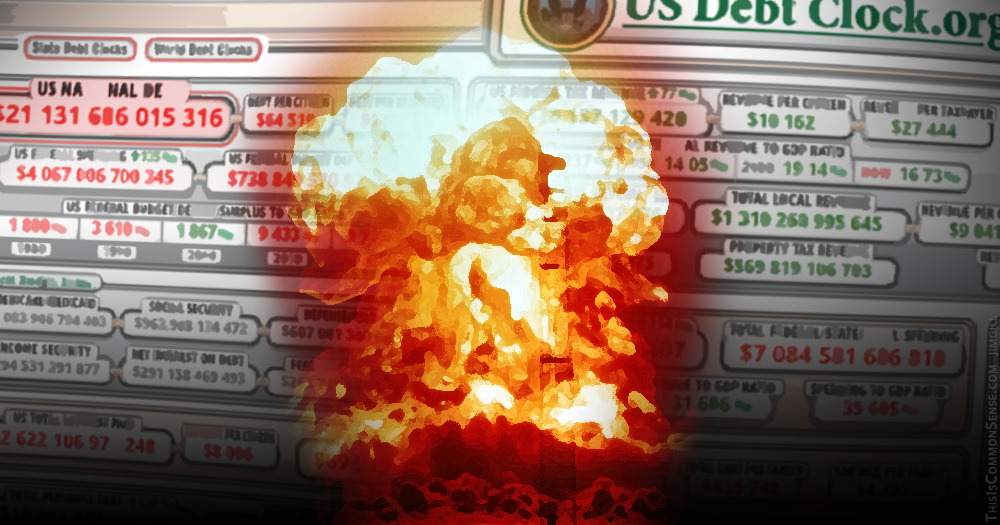
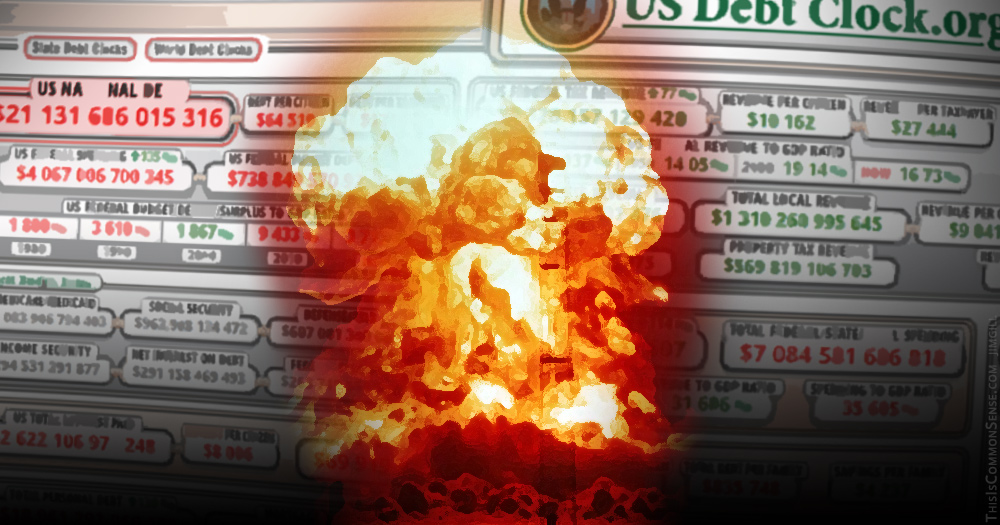
So, think of what’s going into orbit as just another part of the skyrocketing — spacerocketing — federal debt.

This is Common Sense. I’m Paul Jacob.


* The odd payload choice might make sense in sci-fi context, for, in the early days of science fiction, one idea often mentioned was to literally send a bomb to the Moon: an explosion, after all, could be seen, in early Space Age days, with old technology right here from Planet Earth surface. This was the case in the boys’ book The Rocket’s Shadow as imagined in 1947.


PDF for printing