Categories
free trade & free markets general freedom moral hazard nannyism national politics & policies

Best Plan Is No Plan

“Republicans would create chaos in the health care system because they are stuck,” Senate Minority Leader Chuck Schumer says, “between a rock and a cliché.”

Oh. Off by a word or two. But I don’t need to fix it.

What needs to be fixed is the whole system. “Head clown”* Schumer gloats that it cannot be done. The “delicate balance” that is the Affordable Care Act makes it impregnable. For all Republicans’ talk of repeal, “for five years now they’ve had nothing to put in its place.”

Schumer sees the trap. He set it when he and his comrades voted Obamacare in without reading it. Any new program with any new constituency always presents a set of . . . political hurdles . . . that quickly become “impossible” to jump.

The President-elect, he notes, has supported three of the “most popular” regulations in Obamacare: “pre-existing conditions,” “26-year-olds on parents’ plans,” and sex equality re: insurance rates.

What Schumer fails to mention is that these are three huge drivers of spiraling insurance prices. The Affordable Care Act “delicately balances” medical markets by shifting who pays for what, hoping that the biggest losers† don’t complain too much and the obvious winners never cease protesting‡ any change.

The truth? Obamacare can be repealed. But replacing it would be a disaster. The best plan is no plan. Repeal all the regulations. The federal government should completely deregulate the markets, and prevent states from ruining interstate markets in insurance and health care.

Do what the Commerce clause was designed to do.

Schumer is counting on Republicans to do nothing. Despite signs they’re cooking up something.

This is Common Sense. I’m Paul Jacob.


*What Trump called Schumer. And in the same tweet dubbed Obamacare “a lie.” Truer words never spoken?

† Obamacare presents a huge burden on the self-employed, self-insured, and on the previously insured, since it is these people who most obviously pay for all the newly insureds. Of course, in the end, everybody pays . . . from increasing prices and decreasing rates of progress.

‡ At least they are the focus of advocacy groups. The poor neatly serve as innocent shields of the spoliators.

N. B. Adapted from this weekend’s Townhall column.


Printable PDF

Obamacare, ACA, Healthcare, reform, replace, policy, insurance


Categories
folly general freedom ideological culture nannyism privacy property rights too much government U.S. Constitution

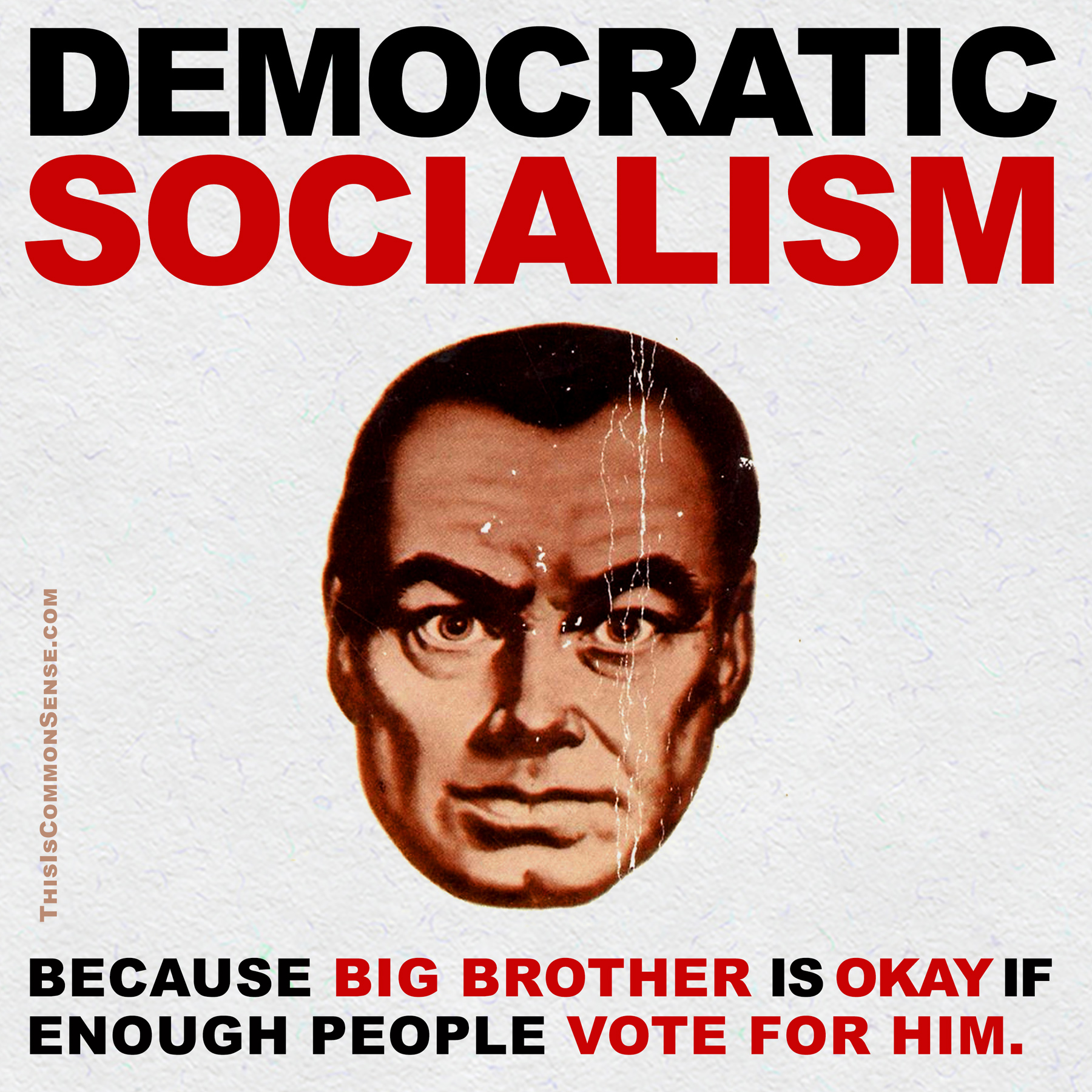
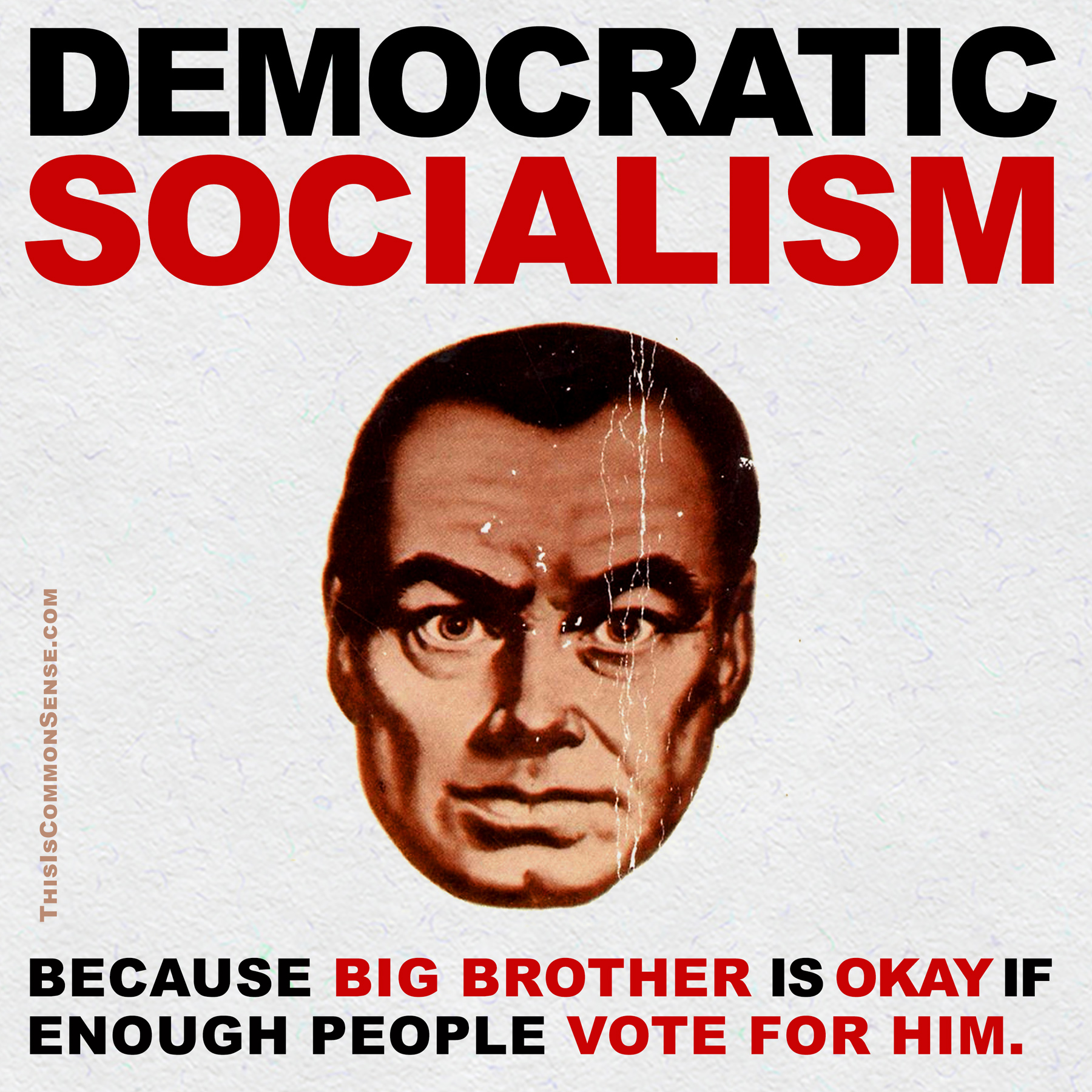
Democratic Socialism. . .

Because BIG BROTHER is okay as long as enough people vote for him!


CLICK BELOW for a high resolution version of this image:

Democratic Socialism, Big Brother, socialism, vote, voting, egalitarian, meme, Jim Gill, Paul Jacob, Common Sense


Categories
meme nannyism national politics & policies too much government

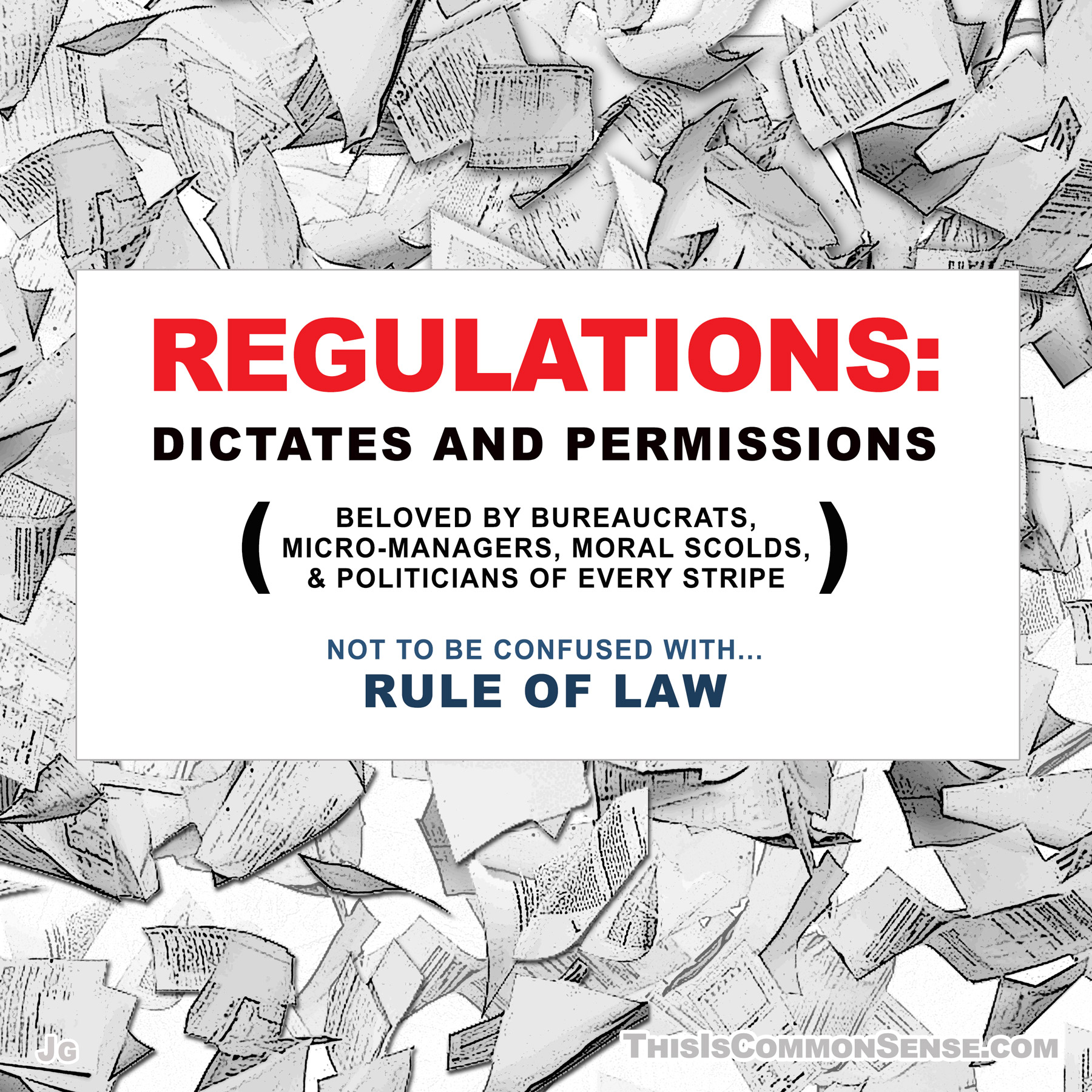
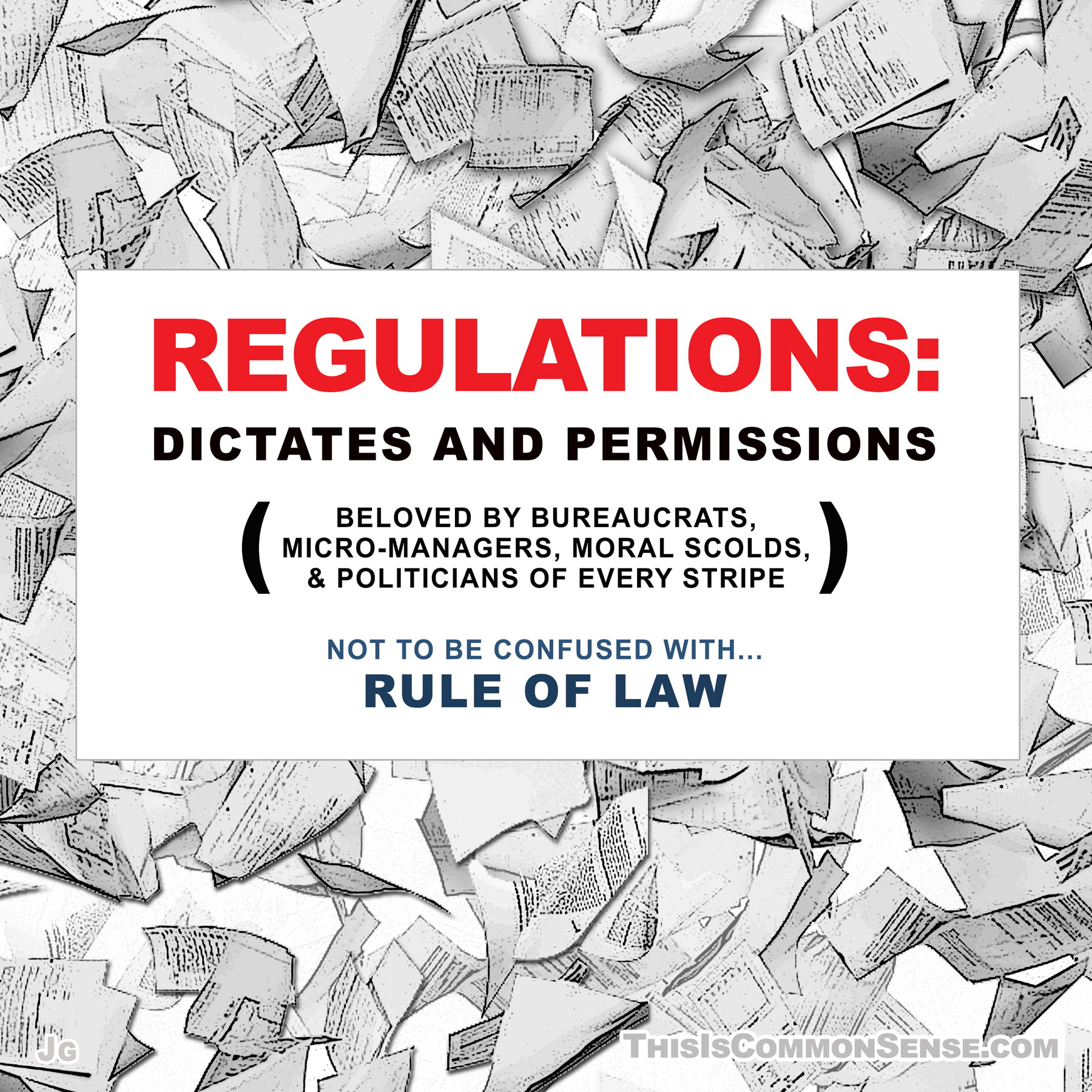
“Regulation” should not be confused with “rule of law”

A “rule of law” is based on general principles, and makes room for — or, better yet, is based upon — the protection of individual rights.

It used to be common to say, “a rule of law, not of men”; it was even as common in political oratory as was spouted out over drinks at the Rotary. But as the modern Regulatory State has grown in scope and power, most folks seem to have lost track of the notion. It is now not even a cliché. Few even of our most educated folks can explain this idea. Vast swaths of the mis-educated public appear not to “get” the idea of limiting government to the enforcement of a few general principles; instead, they cry for more “regulations” (along with additional spending and maybe even a whole new division of the executive government) every time a crisis, tragedy or atrocity occurs.

So we are left with a political culture in which the words of Tacitus seem to a majority as implausible at best, evil at worst: “The more the laws, the more corrupt the State.” Contrary to today’s trendy prejudice, we do not need “more laws” — edicts legislated by representatives, or regulations concocted by bureaucracies — we need Law.

As in, “a rule of Law.”


Click below for high resolution version of this image:

regulations, rule of law, control, bureaucracy, law, meme, Common Sense, Paul Jacob, Jim Gill


Categories
general freedom ideological culture meme nannyism national politics & policies

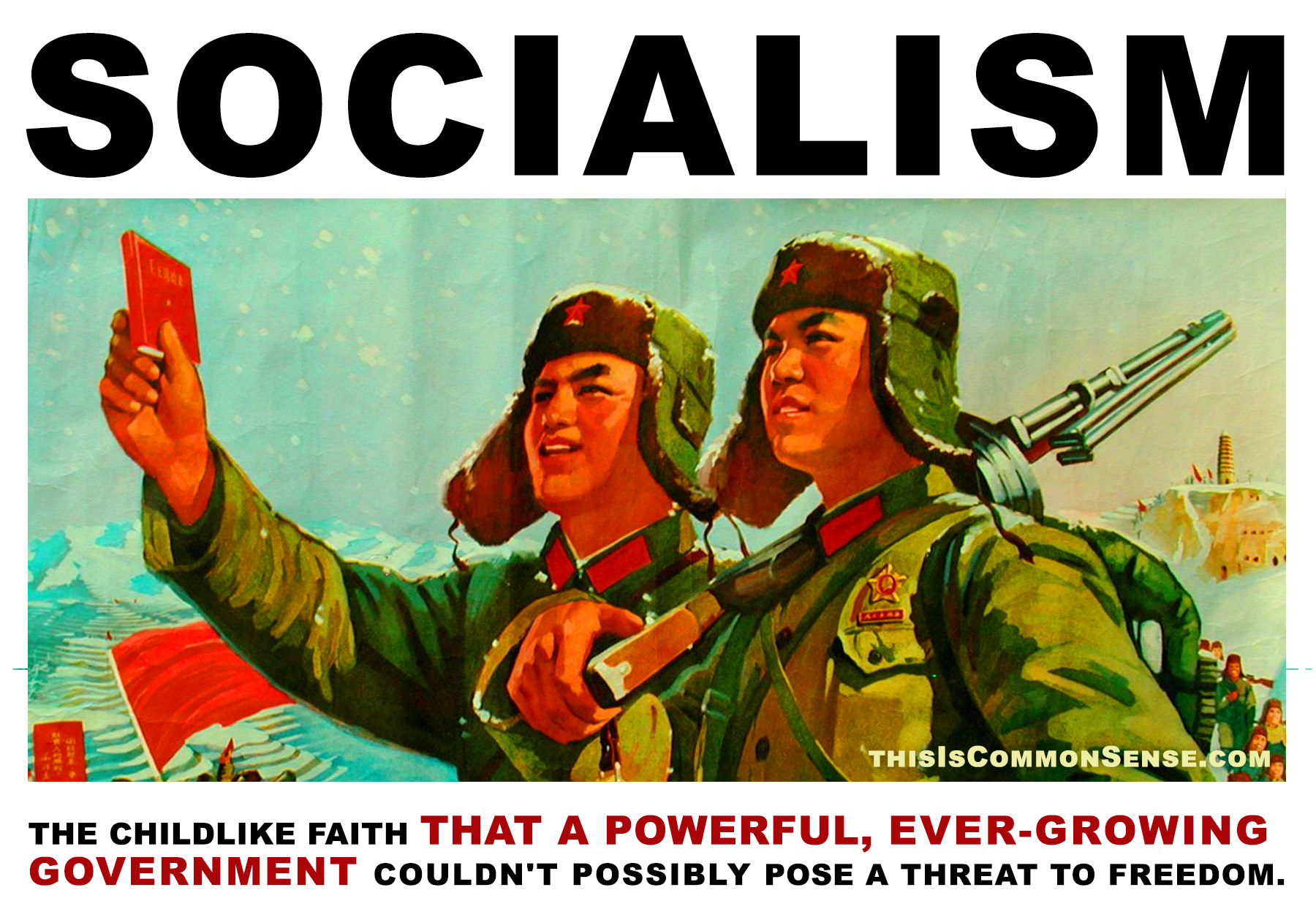
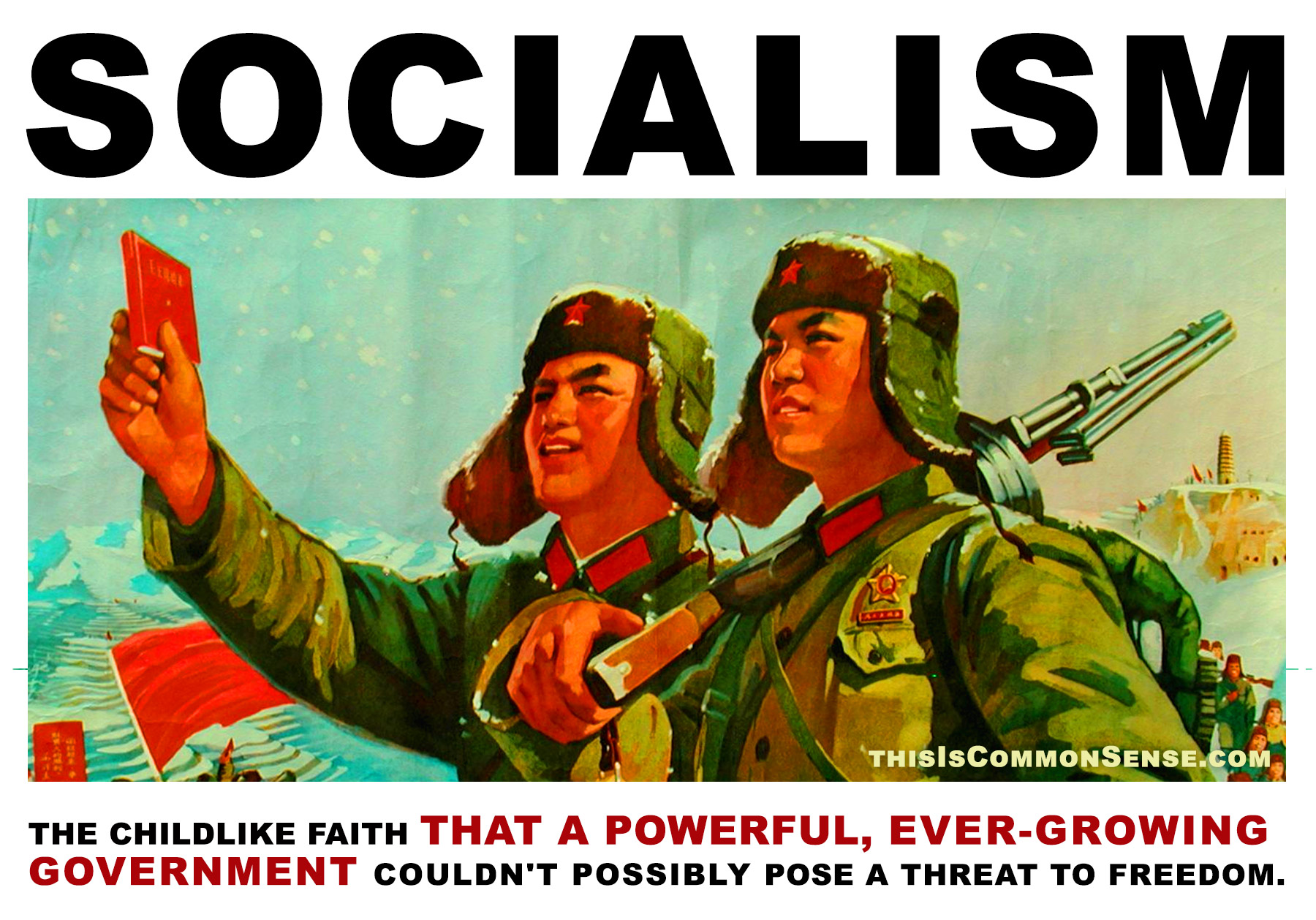
A Childlike Faith. . .

SOCIALISM…

The childlike faith that a powerful, ever-growingGovernment couldn’t possibly pose a threat to freedom.


Click here for a high resolution version of the image:

socialism, childlike faith, government, power, progressivism, Paul Jacob, Jim Gill, Common Sense, meme, illustration


Categories
meme nannyism too much government

The Meaning of “Liberal”

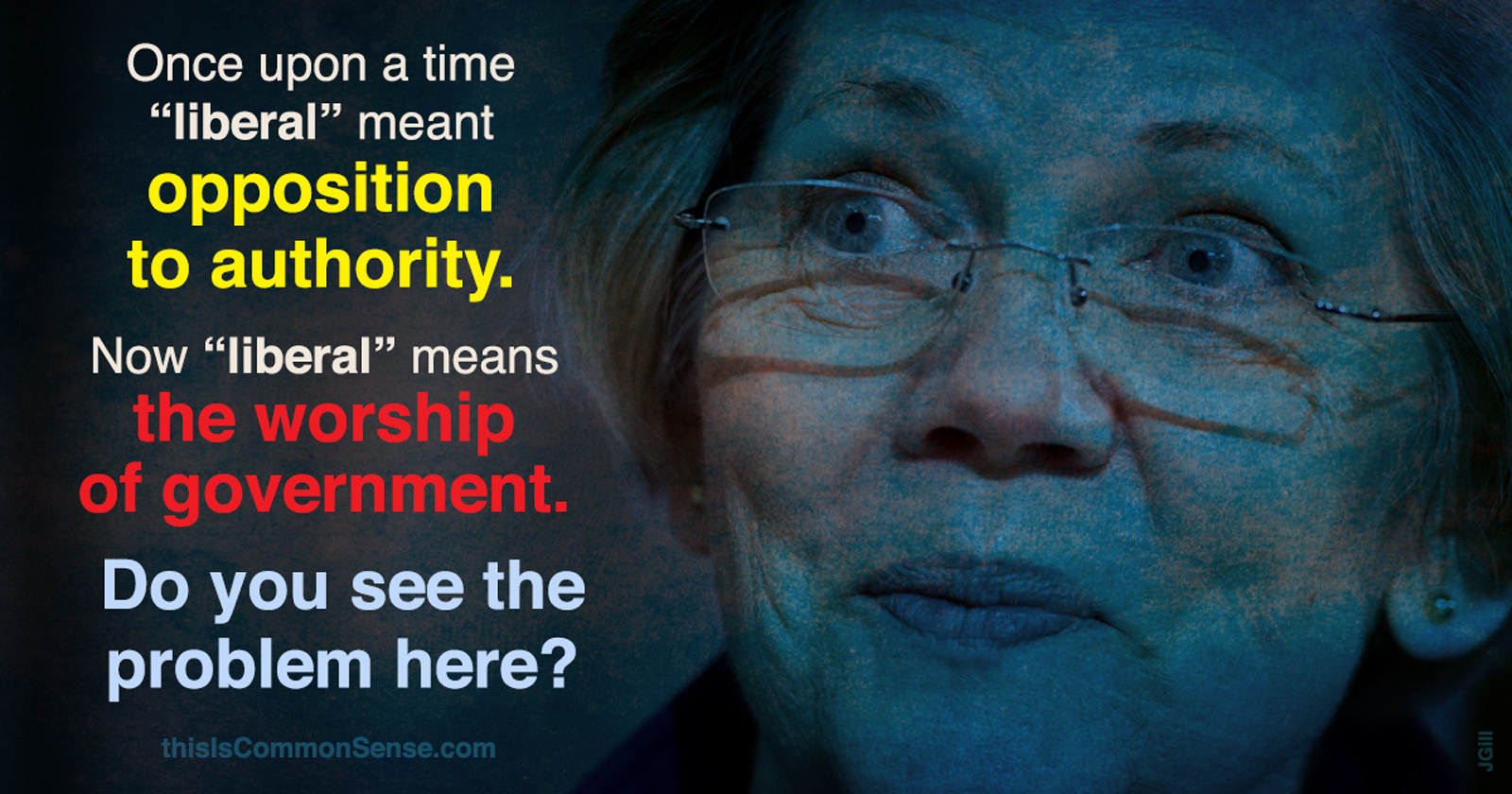
Once upon a time “liberal” meant opposition to authority.

Now “liberal” means the worship of government.

Do you see the problem here?


Shared ideas matter. Please pass this along to friends.

Get a high-resolution screensaver of this image. Click on the thumbnail picture below to open a large version that you can download.

The Meaning of "Liberal"


Categories
Accountability folly free trade & free markets general freedom ideological culture meme nannyism national politics & policies

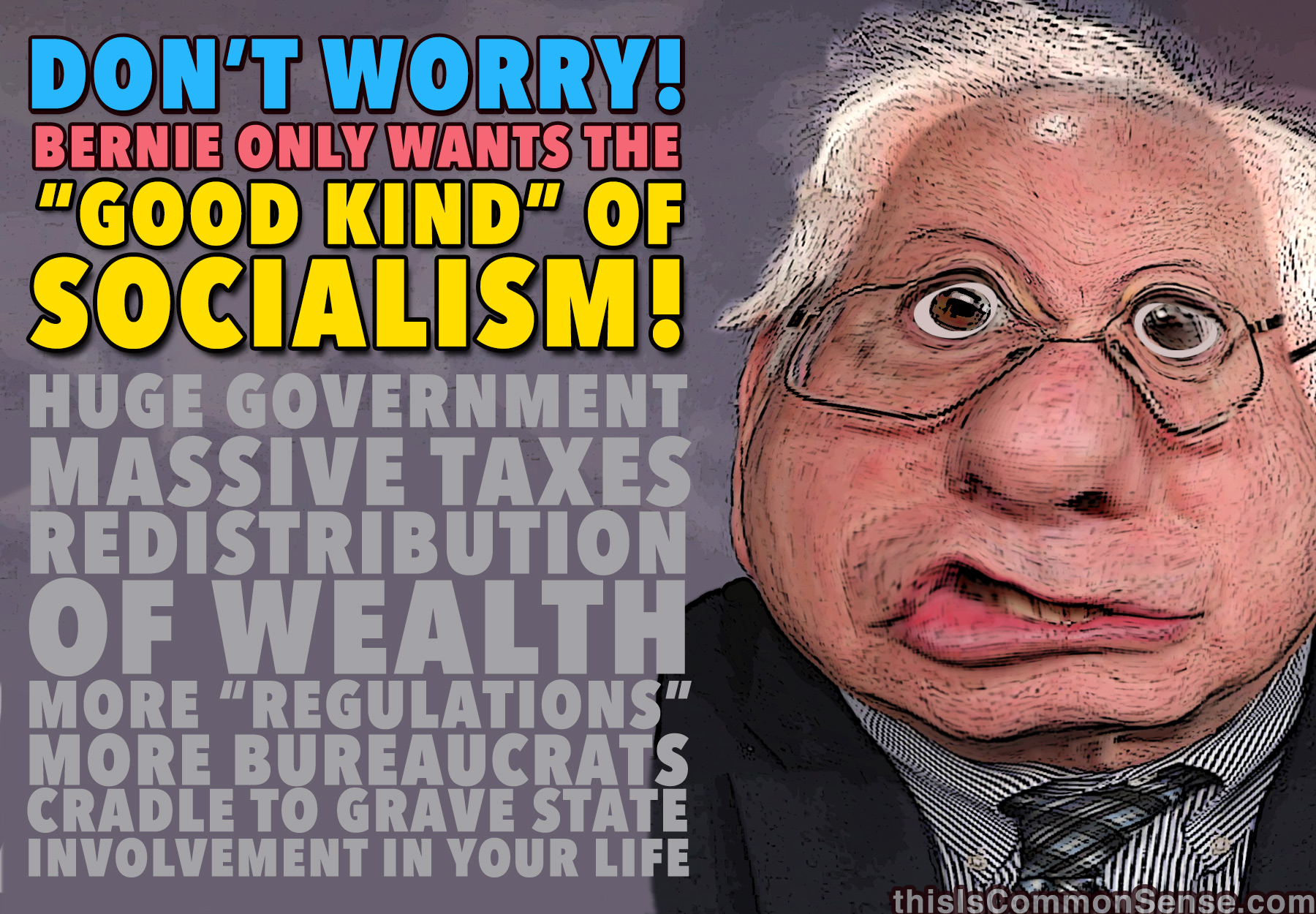
“The Good Kind of Socialism”

Don’t worry…

Bernie only wants “the good kind of socialism.”


Click here for a high resolution version of this image:

Bernie Sanders, The good kind of socialism, presidential race, progressivism, progressive, socialist, education, meme, cartoon, illustration, Jim Gill, Paul Jacob, Common Sense


Categories
folly general freedom moral hazard nannyism national politics & policies responsibility

Town, County, Stasis

The savvier economists (and intellectuals like Steven Pinker) like to remind us that it is progress that must be explained; poverty is natural.

But when you see poverty settle in like an infestation of slime mold, staining a whole modern city or region, you begin to wonder. As Ron Bailey wonders in his excellent Reason report on West Virginia’s impoverished McDowell County . . .

WHY DON’T THESE PEOPLE JUST MOVE?

The feeling of being trapped in your community — in your hovel, in your own blighted life — does not come, these days, from mere poverty alone. I remember the Joads in The Grapes of Wrath; my family has a history. Once upon a time, folks in America, when industry ran out, left. Traveled. Migrated — to find work where industry boomed.

And sure, McDowell used to be much more populated. Bailey’s family left two generations ago.

But the stragglers?

Almost any community has its specific enticements.

But one thing becomes clear, as you read through Bailey’s sad survey (in part memoir, since he has family ties there): government is the worst culprit.

A lot of welfare goes into McDowell, and a huge percentage of the population is retired or on disability.

“If you get public assistance to supply your needs without any effort from you,” explains one young man who came back to his beleaguered hometown, “you’ve got no incentive to better yourself or your situation.”

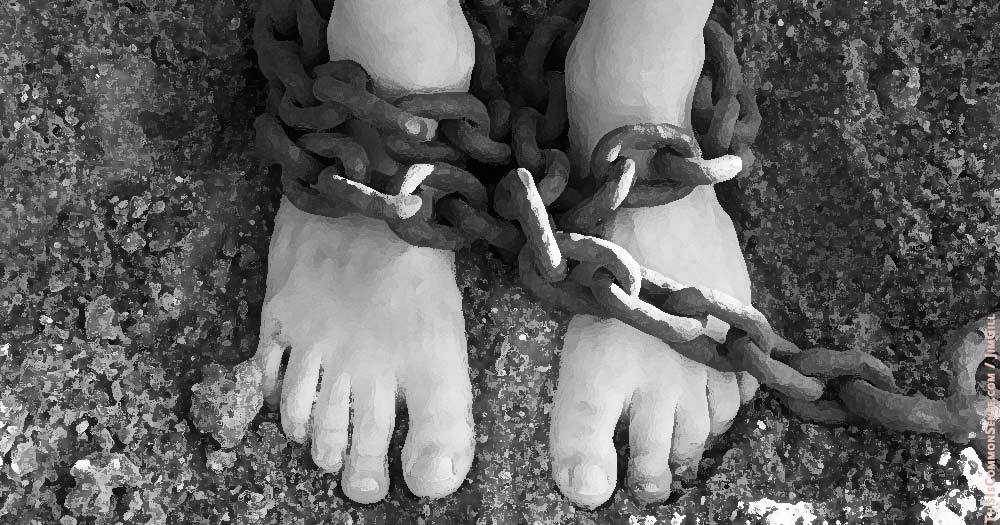
Government subsidizes poverty. Sure, it prevents destitution. Utter misery. But it also traps people, robbing them of their wherewithal to get up and go and achieve something.

Modern government is in the stasis business. Our assistance programs don’t just assist.

A modern American nightmare.

This is Common Sense. I’m Paul Jacob.


Printable PDF

chained, West Virginia, poverty, welfare,


Categories
Accountability ideological culture media and media people moral hazard nannyism national politics & policies

The Revenge of the Gatekeepers

We saw glimmerings last year when Twitter began to selectively enforce “policy” against some (Milo Yiannoupolis) and not against others (the hordes of leftists who threatened to assassinate Donald Trump).

You could see it in Hillary Clinton’s campaign; after Trump won, it loomed to eclipse all reason.

And on Thursday I noted Congress’s reaction.

I refer to the hysteria over non-Democratic “memes” and “fake news” that trumped the erstwhile gatekeepers of the Fourth Estate and the political classes — including the lobbying and bureaucratic cliques — and stymied the ascension of Mrs. Clinton to the Most Powerful Office in the Whole Wide World.

Now Facebook has come on board with a way to combat this freewheeling flow of ideas.

Fact-checking.

Hayley Tsukayama, writing in the Washington Post, explained the new program:

The social network is going to partner with the Poynter International Fact-Checking Network, which includes groups such as Snopes, to evaluate articles flagged by Facebook users.

If those articles don’t pass the smell test for the fact-checkers, Facebook will pass on that evaluation with a little label whenever they are posted or shared, along with a link to the organization that debunked the story.

The problem, here, is not a First Amendment issue: Facebook is not the government; when it tampers with your communications, it does not break the law.

The problem is that the Internet’s self-proclaimed fact-checkers are not exactly fair-minded, or even capable of sticking to the facts. I quoted Nietzsche yesterday (“there are no facts, only interpretations”), today I will merely reference Ben Shapiro, who has a history with false fact-checkers, and riff off of Juvenal: who will fact check the fact checkers? (Obvious, I know.)

Meanwhile, the folks behind new social media service minds.com offer an innovative posting promotion system, and promise never to sneakily favor some ideas over others.

The proper response to a business firm’s discriminatory policy is to provide market pressure.

This is Common Sense. I’m Paul Jacob.


Printable PDF

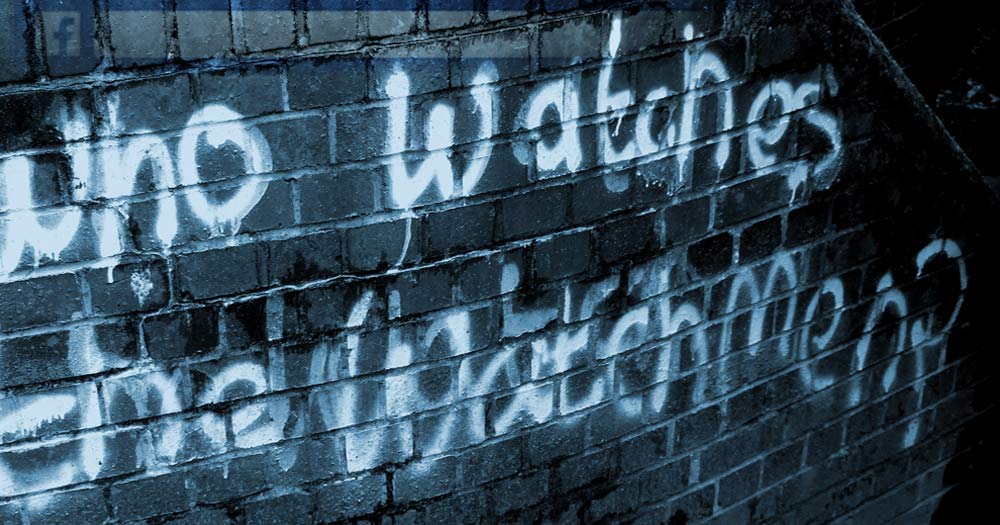
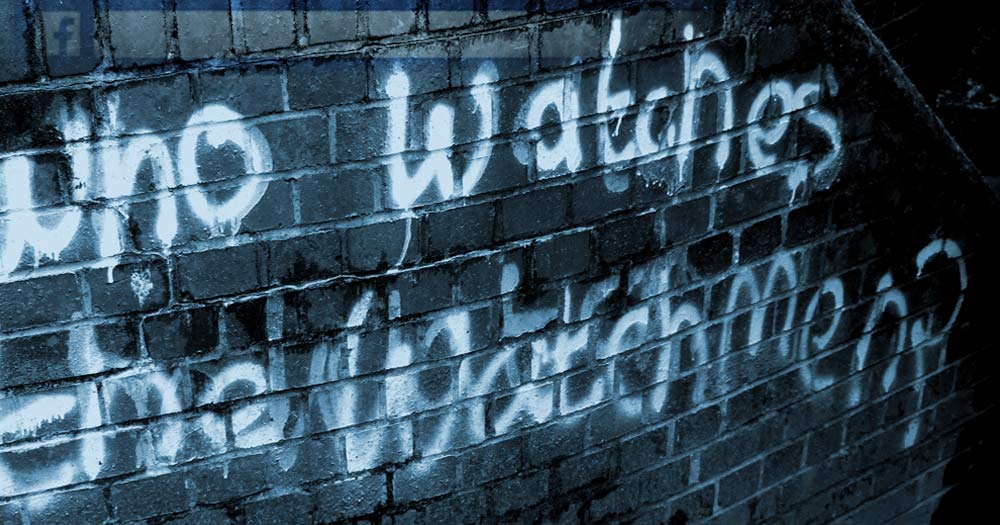
watchers, watchmen, media, fake news, fact check, illustration


Categories
ideological culture media and media people moral hazard nannyism national politics & policies porkbarrel politics responsibility too much government U.S. Constitution

Diversity, Identity, and the Liberal Implosion

“To paraphrase Bernie Sanders, America is sick and tired of hearing about liberals’ damn bathrooms.”

Finally. Some sense from the New York Times.

Mark Lilla, in “The End of Identity Liberalism,” delivers a valuable lesson about political correctness — without once mentioning the term “political correctness.”

Now this is a lesson we can get behind.

The problem is “diversity.” The center-left became so obsessed with it that it helped sink the last election for Hillary Clinton, Democrats at large, and the coherence and legacy of President Barack Obama.

“However interesting it may be to read, say, about the fate of transgender people in Egypt,” Lilla wrote in the Friday think piece, “it contributes nothing to educating Americans about the powerful political and religious currents that will determine Egypt’s future, and indirectly, our own.”

Fixating on diversity of gender identity and racial make-up in business and government has scuttled the rights-oriented approach of the older liberalism.

Alas, Lilla is not talking about the liberalism of J.S. Mill or Lord Acton. He is talking about FDR.

But compared to today’s “identity liberalism,” FDR’s burdensome promises look like sheer genius. And Lilla understands at least one thing about diversity: “National politics in healthy periods is not about ‘difference,’ it is about commonality. And it will be dominated by whoever best captures Americans’ imaginations about our shared destiny.”

He does not bring up the real liberal message: that the way to find commonality is to avoid making government all things to all people. It is to limit its scope, instead, so the president of the United States isn’t every school’s bathroom monitor.

Perhaps an essay on The End to Hubristic Liberalism is required?

Another day. And probably another paper.

This is Common Sense. I’m Paul Jacob.


Printable PDF

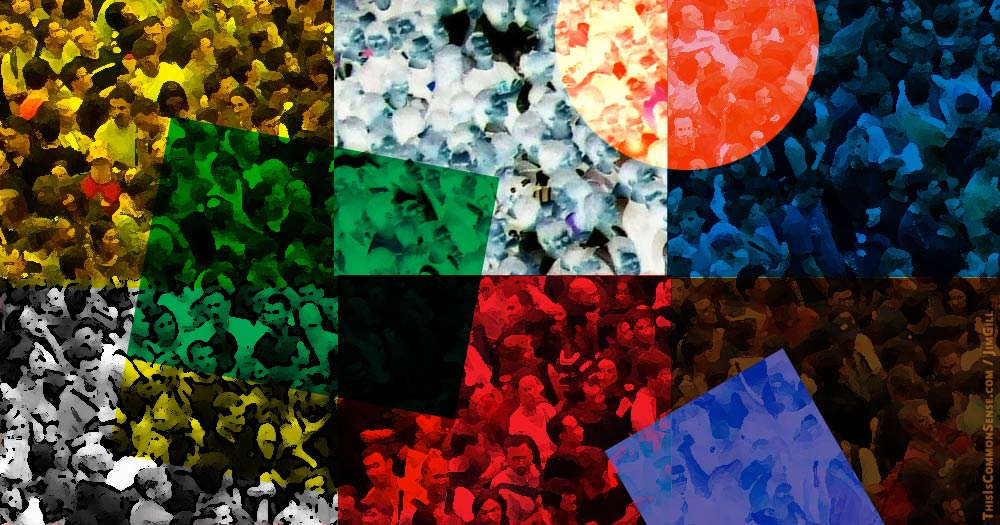
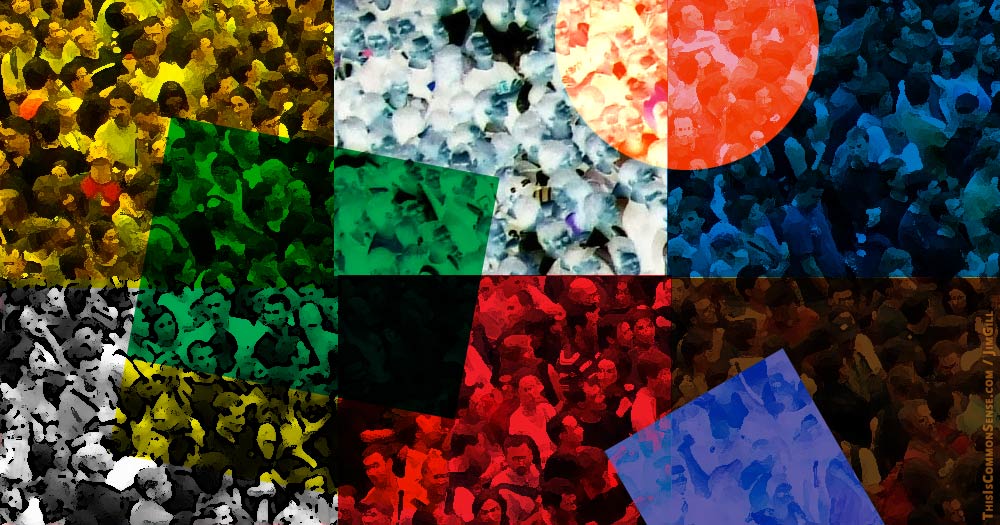
identity, diversity, politics, individualism, rights, individual, illustration, crowd


Original (cc) photo by James Cridland on Flickr

Categories
Accountability general freedom ideological culture media and media people nannyism Regulating Protest responsibility too much government

Tyranny’s Days Are Numbered

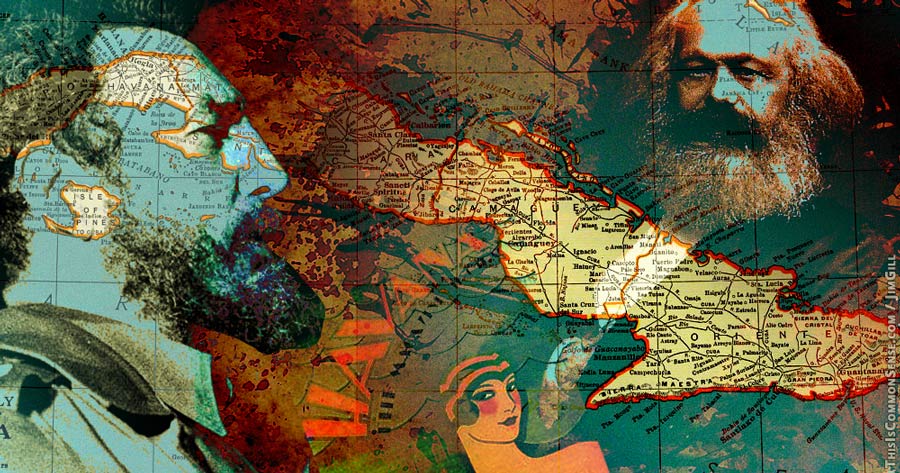
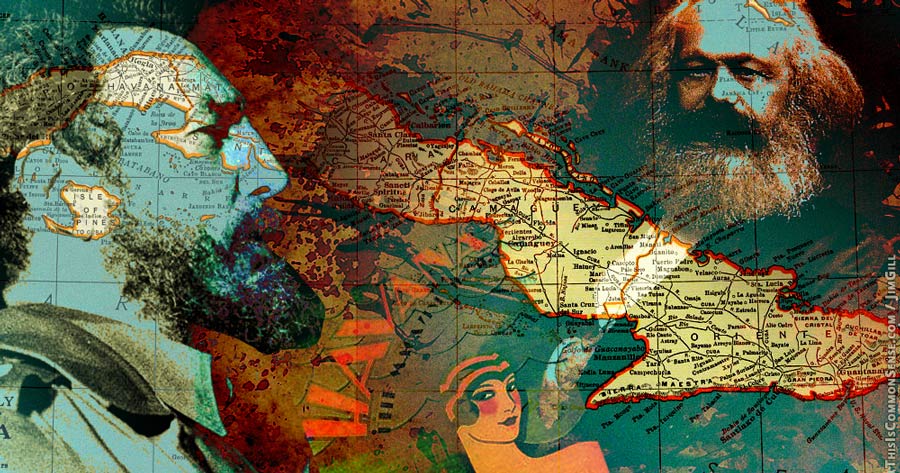
Fidel Castro, the Cuban dictator for half a century, died Friday night.

“Although Castro was beloved by a legion of followers,” The Washington Post acknowledged, “detractors saw him as a repressive leader who turned Cuba into a de facto gulag.”

Many on the American left — especially in Hollywood — have been surprisingly enamored of Castro, and the supposed “accomplishments” of better education and healthcare delivery in his socialist paradise.

I guess we must all weigh whatever policy advances were made against Mr. Castro’s faults.

As the New York Times detailed: “Foreign-born priests were exiled, and local clergy were harassed so much that many closed their churches. . . . a sinister system of local Committees for the Defense of the Revolution that set neighbors to informing on neighbors. Thousands of dissidents and homosexuals were rounded up and sentenced to either prison or forced labor. . . . jailing anyone who dared to call for free elections. . . . imprisoning or harassing Cuban reporters and editors.”

Fidel Castro’s death reminds me of Irving Berlin’s jazz tune about Adolf Hitler, When That Man is Dead and Gone:

What a day to wake up on

What a way to greet the dawn

Some fine day the news’ll flash

Satan with a small mustache

Is asleep beneath the lawn

When that man is dead and gone

Saturday morning, that news finally flashed for Cuban Americans in south Florida. Followed by jubilation. Horns honking. Smiles, cheers and songs. Jigs were danced.

Fidel Alejandro Castro Ruz — that dictator, the person who imprisoned and murdered many seeking freedom — is dead and gone.

For now, sadly, his brand of tyranny continues through brother, Raúl Castro. But its days, too, are numbered.

This is Common Sense. I’m Paul Jacob.


Printable PDF

Castro, death, Cuba, Communism, freedom, illustration