Categories
First Amendment rights general freedom ideological culture meme moral hazard national politics & policies Popular

Re-Segregation

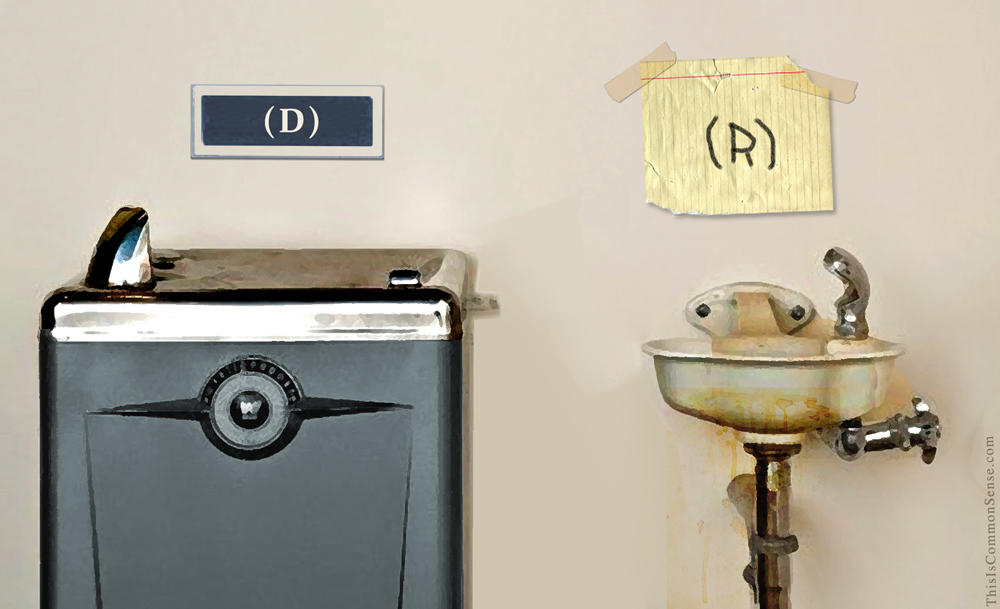
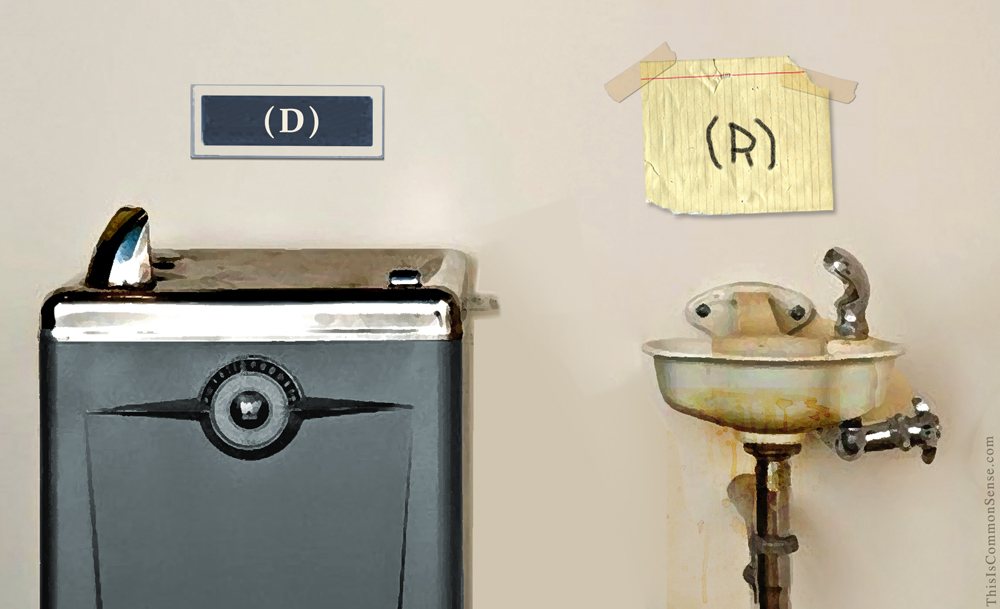
It is hard not to miss the ideological left’s inconsistency regarding “diversity”: demanding diversity of race and gender, they enforce a monoculture that somehow cannot tolerate intellectual and political competition.

We see this in 

  • higher education, dominated by left-of-center professors and administrators; 
  • in the news media, overwhelmingly filled with Democrats; and 
  • even in the corporate world, especially in HR Departments.

That some areas of life are filled with one type of person, and others with a different kind, should shock no one. But the intolerance of this? It has recently become extra extreme on the left: De-platforming, physical attacks on free speech, censuring and firing employees who dare offer facts inconvenient for progressivism. When a senior Facebook engineer attempted to bring in tolerance and diversity, what should have been a non-story received national attention.*

It amounts to a new segregationism. 

People are segregating more and more in their communities based on income and culture (see Bill Bishop’s The Big Sort) — despite many of these same self-segregators support for Martin Luther King’s civil rights agenda of de-segregation. 

Another current trend is shunning. When it was discovered, the other day, that the In-N-Out burger chain had contributed $25,000 to the California Republican Party, the Twitterverse cooked up something special: “#BoycotInNOut — let Trump and his cronies support these creeps” . . . well, that gem is from the chair of the California Democratic Party.

Apparently, this Democratic Party official is demanding separate eating establishments for progressives and conservatives.

But hey, where would I eat?

This is Common Sense. I’m Paul Jacob.


* Arguably, many of the stories we fret about should be non-stories — as in, “none of our business.” But when some people make others’ business theirs, the stories just will not stay local.

PDF for printing


Categories
education and schooling ideological culture moral hazard responsibility too much government

An Expert Explains Failure

The failures of the public high schools in the District of Columbia go on an on. It is quite a scandal, as I explained this weekend at Townhall.

And yet some “charter schools that serve large populations of children from low-income families,” notes the Washington Post, after providing much detail about the massive failures, “recorded big increases in scores.”

What hint about improving education does that fact give?

Well, Kevin Welner, a professor who heads the National Education Policy Center at the University of Colorado, has an interesting thought: “People want to read into these test scores lessons about what the schools are doing. But these scores, even the growth scores, depend a great deal on students’ opportunities to learn outside of school. If we address the poverty and racism, then we will see these test scores increase.”

Hmmm. Let’s review: (a) the problem is at home and (b) it cannot be overcome by the schools. Moreover, the esteemed professor perceives the cause of these detrimental home environments to be “racism and poverty.” 

Once upon a time, public education was proclaimed to be the great equalizer, allowing the disadvantaged to climb the economic ladder, and, if not wipe out poverty completely, to certainly dramatically reduce it. 

Now, we discover from a certified education expert that we had it backwards.

So maybe it is time to chuck the whole experiment and just try to educate kids.

Not “save” them, or society.

This is Common Sense. I’m Paul Jacob.


PDF for printing


Categories
Accountability crime and punishment moral hazard property rights U.S. Constitution

Forfeiting Common Sense

Is it okay to steal if you can get away with it?

A full answer would require a treatise. But most of us common-sensibly understand that evil does not magically become good when perpetrators are not stopped or punished. Thrasymachus was wrong to contend, in Plato’s Republic, that justice is merely the “interest of the stronger.”

When it comes to crimes like bank robberies, muggings and car jackings, we have no doubts about this. In such blatant cases, we suffer nothing like the legitimate confusion to which we may be prone regarding the exact border between adjacent parcels of land or the niceties of intellectual property law.

Well, somebody tell the New Hampshire state police.

Some of them apparently believe it’s okay to steal if you can evade laws against the stealing.

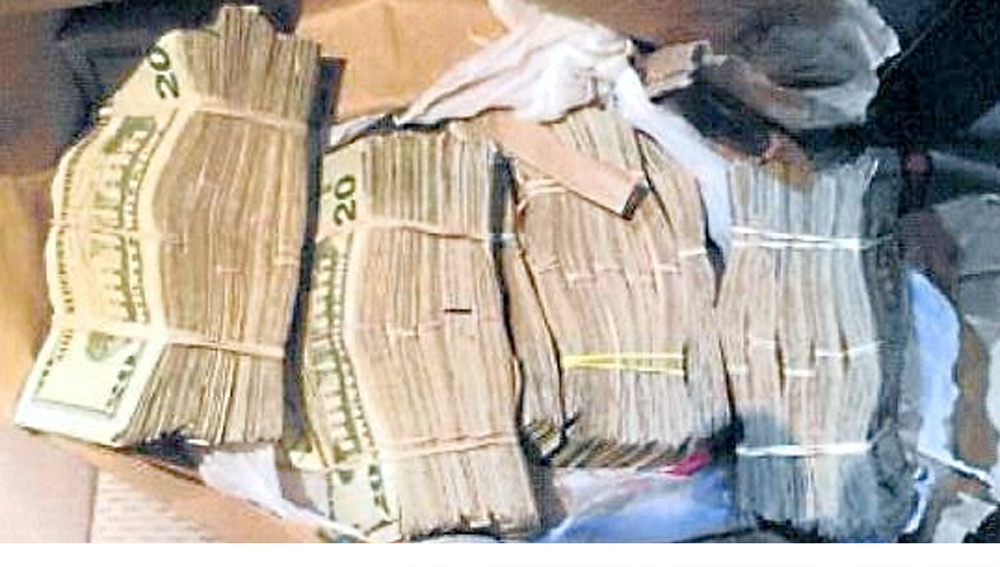
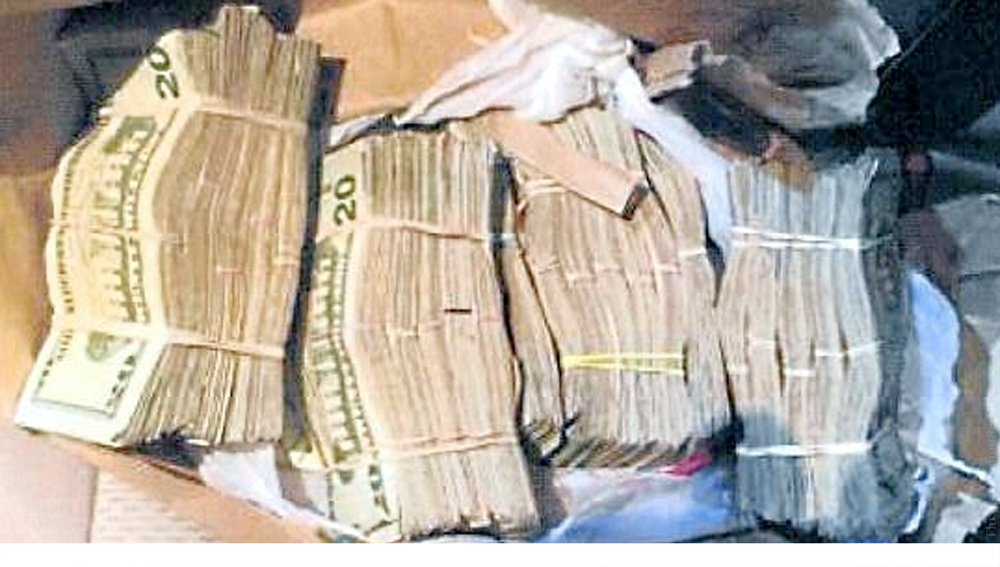
New Hampshire’s recent reform of civil forfeiture laws requires criminal conviction of a person before there can be any forfeiture of his property. But a loophole enabled officers to grab $46,000 of Edward Phipps’s money — from his car, stopped on the road — even though he was never accused of a crime. 

How?

It seems that if state cops collaborate with the feds, safeguards established to prevent such abuse can be evaded.

To retrieve even a little of his money ($7,000), Mr. Phipps was forced to relinquish all claim to the balance ($39,000). Even if lawmakers close the loophole, as they should, the robber-cops will probably get away with this particular larceny. 

They shouldn’t.

That’s injustice, not common sense.  I’m Paul Jacob.


PDF for printing


Photo Credit: N.H. State Police


Categories
First Amendment rights general freedom ideological culture media and media people moral hazard

May Trigger Eye Rolling

The fashionable campus notion of “microaggressions” blurs the distinction between peaceful speech (offensive or not) and bashing somebody over the head with a club. 

If courts, police and/or university officials can rationalize regarding the perpetrator of a so-called “microaggression” as initiating force against an offended listener, they can also rationalize using actual physical force in retaliation. Which, to the extent implemented, would mean the end of freedom of speech. 

After all, nobody needs a First Amendment in order to utter banal pronouncements about the weather.

The allied campaign urging or requiring professors to issue “trigger warnings” before discussing anything that might provoke discomfort also dampens discourse. 

Who can object to letting viewers of TV news know that they are about to see a corpse? Or sending little kids out of the room when certain subjects are discussed? But is such common sense the point of “trigger warnings”?

At best, “trigger warnings” are a silly name for referring to what nobody seeks to keep secret. At worst, they help trigger distress themselves — or impede frank discussion of controversial subjects. The latter treats adults as if they were not adults; the former makes adults less adult. 

If and when “trigger warnings” are imposed by force, with penalties for omitting them, they also endanger freedom of speech.

Advocates of open discourse seem to be in an endless war with champions of a repressive political correctitude. The jabberwocky used to justify that repression keep evolving. The response must be constant: intellectual clarity and eternal vigilance.

This is Common Sense. I’m Paul Jacob.


PDF for printing


Categories
Accountability First Amendment rights general freedom ideological culture media and media people moral hazard nannyism national politics & policies Regulating Protest too much government

Dbl Standard Destruction Co.

Addison Barnes has just won a court case against Liberty High School of Hillsboro, Oregon. The court ruled that the school acted wrongfully when, early this year, it suspended him for wearing a “disruptive” T-shirt heralding a “Donald J. Trump Border Wall Construction Co.” 

Addison was awarded $25,000 for legal expenses, and the school has apologized to him, sort of, for the suspension.

“I brought this case to stand up for myself and other students who might be afraid to express their right-of-center views,” Addison says. “Everyone knows that if a student wears an anti-Trump shirt to school, the teachers won’t think twice about it. But when I wore a pro-Trump shirt, I got suspended. That’s not right.”

No, it’s not.

The outcome is imperfect. The apology offered by Liberty High does not acknowledge the glaring injustice of the suspension. It simply asserts that the school got the “balancing act” wrong between making students feel welcome and making them feel safe. (Because it is “unsafe” per se for kids to peacefully express political disagreements?) Nor was the teacher who imposed the suspension obliged to apologize personally.

Ideally, all schools would be privately owned, privately run. Then they could openly promulgate whatever silly policies they wished about what students may display on T-shirts, if anything. Market pressures would tend to discourage indefensible rules. 

But today’s schooling system is not ideal.

Have you noticed?

Meantime, let’s hope that the court’s decision will discourage other schools from imposing similar double standards.

This is Common Sense. I’m Paul Jacob.


PDF for printing


Categories
Accountability folly free trade & free markets general freedom moral hazard property rights responsibility too much government

Poison Is Poisonous

Venezuela’s socialist economy has been collapsing.

No big mystery. If, out of hostility to capitalism, a society keeps destroying everything that production, trade, and prosperity depend upon, the economy suffers. The benefits of markets don’t flow no matter what.

One assault has taken the form of hyperinflation — runaway printing of currency, done in part to dissolve government debt. Many Venezuelans are resorting to barter. It’s easy to understand why.

Or is it? A Reuters reporter says that economists say that “the central bank [of Venezuela] has not printed bills fast enough to keep up with inflation, which . . . reached an annual rate of almost 25,000 percent in May.”

So go faster!?

Dude. Dude. The massive expansion of Venezuela’s money supply is what’s causing massive jumps in prices. Just like any other economic good, the medium of exchange is subject to the laws of supply and demand.

Other things being equal, enormously increasing a supply of a good will enormously lower its market value or price. Money, too, has a price — in terms of the non-monetary goods being bought. If the pre-hyperinflation price of a dollar in terms of bread is one loaf and the post-hyperinflation price is one bread crumb, you won’t reverse the decline by printing even more dollars or bolívars even faster.

If you’re ingesting poison, you can’t fight the effects by being poisoned more and harder. The very first thing to do is stop ingesting the poison.

This is Common Sense. I’m Paul Jacob.


PDF for printing


Categories
Accountability crime and punishment folly free trade & free markets general freedom moral hazard nannyism responsibility too much government

Taking a (Lemonade) Stand

When life hands you lemons. . . .

Once upon a time, putting up a summertime lemonade stand was the American way for kids to learn about hard work, good will, and entrepreneurship. Almost every kid had one, making some spendable profit selling the nectar.*

Some of the youngsters grew up to become Bill Gates and Steve Jobs and, well, lemonade’s one heck of a gateway drink.

But then, along came “progress” — that is, mandates and regulations slapped upon businesses. And the hordes of regulators required to enforce the morass of rules — “swarms of Officers.”

Soon lemonade stands were vanquished from our neighborhoods.

And America was made safe (at long last!) for . . . inane bureaucracy.

“Reports of kids’ lemonade stands being shut down for breaking local health or permitting laws have long left grown-ups feeling sour,” today’s Wall Street Journal informs. But the story also details how “a growing movement of adults is fighting back.”

So, when government policies hand you lemons, what do you do?

Make a map of all the lemonade stand clampdowns.

“I think the Constitution covers [lemonade stands] as written,” Dave Roland told the Journal, explaining the map he and his wife Jenifer have produced. “But if there’s any doubt about that, let’s get it fixed.” The Rolands run the Freedom Center in Missouri, but theirs is a regrettably national map.

Last month, the popular lemonade maker Country Time started “Legal-Ade,”  pledging to come to the defense of any kid “busted” for trafficking in lemonade.

Seriously.

“When life gives you arcane laws,” the company’s video says, “make lemonade.”

Taste the Common Sense. I’m Paul Jacob.


* The profit was made possible largely by pushing their costs off onto their parents. But isn’t that sorta what parents are for? And good lessons were still learned.

PDF for printing


Categories
Accountability crime and punishment free trade & free markets general freedom media and media people moral hazard responsibility

Blame the App?

Who spreads “fake news”?

Gossips, politicians, publicity agents, Twitter eggs, partisan bloggers, lying news journalists?

Or . . . the medium of communication they use?

Do envelopes, stationery, telephones, email, and messaging apps have moral agency?

And who commits the crimes that news (true or false) is used to rationalize?

A New York Times story discusses “How WhatsApp Leads Mobs to Murder in India,” which is like saying that civilization, flying lessons and boarding passes “led” terrorists to 9/11.

The Times reports that fake news about children being kidnapped — dramatized by doctored video clips and forwarded via WhatsApp, a messaging app — provoked anger and fear in many Indians. Some were then willing to attack anyone who “seemed” about to kidnap children.

In recent months, dozens of people have been murdered for being in the wrong place at the wrong time.

Without social media and the mega-popular WhatsApp, the murders probably would not have happened, at least not the way they happened. That seems certain. But this doesn’t mean that without WhatsApp, nobody in India would spread false stories or assault innocent people.

Mob violence in the country antedates the Internet.

Perhaps a thousand material circumstances directly or indirectly enable any particular act of wrongdoing. But no such prerequisites “lead to” anything without individual choices.

If someone pretends it’s okay to kill innocent persons — or persons whose guilt or innocence he doesn’t care to know — he, the killer, is the guilty party. The telecommunications network or messenger app used to provide grist for excuse-making is innocent.

Apps don’t murder people. People murder people.

This is Common Sense. I’m Paul Jacob.


PDF for printing


Categories
Accountability general freedom government transparency incumbents insider corruption local leaders moral hazard national politics & policies term limits

“Dorky” Doesn’t Define It

“Term limits,” said Daniel McCarthy, editor of The Modern Age, in a recent podcast conversation with historian Tom Woods, “was one of the dorkiest ideas of the 1994 so-called Newt Gingrich revolution.”

He characterized it as not having really gone anywhere.

Huh?

Granted, Congress is still not term-limited. But Americans in 15 states — including California, Colorado, Florida, Michigan, and Ohio, and representing 37 percent of the nation’s population — do enjoy term-limited state legislatures.*

And it sure wasn’t Newt Gingrich’s idea. Gingrich opposed it.

McCarthy repeats the old chestnut that what term limitation “winds up doing is actually weakening Congress and congresspeople in particular — relative to their own staff, who stay in Congress and become sort of experts and learn how to manipulate their congressman, and also relative to the executive branch who have people rotate in from time to time.”

Nifty theory — one very popular with politicians, who know that voters fear unelected influences on legislation.

The reality, however, is that Congress, designed by the Constitution’s framers to be both most powerful and closest to the people‚ is, today, the weakest branch.

And legislators are not term limited.

Ditch the “manipulation theory”; adopt a “collaboration theory”: legislators with Methuselah-long careers learn, sans “rotation in office,” to feather their own nests and those of the interest groups that fund their re-elections (and insider trading schemes).

Term limits remain popular with normal Americans because voters intuitively grasp the reality of such everyday corruption, which is directly tied to Congress having sloughed off so much constitutional responsibility.

We need term limits to restore a Congress sold out by professional politicians.

This is Common Sense. I’m Paul Jacob.


* Nine of the ten largest cities in America likewise have termed-limited their elected officeholders. For more information, see the links to the column from which this episode of Common Sense is condensed.

PDF for printing


Categories
Accountability crime and punishment government transparency media and media people moral hazard national politics & policies Regulating Protest responsibility

The Deeply State

FBI agent Peter Strzok is offended.

Deeply.

He takes pains to clarify: he sent emails during the last presidential campaign expressing a willingness and readiness and commitment to preventing a Trump Presidency because he, Agent Strzok, is patriotic.

Deeply.

During yesterday’s contentious congressional interrogation, fielding questions regarding just how anti-Trump he was during the last presidential campaign, Peter Strzok denied that his obvious and admitted political bias affected his professional conduct.

“Like many people, I had and expressed personal political opinions during an extraordinary presidential election,” said Agent Strzok. “My opinions were expressed out of deep patriotism.”

But it wasn’t just a matter of expression, was it? One text message was an assurance that he would “stop” Trump’s election. When challenged on this, Strzok admitted that his memory was faulty.

Deeply?

“At no time, in any text,” Strzok said, decisively, “did those personal beliefs enter into the realm of any action I took.”

When a citizen expresses a credible threat to a president, federal agents investigate. His exchange with his “girlfriend,” Lisa Page, was not what we now call an “existential threat,” of course. Ms. Page had texted her worry about a Trump win: the man was “not ever going to become president, right? Right?!” Strzok’s reply was not vague: “No. No he won’t. We’ll stop it.” The threat is, at most, covert-political, back-room. FBI-ish. The couple were, after all, a part of an investigation into Donald Trump’s alleged Russian connection.

Though one could easily understand a married man assuring his inamorata simply to puff himself up in her eyes, this assurance sure looks different to our eyes — it cannot help but make us suspicious.

Deeply.  

This is Common Sense. I’m Paul Jacob.


PDF for printing