
Categories
First Amendment rights ideological culture media and media people

Gun Group Deplatformed

Mailchimp is an “all-in-one integrated marketing platform” that helps businesses send newsletters and other email to customers, prospects, and supporters. In January it blocked the Virginia Citizens Defense League from sending email to members about an annual rally in defense of gun rights and told the organization to get lost.

Some help.

According to the president of the Defense League, Philip Van Cleave, “There was no justification. They provided nothing. Basically, they just said we need to get our stuff and be prepared to move on.”

Well, Mailchimp’s boilerplate letter did also state that its “automated abuse-prevention system, Omnivore, detected serious risks associated with [your] account. . . . This risk is too great for us to continue to support the account.”

What risk? Oh, why bother to specify. The point is, the automated system detected it. I’m guessing that certain scary words were flagged, like “gun,” “Second Amendment,” “Constitution,” “rights.”

It seems that any kind of assembling on behalf of certain constitutionally protected rights or to petition for redress of grievances is to be regarded as a rationale for summarily ejecting politically right-leaning customers — at least by firms going along with this accelerating strategy to abet repression.

Mailchimp has violated the terms of service upheld by those who respect freedom of speech and do not respect arbitrary assaults on costumers. If you’re using it, look for an alternative.

The Defense League’s “Lobby Day” rally was peaceful again this year — as the group’s website informs, “just a lot of patriots sending a strong message to the General Assembly to keep their hands off our gun rights.”

This is Common Sense. I’m Paul Jacob.


PDF for printing

See all recent commentary
(simplified and organized)
See recent popular posts
Categories
media and media people

The Uninvestigated

We have long relied upon journalists in major media to cover actual news. And investigate leads to juicy stories of major import to clear up confusion.

But the mainstream media has become mainly propagandistic: “journalists” today rarely “report,” they propound and pontificate. And help spread disinformation for major political factions.

Is it really that bad?

Well, one way to test how bad is to track juicy news leads that get left unexplored.

In June I commented on Harvard’s Dr. Charles Lieber, arrested and charged with not reporting his activities with the Chinese at the Wuhan labs — which have been associated with SARS-CoV-2. In October, Lieber sued Harvard for not backing him up in his legal troubles with the U.S. Government.

There could be a huge story here. Or maybe a mere bureaucratic snafu.

But it is not “in” the news; I cannot find any decent reporting on it.

From the beginning, the idea that the virus could have been grown in a lab “to help discover new vaccines” (or even as a cultivated bioweapon) has been a real possibility.

A year after its public acknowledgment, there is still disagreement.

While we expect reporters to dig deep, instead we see a plethora of premature declarations — as at egregious “fact-checking” sites — that the matter is settled. “Leading researchers have debunked this notion,” as Snopes confidently stated in February. But since then, the origins of the pandemic have remained murky. And allegations of bioweaponry keep re-appearing.

The World Health Organization is on the ground in Wuhan now, investigating.

Belatedly.

Long past time for American reporters to get on the beat.

This is Common Sense. I’m Paul Jacob.


PDF for printing

See all recent commentary
(simplified and organized)
See recent popular posts
Categories
media and media people

Reality About Fake News

“Fake news entered the world with the emergence of descriptive language,” writes philosopher Ray Scott Percival on Medium, “perhaps hundreds of thousands of years ago.”

And it is here to stay, because we lack a “fool-proof algorithm” for “disposing of fake news” without cranking out a different variety of fake news.

“But this should not demoralise us,” Percival admonishes. “It is no different from the situation of science. Removing error has to be a piecemeal, tentative enterprise.”

Percival, following a line of argument from philosopher Karl Popper, denies there is such a thing as “manifest truth.” It’s a delusion, says Percival. (The title of his multi-part essay is “Fake News and the Manifest Truth Delusion.”) But you don’t necessarily need to accept wholly his Popperian take on epistemology (or should that be “epistemics”?) to agree with his important conclusion, that a “ministry of fake news is a fantasy, a tool of oppression, suppression and stagnation, and would unavoidably impair our best means of error-correction.”

He recognizes that error isn’t the half of it. People lie. And some lies look pretty convincing, so we spread them. But the bizarre part of the current “fake news” mania is this: too many earnest citizens turn to government to stop “fake news,” though the biggest and most influential liar has always been the government.

What to do? Well, our “biggest gain in the control of error would be through the separation of science and the corrupting influences of politics (e.g. state funding, licensing etc.) and the chilling effect of political correctness on open discussion.”

Percival wants to “keep the enlightenment alive and kicking.” I like to think that’s just common sense.

I’m Paul Jacob.


PDF for printing

See all recent commentary
(simplified and organized)
See recent popular posts
Categories
media and media people partisanship

Mainstream Disinformation

“A historic crime and disgrace.” 

That is how left-leaning journalist Glenn Greenwald characterizes U.S. media coverage of the 2020 presidential race.

Back in October, he resigned from The Intercept, a publication he co-founded with the aim of providing “fearless, adversarial journalism that holds the powerful accountable.” Its editors, you see, refused to publish his writing unless he removed “all sections critical of Democratic presidential candidate Joe Biden.”

When the New York Post, the nation’s fourth largest newspaper, reported on emails from a laptop belonging to his son, Hunter Biden, Facebook and Twitter quickly blocked folks from sharing the news. Arguing the story was “hacked,” Twitter shut down the Post’s account for the critical final weeks of the campaign.*

“We will not waste our time,” declared National Public Radio, on “stories that are just pure distractions.” Now, with Hunter acknowledging the FBI criminal investigation of the family business, the state-media outlet’s Distraction Meter appears out of whack.

But there’s more. “[A]s soon as these [Hunter Biden] documents became known,” Greenwald told Fox News’s Tucker Carlson, “the operatives in the intelligence community, the CIA, [former CIA Director] John Brennan, [former Director of National Intelligence] James Clapper, [former NSA Director] Michael Hayden — all of the standard professional liars — issued a letter claiming that this material was the hallmark of Russian disinformation, even though they had no basis for thinking that.”**

This, he points out, “gave the media permission to lie to the public continuously” by enthusiastically repeating the baseless claim. 

Most ominously, there was again “domestic interference on the part of intelligence agencies in order to manipulate the outcome of our election,” Greenwald explains.

The election is over. Our national nightmare is not. 

This is Common Sense. I’m Paul Jacob.


* There were two huge problems with Twitter’s excuse: (a) the Post’s revelations were not from a hack, and (b) stories are continually written from information hacked and unlawfully leaked to the media — and then shared widely on Facebook and Twitter without any impediment.

** Greenwald is best known for breaking the story of Edward Snowden’s leak of classified information showing unconstitutional NSA spying on Americans, while working for the UK Guardian. Mr. Snowden claimed his “breaking point” in deciding to release the information “was seeing the Director of National Intelligence, James Clapper, directly lie under oath to Congress.”

PDF for printing

See all recent commentary
(simplified and organized)
See recent popular posts
Categories
media and media people

Prognosis: Negative

Ah, the Law of Unintended Consequences!

It doesn’t apply just to government programs. It also applies to journalistic crusades.

What am I talking about?

Well, by now, it is pretty clear that the mask mandates, social distancing efforts, and lockdown policies have not worked very well, if at all. But that hasn’t stopped corporate newsmedia.

From what? 

From inducing panic by playing up the negative aspects of the COVID epidemic, and downplaying — even suppressing — information that would mitigate . . . their propagation of panic.

And policies of an extreme nature.

Jacob Sullum, writing at Reason, calls our attention to recent research: “Based on an analysis of news stories about COVID-19 that appeared from January 1 through July 31, Dartmouth economist Bruce Sacerdote and two other researchers found that 91 percent of the coverage by major U.S. media outlets was ‘negative in tone.’ The rate was substantially lower in leading scientific journals (65 percent) and foreign news sources (54 percent).” 

It has consequences: “This unrelenting, indiscriminate negativity fosters suspicion and resistance. Journalists and politicians who repeatedly cry wolf should not be surprised at the lack of cooperation when the beast actually appears.”

Which suggests that corporate media’s approach to the disease and our responses to it has had effects quite the opposite of what leftist Yellow Journalists aim: total government control of the populace in the cause of fighting a disease.

By overstating their case, and even flagrantly fibbing, they may be inoculating us from the very disease they promote.

That disease being not COVID, of course, but Therapeutic Totalitarianism.

This is Common Sense. I’m Paul Jacob.


PDF for printing

See all recent commentary
(simplified and organized)
See recent popular posts
Categories
international affairs media and media people

Maybe Next Year?

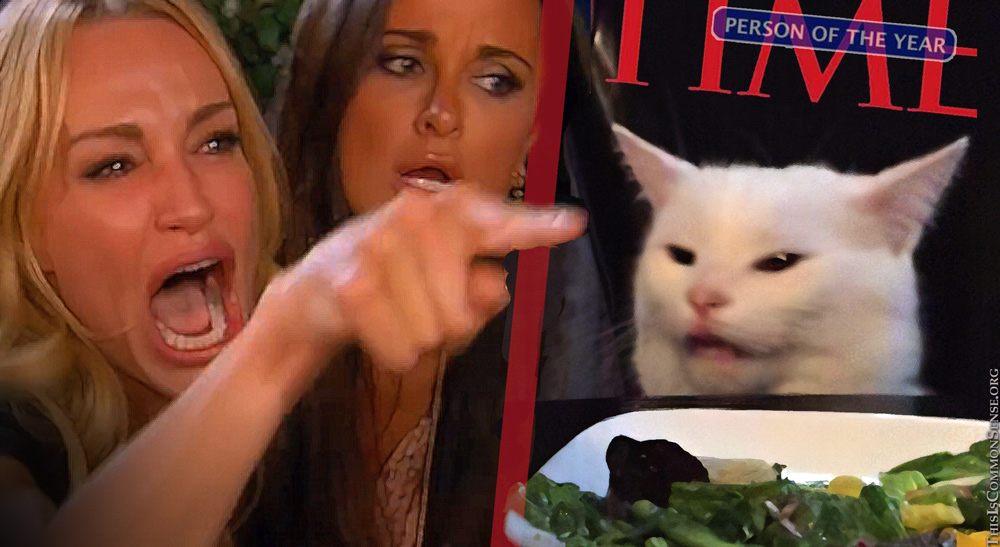
Once again, TIME is skipping right over you and me for consideration as the magazine’s “Person of the Year for 2020.”

What am I saying, YOU were named back in 2006!

TIME’s choice can be important recognition for someone working against all odds to make a very positive difference in this world. Lech Wałęsa in 1981, for instance, and Gandhi in 1930.*

Last year’s pick of Greta Thornburg? Not. So. Much.

While presidents often get the coveted cover, President-elect Joe Biden garnered only 3 percent of the public “advisory” vote. “Essential workers” had the most support at 35 percent. Seems too amorphous . . . a catalyst mostly for endless debate.

Dr. Anthony Fauci, director of the federal government’s National Institute for Allergy and Infectious Diseases for the last 36 years, was next at 31 percent of respondents. No one else had more than 5 percent.

Don’t choose Fauci, please! Despite his experience, his pandemic performance has been less than expert. Under his leadership, Americans were told for months that masks would be of no benefit, then suddenly mandated to wear them.

Last June, Sen. Rand Paul, who is a physician, tried to get Fauci to address the ample scientific data indicating it was safe to open the schools. Fauci deflected and dithered until flippantly declaring last week: “Close the bars and keep the schools open is what we really say.”

That is certainly not, Fox New’s Tucker Carlson exasperatedly explained, what Fauci was “really” saying months ago.

Forget Fauci. For leading the best national response to COVID-19, TIME should name Taiwan’s President Tsai Ing-wen 2020’s “Person of the Year.”

It would send a powerful message about leadership. And freedom.

This is Common Sense. I’m Paul Jacob.


* The magazine has also named dictators and mass murderers: Hitler served as 1938’s “Man of the Year” and Soviet dictator Joseph Stalin took the top spot the next year, and again in 1942; in 1979, with Americans held hostage in Iran, the Ayatollah Khomeini glared at us from TIME’s cover. 

Note: My biggest disappointment was in 2013, when TIME cowardly choose Pope Francis over Edward Snowden.

PDF for printing

See all recent commentary
(simplified and organized)
See recent popular posts
Categories
Internet controversy media and media people

Google Gag Reflex

Maybe it’s an honor when big-tech companies gag you. Maybe you’re doing something right.

Google-owned YouTube has yanked a Mises Institute talk by Tom Woods (“The COVID Cult”) from the Institute’s YouTube channel for challenging orthodox views of the pandemic. Google is also threatening the Mises Institute with further sanctions if the Institute’s YouTube channel sponsors further prohibited discourse.

In response, Mises Institute President Jeff Deist observes that Google and other big-tech firms have become de facto extensions of the state, “governmentalities . . . committed to ideological service. . . .”

To fight back, he says, we must “build our own platforms.” YouTube alternatives include Bitchute and Odysee, which still host the forbidden talk.

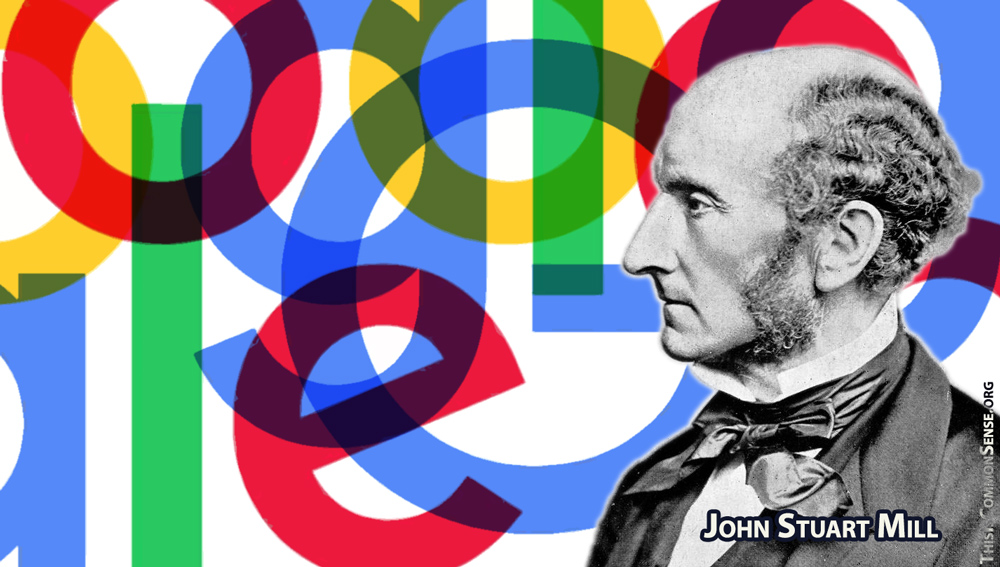
In On Liberty, John Stuart Mill argued that there’s a big difference “between presuming an opinion to be true, because, with every opportunity for contesting it, it has not been refuted, and assuming its truth for the purpose of not permitting its refutation. Complete liberty of contradicting and disproving our opinion, is the very condition which justifies us in assuming its truth for purposes of action; and on no other terms can a being with human faculties have any rational assurance of being right.”

Not every word of this passage is incontestable, but Mill had a point. If Google is so sure it is so right about COVID-19 policy and Woods so wrong, why try to kill an “opportunity for contesting” Google’s view?

Maybe Google’s “assurance of being right” is not so rational.

This is Common Sense. I’m Paul Jacob.


PDF for printing

See all recent commentary
(simplified and organized)
See recent popular posts
Categories
ideological culture media and media people

A Little Maher Common Sense

I’m not the biggest fan of Democrat comedian-pundit Bill Maher. But when he’s right, he’s right.

Mr. Maher once said the sun rises in the east. I concur. He also says that Democrats shouldn’t be so off-puttingly wackadoodle and tyrannical. Correct.

According to Maher, “Democrats are the party of every hypersensitive, social justice warrior, woke bulls—t. The party that disappears people or tries to make them apologize for ridiculous things. [Democrats] think silence is violence, and looting is not. [And we’re the party of] replacing ‘Let’s not see color’ with ‘Let’s see it always and everywhere.’”

In his indictment, the HBO jester argues “the crux of the problem” is that “Democrats too often don’t come across as having common sense to a huge swath of people.” 

Right again!

“It would be so easy to win elections,” he deduces, “if we would just drop this s**t!”

Maher notes a New York Times post-election report that congressional “Democrats wept, cursed and traded blame” over the election results on a recent conference call. Rep. James Clyburn (D-SC) warned that “we’re not going to win” in Georgia if Democrats are talking “Medicare for all or defunding police or socialized medicine.”

“Democratic rhetoric needs to be dialed back,” Maher quotes Rep. Connor Lamb (D-Pa.). “It needs to be rooted in common sense.”

“I feel like I’m being asked to be quiet,” responded squad-member Rep. Rashida Tlaib (D-Mich.). 

Tlaib is half right. The solution to this problem for Democrats is to abandon their anti-common-sense positions. Not to hide them. 

This is Common Sense. I’m Paul Jacob.


PDF for printing

See all recent commentary
(simplified and organized)
See recent popular posts
Categories
media and media people

Not Acosta

In late April, Scott Johnson, cofounder of the political blog Power Line, a former attorney and an accredited reporter, was banned from the Minnesota government’s daily briefings about the COVID-19 pandemic. Officials also stopped answering his written questions.

Why?

Minnesota officials told the Washington Free Beacon that the briefings were limited to “professional journalists.” But if they regarded Johnson as something other than a professional journalist, why had he been allowed to attend to begin with?

More plausible is Johnson’s contention in his June lawsuit against the state that officials simply didn’t like his conservative political perspective or his questions. Johnson had been critical of the policies of Minnesota’s governor, Tim Walz, in combatting the pandemic.

Months later, Scott Johnson has won his lawsuit. He can attend the briefings now. And officials must answer at least three of his written questions per week.

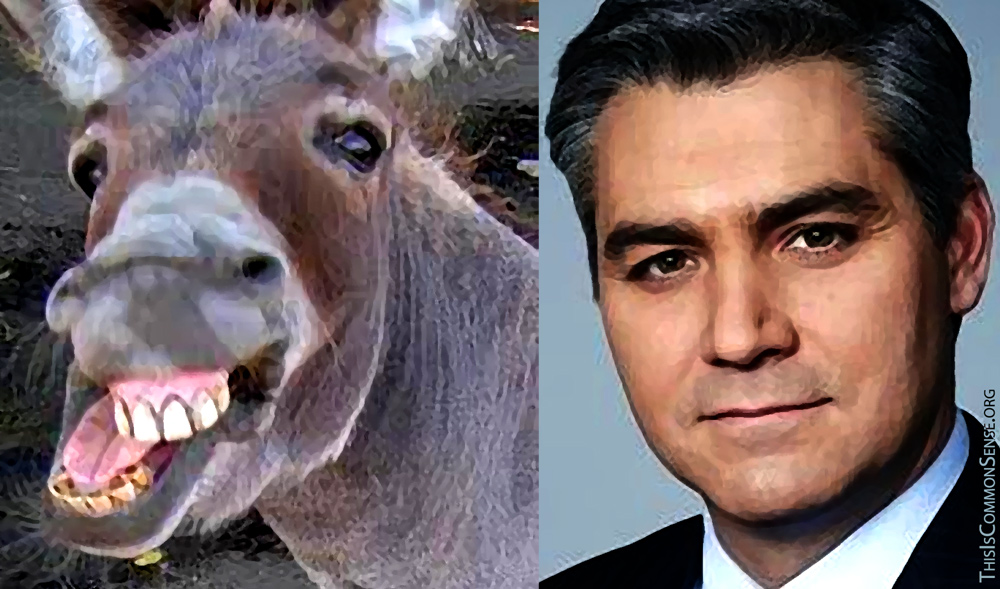
A question occurred to me as I was mulling this story: Isn’t what Minnesota did in banning Johnson from the COVID-19 briefings exactly like what Trump did to that CNN banshee, Jim Acosta, when he banned Acosta from presidential briefings?*

No, not exactly, I answer myself. Trump ousted a reporter who was persistently rude and disruptive. “Asking questions government officials dislike” and “being a constant ass” are not the same thing.

At Power Line, Johnson has posted many reports about the lawsuit and about the course of the pandemic in Minnesota.

He may not be welcome by those in government he probes, but we out here, far from power, are glad he is there.

This is Common Sense. I’m Paul Jacob.


* CNN sued and a judge issued a temporary restraining order against the White House, after which CNN and the Trump Administration agreed Acosta could return as long as he followed rules of decorum newly written by the administration and applied to all reporters.

PDF for printing

See all recent commentary
(simplified and organized)
See recent popular posts
Categories
ideological culture media and media people

Landscape, with Trumpians

“America, in the aggregate, seems just as stupid as it was four years ago,” Philip Kennicott, The Washington Post’s Pulitzer Prize-winning art and architecture critic, declared over the weekend.

Last week’s election was not, Mr. Kennicott correctly concludes, “a repudiation of Trumpism.” He finds “horrifying” the fact that six million or so more Americans voted for Trump over last go-around.The problem? “White supremacy,” which he says is “existential, precognitive and pervasive”; Trumpism is its “colloquial alternative.”

Yet the critic omits the evidence.

“I’ll leave his policies and his politics — to the extent that he ever had policies or coherent politics — to the pundits,” Kennicott punts. 

A master of mere assertion, he declares the MAGA crowd filled with “not just avowed racists who have publicly supported the president but also those who downplay the problem, or align with it for personal gain, or are simply unwilling to acknowledge its history and persistence.”

Trumpeting “our unique brand of ugliness,” Kennicott can’t see the city for the slums. 

Moral uglinesses are evident here and worldwide. But the U.S. is uniquely recognized around the globe for freedom and human rights.

“Trumpism is embedded in America and can be fought only through rigorous self-discipline, through constant surveillance of the thoughts we think, the words we use and the assumptions we make,” writes Kennicott. “Now we know it not as a perverse blemish on American culture but as foundational to American culture. That’s progress.” 

Not true. Not progress. But the Post scrivener does sum up progressivism’s current cultural revolution: “constant surveillance of the thoughts we think.”

He didn’t like this past election or the one four years ago. He won’t like 2022 or 2024 any better.

This is Common Sense. I’m Paul Jacob.


PDF for printing

See all recent commentary
(simplified and organized)
See recent popular posts