Categories
education and schooling folly ideological culture moral hazard

Through a Lens, Darkly

The “best debates” are ones in which one side shouts down the other side and threatens violence.

Well, that is what a Washington Post essay implies. In “Why ‘social justice warriors’ are the real defenders of free speech on campus,” Matthew A. Sears, an associate professor of classics and ancient history at the University of New Brunswick, offers a bizarre take on current campus controversies.

After two years of bizarre antics from leftist student bodies in colleges and universities all over the country, academics as diverse as Steven Pinker, Jordan Peterson, and Camille Paglia have denounced the intentionally disruptive and even violent tactics of student mobs. We need to go back to the Socratic method and “the disinterested pursuit of truth,” as Jonathan Haidt, the author of The Righteous Mind, put it.

Sears counters this by defending the “social justice approach” as better than a “disinterested pursuit of truth.” Instead of “constituting an attack on knowledge, the social justice lens reflects new ideas generated by academic disciplines and experts within them, and generally encourages expanding our knowledge and opening up subjects to new perspectives, much like Socrates advocated.”

Conflating Socratic “dialectic” with the screaming matches and overt force used by the social justice students who have shut down lectures, seminars and fora featuring non-leftist figures such as Ben Shapiro, Heather Mac Donald and Charles Murray, is more effrontery than enlightening.*

And about that “social justice lens”? Lenses refract, mirrors reflect — and Sears’ argument, you will notice, defends bad behavior out of his classroom by focusing on how he teaches in class.

We don’t need mirrors or lenses to see the deflection here.

This is Common Sense. I’m Paul Jacob.


* It was heartening to read most commenters on the page engaging in a merciless “dialectic” against the author.

PDF for printing


Categories
Accountability general freedom ideological culture media and media people national politics & policies responsibility too much government

The Times Must Change

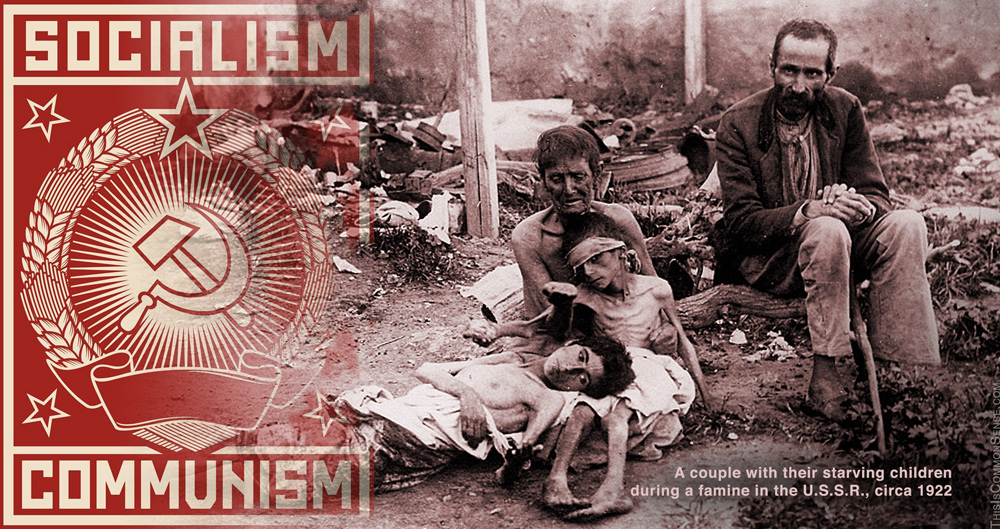
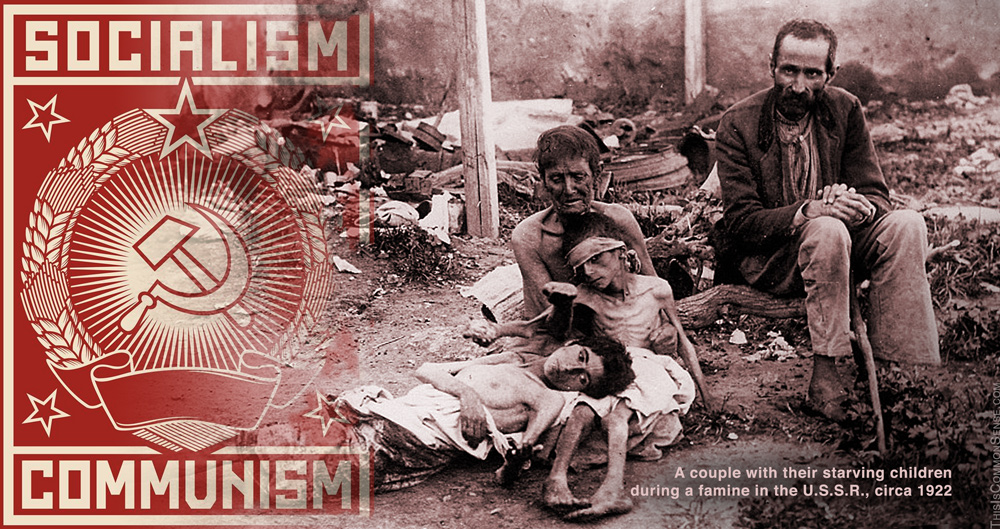
“Political leaders prefer to project a noble history, sometimes by turning complicity in atrocities into claims of victimhood,” the New York Times informed us last Sunday. “In Russia, Mr. Putin and many of his lieutenants came from the K.G.B. and resisted fully confronting its repressive history. And they, like many of their countrymen, prefer to portray Stalin not only as the architect of the Gulag but also as the leader who built Russia’s industrial might and led it to victory in the Great Patriotic War.”

The Gray Lady here marks the passing of Arseny Roginsky, an organizer and activist who kept alive the memory of state mass murder in his homeland. The Times quotes the late hero as insisting that common talk of “victims of repression” is nowhere near enough. The repression did not merely descend upon the people as “a plague.”

The victims were targets of “state terror.”

But there was something missing in this too-brief notice. Though the Nazis were mentioned, the Union of Soviet Socialist Republics wasn’t.

Communism was not.*

State terror did not infect its perpetrators biologically, like the world’s worst case of x-oplasmosis. It neither descended from the heavens nor ascended from the swamps. The infection was ideologicalthe result of Marxian socialism, of unworkable communism.

By not mentioning socialism or communism or even the USSR, the New York Times carries on its sad history of leftist apologetics. The case of the lying propagandist Walter Duranty — the Times’ award-winning foreign correspondent and author of Mission to Moscow — should have been the last of that.

It isn’t, apparently. The Times still protects its safe-space socialist readers.

This is Common Sense. I’m Paul Jacob.


* The omissions were also present in the Timesinitial obituary.


PDF for printing


Categories
Accountability folly ideological culture local leaders media and media people national politics & policies

Where Have You Gone, Al Franken?

Today, finally, is the day. Barring some last-minute hijinks in the extended resignation ritual announced almost four weeks ago by Sen. Al Franken (D-Minn.), the comedian turned cad turned politician turned pervert leaves his U.S. Senate seat.

And hopefully keeps his mitts off other people’s seats to boot.

Even without deadline hijinks, the Franken saga has been strange. After hearing Franken’s resignation statement on the Senate floor, CNN’s Chris Cizzilla wrote, “He didn’t believe he had done anything for which he should have been forced to resign.”

But note: No one “forced” Senator Franken to step down. As my Sunday Townhall.com column reminded, he did so voluntarily. 

Why?

Peer pressure. Three-quarters of fellow Democratic Party senators demanded Franken leave, to clear the way for election-year attacks on Republican sexual sleaze-balls without partisan distraction.

And now some cry crocodile tears. They want the no-longer-amusing Franken out. Sure. But they also wish to continue the pretense that Franken is a wonderful fellow just the same.

“His voice will be stronger than ever,” argued fellow Minnesota Sen. Amy Klobuchar—ridiculously. A Vox article was headlined, “Al Franken resigned amid sexual misconduct allegations, but Democrats aren’t making him leave in disgrace.”

Is it a paraphrase of the old joke: “Don’t go away in disgrace, Senator, just go away”?

But Franken is leaving in disgrace. Should be.

Eight women have come forward with allegations of sexual misconduct. The senator’s response has been to publicly apologize, profusely, and then, later, claim that “some of the allegations” are “not true.”

Others he remembers “differently.”

Not good enough, ex-senator.

This is Common Sense. I’m Paul Jacob.


PDF for printing


Categories
general freedom government transparency ideological culture moral hazard national politics & policies too much government

A Tale of Two Sectors

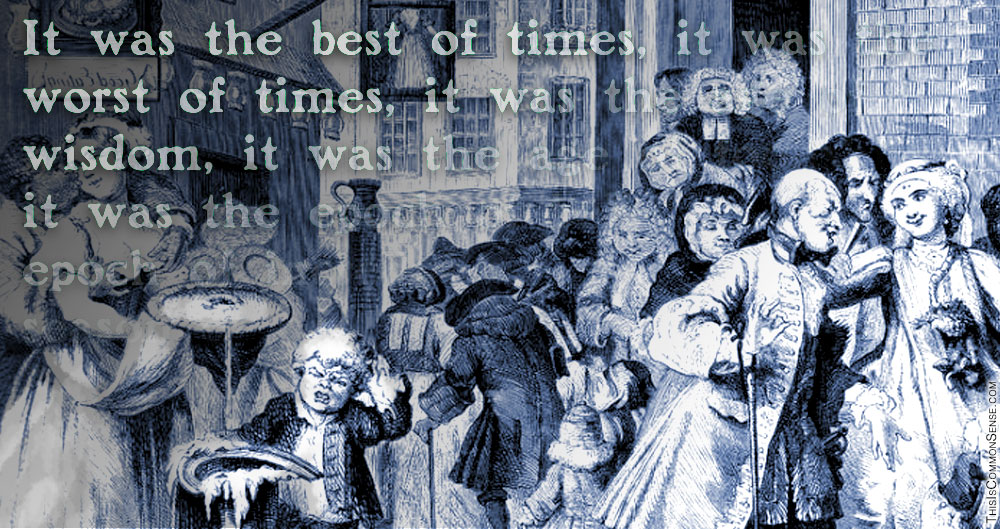
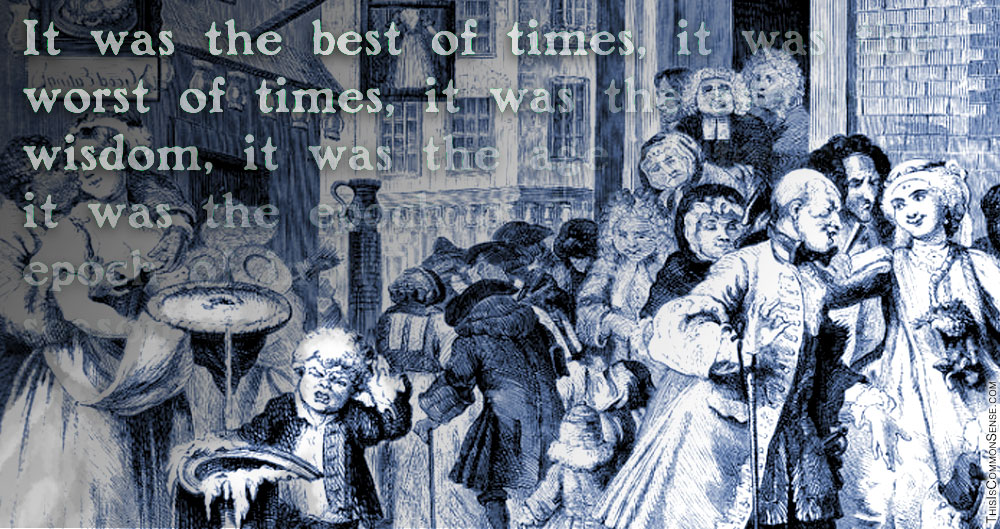
“It was the best of times, it was the worst of times,” begins Charles Dickens’ popular 1859 novel, A Tale of Two Cities. The British master was not prophesying our times. He was describing the period of the French Revolution.

But the judgment feels awfully familiar.

Over at the Foundation for Economic Education, Antony Davis and James R. Harrigan talk up the case for “the best of times,” for optimism: “Global illiteracy rates are below 14 percent. Global rates of extreme poverty are below 10 percent. Despite there being more people currently alive on the planet than ever before, there are also more calories per capita than ever before.”

Davis and Harrigan provide actual reasons for thankfulness as we meet the New Year.

Is there a case for pessimism, nevertheless? Yes. And Davis and Harrigan discuss at length a topic covered here earlier this month: the Ballou High School educational improvement scandal.

Optimism and pessimism, rationally speaking, fall into two camps: private sector progress and government-sector regress.

So, following Dickens’ checklist, ours is an age of

  • wisdom and foolishness —  check (both)
  • belief and incredulity — check (pick your subject)
  • Light and Darkness — check (just move your eyes from higher ed’s hard science departments to the humanities)

and on and on.*

But the most unsettling thing about the “best of times” is that sometimes the great feeling of ebullience can end suddenly: one feels great in free fall — unburdened! free! — right before one hits the pavement.

Splat.

Maybe the best thing we can do this coming New Year is watch our governments as if we were hawks. To avoid the splat.

This is Common Sense. I’m Paul Jacob.


* Dickens’ long and memorable first paragraph: “It was the best of times, it was the worst of times, it was the age of wisdom, it was the age of foolishness, it was the epoch of belief, it was the epoch of incredulity, it was the season of Light, it was the season of Darkness . . .”


PDF for printing


Categories
Accountability crime and punishment folly general freedom government transparency ideological culture moral hazard Regulating Protest tax policy

Been Burned

“They’ve been burned. They’ve been hammered. They’ve been bludgeoned,” George Washington University law professor Miriam Galston explained to the Washington Post. “They’re trying to survive.”

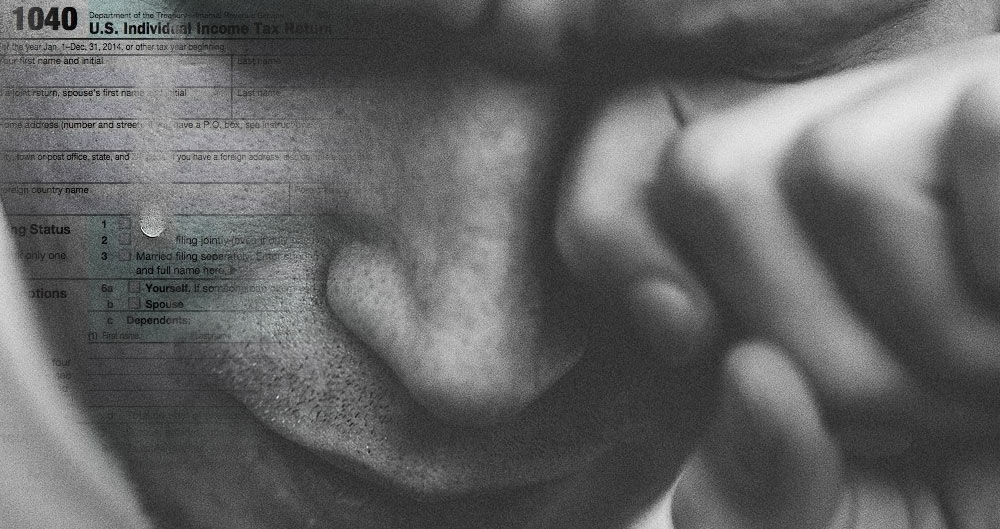
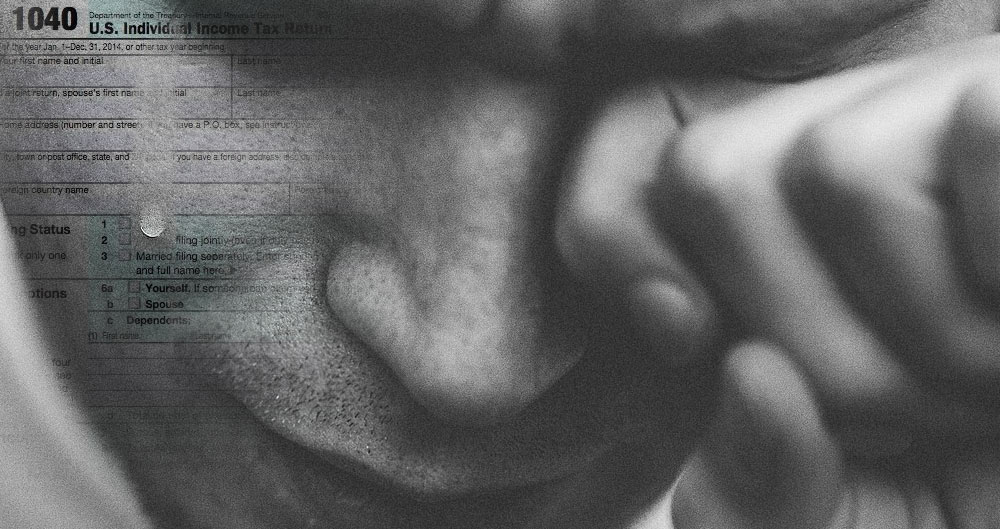
In this heartbreaking discussion at this special time of year, the “they” are the poor, long-suffering folks . . . at the Internal Revenue Service.

According to the Post analysis, “conservatives” have schemed to “scale back the IRS and shrink the federal government.” (I guess this is supposed to tear at every American’s heartstrings.) Notably, they “capitalized on revelations in 2013 that IRS officials focused inappropriately on tea party and other conservative groups based . . . Among conservatives, the episode has come to be known as the ‘IRS targeting scandal.’”

Note that term of art: episode.

The Post saw no scandal, however — despite the IRS having admitted to harassing, blocking and delaying Tea Party and conservative groups from exercising their most fundamental First Amendment rights to freedom of association and freedom of speech, in some cases for four years.

Instead, the Post decries the response to this gross violation of citizens, a congressional check on the power — and budget — of the agency responsible: reducing the budget for the Exempt Organizations division of the IRS from $102 million in 2011 to $82 million in 2016.

Heavens, Washington is never supposed to work like that! It actually approaches . . . accountability.

The budget cuts, along with hefty settlements the IRS is now paying to victimized groups that sued, make it less likely the IRS will repeat this scandalous . . . episode.

“To many, the IRS targeting of Tea Party and conservative and even some progressive groups is not a scandal,” my Sunday Townhall.com column concluded. “To me, that’s the biggest scandal of all.”

This is Common Sense. I’m Paul Jacob.


N.B. The title reference is to Neil Young’s song, Burned, which begins, “Been burned, and with both feet on the ground . . .”


PDF for printing

IRS, I.R.S., corruption, taxes, budget, tears


Categories
Accountability folly ideological culture media and media people national politics & policies tax policy too much government

The Hyperbole Is Falling

A mad killer is on the loose!

That is one way to get attention . . .

The sky is falling!

You are getting the idea . . .

Trump is literally Hitler!

Extravagant hyperbole is not necessary to criticize the current President. Indeed, as Chicken Licken and the Boy Who Cried Wolf demonstrate, that can backfire. Especially when you are complaining about something on which Trump has proved to be pretty darn good — the tax bill, for instance.

Nevertheless, as it passed through Congress, Democrat pols and the major media dinosaurs have doubled down on overstatement: A “middle-class con job” was Sen. Ron Wyden’s characterization; singer-actress Barbra Streisand (presumably now living in Australia or Canada), re-tweeting a New York Times piece on “the Great American Tax Heist,” accused Trump of pushing the bill for “personal gain”; Bernie Sanders calls it a “tax cut for billionaires” who, instead of being helped, he says, should be “asked to pay more in taxes.”

Yes, the richest (by and large) will get the most reductions, since they pay the most taxes already. Bernie should be reminded that it is the very nature of taxes that “ask” is the wrong active verb. And calling a cut in what’s taken from taxpayers a “heist” is too absurd for commentary.

It does look like most taxpayers will get tax relief. That’s good. Alas, the debt may grow larger, depending on the economic growth spurred by the tax reform. But I notice that the Democrats tend to complain about deficits only when Republicans are in charge. And vice-versa.

Partisan Derangement Syndrome at work.

This is Common Sense. I’m Paul Jacob.


PDF for printing


Categories
crime and punishment First Amendment rights general freedom government transparency ideological culture media and media people moral hazard nannyism national politics & policies too much government

No Joking Matter

He thought he was just horsing around.

Using the popular app WeChat, a Chinese construction worker supervisor Chen Sho Uli made a gossipy joke about government officials while chatting in a chat group. But being too casual about what you say — and where — can be dangerous in China. For his sin Chen was incarcerated for several days.

Picking quarrels” is another no-no in the country.

In lieu of Orwell’s telescreen in every room, modern Internet technology enables repressive governments to punish citizens for thoughtcrime that becomes app-speech crime. If the Chinese government can spy on you, it will. And penalize you for remarks it deems offensive to the dignity of the state.

Because of such repression, blogger Stephen Green observes that “strong encryption is everybody’s friend — except the tyrant’s.”

Agreed. Encryption is an important line of defense.

But some societies require this more than others, because harmless, incidental communications are not equally attacked by government, from country to country. Which means that encryption is actually a second line of defense.

The first is a cultural and political tradition respecting individual rights.

For one thing, robust encryption helps only those who engage in hyper-careful private discourse, or hyper-careful anonymous public discourse. Encryption won’t help thinkers of controversial thoughts who wish to express those thoughts publicly and under their own name. Everywhere we can, then, we must strengthen both the technological and cultural defenses of open discourse — recognizing that the latter is the more crucial and fundamental.

This is Common Sense. I’m Paul Jacob.


PDF for printing


Categories
education and schooling folly general freedom ideological culture moral hazard nannyism responsibility

The Common School Agenda

The rise of campus radicalism, write Heather Heying and Bret Weinstein in the “Washington Examiner, appears to “validate every fantasy the Right ever had about the Left.”*

Heying and Weinstein, who have resigned their positions at Washington State’s public liberal arts college, Evergreen, detail what went wrong at the college they “loved.”

A sociologist was hired as college president, and he systematically bred an activist movement reminiscent of the Cultural Revolution. That’s how our two extremely popular professors found themselves defending free speech and non-compliance against angry crowds of students spurred on by college administrators and “equity” officers.

Heying and Weinstein plausibly assert that these protests arise directly from the “‘equity and inclusion’ movement, cloaked in words that sound benevolent and honorable” but serve as little more than “a bludgeon.” And definitely “not like protests many readers will remember from their own college days.”

But are they really that surprising?

Government-run and -funded education hit these United States in a big way with the 19th century’s Common School movement. And not primarily to ensure “proper education.” The rationale was political . . . to more-than-nudge immigrant children to assimilate to our republican way of life.

The political element from our schools never left — and became more Left with each and every “revolution” in educational methods, and each increase in government involvement.

So, does training students to become violent mob activists bent on suppressing ideas they don’t approve of seem out of place?

It certainly is expensive. In more than one way.

This is Common Sense. I’m Paul Jacob.


* And note that this piece did not appear in the left-of-center Washington Post — echoing the hesitance the mainstream and leftstream press have shown towards Bret Weinstein’s story in the first place.


PDF for printing


Categories
Accountability folly ideological culture local leaders national politics & policies term limits

The Great Dood Drain of ’17

How can we expect the federal government to continue to function at its usual peak efficiency without the awesome 52 years of experience and institutional knowledge supplied by Michigan Congressman John Conyers?

American government faces a congressional brain drain, Conyers’s resignation in the wake of accusations of sexual harassment not being anything like unique. Yesterday, Senator Al Franken (D-Minn.) announced his impending resignation, as did Rep. Trent Franks (R-Ariz.) — before allegations against him had even hit the news.

Also imperiled? The talents of an unknown number of other eminent gropers and experienced molesters, a treasury of firsthand knowledge of how government really works.

Sure, the nation survived back when George Washington stepped down after two terms as president; when Congress lost Daniel Webster and Henry Clay and John C. Calhoun, the institution carried on. 

But just think of the complexity of modern governance, and the great expertise and finely crafted statesmanship exhibited by someone like Congressman Conyers. Are we being sent up the proverbial Detroit River sans oar?

If only someone could step forward with the same skill-set as the iconic Conyers! Well, in announcing his resignation, and that his “legacy can’t be compromised or diminished in any way by what we’re going through now,” the congressman endorsed his son, John Conyers III, as his replacement.

Qualifications? you dare ask.

Back in 2010, the III tweeted, “My dad’s a f*cking player and reckless as hell! He just got at this doods wife super low-key.” Earlier this year, the young Conyers was arrested (but not prosecuted) on a domestic abuse charge.

Indeed, the “dood” appears more than able to carry on.

This is Common Sense. I’m Paul Jacob.


PDF for printing


Categories
general freedom ideological culture media and media people Popular

Memed Into the Public Domain?

When the definitive history of the 2016 presidential election is written, the central figure may turn out to be . . . a frog.

“Pepe,” to be precise.

The cartoon frog with red lips started out as a minor figure in a Matt Furie webcomic, but came to symbolize so much more.

“This iconic amphibian has been labeled a Nazi, condemned by a presidential candidate, and now is at the center of an important First Amendment battle in an era of unlimited replication, imitation, and mutation,” writes Zach Weissmueller in a highly entertaining story in Reason. “It’s a fight that involves the alt-right, Trump voters, a powerful Washington, D.C.-based law firm, and the anonymous online image board 4chan. . . .”

Mike Cernovich, the pro-Trump, anti-SJW publicity artist, has found himself at the center of the legal controversy. He’s hired a lawyer.

Oddly — or maybe not, politics and culture wars being what they are — the lawyer for Pepe’s creator makes much of the alt-right/hate group usages of Pepe:

“You can’t copy other people’s ideas and claim free speech,” says Tompros. “[The alt-right is] absolutely free to spout hate in some other form. We just don’t want them using Pepe the Frog to do it.”

Contra Furie’s lawyer, you are allowed to copy others’ ideas in a free society. Copyright is something a bit narrower. Trickier.

This fight over the satirical use of a Trickster figure may turn out to be a legal and cultural landmark. “Fair use” could come to mean what Mr. Cernovich’s lawyer argues, ideas “memed into the public domain.”

Meanwhile, to the many causes of Hillary Clinton’s cruel fate in 2016, we can add a cartoon frog.

This is Common Sense. I’m Paul Jacob.


PDF for printing