Categories
folly general freedom ideological culture moral hazard national politics & policies

Include/Exclude

The right of free assembly is central to a free society. Not everyone understands this.

Last week, conservative/“cultural libertarian” provocateur Milo Yiannopoulis went into the Churchill Tavern in New York to dine with fellow gay journalist Chadwick Moore.

Also in the establishment? The New York City chapter of the Democratic Socialists of America. When the socialists noticed Milo they stood up, faced him, and shouted at him, chantingNazi scum, get out!

Milo is not a Nazi, but his past gentle treatment of the alt-right counts as “Nazi” on the left.*

The left has been pushing for an inclusivist** reading of the right of free assembly for decades. You see, state laws in the South, prior to 1964’s Civil Rights Act, allowed and enforced white business discrimination against African-Americans, such as refusing service and accommodations. Leftists argue that there is no right to refuse service or exclude customers; they strenuously criticize those libertarians and conservatives who argue that a right to associate implies a right not to associate . . . giving them no credit for long opposing laws requiring discrimination.

Yet now we see many on the left banding together to deny others their free association rights by exclusionary tactics.

This was a group of customers, of course, so this is more similar to antifa violence than business discrimination. But Brooklyn politicians echo the logic, now proudly denying free assembly rights to NRA members — on ideological grounds.

Mob action for exclusion? Politicians siding with the mob?

There’s a word for this — fascismo.

Or, in the vulgar tongue, “Nazi scum.”

This is Common Sense. I’m Paul Jacob.


* Cenk Uygur of The Young Turks articulates this point — Milo’s insistence that he is not alt-right carrying no weight, apparently.

** Rather than rule-of-law liberal, or libertarian.


PDF for printing


Categories
ideological culture incumbents local leaders media and media people political challengers too much government

The Centre Cannot Hold

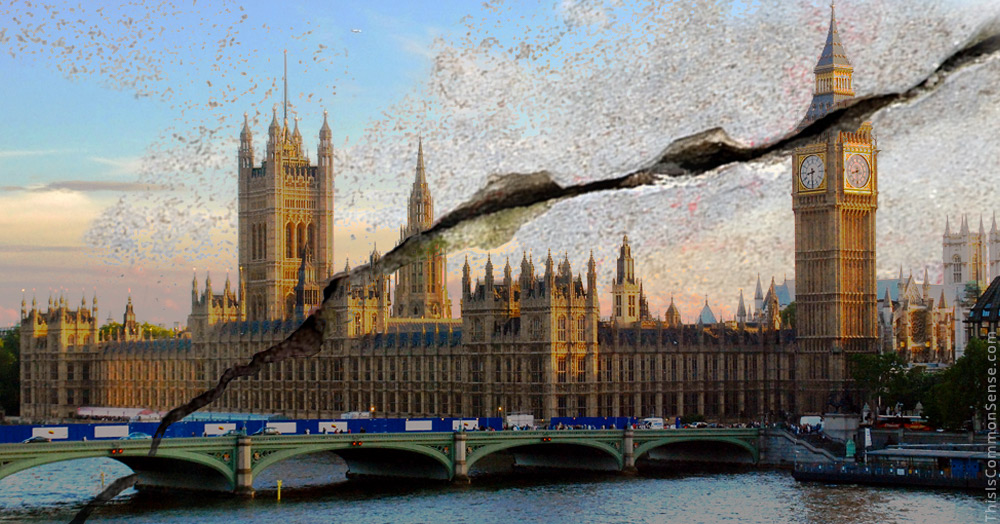
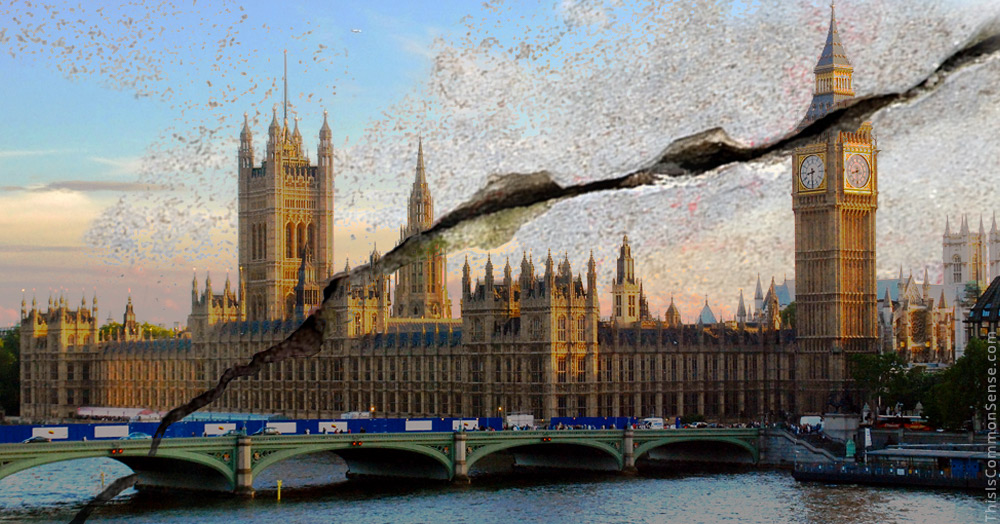
The British may spell their words in funny ways, but their political problems do not seem all that foreign. Their left-of-center party has gone far left, Marxoid left; their right-of-center party has gone ultra-incompetent.

A healthy majority of Brits disapprove of both parties. So, no wonder many Brits are looking to create a new one.

A new centrist political party, no less.

Over at The Economist, the columnist writing under the name “Bagehot” (pronounced “badget”) predicts that this hope will be dashed, for at least three reasons:

First, Britain already has a centrist party, and it is not doing very well.

Second, there sure are a lot of contenders — 35 new parties have been formed just this year, including one called, with humble brag, “Sensible” — and all that competition fractionalizes the vote.

Third, the country sports the same system of vote counting and elections as America does, first-past-the-post, which “is hard on startups.”

That last point is worth thinking about. In multi-candidate races, the British-American electoral system declares as winners those who obtain a bare plurality of votes — thus ignoring the preferences of those who vote for minor party candidates. This means that those who “waste” their votes not only hurt the candidacies they like as second-best but also insulate the second-best parties from those voters’ influence. So the parties become narrow-minded and unhinged from an interested group of voters.

Bagehot thinks Britain’s centrists need to rethink, conjure up some new ideas. But what they need to do first is fix a system that prods political parties away from new ideas. 

This is Common Sense. I’m Paul Jacob.


PDF for printing


Categories
general freedom ideological culture media and media people moral hazard

The Cuban Slavery-and-Freedom Sandwich

How easy is it to mix freedom with just the right amount of slavery?

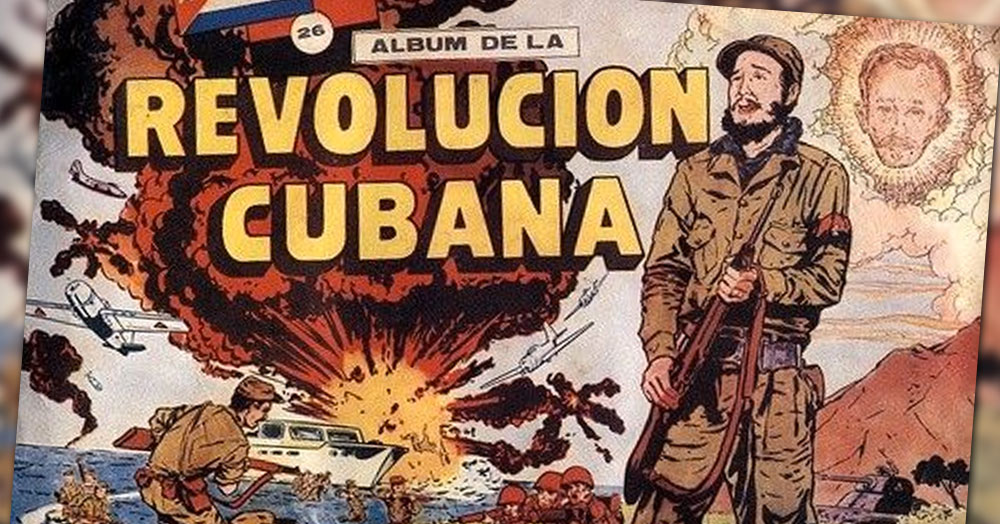
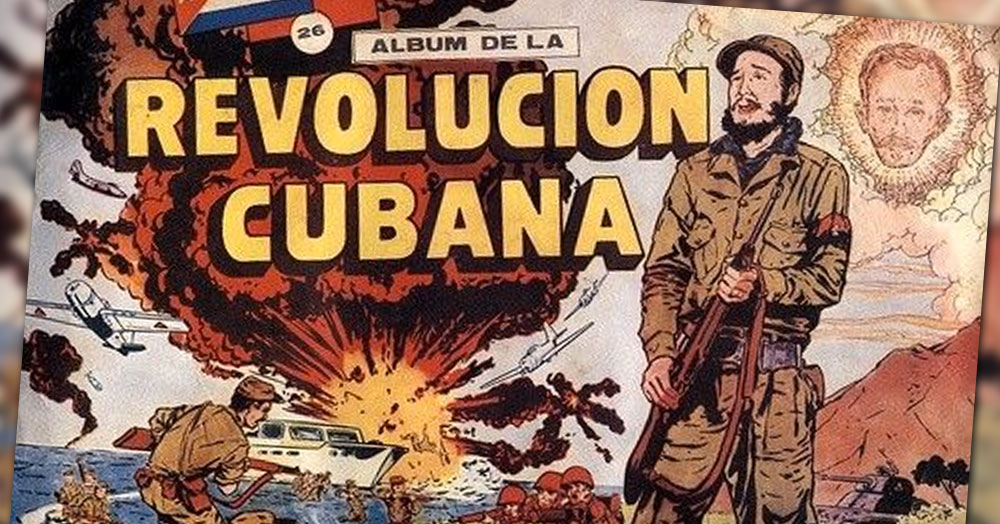
New York Times reporter Azam Ahmed regards the attempt to mingle political opposites as noble or at least understandable. He doesn’t call Cuban Communism and its destructive effects “bad” — it’s a “unique tapestry.”

He wonders, instead, to what extent the Cuban government can fine-tune the contradiction.

According to the article, Cuba’s newest Dear Leader “will have to foster the growing private sector . . . while guarding against the income inequality it often brings. . . . Move too slowly and it risks economic collapse and widespread discontent. . . . Move too fast, and it risks unstitching the unique tapestry of Cuba’s social project.”

“Unique”? With or without cigars and salsa, the “social project” of repressing a hapless populace is as old as civilization. And as a “tapestry,” we’ve seen this warp and weft before.

Under freedom, inequalities are unavoidable.* On the other hand, nothing is wrong with inequality per se. Nature, human beings and economic outcomes are inherently unequal. Equality arrives only with the grave.

A government working to phase out slavery and phase in freedom may have legitimate problems in transition. But it is wrongheaded to seek just the right “balance” of both. How can any degree of freedom and markets fail to threaten a revolution, the purpose of which is a thoroughgoing assault on freedom and markets?

My advice to Cuban social engineers? Abandon Communism altogether and embrace prosperity and freedom instead.

This is Common Sense. I’m Paul Jacob.


* Speaking of inequality, Cuba’s head commies certainly have not lived like the masses they’ve kept down.


PDF for printing


Categories
Accountability crime and punishment education and schooling First Amendment rights general freedom ideological culture moral hazard Regulating Protest

The Shallow State

Amidst all the talk of The Deep State, we are in danger of losing track of a parallel problem: the Shallow State — which, despite lack of depth, is very wide.

I am referring to government employees who increasingly abandon any pretense of impartiality. And the public institutions that protect them.  

Consider the case of the University of Illinois at Urbana-Champaign and its 39-year-old lecturer Tariq Khan, who is a member of an Antifa-affiliated group called the Black Rose Anarchist Federation. Mr. Khan had been angrily shouting and chanting at a campus anti-Trump rally when he was mildly challenged by a non-nut student journalist. Khan went on a rampage, screamed at and pushed the young journalist, and deliberately broke the smartphone of a fellow journalist who had been recording the fracas.

Khan was charged with destruction of property. But the story doesn’t stop there.

“I was told that if I wanted the ‘situation to improve,’” wrote a third journalist, “that I should stop writing about Khan.”

The university placed a restraining order on the three, to squelch news and dissent.

So the trio sued on First Amendment grounds.

Here we have a teacher willing to abridge free speech the old-fashioned way, by playing the bully. And a public institution ready and willing to defend him, to take his petty criminality and raise it to a conspiratorial, Big Brother level.

Not only does this rob Americans of rights, taxpayers are being forced to fund what they might justifiably regard as the destruction of the republican form of governance.

Root out the infamous Deep State?

Sure.

But limit and make transparent the Shallow State, too.

This is Common Sense. I’m Paul Jacob.


PDF for printing


Categories
ballot access education and schooling folly ideological culture media and media people Popular responsibility

Fiddling with the Franchise

In 2013, Tacoma Park, Maryland, became the first place in the U.S. to allow 16-year-olds to vote in local elections.* Now, Washington, D.C., Councilman Charles Allen, “inspired by the high-schoolers who are campaigning for gun control and filled D.C. streets last month in a massive protest that mesmerized the country,” reports the Washington Post, wants to follow suit.

“It’s pretty hard for anyone to watch the events of the last couple of months,” claims Councilman Allen, “and not understand the pure power and maturity of incredibly young voices.”

Well, they do use adult words.

One has to wonder: would the “maturity” of these young adults equally amaze this politician, were they advocating opinions** with which he disagreed?

But wait a second . . . wasn’t one of the demands of the “March for Our Lives” to raise, not lower, the age when a person would be deemed mature enough to legally purchase a scary-looking rifle?

Lowering the voting age seems odd, at best, with society lurching in the other direction — raising the age of adulthood for everything else. Decades ago, the legal age to purchase alcohol was 18 in some places; today it is 21 everywhere. In Virginia, one may still drive at 16, as I could back in the day . . . but now there are limits on other young people riding in the car unless the driver is 18.

More ominously, facilitation by many public schools of the recent student walkouts and marches present the strongest argument against lowering the voting age: So long as government schools act in a partisan manner, indoctrination and intimidation would be rampant.

Who wants a captive audience of would-be voters most?

Unscrupulous ideologues.

This is Common Sense. I’m Paul Jacob.


* Greenbelt and Hyattsville, Maryland, as well as Berkeley, California, have since joined Tacoma Park in allowing 16- and 17-year-olds to vote in local elections.

** Term limits, say. Or school vouchers. Or the rights of gestating humans.


PDF for printing


Categories
crime and punishment education and schooling ideological culture media and media people moral hazard national politics & policies

Bias and Blindness

Neither stretching the truth nor ignoring it helps beat back implicit or explicit racism.  Yesterday, my Townhall.com column took the Washington Post to task for misstating the results of a recent GAO report.

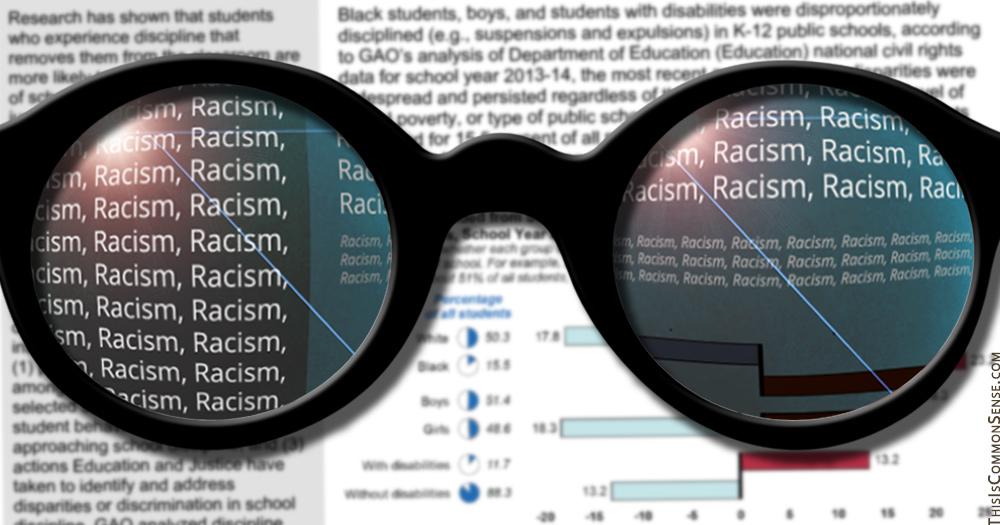
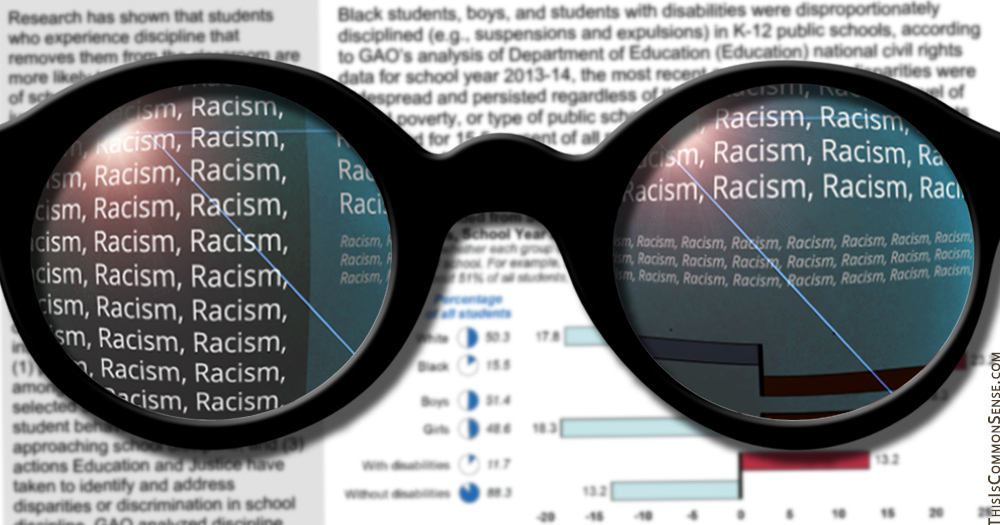
The GAO noted wide discrepancies between the percentage of students facing disciplinary actions who are black, male and disabled and the relative percentages of these groups in the overall student population. Yet, the report also specifically stated: “Our analyses of these data, taken alone, do not establish whether unlawful discrimination has occurred.”

Nonetheless, the Post headline told readers: “Implicit racial bias causes black boys to be disciplined at school more than whites, federal report finds.” The article claimed that “a government analysis of data . . . said implicit racial bias was the likely cause of these continuing disparities.”

The same discrepancies regarding boys of all races? And students with disabilities? Even the crickets had no comment.

In the Post’s Outlook section, yesterday, readers were treated to further edification on race — this time via C. Nicole Mason with the Center for Research and Policy in the Public Interest. “I feel alienated and slightly betrayed by the reboot” of the sitcom Roseanne,” she writes.

The title of her piece proclaims why: “‘Roseanne’ was about a white family, but it was for all working people. Not anymore.”

The “not anymore” refers to Roseanne’s support of (and Mason’s derangement syndrome over) President Trump. Interestingly, a more legitimate “not anymore” angle was completely missed — or ignored. The Connors now have a black granddaughter. The new show isn’t “about a white family,” but a racially mixed family.

When racism is finally extinguished from this planet, someone remember to tell the race-hustlers.

This is Common Sense. I’m Paul Jacob.


PDF for printing


Categories
Accountability crime and punishment general freedom ideological culture media and media people moral hazard nannyism national politics & policies privacy property rights responsibility Second Amendment rights too much government U.S. Constitution

The Myth of the Monoliths

According to organizers of the “March for Our lives,” the National Rifle Association is wholly evil, a corrupter of democracy, a malign presence straight out of Mordor, bent upon murder — a monolithic influence responsible for every mass shooting event.

The clearest expression of this is by young David Hogg, who figured that the NRA’s sum of contributions to Sen. Marco Rubio, when divided not by the number slain in the recent Parkland shooting but instead by the total number of students throughout Florida, came out to $1.05 per student.

Forget the computation — think nasty imputation.

What Hogg and his friends in the media elide is a simple little fact: the NRA is a membership organization. When critics of the Second Amendment point at the NRA and shout “evil!” they are really pointing at the organization’s millions of members.

People, not malign institutions.

Also neglected? The fact that, as near as I can make out, not one NRA member has mown down students in any school or church in America. Instead, at least one civilian NRA member took out his AR-15 to bring down one such mass-murdering shooter.

“Evil NRA” talk is misdirection and slander.

Also not a monolith? Students. Christian Britschgi, writing at Reason, notes that teenagers made up only 10 percent of marchers at the recent rally, and, catching a whiff of astroturf, cites a poll that found less than a majority of Millenials favoring an “assault rifle” ban.

Citizens of all ages disagree. Pretending that all kids are against guns, or that the NRA is anything other than a citizen advocacy group, distorts reality.

This is Common Sense. I’m Paul Jacob.


PDF for printing


Categories
ideological culture media and media people national politics & policies

The Sitcom Society

If we are entering a new Golden Age of television, it is for the most part passing the legacy TV networks by.

So, Roseanne Barr to the rescue!

The reboot of ABC’s Roseanne — a hit situation comedy of the late 1980s and much of the 1990s — should put the network and the art form back in the spotlight.

But though it is very popular, the show is not without . . . its political controversy. You see, funny-woman Roseanne plays Roseanne Conner, and she . . . (drum roll) . . . voted for Trump.*

Horrors!

Predictably, our modal mainstream media cultural mavens are not on board. Roxanne Gay, in the New York Times, complains that Roseanne’s views are “muddled and incoherent.”

Roseanne to Roxanne, hello-o-o: the character is fictional. Who said characters in a comedy should have coherent views? One would think the point of comedy would require the opposite.

Jezebel provides another fine example of this. In “What’s Up, Deplorable; Roseanne Is Back,” Rich Juzwiak opines that “[n]ever discussed was the laundry list of hateful, stupid, and wrong things Trump said, nor their even more nefarious implications.” On Twitter, Professor Jared Yates Sexton calls the character’s perspective “a cleaned-up lie,” and amounts to a turning a “blind eye to Trump’s many, many bigoted statements.”

Neither Juzwiak nor Sexton mentions any problem with the main alternative to the president in the last election — something Roseanne does in the show itself.

It’s almost as if what these (and many similar) critics want is a tidy propaganda piece for their opinions; it’s almost as if their objection is to the show’s realism.

Now that’s comedy.

This is Common Sense. I’m Paul Jacob.


* In the season opener, Roseanne defends the president from her dippy Democrat sister, whom she had not been speaking with since the election. Her sister, Jackie (played hilariously by Laurie Metcalf), enters the tenth season wearing a red pro-Hillary t-shirt and one of those grab-em-by-the-x pink hats. Their reconciliation is a hoot.


PDF for printing


Categories
Accountability general freedom ideological culture media and media people moral hazard nannyism responsibility too much government U.S. Constitution

The Abortionists’ Cartoon Advice

Let it not be said that Planned Parenthood lacks for principles.

When Donald Trump offered a deal, last year, to fund Planned Parenthood only if the organization would stop doing abortions, the company immediately clarified the situation. “Offering money to Planned Parenthood to abandon our patients and our values is not a deal that we will ever accept,” said the outfit’s executive vice president. “Providing critical health care services for millions of American women is nonnegotiable.”

And, for Planned Parenthood, abortion is indeed critical. “The Trump administration needs to stop playing political games that would put access to the full range of safe reproductive care at risk,” said Senator Kirsten E. Gillibrand (D-NY), “or they will get the fight of their lives.”

Well, that fight was won by Planned Parenthood. The politician who once said he would “shut down the government” over the abortionist enterprise has caved after various roadblocks. Trump signed a stopgap omnibus spending bill, last week, which continues to funnel $500 million towards the outfit.

So, as if to celebrate, a Pennsylvania branch of the abortion mill — er, “reproductive care” service — engaged in a bit of ebullience, a “light-hearted” tweet:

We need a disney princess who’s had an abortion

We need a disney princess who’s pro-choice

We need a disney princess who’s an undocumented immigrant

We need a disney princess who’s actually a union worker

We need a disney princess who’s trans

This caused a firestorm.* And not because its Disney obsession was silly. The problem? The tweet showed that Planned Parenthood is really, really committed to valorizing the killing of fetuses. And that its agenda is far, far left.

The outfit should be left without taxpayer funds.

This is Common Sense. I’m Paul Jacob.


* The Tweet was quickly removed.


Printable PDF


Categories
folly ideological culture media and media people national politics & policies

Bipartisan Planks

When a partisan discovers that opposition leaders engage in blatant, bald-faced lying, do you find it charming . . . or sad?

Donald Trump and his “administration are gaslighting us,” writes Ariel Leve. “It’s a term we are hearing a lot of right now.”

Of course we are. “The term ‘gaslighting’ refers to when someone manipulates you into questioning and second-guessing your reality,” explains The Guardian’s helpful reality guard.

By way of explanation, she discusses some vague abuse* her family directed towards her as a child, and then asserts that her mother’s denial of the issues, the “erasure of the abuse,” was, to her, “worse than the abuse.”

I can see that. But what if “your reality” — what you defend — is irreal itself?

Sure, she thinks Trump and the Republicans are “gaslighting” her. Well, welcome to the club, Ms. Leve. I thought Bush and the Republicans were gaslighting me — as were, in the previous century, the Clintons and all those Friends of Bill, and, more recently, Obama and Pelosi and the incredibly fawning media.

The problem sure looks like the proverbial protesting about the mote in the other guy’s eye while not seeing the two-by-four in one’s own. But it is worse when the lumber juts from most eyes on both sides of the partisan aisle — enough to build a McMansion with all the spare wood.

Leve advises the reader to do like she did — trust in her “version of reality. Not allowing it to be altered on demand. Resistance.”

Good advice, but only if you aren’t deluded.

And could politics be too often an avenue for wounded people to lash back at (or make up for) childhood grievances? That would explain a lot.

This is Common Sense. I’m Paul Jacob.


* Ms. Leve helpfully expands upon the chaos of her childhood elsewhere. Sounds horrifying enough to me. She is convincing.


PDF for printing