Categories
First Amendment rights general freedom ideological culture media and media people moral hazard privacy

Google Goes Bad

Good Google’s evil twin, Bad Google, is at it again.

In addition to doing bad things to advance its political agenda, Google is willing to work with bad governments do bad things. 

For example, the authoritarian Chinese government.

Google is working on a mobile version of its search engine, code-named Dragonfly, which would censor search results the way the Chinese government wants. The company is doing so even though it shut down its Chinese-mainland search engine back in 2010 because it “could no longer continue censoring our results” in China. At the time, I praised Google for moving in the right direction.

Now it’s regressing.

And more than regressing. The Intercept reports that Dragonfly goes beyond censorship. How? By linking a user’s search results to his phone number. Critics note that this would abet human rights violations, since users could easily be detained and even jailed for searching for the “wrong” terms.

At least five Google employees have resigned in protest. One, Jack Poulson, a research scientist, says that he regards “our intent to capitulate to censorship and surveillance demands in exchange for access to the Chinese market as a forfeiture of our values and governmental negotiating position across the globe.”

Google no longer promotes what used to be its motto and guide: “Don’t be evil.” 

To be sure, that motto did not put a very positive spin on the company’s moral stance. “Always be good” might be better. But I agree with both. 

Be good, not evil.

This is Common Sense. I’m Paul Jacob.



PDF for printing


Categories
crime and punishment ideological culture insider corruption media and media people

Socialist Saboteurs Infiltrate

Once upon a time, people who worried about communists infiltrating the government were often dismissed as paranoid. 

“Sure, commies under every bed! Right!”

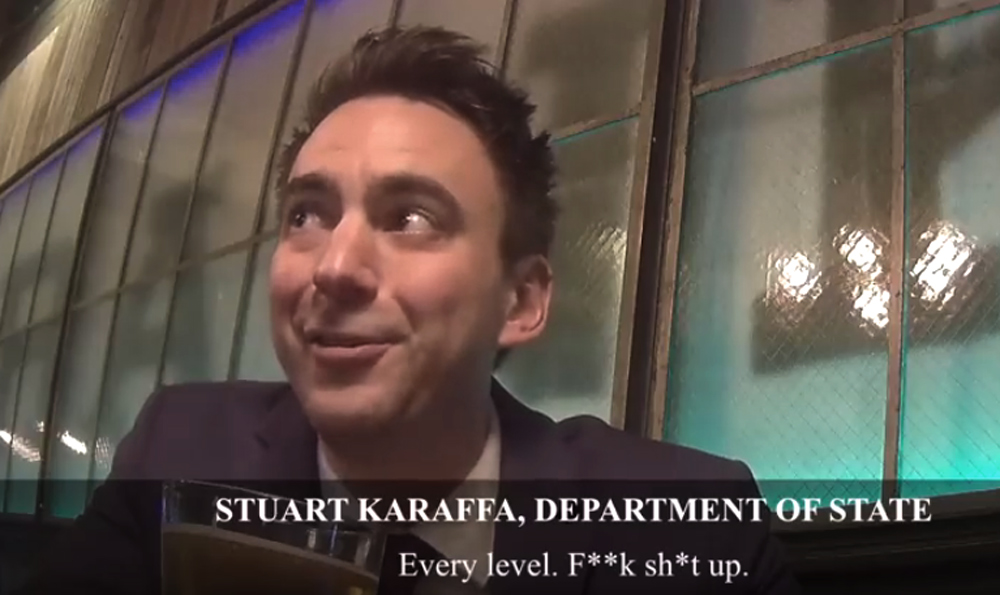
Communists in the State Department or wherever generally weren’t caught on tape boasting that they were Soviet agents and part of the Resist Truman or Resist Eisenhower movement. Allen Funt did not expose Alger Hiss. But now we have this social-media thing happening. And we have members of the Democratic Socialists of America (DSA) caught on tape touting their illicit exploits as federal employees.

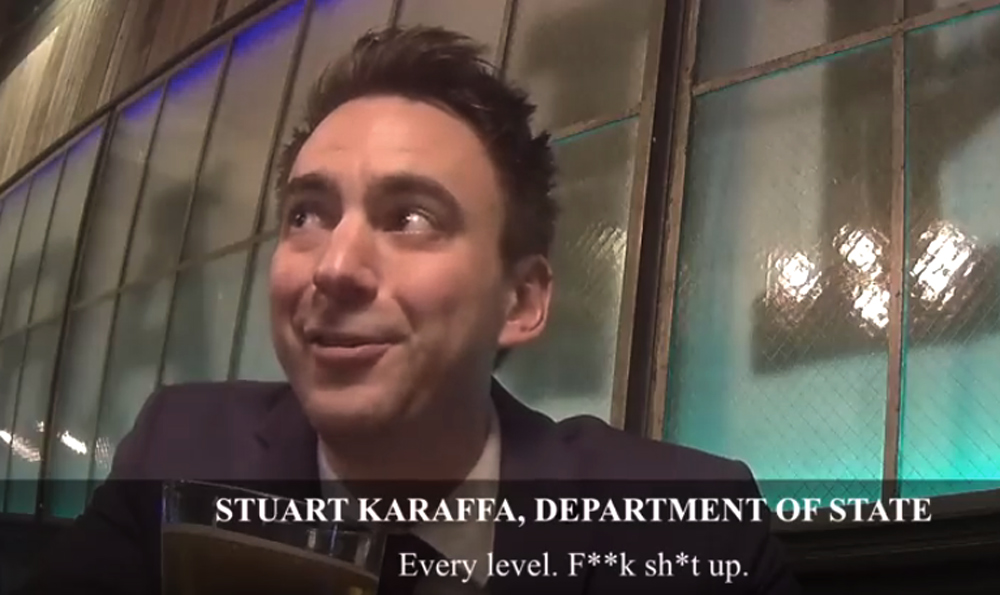
Project Veritas is a conservative group* that conducts hidden-camera interviews with lefty activists. In one of Veritas’s recent exposes, several DSA members confess to abusing their government positions in order to impede Trump Administration policies, including any even slightly pro-market policies. The goal is to “f*ck sh*t up,” as one rebel summarizes.

Several of the Resisters boast that “we can’t really get fired.” That’s probably almost true; they’re federal bureaucrats. But DOJ paralegal Allison Hrabar and others may find that their license to chill is about to expire. 

Hrabar was in the news a few months back for helping chase Homeland Security Secretary Kirstjen Nielsen from a restaurant. Now she has admitted using government resources to dredge up the home address of a DC lobbyist she wanted to target. Address in hand, she and several DSA comrades swooped down on the residence to hold a harassing protest. 

Not quite how taxpayer dollars are supposed to be deployed.

This is Common Sense. I’m Paul Jacob.


* Project Veritas founder James O’Keefe, whom I know and like, has done enormous good with his undercover stings of ACORN and others. Last year’s failed effort against the Washington Post is the exception. Had Project Veritas succeeded in slipping this false accusation into the newspaper, the result would have been to publicize a harmful lie, not show the truth (per his group’s name.

PDF for printing


Categories
First Amendment rights ideological culture too much government

Censorship for Unity

“Social media has given extremists a new tool with which to recruit and radicalise,” writes British Labour MP Lucy Powell in The Guardian. 

And just where are people “being exposed to extremist material”?

On Facebook!

“Instead of small meetings in pubs or obscure websites in the darkest corners of the internet,” she explains, “our favourite social media site is increasingly where hate is cultivated.”

Sharing ideas that she opposes is dangerous because they quickly spread. But her main ire is directed against private “Facebook groups,” an environment she argues “normalises these hateful views” because “critics are removed from the groups.”

Apparently, the problem with Facebook is that it is open — and that it is closed. Facebook is something new and dangerous because everybody uses it. Yet, because it allows closed groups, it is something very much like . . . “small meetings in pubs.”

Ms. Powell has, naturally enough, proposed a bill. “The responsibility to regulate these social media platforms falls on the government,” she asserts. “I believe we can force those who run these echo chambers to stamp out the evil that is currently so prominent.”

Like any politician, she talks up unity, of course. She demands the government prevent social media from “being hijacked by those who instead wish to divide.” 

But remember, she is a member of a political party that opposes other parties. She is trying to suppress divisions that exist. The implication of her agenda is a one-party state, where opposition is suppressed.*

By censorship.

A word she somehow neglects to use.

Online extremism, she writes, “is something we are frighteningly unequipped to deal with.”

I’d say she is frighteningly equipped.

This is Common Sense. I’m Paul Jacob.


* Social media critic Dave Cullen notices that MP Lucy Powell admits that there is a huge personal element here: she is a politician who doesn’t like criticism.

PDF for printing


Illustration by JG


Categories
general freedom ideological culture moral hazard nannyism national politics & policies too much government

An Evil Ism

With “democratic socialism” again on the rise, a refresher course in history seems apt: socialism has demonstrated the strong tendency to end up in totalitarian tyranny, poverty, and genocide.

As I mentioned on Monday, Reason’s Nick Gillespie suspects that this response is not very convincing to people tempted by socialism. But really, why not? What about a history of horror could be appealing?

Which is why the question “Do Socialists Mean Well?” as answered by Grant Babcock, might help. Babcock answers in the negative.* “Socialism is not ultimately an end but a means. And as a means, socialism is evil.”

With an evil means, one’s chosen end is irrelevant, because of other results. “If I told you I wanted to end homelessness, you might say I had good intentions,” Babcock explains. But if he confessed to seek that end “by conscripting the homeless into the army . . . [n]ot only should you say I have bad intentions, you shouldn’t give me any moral credit for saying I want to end homelessness.”

True. But Babcock has to engage in his extended argument about means because, for purposes of his essay, anyway, he began with the premise that while fascists are evil because they seek directly to harm some people, socialists do not.

Uh, really? Most socialists make much of taking from “the rich,” however they define the rich — as “the one percent” or “the privileged,” etc.

Call it expropriation; call it theft: that’s a lot of anger and ill will directed to one group of people.

In that way, the appeal of socialism is too much like the appeal of fascism.

This is Common Sense. I’m Paul Jacob.



* Babcock, by the way, denies the label “socialist” to social democrats who call themselves “democratic socialists” — by definition. On this matter, see “Bernie’s Slippery Definition of Democratic Socialism” and “Is Denmark Socialist?” on this site.

PDF for printing


Categories
ideological culture Popular too much government

The Irony Law of Socialism

Under capitalism, said the old socialists, “the rich get richer and the poor get poorer.” Today’s socialists admit this hoary “immiseration thesis” is old hat.

“The socialist argument against capitalism isn’t that it makes us poor,” explains City University of New York Professor Corey Robin in the New York Times. “It’s that it makes us unfree.”

Unfree?

Nick Gillespie at Reason tries to make sense of that breathtaking inversion of the usual anti-socialist argument, which Gillespie characterizes as the invocation of “Stalin, the Great Leap Forward, or even Hugo Chavez.”*

But is there really anything new here? 

“When my well-being depends upon your whim, when the basic needs of life compel submission to the market and subjugation at work, we live not in freedom but in domination,” writes the tax-funded socialist professor. He wants “to establish freedom from rule by the boss, from the need to smile for the sake of a sale,” which is so very not new. It’s reminiscent of Oscar Wilde’s “The Soul of Man Under Socialism,” which imagined rescue “from that sordid necessity of living for others.”

How real-world socialism “frees” us, though, is palpably oppressive: by burdening business and labor and trade with taxes, prohibitions, regulations.

And constant bullying. 

The ironies abound, too. Gillespie notes that “Alexandria Ocasio-Cortez may rail against the gig economy, but just like Bernie and Warren she uses Uber every chance she gets.” Jim Carrey praises “free” medicine in Canada, acknowledging no costs.

The cost of “free stuff” is actual freedom. And the cost of actual freedom is paying for what you get, and not getting what you won’t pay for.

That’s the Irony Law of Socialism.

This is Common Sense. I’m Paul Jacob.



* Gillespie also says it is unpersuasive. Well, unpersuasive to whom? As always, many arguments for the truth are necessary.

PDF for printing


Categories
free trade & free markets general freedom ideological culture too much government

The Ambit of an Ambition

“The geopolitical situation makes this Europe’s hour: the time for European sovereignty has come,” said European Commission President Jean-Claude Juncker this week, staking a big claim for the future in this year’s State of the Union Address.

Juncker wants the EU to be a shiny new “global player,” but shies from the word that comes immediately to mind: “We have to be super,” Juncker clarifies, “but not a superpower.”

The big question is how Juncker’s ramped-up globalism would serve European citizens. Juncker itches to build a “More United, Stronger and More Democratic Union,” but his biggest problem may be that the people seem increasingly iffy on this whole unity thing. 

Brexit is only the most spectacular popular rebellion.

“The Visegrad nations of Hungary, Poland and the Czech Republic,” the Washington Times noted yesterday, have balked at EU migration policies, and “all face EU legal sanctions.” Meanwhile, “Populist governments have been elected in Italy and Austria, where voters are sick and tired of the constant intrusions into their lives by Brussels.” 

And on Wednesday the EU enacted Article 13, an intrusive copyright law that Net activists have dubbed a “meme killer” capable of destroying “the Internet as we know it.”

While Juncker talks about Europe taking “destiny into its own hands,” Europeans seem more interested in taking their government into their own hands.

After all, it is not as if Europeans cannot prosper in a world economy without confederation — much less something much more, a stronger central bureaucratic authority. 

European states could, for instance, adopt free trade. It would make them richer and the world safer.

And they could, in addition, junk Juncker.

This is Common Sense. I’m Paul Jacob. 



PDF for printing


Categories
folly ideological culture moral hazard

Mass Murderers Are Cool?

If you have a lick of sense, you wouldn’t emblazon images of Ché Guevara on your chest or your wall — and yet Ché t-shirts and posters have been a pop culture hit for decades now.

He is cool, we are told, because he was ¡Viva la Revolución! and all that.

But it could get worse. You could be emblazoning a hammer and sickle.

Walmart’s website is there to help. Under “men’s sleeveless,” for example, we see an artistic rendering of the old Communist symbol, frankly identified as a “Soviet Hammer and Sickle,” white on black for $14.97.* Walmart files it under “Pop culture.”

Aren’t men’s sleeveless shirts called “wife beaters”? Should we now call them Kulak Killers?

It’s hip to murder millions!

No wonder Lithuania and several other Baltic countries — who suffered greatly under Soviet rule — object. Indeed, many of these countries go too far in actually banning the symbols. Now, they have contacted Walmart requesting a cessation in hawking the offensive merchandise. “You wouldn’t buy Nazi-themed clothing, would you?” Lithuania’s foreign minister Linas Linkevicius tweeted. Or sell such items.

But a few people might. Certainly, a lot of people do buy stuff that others regard as “Nazi.” Sometimes to be “cool”; other times to make a controversial political point.

At the Uhuru Store, Gavin McInnes’s “ProudBoys Official” sells a “Pinochet Did Nothing Wrong” t-shirt for twice the price of Walmart’s Hammer and Sickle shirt — and that surely has annoyed leftists who have seen it.

I’m waiting for the death of cool.

This is Common Sense. I’m Paul Jacob.



* The shirts also come in Navy, Royal and Gray. I guess to get a red commie shirt you have to go for the sleeves.

PDF for printing


Categories
Accountability ideological culture moral hazard national politics & policies term limits

The Self-Neutered Congress

Last week, the Senate Judiciary Committee again demonstrated why Congress’s approval ratings bob about in our toilet bowls. Amid the spectacle of Judge Brett Kavanaugh’s confirmation hearings, one senator spoke not about judicial philosophy, but political reality.

“What’s the hysteria coming from?” asked Sen. Ben Sasse (R-Neb.), noting the circus-like atmosphere. His answer? The Supreme Court “is increasingly a substitute political battleground,” because “the Congress has decided to self-neuter.”

Blunt assessment.

“In our system, the legislative branch is supposed to be the center of our politics,” Sasse argued, adding dejectedly, “It’s not.”

Why not? 

“What we mostly do around this body is not pass laws,” he offered. “What we mostly do is decide to give permission to the secretary or administrator of bureaucracy X, Y, or Z to make law-like regulations.” 

“More and more legislative authority is delegated to the executive branch every year. Both parties do it,” explained the senator. “The legislature is impotent, the legislature is weak, and most people here want their jobs more than they really want to do legislative work . . .”

Sasse continued, “The real reason, at the end of the day, that this institution punts most of its power to executive branch agencies is because it’s a convenient way for legislators to be able to avoid taking responsibility for controversial and often unpopular decisions.”

Better to blame the bureaucracy.

“If your biggest long-term thought around here is about your own incumbency,” he said dismissively, “then actually giving your power away is a pretty good strategy.”

But “when Congress neuters itself,” warns the Cornhusker State solon, “it means the people are cut out of the process.”

A powerful case for term limits.

This is Common Sense. I’m Paul Jacob.


PDF for printing


Categories
folly ideological culture media and media people national politics & policies

Sometimes a Great Moment

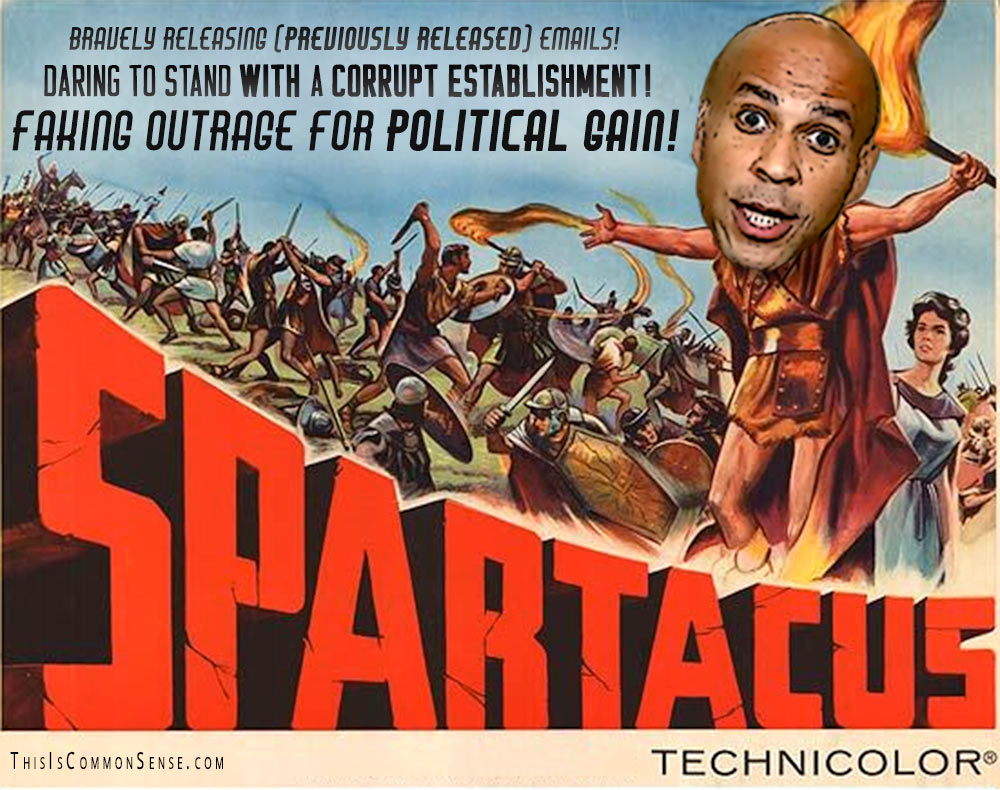
“This is about the closest I’ll probably ever have in my life to an ‘I am Spartacus’ moment,” Corey Anthony Booker said, referring, during last week’s Senate hearings, to his “leakage” of confidential emails from Supreme Court nominee Brett Michael Kavanaugh.

How the mighty have fallen. Senator Booker, when mayor of Newark, seemed an up-and-comer.

Now? A down-and-goer?

“I come from a long line, as all of us do as Americans, of understanding what that kind of civil disobedience is, and I understand the consequences.” It was almost a Br’er Rabbit Briar Patch Moment, performatively suggesting, “whatever you do, don’t censure me.”*

The moment Senator Booker was referring to was from Stanley Kubrick’s Spartacus, where a group of slaves all claim to be Spartacus, the leader of the rebelling slaves. Booker mostly missed the point of a great movie scene. 

That wasn’t all he missed. The emails he leaked (a.) had in fact been previously released to the public; (b.) he knew this; and (c.) they somehow failed to provide that killer proof of Kavanaugh’s racist love of racial profiling.

Funny, in a cringe-inducing sort of way, as when someone tries to tell a mildly risqué joke at a church social . . . and flubs it.

Booker was not the only one to make a fool of himself at the Senate’s Supreme Court nomination hearings. Though Kavanaugh doesn’t seem so scary, Democrats have gone off the beam, even so far as to engage in ululations of protest.

Why?

I have several theories. But maybe it’s just that they are out of power.

It’s especially hard being out of power when power is what you are all about.

This is Common Sense. I’m Paul Jacob.


* Being seen as the underdog is so persuasive that some will put themselves under a dog.

PDF for printing


Categories
general freedom ideological culture media and media people moral hazard

Until the Fat Lady Offends

We live in a new Age of Offense. A whole lot of people make a whole lot of fuss about what other people say and listen to, view and experience.

Then again, some things are enormously offensive.

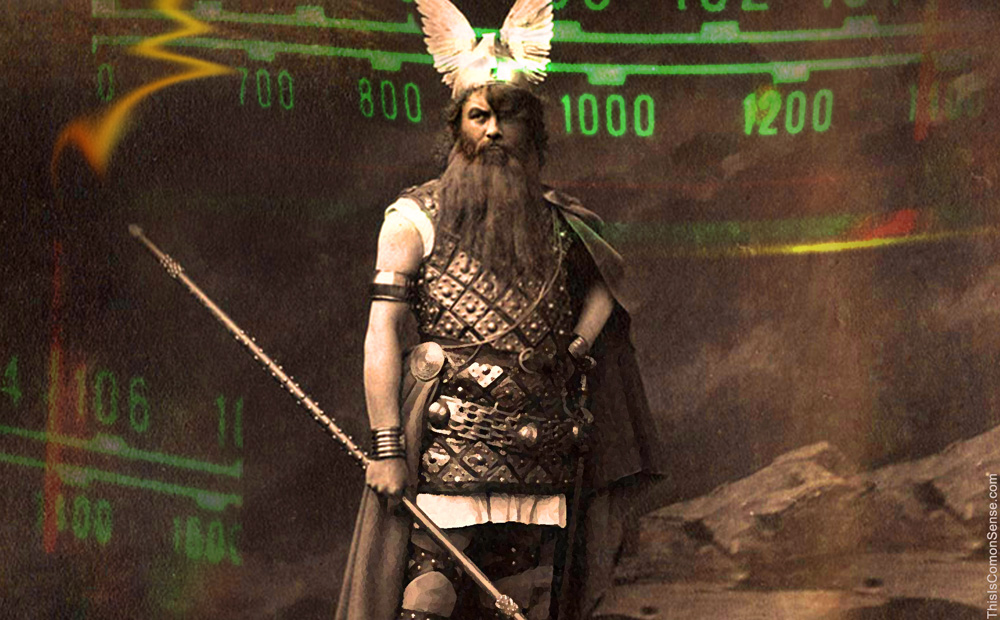
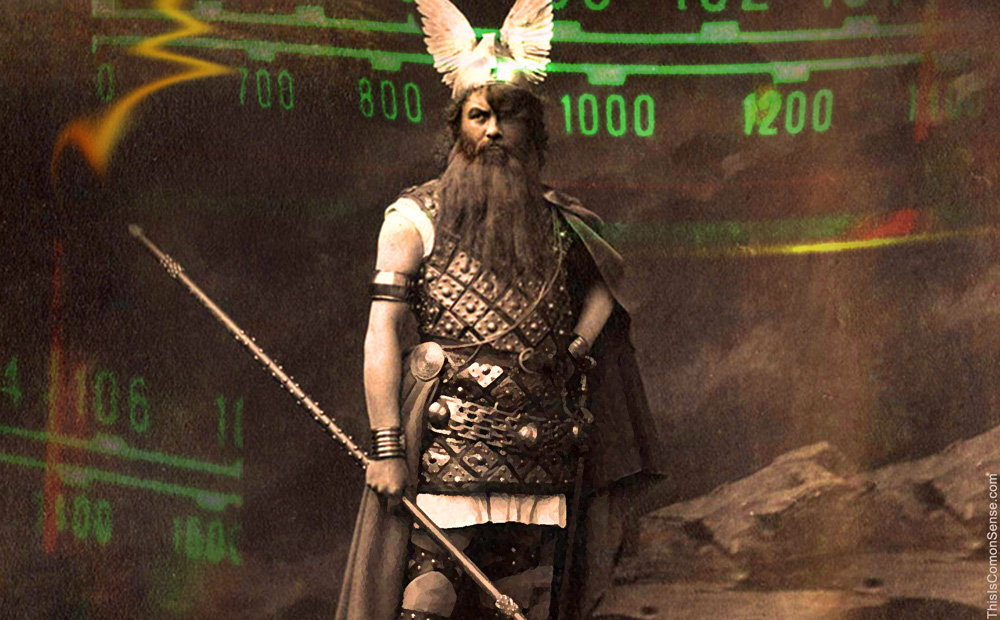
One of the latest offense-takings takes place in Israel, where a classical music station played music by Richard Wagner. And so of course had to apologize.

The music played was from the final opera in Wagner’s Ring Cycle. Not my cup of tea. Or coffee. Or latte. As those who follow me on Facebook know, I have varied musical tastes, but more classic rock than classical.

Israelis who listen to classical tend to be none too fond of Wagner not because he was an especially bad composer (I’m told he is a “Great”) but because he was very much an anti-Semite, and Hitler’s favorite composer.

“While there is no law in Israel banning the German composer’s works from being played,” The Telegraph informs us, “orchestras and venues refrain from doing so because of the public outcry and disturbances accompanying past attempts.”

Understandable.

Still, some Israelis do like Wagner’s music. But since the radio station is State-owned and -controlled, the Israel Wagner Society’s president’s admonishment that “Whoever doesn’t want to hear the music can always turn the radio off,” doesn’t quite work.

That would apply only were the station owned by the Israel Wagner Society — willing to bear the loss of customers one might expect in Israel.

In America, of course, Wagner is often on the air. 

And those who object . . . turn the dial. 

This is Common Sense. I’m Paul Jacob.

 

PDF for printing