It has been a big week for socialism — or, rather, anti-socialism.
The high point was probably President Trump’s State of the Union Address, in which he opposed not only the murderous, ruinous regime in Venezuela, but also the rising tide of socialism in the Democratic Congress — with Senator Sourface, er, Bernie Sanders, trying not to explode as he heard that taboo word “free” applied to America . . . not goodies.
Meanwhile, Panera Bread announced, The Blazereports, that it is closing “its last pay-what-you-can restaurant, located in Boston, on Feb. 15.”
“Panera Cares” was, it appears, “initially created to serve food to low-income people nine years ago in 2010,” but sure seemed to be itching to prove a sort of post-capitalist point. The company’s founder, Ron Shaich, said that “the program’s aim was a ‘test of humanity.’”
More like a test of gullibility.
No branch of the “experiment” ever ran in the black. Like experiments in society-wide socialism, it relied upon subsidy to carry on — but unlike in socialism, Panera could not force people to cough up the dough needed to keep it going.
Once upon a time, the great economist Vilfredo Pareto, during a lecture, was repeatedly interrupted by one Gustav von Schmoller, who denied that economists had discovered any enduring principles, especially ones that would undermine his beloved socialism. So Pareto dressed down as a bum and approached Schmoller on the streets, inquiring about a restaurant that served meals for free. When Schmoller told him that there were only cheap, but no free meals, at restaurants, Pareto stood up with the ultimate gotcha:
One of the things many people no longer understand about these United States is its — their — peculiar genius: decentralism.
The extreme of this is that contentious notion of state nullification of federal law, which most “smart” people deride (contra Jefferson and Madison) as itself made null and void by the Supremacy Clause of the Constitution.
And yet even nullification skeptics often support some form of nullification, like fighting marijuana prohibition or ObamaCare at the state level. State initiatives, especially, have driven much of this resistance to centralist, top-down regulation.
But a state initiative in Washington State, I-1639, passed last year, has devolved the nullification idea to where it gets even trickier. The gun control measure passed last year 60-40, but residents of rural counties are none too pleased. As reported in The Guardian, many of the sheriffs in the 27 counties that voted against the measure are not enforcing the law, which they see as unconstitutional.
“The refusal of law enforcement officers to enforce the new restrictions plays into a longer history of so-called ‘constitutional’ sheriffs resisting the gradual tightening of gun laws,” says The Guardian, which goes on to mention “the doctrine of ‘county supremacy,’ long nursed on the constitutionalist far right, which holds that county sheriffs are the highest constitutional authority in the country.”
Whatever its legal merits, this form of resistance to state law enjoys a deep American tradition.
As regular readers know, I am a big proponent of initiative and referendum rights. And one reason to support them is to add a countervailing power against central authorities dominated by special interests and political elites.
In Washington state, a freshly implemented ballot initiative and a raft of new bills may produce some of the tightest firearms regulations in the US. But standing in the way is a group of rural law enforcement officers who say point blank that they won’t enforce any of it.
The Klickitat county sheriff, Bob Songer, is one of them. He told the Guardian that the initiative passed last November “is unconstitutional on several grounds. I’ve taken the position that as an elected official, I am not going to enforce that law”.
Songer also cited ongoing litigation by the National Rife Association gun industry lobby and others which aims to demonstrate the laws violate both the second amendment and the state’s constitution. He also said that if other agencies attempted to seize weapons from county residents under the auspices of the new laws, he would consider preventively “standing in their doorway”.
In November, the state’s voters handily passed an initiative, I-1639, which mostly targeted semi-automatic rifles. As of 1 January, purchasers of these weapons must now be over 21, undergo an enhanced background check, must have completed a safety course, and need to wait 9 days to take possession of their weapon. Also, gun owners who fail to store their weapons safely risk felony “community endangerment” charges.
Feeling the wind at their backs after the ballot, gun campaigners and liberal legislators have now gone even further in the new legislative session. Bills introduced in the last week to Washington’s Democrat-dominated legislature look to further restrict firearms. Some laws would ban high capacity magazines and plastic guns made with 3D printers. Others would mandate training for concealed carry permits, and remove guns and ammo during and after domestic violence incidents.
Washington’s attorney general, Bob Ferguson, who proposed several of the bills, said in an email: “Now is the time to act. Washingtonians have made it clear that they support common-sense gun safety reforms.”
Kristen Ellingboe, from Washington’s Alliance for Gun Safety, which has long campaigned for more firearms restrictions, said that “for a long time our elected officials thought that gun violence protection was somehow controversial, but they have been behind where the people of Washington are on this issue”.
But like other west coast states, Washington exhibits a deep cultural and political divide between its populous, coastal cities and its more sparsely populated rural hinterland.
I-1639 passed on a roughly 60-40 split; in the big, blue counties west of the Cascade Mountains, such as King county, where Seattle is located, the margins were even bigger.
However, 27 of Washington’s 39 counties rejected the ballot measure. Many of those counties are in the state’s more rural, sparsely populated districts.
It is in these counties that many – including sworn officers – are promising to resist the laws.
In Ferry county in eastern Washington, more than 72% of voters rejected I-1639. In the county’s only incorporated city, Republic, the police chief Loren Culp asked the council in November to declare the city a “second amendment sanctuary”. That vote has been delayed until March, but in the meantime, like Songer, Culp says he will not enforce.
The sheriff in Ferry county, Ray Maycumber, told the Guardian that he would not be enforcing the laws either, at least until the NRA’s litigation is completed.
“There’s a window of time when I get to make the assessment”, he said. Should the NRA not succeed, he said, he would “consider if I want to go on in the job”.
The “sanctuary” idea has caught on with other rightwing activists. Matt Marshall is the leader of the Washington Three Percent, a patriot movement group which has held several open carry rallies in downtown Seattle in the last year.
Marshall is attempting to persuade rural Washington counties to adopt local second amendment sanctuary ordinances. Next week, together with the Patriot Prayer founder and former Senate candidate Joey Gibson, he is addressing a meeting of Lewis and Pierce counties to try to persuade them to adopt resolutions which would mean that the gun laws were not enforced.
The refusal of law enforcement officers to enforce the new restrictions plays into a longer history of so-called “constitutional” sheriffs resisting the gradual tightening of gun laws. There are also hints, in the stance, of the doctrine of “county supremacy”, long nursed on the constitutionalist far right, which holds that county sheriffs are the highest constitutional authority in the country.
Such notions have long been promoted by figures like sheriff Richard Mack, who leads the Constitutional Sheriffs and Peace Officers Association. As gun laws throughout the west have gradually tightened in recent decades, resistance along these lines has become prevalent in areas with strong political support for gun rights.
Since the initiative passed, and they made their positions public, both Songer and Culp have been lionized in conservative media. Earlier this month, Songer detailed his position on the Alex Jones show, where he appeared with Gibson.
On this resistance to the new wave of gun restrictions in Washington, Ellingboe, the gun safety campaigner, said that “it’s disappointing that the gun lobby is trying to undermine the will of Washington voters”.
As 2019 begins…
… we’re asking readers to make a new year contribution in support of The Guardian’s independent journalism. More people are reading our independent, investigative reporting than ever but advertising revenues across the media are falling fast. And unlike many news organisations, we haven’t put up a paywall – we want to keep our reporting as open as we can. So you can see why we need to ask for your help.
The Guardian is editorially independent, meaning we set our own agenda. Our journalism is free from commercial bias and not influenced by billionaire owners, politicians or shareholders. No one edits our editor. No one steers our opinion. This is important as it enables us to give a voice to those less heard, challenge the powerful and hold them to account. It’s what makes us different to so many others in the media, at a time when factual, honest reporting is critical.
Please make a new year contribution today to help us deliver the independent journalism the world needs for 2019 and beyond.
Some rural sheriffs in Washington State say they will not enforce the state’s new gun laws — which could wind up being some of the strictest in the country — arguing that they are unconstitutional, the Guardian is reporting.
Some of The Country’s Strictest Gun Laws
In the wake of recent mass shootings — including one at a Las Vegas music festival in 2017 and another at a Parkland, Florida high school last year — Washington’s voters passed initiative I-1639 in 2018, which by-and-large regulates semiautomatic rifles. Since January 1, 2019, purchasers of such weapons must be 21 years of age or over, must undergo an enhance background check and complete a safety course, and must wait nine days to take possession of their weapons. Further, weapons must be stored properly, or their owners will face felony endangerment charges.
Washington’s legislature, now controlled by Democrats, has demonstrated a willingness to take things even further when it comes to gun laws. Some proposals recently introduced into legislature would ban high capacity magazines and plastic guns made with 3-D printers. Other initiatives would require training for concealed carry permits, and remove guns and ammo during and after domestic violence incidents.
The Deep Divide Between Washington’s Rural And Urban Population
Like other liberal West Coast states, Washington isn’t all blue. In fact, the political and cultural divide between the state’s urban, liberal voters and conservative, rural voters, is almost palpable. Of Washington’s 39 counties, 27 of them – the least-populated, most rural – all rejected I-1639 handily. Statewide, however, the initiative passed by 60 percent to 40 percent.
Refusing To Enforce The New Laws
It’s in these rural counties where county sheriffs say they won’t enforce the new laws. One of them is Klickitat County Sheriff Bob Songer.
“[I-1639] is unconstitutional on several grounds. I’ve taken the position that as an elected official, I am not going to enforce that law.”
Songer went on to claim that if another Washington State agency tried to enforce gun laws against citizens in his county, he would stand in their doorway as a barrier between the citizen and the agent.
Over in Ferry County, Sheriff Ray Maycumber said that until the National Rifle Association’s (NRA’s) lawsuit against Washington’s new laws is resolved, he won’t be enforcing the laws, either. And if the NRA fails, he’ll consider whether or not he wants to remain in law enforcement.
2nd Amendment Sanctuary Cities
Taking a cue from the illegal immigration debate, some elected officials in rural Washington are calling for towns and counties in the state to be “2nd Amendment Sanctuary Cities,” where law enforcement would simply not enforce the new gun laws, and where residents would be protected by local law enforcement against arrest and confiscation of their weapons.
I will concede — at least “arguendo” — that President Trump is awful. But I will not concede that he is uniquely awful. His Tweets and signature verbal provocations aside, he is arguably better than his predecessors.*
Arguably.
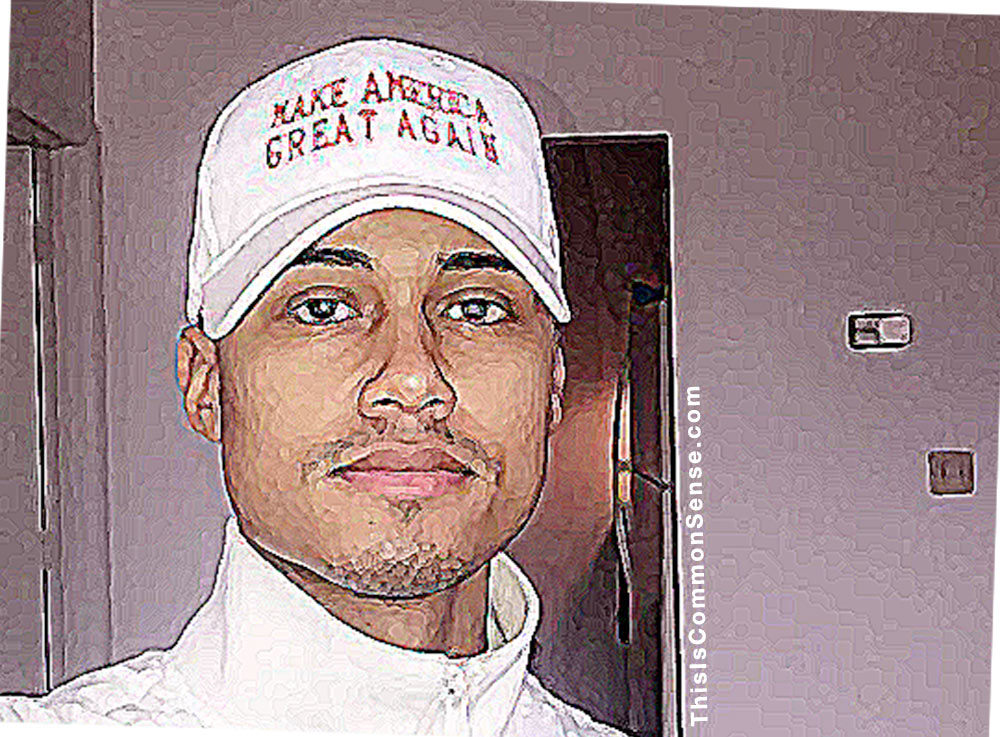
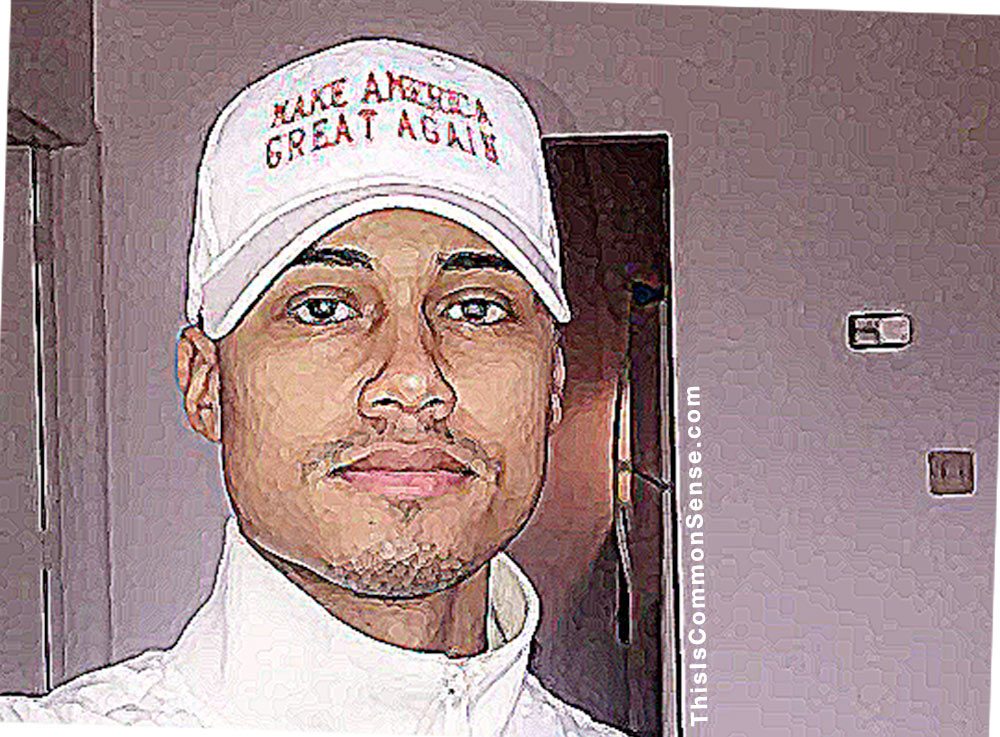
Which means that his cribbed campaign slogan, “Make America Great Again,” affixed to an ultra-simple red hat, is the last thing we should fixate on.
You know, as a symbol of “hate.”
Even Andrew Sullivan, in lambasting the media — and the left in general — over their insane over-reaction to the Covington kids’ non-existent “racism” and “disrespect” (“The Abyss of Hate Versus Hate, Intelligencer), could not help himself when it comes to the MAGA hat. Amidst his defense of the lads, Sullivan wrote that “they should not have been wearing MAGA hats to a pro-life march.”
Why not?Mr. Trump has taken pro-life action.
“They aren’t angels,” Sullivan went on, “they’re teenage boys.”
The President is no angel either. But he was duly elected. And he hasn’t started any unconstitutional wars** or suppressed the freedom of the press.
MAGA is said to be a statement of “white supremacy,” but, well, there are non-whites who find that absurd. For good reason.
This all indicates a deeper problem: an over-indulgence in symbolism— real and contrived.
In the immortal words of “motorist” Rodney King, “can we all JUST get along? Can we get along? Can we stop making it, making it horrible for the older people and the kids?”
The federal government “shutdown” — now on reprieve — has been and continues to be a rather strange charade. Various political players make motions towards one another, and we, the people, are supposed to guess the real meaning.
Which is usually conceived as
All about President Trump’s “Wall”;
All about the Pelosi-Schumer commitment to never letting Trump get away with his Evil Agenda; or
The great huge, honking divide in America that grows every day.
I suspect it is about all these things and more — which is easy to say, since these three issues are intimately related.
And as if playing a subtle joke on us all, the standoff that appears as obstructionism is about a proposed obstruction at the southern border: literally a “Mexican standoff.”
Meanwhile, a different security measure has received attention.
Congress could, of course, take this opportunity to disband this airport security worker agency. If managed by the airlines or any entity but the federal government, TSA wouldn’t have suffered through the shutdown.
Tragically, Congress long ago ceased being functional, responsible, or even the eensiest, teensiest bit respectable. And a divided public stands little chance of forcing a change.
Smirking is a subset of smiling. But what is a grimace?
Nick Sandman, the offending Covington, Kentucky, Catholic high school student who triggered so much outrage last weekend, smiled. The effrontery!
Seeing a snippet of video, a social media mob formed, leaping to the conclusion that young Mr. Sandman was being disrespectful of an older Native American man who — chanting and drumming right up in his face — should have been “shown respect.”
And not smiled? Instead, what: frowned? Cried? Bowed?
Smirks are irksome. Sure. But the young man’s facial expression seemed to me an attempt, only half-successful, to smile — a covered-over grimace.
Understandable. The Covington youngsters — waiting to be picked up — had been targeted earlier by a group of nutty “Black Hebrew Israelites” who taunted at them for being . . . white. And the Native American man, Nathan Phillips, had singled Mr. Sandman out, violating his personal space. A grimace could be accounted for as putting “a brave smile on the situation,” as we used to say.
But that was not how the Twitter mobs interpreted it. And of course the young Catholic students were wearing “MAGA hats” (pro-Trump “Make America Great Again” baseball caps) which were later said to be racist. And the pro-life rally he and his friends attended was said to be sexist.
Can we all calm down? If we disagree on so much that even smiling is scandalous, maybe take a breath.
In the midst of it all, economist Bob Murphy reminded us of the previous culture-war fracas, the Gillette “toxic masculinity” ad, tweeting “if you see a mob picking on a boy, Gillette wants you to intervene.”
The 3rd annual Woman’s March strolled by over the weekend — a tiny fraction of its former self.
Two years ago, close to a million protesters converged on Washington, D.C., while this year’s event “appeared to attract only thousands,” The Washington Postreported, “mirroring lower turnout at marches . . . across the country.”
“[A] movement that once bragged about its inclusivity,” explained a separate news analysis, “has been roiled by reports of battles over diversity, hate speech and branding.”
In addition to squabbles over corporate ownership of the very name of the “Women’s March,” the leaders of the main organization have been accused of anti-Semitism. “Board members Linda Sarsour, Carmen Perez and Women’s March, Inc., co-president Tamika Mallory, have publicly affiliated with and praised anti-Semitic Nation of Islam leader Louis Farrakhan,” notes the Capital Research Center’s Influence Watch website.
March founder Teresa Shook called on them to resign, charging “they have allowed anti-Semitism, anti-LBGTQIA sentiment and hateful, racist rhetoric to become a part of the platform . . .” The Democratic National Committee and a number of progressive groups have withdrawn their support.
But the “inclusivity” was always fake. As a “women’s” march, it started out excluding half the population. Nothing wrong with women having events or organizations that focus on issues of particular interest to females; it’s just not inclusive.
And let’s not ignore that pro-life women were specifically booted from participating in the original 2017 event.
“Is the Women’s March more inclusive this year?” a USA Today article asked before last year’s pink-hatted festivities.
Apparently not. This year, everyone was excluded fromthe Eureka Women’s March — cancelled because those hoping to participate were “overwhelmingly white.”
With all this inclusion, no wonder we are so divided.
It is not a question of “belief,” says Anastasios Tsonis.
In “The overblown and misleading issue of global warming,” this emeritus distinguished professor at the University of Wisconsin-Milwaukee explains that in a “scientific problem ‘believing’ has no place,” going on to clarify:
“In science, we either prove or disprove.”
And regarding climate there is no “settled science.” Lacking unquestionable experimental context — “we have only one realization of climate evolution” — no matter how strong our opinions, skepticism is always in order.
But let us admit the obvious, the “global warming”/“climate change” debate has been frustrating for just about everybody. And much of this is the result of dogmatism.
“The fact that scientists who show results not aligned with the mainstream are labeled deniers is the backward mentality,” Tsonis insists. “We don’t live in the medieval times, when Galileo had to admit to something that he knew was wrong to save his life.”
He argues that our lack of knowledge means that we should be circumspect about whether humans have caused the bulk of recent climate change. “Climate is too complicated to attribute its variability to one cause. We first need to understand the natural climate variability” — which, he says, “we clearly don’t.”
Tsonis concludes talking about problems more urgent than climate change. We can (and should) quibble with his list, but we should be open about our reasoning.
One reason for concentrating on these other issues is that we might be more likely to gain clarity on them.
And thus might be able to do something not foolish.
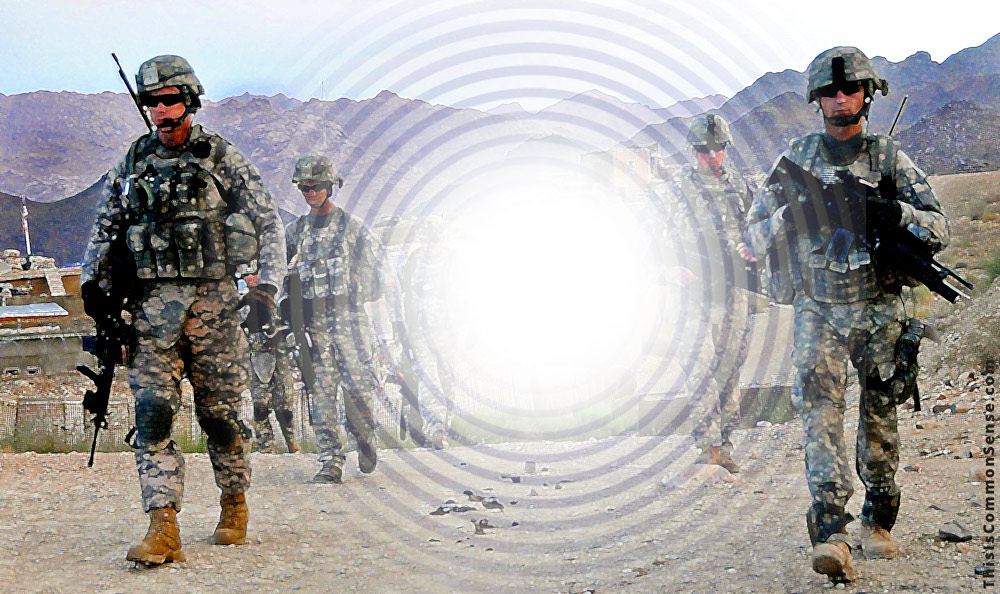
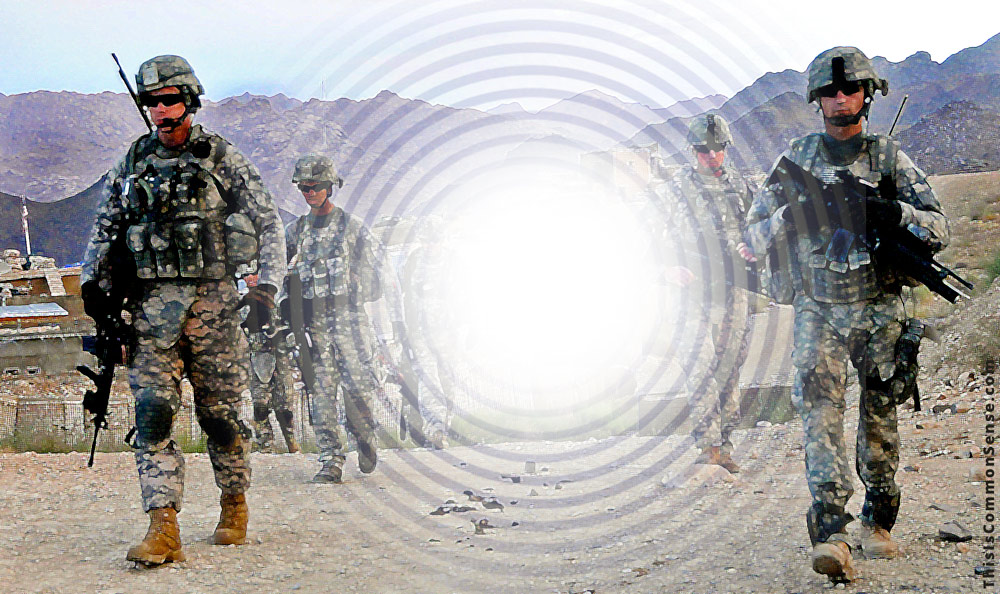
A new poll shows that a narrow majority of Americans would support the President were he to pull troops out of Afghanistan. Less than a quarter of those polled said they would oppose it.
“The survey also indicates Americans remain unconvinced that the United States has a clear purpose in Afghanistan,” explains the January 10 press release of the Charles Koch Institute, which commissioned the poll. “Almost half of respondents, 45 percent, said the United States has no strategic objective, while only 21 percent said it does. About one-third (34 percent) said they did not know.”
However you slice the public opinion data, the wars in the Mid-East are not gaining in popularity. A plurality of Americans polled want out of Syria, too — no matter “whether the conflict was framed around the Syrian civil war or to counter-ISIS.”
Lucy Steigerwald, writing at Reason, highlights the incoherence in the White House and Pentagon: “no one seems to know what the hell is going on.” Which just shows how far we have come, after all these years. “The long life of the Afghan war makes it hard to remember how popular it was when it began.”
But back then it all seemed so clear: get Osama bin Laden, destroy his training camps, and punish the Taliban for harboring him.
All that was accomplished long ago. Now our leaders fear pulling out because . . . we haven’t established a western democracy there?
That was never going to happen.
It is foolish — even immoral — to keep a war going with impossible and incoherent goals.
“If we work our butts off to make sure that we take back all three chambers of Congress,” stumbled U.S. Representative Alexandria Ocasio-Cortez (D.-N.Y.), “uh, rather, all three chambers of government: the presidency, the Senate, and the House. . . .”
The Daily Wire, where I encountered this particular snippet of inanity, could be caught gloating between her lines. And it is funny (amidst the fear) when politicians prove themselves ignorant, clueless, unprepared. Politicians rarely come across as masters of their subject.
But we who are subjected to their lack of mastery should worry about their substantive flubs more than their trivial technical errors.
As the newly elected solon herself had the wit to notice.
“Maybe instead of Republicans drooling over every minute of footage of me in slow-mo, waiting to chop up word slips that I correct in real-tomd [sic],” she went on, “they actually step up enough to make the argument they want to make: that they don’t believe people deserve a right to healthcare.”
I am not a Republican, but I’mhere to help. The only rights we “deserve” are those we can have without enslaving and exploiting others. My right to freedom requires only your duty to leave me alone, not systematically taking from others or running their lives. But a right to “healthcare”? The corresponding duties are vague and ominous, potentially limitless.
And thus oppressive.
A government big enough to give Ocasio-Cortez everything she wants is too big to leave any freedom for the rest of us.
The academic world is filled with “scholars” who write papers that are almost never cited, and which are so filled with gobbledygook and periphrasis that they are almost impossible to read.
Without cracking up, anyway.
A year and a half ago I wrote about one team who authored fake papers to show up postmodernist academics for the phonies they are. But the sad truth is that even serious papers prove to be nothing more than “cryptic, pretentious, prolix nonsense.”
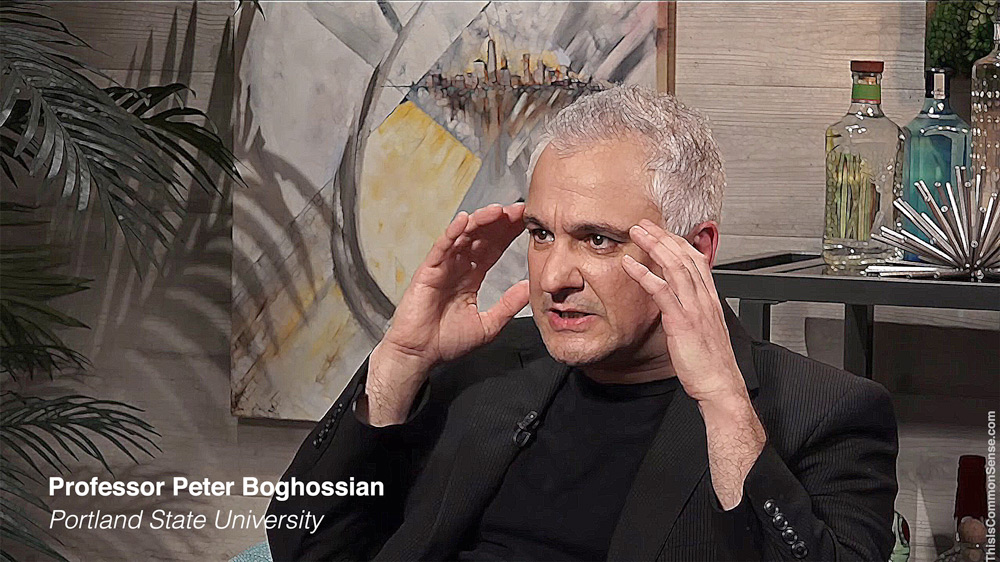
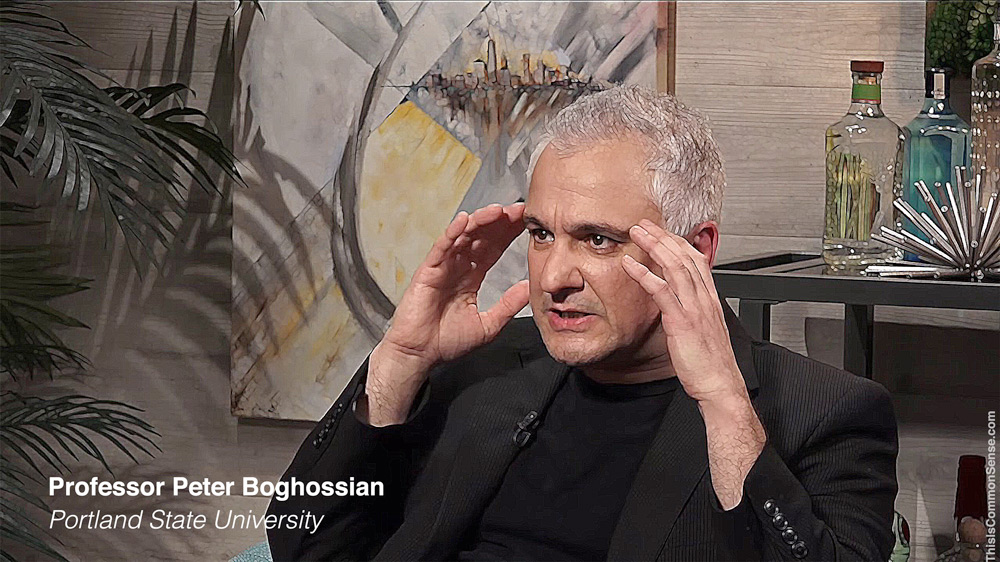
Now, the humiliated academic world is striking back. One of the japers, Professor Peter Boghossian of Portland State University, is facing academic censure and misconduct charges.
“This strikes me (and every colleague I’ve spoken with) as an attempt to weaponize an important [principle] of academic ethics in order to punish a scholar for expressing an unpopular opinion,” wrote Harvard psychologist Steven Pinker, entreating PSU not to persecute their philosopher. Biologist Richard Dawkins and psychologist Jordan Peterson joined Pinker in support of the rogue-but-reasonable academic.
PSU administrators say that Boghossian, by trying to trick academic journals into publishing fake studies, has violated Institutional Review Board protocols. You see, he did not seek approval to carry out experiments on human subjects!
The thing is, the whole post-structuralist, post-modernist, “‘Studies’ studies”mob has been experimenting on their alleged clients, the students, for decades. And the results have been . . . enlightening if not praiseworthy.
It is hard to see Boghossian’s antics as anything but heroic.