Categories
education and schooling government transparency national politics & policies Popular Second Amendment rights

A Faulty Gun Report

While statistics are generally unreliable, data about gun crimes often qualify as “anti-data.”

“This spring the U.S. Education Department reported that in the 2015-2016 school year, ‘nearly 240 schools . . . reported at least 1 incident involving a school-related shooting,’” National Public Radio told us yesterday. Like previous stats we’ve seen cited on social media, that seems unbelievably high. 

And yes, it is — “far higher than most other estimates,” reporter Anya Kamenetz noted. “NPR reached out to every one of those schools repeatedly over the course of three months and found that more than two-thirds of these reported incidents never happened.”

Were they fibbing? Well, never underestimate the power of incompetence. 

Even that’s harsh: remember that reporting requirements are a burden. And filing bureaucratically-designed forms with the Education Department may be no easier than filing tax returns with the IRS. One of the biggest errors in one school district report resulted from a simple data entry error.

That is not a sophisticated statistical problem, but a simple typo.

Not that there aren’t some difficulties of a not-so-easy-to-understand nature in the story. For one, the degree to which the report was off is said to lie within “the margin of error.”

So, how big was the error, exactly? What’s the number? Well, of the 240 supposed “shootings,” NPR claimed to be “able to confirm just 11 reported incidents.”

Yet the Education Department bureaucrats will only affix an erratum note to their ridiculous report. 

Nor will it be withdrawn or replaced, as it should be.

This is Common Sense. I’m Paul Jacob.


PDF for printing


Categories
Accountability government transparency incumbents initiative, referendum, and recall local leaders nannyism political challengers Regulating Protest term limits too much government

Strange It Is

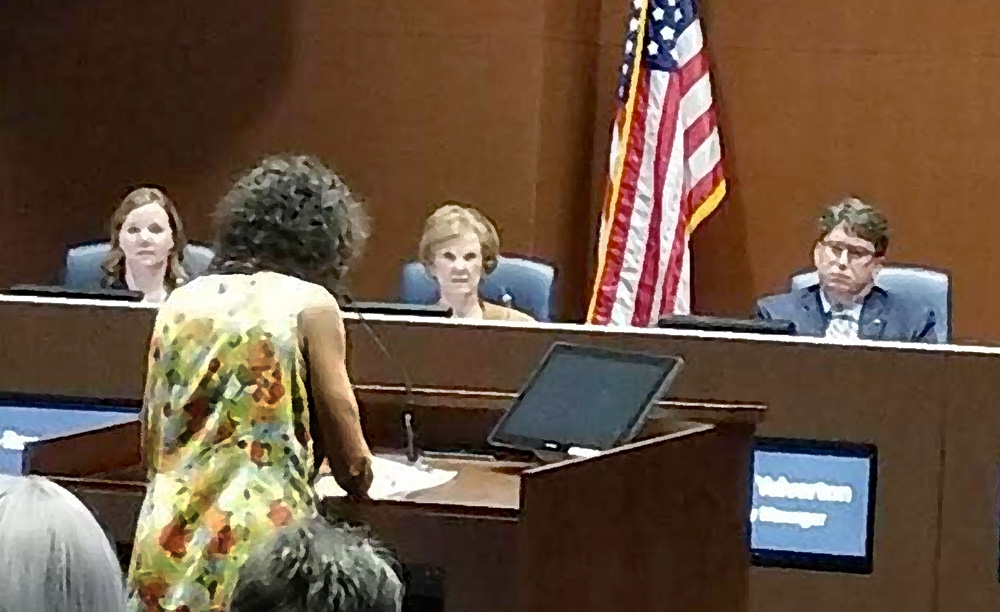
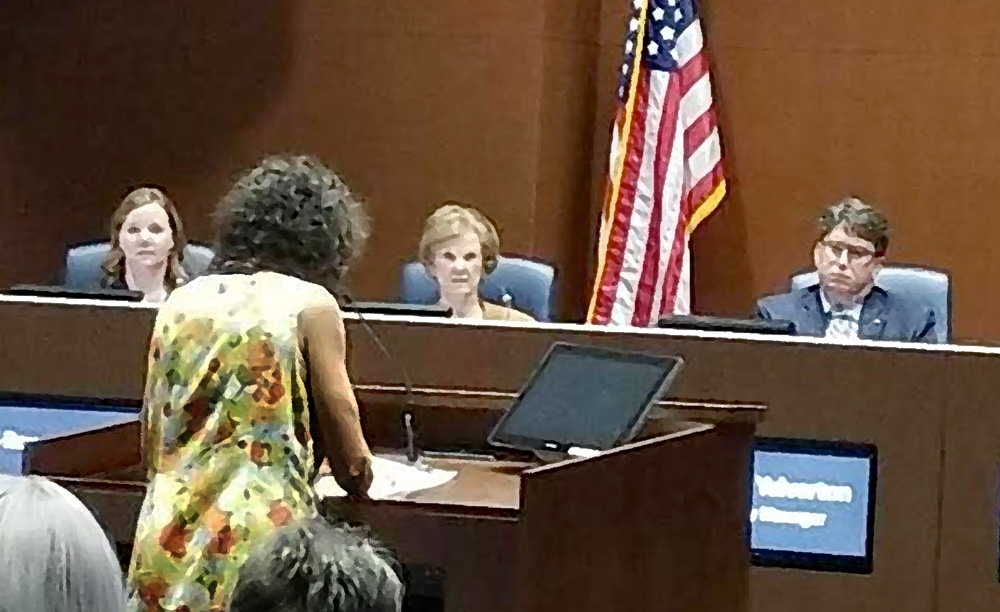
Strange for the Arlington, Texas, City Council to hold a meeting on a Sunday evening, much less one to “consider suspending the city charter.”

That is how the Fort Worth Star-Telegram reportedthe latest twist in the term limit controversy that has engulfed the city with a lawsuit and competing ballot proposals.”

Led by Zack Maxwell, citizens in this Fort Worth adjacent community of 400,000 gathered 11,000 voter signatures to place a term limits charter amendment on the November ballot. It would limit councilmembers to three two-year terms. It also figures in past service, so five of the eight current councilmembers would be blocked from seeking re-election in the coming two years.

With swift legislative prowess, the council responded, passing its own competing “term limits” measure, which incidentally allows them to stay 50 percent longer in office.

But there’s one problem: the council did not follow the law, which requires multiple readings, with one at a regular meeting. 

Actually, there’s a second problem: Mr. Maxwell challenged the council’s unlawful action in court. 

The court blocked the council’s measure. 

That left the council holding an unusual weekend meeting to suspend the rules and re-pass their fumbled alternative to the term limits voters really want. But news travels fast and city hall was “packed.” 

“You’re suspending the rules because your jobs are in jeopardy,” charged one man.

A woman told the council, “You guys should be absolutely embarrassed about this.”

“After hearing from dozens of angry residents,” the paper explained, “[t]he council voted unanimously to not suspend the rules, finally killing its own term limit proposal.”

Politicians doing the right thing . . . having exhausted every other possibility.

This is Common Sense. I’m Paul Jacob. 


PDF for printing


Photo from the Fort Worth Star-Telegram


Categories
Common Sense free trade & free markets government transparency insider corruption local leaders media and media people national politics & policies too much government

Never Trust a Politician

One of my more persistent critics on this site asked, last week, why I might believe anything the current president says — considering all the lies.

For reasons of decorum I won’t repeat his exact wording.

The odd thing about the comment was not the vulgarity, though (unfortunately). It was the idea that I was relying upon belief in Donald Trump’s veracity. The whole point of my commentary regarding Trump’s handling of trade and foreign policy was to read between some lines.

I try never to believe anything . . . er, everything . . . any politician says.

In Donald Trump’s case, though, there are lies and there are fictions and there are exaggerations. And corkers . . . and “negotiating gambits.” Separating the wheat from the chaff from the grindstone is not always easy.

Based not only on some of what he says, but also on results-thus-far from the EU negotiations, Trump’s idea of “fair trade” appears to be multilateral free trade. But he has chosen a bizarre method to get there: the threat of high-tariff protectionism — which in the past has led to multilateral protectionism, not free trade.

Trump sees everything as a contest. Trade isn’t a contest as such. It’s win-win. But trade negotiations are contests. And Trump’s game of chicken is dangerous.

Regarding foreign policy generally, though, he seems to be playing a more familiar game: we can outspend everybody. The recent increase in Pentagon spending is bigger than Russia’s annual military budget!

So, who pays? Americans in

  1. higher taxes and 
  2. the consequences of massive debt, as well as in
  3. the higher prices from his tariffs.

That’s awfully daring of him. For us.

This is Common Sense. I’m Paul Jacob.


PDF for printing


Photo from Max Pixel


Categories
free trade & free markets government transparency media and media people national politics & policies too much government

Most Outrageous Negotiation Strategy Yet

The best defense of Donald Trump’s presidency, so far? He is smarter than the rest of us, and knows how to negotiate with bad guys and insider players. We have to discount what he is saying, the theory goes, because he is not telling truths . . . obviously. 

He is negotiating.

Take nothing at face value, including Trump’s professed beliefs.

Protectionism, for example. Trump has long been against NAFTA and the modern version of “free trade.”* But, as I noted in late July, Trump does not seem to be demanding managed trade, or high tariffs as a means to protect American producers, or even tariffs as a means to increase government revenue. He appears — at least some of the time — to be using tariffs as a way to bargain other countries to reduce their tariffs.

This method has not worked in the past.

But is Trump different enough a politician to pull off a “madman” strategy to get leaders in other countries to do the right thing and reduce their tariff and regulatory burdens on their own countries?

A long shot — and several sectors of American business are being hurt right now in this “negotiating” (threat) phase of Trump’s outrageous gambit.

Another area where one might express such hope for a master-negotiator president is in reining back the Pentagon. In the run-up to November 2016, Trump sure seemed defiant of the neo-conservative/neo-“liberal”/center-left establishment on foreign policy.

But now he just signed a huge increase in the Pentagon budget: an $82 billion increase.

Is Trump’s plan to bring big-spending military-industrial complex lobbyists to heal by first giving them what they want?

That. Won’t. Work. 

This is Common Sense. I’m Paul Jacob.


* Post-WWII trade policy has consistently defended treaty-based global trade, but with heavy elements of protective tariffs, regulations and subsidies, making the whole thing look less like Free Trade and more like Mis-Managed Trade.

PDF for printing


Categories
folly government transparency national politics & policies too much government

It’s Only Money

“If we can put a man on the moon,” went the old 1970s saw, we can do . . . well, fill in the blank.

Anything!

Man, can that “anything” get really expensive. And when promoters of big government drive the program, anything quickly serves as a first-stage rocket to everything.

During the 2016 campaign, a Democratic Party activist knocked on my door to express confidence that Democrats would provide greater healthcare benefits. “Can we afford that?” I asked.

The question caught her off-guard, but after reflecting on the affordability for a brief moment on my step, she decided, what the heck, surely the great “we” can swing it.

Vermont Senator Bernie Sanders, the conscience of the Democratic Party (that he refuses to join), likewise ponders healthcare. Sans cost, again, focusing exclusively on bestowing benefits. 

Sanders has introduced legislation mandating that the federal government provide Medicare for All.

Fortunately, the folks at the Mercatus Center at George Mason University are not so arithmetic-averse, calculating the price tag for the socialist senator’s bill to be a whopping $32.6 trillion (with a “t”) over ten years. 

In fiscal 2019, the U.S. Government plans to spend $4.4 trillion, borrowing a trillion dollars of that to keep the federal spigots spewing cash. So, Bernie suggests nearly doubling annual spending, placing a giant $3.3 trillion cherry on top of the current fiscal pig-out. 

And who in Washington has any credibility left to argue against the socialist urging evermore deficit spending on top of massive debt and gargantuan liabilities? 

President Trump? Republicans in Congress? The very architects of annual trillion-dollar deficits for the foreseeable future?

 That “lunacy” refers to the moon? Mere coincidence.

This is Common Sense. I’m Paul Jacob.


PDF for printing


Categories
Accountability general freedom government transparency incumbents insider corruption local leaders moral hazard national politics & policies term limits

“Dorky” Doesn’t Define It

“Term limits,” said Daniel McCarthy, editor of The Modern Age, in a recent podcast conversation with historian Tom Woods, “was one of the dorkiest ideas of the 1994 so-called Newt Gingrich revolution.”

He characterized it as not having really gone anywhere.

Huh?

Granted, Congress is still not term-limited. But Americans in 15 states — including California, Colorado, Florida, Michigan, and Ohio, and representing 37 percent of the nation’s population — do enjoy term-limited state legislatures.*

And it sure wasn’t Newt Gingrich’s idea. Gingrich opposed it.

McCarthy repeats the old chestnut that what term limitation “winds up doing is actually weakening Congress and congresspeople in particular — relative to their own staff, who stay in Congress and become sort of experts and learn how to manipulate their congressman, and also relative to the executive branch who have people rotate in from time to time.”

Nifty theory — one very popular with politicians, who know that voters fear unelected influences on legislation.

The reality, however, is that Congress, designed by the Constitution’s framers to be both most powerful and closest to the people‚ is, today, the weakest branch.

And legislators are not term limited.

Ditch the “manipulation theory”; adopt a “collaboration theory”: legislators with Methuselah-long careers learn, sans “rotation in office,” to feather their own nests and those of the interest groups that fund their re-elections (and insider trading schemes).

Term limits remain popular with normal Americans because voters intuitively grasp the reality of such everyday corruption, which is directly tied to Congress having sloughed off so much constitutional responsibility.

We need term limits to restore a Congress sold out by professional politicians.

This is Common Sense. I’m Paul Jacob.


* Nine of the ten largest cities in America likewise have termed-limited their elected officeholders. For more information, see the links to the column from which this episode of Common Sense is condensed.

PDF for printing


Categories
Accountability government transparency insider corruption local leaders media and media people nannyism national politics & policies political challengers Regulating Protest responsibility

Not Fine with Feinstein?

Could it be that Sen. Dianne Feinstein, Democrat of California, may not be liberal enough?

The San Francisco Democrat has ostensibly represented the Golden State in the United States Senate for the last 26 years. Before that, Feinstein spent eight years on San Francisco’s Board of Supervisors and then a decade as mayor.

Now, after 44 consecutive years as a public official, what does the 85-year-old Feinstein seek? More. That is, another six-year lease on her powerful perch in the U.S. Senate.

But the Executive Board of the California Democratic Party — Feinstein’s Party — just said, “No way!”

A whopping 65 percent of the 333-member board opted for State Sen. Kevin de León, a fellow Democrat seen as more “progressive.” Only seven percent supported endorsing Feinstein.

Keep in mind that Feinstein is already on the November ballot. She was the leading vote-getter in California’s primary last month. Yet, she received only 44 percent of the vote: a majority does favor someone else.

In February, 2,700 activists at the State Democratic Party Convention in San Diego voted 54 to 37 percent for State Sen. De León over U.S. Sen. Feinstein.

“Feinstein, who spends much of her time in Washington, has had a distant relationship with party activists for years,” noted the Los Angeles Times report.

Still, what Democratic Party activists want may not matter so much. Mrs. Feinstein enjoys tremendous name recognition and, according to the Times, has “$7 million in campaign cash socked away as of May, ten times what De León had.”

That money seems to be Sen. Feinstein’s real base of support.

This is Common Sense. I’m Paul Jacob.


PDF for printing


Categories
Accountability crime and punishment government transparency media and media people moral hazard national politics & policies Regulating Protest responsibility

The Deeply State

FBI agent Peter Strzok is offended.

Deeply.

He takes pains to clarify: he sent emails during the last presidential campaign expressing a willingness and readiness and commitment to preventing a Trump Presidency because he, Agent Strzok, is patriotic.

Deeply.

During yesterday’s contentious congressional interrogation, fielding questions regarding just how anti-Trump he was during the last presidential campaign, Peter Strzok denied that his obvious and admitted political bias affected his professional conduct.

“Like many people, I had and expressed personal political opinions during an extraordinary presidential election,” said Agent Strzok. “My opinions were expressed out of deep patriotism.”

But it wasn’t just a matter of expression, was it? One text message was an assurance that he would “stop” Trump’s election. When challenged on this, Strzok admitted that his memory was faulty.

Deeply?

“At no time, in any text,” Strzok said, decisively, “did those personal beliefs enter into the realm of any action I took.”

When a citizen expresses a credible threat to a president, federal agents investigate. His exchange with his “girlfriend,” Lisa Page, was not what we now call an “existential threat,” of course. Ms. Page had texted her worry about a Trump win: the man was “not ever going to become president, right? Right?!” Strzok’s reply was not vague: “No. No he won’t. We’ll stop it.” The threat is, at most, covert-political, back-room. FBI-ish. The couple were, after all, a part of an investigation into Donald Trump’s alleged Russian connection.

Though one could easily understand a married man assuring his inamorata simply to puff himself up in her eyes, this assurance sure looks different to our eyes — it cannot help but make us suspicious.

Deeply.  

This is Common Sense. I’m Paul Jacob.


PDF for printing


Categories
Accountability folly general freedom government transparency initiative, referendum, and recall local leaders nannyism responsibility too much government

Minimum Sense

Suddenly, the Democrats who dominate the Washington, D.C., City Council seem unwilling to increase the minimum wage for tipped workers — despite their official support for legislative minimum wage rate increases.

And a vote of the citizens.

Initiative 77, which passed easily last month, requires restaurant employers to incrementally increase the “tipped wage” until rates “reach what will be the uniform minimum of $15 an hour by 2025.”

“Initiative 77 is something I believe will be very harmful to our restaurants and, more importantly, our restaurant workers,” argues Councilman Jack Evans, one of three council members pledging repeal.

A spokesperson for One Fair Wage DC, calling a repeal “deeply undemocratic,” notes that “D.C. voters don’t like it when Republicans in Congress do it, and we trust council will not stoop to that level.”

Yet it would not be “the first time the city’s lawmakers overturned a decision by the electorate,” the Washington Post reminds readers, citing “a decision in 2001 when the D.C. Council overturned term limits approved by voters.”*

I’m all for ballot measures to decide any issue the people have a right to decide . . . limited by all of our inalienable rights as individuals. Minimum wage laws constitute an abuse of our First Amendment right to association, which neither legislatures nor voters may legitimately abridge.

That the council doesn’t recognize this right of association, yet nonetheless thinks it should nullify a vote of the people tells you everything you need to know about the sorry state of representation.

This is Common Sense. I’m Paul Jacob.


* And even quoting moi on the incredible hypocrisy dating back 17 years: “If you’re in a city struggling to get representation in the first place, that’s a terrible signal to say that your own local officials don’t respect their own citizens.”


PDF for printing


Categories
Accountability crime and punishment general freedom government transparency individual achievement media and media people moral hazard national politics & policies privacy Snowden U.S. Constitution

Happy Birthday, Edward Snowden

Edward Snowden turns 35 today and begins another year as a fugitive stuck in Russia.

Five years ago, he fled the country to Hong Kong, meeting with The Guardian’s Glenn Greenwald and documentary filmmaker Laura Poitras to discuss documents he had released showing illegal National Security Agency collection of our phone records, social media posts and mega other metadata.

It is not merely Snowden who calls the NSA’s programs unconstitutional, or me, but how a federal judge ruled.

Remember when James Clapper, President Obama’s Director of National Intelligence, wittingly misled Congress by claiming our private information was not being swept up, except “unwittingly.” We only know that Clapper fibbed because of what Snowden divulged.

“[T]he breaking point was seeing the Director of National Intelligence, James Clapper, directly lie under oath to Congress,” Snowden has explained. “There’s no saving an intelligence community that believes it can lie to the public and the legislators who need to be able to trust it and regulate its actions.”

Clapper is free, collecting his pension. Snowden has been indicted under the Espionage Act, which unconstitutionally limits his defense.

Snowden sure has paid for his courage. He was making very good money, and living with his girlfriend in Hawaii, when he decided he had a duty to alert us to our government’s lawlessness — at the cost of his livelihood, his future, his very life, perhaps.

While our leaders call him a traitor, I call him “friend.”*

Edward Snowden is a friend of every American who cherishes our Fourth Amendment right “to be secure in [our] persons, houses, papers, and effects, against unreasonable searches and seizures.”

Freedoms the government was secretly stomping upon.

It is time to bring him home.**

Ed Snowden, thank you for your service. Happy Birthday!

This is Common Sense. I’m Paul Jacob.


* I feel a connection to Mr. Snowden, and have an inkling of what it’s like to do what you believe is right and to find yourself wanted by the government, on the run, far from home.

** Snowden deserves a presidential pardon. But he has said he would even return to face prosecution, provided the charges did not preclude him from defending his actions in open court.


PDF for printing