Categories
government transparency ideological culture responsibility

People Power in the Republic of China

Which country has handled this worldwide pandemic best?

The question was asked on Facebook, by one friend, and answered this way by another: 

“Government: South Korea; People: Japan.”

My response?

“Combo of people and government: Taiwan.”

There is a lot in the Taiwanese response to explore. 

“The first cause of Taiwan’s success,” write Javier Caramés Sanchez and William Hongsong Wang on Mises Wire, “is the transparency of information, which stopped the rapid growth of infection.” While on Mainland China the corrupt government was no more transparent than the very murky Yellow River, in the Republic of China (commonly called Taiwan, and once listed on the globe as “Formosa”) the Ministry of Health and Welfare began informing the public as early as December 31.

The second reason? “The type of quarantines established by the Taiwanese government are mostly self-quarantines. The Taiwanese government acknowledges that it is crucial to rely on people’s voluntary actions to resist the pandemic.” In Japan the people regularly don masks when sick. That kind of compliance is cultural there. In Taiwan, there has been a lot of spontaneous and “all you need to ask” compliance with social distancing and the like.

“The key is that the Taiwanese government and the Taiwanese people understand that the individual’s own responsibility and actions are essential to suppressing the coronavirus pandemic, not a mandatory massive shutdown,” the authors conclude. “This is what the world needs to learn.”

Responsibility is what a free people practice. And learn to master.

This is Common Sense. I’m Paul Jacob.


PDF for printing

responsibility, command, politicians, control, self reliance,

See all recent commentary
(simplified and organized)
See recent popular posts

Categories
Accountability government transparency national politics & policies

Deep State, Deeply Fake

Is there a good, presumptive reason to believe what the government tells us?

Not when it comes from the “intelligence” agencies.

One of the more breathtaking developments of recent years has been the transformation of Democratic Party politicians and activists from skeptics of alphabet soup intelligence agencies — CIA, NSA, FBI and many more — to becoming enthusiastic cheerleaders.

On the bright side, Republicans are drifting in the other direction, from their old-fashioned lockstep support of “intelligence agencies” to a new realism — the relentless Deep State “coup” attempts against the Trump Administration having proved . . . instructive.

While we might wish to think that, whew!, these agencies are comprised of loyal Americans, consider what Senator Chuck Schumer said earlier this year, almost approvingly: “You take on the intelligence community — they have six ways from Sunday at getting back at you.”

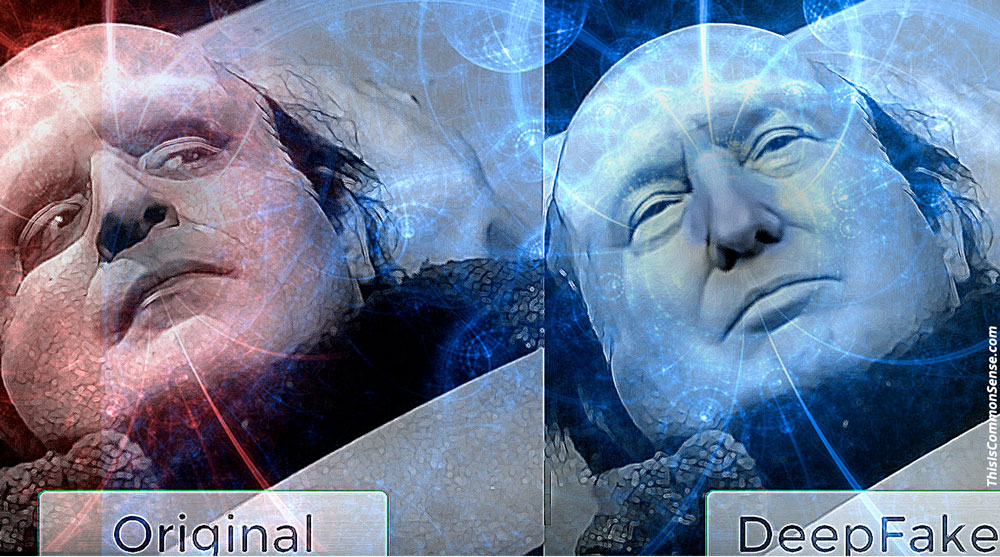
But more important than all this is the developing techniques the Deep State can marshal. I refer to Deepfake tech, where anything video can be faked, convincingly and completely. If not now, then very soon, technicians within the Deep State — and outside, too — will be able to videofake anything, from Trump cavorting with Moscow hookers to an Iranian “attack” to . . . UFO landings.

We shouldn’t have trusted intelligence agencies in the run-up to the Iraq conquest, now we have good reason to doubt anything and everything they tell us. 

Which means Congress should take very tight control of them, rein these agencies in — for Congress is indeed worried about deepfake tech.

How?

Well, de-classifying old secrets might be a good start. The last bit of the JFK assassination files? Maybe. UFOs? Maybe. But it’s what’s not on our radar that may be the most important.

This is Common Sense. I’m Paul Jacob.


PDF for printing

deep fake, Donald Trump, Young Frankenstein,

See all recent commentary
(simplified and organized)
See recent popular posts


Categories
government transparency

Transparent on Twitter?

I find Twitter distasteful, annoying, even stupid. I sometimes wonder why I should care about that particular “micro-blogging” platform.

But since it is a big deal to others, I struggle to understand.*

Joining me in the struggle are our two most famous political Twitterers, President Donald Trump and Representative Alexandria Ocasio-Cortez (D-N.Y.).

The president lost in court the other day, with the 2nd Circuit Court of Appeals telling him he must no longer block users on the social media platform.

Now AOC finds herself in a similar pickle. On Tuesday, a former Democratic New York Assemblyman filed a lawsuit in federal court against the popular freshman U.S. Representative for doing the same thing Trump had been doing: blocking users on Twitter based on their personal viewpoints.

The litigant surmises that AOC had blocked him “apparently because my critique of her tweets and policies have been too stinging.”

Ouch?

“Twitter is a public space,” insists this Democrat, Dov Hikind, “and all should have access to the government officials on it.”

This puts me in a pickle, too. I am all for government transparency — and I do think officials and representatives should not be completely insulated from the citizens they serve. But we don’t have a right to follow them into their bedrooms or bathrooms.

So, high-profile federal employees who in any way discuss public matters on social media should not be allowed to block Americans from seeing their posts. But take pity on the poor pols: they should be able to mute users, that is, keep others from cluttering up their social media experience.

Oddly, the lawsuit does not address this muting option.

This is Common Sense. I’m Paul Jacob.


* I even use it, occasionally.

PDF for printing

AOC, Trump, twitter, block, blocking, free speech,

See all recent commentary
(simplified and organized)
See recent popular posts


Categories
government transparency Popular

The Whys Behind the Whats

“[H]ow quickly our differences worldwide would vanish,” said Ronald Reagan in 1987, “if we were facing an alien threat from outside this world.” 

Does that Reaganite talking point give us any hints about the current series of disclosures about Unidentified Flying Objects? 

I noted the most recent story to hit mainstream news on Sunday, about members of the U.S. Senate being briefed on the many repeated Navy encounters around the world with Unexplained Aerial Phenomena — “UAP” being the current euphemism for “UFO.” 

As I mentioned a few weeks ago, the bulk of these news stories have been driven by a cadre of former government officials and contractors who have investigated UAP as part of a Pentagon research program. Now members of a non-profit educational corporation, they are on a mission to break the government-imposed silence and compartmentalized lock-up of knowledge about the phenomena. 

This being America, the effort also has a History Channel tie-in.

But much of the buzz appears to be coming from outside that core group, some of it focusing on leaked documents relating to a 2002 meeting between a scientist and a Navy admiral. The subject matter includes a secret program studying actual, hangered examples of ultra-strange flying craft* kept deeply secret — even from current military command — in the corporate wing of the military-industrial complex.

A new threat to unite us all? Or just another excuse to throw taxpayer funds down the Pentagon/military-industrial complex rathole?

The ongoing UFO disclosure might be neither of these yet still not what it seems.

We should keep our minds open, but our suspicions set on high alert.

This is Common Sense. I’m Paul Jacob.


* The technology in question, in this document as well as in the footage disclosed in 2017, purportedly does not use propellers, jets, or rockets to move extremely rapidly, change course immediately, and hover.

PDF for printing

UFO, navy, flight, tracking, military, disclosure, secret, conspiracy,

See all recent commentary
(simplified and organized)
See recent popular posts


Categories
Accountability government transparency national politics & policies too much government

Long Gone Rogue

Back in the 1990s, we used to talk about “rogue agencies” of the U.S. Government. And for good reason: the Branch Davidian massacre and the Ruby Ridge fiasco were hard to forget.

After 9/11/2001, however, we cut the agencies some slack. Why? Their incompetence and our hope.

But it became obvious from the NSA’s illegal metadata collection program, as revealed by Edward Snowden, the core agencies of the military-industrial complex do not like playing by rules that the American people have a say in.

How bad is it?

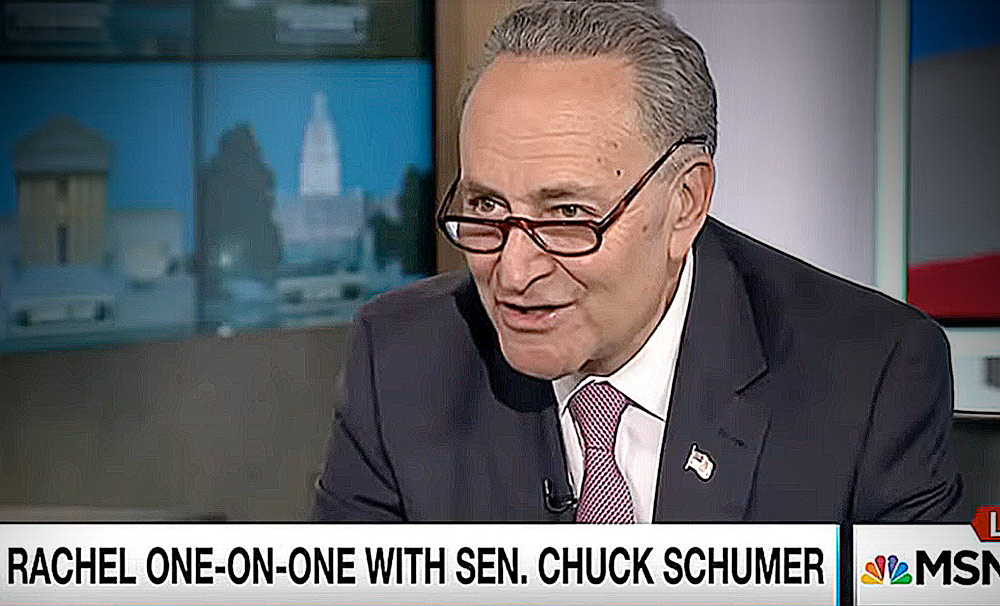
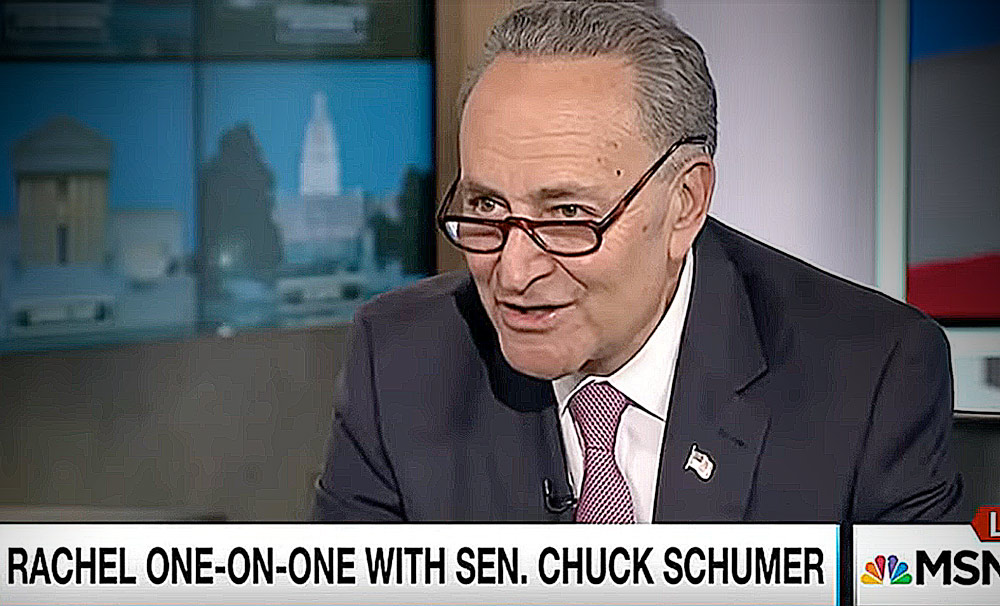
On New Year’s Day this year, Sen. Chuck Schumer was talking to MSNBC’s Rachel Maddow about their favorite conspiracy theory. Maddow, as we all know, had gone Full Nutter on this “collusion”/“corruption” story, and Democratic politicians (along with nearly the whole of the mainstream news media) ran with the story for two years. Then, the Mueller report is “no collusion.”

But on that first Tuesday of 2019, Ms. Maddow was talking about Trump’s tweets which she characterized as “taunting” the CIA and other agencies obsessed with the “Russian hacking” angle of the brouhaha. And Schumer’s response? 

“Let me tell you: You take on the intelligence community — they have six ways from Sunday at getting back at you.”

We should take this as a signal. It is like making prison rape jokes. It says something about the situation: prison rape or Deep State machinations. And about the speaker: leveraging a rogue element as a threat.

No wonder many now think the Russiagate/Mueller investigation was a “Deep State Coup” attempt.

A republic with rogue agencies is hardly a republic at all.

This is Common Sense. I’m Paul Jacob.


PDF for printing

Chuck Schumer, Rachel Maddow, deep state, Donald Trump

See all recent commentary
(simplified and organized)
See recent popular posts


Categories
Accountability government transparency

Put the Public in Public Policy

“Negotiations are impossible without trust,” wrote Leon Panetta in a Washington Post op-ed.

What with all his experience, Mr. Panetta has some reason to be trusted on his chosen subject, government shutdowns. The California Democrat spent 16 years in the Congress before joining the Clinton Administration as Director of the Office of Management and Budget and later serving as White House Chief of Staff. He was Obama’s first CIA Director and then Secretary of Defense.

But not every one of the sage’s pronouncements passes muster. 

“Never,” he advised, “negotiate in public.” 

He is of course referring to the hilarious chat President Trump had with two Democratic leaders . .  . and a bland, bored, and blank Vice President Pence.

“The talks to avert a shutdown got off to a terrible start,” Panetta argues, “when the president, during an Oval Office meeting with likely incoming speaker Nancy Pelosi (D-Calif.) and Senate Minority Leader Charles E. Schumer (D-N.Y.), began arguing his position in front of White House reporters. . . . In all the negotiations on the budget that I took part in as both House Budget Committee chairman and the director of the Office of Management and Budget, not one took place in front of the media. Public shouting matches usually guarantee failure.”

The implication? That these previous negotiations were “successful.”

To those with careers ensconced in Washington power, they worked out just splendidly, I’m sure. But the aftermath of these private, secretive agreements on the rest of us? It can be quantified: $21 trillion.

In federal debt. 

We do not need more of that “success.”

Let’s put the public back in public policy decisions.  “It’s called transparency,” President Trump said. 

Yes. 

More of that.

This is Common Sense. I’m Paul Jacob.


PDF for printing

Nancy Pelosi, Chuck Schumer, secrecy, transparency, negotiations

See all recent commentary
(simplified and organized)
See recent popular posts
Categories
government transparency national politics & policies

Full Frontal Negotiations

Last week’s political circus reached a new level of Big Top.

Or three rings, as President Donald Trump hosted two Democratic leaders in the White House, debating border security and government shutdown — in public. House Minority Leader, soon-to-be Speaker Nancy Pelosi (D-Calif.) and Senate Minority Leader Charles E. Schumer (D-N.Y.) were somewhat uncomfortable with Donald Trump’s decision to hash out their differences in front of the cameras and the American people.

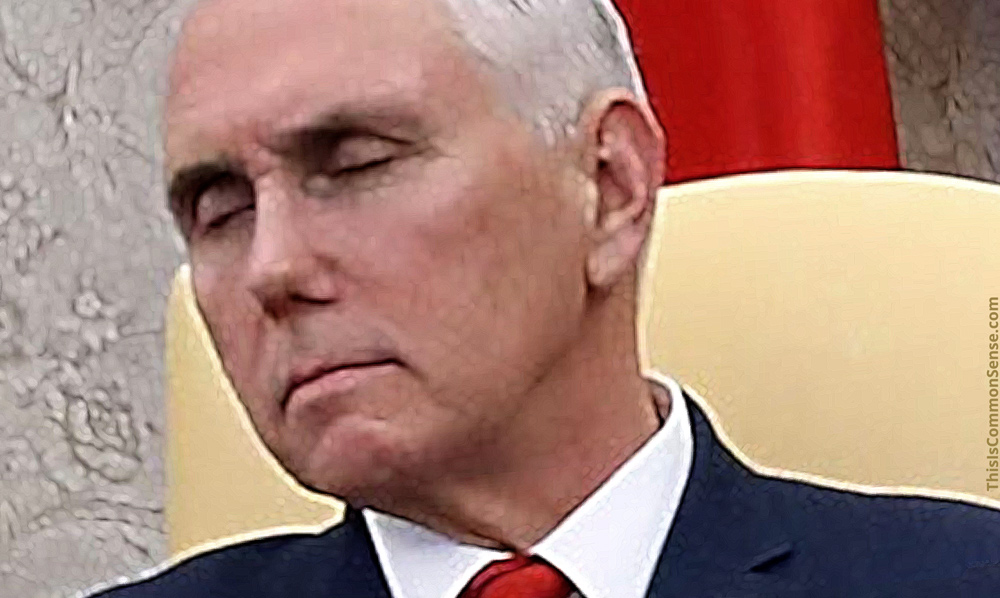
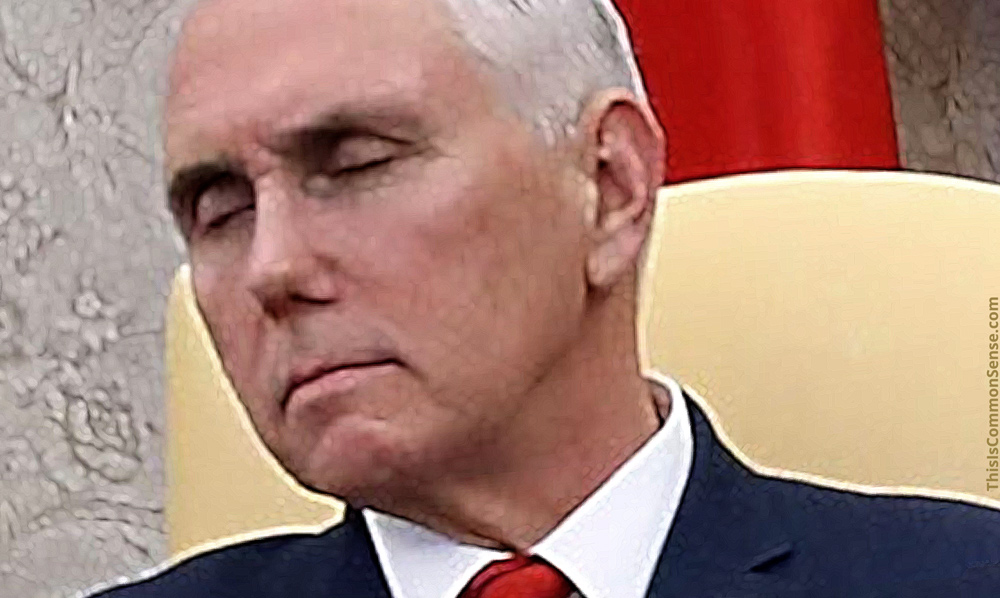
It was quite the comedy. Yet Vice President Mike Pence all but snored. While many pundits once again expressed their frustrations with a lack of solemn decorum from Trump, Pence provided not solemnity but somnolence.

The idea of government negotiations being done out in the open isn’t new. Transparency is good, if rarely practiced. But it did not take long for Mrs. Pelosi and Mr. Schumer to express alarm at this foray into Reality TV. 

“We’re here to have a conversation the careful way,” Pelosi informed the president, “so I don’t think we should have a debate in front of the press on this.”

Once upon a time, Dems promised transparency. Barack Obama campaigned on negotiating health care reform on C-SPAN — only to renege on that pledge when the negotiations got going.

In olden days, Democrat President Grover Cleveland practiced political transparency when he was governor of New York (1883-1885), pointedly leaving the door to his office open whenever discussing any subject whatsoever with anyone.*

And let’s tip the hat to Mike Pence. Ridiculed when it came out that he would not meet in private with any woman not his wife, upon the arrival of #MeToo and the Kavanaugh hearings, Pence appeared genius.

If a sleepy one.

This is Common Sense. I’m Paul Jacob.


* Cleveland was not so transparent when, during a crisis in his second presidency, he secretly had his jaw operated upon in a boat in international waters.

PDF for printing


See all recent commentary
(simplified and organized)
See recent popular posts

Categories
government transparency too much government

Fill Up the Swamp Some More

Donald Trump’s “drain the Swamp” promise was good rhetoric, great politics — because nearly everybody knows that the federal government just cannot restrain, constrain, or re-train itself.

So it would have to take an outside force.

Along comes said Outside Force — the current president — yet the Swamp remains.

Unfortunately, too few of the president’s most ardent supporters see the deepest part of the Swamp.

That is, the Department of Defense.

“Less than a week after calling the Pentagon’s $716 billion budget ‘crazy’ and indicating that he wanted to trim it, President Donald Trump is reportedly proposing to push America’s military spending to greater heights,” writes Eric Boehm at Reason. “Trump told Mattis to submit a $750 billion budget request for next year — well in excess of the $733 billion level that had been previously planned.”

And he does this despite the fact that just recently this military establishment failed to give a competent accounting of its spending.

Sadly, poor accounting is rigged into the Department of Defense, as demonstrated in an important exposé last month.

“For decades, the DoD’s leaders and accountants have been perpetrating a gigantic, unconstitutional accounting fraud,” The Nation explains, “deliberately cooking the books to mislead the Congress and drive the DoD’s budgets ever higher, regardless of military necessity.”

Even the imperiled Social Security juggernaut is not run as badly as the Pentagon. We at least know where its funds go and have gone.*

It may be that a real leader — with substantive ideas, reliable information, and a sense of the enormity of governmental carelessness — will inspire Americans and challenge the Deep Swamp, er, State, before catastrophe.

Unfortunately, Trump is looking less and less like that drainer.

This is Common Sense. I’m Paul Jacob.


* One recipient of Social Security “contributions” has been, in fact, the Pentagon, since budget deficits have been at least partially covered by congressional borrowing from Social Security’s “surpluses.”

PDF for printing

Photo credit: Puck, 1909


See all recent commentary
(simplified and organized)
See recent popular posts

Categories
ballot access government transparency Popular

The Rank Reality of Math

U.S. Rep. Bruce Poliquin (R-Maine) doesn’t like Ranked Choice Voting.

Last week, I suggested that’s because he lost his re-election to Congress in his state’s first use of Ranked Choice Voting (RCV). Perhaps I spoke too quickly? Congressman Poliquin argues that RCV is a “black-box voting system.”

“We heard from countless Maine voters who were confused and even frightened their votes did not count due to computer-engineered rank voting,” read a campaign statement.

Who wants frightened voters?

The “voting system utilized by the Secretary of State is secret,” Poliquin’s campaign spokesman further complained. “No one is able to review the software or computer algorithm used by a computer to determine elections. This artificial intelligence is not transparent.”

Computer-engineered elections? Artificial intelligence? Oh, my!

“I think it’s time that we have real ballots, counted by real people,” the congressman told reporters. “. . . instead of this black box that computes who wins and who loses.”

By all means, yes.

Nathan Tefft is a professor at Bates College in Lewiston, Maine, and claims to be “a real person.” With a PhD in economics. He got all the election data and replicated the ranked -choice process used by the Maine Secretary of State in conducting the count, confirming the state’s results.

“The Maine secretary of state’s office has published all the election results on its website — every ballot, every ranking in every town,” the Bangor Daily News informed. “It’s all there in massive data files that can be inspected and downloaded.”

Wait a second . . . what about the black-box, the secrecy, the dreaded use of AI?

All a fable.

“Yeah,” Dr. Tefft noted, “it’s just math.”

This is Common Sense. I’m Paul Jacob.


PDF for printing


» See popular posts from Common Sense with Paul Jacob HERE.


Categories
government transparency ideological culture national politics & policies

Last Week’s Least Credible Answer

So, who was lying, last week, at America’s big show trial — er, Senate Judiciary Committee hearing?

Professor Christine Blasey Ford or Judge Brett Kavanaugh?

Many Americans took sides. I cannot. Both said believable as well as scarcely believable things, but I’m with that minority who admits not to know what to believe.

Except for one thing: I am pretty sure I know who told the biggest whopper.

Senator Dianne Feinstein.

Democratic senators, especially Kamala Harris (D-Calif.), repeatedly pressured Kavanaugh to himself demand an FBI investigation to clear his name. It all seemed Orwellian: to make the accused insist on an investigation into allegations he had denied. It was also odd, considering, as Kavanaugh reminded his inquisitors, that he had repeatedly accepted any investigation the committee desired.

They just wanted him to demand it.

All of which is nuts, since the Committee possesses subpeona power, and can do an investigation itself.

But the weirdest aspect? The FBI had already checked Kavanaugh’s background, had performed an official investigation. But since Senator Feinstein had not tipped the agency off to Professor Ford’s confidential accusation — had effectively sat on the letter — the FBI hadn’t covered that precise avenue of inquiry.

And then, after the hearings were nearly over . . . the leak. And the bouhaha.

When asked whether she leaked Ford’s epistle, Feinstein said No. When asked if her staff did, she said she . . . hadn’t asked them.

Oh, come on.

Not as believable as either Ford or Kavanaugh.

This is Common Sense. I’m Paul Jacob.


PDF for printing