Categories
Accountability Common Sense folly free trade & free markets general freedom meme

Progressive Logic

Government is so corrupt that its power to intervene in the market can be bought and sold by the rich…

…Therefore government should be bigger and more powerful.


Click here for a large resolution version of this image:

progressive logic, crony capitalism, corruption, big government, government power, meme, illustration, photomontage, Jim Gill, Paul Jacob, Common Sense


Categories
free trade & free markets general freedom national politics & policies

Why Protectionism

Why do so many people (especially politicians) favor high tariffs, “managed trade,” embargoes and domestic subsidies, all of which — first as “mercantilism” and then as “protectionism” — have been debunked, repeatedly (demonstrated as ineffective economic policy), since Adam Smith’s famous 1776 attack?

Economist Donald Boudreaux, in an excellent defense of economic principles, explains why the Bernie Sanderses and Donald Trumps of this world support anti-free trade nostrums — out of sheer ignorance:

The typical politician opposes free trade because he . . . doesn’t understand that the purpose of trade — any trade — is to enrich people as consumers and not to enrich people as producers. He doesn’t understand that exports are a cost and that imports are a benefit; he thinks that it’s the other way ’round. He doesn’t understand that the specific jobs lost to imports are not the only employment consequences of trade; he doesn’t understand that trade also “creates” jobs in the domestic economy. . . . He, in short, doesn’t understand the first damn thing about the economics of trade.

But what protectionists do understand are direct appeals to “good results” (like more and better high-paying jobs). The fact that their proposals throw a monkey wrench into the diverse mechanisms of trade, yielding worse results?

They just don’t see them.

Why? Because real economies are complex, and protectionists lack the science that would help them trace the consequences of their policies.

The fact that they’ve focused their whole attention on the business of “governing,” and making simplistic, direct appeals to people who are also uneducated in economic principles, doesn’t help.

This is Common Sense. I’m Paul Jacob.


Printable PDF

Donald Trump, Bernie Sanders, economics, free trade, collage, photomontage, Jim Gill, Paul Jacob, Common Sense


Categories
crime and punishment folly free trade & free markets general freedom tax policy

Gold Leaf

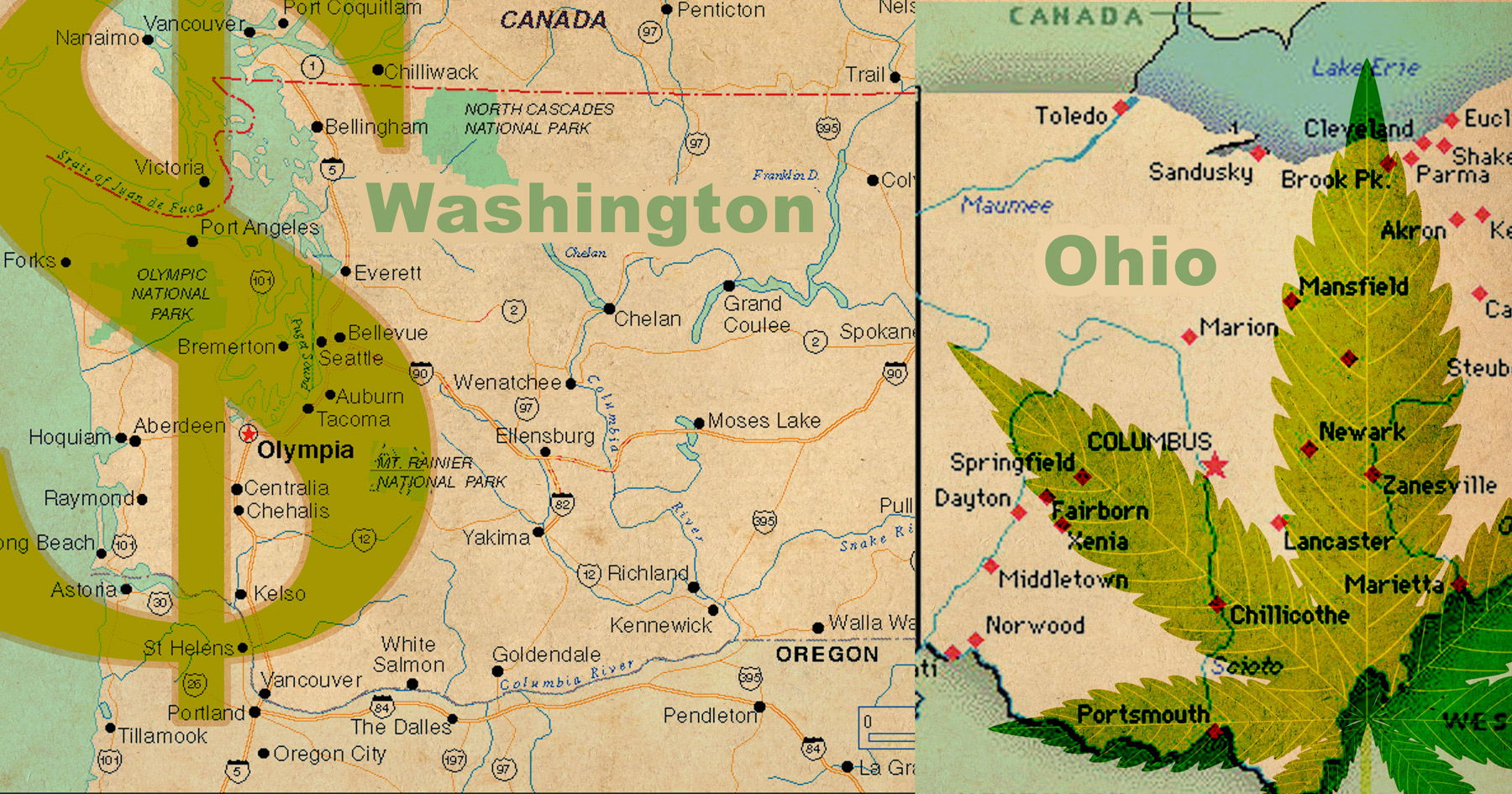
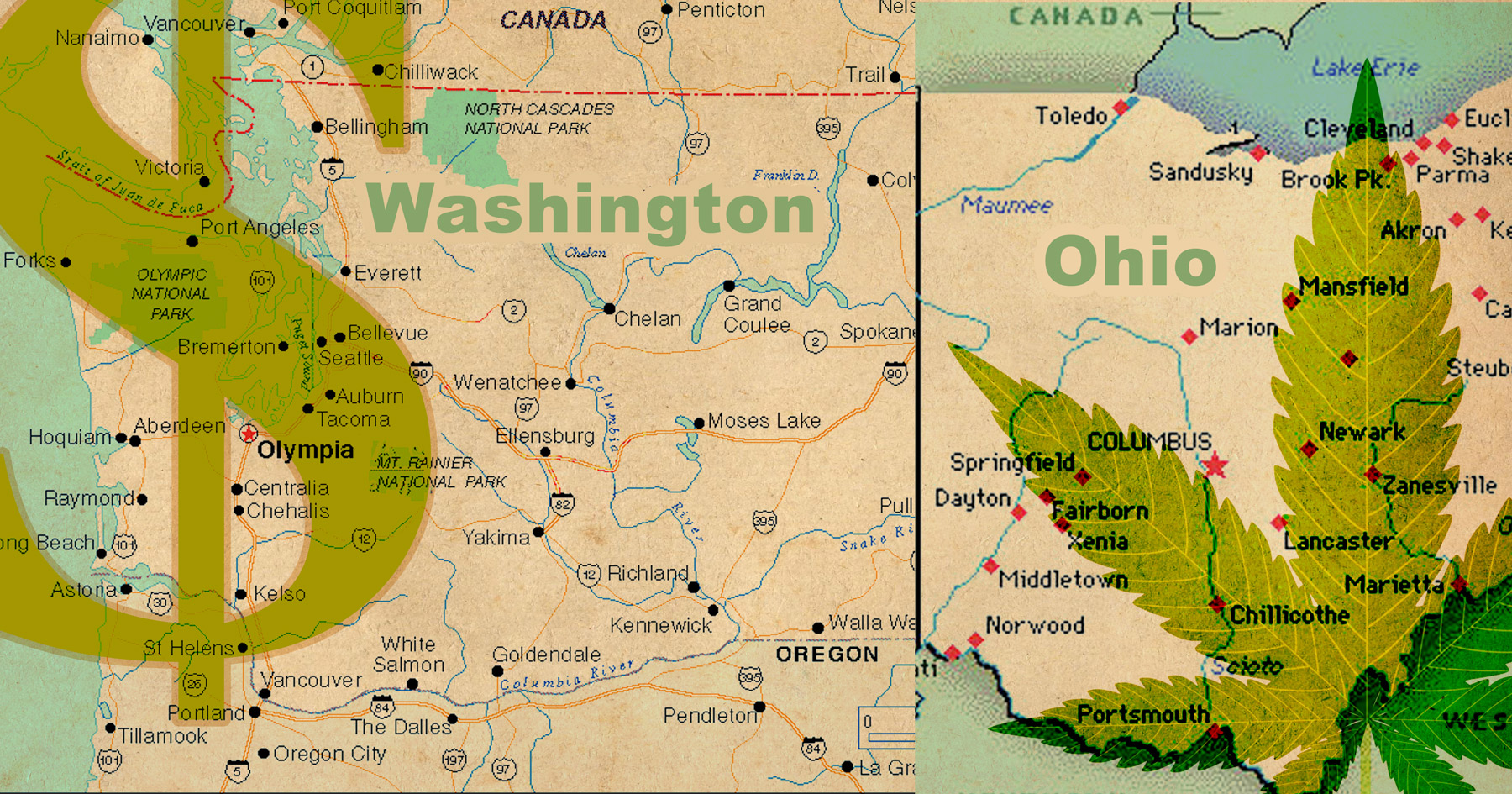
The experiment in legalized marijuana begun by citizens in the states of Washington and Colorado has, from the beginning, faced a huge obstacle: marijuana is still illegal, federally. State nullification of federal law is not merely “problematic,” it’s hard to “get away with.”

Take Colorado’s experience. The Centennial State, which has made the swiftest and most extensive progress regarding marijuana retail sales, has come up to an inevitable problem with the federal government.

Over banking.

Interesting Reason reporting tells us that “Marijuana-related businesses in Colorado are so profitable that the government doesn’t know what to do with all of the tax revenue they’re generating. But business owners face a more immediate problem: Where to stash their own profits when banks won’t take it.”

Congress has been very active making banking less and less private and less and less free for decades now, in part because of the War on Drugs. Existing banks refused to take new cannabis clients.

So a new credit union was formed, to handle the cash.

And now, NBC News tells us, our central bank, the Federal Reserve (dubbed by NBC “the guardian of the U.S. banking system”), said “that it doesn’t intend to accept a penny connected to the sale of pot because the drug remains illegal under federal law.” Which makes modern banking difficult, even for a credit union, apparently.

What are “weed” businesses to do . . . other than what they are doing, hiring security guards for all the cash?

Maybe Bitcoin will step in. Or old gold-warehouse banking, as was not unheard of even in the 19th century.

Or, maybe, the federal government will cease its over-reach?

This is Common Sense. I’m Paul Jacob.


Printable PDF

cannabis, marijuana, legalization, tax, taxes, federal, Colorado, illustration, Jim Gill, Paul Jacob, Common sense


Categories
crime and punishment folly general freedom ideological culture

South Dakota Déjà Vu

In the words of Yogi Berra, the recently deceased baseball great: “It’s déjà vu all over again.”

We’ve followed the incredible case of Dr. Annette Bosworth extensively this year. She was convicted of twelve felony counts of petition fraud for circulating petitions that were signed at her medical office by patients (and her sister), while the doctor was in the Philippines on a medical mercy mission.

I don’t defend Dr. Bosworth signing that affidavit, stating that she witnessed those signatures, but I also don’t see criminal intent. Her attorney advised her it was lawful and all the signers were legitimate voters who truly wanted her to run for the U.S. Senate. Talking about felony fraud in such a case seriously misses the forest for the trees.

Bosworth wasn’t sentenced to prison time, thankfully.

But she lost her medical license.

Let’s hold people accountable, but not with an over-the-top vengeance likely to scare the average citizen away from political participation altogether. That’s been my message to South Dakota Attorney General Marty Jackley.

What about déjà vu?

Today, in a Pierre courtroom, Annette’s husband, Chad Haber, will be arraigned on felony charges for signing as the circulator on a petition with two signatures affixed when he was with his wife on that medical trip.

AG Jackley loudly proclaims that this is not his indictment; it was filed by a county prosecutor. But anyone who didn’t fall off the turnip truck yesterday knows how these things tend to work.

Haber challenged Jackley last election and the feud is well known and long-running. Being a prosecutor requires judgment, something Jackley lacks . . . as he will no doubt prove in court.

This is Common Sense. I’m Paul Jacob.


Printable PDF

Chad Haber, Annette Bosworth, Marty Jackley, South Dakota, illustration, Paul Jacob, Common Sense


Categories
folly general freedom ideological culture term limits

Congo Prez Prizes Service

Congo-Brazzaville’s president, Denis Sassou Nguesso, is quite the statesman.

He’s actually done what many an illustrious American pol with an obsession about “campaign finance” would merely like to do, but cannot (that darn First Amendment!): prohibited all talk about politics prior to the next election.

Indeed, the government has shut down the Internet and cellular SMS services, simply to prevent undue influence prior to the upcoming votes. Democracy requires a veil of ignorance, we’re told, and Nguesso’s taken that august philosophical scheme to its logical conclusion: no information running through the information superhighway of the modern age . . . at gunpoint.

And like many a long-term American insider, he’s balking at term limits, too. He has served his legally limited two terms. So he and his fellow statesmen put a referendum onto the upcoming ballot to overthrow them.

Just so he can serve longer.

Think of the sacrifice! He really must be looking out for his earnest and ardent supporters.

But he didn’t stop there. To fulfill his mandate, and continue in office, he has to entreat the people to overturn Congo’s mandated retirement age. At 71, he’s now too old to legally run, even if he were a first-termer.

Trifecta! — a pol so insistent at continuing his life of never-ending public service that he fights against ageism, term limits, and the corrupting influence of free speech!

I’m sure he has many, many secret sympathizers in our Congress, and in the legislatures of our several states.

This is Common Sense. I’m Paul Jacob.


Printable PDF

Congo-Brazzaville’s president, Denis Sassou Nguesso, Nguesso, Africa, democracy, voting, elections, collage, photomontage, illustration, JimGill, Paul Jacob, Common Sense


Categories
general freedom ideological culture national politics & policies political challengers porkbarrel politics too much government

Biden His Time

Vice-President Joe Biden announced, yesterday, that he will not run for the Democratic Party’s presidential nomination, ending many weeks of speculation.

The Veep’s exit from a race he never entered benefits Mrs. Clinton, who in those same polls has a larger lead head-to-head against Sen. Bernie Sanders (I-Vt.).

Much of “Middle-Class” Joe’s speech was the usual laundry list of progressive pie-in-the-sky, money-can-too-buy-us-love shibboleths:

  • “President Obama has led this nation from crisis to recovery, and we’re now on the cusp of resurgence.”
  • The public schools fail to adequately educate kids — at stupendous cost. Rather than innovate, Biden demands we “commit to 16 years of free public education for all of our children.”
  • Biden’s biggest pitch was for “a moon shot to cure cancer.” (Cancer will be cured . . . but not by politicians.)

Still, Joe voiced something other candidates fail to emphasize:

[W]e have to end the divisive partisan politics that is ripping this country apart. . . . I don’t think we should look at Republicans as our enemies. They are our opposition. They’re not our enemies. And for the sake of the country, we have to work together.

That hasn’t been Hillary Clinton’s approach, having compared conservative Republicans to terrorist groups. Plus, to the question “Which enemy that you made during your political career are you most proud of?” she answered, “Republicans.”

“Four more years of this kind of pitched battle may be more than this country can take,” Joe Biden added.

I guess Joe’s not for Hillary.

This is Common Sense. I’m Paul Jacob.


Printable PDF

Joe Biden, president, election, nuzzle, statue of liberty, photomontage, collage, illustration, Jim Gill, Paul Jacob, Common Sense


Categories
folly general freedom ideological culture media and media people national politics & policies U.S. Constitution

Capitol Hill Chaos

Washington Post scribe Dana Milbank is panicked about the “chaos on Capitol Hill.”

He hyperventilated, in a recent column, concerning the difficulty Republicans are having in choosing a new Speaker of the House, after the announced resignation of current Speaker John Boehner (R-Ohio), then the sudden withdrawal from the race by House Majority Leader Kevin McCarthy (R-Calif.), and now the reluctance of Rep. Paul Ryan (R-Wisc.) to seek the post.

We’re informed of the speaker’s importance — “second in line to the presidency” and “key to national security and domestic tranquility” — as if Milbank, alone, has access to a Constitution.

Yet, is it really “chaos” or continued gridlock that’s bothering our company-town columnist?

If it were, Milbank wouldn’t focus his attacks solely on conservative Republicans for their unwillingness to “compromise” (read: surrender). Both Democrats and so-called establishment Republicans seem equally adamantine.

According to Milbank, these conservative “hardliners” and “zealots” constitute “a rough crowd” who employ “thuggish tactics.” Why, they have “hijacked the chamber”!

How so?

They had the audacity to not always vote lockstep with Speaker Boehner; they balked at supporting the Speakership for Rep. McCarthy; and (heavens!), they even dared communicate their viewpoint to voters in McCarthy’s home district.

Could free political speech still be allowed by law?

Milbank reviles the “efforts by conservative groups to depose [McCarthy] before he ever took the throne.”

Depose? Throne?

Milbank even laments that Eric Cantor “would have been speaker today” had only voters in his district not voted for somebody else. Pesky voters!

Methinks Mr. Milbank has been lounging around the halls of power a tad too long.

This is Common Sense. I’m Paul Jacob.


Printable PDF

Washington Post, Dana Milbank, Washington, collage, photomontage, JGill, Paul Jacob, Common Sense


Categories
general freedom individual achievement responsibility tax policy

Plotting Progress

The prestige of the Nobel Peace Prize has been tarnished by some more-than-dubious awards, in our time . . . Henry Kissinger and Barack Obama, most obviously.

Same goes for the Bank of Sweden’s knock-off “Memorial” prize for economics.

But, according to David R. Henderson, this week’s Nobel nod to Scottish-born Angus Deaton, for his “analysis of consumption, poverty and welfare,” is “a fine pick.”

Deaton is, writes Henderson, “an important chronicler of the market’s abilities to create wealth and improve society.”

While it is all the rage, these days, to complain about increasing inequality, Deaton has been instrumental in showing that wealth, health and welfare have increased as poverty, worldwide, has decreased.

And this has been largely the result of markets. Not big government programs.

Deaton, Henderson tells us, “believes that the approximately $5 trillion given by governments of rich countries to poor countries over the past 50 years has undercut good governance by making poor countries’ leaders less accountable to their own citizens.”

ABC News seconds Henderson’s account:

In his 2013 book, The Great Escape, Deaton expressed skepticism about the effectiveness of international aid programs in addressing poverty. . . . China and India have lifted tens of millions of people out of poverty despite receiving relatively little aid money. Yet at the same time, poverty has remained entrenched in many African countries that have received substantial sums.

Peter G. Klein, at mises.org, identifies a deeper insight by the latest Nobel economist: “aggregate measures of consumption and inequality conceal important differences among individuals.” This explains why Deaton came to his other (controversial) conclusions: he never took his eye off the real player in market life, the individual.

This is Common Sense. I’m Paul Jacob.


Printable PDF

Angus Deaton, Nobel Prize, Economics, The Great Escape, Inequality, collage, photomontage, JGill, Paul Jacob, Common Sense


Categories
Accountability crime and punishment general freedom responsibility

Heroism for Everybody

Liberty is achieved, when it is achieved, at a price. Vigilance.

And this isn’t just an inspiring political message. It’s practical advice for extraordinary circumstances.

What’s the best thing to do if you meet a mass murderer on a rampage, or a terrorist on his mission? It may not be to merely call 911. As one counterterrorism consultant puts it, “We are conditioned to dial 911 and wait, but, in the case of an active shooter, that does not work.”

This conflict expert, Alon Stivi, went on to explain that “[m]ost casualties occur within the first ten or fifteen minutes, and police response usually is too late.”

And speaking of 911, remember that on 9/11/2001, the most successful anti-terrorist effort was by the passengers of United Airlines Flight 93.

That was heroism. It cost them their lives, but they accomplished something in that they saved lives, too.

Some people don’t like bringing this up for fear of, well, hurting some feelings. But Ari Armstrong has an answer for this:

If we avoid serious discussions about self-defense and survival tactics in cases of intended mass murder out of fear that such discussions are somehow insensitive to victims of past attacks, all we accomplish is to ensure that more people will be murdered in possible future attacks.

There is a reason we should keep ourselves fit, and alert. Who knows when we may be called upon, by circumstance, to defend not only ourselves and our loved ones, but our way of life?

Sure, this “call” is made by the unjust. But we, the just, should answer anyway.

This is Common Sense. I’m Paul Jacob.


Printable PDF

self defense, gun, responsibility, terrorism, collage, photomontage, JGill, Paul Jacob, Common Sense


Categories
folly general freedom too much government

Worth a Crackdown?

Charming. That is the best word to describe the “Little Free Library” movement.

Haven’t heard of it? It is the practice by which just plain folks share their books by building these little birdhouse-sized free lending libraries that they place in their yards by the curb. Usually, the little “libraries” encourage folks to take a book, bring a book.

Sometimes they advise readers to just take.

It’s the spirit of the public library, only provided privately, and without great pretense. Or expense.

The example in the artwork, above, is from across the country, in the tiny burg of Cathlamet, Washington. A reader sent me the photo. It is obvious: libraries like this are both quaint and useful — encouraging literacy, the activity of reading, and the appreciation of learning.

And yet, local governments across the country are cracking down.

Andrew Collins, writing at the Franklin Center website, points to an excellent Conor Friedersdorf article published early this year in The Atlantic, “The Danger of Being Neighborly Without a Permit.” Both these pieces present how meddlesome, ugly, intrusive, and anti-social local governments can be. Harassing friendly book providers with cease-and-desist letters, fines, and other niggly, invasive spins on zoning and public nuisance laws is just so idiotic it hardly merits much comment. But I agree with Friedersdorf — folks hosting Little Free Libraries are acting in the “venerable tradition” described by Alexis de Tocqueville in Democracy in America, the cooperative, neighborly culture that made our country great.

Government officials attacking this new, endearing bit of Americana are grand examples of the pettiness that is bringing America down.

This is Common Sense. I’m Paul Jacob.


Printable PDF
Little Free Library, illustration, Common Sense, Paul Jacob