Categories
general freedom international affairs Popular

Protests and Propaganda

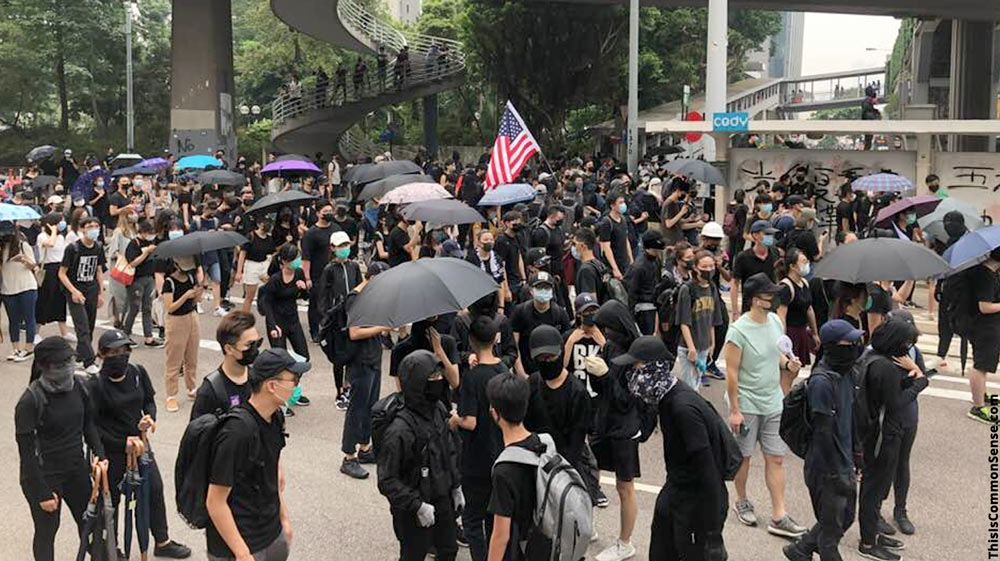
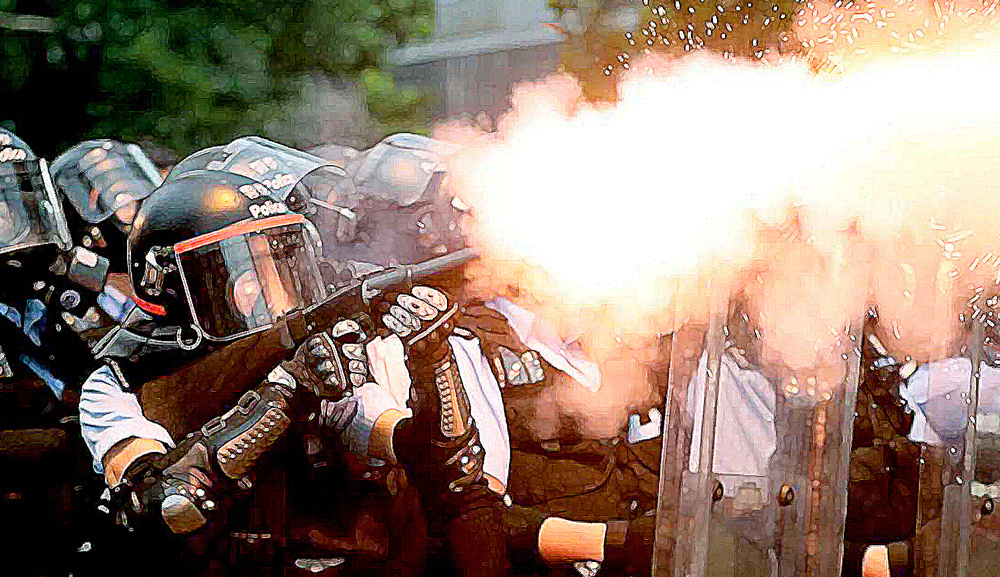
Poised to gobble up Hong Kong whole, completing the process Britain began when it ceded the colony back to China in 1997, the government of China remains concerned about world opinion, for it engages in massive propaganda.

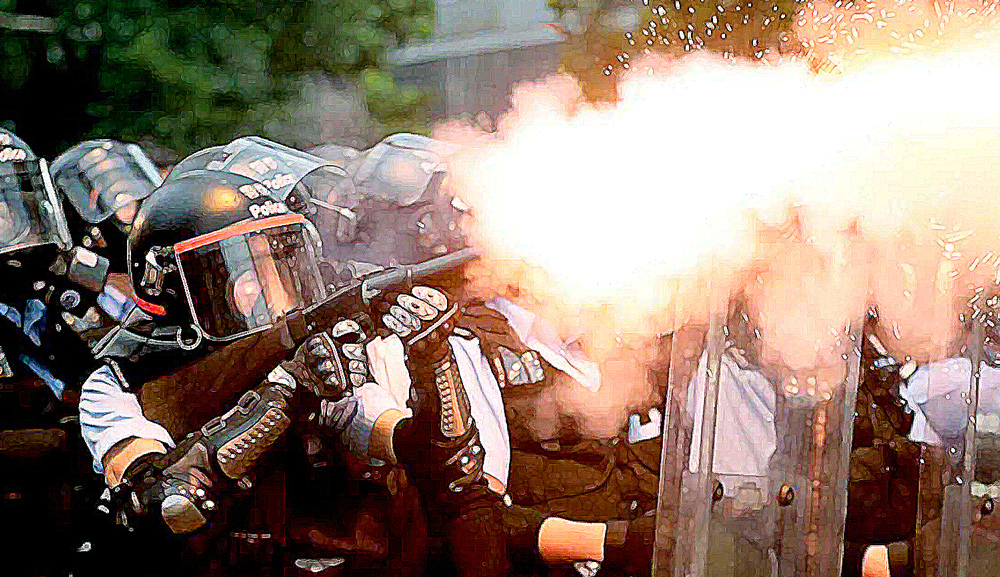
“When a projectile struck a Hong Kong woman in the eye this week as protesters clashed with the police, China responded quickly,” explains an article in the New York Times. “Its state television network reported that the woman had been injured not by one of the police’s bean bag rounds, but by a protester.”

But that’s not the only kind of propaganda. If you have spent any time on Instagram, for example, you have probably seen the posts of Chinese people decrying the scandal and shame of how Hong Kongers resist government efforts at hegemony.

There is a name for this latter form of propagandist, “the fifty cent party” because the Communist Party is said to pay social media users for each pro-government post . . . though almost certainly not 50¢.*

The basic idea, according to General Secretary Xi Jinping, is to “to strengthen media coverage … use innovative outreach methods … tell a good Chinese story, and promote China’s views internationally.”

And managing its own population, as when, according to the Times, state media “posted what it said was a photo of the woman counting out cash on a Hong Kong sidewalk — insinuating, as Chinese reports have claimed before, that the protesters are merely paid provocateurs.”

These young street protestors are almost certainly not mercenaries, though they have sometimes faced what appear to be hired thugs. 

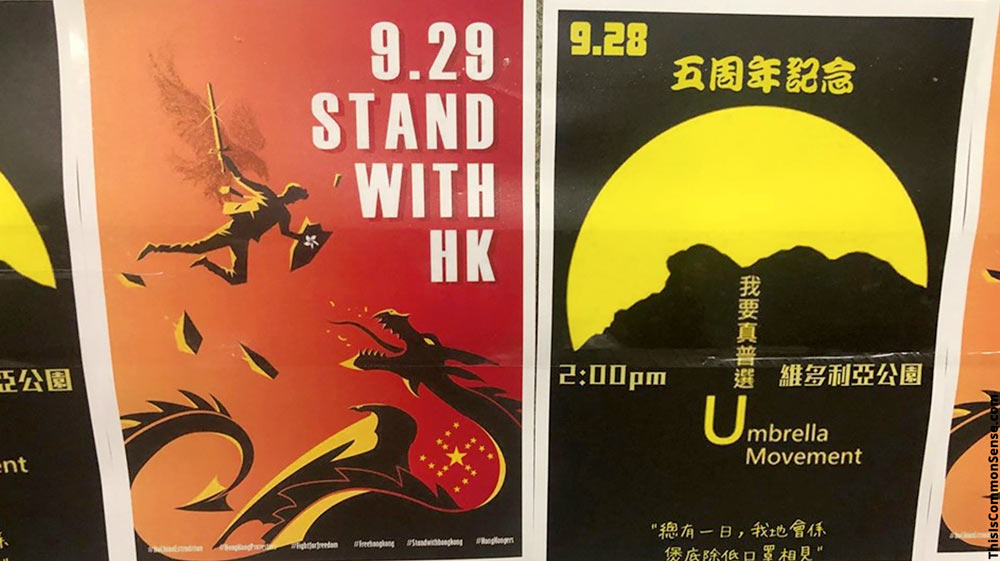
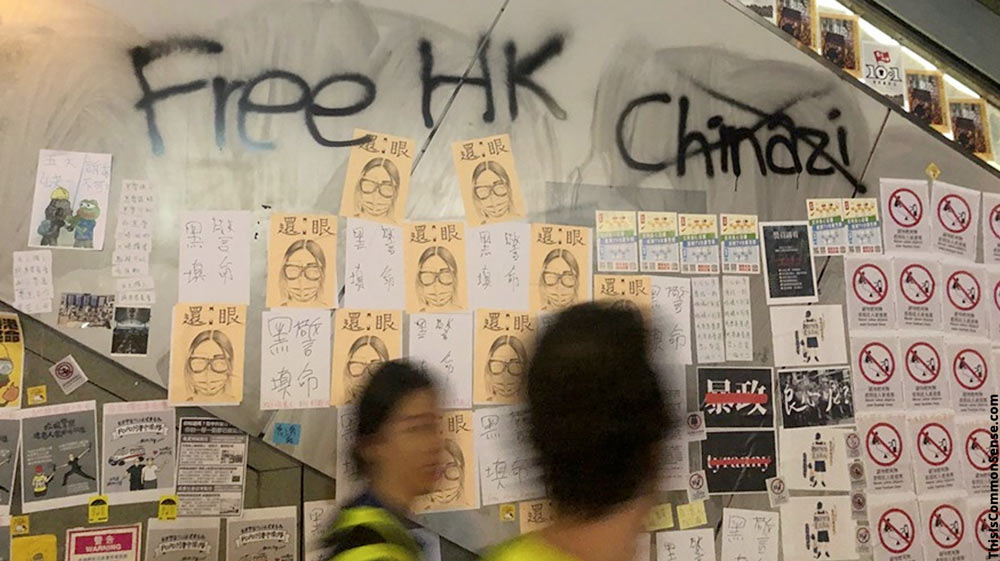
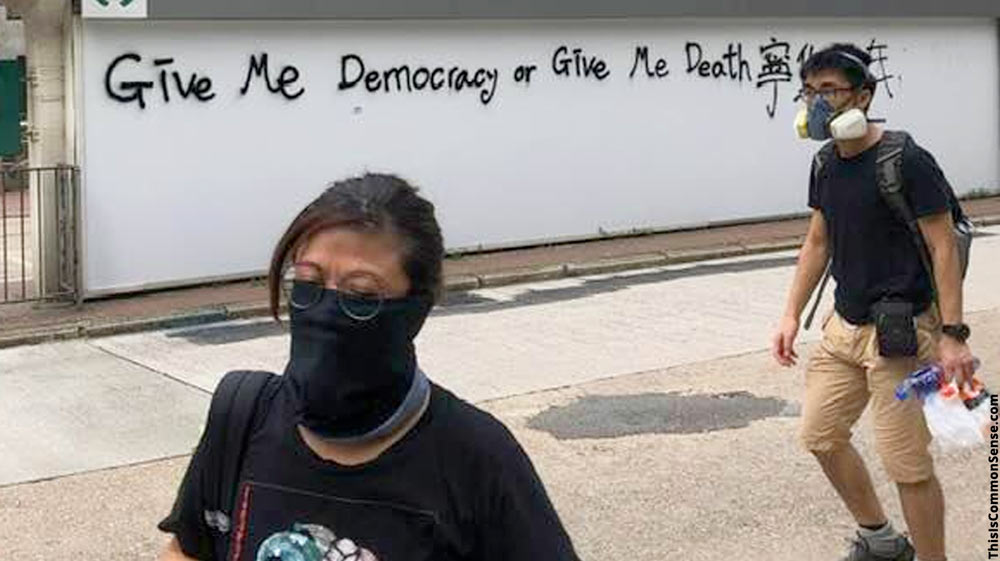
The protests are a kind of insurrection. Strong resistance, at least, to being totalitarianized.

This is Common Sense. I’m Paul Jacob.


PDF for printing

Hong Kong, police, riots, protests, violence,

See all recent commentary
(simplified and organized)
See recent popular posts


Categories
general freedom ideological culture

The Atrocity Exhibition

News commentary can seem like a race, commentators reacting as if to the crack of the starting-gun, scrambling to make sure they do not come in last.

Yet, in stories like this weekend’s round of mass shootings, being last to comment might be something to aspire towards. 

As I have argued before, mentioning perps’ names has a tendency to encourage further mass murders, spree murders. But in cases of outright terrorism — as the El Paso shooting was immediately classified — the frenzy to comment is pretty much the same thing as using names. 

How?

Well, terrorism is the use of violence to effect political change. The old anarchists and syndicalists called it “propaganda by the deed.” And, in a mass- and alt-media drenched democratic society, the aim is to get people to go into alarm, in part by getting tongues tapping and keyboards clattering.

Focusing on terrorist murders does feed the idea that terrorism somehow works.

So, when Democrats immediately talk about racism and the need for gun confiscation (both seen on Twitter immediately after the El Paso event, of course) and Republicans leap to the “mental health” issue and . . . video games (as I saw inching across the news chyrons) . . . my urge to comment dissipates dramatically. 

But here I am.

Politicians can demand new laws to restrict firearms, or video games, but those laws won’t prevent future mass shootings. 

Nor do I hold any hope that we can perfectly police against white nationalists like the manifesto-writing El Paso killer or lewd socialists such as the Dayton shooter

Our best hope is to save kids from growing into angry, disaffected, violent adults.

This is Common Sense. I’m Paul Jacob.


PDF for printing

atrocity, exhibition, shooting, violence, guns, control, 2nd Amendment, boy, white,

See all recent commentary
(simplified and organized)
See recent popular posts


Categories
First Amendment rights general freedom ideological culture

Ngo Go Zone

Last week, photojournalist Andy Ngo was attacked on the streets of Portland, Oregon, while video-recording a Patriot Prayer march and its Antifa opposition.

As they attacked, one malefactor can be heard screaming, “F**k you, Andy!” Another cried, “F**king owned bitch.”

It was personal. They knew Mr. Ngo, who had been covering Antifa and other far-left activists rioting in Portland for several years.

Ngo’s new GoPro camera was stolen, he was hit on the head, had eggs and milkshakes thrown at him, and shot with silly string. The aim, apparently, was to humiliate and hurt and incapacitate.

Aside from the Antifa terrorists’ personal sense of aggrievement, there is that odd element where the putative “protesters” just do not want to be recorded. Which, after all, is the whole point of actual protest.

Odder yet, while Antifa is allegedly for equality and inclusion, the faces of the arrested malefactors appear largely white, and from what we know in the past, the black-clad, hooded-or-masked mob is mostly made up of white, twenty-something men. 

A white mob attacking a gay Asian sure seems racist and homophobic.

So maybe there is a bit of truth to the notion that Antifa is mainly a bunch of guys unleashing their lust for violence and mayhem. “Anti-fascism” is just a not very plausible excuse. 

But, significantly, it is one that major media continue to make for the group. And many in the media go further, apparently seeking to excuse Antifa by labelling Ngo as a “conservative” (!) and a “provocateur.”

There is no excuse for Antifa — or its apologists.

This is Common Sense. I’m Paul Jacob.


PDF for printing

See all recent commentary
(simplified and organized)
See recent popular posts

Categories
general freedom ideological culture Popular

America, the Debatable?

“A divided America gathers for Fourth,” The Washington Post headlined its lead story about the Independence Day celebration on the National Mall.* 

Give me two minutes to unite us.

On the night of July 3rd, stuck in horrendous holiday traffic, I stumbled upon a National Public Radio broadcast discussing the punk rock song, “’Merican,” by Descendants. The operative lyrics being:

I’m proud and ashamed
Every fourth of July
You got to know the truth
Before you say that you got pride

“Truth,” now that’s heavy, man. What’s the truth about ’Merica — er, America?

It is certainly true that our government — in our name — has done some terrible things. And, accordingly, to suggest that criticism is unpatriotic is, well, to miss the point of why I feel very proud to be an American. 

On the 150th anniversary of the Declaration of Independence, President Calvin Coolidge called July 4, 1776 “one of the greatest days in history” and “not because it was proposed to establish a new nation, but because it was proposed to establish a nation on new principles.” Those being “that all men are created equal, . . . endowed with certain inalienable rights, and that . . . the just powers of government must be derived from the consent of the governed.”

What this offers us is a standard to criticize America.

That is why it seems strange to witness folks criticizing current policy and behavior based on principles derived from the Declaration, yet, in the same breath, spurning America in the process. When America is wrong, let us right it — in true American style.

We may be divided on many issues, but on the ideals set forth in the Declaration of Independence we should all stand united.

This is Common Sense. I’m Paul Jacob.


* This was the headline in the print edition dropped on my driveway July 5th; the online version carried a different headline: “Trump’s Fourth of July celebration thrills supporters, angers opponents.”

** Love him or despise him, Rep. Justin Amash made a similar point in his op-ed about leaving the GOP to become an independent: “Our country’s founders established a constitutional republic . . . so ordered around liberty that, in succeeding generations, the Constitution itself would strike back against the biases and blind spots of its authors.

PDF for printing

liberty, freedom, independence, debate, American,

See all recent commentary
(simplified and organized)
See recent popular posts
Categories
Common Sense general freedom ideological culture

Dependence or Independence?

“America does not want to witness a food fight,” Senator Kamala Harris said at last week’s debate, reprimanding her squabbling fellow Democratic Party presidential contenders. “They want to know how we’re going to put food on their table.”

The no doubt well-rehearsed line drew raucous applause. She’s right; we’re not interested in a food fight.

But her second statement struck me as . . . odd . . . and not true. 

Harris spoke of how “we” — meaning they, the assembled politicians on the stage — are “going to put food” on “their” — meaning our — tables. 

Does she imagine that presidents produce our food, not farmers? Is she trying to say, “You didn’t grow that”? 

“Were we directed from Washington when to sow and when to reap,” the author of the Declaration of Independence wrote, “we should soon want bread.”

Perhaps this presidential aspirant remains unaware of how America became a land of abundance? It wasn’t the exertion of career politicians. Or regulators. Or bureaucrats. It was the amazingly productive engine that is a free people.

“Yet this government never of itself furthered any enterprise, but by the alacrity with which it got out of its way,” Henry David Thoreau explained in his famous 1849 essay, entitled Resistance to Civil Government. “The character inherent in the American people has done all that has been accomplished.” 

The difference between a society where people honor independence and one where, conversely, they idolize dependence on the government is the difference between bright day and darkest night. 

Today’s date is July 4th, but the holiday is Independence Day. It is not a celebration of dependence on cradle-to-grave big brother government. We celebrate freedom for the individual.

A Republic . . . if We, the People can keep it.

But how? How do we restore freedoms lost while retaining extant freedoms?

Well, with ideas. Arguments. Promotion of others’ efforts.

And for two decades, this daily commentary has defended freedom and those fighting for it. And I hope to keep the Common Sense coming far into the future. 

Yet, this effort is totally dependent on you — and your generosity. In this 20th year, won’t you make a special pledge of $20? Or $200? Or $2,000 if you have the financial freedom to do so.

“Those who expect to reap the blessings of freedom, must,” wrote Tom Paine in 1777, “undergo the fatigues of supporting it.”

Don’t worry, it won’t be so fatiguing. We stand up for freedom and against dependence on big government — with a rhetorical flourish now and again . . . and a sense of humor. 

Please pass the ammunition. And no food fight.

This is Common Sense. I’m Paul Jacob.


Kamala Harris, debate, Democrats, Fourth of July, Independence Day,

See all recent commentary
(simplified and organized)
See recent popular posts
Categories
general freedom media and media people nannyism too much government

When Push Comes to Nudge

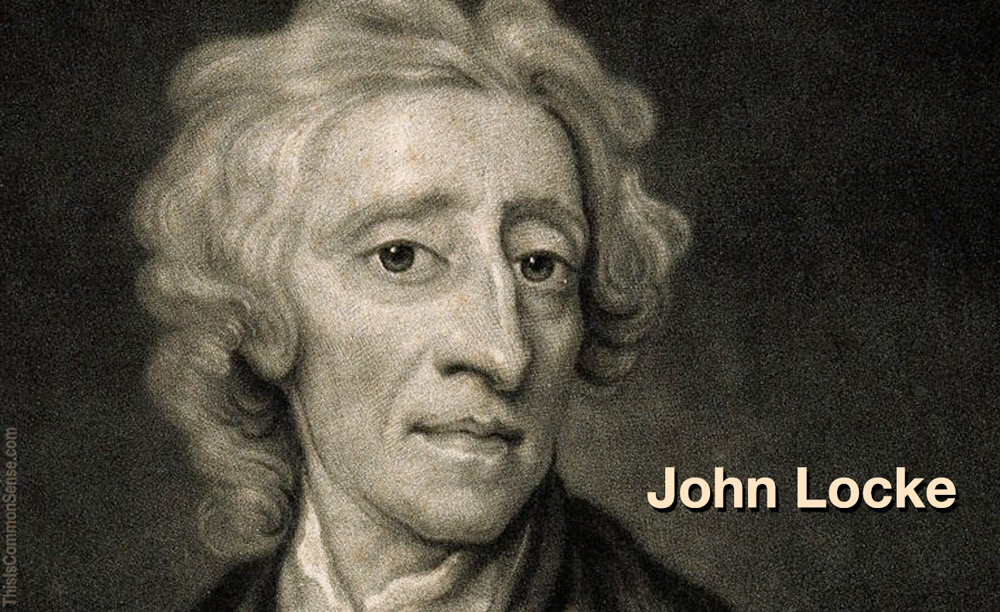
Ireland’s prime minister — or “Taoiseach” — is enthusiastic. “Speaking at the launch of the Climate Action Plan in Grangegorman today,” the Independent reported last week, “Mr [Leo Eric] Varadkar said the government would establish a Climate Action Delivery Board in the Department of the Taoiseach to oversee its implementation.”

The plan will deeply affect “almost every aspect” of Irish life. “The Government plans to force petrol and diesel cars off our roads,” the Independent elaborates, “introduce new buildings regulations and change the school curriculum in a bid to counteract climate change.”

Though the scope of the effort is breathtaking, Mr. Varadkar pretends he is being oh-so-humble and cautious, “nudging” citizens rather than going for a “coercive” approach.

Typical politician’s whopper, of course. Higher taxes on fuel and plastics, banning oil and gas boilers in new buildings, forcing private cars off city roads — this is all force.

Pretending otherwise is something akin to a Big Lie.

And all in service to the cause of reducing “greenhouse gas emissions by two per cent a year each year for the next ten years.”

Varadkar says he is doing it for the young and at the behest of the young . . . who have been propagandized to believe “that the world will be destroyed in a climate apocalypse.”

Well, the Taoiseach didn’t use the word “propagandized,” and insists that disaster is “not inevitable, it can be stopped, action can be taken.”

But Ireland’s contribution to the planet’s “greenhouse gases” is negligible. If all the Irish held their breaths and keeled over for the cause, they wouldn’t make a carbon dioxide burp of a difference.

It is a power grab. Not anything like a “nudge.”

This is Common Sense. I’m Paul Jacob.  


Ireland, global warming, authoritarian, totalitarian, control, climate,

See all recent commentary
(simplified and organized)
See recent popular posts

Categories
general freedom Popular Regulating Protest too much government

I Am Hong Kong

“I love my students so much,” a protesting teacher in Hong Kong told a BBC reporter, wiping tears from her eyes. “I worry about they cannot have the freedom we have before. They cannot speak what they want to speak like us. So, I don’t want . . . this.”

Her English grammar notwithstanding, she speaks a language we should all understand: Liberty.

“If there must be trouble,” Tom Paine wrote in The American Crisis, “let it be in my day, that my child may have peace.” As usual, it is the young, whose idealism and courage has not been worn down and compromised — and who have their own future children to fight for — who lead the effort, facing tear gas and truncheons. That is precisely what they’ve encountered in Hong Kong . . . along with pepper spray and rubber bullets . . . for now. 

It can get worse.

Nonetheless, millions of Hong Kong residents have taken to the streets against Hong Kong’s legislature considering a bill to allow Mainland China the power to extradite criminal suspects. People well understand that, if the bill passes, their civil rights will be extinguished in China’s crooked, totalitarian justice system.

What to do? Hope and pray for Hong Kong. 

But let’s draw some lessons. Freedom requires not merely bravery, but also unity. An attack on the rights of anyone is an attack on us all. And attacks on precious democratic checks on political power are attacks on everyone’s freedom. 

Instead of the United Nations, we need an organization of united citizens across the globe. People everywhere want to be free and democratic. We should work together . . . bypassing our governments.

This is Common Sense. I’m Paul Jacob.


PDF for printing

Hong Kong, protests, extradition, freedom, democracy,

See all recent commentary
(simplified and organized)
See recent popular posts
Categories
free trade & free markets general freedom too much government

Don’t Follow the Feds

“Federal agents never wear body cameras,” The Washington Post reports, “and they prohibit local officers from wearing them on their joint operations.”

That’s why a growing number of local law enforcement agencies are doing what Atlanta’s police chief and mayor “decided late last month,” pulling “out of joint task forces with the Drug Enforcement Administration, the FBI and the U.S. Marshals Service.”

The Justice Department supplies the usual excuses for their lack of transparency: they are “protecting sensitive or tactical methods” and “concerned about privacy interests of third parties.” But as Houston Police Chief Art Acevedo reminds, “if there’s a legitimate need to redact any [footage], there’s a process available for that through the courts.”

It is the height of hypocrisy, for the use of body cams has been “what they’ve been preaching,” St. Paul (Minn.) Police Chief Todd Axtell argues, referring to the Justice Department’s funding and training of local police forces in body-camera usage. “It’s ironic they aren’t complying with what they preach to be so important in policing.”

Ironic? Sure. 

Par for the course? Indeed.

The bad example federal police agencies set is hardly limited to body-camera use. In states where legislation has reduced or ended the outrageous practice of civil asset forfeiture — whereby police can take and keep cash and property from people never accused or convicted of any crime — the Feds are there again to facilitate the thievery known as “equitable sharing.”  

“Federal forfeiture policies are more permissive than many state policies,” a 2016 Post report explains, “allowing police to keep up to 80 percent of assets they seize.”

Make sure your local and state police don’t follow the Feds.

This is Common Sense. I’m Paul Jacob.


PDF for printing

body cam, camera, police, feds, federal, crime, law,

Photo credit: North Charleston

See all recent commentary
(simplified and organized)
See recent popular posts

Categories
general freedom ideological culture individual achievement Popular

Abolishing You

In a recent Washington Post essay — “Is the individual obsolete?” — syndicated columnist George Will tackled the “you didn’t build that” theme that President Obama blurted out on the 2012 campaign trail, borrowed from a not-obscure-enough (and now former) Harvard Professor, Elizabeth Warren.

“What made Warren’s riff interesting, and Obama’s echo of it important,” wrote Will, “is that both spoke in order to advance the progressive project of diluting the concept of individualism.”

Mr. Will called it “a prerequisite for advancement of a collectivist political agenda,” adding “the more that any individual’s achievements can be considered as derivative from society . . . the more society is entitled to conscript — that is, to socialize — whatever portion of the individual’s wealth that it considers its fair share.”

Some fairness.

“This collectivist agenda,” he explained, “is antithetical to America’s premise, which is: Government — including such public goods as roads, schools and police — is instituted to facilitate individual striving, a.k.a. the pursuit of happiness.”

It’s a great read, but of course, George Will ‘didn’t produce that.’ Without the Post publishing it, without the police preventing progressive lynch mobs from stringing him up prior to typing it up, without the delivery person tossing it on my driveway or Al Gore’s amazing internet . . . I couldn’t have read it. 

To some, these “unremarkable” facts diminish Mr. Will’s work product. To me, it shows just how crucial his contribution is — creating jobs for all these other folks. 

After all, I don’t purchase the newspaper merely to provide jobs for paper boys, printers or the police. That’s simply a beneficial byproduct.

This is Common Sense. I’m Paul Jacob.


See all recent commentary
(simplified and organized)
See recent popular posts

Categories
general freedom term limits

What Tiananmen Inspired

Why did term limits spring up in the 1990s?

Term limitation has a long history in America, of course — and all the way back to Aristotle — but why the resurgence? I remember opponents suggesting that Americans were frustrated with slow economic growth. 

Not likely. 

In “Restoring Faith in Congress,” a 1993 article in the Yale Law & Policy Review, authors Kimberly Coursen, Thomas Mann, Norman Ornstein and Todd Quinn recognized that “the 1990s are different” because “the climate for far-reaching political reform is ripe.”

But why?

For seven weeks in 1989, Chinese students protested for freedom and greater democracy, joined by others until more than a million people filled Tiananmen Square. Americans were deeply moved by their makeshift Goddess of Democracy, resembling our Statute of Liberty, as well as by the students’ demands, which read much like our Declaration of Independence. 

Then, all that hope was doused, courtesy the Butchers of Beijing.

Five months later, the Berlin Wall came down, followed by the overthrow of communism throughout Europe, then the fall of the Soviet Union in 1991.

No more Cold War. 

Americans, lacking an external enemy for the first time in decades, and with Tiananmen’s “tankman” fresh in our minds, could at last safely take a good look at our own government. 

We did not like what we saw.

In 1990, Americans in three states — California, Colorado and Oklahoma — used direct democracy by petitioning term-limit initiatives onto the ballot. All three won. In 1992, U.S. Term Limits rallied voters to pass initiatives in a record 14 states.  

Sadly, the 1989 Tiananmen Square protests did not usher in freedom for China. Yet, they lit fires in hearts across the globe.

Including mine.

This is Common Sense. I’m Paul Jacob.


PDF for printing

Tiananmen Square, China, Goddess of Democracy, term limits, freedom,

See all recent commentary
(simplified and organized)
See recent popular posts