Categories
folly free trade & free markets general freedom moral hazard nannyism national politics & policies property rights responsibility too much government

What’s the Big Deal?

Big news: in a $69 billion deal, CVS Health Corp. plans to buy Aetna Inc. The AP story by James F. Peltz says the move “would shake up healthcare industry.”

Should we worry?

Because corporations aren’t cancerous, growth and consolidation are not to be feared as such.

But speaking of cancerous growths . . . the federal government will not likely take the news of the merger with the tranquility of a Taoist sage.

Over at Forbes, last month, Bruce Japsen predicted that the deal wouldn’t go through, arguing that “a full-blown merger of the healthcare giants would be complicated and unlikely given recent antitrust scrutiny in the sector and given that the drugstore chain is already going into business with an Aetna rival, Anthem.”

Government antitrust to the rescue?

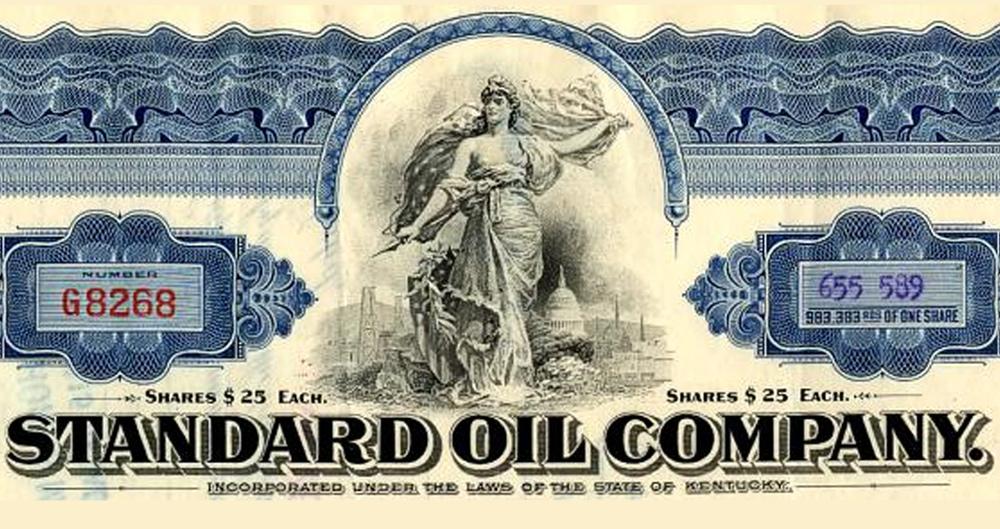
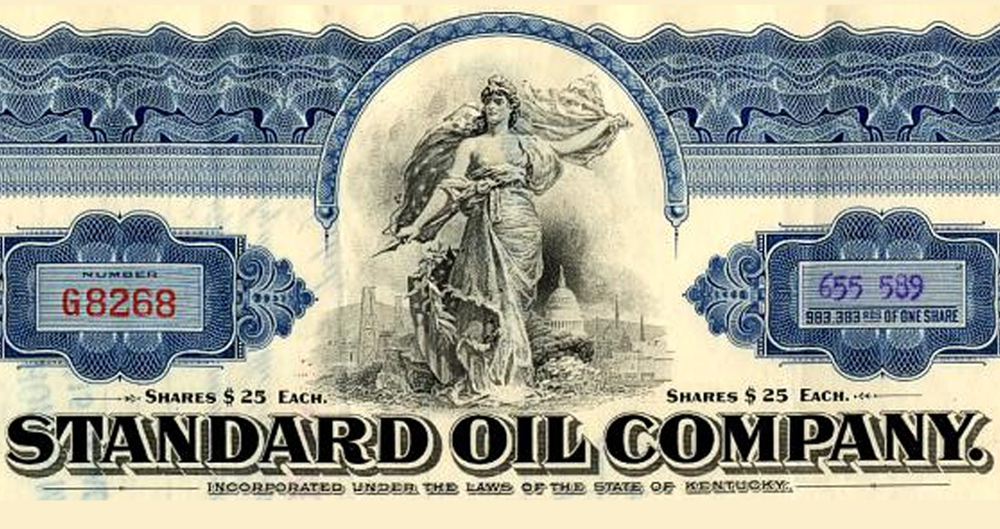
No. We may have been schooled to believe that antitrust “protects competition,” but it has always limited competition, instead. Antitrust was always about fear — of bigness. It was definitely not designed to help consumers. The classic case is the infamous break-up of Standard Oil, which produced more fuel while lowering prices — even as it grew humongous.* Standard Oil grew because it satisfied consumer demand. Which is what businesses are for.

And yet government broke it to pieces, using antitrust rationales, for the benefit of some producers, some businesses.

Think of it as crony capitalism in action.

So, my remaining question runs like this: is the CVS/Aetna merger a response to pure market demand, or as a way to wiggle around insane state and federal regulations?

Health care in America is sick. The merger is not likely the cure. But it would not kill the patient.

We have government for that.

This is Common Sense. I’m Paul Jacob.


* For background, consult the studies of economist Dominick T. Armentano.

PDF for printing


Categories
Accountability free trade & free markets insider corruption moral hazard national politics & policies porkbarrel politics responsibility too much government

Cry Me an Amazon

My idea of a “free market” is not our politicians’. Their idea is to give away free stuff to their new and old business buddies . . . at everyone else’s expense.

That sort of “crony capitalism” has been writ large per Amazon’s search for a location for a second headquarters (HQ2). The world’s biggest retailer — valued higher on the market than all other major retailers combined — announced it would spend $5 billion and bestow 50,000 new jobs on HQ2’s locale. Subsequently, 238 cities, states and provinces in the U.S., Canada, and Mexico offered to take from their current citizenry to give unfairly to Amazon.

Chicago’s proposal would allow Amazon to keep the income taxes their employees pay. Seriously. This “personal income-tax diversion” would add up to over a billion dollars for the company.

New Jersey state government offered a cool $7 billion in subsidies should Amazon choose to locate in Newark.

Seattle Times columnist Danny Westneat described this sorry spectacle of subsidy as not so much a corporate “takeover” as a government “surrender.”

The most egregious example, though, has to be Fresno, California, where the city “promises to funnel 85 percent of all taxes and fees generated by Amazon into a special fund. . . . overseen by a board, half made up of Amazon officers . . . supposed to spend the money on housing, roads and parks in and around Amazon.”

“Rather than the money disappearing into a civic black hole,” explained Larry Westurland, Fresno’s economic development director, “Amazon would have a say on where it would go.”

Selling out the taxpayers? Moolah in the millions. Referring to a normal city budget as a “black hole”? Priceless.

This is Common Sense. I’m Paul Jacob.


PDF for printing


Categories
Accountability folly free trade & free markets general freedom ideological culture media and media people moral hazard nannyism national politics & policies Popular responsibility

Don’t Think Different

What do we know for sure about the resignation of Apple’s “vice president of diversity and inclusion,” Denise Smith?

  1. She is a black woman who landed in hot water for saying that a group of blue-eyed blond men can also be “diverse,” because “they’re going to bring a different life experience and life perspective to the conversation. Diversity is the human experience. I get a little bit frustrated when diversity . . . is tagged to the people of color, or the women, or the LGBT.”
  2. An uproar ensued among persons who favor making characteristics like sex and skin color — as opposed to talent, perseverance, intellect — a top priority in hiring.
  3. Smith then apologized, seeming to disparage her own correct and much-needed statement defending genuinely relevant diversity.
  4. She has left Apple.

What outsiders don’t know for sure is whether Apple asked Smith to leave because of what she said. We can be merely 99.99 percent sure that Apple requested her departure for making her excessively un-same and sane observation.

Not good, Apple.

Excellence and common sense should never be sacrificed to “diversity.” Sub-perfect “diversity” has not impaired Apple’s ability to make popular and effective smartphones bought by persons of every description.

Indeed, no company should be in the least concerned with promoting “diversity” if this means trying to increase the proportions of employees of a certain race, sex, weight, height, blood type, timbre, etc. even when such traits are blatantly irrelevant to prospective job performance.

This is Common Sense. I’m Paul Jacob.


PDF for printing


Categories
Accountability folly free trade & free markets general freedom ideological culture media and media people national politics & policies responsibility

Coffee in the Age of Covfefe

You might think that that coffee could not be spoiled by today’s politics, but, well, consider the Keurig line of coffee-related products. I’m a Starbucks man, myself, but one of the great things about capitalism is that I can have my tall (or grande) latte and you can have your home-brewed Keurig cup of java.

Enter Media Matters.

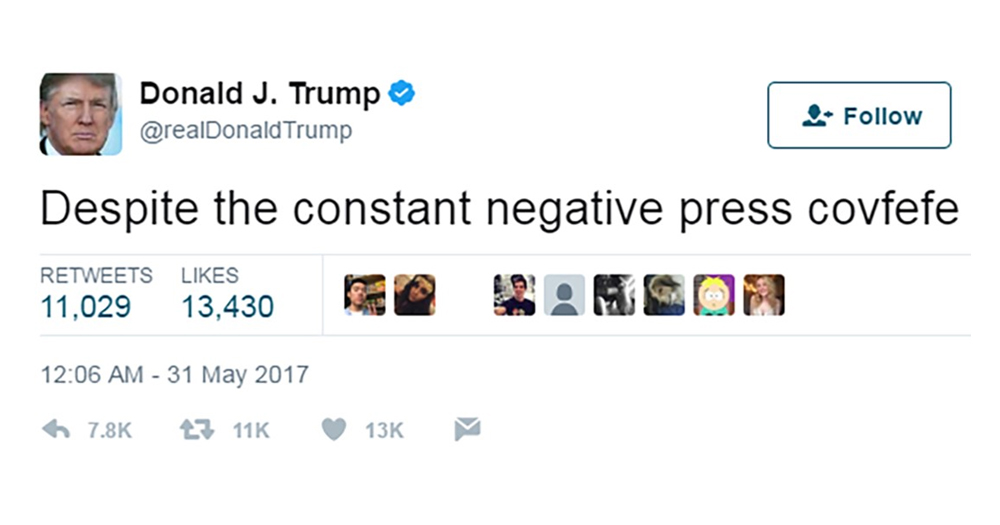
You might think of the outfit as the subject of President Trump’s enigmatic tweet of several months back . . .

. . . which is all he wrote.

He obviously meant “negative press coverage,” but got distracted. And the typo took on a life of its own.

But Media Matters, a dirty player in the politico-cultural wars (pretending to be a watch dog outfit), stepped in. One of Media Matter’s negative employees tweeted

Good afternoon @Keurig. You are currently sponsoring Sean Hannity’s show. He defends child molester Roy Moore and attacks women who speak out against sexual harassment. Please reconsider.

And Keurig capitulated, pulling their ads from Hannity’s show.

Now, as far as I can tell*, Sean Hannity did not defend “child molester Roy Moore.” Understandably, Hannity’s fans struck back, not only initiating a public boycott, but made the whole thing viral by trashing the Keurig coffee makers in online videos.

This is the result of going full Alinsky.**

And there appears to be a clear bad guy here, clearer even than Roy Moore’s alleged crimes: Media Matters lied to squash Hannity for reasons having nothing to do with the Alabama Senatorial race.

Media Matters embodies “covfefe.” And the negativity has spilled out of politics and into the beauty of everyday life. Coffee.

This is Common Sense. I’m Paul Jacob.


* The YouTube recording of Hannity’s interview of Judge Moore that I listened to has been pulled, so there’s no point in linking to it. Instead, consider Ben Shapiro’s take and other non-covfefe at The Daily Wire.

** Never go full Alinsky.


PDF for printing


Categories
Accountability crime and punishment free trade & free markets general freedom ideological culture moral hazard nannyism national politics & policies property rights responsibility too much government

The Owners of Twitter Have Rights

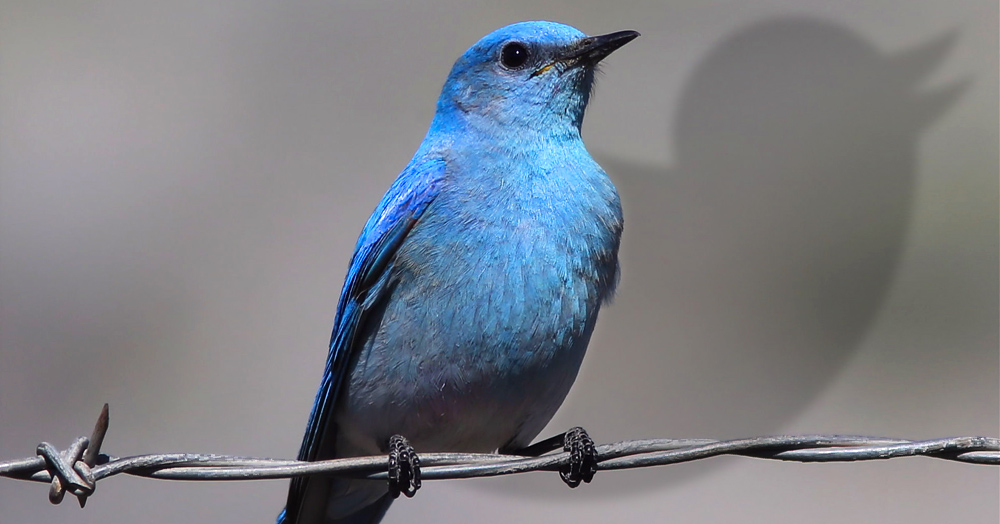
Roger Stone is suing Twitter for kicking him out.

Without saying exactly why they booted him, Twitter implies that the reason is abusive language. For his part, Stone accuses the social media giant of targeting right-wing tweeters while letting left-wing tweeters off the hook for the same or worse alleged wrongdoing.

I’ll stipulate that Stone is justified in accusing Twitter of rank, ideologically motivated hypocrisy in applying its micro-blog policies. But he’s wrong to sue.

As I have argued before — indeed, just yesterday — government should not regulate Internet forums and should not compel Twitter or other firms to provide a soapbox for anybody else. The only relevant legal issue here is whether Twitter has violated a contract. But Twitter does not agree to let anyone use its services unconditionally. And I don’t think that Stone is alleging any violation of contract.

Our right to freedom of speech does not include the right to force others to give us access to their property in order to exercise that freedom. Nor do the rights of any individuals to use and dispose of their own property disappear if they happen to create a very big and successful enterprise. There are many ways to try to make Twitter pay for bad policies without using force against the company, including boycott and direct competition.

I agree with the guy who said that one’s right to freedom is not contingent upon a guarantee “that one will always do the right thing as others see it.”

This is Common Sense. I’m Paul Jacob.


PDF for printing


Photo by Nigel on Flickr


Categories
Accountability folly free trade & free markets too much government

Jonesing for Disaster

First, do no harm. Second, stop harming.

You might think that these would be the Two Commandments of Government.

But no.

Politicians make a good show of saving us, sure. Sadly, appearance alone suffices. For them. Much easier to announce a new program than get rid of a harmful old one.

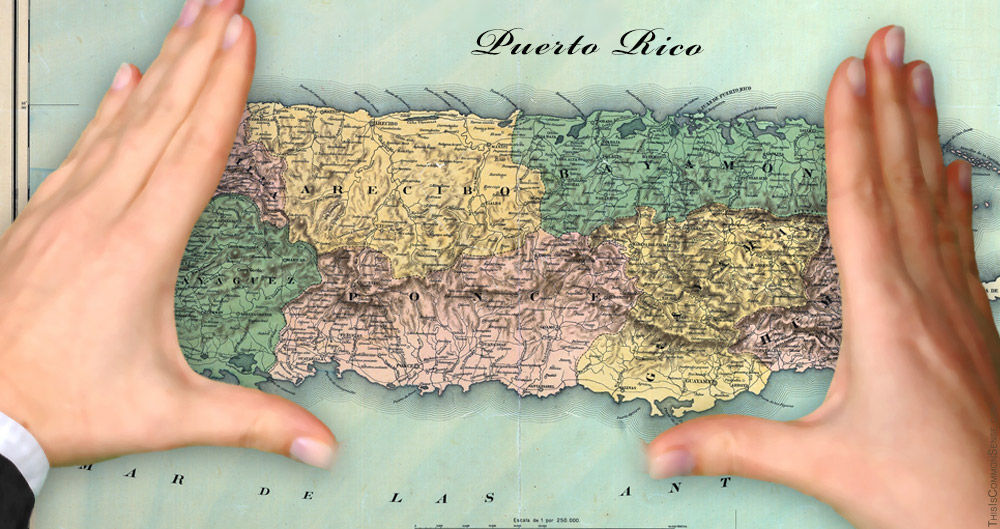
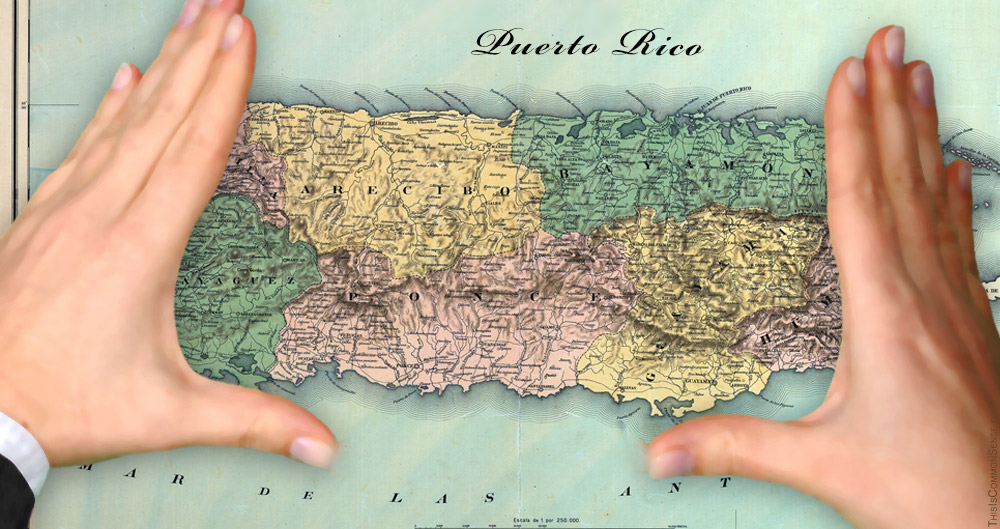
Latest case? Courtesy of a storm and a new president, we now get to witness hurricane recovery mismanagement all over again, but this time outside the continental United States.

“The administration announced some bad news for Puerto Rico,” writes Scott Shackford at Reason. It will not, Mr. Shackford explains, “be waiving the Jones Act, which significantly restricts the ability of foreign or foreign-owned ships from bringing goods to Puerto Rico.”

The “unincorporated U.S. territory” that is the island must take its lumps.

The Jones Act* limits foreign ships port access . . . down to one. The mandate allowing port-to-port commerce only to American-manned ships is designed to save a few jobs and grease a few union wheels in the mainland.

And now, especially, that old, ongoing “centralized government planning for the benefit of a small group of powerful U.S. shipping interests” amounts to a real kick to a people already devastated by Hurricane Maria.

Closing ports to much needed help doesn’t help. An emergency order could suspend the ongoing harm of throwing roadblocks in the way of a swift recovery and rebuilding.

Or Congress could repeal the Jones Act entirely.

Neither is likely.

So the wounded Puerto Ricans — prior to the storm hobbled by years of territorial misgovernance — can expect more fake government help.

This is Common sense. I’m Paul Jacob.


* Not to be confused with the Jones-Shafroth Act of 1917, which set up territorial  governance of the island.


PDF for printing


Categories
Common Sense folly free trade & free markets general freedom ideological culture media and media people moral hazard nannyism national politics & policies

Evil Capitalists Hook Brazil On Eating

Have you heard the latest?

More and more peoples around the world these days have the unfortunate misfortune of having adequate food — not merely vegetables either!! — thanks to the ruthlessly profit-seeking food producers and their unconscionable engagement in the division of labor, capital accumulation, and international trade.

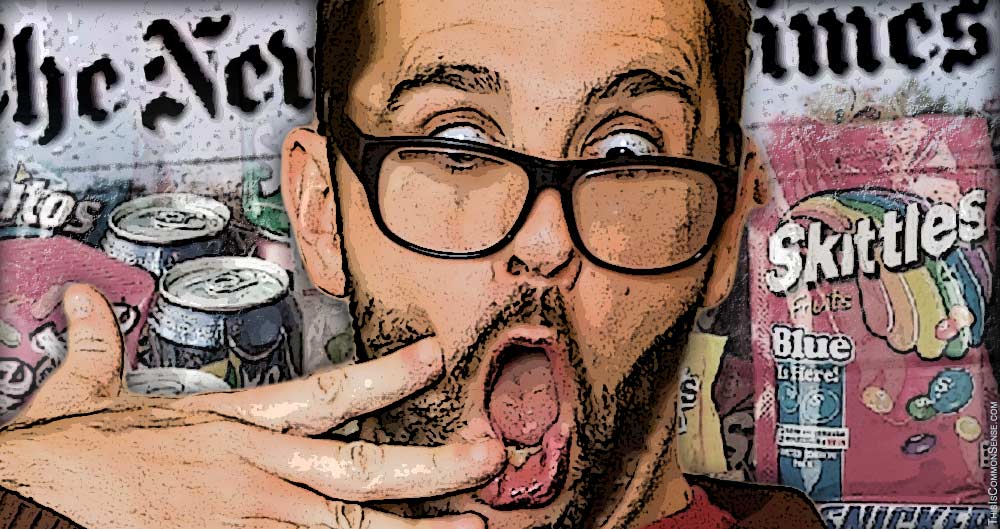
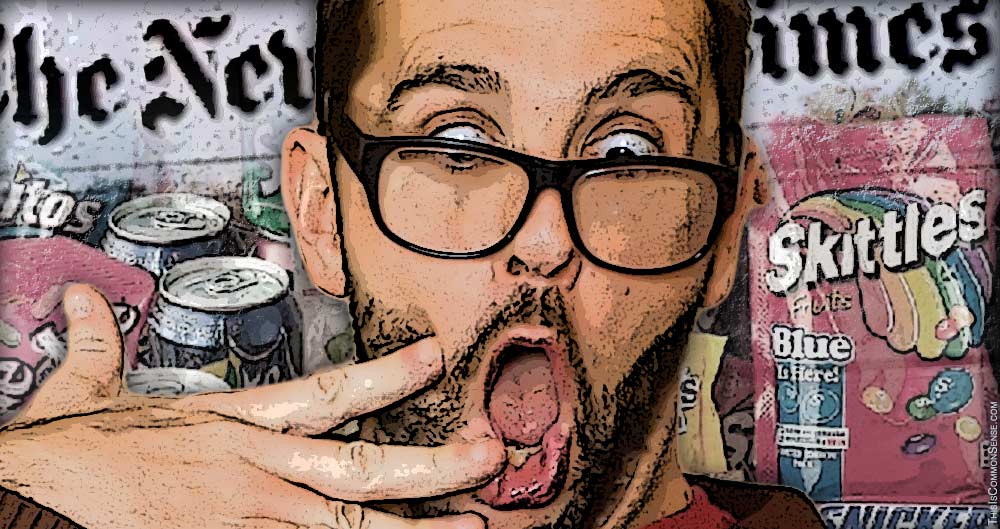
It’s right there in The New York Times, which is, as you know, the paper of record.

“DealBook: How Big Business Got Brazil Hooked on Junk Food.”

Dastardly! Those Big American Businessmen must have kidnapped the Brazilians, strapped them into chairs, and pumped Doritos into those poor souls with a syringe. Heaven knows, the fecklessly irresponsible Brazilians can’t be held responsible for their own diets.

How bad is it?

This bad: “As growth slows in wealthy countries, Western food companies are aggressively expanding in developing nations, contributing to obesity and health problems.”

One expert quoted in the story (no hungry people consulted) says, “Part of the problem . . . is a natural tendency for people to overeat as they can afford more food.”

Worse than Hurricane Irma!

Thanks to the Times’s aggressive investigative journalism, we know that these brazenly food-selling companies do not even nag their international customers to be careful about their diets. Ergo, it’s chips and other indiscriminately convenient snacks for everybody, no strings attached.

It’s become all too easy to be well-fed and overfed and mis-fed.

Thanks a lot, capitalism.

Oh for the good old hunting-and-gathering days when human beings spent much of their time starving, and the world had the human population of Binghamton. No problem with anyone gorging on Twinkies and Doritos back then. No problem of epidemics of corpulence.

We’ve lost that swell paradise . . . perhaps forever.

This is Common Sense. I’m Paul Jacob.


PDF for printing


Illustration based on original photo by David Goehring on Flickr.


Categories
Accountability free trade & free markets general freedom moral hazard nannyism responsibility too much government

Wabbit Season — or Duck Responsibility Season?

Venezuelans are starving. The country’s children are malnourished and — if something is not done soon — “it will be very difficult for these children ever to get back onto their nutritional growth curve.”

That is the testimony of the director of Caritas Venezuela.

Clearly, “Bolivarian” socialism has failed.

And yet, dictator Nicolas Maduro blames American “sanctions” for “exacerbating” the situation.

And offers up a “Rabbit Plan” to feed the people.

Yes, Maduro has called upon his countrymen to raise rabbits . . . and eat them.

But the source of the dark comedy isn’t just a dictator waxing eloquent on bunnies. “There is a cultural problem because we have been taught that rabbits are cute pets,” said the agriculture czar . . . whose first name is “Freddy.”

Holding a televised press conference with Maduro himself, last week, he insisted that “a rabbit is not a pet; it’s two-and-a-half kilos of meat that is high in protein, with no cholesterol.”

The funny part — the gallows humor, here — is this is what the grand planning of socialism has come to: not mass collaboration and an extended division of labor, but the people feeding themselves on small plots of land.

The Inca had developed a more effective mode of socialism.*

Just as humiliating for Bolivarians must be the trade embargo charge. Socialism is all about how superior government control is to the “anarchy in production” of market life. To blame their problems even a little on a capitalist country >not trading with them doesn’t merely admit defeat, it evades the last shred of responsibility.

I have a better “Rabbit Plan”: the tyrants should hop on down the bunny trail . . . freeing Venezuelans to recover.

This is Common Sense. I’m Paul Jacob.


* It depended upon radical inegalitarianism, subordination, drudgery, servility, and lack of any meaningful freedom.


PDF for printing


Categories
free trade & free markets general freedom moral hazard nannyism national politics & policies responsibility too much government

Free the Truck Drivers

Should our government liberate truck drivers from the country-wide prison in which they’re incarcerated?

You say I’m exaggerating. Being metaphorical.

Yes. Maybe metaphors and hyperbole are not to your taste, but suggesting an analogy, at least, is more than justified. The government does treat truck drivers like inmates . . . with no right to plan their own schedules.

In an article for The Federalist (“‘Overregulation’ Means Government Literally Deciding When I Work, Eat, Sleep”), Matthew Garnett attests to what the regulations mean in practice. He must obey five deadlines, only one — showing up on time — related to the objective requirements of the job. Also: He may work only so many hours before taking a break, only so many hours on the job and driving, only so many hours on the job and not driving, only so many hours per week.

“There’s no way I can decide for myself when I’m going to sleep or rest or drive,” Garnett “concedes.” “After all, I’m just a stupid truck driver. What would I know about such things?”

The mandatory pacing means that drivers often rush to meet a bureaucratic deadline even if they’d rather travel more slowly and safely. And rushing can be “a very, very bad thing to do when you’re operating an 80-foot, 80,000-pound vehicle that will go 70 miles an hour downhill,” Garnett observes.

What to do? Repeal it all.

Of course, hold the truck driver, like every other driver, responsible for conducting himself safely.

But don’t force him to obey continuous and arbitrary edicts about when to stop and go.

This is Common Sense. I’m Paul Jacob.


PDF for printing


Categories
Accountability free trade & free markets general freedom national politics & policies property rights Regulating Protest

Union Dues, Don’ts

You may soon be able to shred your union card — if you are careful.

By “you” I mean You, the reluctant union member.

If you’re not one, though, perhaps you know somebody who is, someone who’d be happy to learn that the Supreme Court is on the verge of dealing a huge setback to coercive unionism.

John Hinderaker explains at Power Line. The Supreme Court is expected to soon decide a major case in a way that “bar[s] public employees from being forced into unions, or from being required to support unions via the fiction of ‘fair share contributions.’ ” (Much of that money goes straight to Democratic Party coffers.) With Neil Gorsuch now on the bench, a 4-4 holding pattern is expected to become a 5-4 decision in favor of plaintiffs suing for freedom from mandatory union membership.

Sounds good.

Problem is, though, that union officials are working to trick members into paying dues in perpetuity. For example, Education Minnesota is trying to con its 86,000 teachers into signing “Membership Renewal” forms assenting to automatic renewal of fees – unless the signatory makes a special effort to opt out.

The union hopes members will sign the cards and forget about them, continuing to fund the unions, and Democratic politics, indefinitely — even if the high court rescues everyone from mandatory membership.

So, if you happen to be trapped in a union at the moment — watch what you sign. And watch the news.

This is Common Sense. I’m Paul Jacob.


PDF for printing