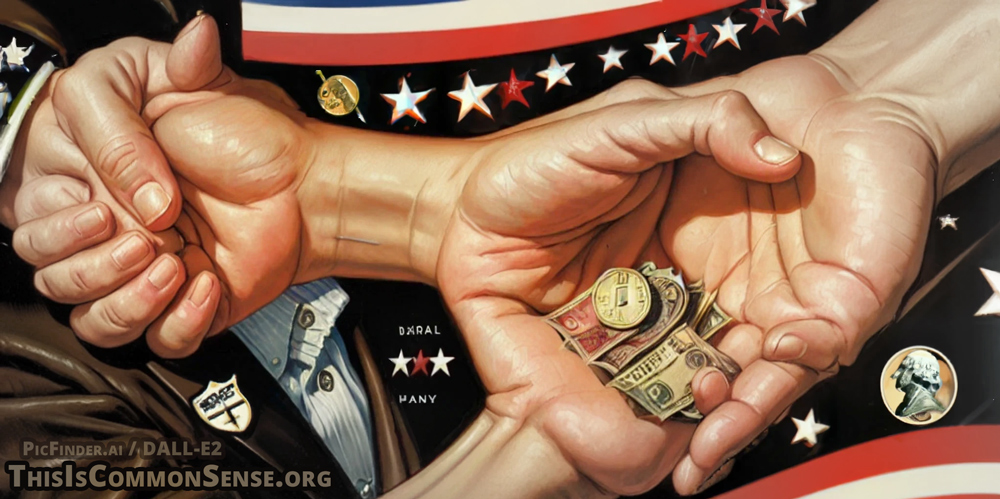
Civil forfeiture laws allow officers of the law to commit theft. Sometimes they have to return the money they stole. But they don’t get punished.
Under civil forfeiture, authorities can grab cash or other possessions without proving criminal wrongdoing and without making an arrest. Since 2000, though, a federal law has made the federal government liable for reasonable attorney fees when a victim “substantially prevails” in court.
This law enabled Brian Moore, a rap artist, to eventually obtain compensation for thousands in legal costs after he sued to recover the $8,500 taken from him by federal drug agents.
One day in 2021, Moore took this cash, which he had inherited from his grandfather, to the airport. He hoped to fund production of a music video in Los Angeles, his destination. He was thwarted.
Even after a judge ruled that Moore could get his money back, he had to keep fighting, now with the help of Institute for Justice, to be compensated for legal fees. Eventually, he won that battle too.
But he won only after wasting a lot of time and suffering a lot of anxiety because officers of the law, with no evidence of wrongdoing, treated a person carrying cash as guilty of something just for carrying cash.
It was like Mount Everest. The officers took Moore’s stuff because it was there.
And they knew what they were doing. Such conduct should be punishable. If it were, it wouldn’t happen so often.
This is Common Sense. I’m Paul Jacob.
Illustration created with Krea and Firefly
See all recent commentary
(simplified and organized)
See recent popular posts