Categories
Accountability ballot access initiative, referendum, and recall local leaders national politics & policies political challengers U.S. Constitution

Free to Choose

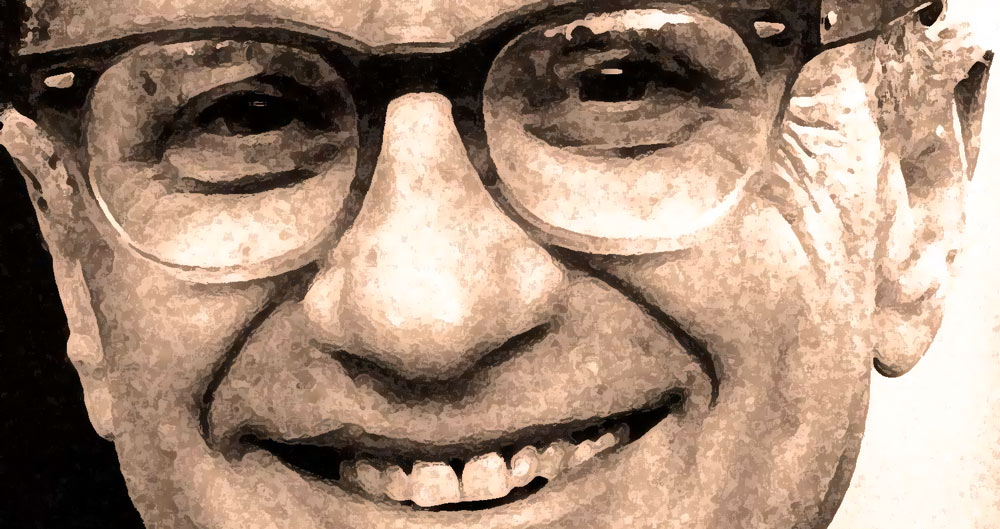
“I think that the most effective way one could possibly move toward greater freedom in the United States, toward a smaller role of government, would be if we could only have a more democratic society.”

Who said that? A Democrat?

No.

The speaker quickly added, “I don’t mean a capital-D, I mean a small-d.”

“That is, I mean if we could have referenda,” the late Milton Friedman explained back in 1987.

The Nobel Prize winning economist — and co-author with wife Rose of the bestselling Free to Choose* — was referring to the initiative and referendum process, whereby citizens vote on laws, and in the case of initiatives directly place measures onto the ballot.

Citizens enjoy initiative and referendum rights in twenty-four states and roughly 60 percent of cities throughout the country.

“The public at large has always shown itself,” Dr. Friedman observed, correcting himself, “has almost always shown itself to be more libertarian in its views than have their elected representatives.”**

Friedman was not suggesting that a bad law becomes good because it was passed at the ballot box. He simply weighed the odds between two distinct sets of voters. Legislators are a small group, the personal power of each one so closely tied to government that politicians’ personal interests often compete against the public’s. Conversely, the much larger group of voting citizens almost defines the public interest.

Perhaps I was channeling the great doctor of economics when I was once asked, “Do you trust the people?”

My reply?

“No. But I trust the people a whole lot more than I trust the politicians.”

This is Common Sense. I’m Paul of Jacob.


* The book was first published in January 1980, in tandem with PBS’s airing of the popular “Free to Choose” series.

** He spoke this at a California Libertarian Party conference. Tough crowd.

PDF for printing


Categories
Accountability general freedom ideological culture media and media people moral hazard national politics & policies Regulating Protest

Gatekeeping 2.0

There once was opinion hegemony, almost a monopoly. Official gatekeepers kept unwanted ideas — including some of mine, including many I strongly oppose — out of public consideration.

Then came the online media revolution, which switched influence from corporate, academic-approved media outlets to truly new media, like Facebook, Twitter and YouTube.

And now? The counter-revolution.

We saw it obviously in the downgrade and then banning of Milo Yiannopoulis’s Twitter, last year. Since then, new measures surface on a regular basis.

We helots, we commonfolk, must not be allowed actually to affect an election!

Or the hearts and inquiring minds of Americans, Europeans, and others worldwide.

Unless that opinion has received the imprimatur of the Center-Left.

I’ve written about this return of the Gatekeeper mentality before. The latest malefactor is YouTube, which locked Dr. Jordan Peterson out of his account this week* as well as put in place new policies to hobble the social sharing elements of YouTube.**

A week or so earlier, Patreon, an online crowdfunding patronage web service I’ve been thinking about trying out, cancelled independent journalist Lauren Southern’s account. Patreon managers charged that her most recent endeavor might cause “loss of life,” but, tellingly, “showed no evidence or proof, are allowing no appeal and have acted as judge, jury and executioner” — as one concerned netizen not inaccurately summarized.

The company’s CEO calmly explained himself to Dave Rubin on YouTube. Does he convince you?

I catch a whiff of panic.

This is Common Sense. I’m Paul Jacob.


* Dr. Peterson’s account has since been reinstated, no explanation given.

** You can learn all this and more on YouTube itself — so the platform hasn’t been shut down as such. Instead, a new Artificial Intelligence will restrict videos that do not even break YouTube terms of service, removing Likes, Comments, and Search features.


PDF for printing


Categories
Accountability education and schooling free trade & free markets general freedom local leaders national politics & policies responsibility too much government

SEZ Ed

The great barrier to educational advance in our time is the federal government. The second great barrier? Your state government. The third great barrier? Your local government.

Proposals to break up government-subsidized and -enforced school monopolies have ranged from tax credit proposals and voucher programs to charter schools and (the biggest success so far) home schooling.

But it may be time to advance something a little . . . more daring. Break the stranglehold of government on dysfunctional schooling.

How?

Apply the “free trade zone” (FTZ) idea to education.

We remember the FTZ proposal because of its rise in popularity amongst academics and policy wonks in the 1980s and 1990s. But the notion is an old one. And in China, where they are called “special economic zones” (SEZs) — and it is this term that is catching on — they have been amazingly successful, the former fishing village of Shenzhen being the most obvious example.

What about America? Take a devastated region, like inner-city Chicago or Detroit,* and simply nullify the regulations and rules. (This probably would require federal enabling legislation on top of state leadership.) With the ensuing freedom and opportunity, entrepreneurs, established businesses and schools, teachers, community groups and activists could cook up new solutions to the oldest schooling problem there is:

actual education.

I’ve heard whispers of this Educational SEZ idea for some time now.

It is time for rational and quite public discussion.

And then the shouting.

This is Common Sense. I’m Paul Jacob.


* Of course, any area could work. The reason to focus on demonstrably failed educational regions is that such areas have lost hope, and thus the politically resistant are likely to give in and allow it.


Printable PDF


Categories
Accountability incumbents initiative, referendum, and recall term limits

The Junk Bond State

What a pleasure — comparing notes with Nick Tomboulides, executive director of U.S. Term Limits, my old job.

Speaking on a panel last week at the Young Americans for Liberty National Convention,* Illinois came up. Nick agreed that if the Land of Lincoln had a term-limited legislature, we would never have heard the end of it: “Term limits are a failure!”

Illinois, you see, is a failed state, confessing the lowest credit rating in history.

Only a notch above junk bond status.

The media would have incessantly blamed “inexperience” for the fiscal implosion.

In reality, though, Illinois is a career politician’s paradise. Speaker Michael Madigan (D-Chicago) has spent the last 45 years in the legislature and all but two of the last 34 years as the chamber’s top banana.

Oh, it’s been a great ride for this longest-serving House Speaker in modern history. He’s grown wealthy while “serving” in office — and provided himself with a lucrative (and curiously gamable) state pension.

On the panel, Mr. Tomboulides highlighted “Ranking the States by Fiscal Condition,” a recent study by the Mercatus Center at George Mason University. Though only 15 of the 50 states have term-limited legislatures, those term-limited states represent a majority, eight of the top 15 ranked states. Among the states ranked at the very bottom, none have term limits.

“For years they’ve warned that term limits would lead to inexperience which would produce fiscal ruin,” Tomboulides wrote at the U.S. Term Limits blog. “This report proves the opposite is true — that term limits states do better than those run by prehistoric politicians.”

And yet, somehow, not once have Nick or I seen the state’s financial woes blamed on careerism.

This is Common Sense. I’m Paul Jacob.


* Feel good about the future: Very smart group of young folks at this YAL event.


Printable PDF


Categories
Accountability general freedom ideological culture initiative, referendum, and recall local leaders moral hazard national politics & policies

Reactionary America

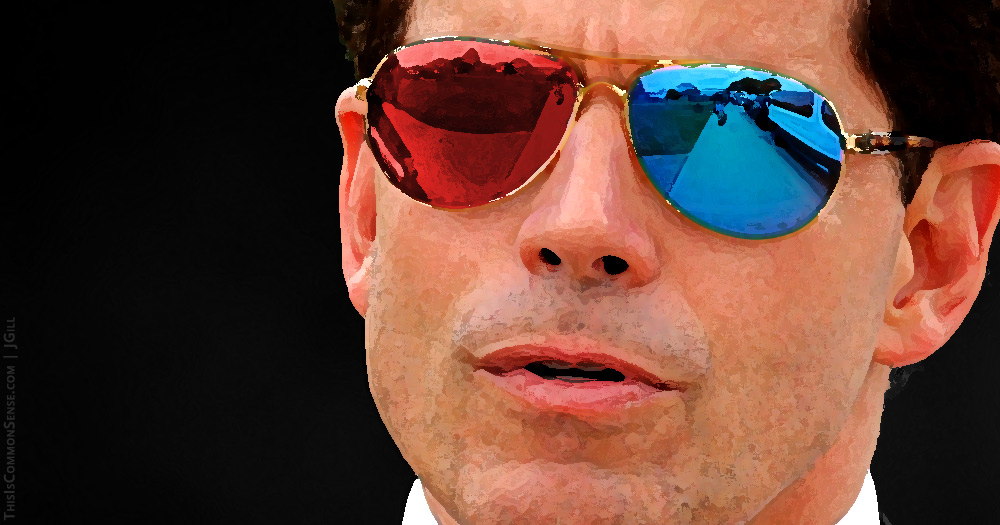
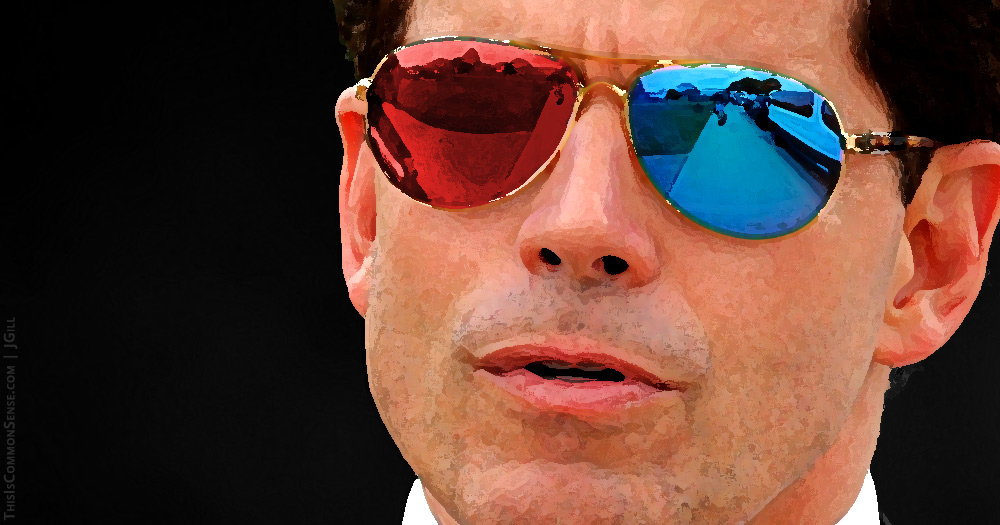
With the meteoric transit of Anthony Scaramucci — into the Trump Administration and then, in an eye-blink, out of it — I have never been more convinced of the vital importance of state and local activism.

Yes, it’s been a chaotic week in Trumptown. The new White House Director of Communications vulgarly communicated himself into administrative excommunication. So to speak.

Everybody’s heard the vulgarisms; we’ve all processed the insanity. It looks like Mr. Scaramucci is one of those professionals who think everybody else is an idiot, and in so thinking it, proves himself to be what he himself despises. @#$%&?!

The man nicknamed “The Mooch” screwed the pooch, as we now say, and we can all shake our heads and . . .

what?

What is the lesson?

We have long known the worst: our national politics is broken. It has been for a very long time. Is it possible we never recovered from the LBJ and Tricky Dick fiascos of my childhood? The parties have become more ideological and less regional, while the regions have become . . . less rational. The only word seems to be . . .

reactionary.

The press reacts to the president’s tweets, and the president tweets in response to media reaction.

Progressives hate progress; conservatives conserve nothing.

“Reactionary” is the apt word, despite all the term’s past Marxist associations, because no one seems able to think forward, independent of partisan oppositionalism.

Don’t drive yourself crazy with this. Look homeward; think locally, act locally, and let’s build on a solid foundation.

This is Common Sense. I’m Paul Jacob.


Printable PDF


Categories
Accountability folly free trade & free markets general freedom ideological culture moral hazard nannyism national politics & policies too much government

ObamaCare’s Casualties

We all know the truth: Partisan “warfare” yields the usual war casualty, truth itself. Now, because of the increasing weight of federal government presence in healthcare markets, partisan untruth incurs medical costs.

Take the goofy Republican plan(s) to “repeal and replace” ObamaCare — pushed with so many half-truths and downright lies that one wonders where to begin. But before die-hard Republicans get too incensed about this judgment, let’s note that the supporters of the mis-named “Affordable Care Act” are no better.

Probably worse.

“Fact-checking,” writes David Harsanyi on the media mishandling of ObamaCare, “has evolved from an occasionally useful medium to an exercise in revisionism and diversion.” Journalists now seem more like spin doctors.

And their patient? The reputation of ObamaCare’s namesake.

One journalist, for example, insists that “Obama didn’t lie or ‘mangle facts’ or mislead anyone,” Harsanyi writes.

What does this journalist claim Obama did in repeatedly promising “if you like your doctor you can keep your doctor”?

Well, “he gave a ‘misguided . . . pledge.’ The word ‘misguided’ intimates that Obama wasn’t misleading anyone on purpose.”

It helps the former president save face if he accidentally got us in this fix. He had the best intentions, you know.

Worse yet, as both sides snipe about these little untruths, they lose sight of the biggest truth, which I wrote about this weekend: that “government-run” means “government-decided,” and that, in turn, means

government deciding matters of your life and your death.

It would be helpful if our leaders took this all a bit more seriously, daring to speak truth . . . to us . . . as well as to themselves and each other.

This is Common Sense. I’m Paul Jacob.


Printable PDF


Categories
Accountability crime and punishment general freedom local leaders moral hazard nannyism national politics & policies privacy property rights responsibility too much government U.S. Constitution

The Minimal Use of a Finger

Drivers in Washington State have a new law to . . . swerve from?

“New distracted driving law starts Sunday, July 23,” the Washington State Department of Transportation (WSDOT) tweeted last week. “The law forbids,” Washingtonians were told,  “virtually all use of handheld gadgets such as phones, tablets, laptop computers and gaming devices while driving.”

The idea is to prevent accidents. Though distracted driving’s danger has been contested, texting while driving certainly seems a kind of crazy.  

Thankfully, it’s possible to talk “hands free.”

Which, it turns out, the new law does allow. Drivers may activate and de-activate hands-free devices (and apps) with the “minimal use of a finger.”

Eating and drinking while driving are also disallowed, but those are “secondary offenses,” which police are not allowed to pull you over for.

At this point, another meaning of “minimal use of a finger” may occur to some readers. What starts out as secondary offenses have been known to be upgraded, legally and practically, to primary offense status.

Does a shiver runs down your back?

Yet another rule! More fines!

More interactions with police.

And if all this doesn’t feel “police state-y” enough for you, there is argument in Seattle about whether pedestrians should be prohibited from “distracted walking.”

Yes, some are actually considering that.

I’m reminded of an argument against socialism: government-run enterprises tend to be run “ruthlessly and with special attention to prosecution (and overburdening) of the poor.” Why would anyone want such techniques writ society-wide, in every sector?

Meanwhile, we apparently must live and drive with more rules and more fines and more harassment.

This is Common Sense. I’m Paul Jacob.


Printable PDF


Categories
Accountability education and schooling folly responsibility

Only Make Believe

Problems can be solved. But for those lacking the merest clue how to solve a given problem . . . alternatives exist.

Books can be cooked to pretend the problem no longer exists. And perhaps to fool others.

A series of articles in the Washington Post highlights the effort to reduce the rate by which city schools suspend students for misbehavior. The good news? “D.C. Public Schools has reported a dramatic decline in suspensions at a time when school systems around the country have been under pressure to take a less punitive approach to discipline.”

Results? A whopping 40-percent decline.

The bad news?

A Post investigation found that “at least seven of the city’s 18 high schools have kicked students out of school for misbehaving without calling it a suspension and in some cases even marked them present.” In those schools, “most suspensions were not reported.”*

The Post further uncovered documentation showing that “DCPS officials knew students were being sent home without documentation at least as early as 2010.”

It brings to mind the recent scandal in Prince George’s County (Maryland) Public Schools, where a dramatic announcement that the county increased its student graduation rate faster than any other county . . . was followed by an investigation into grade tampering by school administration officials, which numerous teachers have alleged.

It is also reminscent of the systematic cheating on standardized tests in Atlanta — and across the nation.

Hiding the truth, cheating on tests, lying about results . . . not the actions of a system teaching kids a love of truth.

This is Common Sense. I’m Paul Jacob.


* Seven schools’ emails show that students spent a total of 406 days in suspension in January 2016. Officially recorded? Only 15 percent.


Printable PDF


Illustration based on a photo by Tod Baker

Categories
Accountability crime and punishment folly free trade & free markets general freedom moral hazard nannyism too much government

Pardon Him, Mr. President

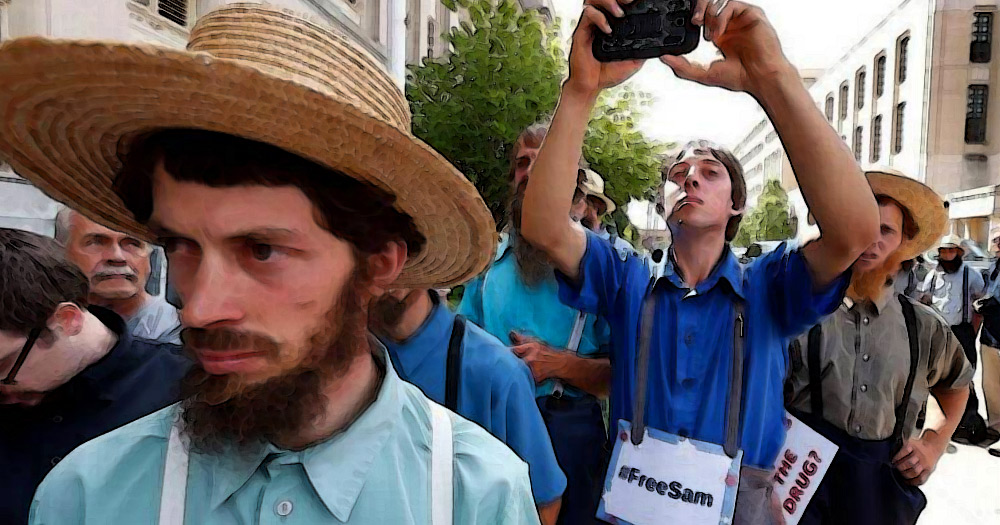
Presidents tend to issue pardons as their tenures draw to a close. But many victims of our government should be pardoned right now. Until the culpable agencies can be dismantled and/or sundry bad laws repealed, a steady flow of presidential pardons would provide the swiftest justice.

An Amish man in Kentucky, Samuel Girod, has been convicted of selling herbal remedies and such crimes as “failing to appear.” It doesn’t add up to one day in prison, let alone the six years of his sentence.

Girod created a salve from natural ingredients for treating skin disorders. After the state health department demanded that he stopped making certain claims for the product, he changed its name to Healing Chickweed. Told that the word “healing” was prohibited, he changed the name to Original Chickweed. The Food and Drug Administration also hounded him for selling various herbal remedies, which they called “drugs” because of his medical claims.

The man’s worst sin in all this seems to be failure to cooperate with the harassment. When FDA agents tried to examine his “manufacturing process,” he refused entry to his home. When Girod missed a hearing about his case, the government dubbed him a “fugitive.” The local sheriff can’t understand why the government is “victimizing such peaceful and law-abiding citizens.”

Yes, it’s a puzzle. Many historical, political, institutional, ideological and psychological factors would help explain it. More than answers, though, Samuel Girod needs his freedom.

How about it, Mr. President?

This is Common Sense. I’m Paul Jacob.


Printable PDF


Categories
Accountability folly free trade & free markets general freedom moral hazard nannyism national politics & policies responsibility too much government U.S. Constitution

According to Logic

“Polling on every possible option confounds all logic,” or so writes Tiana Lowe about ObamaCare and its repeal, at National Review.

“Americans overwhelmingly dislike the individual mandate and prioritize lowering the cost of health care over all other health problems in the country,” Ms. Lowe elaborates, “but a majority of Americans do not want to roll back Obamacare’s guaranteed coverage of pre-existing conditions. Just a quarter of Americans are happy with Obamacare as-is, but a mere 12 percent favor the now-dead Senate health-care bill.”

Perceptively, she notes that the situation is as bad or worse for politicians, who want to “have their cake and eat it too.” The problem with politicians is pretty obvious: they lie because they are afraid of confronting the truth.

But it seems to me, on the evidence Lowe herself provides, Americans mostly have it right.

We want to lower costs of health care. Well, that should be the first priority. It should’ve been government’s highest priority, since government caused our predicament.

A huge supermajority is unhappy with ObamaCare, which makes sense. The Affordable Care Act is not affordable. But the Senate health-care bill was worse than ObamaCare, so folks were right to oppose it.

The only real issue? Many Americans don’t seem to understand that the “pre-existing coverage” mandate necessarily raises costs. Forcing insurance companies to pay for non-eventualities* requires them to pass those extras onto customers in general. Here is where leadership would be of help.

And where it has failed, our President most of all.

Lowe criticizes Trump for not pushing the Senate’s bill more effectively. I’m thankful for that.

This is Common Sense. I’m Paul Jacob.


* Insurers wager against unpredictable future illness or accident, not the sucker’s bet of paying for an existing predicament.


Printable PDF