Categories
ideological culture media and media people too much government

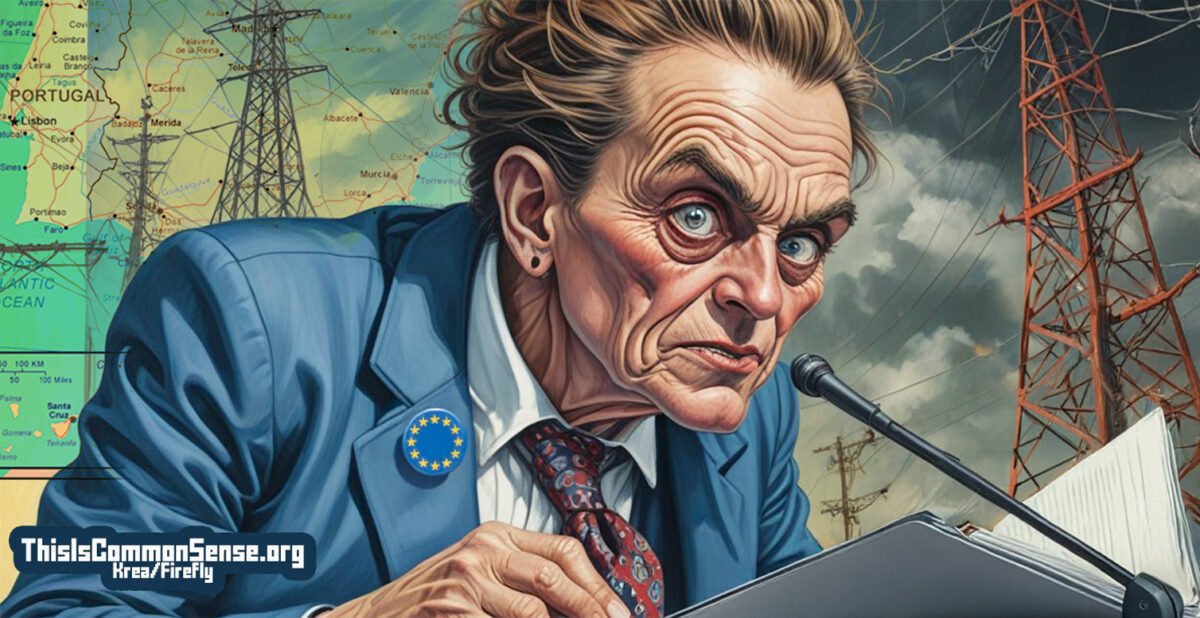
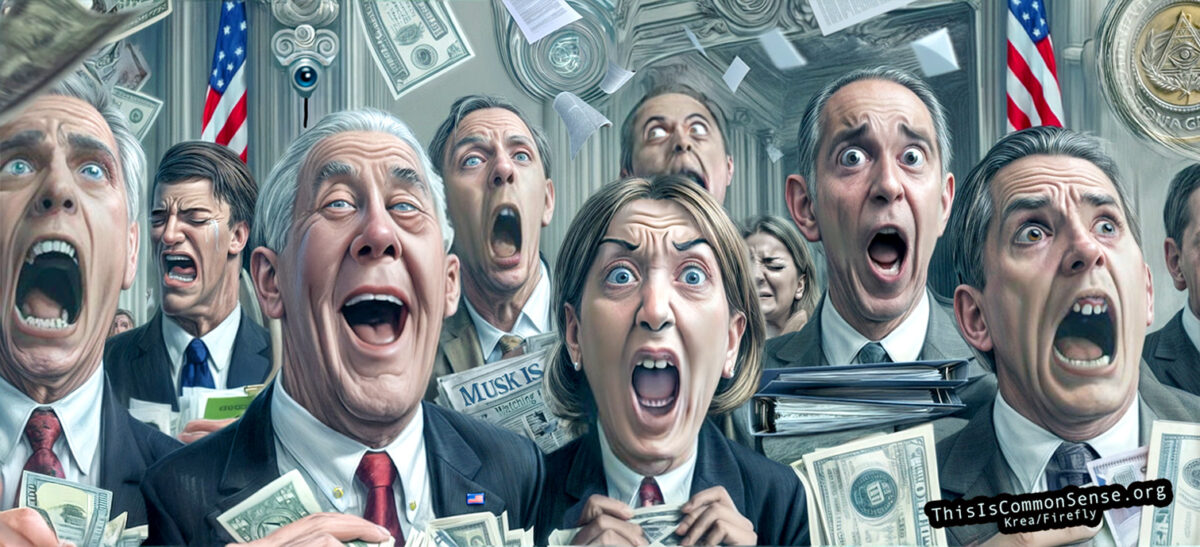
Musk’s Alternative for Germany

“Tech entrepreneur Elon Musk caused uproar after backing Germany’s far-right party in a major newspaper ahead of key parliamentary elections in the Western European country,” ABC News tells us, “leading to the resignation of the paper’s opinion editor in protest.”

Germany’s three-party coalition government, led by “center-left” Chancellor Olof Scholz, fell apart when he fired the “pro-business” party’s biggest name in the government, Finance Minister Christian Lindner.

Musk wrote a piece for Welt am Sonntag in which he expressed his support for Alternative für Deutschland, which is considered “far-right” for opposing Die Grünen, the (“pro-business”) Freie Demokratische Partei, and Scholz’s own Sozialdemokratische Partei Deutschlands. “The Alternative for Germany (AfD) is the last spark of hope for this country,” asserted Musk*.  

“The Tesla Motors CEO also wrote,” explains ABC, “that his investment in Germany gave him the right to comment on the country’s condition.”

Musk must mean “a right” as in manners, not in law. In a free country, anyone has a legal right to speak up and comment on government.

But what is the significance of the editor who quit? She has every right to work only with news outfits that marginalize the AfD as promoters of “anti-democratic” ideas. Hers is a matter of strategy: shunning, marginalization — no-debate/no-cooperate — are what she thinks journalists must marshal against the “far right.” 

This journalist’s political tactic mirrors Germany’s practiced politics. ABC News explains that the AfD’s polling strength doesn’t much help its candidate, Alice Weidel, to “becom[e] chancellor because other parties refuse to work with the far-right party.”

The non-cooperation strategy goes full anti-democratic when election results are suppressed. In Romania, for example, elections have basically been overturned because of how “far-right” they are.

All very anti-democratic, these “democrats.”

This is Common Sense. I’m Paul Jacob.


* To be clear, his piece was published in German, of course, and above I’m quoting the English translation.

PDF for printing

Illustration created with Flux and Firefly

See all recent commentary
(simplified and organized)
See recent popular posts
Categories
national politics & policies too much government

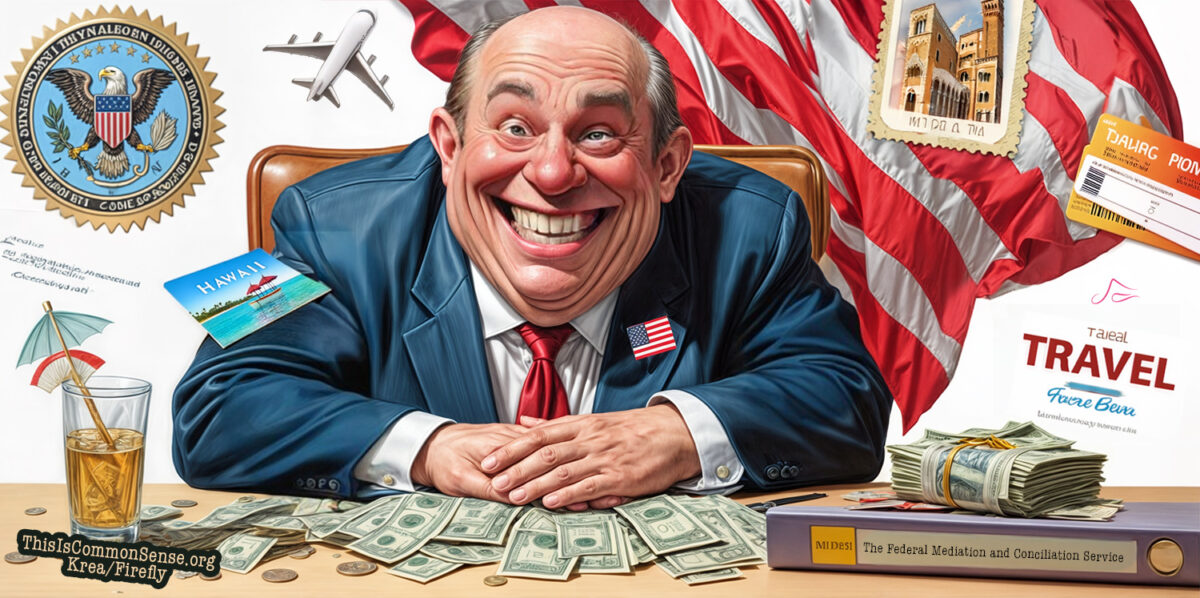
Trump Ponders Privatizing Post Office

Donald Trump can’t turn the U.S. Postal Service over to private hands with a wave of his hand. But he can push to make it happen.

Three people “with knowledge of the matter” say that he has discussed the possibility with Howard Lutnick, his choice for commerce secretary.

USPS never makes money. It costs taxpayers billions every year. In fiscal year 2023, it lost $6.5 billion; in the next fiscal year, $9.5 billion.

If privatizing the agency does happen, the transition probably won’t be seamless, not even if we can surmount the opposition of the powerful postal union. 

Fortunately, we already have many private alternative ways of shipping information and packages, from encrypted email to UPS and FedEx.

The latter have come to rely on the post office to handle part of delivery, typically the last mile or two. They’ll have to find alternatives if a privatized USPS does not immediately assume these contracts. 

Thankfully, delivery services are already supplementing their local-area shipping. For example, UPS has Roadie, a company that relies on independent drivers to provide same-day delivery within a town for stores like Best Buy.

Roadie drivers are gig workers. So let’s hope that even as the federal government paves the way for a hostile private takeover of the Postal Service, freelance contractors are not being regulated out of existence. 

For some reason, Trump has named a person in favor of that sort of thing to lead the Labor Department. So expect bumps ahead.

This is Common Sense. I’m Paul Jacob.


PDF for printing

Illustration created with

See all recent commentary
(simplified and organized)
See recent popular posts
Categories
too much government

Somebody Different, Chicago?

It’s good when the latest horrific loot-and-pillage ideas of the latest horrific mayor of your city keep getting shot down. 

The people of Chicago must hope that this continues.

But it would be better to have a mayor who doesn’t make it necessary.

Chicago’s city council recently met in a special session to consider Mayor Brandon Johnson’s proposal to hike property taxes by $300 million to help balance the budget. Councilmen defeated the idea 50-0.

In pitching his plan, Johnson had said that the only alternative was major cuts to the numbers of police officers and fire fighters. There would also be fewer trash pickups, less tree trimming, more rats.

Off the table? Any reductions in public school spending. 

But, as The Wall Street Journal observes, Chicago’s city budget has grown from $11 billion in 2019 to $17 billion in 2023. Meanwhile, “the Chicago Public Schools added almost 7,000 employees while CPS enrollment declined by more than 30,000 students” — as “temporary” pandemic-era jumps in spending became permanent.

Teachers-union-backed Brandon Johnson was elected in 2023 with about 52 percent of the vote; his leftist campaign platform included proposals to hike taxes.

Johnson’s main opponent, Paul Vallas, also a Democrat but of sounder policy mind, campaigned mostly on a tough-on-crime platform. But he also made clear his opposition to the “high-tax and high-regulation environment” in which many Chicago businesses find themselves.

Turnout in Chicago’s April 2023 runoff campaign was only 35 percent.

Try again, Chicago?

This is Common Sense. I’m Paul Jacob.


PDF for printing

Illustration created with Flux and Firefly

See all recent commentary
(simplified and organized)
See recent popular posts
Categories
national politics & policies too much government

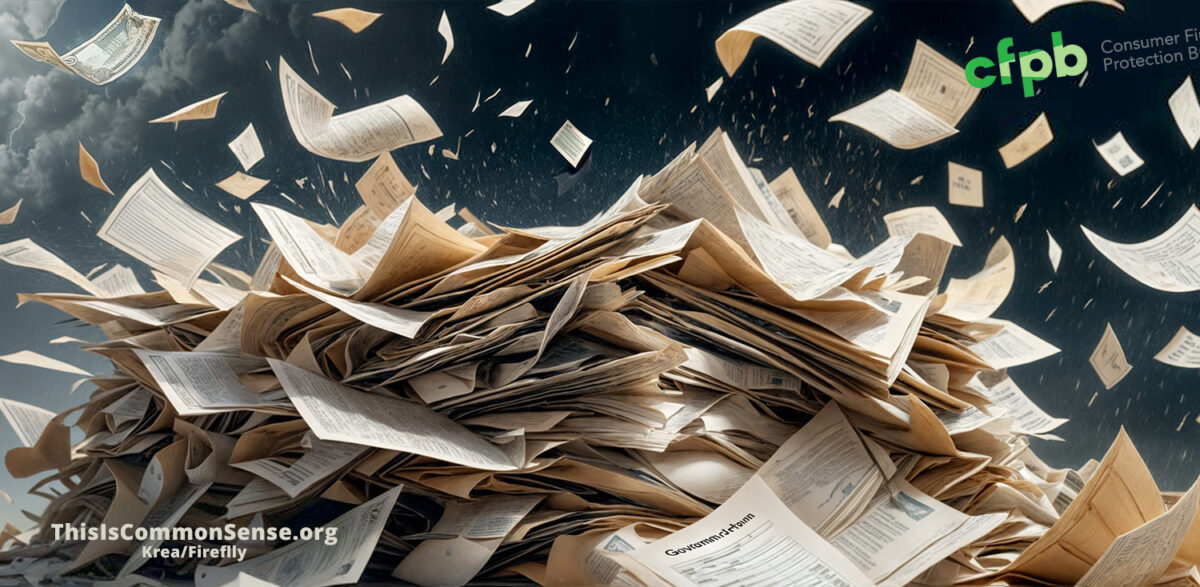
Elon & Vivek to Cut Government?

Will it happen this time?

Even the most profligate taxers and spenders sometimes talk about making our federal government “more efficient” or about “cutting waste.” Commissions are set up, reports issued, and then — we still see the same runaway trajectory.

This time, former President and President-Elect Donald Trump has announced that two heavy hitters, entrepreneurs Elon Musk and Vivek Ramaswamy, will be heading up a Department of Government Efficiency (DOGE) to do the job. They’re already planning and hiring.

Trump says that DOGE is determined to “dismantle government bureaucracy, slash regulations, cut wasteful expenditures, and restructure federal agencies.”

The project of cutting wasteful expenditures is the same going-nowhere notion that we have seen before. If we get actual demolition of merely destructive agencies — which would require congressional cooperation, I believe — this would be great.

I can provide a list. But that would make me a part-timer in this endeavor, and “We don’t need more part-time idea generators,” DOGE says.

“We need super high-IQ small-government revolutionaries willing to work 80+ hours per week on unglamorous cost-cutting. If that’s you, DM this account with your CV. Elon & Vivek will review the top 1% of applicants.”

Let us see what happens. Trump would have to push this forcefully and continually, getting his supporters to forcefully and continually pressure Congress, to get enough done fast enough to actually reduce Leviathan. And he’ll have a lot of other stuff to cope with.

But . . . boy, do we need it.

This is Common Sense. I’m Paul Jacob.


PDF for printing

Illustration created with Midjourney

See all recent commentary
(simplified and organized)
See recent popular posts
Categories
crime and punishment property rights social media too much government

The Squirrel vs. The State

“Squirrel!”

In an age of short attention spans and viral memecraft, the latest cultural moment regarding a squirrel could influence more minds about politics than all the quips, speeches and gaffes of Trump and Harris combined.

The news is not hard to understand. “Wild squirrel that was taken in by Mark Longo seven years ago was confiscated after conservation officials received reports of ‘potentially unsafe housing of wildlife,’” is how The Guardian put it on Halloween. 

“An orphaned squirrel that became a social media star called Peanut was euthanized after New York authorities seized the beloved pet after a raid on his caretaker’s home, authorities said,” was Saturday’s Guardian update.

After the six- (or ten-) officer raid and after the execution, the deluge: ire and satire flooded the meme-o-sphere.

Not a few governments enforce laws against taming wild animals. One concern is rabies, though the rabies danger of a squirrel rescued as a baby and raised indoors must be preciously close to ZERO. When individuals own tigers and other predators, the danger is obvious — but certainly P’nut was not such a concern.

This is just the way the modern State operates: bureaucratically, with lumbering indifference to property rights (the squirrel was indeed owned, and housed privately), liberty (sans harm, the case to leave well enough alone is pretty clear), and common sense (Andy Griffith would not have put down the squirrel; he would have told Barney Fife to put down the revolver). 

How ridiculous and cruel government can be!

Maybe the last half dozen of undecided Americans will pull the lever, Tuesday, for less nonsensical government intrusion because of it.

It certainly doesn’t make the meddler class look good.

This is Common Sense. I’m Paul Jacob.


Note: We also mourn the passing of Fred the Raccoon, a fellow rescuee at P’Nut’s Freedom Farm, also confiscated and executed by the State of New York for the same trivial infraction of his owner: not licensed by the State.

PDF for printing

Illustration created with Midjourney and Firefly

See all recent commentary
(simplified and organized)
See recent popular posts

Categories
free trade & free markets too much government

An Ember of Hope?

Will the world escape the punishing “green energy” mandates?

The government of Italy is making known its unhappiness with a looming ban on sales of gas-powered vehicles, supposed to happen by 2035. The mandate has been imposed by the European Union, of which Italy is a member.

The transition is to be attended by formal review of how things are progressing toward the goal of eliminating gas cars. One is scheduled for 2026. Italy wants it to happen sooner.

Italy’s industry minister, Adolfo Urso, has indicated that his government will soon formally request this early review. Everyone understands that this is not because the current government of Italy is in a hurry to stamp its imprimatur on the EU’s plans.

Urso says: “We believe it’s absolutely necessary to modify the direction of EU industrial policy. The automotive sector is the one where a change from the Green Deal is most required.”

Prime Minister Giorgia Meloni has called the decision to outlaw gas-powered vehicles “self-destructive.”

Meanwhile, demand for electric cars has slumped in Europe and the U.S. as the inconveniences and risks become better known. These include the cars’ still very high cost, their tendency to freeze up in very cold weather, the greater frequency with which their tires must be changed, the difficulties of recharging, the difficulties of putting out the fires when the cars catch fire.

May Italy show the way out of the debacle and let’s hope the rest of the EU follows.

This is Common Sense. I’m Paul Jacob.


PDF for printing

Illustration created with Midjourney and Firefly

See all recent commentary
(simplified and organized)
See recent popular posts
Categories
regulation subsidy too much government

Flood and Fire

Tesla, the maker of some of the most popular, eye-catching, and prestige electric vehicles of our time, offers advice to folks who may experience “submersion events” with their automobiles. The company “recommends moving EVs to higher ground ahead of potential” unholy baptisms and warns owners to keep a safe distance as well as notify “first responders if one notices ‘fire, smoke, audible popping/hissing or heating coming from your vehicle,’” summarizes The Epoch Times.

This is sparked, I’m sorry to say (and pun) by hurricane victims in Florida, at least six of whom had their houses catch fire after their electric vehicles caught fire after their vehicles were submerged in water. Florida’s chief financial officer and fire marshal Jimmy Patronis put the number higher, at 16, of burning “EVs in the Tampa Bay area alone, including Pinellas County.”

“So far.”

When it floods, it burns.

“The governor had warned EV owners in Florida to get their vehicles to higher ground ahead of Helene’s arrival,” explains Jacob Burg, in the above-mentioned Epoch Times piece, “as contact with saltwater can short-circuit the batteries, causing a catastrophic chain reaction known as thermal runaway in which heat energy is released from the battery to cause a fire.”

I’ve been seeing quite a few reports that EVs don’t do well in extreme conditions. The cold, for one, where the batteries don’t work properly, and the heat, for another, when they can too easily catch fire. And now this “submersion” menace.

Electric vehicles sure do appear to demonstrate a technology still in its infancy. 

One the government shouldn’t be pushing on us.

This is Common Sense. I’m Paul Jacob.


PDF for printing

Illustration created with Midjourney

See all recent commentary
(simplified and organized)
See recent popular posts

Categories
regulation too much government

Wait, What?

The Federal Aviation Administration wants to fine Elon Musk’s spacefaring firm SpaceX $633,000 for various alleged infractions of FAA regulations. In response, Musk says he’s suing the agency for “regulatory overreach.”

One set of fines pertains to using an “unapproved control room” and failure to “conduct the required T-2 hour poll” during a June 2023 launch: 350,000 smackers.

Another set, totaling $283,000, is for using an “unapproved rocket propellant farm,” i.e., tanks for storing fuel until it’s pumped into the ships, back in July 2023.

Meanwhile, the Justice Department has sued SpaceX for hiring “only U.S. citizens and lawful permanent residents” (wait, what?) and failing to take into account currently prevailing political winds. Perhaps the FAA should sue the Justice Department for expecting SpaceX to focus on anything but its missions.

The initial reporting doesn’t make clear whether there’s any merit to the FAA’s complaints — wrong specs for fuel tanks or whatever. The mere deviation from some regulation is meaningless if what SpaceX did instead is as safe or safer than what the bureaucrats stipulated.

Large enterprises must navigate an infinite number of regulations, and federal agencies are certainly selective enforcers. If you’re Boeing, it seems you can get away with shoddy practices for years, at least until the fit hits the shan.

I’ll wait to hear more, but I suspect that the FAA’s attempt to grab hundreds of thousands of dollars from Musk is indeed a symptom of regulatory overreach.

And just possibly motivated by . . . politics.

This is Common Sense. I’m Paul Jacob.


PDF for printing

Illustration created with PicFinder and Firefly

See all recent commentary
(simplified and organized)
See recent popular posts
Categories
national politics & policies regulation subsidy too much government

Stay Puft America

“It was perhaps just a matter of time before issues of health — not policies over health-care provision but actual human health — would enter into our politics,” surmises Jeffrey A. Tucker in The Epoch Times. “We look at pictures of people in cities or at the beach in the 1970s and compare them with today and the results are shocking. We have changed as people and for the worse.”

Jeff Tucker is trying to explain the background for a big policy-interest shift, as a result of the Robert F. Kennedy, Jr., endorsement of Donald J. Trump. Kennedy’s big issue is health, and Trump’s gone along with it, willing to make it a part of his agenda.

In “How Did Health Become a Political Issue?” Tucker focuses first on the COVID debacle, moving on to the real culprit: government.

Or, technically, government and industry, combined into one huge Stay Puft Marshmallow of Destruction. For behind our changing eating patterns and food habits are government tariffs, subsidies, researchstrategies, diet crazes, and much, much more. 

Perhaps even bigger than Big Pharma is Big Agribiz, a conglomerate of companies pushing lab-created additives and worse on a trusting public, or, as Tucker puts it, “many decades of heavy government subsidies for the worst food, and so much in the way of corn, soy, and wheat are produced that we’ve invented new ways to use it.”

But it’s not really “we’ve.” The Standard American Diet (SAD) wouldn’t have existed were it not for the USDA and the FDA and a whole alphabet soup of bureaus captured by the industries they were assigned to regulate, working together in a Big Biz/Gov partnership to create a Big Problem in the general population.

Somehow, though, when asked about the government causes of SAD, RFKj said he wouldn’t abolish anything. He merely wants “better regulations.”

Someone needs a fast . . .from Big Government.

That someone? Kennedy. 

And America.

This is Common Sense. I’m Paul Jacob.


PDF for printing

Illustration created with PicFinder and Firefly

See all recent commentary
(simplified and organized)
See recent popular posts
Categories
First Amendment rights too much government

Deep State in a Corner

Once upon a time, the CIA and allied agencies pushed free speech as a norm. 

Overseas.

The rationale? Without some free speech and press rights, it was too hard to organize a populace to overthrow their government. Our spooks exported freedom of speech abroad not because they were so gung-ho American; it was all about seeding revolutions.

But not here! 

The CIA couldn’t let others take advantage of American free speech like its agents leveraged free speech abroad. A change in government might mean . . . loss of jobs. Mission. Money.

What to do? Disinform at home. By corrupting journalism.

The Operation Mockingbird efforts in the 1960s helped intel insiders control information and manage “the consent of the governed,” and these early efforts grew into the close ties between the Deep State and credentialed journalists today. 

The connections, I’m told are many: it’s not just Anderson Cooper’s internship at the CIA. 

During the Cold War, the disinformation element found a plausible justification. Then, the Soviets had us at a disadvantage: we had trouble extracting reliable information from within the Iron Curtain, but they could grab all sorts of useful information from our open, comparatively free speech realm.

Disinformation: a strategic necessity. But the consequences?

 “We’ll know our disinformation program is complete,” William Casey explained to President Ronald Reagan, “when everything the American public believes is false.”

In the early days of the Internet, the Deep State pushed online speech platforms, the better to allow for foreign coups. Is there a social media space that hasn’t received surreptitious government subsidy? It’s hard to be sure. We’re supposed to assume our government protects us rather than controls us. 

But, increasingly, Internet-connected Americans see government officials chiefly as manipulators.

Which is why the Deep State’s most ardent partisans (neocons; Democrats; plutocrats) now routinely attack free speech here, and why allies overseas are so thoroughly cracking down on “de-stabilizing” opinions. It’s why Rumble is no longer available in Brazil and why Musk is pulling out Twitter personnel . . . and why France has arrested the CEO of Telegram.

Us catching on to the psy-op game places the Deep State in a corner. All the disinformation agents have left is censorship and repression.

This is Common Sense. I’m Paul Jacob.


PDF for printing

Illustration created with Midjourney and Firefly

See all recent commentary
(simplified and organized)
See recent popular posts