Categories
free trade & free markets media and media people too much government

A Former Economist

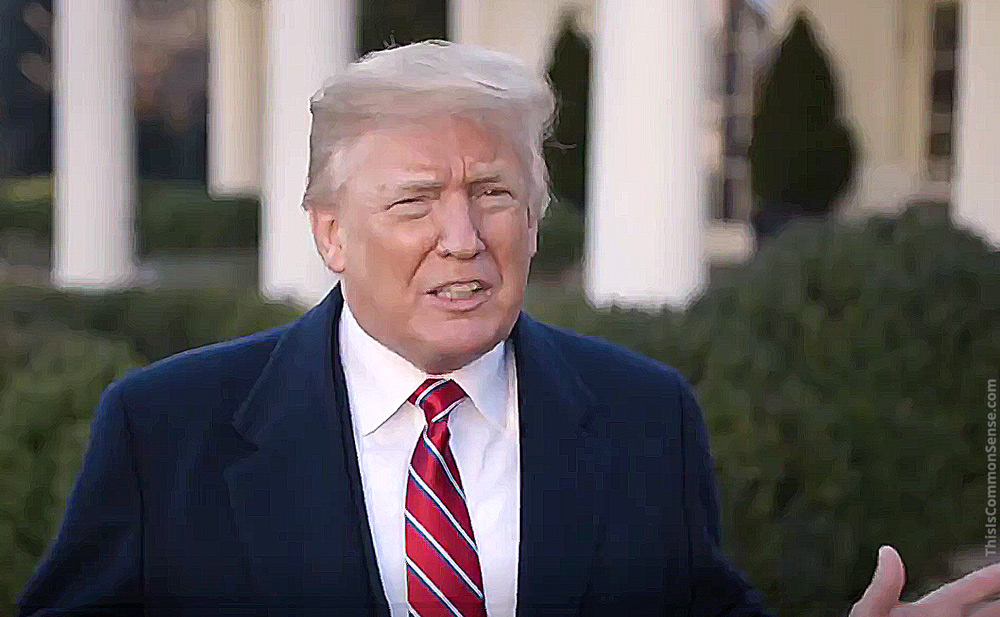
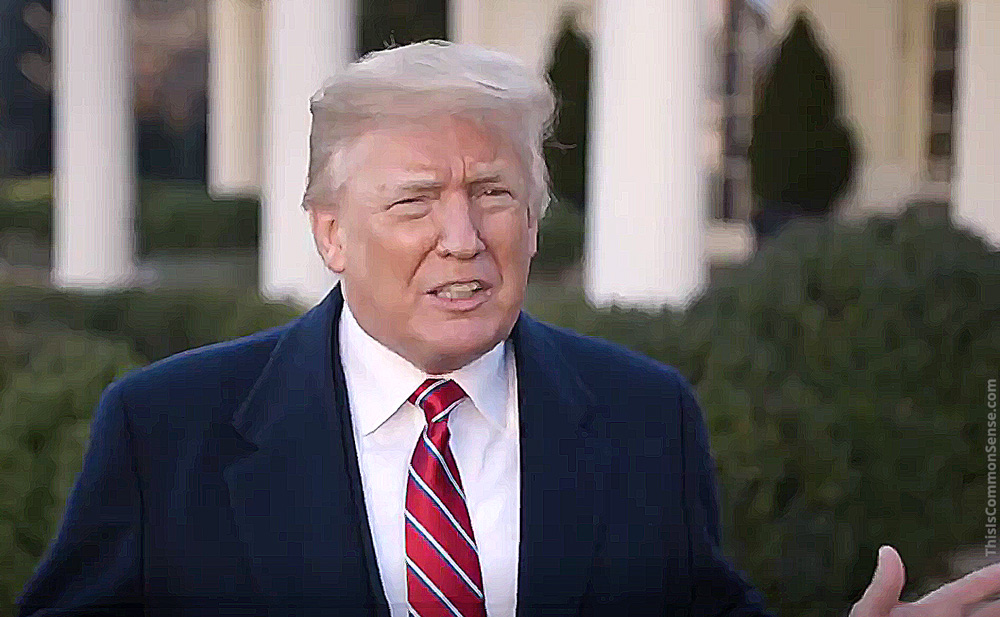
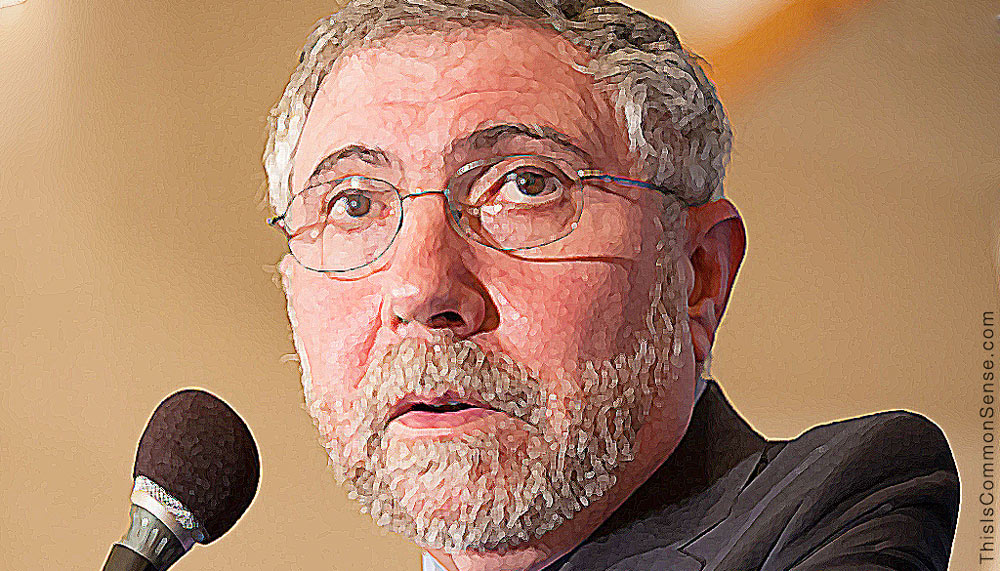
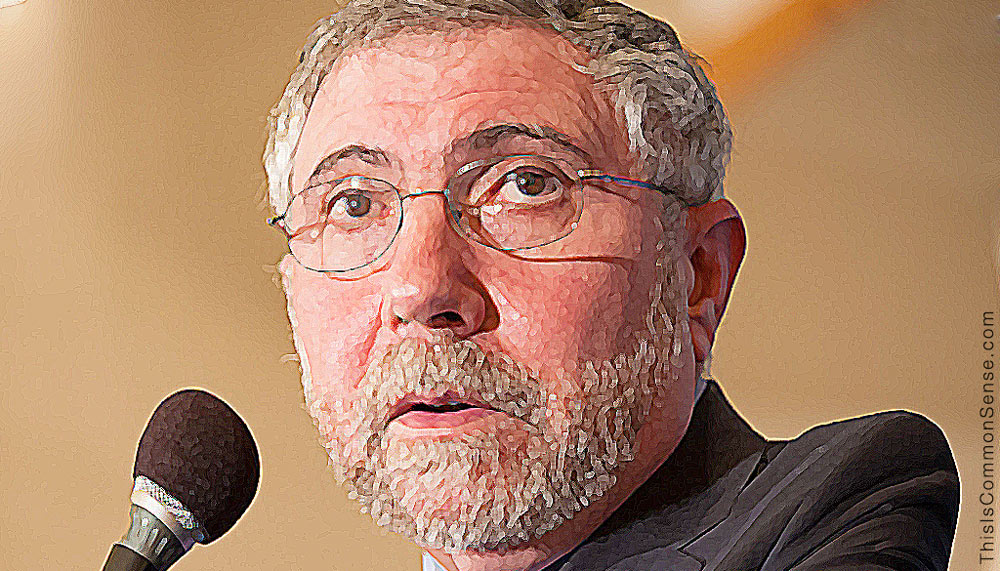
Paul Krugman, New York Times columnist and former economist, tested our patience last week with “Trump’s Big Libertarian Experiment.” How many non sequiturs will squeak past the Gray Lady’s editorial department? 

Loads — and all about how the federal government shutdown gives limited government folks what they want: less government.

Subsidy checks to farmers aren’t going out, as “libertarian organizations like Cato” have long advocated. Sure. But it’s no policy change.

As soon as there’s a budget deal, those checks will be made up.

Further, “businesspeople are furious that the Small Business Administration isn’t making loans.” 

Well, it’s high time businesses were weaned off the SBA teat — and a few whiners do not a case for subsidy make.

And then there’s the Food and Drug Administration, which can no longer inspect foods. Since “there’s a long conservative tradition, going back to Milton Friedman, that condemns the F.D.A.’s existence as an unwarranted interference in the free market” libertarians must be pleased, eh?

There is also a long tradition among economists that says businesses don’t get rich poisoning their customers, and that there are many mechanisms in place — and, barring the FDA, more would be in place — to ensure customers that they won’t be infected by eating . . . Romaine lettuce.

Which then Krugman admits . . . as if he had belatedly recalled Friedman’s lesson in Capitalism and Freedom. He concedes that the shutdown is not the way Friedman would go about limiting government. Besides, “libertarian ideology isn’t a real force within the G.O.P.”

So what’s the point?

Krugman ends with talk of a smell test: does lack of food inspections smell like freedom?

Something stinks here. But it isn’t spoiled food. Or freedom.

This is Common Sense. I’m Paul Jacob.

PDF for printing

Paul Krugman, libertarianism, libertarian, freedom, shutdown

See all recent commentary
(simplified and organized)
See recent popular posts
Categories
meme too much government

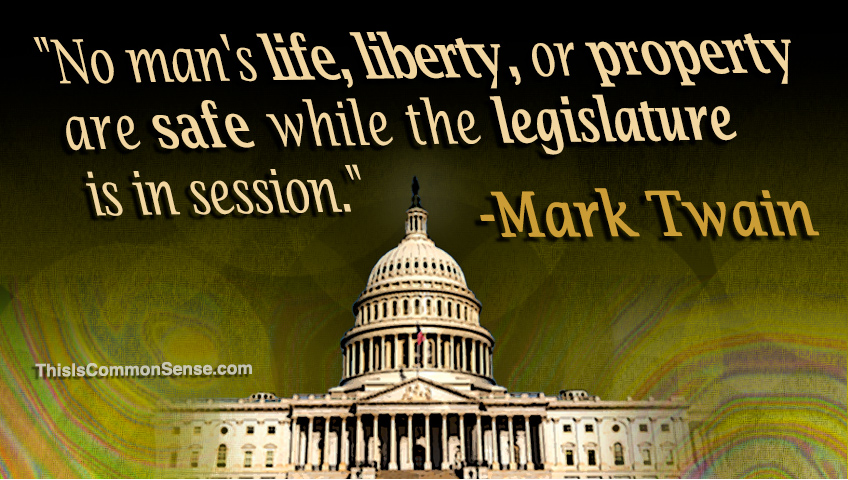
Twain on Congress and Liberty

Categories
too much government

Five-Alarm Foolishness

Will President Trump declare a “national emergency”? Is he that desperate to get the funds needed to build a wall (or steel-slate fence or barrier of some sort) on the U.S. border with Mexico?

It looks increasingly likely, but who knows . . . 

What I do know is how foolish and dangerous it is to provide “emergency” loopholes for politicians.

Words have very mutable meanings to politicians. “Emergency” will entail whatever the president invoking it desires. 

In fact, when Congress passed the National Emergencies Act in 1976, the legislation didn’t even bother to define the term, “emergency.” 

Every time I hear “national emergency,” it reminds me of Colorado and Oregon, where state constitutions are clear that an emergency entails a true threat to the health and safety of the public. But since those constitutions protect emergency bills from the check of a citizen referendum, legislators make use of the obvious loophole: a majority of bills in those states now carry a clause dishonestly claiming emergency status.

I guess we should not be shocked to discover that Congress has awarded the president at least 136 emergency powers, as Elizabeth Goitein of the Brennan Center for Justice informs The Washington Post.

Ninety-six of those “powers” allow the president to act unilaterally.

What sort of blind power giveaways are we talking about? 

Goitein explains that in a declared emergency, under current law, Congress has authorized “the president to shut down or take over radio stations and even suspend a law that prohibits government testing of chemical and biological weapons on unwitting human subjects.”

We need a wall, all right . . . between politicians and this foreign notion of extra-constitutional “emergency” powers. 

This is Common Sense. I’m Paul Jacob. 

emergency, alarm, Trump, Donald, President, power

P

Categories
ideological culture too much government

Worse Than Her Faux Pas

“If we work our butts off to make sure that we take back all three chambers of Congress,” stumbled U.S. Representative Alexandria Ocasio-Cortez (D.-N.Y.), “uh, rather, all three chambers of government: the presidency, the Senate, and the House. . . .”

The Daily Wire, where I encountered this particular snippet of inanity, could be caught gloating between her lines. And it is funny (amidst the fear) when politicians prove themselves ignorant, clueless, unprepared. Politicians rarely come across as masters of their subject.

But we who are subjected to their lack of mastery should worry about their substantive flubs more than their trivial technical errors.

As the newly elected solon herself had the wit to notice.

“Maybe instead of Republicans drooling over every minute of footage of me in slow-mo, waiting to chop up word slips that I correct in real-tomd [sic],” she went on, “they actually step up enough to make the argument they want to make: that they don’t believe people deserve a right to healthcare.”

I am not a Republican, but I’m here to help. The only rights we “deserve” are those we can have without enslaving and exploiting others. My right to freedom requires only your duty to leave me alone, not systematically taking from others or running their lives. But a right to “healthcare”? The corresponding duties are vague and ominous, potentially limitless.

And thus oppressive. 

A government big enough to give Ocasio-Cortez everything she wants is too big to leave any freedom for the rest of us.

This is Common Sense. I’m Paul Jacob.


PDF for printing

Alexandria Ocasio-Cortez

See all recent commentary
(simplified and organized)
See recent popular posts


Categories
meme moral hazard too much government

How to Know

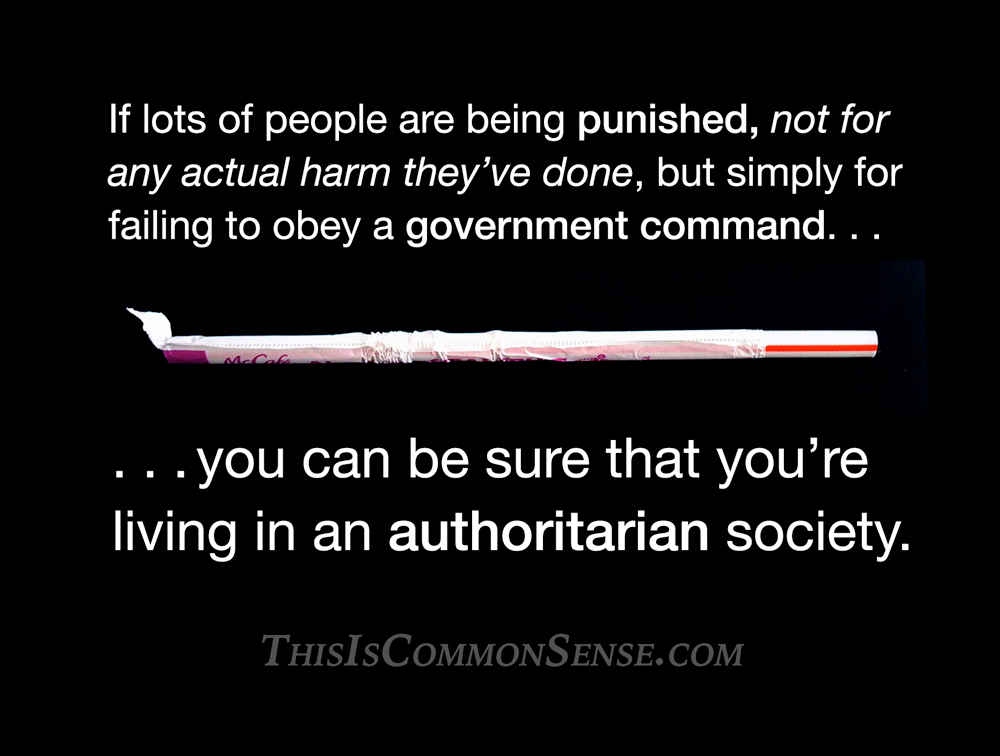
Many people don’t seem to realize that a prohibition (banning something) is AUTHORITARIAN BY DEFINITION. Whether it’s drugs, guns, alcohol, offensive language, dangerous ideas, texting while walking(!), plastic straws(!)… authoritarians are perfectly happy to use government violence to force the rest of us behave as they wish. Because they think they know what’s right for everybody else. They are the authorities. They are the keepers of the truth. For the rest of us, the message is clear: obey or be punished.

The spectacle of people screaming about Trump’s “authoritarianism” while simultaneously demanding more regulations, more bans, more restrictions… would be funny if it weren’t so dangerous.


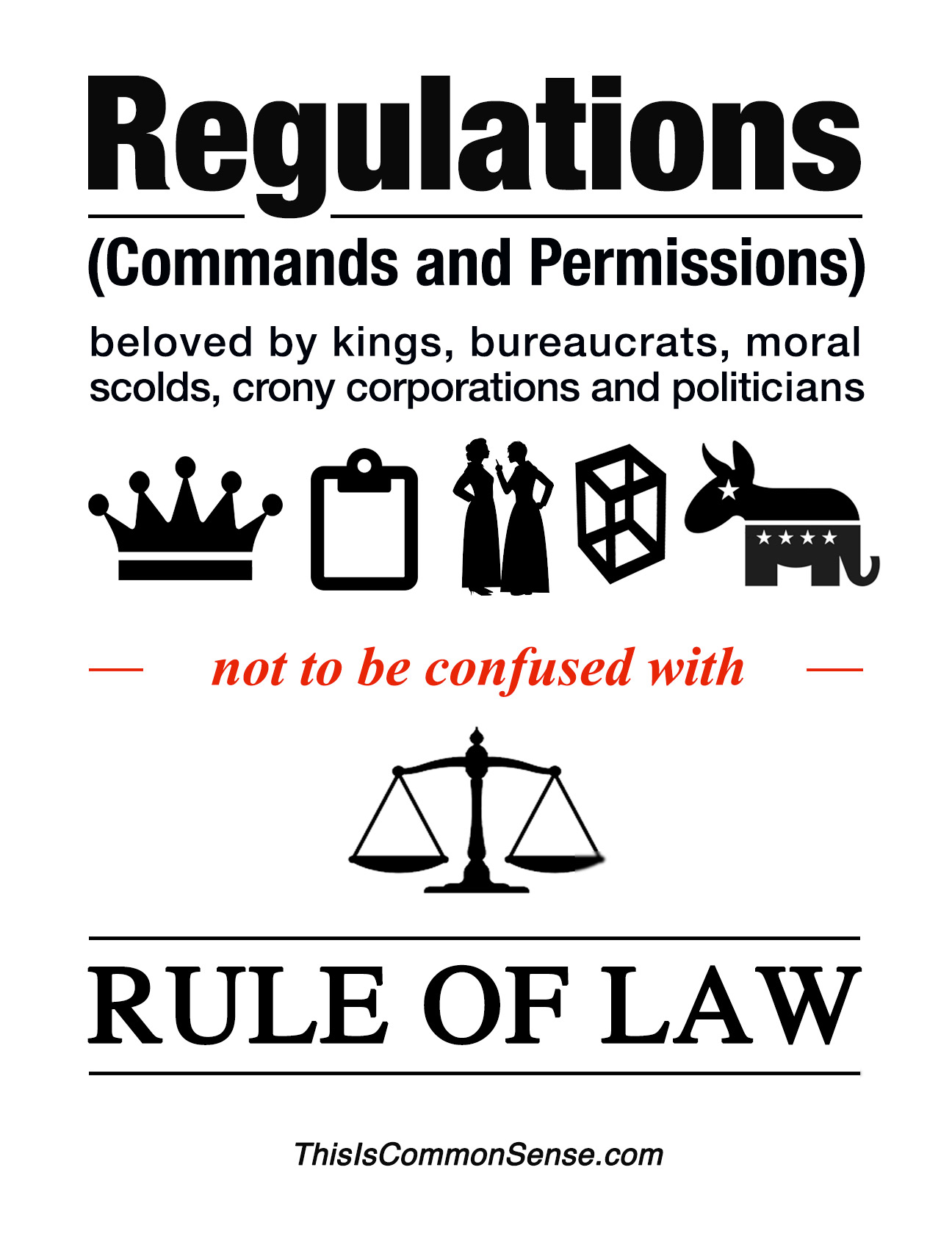
A “rule of law” is based on general principles, and makes room for — or, better yet, is based upon — the protection of individual rights.

It used to be common to say, “a rule of law, not of men”; it was even as common in political oratory as was spouted out over drinks at the Rotary. But as the modern Regulatory State has grown in scope and power, most folks seem to have lost track of the notion. It is now not even a cliché. Few even of our most educated folks can explain this idea. Vast swaths of the mis-educated public appear not to “get” the idea of limiting government to the enforcement of a few general principles; instead, they cry for more “regulations” (along with additional spending and maybe even a whole new division of the executive government) every time a crisis, tragedy or atrocity occurs.

So we are left with a political culture in which the words of Tacitus seem to a majority as implausible at best, evil at worst: “The more the laws, the more corrupt the State.” Contrary to today’s trendy prejudice, we do not need “more laws” — edicts legislated by representatives, or regulations concocted by bureaucracies — we need Law.

As in, “a rule of Law.”

regulations, rule of law, control, freedom

See all recent commentary
(simplified and organized)
See recent popular posts

Categories
national politics & policies too much government

PayGo Piffle

Republicans are especially good at deficit spending. Give them control of the presidency and both houses of Congress, and watch the money flow! It happened under George W. Bush, and now under President Donald Trump.

But note: the Democrats have gained control of the House of Representatives. We might see some restraint on government growth, if for no better reason than “divided government,” in which the two major parties can more effectively do damage to each other’s spending.

Nancy Pelosi, again Speaker of the House, has a monkey wrench to throw into Republican spending plans, not excluding that much-promised, little acted-upon Trump promise, “The Wall.” 

It is called “PayGo,” or, in the Twittersphere, #PayGo.

Not something new (Democrats have used it before), the House rule aims to limit any new expenditures to equal cuts in old spending.

Effective? Well, in capping the deficit at a trillion dollars annually . . . until they vote for exceptions to the rule. 

And effective enough to annoy Republicans!

And now, to rile up progressives, too.

Alexandria Ocasio-Cortez (D-N.Y.) has made a big deal about her opposition. She has opposed Pelosi’s attempt to re-establish the rule. 

Heedless of any danger that could result from further adding to the now-$22 trillion national debt, progressives scorn the idea of fiscal responsibility as “austerian,” claiming the whole idea was somehow disproven by “economic history,” in the Tweeted words of Rep. Ro Khanna (D-Calif.).

The “real” beneficiaries would be the corporations, progs say, and that PayGo would work against the “progressive agenda” of increasing government programs without limit.

Typical political piffle.

This is Common Sense. I’m Paul Jacob.


PDF for printing

Alexandria Ocasio-Cortez, #PayGo, austerity, spending

See all recent commentary
(simplified and organized)
See recent popular posts

Categories
free trade & free markets too much government

San Francisco Obstructionism

Bob Tillman wants to build a 75-unit apartment building in San Francisco.

He owns the property — a laundromat. He just wants to convert it. But although there are no good reasons why he shouldn’t, city officials and activists opposed to the property rights of developers have been blocking the project. Tillman has spent years and hundreds of thousands of dollars just trying to get started.

His plight “encapsulates the political dysfunction that’s turning San Francisco . . . into an exclusive playground for the ultra-wealthy,” says Reason magazine.

Because of the government’s general antagonism to development, and specific policies such as rent control, much less housing is getting built in the city than would have been possible in a fully free market.

The population is growing quickly, but housing isn’t keeping up. Which results in unnecessarily high rents and housing prices.

None of this is shocking if you understand basic economics. The greater the supply of a good, the cheaper the price tends to be — all other things being equal. That qualification is important. If the supply of oranges doubles but everybody suddenly starts an all-orange-juice diet, orange prices may remain the same or even rise — but less than the price would have risen without the greater supply.

Many factors, including monetary factors, can affect the price of a good. All I’m saying is that if you want the benefits of more housing, including rents that are lower than they would have been without the new housing, you must build houses and apartment complexes.

Stop something from being built and, unfortunately, it won’t be there.

This is Common Sense. I’m Paul Jacob.


PDF for printing

San Francisco, homeless, zoning, housing, regulations
Photo by Mussi Katz

See all recent commentary
(simplified and organized)
See recent popular posts

Categories
international affairs meme Popular too much government

What Kind of Ice Cream Cone?

When I wrote about the Donald’s change of troop positions abroad last week, it was less than completely clear that the US President aimed to withdraw troops from Afghanistan as well as Syria. But multiple reports on the day I posted “Strategic Disengagement” make it clearer: about half of America’s 14,000 troops stationed there are scheduled to exit.

Why not all?

Well, you can see how entrenched foreign intervention is for American leaders. While most of the GOP policy establishment howled at Donald Trump’s betrayal of the cause (whatever that cause is, exactly), so, too, did many of the Democrats. And they seem awfully earnest. More earnest than one has reason to expect from the objectors to “George W. Bush’s wars.”

Even Noam Chomsky came out saying that the U.S. should stay in Syria to save the Kurds, and Howard Dean tweeted that American troops must remain in Afghanistan for the sake of women’s rights.

What we are witnessing are eternal programs that do not ever — and cannot ever — fulfill their basic purpose. No amount of occupation of Syria or Afghanistan or Iraq is going to give us what the neoconservatives promised: freedom and democracy and jubilation in the streets.

Freedom and democracy do not work that way.

There is a term for such impossible-to-win/impossible-to-stop policy messes: “self-licking ice cream cones.”

The term means a “self-perpetuating system that has no purpose other than to sustain itself,” which is just standard operating procedure for domestic bureaucracies.

But in foreign military action?

Awfully cold imagery, and too comic . . . for tragedy.

This is Common Sense. I’m Paul Jacob.


PDF for printing

self licking ice cream, war, foreign policy, government

See all recent commentary
(simplified and organized)
See recent popular posts
Categories
international affairs Popular too much government

Strategic Disengagement

The policy was announced in a Tweet: President Trump said it was time to pull out of Syria. We won, he explained. “After historic victories against ISIS, it’s time to bring our great young people home!”

There is, of course, much outcry among Republicans, Sen. Lindsey Graham (R-SC) and pundit Ben Shapiro making the same point: this is, in the senator’s words, “a huge Obama-like mistake.”

But not a few are supportive. “U.S. forces should not be engaged in Syria — or any country,” explained Rep. Justin Amash (R-Mich), “without legitimate military justification AND proper congressional authorization.”

And there is no doubt that after pulling out of the region — and yes, it looks like Trump is readying forces for a pull-out of the expensive and ridiculous Afghanistan occupation — there will be outrageous horrors. But are they America’s? 

Should they be?

The problem with trying to solve every worldwide conflict is clear: by intervening, we make those conflicts ours.

The idea that the American military can successfully micromanage conflicts around the world seems implausible. And increasingly counter-factual. 

The same logic against intervening in the domestic economy to “wisely” promote some businesses and demote others also applies against most foreign military intervention: “unintended” consequences get conjured up, and even blowback.

Also, somehow, almost no one ever consults Just War theory to test various proposed interventions. Instead, military interventionism is all audacious hope and lofty language.

No realism, despite “Mad Dog” Mattis’s protests to the contrary.

Foreign policy scholar Earl Ravenel had the perfect term for what Trump may be and should be doing: strategic disengagement. We have much to gain from a more restrained — and constitutional — foreign policy.

This is Common Sense. I’m Paul Jacob.


PDF for printing

Donald Trump, Trump, Syria

See all recent commentary
(simplified and organized)
See recent popular posts

Categories
government transparency too much government

Fill Up the Swamp Some More

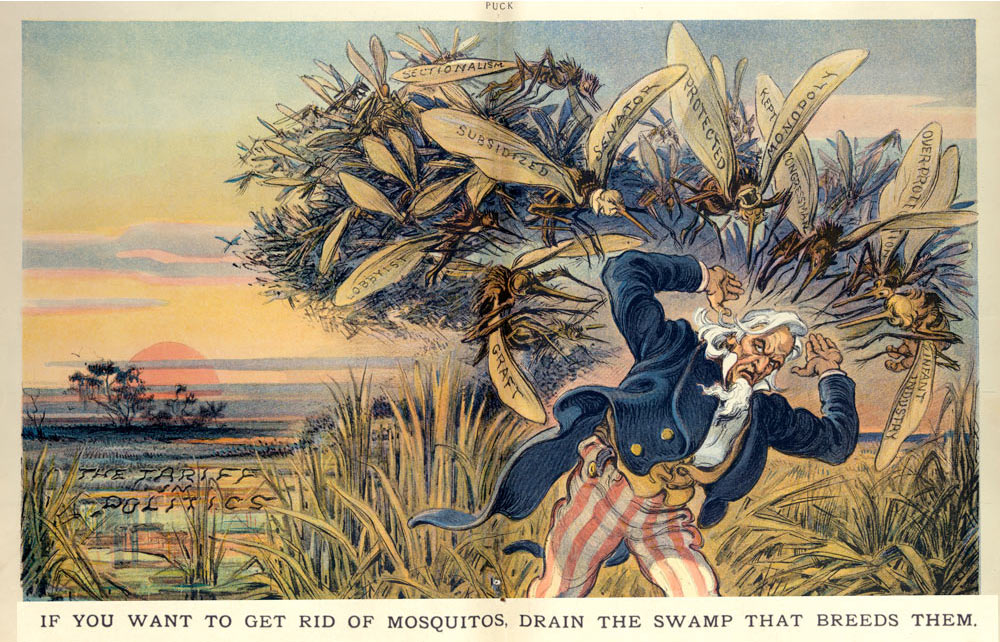
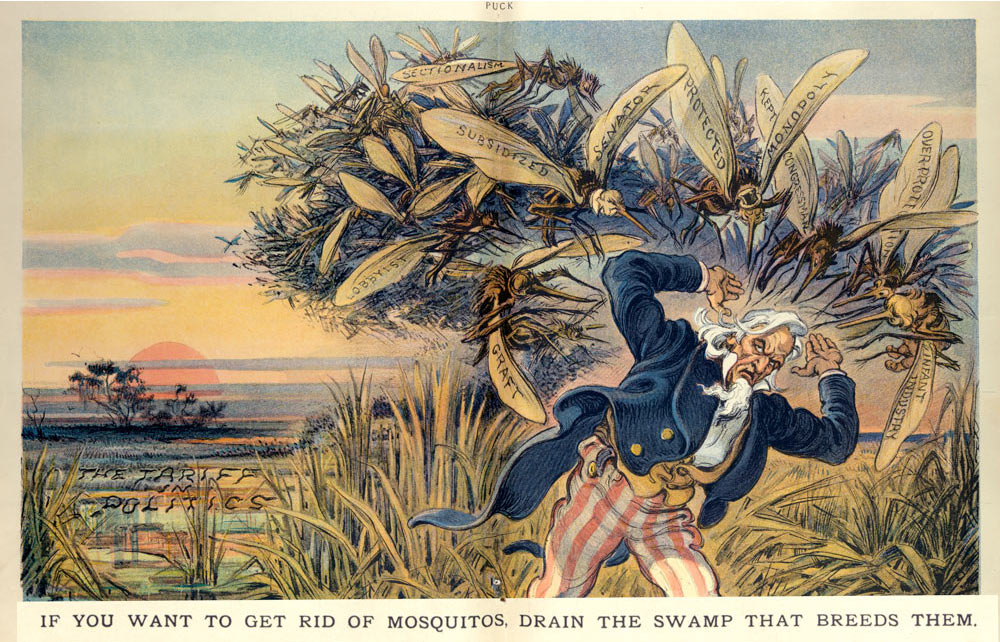
Donald Trump’s “drain the Swamp” promise was good rhetoric, great politics — because nearly everybody knows that the federal government just cannot restrain, constrain, or re-train itself.

So it would have to take an outside force.

Along comes said Outside Force — the current president — yet the Swamp remains.

Unfortunately, too few of the president’s most ardent supporters see the deepest part of the Swamp.

That is, the Department of Defense.

“Less than a week after calling the Pentagon’s $716 billion budget ‘crazy’ and indicating that he wanted to trim it, President Donald Trump is reportedly proposing to push America’s military spending to greater heights,” writes Eric Boehm at Reason. “Trump told Mattis to submit a $750 billion budget request for next year — well in excess of the $733 billion level that had been previously planned.”

And he does this despite the fact that just recently this military establishment failed to give a competent accounting of its spending.

Sadly, poor accounting is rigged into the Department of Defense, as demonstrated in an important exposé last month.

“For decades, the DoD’s leaders and accountants have been perpetrating a gigantic, unconstitutional accounting fraud,” The Nation explains, “deliberately cooking the books to mislead the Congress and drive the DoD’s budgets ever higher, regardless of military necessity.”

Even the imperiled Social Security juggernaut is not run as badly as the Pentagon. We at least know where its funds go and have gone.*

It may be that a real leader — with substantive ideas, reliable information, and a sense of the enormity of governmental carelessness — will inspire Americans and challenge the Deep Swamp, er, State, before catastrophe.

Unfortunately, Trump is looking less and less like that drainer.

This is Common Sense. I’m Paul Jacob.


* One recipient of Social Security “contributions” has been, in fact, the Pentagon, since budget deficits have been at least partially covered by congressional borrowing from Social Security’s “surpluses.”

PDF for printing

Photo credit: Puck, 1909


See all recent commentary
(simplified and organized)
See recent popular posts