Categories
ideological culture national politics & policies Popular too much government

Greenlighting Socialism

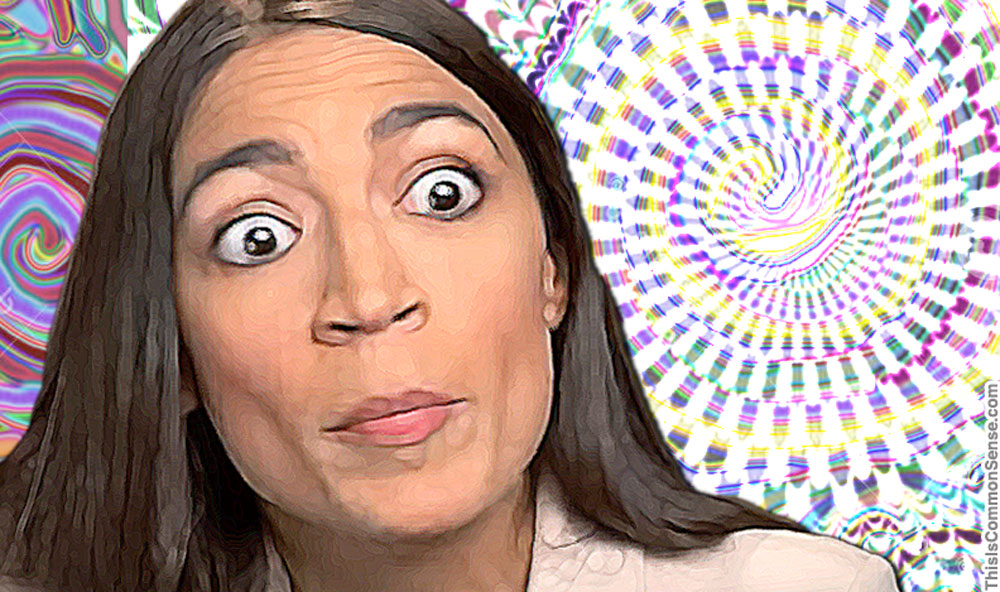
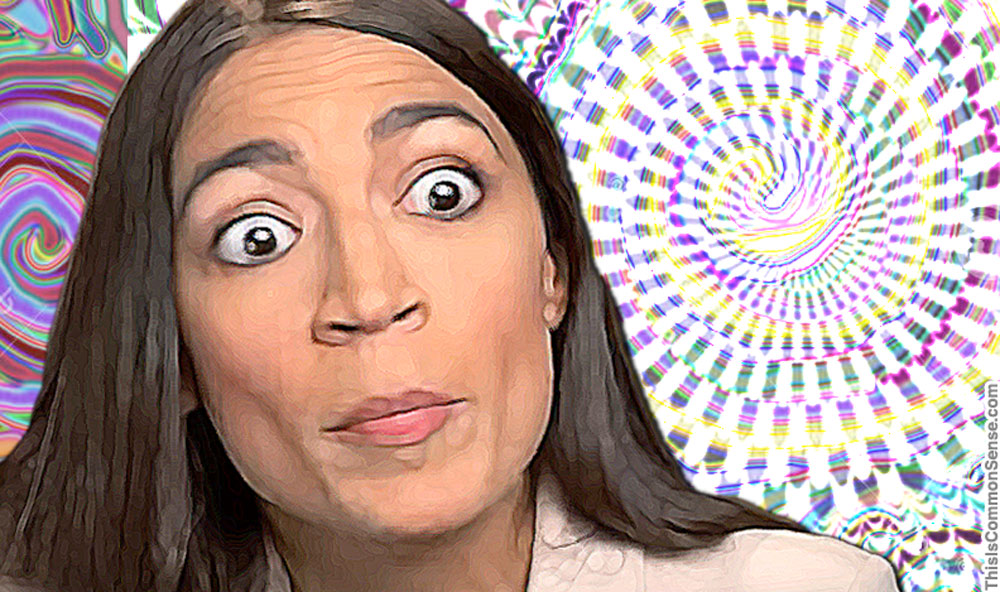
Can we blame U.S. Rep. Alexandria Ocasio-Cortez (D-NY), really? 

A decade of quantitative easing, along with trillion-dollar annual deficits run up recently by congressional Republicans, have paved a debt-ridden road upon which she hopes her massive Green New Deal (GND) might glide.

We can derisively point to the now-withdrawn FAQ, which the congresswoman’s staff “accidentally” posted on the Web and sent out to reporters. It was “unfinished,” and “erroneously” said the GND would be “guaranteeing . . . Economic security for all who are unable or unwilling to work.“

But of course, read the actual totalitarian-esque House Resolution — calling for “a new national, social, industrial, and economic mobilization on a scale not seen since World War II and the New Deal era” and labeling it “a historic opportunity” — and tell me the silly FAQ isn’t accurate.

The GND promises to “create millions of good, high-wage jobs . . . provide unprecedented levels of prosperity and economic security for all people . . . and . . . counteract systemic injustices.” It must, of course, after wiping out tens of millions of jobs in private health insurance (2.6 million) and fossil fuels (10 million).

Senate Majority Leader Mitch McConnell has been so kind as to announce he will bring the GND to a vote in the Senate. Put Senators on record. And more than 100 Democrats in Congress, including four declared presidential candidates — Sens. Cory Booker (D-N.J.), Kirsten Gillibrand (D-N.Y.), Kamala Harris (D-Calif.), and Elizabeth Warren (D-Mass.) — have endorsed the Green New Deal resolution.

Give AOC her due. She has brought fresh young energy to old-fashioned socialism. 

And leading Democrats out of the shadows.

This is Common Sense. I’m Paul Jacob.


PDF for printing

Alexandria Ocasio-Cortez, New Green Deal, socialism

See all recent commentary
(simplified and organized)
See recent popular posts

Categories
ideological culture political economy too much government

Socialism Doesn’t Work, But…

“Socialism” — we all want to be sociable, right?

Last week’s anti-socialist moment was not limited to the president’s promise that America would never go socialist, as I noted this weekend there was also Panera Bread’s abandonment of its quasi-charitable Panera Cares (“pay-what-you-want”) fast food chain.

Isn’t that a bit of a strange connection? Socialism is not charity. It’s bad because it is force through and through, not because it seeks to help people. 

Well, note that while Panera’s notion was the same as many socialists’, to help the poor. Panera’s method was to cajole, or “nudge,” the better-off to pay enough more to cover the costs of paying less. 

Kinda like ObamaCare, but without the force.

And without the force, it failed.

What Panera management discovered is that not only is it very hard to get the message across, it is almost impossible to set up coherent incentives to successfully alter consumer behavior. 

Getting incentives right is something that plagues all sorts of socialistic experiments, voluntary or coercive, within a capitalist society. 

Take Finland’s recent experiment with a Universal Basic Income (UBI). 

The idea of that nation’s centrist party was to take care of the unemployed beneficiaries’ basic needs so they could get back to work.

Well, those who received the basic income were happy enough receiving the moolah. Sure. But “there was no evidence from the first year of the experiment,” a report in Huffington Post admits, “that the scheme incentivized work.” Despite that, socialists in England are pushing for the UBI.

Socialism doesn’t work, and socialists would rather not work — except to advance socialism.

This is Common Sense. I’m Paul Jacob.


PDF for printing

socialism, force, incentive, Occassio-Cortez

See all recent commentary
(simplified and organized)
See recent popular posts

Categories
term limits too much government

Beautiful Canary

New hope for Venezuela: A direct constitutional challenge against the horrific reign of socialist strongman Nicolás Maduro enjoys massive popular support and has quickly gained international recognition.

If 35-year-old National Assembly President Juan Guaidó, who launched the campaign, succeeds in restoring a democratic government, he should also restore term limits on the president, the National Assembly and other offices. 

Those limits were repealed through a 2009 constitutional referendum that paved the way for then-President Hugo Chavez to continue in power. With government domination of the media and a slanted ballot question, it was less than a fair election. Still, 54 percent voted to end the limits.

Today, I’m certain the majority would vote differently.

Venezuela makes me think of Nicaragua, likewise being looted and brutalized by a socialist thug. Hundreds have been killed in protests demanding that Nicaraguan President Daniel Ortega step down. I have friends with relatives in harm’s way.

Nicaragua is similar to Venezuela in another respect: The care and maintenance of dangerous concentrations of power ran smack into an established constitutional restraint known as term limits. 

In a widely condemned 2011 decision, the country’s supreme court “declared the constitution unconstitutional,” as the leader of the Nicaraguan Center for Defense of Human Rights put it. This permitted Ortega to run again. Three years later, the National Assembly jettisoned the limits from the constitution — without any vote of the people.

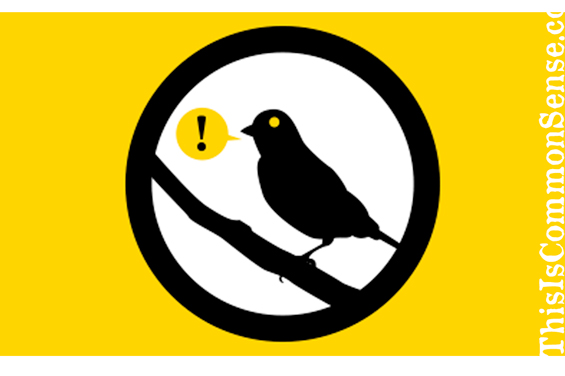
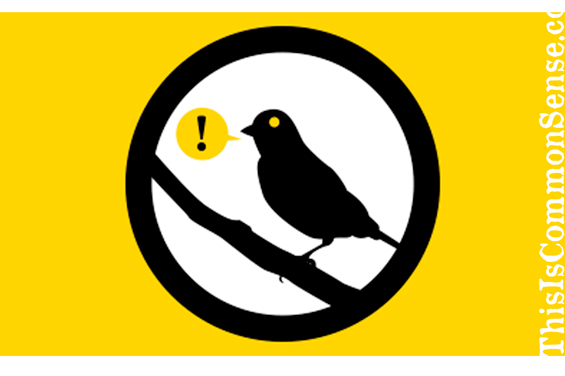
Term limits are needed everywhere, every city, state and nation across the globe. Even when a powerful despot breaks the limit, the violation at least serves as the coal miners’ dead canary, demonstrating that the political air has become too dirty for liberty to breathe.

This is Common Sense. I’m Paul Jacob.


PDF for printing

term limits, Venezuela, socialism, canary

See all recent commentary
(simplified and organized)
See recent popular posts

Categories
First Amendment rights national politics & policies too much government

First Things First

Surely there’s something good in the first legislation put forth by the brand-new Democratic House majority — though nothing jumps to mind. 

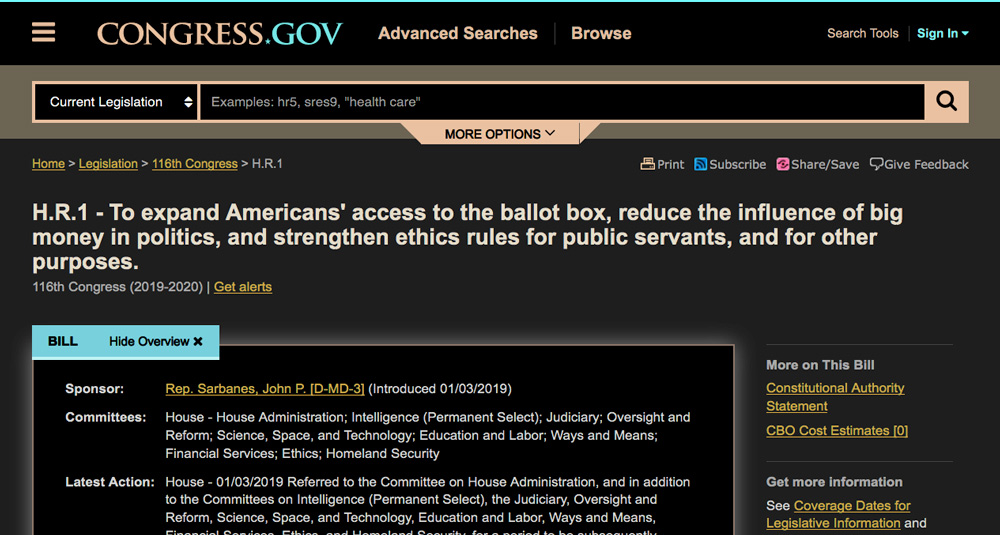
The 571-page smorgasbord bill “addresses voting rights, corruption, gerrymandering and campaign finance reform,” writes Thomas Edsall in The New York Times, “as well as the creation of a Select Committee on the Climate Crisis — a first step toward a ‘Green New Deal.’” 

H.R. 1 would mandate that states adopt automatic voter registration, a step too far. It establishes a system of public subsidies for candidates running for Congress, with taxpayers forking over a six-to-one match on donations of $200 or less. 

The legislation also empowers* the Federal Election Commission, including by ending its supposedly “neutral” composition, i.e. an equal number of Democrat and Republican commissioners. This would either allow the FEC to be more “decisive” or unleash the dogs of partisan political witch hunts . . . depending on the case and/or your politics.**

Speaker Nancy Pelosi (D-Calif.) and Rep. John Sarbanes (D-Md.), the lead sponsor of the legislation, bill it as the best way “to rescue our broken democracy.” 

“It should be called the Democrat Politician Protection Act,” argues Senate Majority Leader Mitch McConnell in the Washington Post

David Keating, president of the Institute for Free Speech, tells NPR, “A lot of [H.R.1] looks to be unconstitutional.”

No problem, for one provision calls for a constitutional amendment to partially repeal the First Amendment, so to authorize Congress to regulate campaign spending and speech.

Remember: the First Amendment is a single sentence, a mere 45 words.

Succinct and effective.

The former does not apply to this new bill, and the latter, I hope, does not apply to this new Congress.

This is Common Sense. I’m Paul Jacob.


* Let’s not give greater power to the FEC, which, according to a federal judge, “acted arbitrarily and capriciously and contrary to law” in the 2016 election.

** Of course, for Ross Perot in the 1990s or Libertarians, Greens and independents today, that “bipartisan” make-up isn’t neutral but stacked like a Star Chamber


PDF for printing

See all recent commentary
(simplified and organized)
See recent popular posts
Categories
free trade & free markets media and media people too much government

A Former Economist

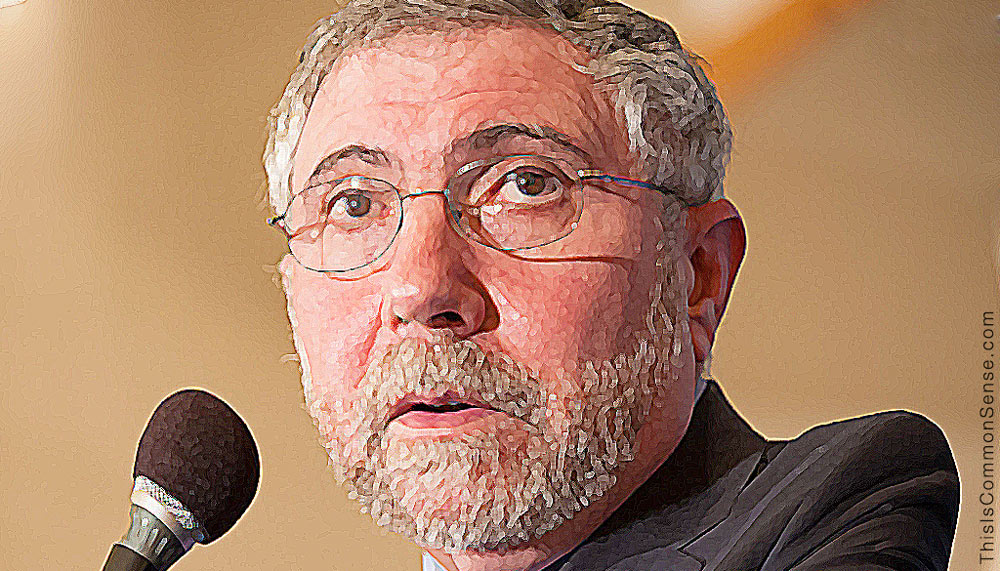
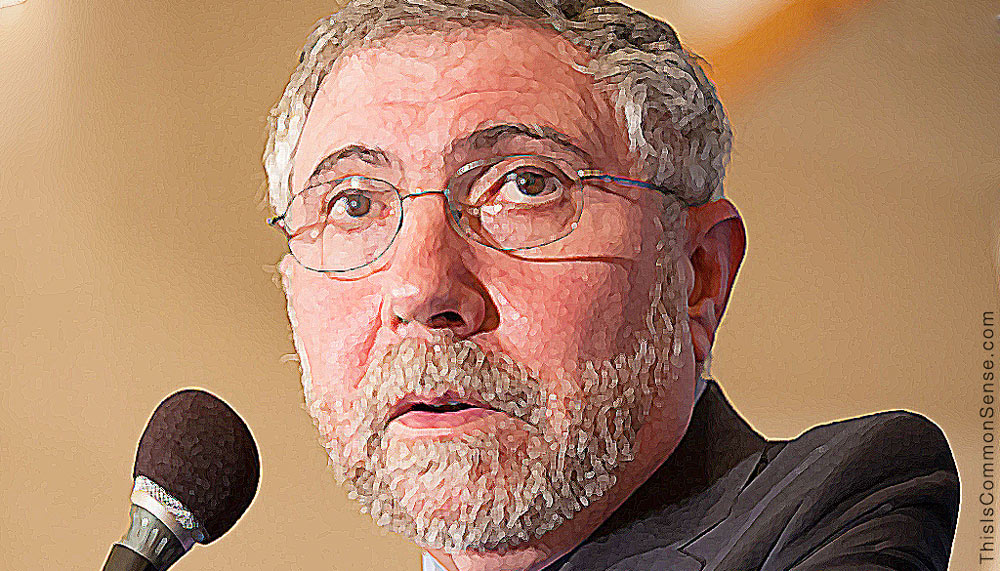
Paul Krugman, New York Times columnist and former economist, tested our patience last week with “Trump’s Big Libertarian Experiment.” How many non sequiturs will squeak past the Gray Lady’s editorial department? 

Loads — and all about how the federal government shutdown gives limited government folks what they want: less government.

Subsidy checks to farmers aren’t going out, as “libertarian organizations like Cato” have long advocated. Sure. But it’s no policy change.

As soon as there’s a budget deal, those checks will be made up.

Further, “businesspeople are furious that the Small Business Administration isn’t making loans.” 

Well, it’s high time businesses were weaned off the SBA teat — and a few whiners do not a case for subsidy make.

And then there’s the Food and Drug Administration, which can no longer inspect foods. Since “there’s a long conservative tradition, going back to Milton Friedman, that condemns the F.D.A.’s existence as an unwarranted interference in the free market” libertarians must be pleased, eh?

There is also a long tradition among economists that says businesses don’t get rich poisoning their customers, and that there are many mechanisms in place — and, barring the FDA, more would be in place — to ensure customers that they won’t be infected by eating . . . Romaine lettuce.

Which then Krugman admits . . . as if he had belatedly recalled Friedman’s lesson in Capitalism and Freedom. He concedes that the shutdown is not the way Friedman would go about limiting government. Besides, “libertarian ideology isn’t a real force within the G.O.P.”

So what’s the point?

Krugman ends with talk of a smell test: does lack of food inspections smell like freedom?

Something stinks here. But it isn’t spoiled food. Or freedom.

This is Common Sense. I’m Paul Jacob.


PDF for printing

Paul Krugman, libertarianism, libertarian, freedom, shutdown

See all recent commentary
(simplified and organized)
See recent popular posts
Categories
meme too much government

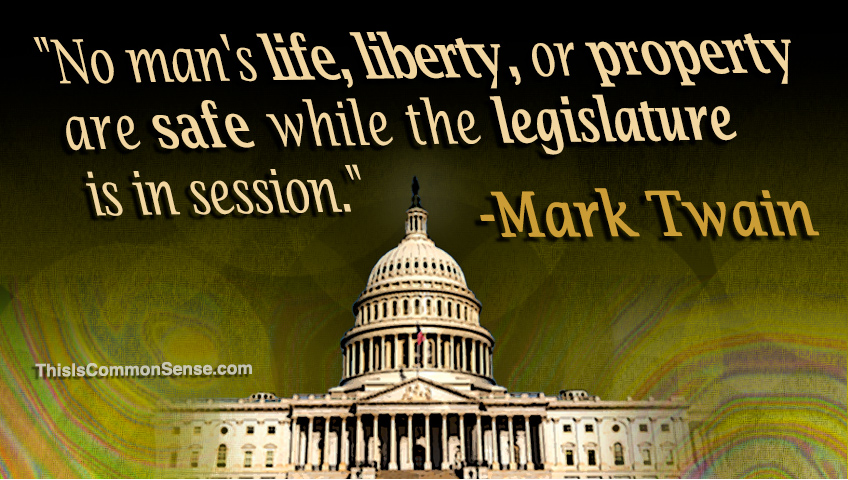
Twain on Congress and Liberty

Categories
too much government

Five-Alarm Foolishness

Will President Trump declare a “national emergency”? Is he that desperate to get the funds needed to build a wall (or steel-slate fence or barrier of some sort) on the U.S. border with Mexico?

It looks increasingly likely, but who knows . . . 

What I do know is how foolish and dangerous it is to provide “emergency” loopholes for politicians.

Words have very mutable meanings to politicians. “Emergency” will entail whatever the president invoking it desires. 

In fact, when Congress passed the National Emergencies Act in 1976, the legislation didn’t even bother to define the term, “emergency.” 

Every time I hear “national emergency,” it reminds me of Colorado and Oregon, where state constitutions are clear that an emergency entails a true threat to the health and safety of the public. But since those constitutions protect emergency bills from the check of a citizen referendum, legislators make use of the obvious loophole: a majority of bills in those states now carry a clause dishonestly claiming emergency status.

I guess we should not be shocked to discover that Congress has awarded the president at least 136 emergency powers, as Elizabeth Goitein of the Brennan Center for Justice informs The Washington Post.

Ninety-six of those “powers” allow the president to act unilaterally.

What sort of blind power giveaways are we talking about? 

Goitein explains that in a declared emergency, under current law, Congress has authorized “the president to shut down or take over radio stations and even suspend a law that prohibits government testing of chemical and biological weapons on unwitting human subjects.”

We need a wall, all right . . . between politicians and this foreign notion of extra-constitutional “emergency” powers. 

This is Common Sense. I’m Paul Jacob. 

emergency, alarm, Trump, Donald, President, power

P

Categories
ideological culture too much government

Worse Than Her Faux Pas

“If we work our butts off to make sure that we take back all three chambers of Congress,” stumbled U.S. Representative Alexandria Ocasio-Cortez (D.-N.Y.), “uh, rather, all three chambers of government: the presidency, the Senate, and the House. . . .”

The Daily Wire, where I encountered this particular snippet of inanity, could be caught gloating between her lines. And it is funny (amidst the fear) when politicians prove themselves ignorant, clueless, unprepared. Politicians rarely come across as masters of their subject.

But we who are subjected to their lack of mastery should worry about their substantive flubs more than their trivial technical errors.

As the newly elected solon herself had the wit to notice.

“Maybe instead of Republicans drooling over every minute of footage of me in slow-mo, waiting to chop up word slips that I correct in real-tomd [sic],” she went on, “they actually step up enough to make the argument they want to make: that they don’t believe people deserve a right to healthcare.”

I am not a Republican, but I’m here to help. The only rights we “deserve” are those we can have without enslaving and exploiting others. My right to freedom requires only your duty to leave me alone, not systematically taking from others or running their lives. But a right to “healthcare”? The corresponding duties are vague and ominous, potentially limitless.

And thus oppressive. 

A government big enough to give Ocasio-Cortez everything she wants is too big to leave any freedom for the rest of us.

This is Common Sense. I’m Paul Jacob.


PDF for printing

Alexandria Ocasio-Cortez

See all recent commentary
(simplified and organized)
See recent popular posts

Categories
meme moral hazard too much government

How to Know

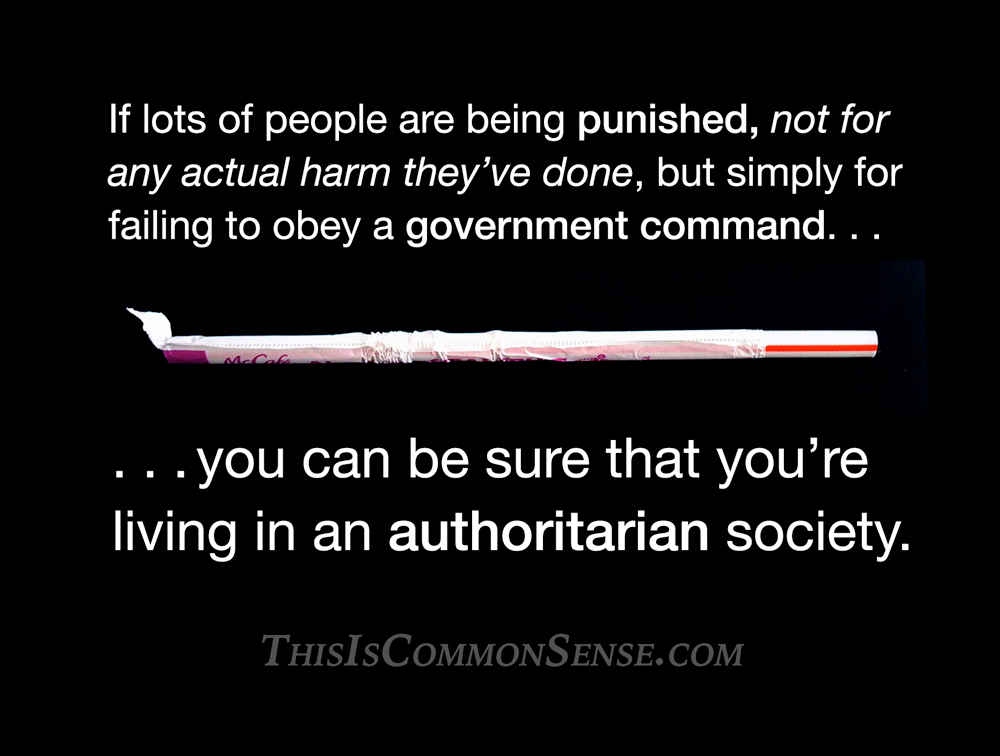
Many people don’t seem to realize that a prohibition (banning something) is AUTHORITARIAN BY DEFINITION. Whether it’s drugs, guns, alcohol, offensive language, dangerous ideas, texting while walking(!), plastic straws(!)… authoritarians are perfectly happy to use government violence to force the rest of us behave as they wish. Because they think they know what’s right for everybody else. They are the authorities. They are the keepers of the truth. For the rest of us, the message is clear: obey or be punished.

The spectacle of people screaming about Trump’s “authoritarianism” while simultaneously demanding more regulations, more bans, more restrictions… would be funny if it weren’t so dangerous.


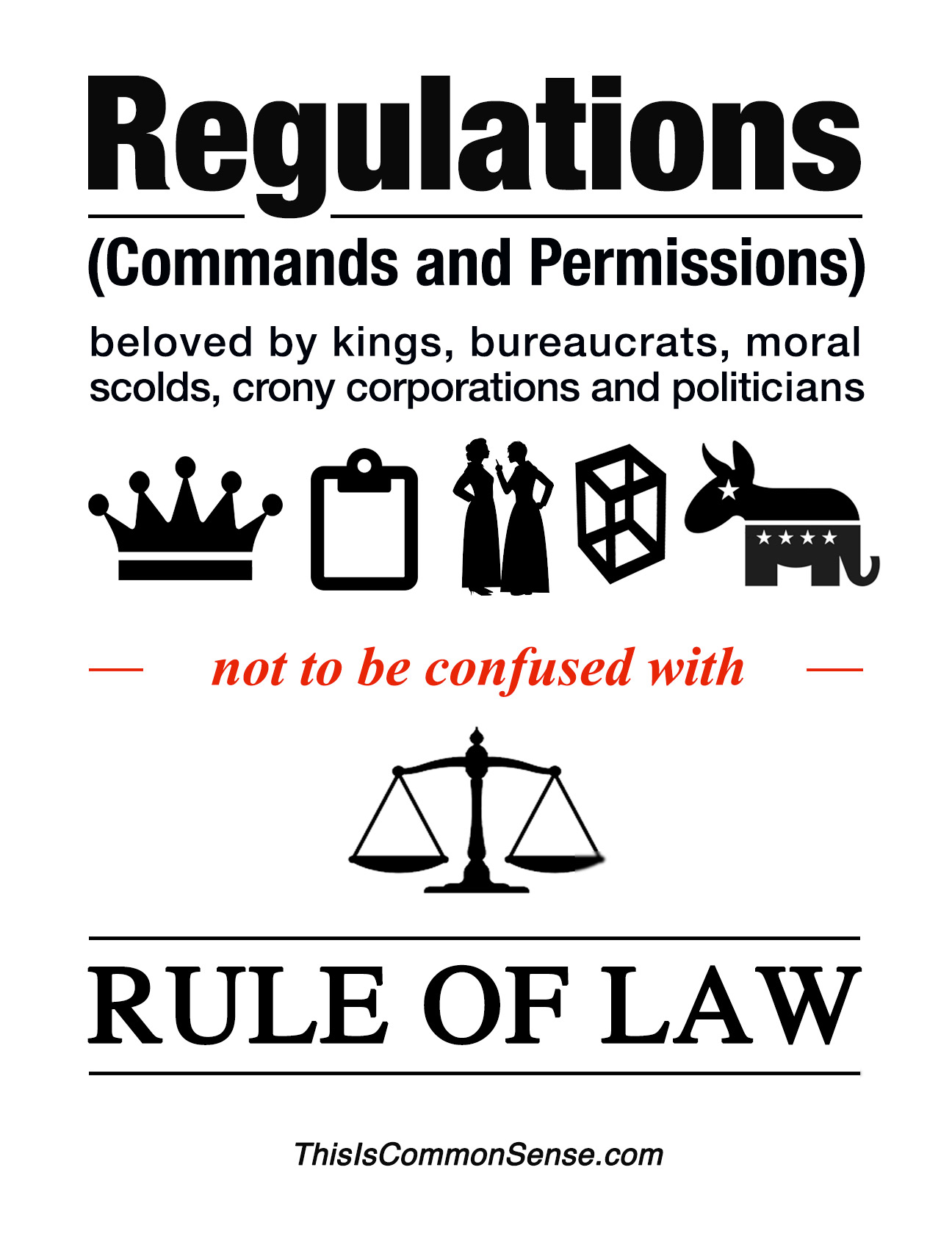
A “rule of law” is based on general principles, and makes room for — or, better yet, is based upon — the protection of individual rights.

It used to be common to say, “a rule of law, not of men”; it was even as common in political oratory as was spouted out over drinks at the Rotary. But as the modern Regulatory State has grown in scope and power, most folks seem to have lost track of the notion. It is now not even a cliché. Few even of our most educated folks can explain this idea. Vast swaths of the mis-educated public appear not to “get” the idea of limiting government to the enforcement of a few general principles; instead, they cry for more “regulations” (along with additional spending and maybe even a whole new division of the executive government) every time a crisis, tragedy or atrocity occurs.

So we are left with a political culture in which the words of Tacitus seem to a majority as implausible at best, evil at worst: “The more the laws, the more corrupt the State.” Contrary to today’s trendy prejudice, we do not need “more laws” — edicts legislated by representatives, or regulations concocted by bureaucracies — we need Law.

As in, “a rule of Law.”

regulations, rule of law, control, freedom

See all recent commentary
(simplified and organized)
See recent popular posts
Categories
national politics & policies too much government

PayGo Piffle

Republicans are especially good at deficit spending. Give them control of the presidency and both houses of Congress, and watch the money flow! It happened under George W. Bush, and now under President Donald Trump.

But note: the Democrats have gained control of the House of Representatives. We might see some restraint on government growth, if for no better reason than “divided government,” in which the two major parties can more effectively do damage to each other’s spending.

Nancy Pelosi, again Speaker of the House, has a monkey wrench to throw into Republican spending plans, not excluding that much-promised, little acted-upon Trump promise, “The Wall.” 

It is called “PayGo,” or, in the Twittersphere, #PayGo.

Not something new (Democrats have used it before), the House rule aims to limit any new expenditures to equal cuts in old spending.

Effective? Well, in capping the deficit at a trillion dollars annually . . . until they vote for exceptions to the rule. 

And effective enough to annoy Republicans!

And now, to rile up progressives, too.

Alexandria Ocasio-Cortez (D-N.Y.) has made a big deal about her opposition. She has opposed Pelosi’s attempt to re-establish the rule. 

Heedless of any danger that could result from further adding to the now-$22 trillion national debt, progressives scorn the idea of fiscal responsibility as “austerian,” claiming the whole idea was somehow disproven by “economic history,” in the Tweeted words of Rep. Ro Khanna (D-Calif.).

The “real” beneficiaries would be the corporations, progs say, and that PayGo would work against the “progressive agenda” of increasing government programs without limit.

Typical political piffle.

This is Common Sense. I’m Paul Jacob.


PDF for printing

Alexandria Ocasio-Cortez, #PayGo, austerity, spending

See all recent commentary
(simplified and organized)
See recent popular posts