Categories
general freedom nannyism national politics & policies too much government

A Federalist Prescription

California has become the 32nd state to stand up for the dying.

Gov. Jerry Brown just signed the “right to try” law that the Goldwater Institute has been pushing. It allows diagnosed terminally ill patients with only a few months left to live to try “experimental” medications.

These are drugs that haven’t passed through all the Food and Drug Administration’s many hoops.

The rationale for the law is that the FDA’s decade-long, costly process is ostensibly designed to prevent “dangerous” drugs from being regularly prescribed and sold and used in the United States. To save lives, you see. But it is simply cruel to hold patients in the process of dying to the strict standards of the slow, bureaucratic federal bureaucracy. Cruel because purposeless.

The Goldwater Institute’s press release clarifies the law like this: “Right To Try is limited to patients with a terminal disease that have exhausted all approved treatment options and cannot enroll in a clinical trial. All medications available under the law must have successfully completed basic safety testing and be part of the FDA’s on-going approval process.”

Hardly radical. Indeed, it seems such a meek and mild move, to me. If you are dying, and your doctor is obliging, who is harmed?

Two things, though:

  1. Had Americans a right to self-medicate — like we did before the Progressive Era nanny state bureaucracies were set up — this issue would not even come up. These reforms are necessary because we are not Once upon a time, all Americans could choose any medication.
  2. This is yet another example of states effectively nullifying federal law.

More please.

This is Common Sense. I’m Paul Jacob.

Printable PDF

FDA, self medication, drugs, medicine, death, illustration


Categories
Accountability ballot access First Amendment rights general freedom government transparency initiative, referendum, and recall media and media people moral hazard nannyism Regulating Protest too much government U.S. Constitution

Four Measures for Rogue Government

Rule of thumb: don’t enact today laws that, had they been obeyed by folks in the original 13 states of our union, would have prevented independence.

Voters in Missouri, South Dakota, and Washington have the “opportunity” to enact such laws this November.

In “Beware of Anti-Speech Ballot Measures,” Tracy Sharp and Darcy Olsen, presidents of the State Policy Center and the Goldwater Institute, respectively, offer a warning. Focusing on Measure 22, the South Dakota Government Accountability and Anti-Corruption Act, they show how dangerous notions like forcing “nonprofit organizations to report the names and addresses of their donors to the state government” can be.

Such disclosure would subject non-profits “to possible investigation by an unelected ethics board that is given the power to subpoena private documents and overrule decisions made by the state attorney general. . . .” Rogue, star-chamber government.

Fever dream?

No. Sharp and Olsen highlight a famous U.S. Supreme Court case that protected the NAACP from the state’s demand for the group’s funding sources. Both women also offer personal tales of how nasty the opposition (in government and out) can become when big issues are on the line.

I can personally attest.

These measures fly in the face of what really matters — encouraging robust public debate. Democracy doesn’t work when people dread participation. As our authors challenge, “[d]o we want America to be a country where government keeps public lists of law-abiding citizens because they dare to support causes they believe in?”

Especially when, without the secret (unreported!) activities of the Committees of Correspondence, the USA would not have become united states in the first place.

This is Common Sense. I’m Paul Jacob.


Printable PDF

speech, anti-speech, NAACP, Supreme Court, First Amendment, Free Speech,


Original (cc) photo by Michael Tracey on Flickr


Categories
Accountability national politics & policies political challengers responsibility too much government U.S. Constitution

How to Corrupt Politicians Without Really Trying

In a Townhall.com column last January, I argued that politicians weren’t “stupid,” as Mr. Trump had loudly proclaimed — to few objections.

The problem is worse: too many politicians lack honesty and integrity. They’re in the politics biz for their own lucrative ends.

Six weeks ago, I declared — again, to few objections — that “Politicians Must Suffer.” Despite the provocative, sizzling-with-Schadenfreude title, my point was simple: “lavish pay, pensions and other benefits for city councilmen, state legislators and congressmen constitute a serious problem.”

“It breeds,” I added, “bad behavior when politicians line their own pockets. . . .”

Well, I’m right.

At least, I’ve got some academic back-up from a new study by Mitchell Hoffman of the University of Toronto and Elizabeth Lyons of the University of California-San Diego, entitled, “A Time to Make Laws and a Time to Fundraise? On the Relation Between Salaries and Time Use for State Politicians.”

Sounds like a fascinating read, eh?

“Using data on time use and legislator salaries, we show that higher salary is associated with legislators spending more time on fundraising,” the study’s abstract reads. “In contrast, higher salary is also associated with less time spent on legislative activities and has no clear relation to time spent on constituent services.” [Emphasis added]

While their study jives with my experience, the Wall Street Journal reports that others were surprised. Authors Hoffman and Lyons explain: “When salaries are higher, politicians face a greater incentive to get re-elected (as the value of serving in office is greater). Thus, they will optimally respond by increasing the time spent on fundraising.”

Sounds like in addition to lower pay for politicians, we need term limits, too.

This is Common Sense. I’m Paul Jacob.


Printable PDF

politicians, public servants, service,


Categories
Accountability crime and punishment folly general freedom media and media people

Crime and Terror and Panic

Many people think crime is going up. But it’s going down.

Similarly, many people think terrorism is “an existential threat” to our very civilization.

Could the latter folks be wrong for the same reason the former folks are?

Because news reporting concentrates on crime, covering it intensely, incessantly — if it bleeds, it leads — we get the wrong perspective on crime. The long-term trend-line shows crime going down since the early 1990s. Though we’re now seeing upticks in certain big cities, it’s simply not all getting worse.

This is not a reason to slack off. It is a reason not to panic.

How is terrorism different?

In 15 years, there has been no repeat of 9/11/01, or anything close to it. Granted, there have been horrific homegrown terror incidents. That threat remains. Though, thankfully, last weekend’s terrorist spree wasn’t more effective: One bomb fizzled, another killed no one, and the mad jihadist knifer was himself put down before anyone was killed.

Some might note that the number of deaths as a result of automobile crashes* is far, far higher than from terrorism. Why worry more about the very small number of terrorist outbreaks in a huge country like ours?

Here’s why: the terrorism is intentional, and could become worse for whatever reasons flip normal Muslim men and women into jihadist radicals. So our vigilance must not abate.

But there’s another difference. Terrorists, unlike normal criminals, want to be noticed. The more we panic, the more they are tempted to seek to cause us to panic.

Terrorism, whether going up or down, requires, along with vigilance, a certain resolute calmness.

This is Common Sense. I’m Paul Jacob.


* Deaths from automobile accidents have been decreasing for decades, a 35 percent drop from 1979 to 2005. However, last year the U.S. had the “highest one-year percentage increase in traffic deaths in half a century.”


Printable PDF

panic, terror, terrorism, media, keep calm, illustration


Categories
Accountability media and media people national politics & policies political challengers

The Crooked News Network

A recent Gallup poll found Americans’ trust in their news media has fallen to the lowest level ever recorded. Only 32 percent expressed either “a great deal” or “a fair amount” of confidence in the press “to report the news fully, accurately and fairly.”

Trust among Republican is down to a mere 14 percent.

Sad statistics . . . but not surprising. Remember Rathergate in 2004?

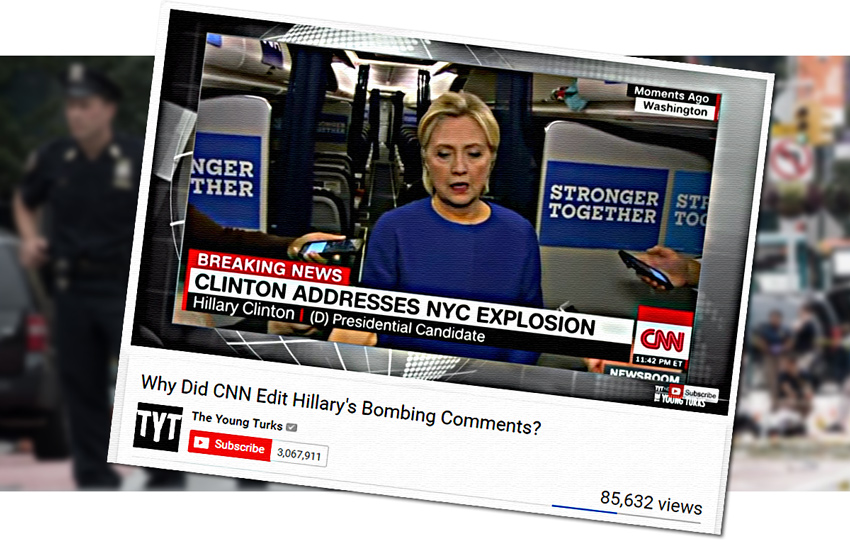
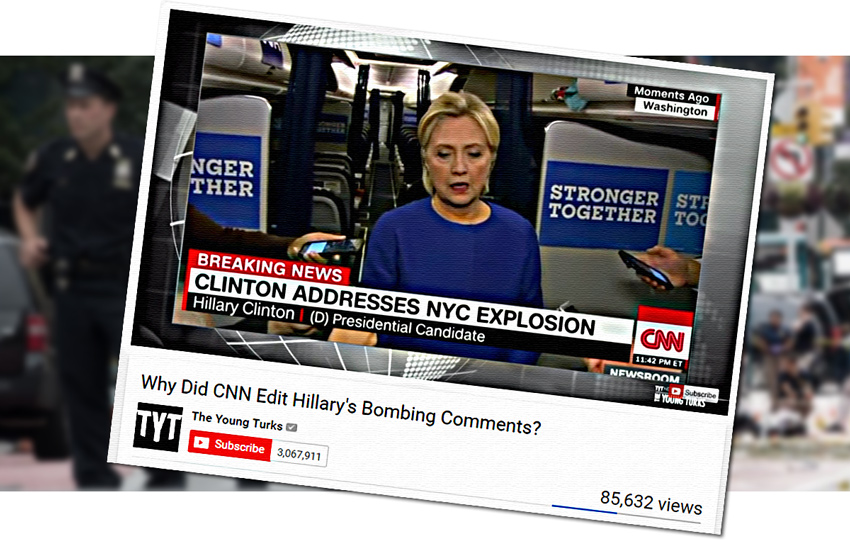
Over the weekend, CNN earned its “Clinton News Network” nickname by blatantly misreporting Hillary Clinton’s and Donald Trump’s responses to the terrorist bombings in New York and New Jersey.

Both candidates initially called these incidents “bombings” — even before government officials had definitively confirmed the obvious. But in its reports, CNN edited out Mrs. Clinton’s remarks to that effect and ran with the angle that Mr. Trump was irresponsible for saying . . . well, what she said.

“The press has since largely slammed Trump for referring to the explosion as a ‘bomb’ too soon,” reported The Hill, adding that major media outlets have somehow “also failed to mention Clinton in focusing on Trump.”

Some blame the public’s low esteem for the media on Mr. Trump’s scathing attacks. The Donald dubbed CNN, for example, “disgusting and disgraceful” over this latest controversy.

He’s right.

Enough. CNN’s desire to propagate stories favorable to one candidate and unfavorable to another has spiraled down to the withholding of relevant information, for no better reason than to mislead the public. As a news junkie with an itchy trigger finger on my TV remote, I’ve stopped clicking over to CNN.

Now, Anthony Bourdain’s Parts Unknown will be even more so.

This is Common Sense. I’m Paul Jacob.

Printable PDF

HIllary Clinton, CNN, bomb, bombing, bias, illustration


Categories
crime and punishment ideological culture media and media people nannyism national politics & policies

The Other Half of the Truth

Another terrorist event. And another.

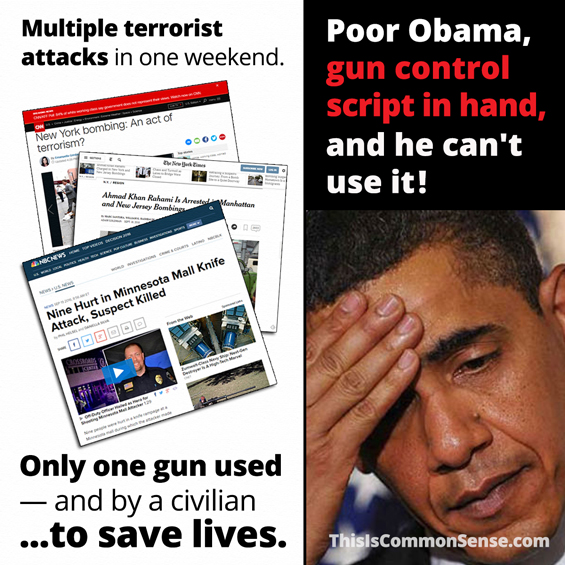
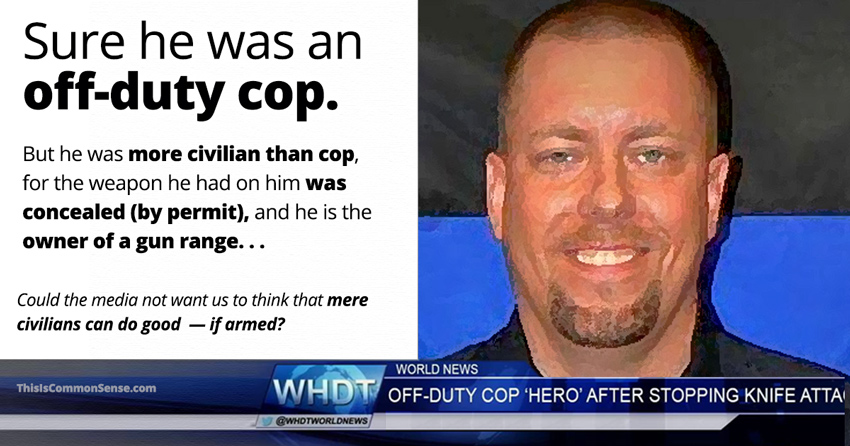
Douglas A. French, of the National Review, while writing about Islam and terrorism, innocently drew up a half-truth: “In Saint Cloud, Minn., Dahir Adan’s family identified him as the man who stabbed eight people in a mall before being shot and killed by an armed civilian, an off-duty police officer named Jason Falconer.” So, what is the missing half of the truth?

The heroic Mr. Falconer was armed, sure. And an off-duty cop. But he was more civilian than cop, for the weapon he had on him was concealed (by permit), and he is the owner of a gun range.

Actually, a firearms training business that teaches “individuals the mindset, knowledge and skills needed to be successful with firearms in order to secure their personal safety or that of their family, at home or in public.”

Falconer used to be a police chief, and still works part-time as a police officer. But, we should emphasize, his main gig is training. Indeed, he’s an advocate concealed carry and a member of the dreaded National Rifle Association.

I am not criticizing Mr. French. His focus was on something else. And he did use the word “civilian,” which is not the case in most coverage. But that “off-duty cop” meme is everywhere — pushed by most journalists.

Could they not want us to think that mere civilians can do good in a world of too much conflict and crime — if armed?

Let’s honor Jason Falconer. And let’s also reaffirm his message, the importance of concealed carry and trained firearms use by good people.

This is Common Sense. I’m Paul Jacob.
 

Poor Obama, gun control script in hand


Printable PDF


Categories
Accountability ballot access folly general freedom media and media people national politics & policies Regulating Protest too much government

The Two-Product Economic System

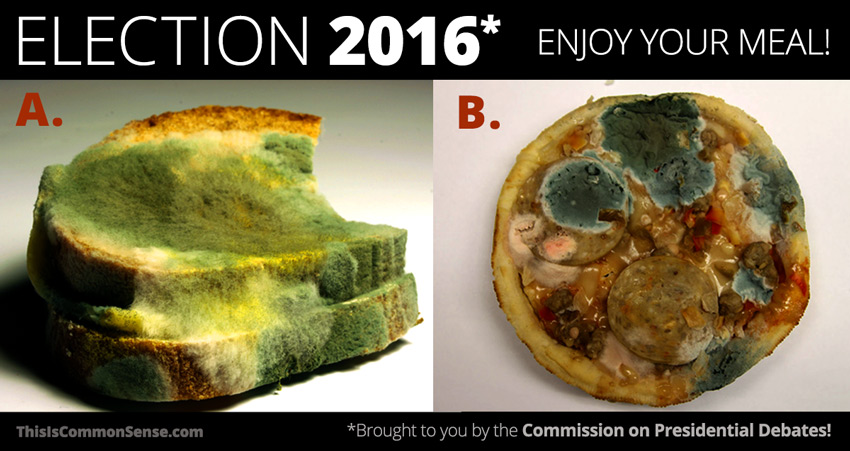
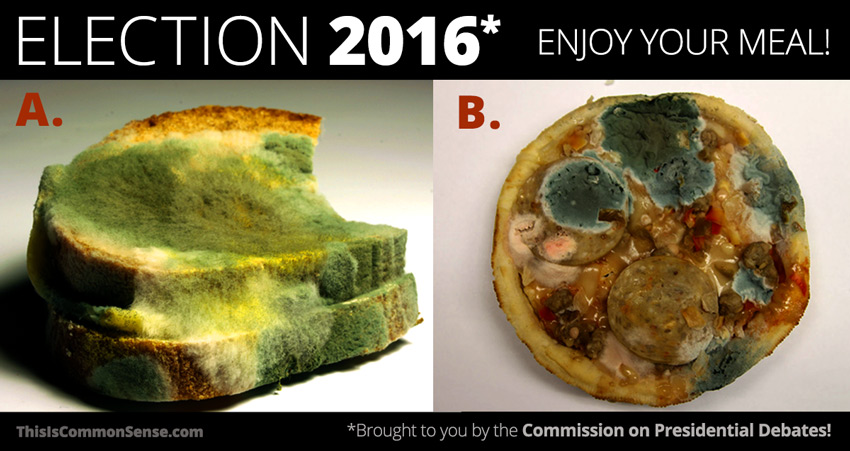
What if our economy worked like our political system?

Only two major companies would provide any particular product for sale. But don’t worry — we’d still have a solid choice between “This Product Is Obnoxious” and “I Don’t Trust This Product.”

Those two companies would create a non-profit entity — a Commission on Product Debates — empowered to determine the rules under which any upstart company could present its “third-choice” product to consumers.

That Commission would prevent any third-choice product from standing on the marketplace stage where consumers could compare it face-to-face with the two established choices . . . until it captured 15 percent of the market.

Last week, in real life, the Commission on Presidential Debates announced that its upcoming September 26th debate would feature only Republican Donald Trump and Democrat Hillary Clinton.

Neither Libertarian Gary Johnson, averaging 8.4 percent in the five commission-approved polls, nor Dr. Jill Stein, the Green, at 3.2 percent, met the 15 percent threshold set by the Commission.

Forget that polls also show nearly two-thirds of consumers — er, voters, want Johnson and Stein in the debates. You can’t win ’em all.

Or any at all . . . if you can’t take your product to market. And the presidential debates are an essential space in today’s political marketplace.

No third-party or independent presidential candidate has been allowed on that debate stage since Ross Perot qualified in 1992, at the time polling at 8 percent — below Johnson’s current percentage.

That was before the Commission required a polling threshold. After those debates, one in five Americans voted for Perot on Election Day.

Duopolies do not serve us well. They cannot. That is not even their aim.

This is Common Sense. I’m Paul Jacob.

Printable PDF

election, duopoly, rotten choices, Hillary Clinton, Donald Trumpk


Categories
Accountability incumbents initiative, referendum, and recall nannyism national politics & policies

Colorado’s Problematic Solution

There’s a problem in Colorado, or so we’re told. And a solution. But the one doesn’t seem to match the other.

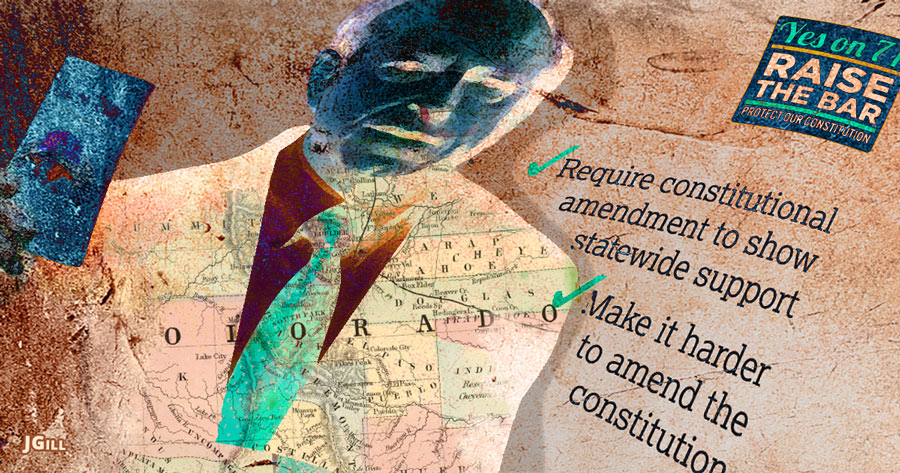
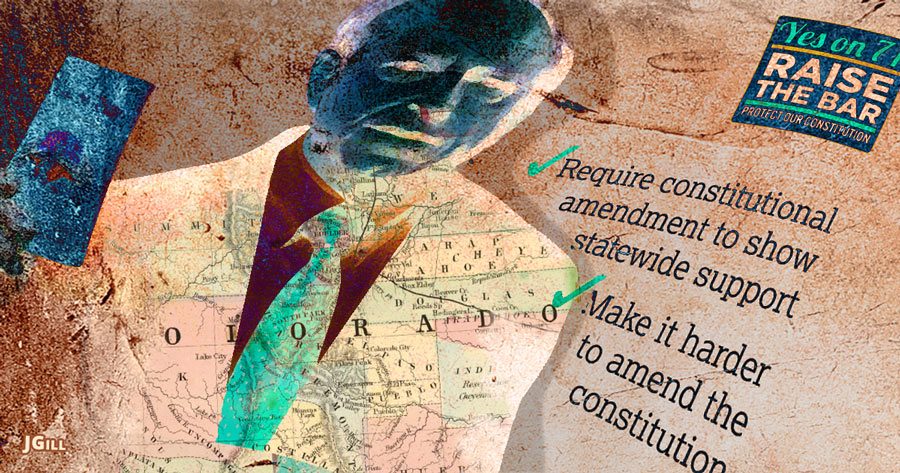
The problem, according to the supporters of Amendment 71, is too many constitutional amendments.

Their solution? Pass another constitutional amendment.

Moreover, even though two-thirds of constitutional changes have been proposed by legislators, not by citizen initiative, Amendment 71 makes it much tougher for citizens to propose amendments, while not altering the legislature’s power.

Maybe that’s because their committee, Rig the Bar . . . er, Raise the Bar, is a bipartisan group of politicians and political insiders. Their amendment would (1) increase the vote required to pass a constitutional amendment to a 55 percent supermajority, and (2) mandate that citizens qualify petitions statewide, as currently required, but also in each of the 35 state senate districts.

This means that to get an issue on the ballot citizens must successfully run 36 petition drives, not just one. And falling short in any single senate district would doom an entire effort. In short, future citizen initiatives would be much more expensive and likely to fail.

Meanwhile, the supermajority vote threshold provides well-heeled special interests with an ability to win even when they lose. Expect the powers-that-be to beat up reform measures with negative ads, knowing that simply by holding YES votes down to 54.9 percent, the establishment wins.

In a recent debate, Elena Nunez with Common Cause explained, “The problem with Amendment 71 is it’s designed to allow the wealthiest special interests in the state to act as a gate-keeper, because the cost of initiatives will go up dramatically.”

This Special Interest Protection Act sure is a problematic solution.

This is Common Sense. I’m Paul Jacob.

Printable PDF

Colorado, initiative, amendment, 71, incumbents, illustration


Categories
folly insider corruption moral hazard nannyism national politics & policies porkbarrel politics responsibility

Settled Science?!?

You probably know that America’s sugar industry is protected, making astounding profits because of high tariffs and artificially raised consumer prices.

And you likely know that government has worked hand-in-hand with agribiz interests to cook up (and regulate) a competitive sweetener, high fructose corn syrup. You understand that there are various types of sugar, and almost certainly suspect that refined sugar is bad for you, with high fructose corn syrup perhaps worse.

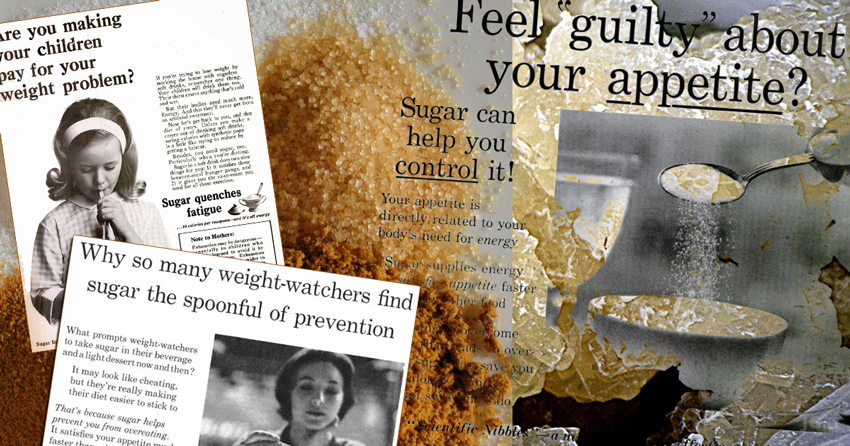
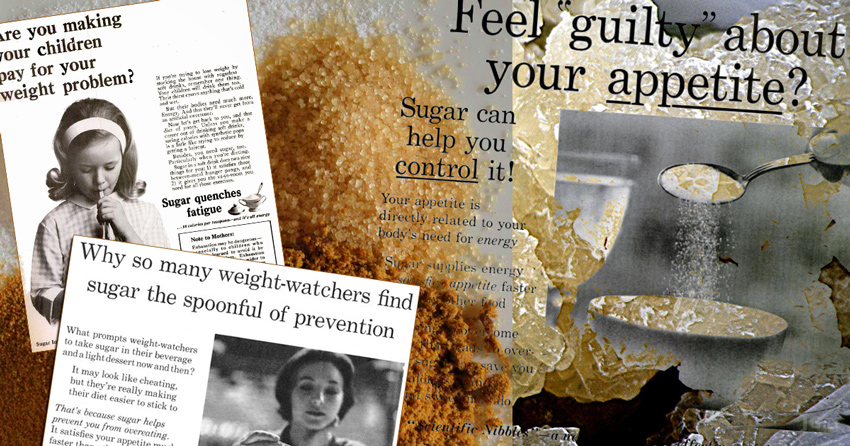
In fact, the scientific evidence for the danger of a high sugar diet has been around since the 1950s.

Well, what we now know, Elizabeth Nolan Brown writes at Reason, is “how the sugar industry essentially bribed Harvard scientists to downplay sugar’s role in heart disease — and how the U.S. government ate it up.”

Before Reason weighed in, my colleague Eric D. Dixon sent me a New York Times story, which stated the main proposition plainly: “How the Sugar Industry Shifted Blame to Fat.” But Reason’s Brown is right: it was government that really made this a nationwide disaster. The imprimatur of government sanctified the anti-fat craze, and the government’s own dietary guidance (and regulations) proved grossly wrongheaded.

Now we’re the ones who are gross.

Scientists and government (bought off by a protected industry) fed us a line that many swallowed. We increasingly swapped fat for refined sugars, causing health to decline as girths went out and weights went up.

So when I hear outrageous claims for the “settled science of climate change,” I look at my middle and doubt that “settled” part. And I nurture an unsettling thought. . . . it’s the political science that’s settled: government lies to us.

This is Common Sense. I’m Paul Jacob.

Printable PDF

sugar, lobbying, science, corruption, illustration


Categories
Accountability nannyism national politics & policies tax policy

The Year of Translucency

Barack Obama promised transparency in government. He didn’t deliver.

But others stepped up to the plate.

It’s now possible to see through a lot of political, elitist, and bureaucratic bunk courtesy of fugitives like Snowden, convicts like Manning, and citizens using FOIA (Freedom of Information Act) procedures.

And we are learning more about Hillary Clinton with each info dump from Julian Assange’s Wikileaks and every court-ordered disclosure thanks to lawsuits to enforce FOIA by organizations like Judicial Watch.

Some folks demand that Donald Trump release his tax returns. On the one hand, hooray for public demands for more information about candidates. But on the other hand, the richer you are, the longer and stranger your tax returns become. One shifts income around to avoid taxes — indeed, you take every “loophole” the law allows. As Justice Brandeis advised. Some folks may be shocked by Trump’s creative-but-legal accounting.

To avoid future confusion, we should demand simple tax returns from the rich. That would require jettisoning most of the tax code, simplifying the system. But ask your congressional representative why he or she will not support such a reform.

The reason we have an opaque and complicated tax code is . . . well, transparent. Under a simple tax system, there would be fewer favors to “trade” . . . and thus less power to accumulate, less oomph to parlay into pomp and splendor.

Which is why politicians rarely provide much transparency, and why it must often be wrested from them.

Merely by being merchants of opacity, our pols reveal, if inadvertently, the nature of our Too Big Government.

This is Common Sense. I’m Paul Jacob.

Printable PDF

tax code, power, politicians, transparency, illustration