Categories
Accountability folly free trade & free markets general freedom moral hazard

Oil’s Bad that Ends Bad

Sometimes socialism seems reasonable.

Emphasis on “seems.”

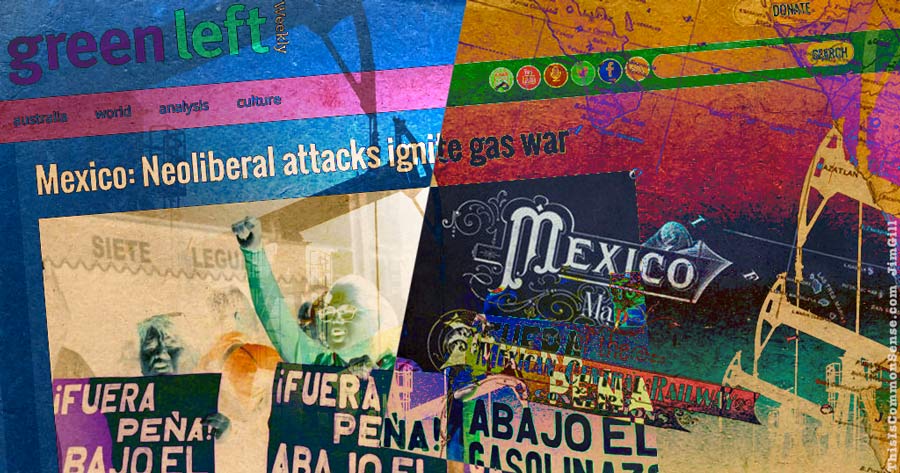
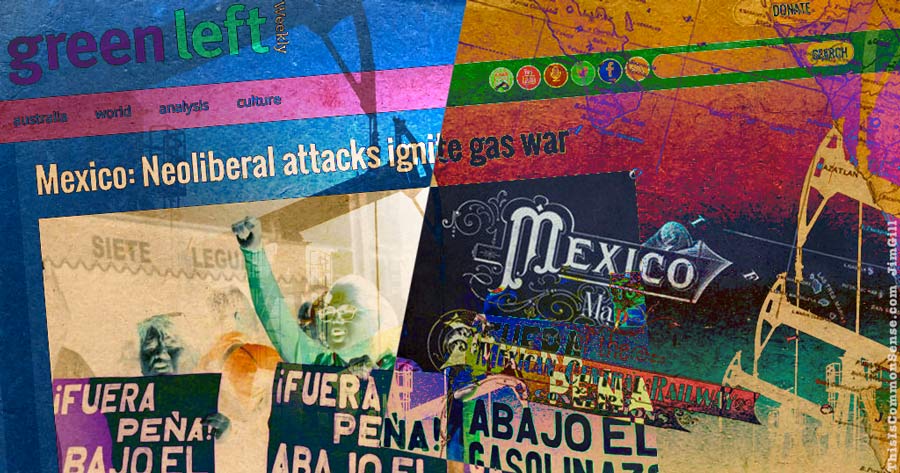
Take natural resource socialism. Ores and oil are “just there in the ground” and “belong to everybody.” So it “just makes sense” that “the people” should “own” the mining and drilling and refining industries, and run these operations to share the profits to help “everybody,” not just a few.

The Mexican government bought into this back in 1938, when it nationalized the U.S.- and Dutch-based oil companies. Today, the industry is under-capitalized, its equipment old and inefficient. Mexico itself is a mess. The government is corrupt and the people far poorer than would have been the case had they not bought into the nationalization mania.

The cause of the problems should not be in dispute. “By cutting off Mexican oil exploration from foreign investment and foreign know-how,” Ryan McMaken writes in an interesting analysis, “the Mexican state has only succeeding in making the Mexican oil industry less efficient, and less capable of taking advantage of the natural resources in Mexico.”

Which is why the government has been making tentative “liberalization” moves, de-monopolizing Pemex, the government’s oil outfit.

Unfortunately, though the damage done by bad government policy and monopolistic privilege is everywhere to see, many people (especially intellectuals) in Mexico blame “neo-liberalism” and non-existent “free markets” for rising prices and the specter of economic collapse.

Once bitten by the natural resource socialism bug, it’s apparently easy to dismiss evidence. Or the common-sense notion that government over-reach has made the mess they now struggle with.

This is Common Sense. I’m Paul Jacob.


Printable PDF

Mexico, oil, nationalize, socialism, neoliberalism


Categories
crime and punishment general freedom individual achievement U.S. Constitution

The Man from Freedom

In the Show-Me State, an attorney is showing us government held accountable.

He leaves folks inspired about their freedom, wondering . . . who was that masked attorney?

Well, no. Against my advice, he won’t wear a mask to court, nor leave behind silver bullets. (He says they’re too expensive.)

David Roland is the Man from Freedom — er, the Freedom Center of Missouri, co-founded with his wife Jenifer in 2010. Every day, they defend “individual liberty and constitutionally limited government.”

I first heard about the Center when Dave Roland defended two Girl Scouts being harassed by the City of Hazelwood. “People would assume you have the right to have a lemonade or cookie stand in your yard,” he explained. “Here we have a city that says not only is it illegal, but you can’t even get a permit to do it.”

Last January, Roland won a verdict preventing St. Louis County officials from banning third party and independent candidates from special election ballots.

Earlier this month, our crusader* achieved another big victory, this time against the East Missouri [Drug] Task Force, which had been violating the open records law by blocking public attendance at its public meetings.

Yet, the judge failed to award the Center attorney’s fees. Hey, even super-heroes and super-lawyers have to pay the rent.

Let’s form “a posse”: click here† to support the work of the Freedom Center of Missouri with our own silver bullets, coins . . . or just pull out your plastic. Please.

The Man and Woman from Freedom will thank you (and so do I).

This is Common Sense. I’m Paul Jacob.


* Darn it, if Dave doesn’t refuse to don the cape, too.

This link goes to the Freedom Center’s main page — the PayPal donation button is at right.


Printable PDF

David Roland, Freedom Center of Missouri, Girl Scouts, Jennifer


Categories
Accountability crime and punishment education and schooling ideological culture moral hazard

The Damage Done

In his Washington Post op-ed, “The dangerous myth of the ‘missing black father,’” Mychal Denzel Smith argues that “responsible fatherhood only goes so far in a world plagued by institutionalized oppression.”

He asks:

If black children were raised in an environment that focused not on bemoaning their lack of fathers but on filling their lives with the nurturing love we all need to thrive, what difference would an absent father make? If they woke up in homes where electricity, running water and food were never scarce, went to schools with teachers and counselors who provided everything they needed to learn, then went home to caretakers of any gender who weren’t too exhausted to sit and talk and do homework with them, and no one ever said their lives were incomplete because they didn’t have a father, would they hold on to the  pain of lack well into adulthood?”

Hmmm. The first question answers itself. If all children get everything they “need to thrive,” it is assumed they’ll thrive. The second question is impossible to know . . . at least until the creation of that perfect utopia with universal material abundance, a flawless education system and indefatigable single-parents.

Fatherlessness is not just a black problem. And let’s agree there are great single-parent (or no-parent) homes as well as terrible two-parent homes.

Still, fathers are nice. Oftentimes they help children thrive, in part by providing “electricity, running water and food” as well as “love” — both tough and nurturing. Proclaiming that fathers would not matter in a society where everything’s automatically supplied is . . . simple-minded.

Often called socialism.

Smith raises the issues of “racist drug laws, prosecutorial protection of police officers who kill, mass school closures . . . the poisoning of their water.” He’s right: having a father won’t magically solve those.

But it would solve the problem of not having a father.

This is Common Sense. I’m Paul Jacob.


Printable PDF

black, father, racism, children, race


Original photo by Sunil Soundarapandian on Flickr


Categories
free trade & free markets general freedom meme moral hazard nannyism national politics & policies Popular too much government

Is Denmark Socialist?

First… some definitions:

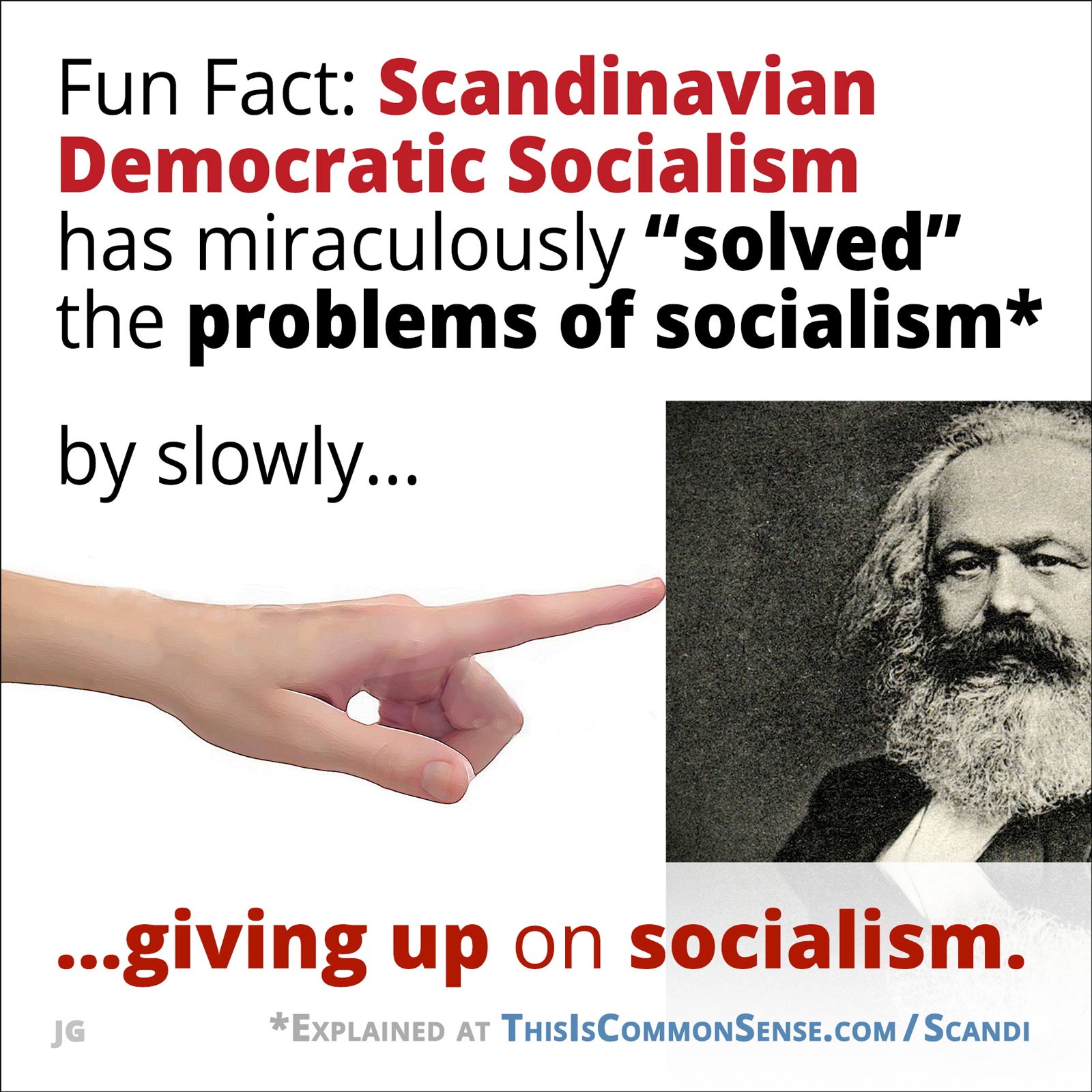
Socialism advocates the public ownership (or control) of business and industry in service of a more equal distribution of wealth.

Bernie Sanders and his version of “democratic socialism” places emphasis on redistribution and downplays the public ownership and control part of the system.

However… Bernie seems never to have met a government monopoly he didn’t love, or a free market enterprise he didn’t distrust or despise.

What are the problems (dangers) of socialism?

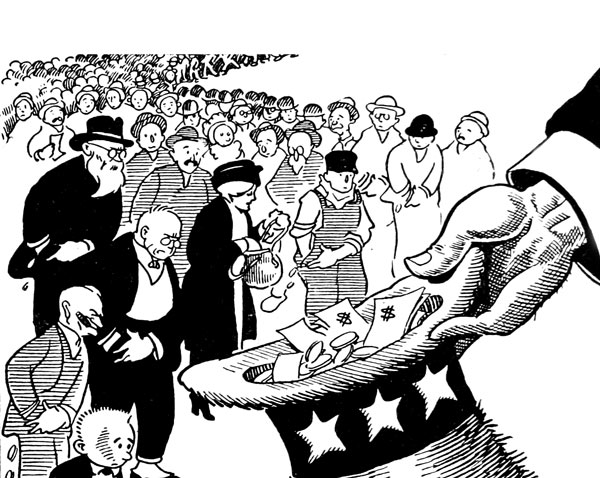
It idealizes envy.


It rationalizes theft.


It idealizes state power.

It penalizes accomplishment.
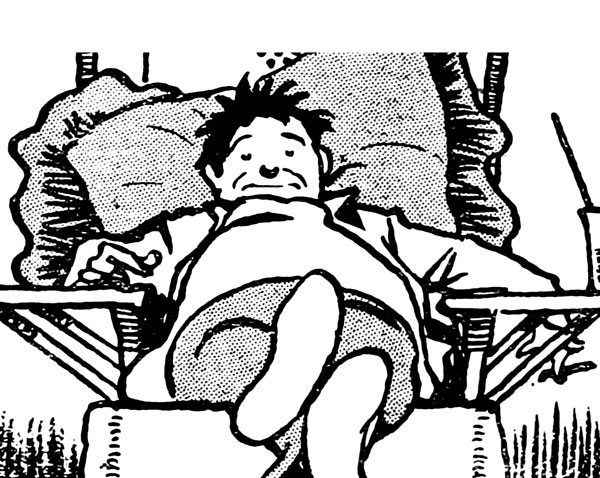

It rewards indolence.


It promotes obedience to the state.
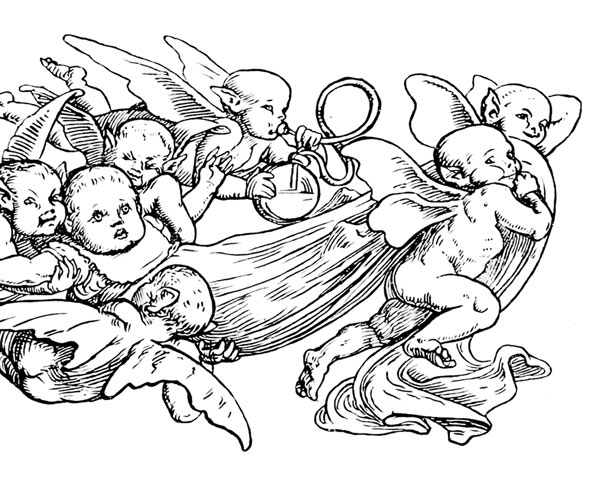

It encourages dependence on the state by treating citizens as children.

It dismisses the protection of individual rights with a vague appeal to the “collective good” or “public good.”
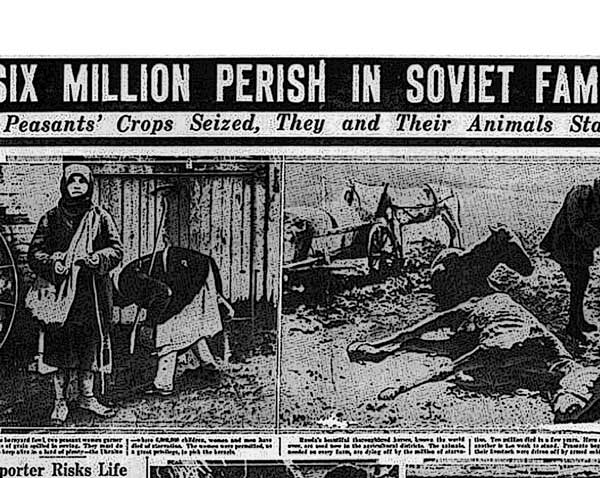

It has repeatedly led to economic collapse, oppression, poverty and starvation. So how have Scandinavian democratic socialists managed to overcome these problems?


Quote from the current Prime Minister of Denmark:

“I know that some people in the US associate the Nordic model with some sort of socialism. Therefore I would like to make one thing clear. Denmark is far from a socialist planned economy. Denmark is a market economy.”
Speech, Harvard Institute of Politics


From “Scandinavian Unexceptionalism” (from the Institute of Economic Affairs):

Today the Nordic economies are again growing, following a return to broadly free-market policies that served them well before policies changed during the 1960s and 1970s.

The countries are changing in the face of serious long-term problems that have developed over the last 30 years.

Finland, Sweden and Denmark have…introduced far-reaching market reforms. These changes include greater openness to trade, clear reductions in the tax burden, private provision of welfare services, the introduction of personal retirement accounts and, in Denmark, even a shift towards a liberal labour market.

—Scandinavian Unexceptionalism (highly recommended!)

And the moral hazards?

The development of Scandinavian welfare states has led to a deterioration in social capital.

Nordic societies have for hundreds of years benefited from  a strong Lutheran work ethic, a strong sense of individual responsibility and high levels of trust and civic participation.

In the early stages of their transition to “democratic socialism”, safety nets DID exist, but few used them. Over time, an increasing share of the population became dependent on government transfers. The welfare states moved from offering services to the broad public to transferring benefits to those who did not work.

The situation that exists in Nordic societies today is one in which ethics relating to work and responsibility are not strongly encouraged by the economic systems. Individuals with low skills and education have limited gains from working. This is particularly true of parents of large families, which gain extra support if on welfare.

It is true that welfare systems have reduced poverty. However, especially in the second generation, they have also created a form of social poverty of the same type that is apparent in the countries from which many of the admirers of the Scandinavian systems come. Detailed research clearly shows that welfare systems have formed a culture of dependency which is passed on from parents to children.

MUCH MORE HERE on the moral and economic capital that preceded the welfare state, and its gradual disintegration over time… 


Do you believe that socialism is a good idea that has simply been corrupted by ruthless dictators? Consider the story of the Chinese Cultural Revolution. . .  a mass movement of Chinese youth dedicated to eradicating capitalism and advancing socialism. Its bloody history tells us quite a lot about the logic of this flawed political philosophy. . . “Socialism’s Idealistic Youth”


 Useful References

Scandinavian Unexceptionalism (Institute of Economic Affairs)
This paper is especially valuable because it was written by someone who actually favors a large welfare state. His willingness to concede the problems inherent in such a state are refreshingly honest… and useful for anyone interested in the issues.

What Can the United States Learn from the Nordic Model? (CATO Institute)

Myth: The Scandinavian countries are proof socialism works (Being Classically Liberal)

The Myth of the Scandinavian Model

Economic Freedom of the World: 2013 Annual Report

International government spending (Wikipedia)

Index of Economic Freedom (Heritage Foundation)


A healthy democracy depends on the spreading of good ideas. If you found this article useful,  please share it with friends by clicking on any of the social media icons below.

Also, please consider showing your appreciation by dropping something in our tip jar  (this link will take you to the Citizens in Charge donation page… and your contribution will go to the support of the Common Sense website). Maintaining this site takes time and money. Your help in spreading the message of common sense and liberty is very much appreciated!
Categories
Common Sense general freedom ideological culture moral hazard too much government

A Tree Fell In a Forest

It’s neither “iconic” nor “ironic.”

Storm fells one of California’s iconic drive-through tunnel trees, carved 137 years ago,” Travis M. Anderson’s title informs us. Calaveras Big Trees State Park is famous for its hollowed-at-the-trunk Pioneer Cabin Tree, a sequoia you have seen in hundreds of photos.

It fell, almost certainly, because of a storm. The ground got wet, undermining the sturdiness of the tree’s root system. And the winds got fast, sending the tree crashing to the ground.

But that’s not the hole — er, whole story.

The obvious reason it fell down is that the “hollowed-out” tunnel amounted to a huge cut. It is almost as if loggers started the felling job nearly seven score ago, and it took all that time to fall.

That is not “ironic,” in case you were wondering. It’s to be expected. The real wonder is that it stayed up so long.

Which should remind us: more than one cause can contribute to a singular effect. We are always tempted to focus on only one factor when we argue about an event. But in society, as in trees and forests, multiple influences are always at work.

Life isn’t monocausal, to put it in professor-speak.

Anderson dubbed the tree “iconic.” Now, an icon is an image used to stand in for other things that look similar. That tree didn’t stand in or represent, did it, other trees in the forest? It stood in memory by standing out as different, distinct — one of a very few hallowed, hollowed California sequoias. The opposite of “iconic.”

Still, in using the tree’s toppling as an object lesson in complexity, the fallen timber might be iconic. It stands for a common sense view of how tragedies happen.

This is Common Sense. I’m Paul Jacob.


Printable PDF

Calaveras Big Trees State Park is famous for its hollowed-at- the- trunk Pioneer Cabin Tree, a sequoia


Categories
Accountability government transparency ideological culture insider corruption meme moral hazard national politics & policies

Corporate influence. . .

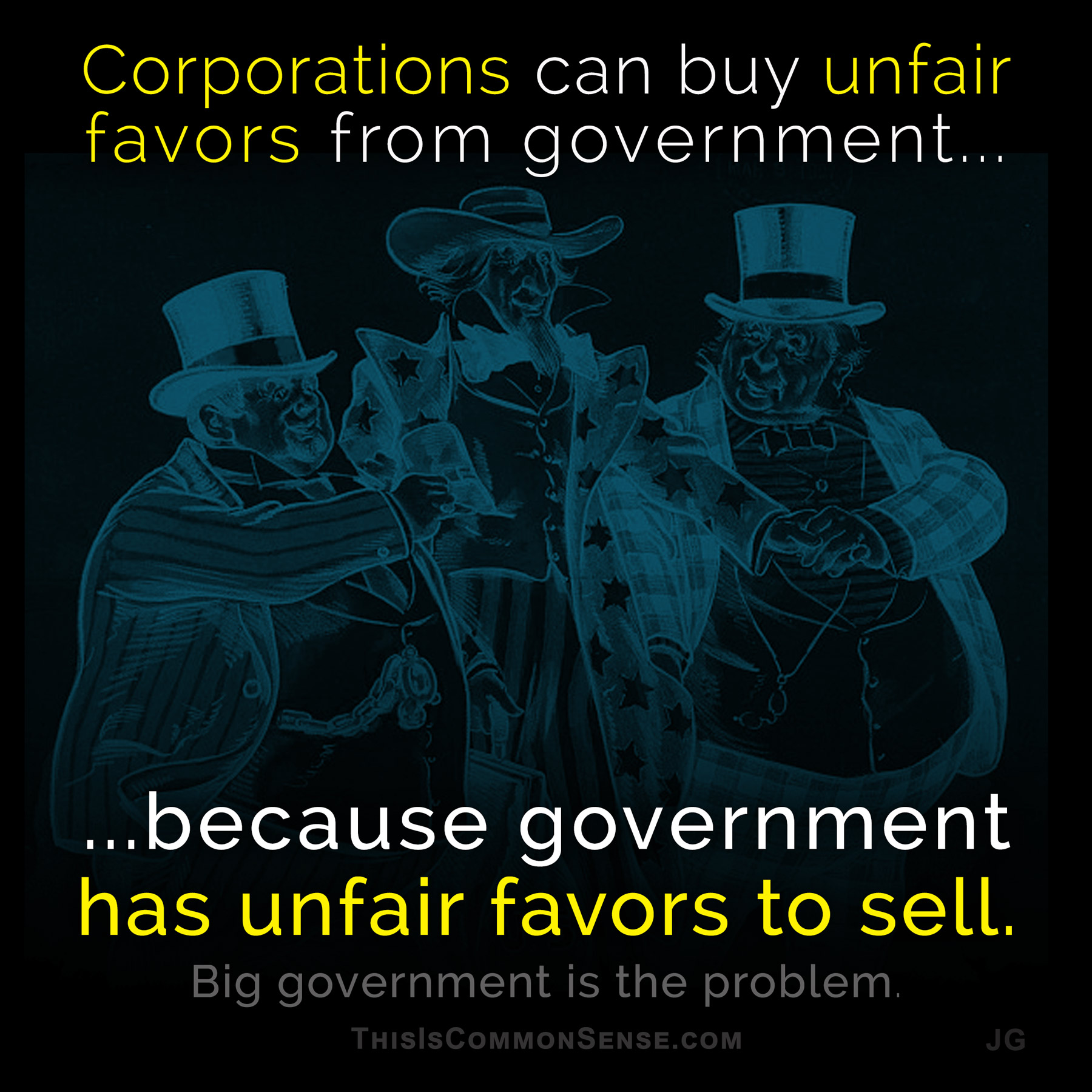
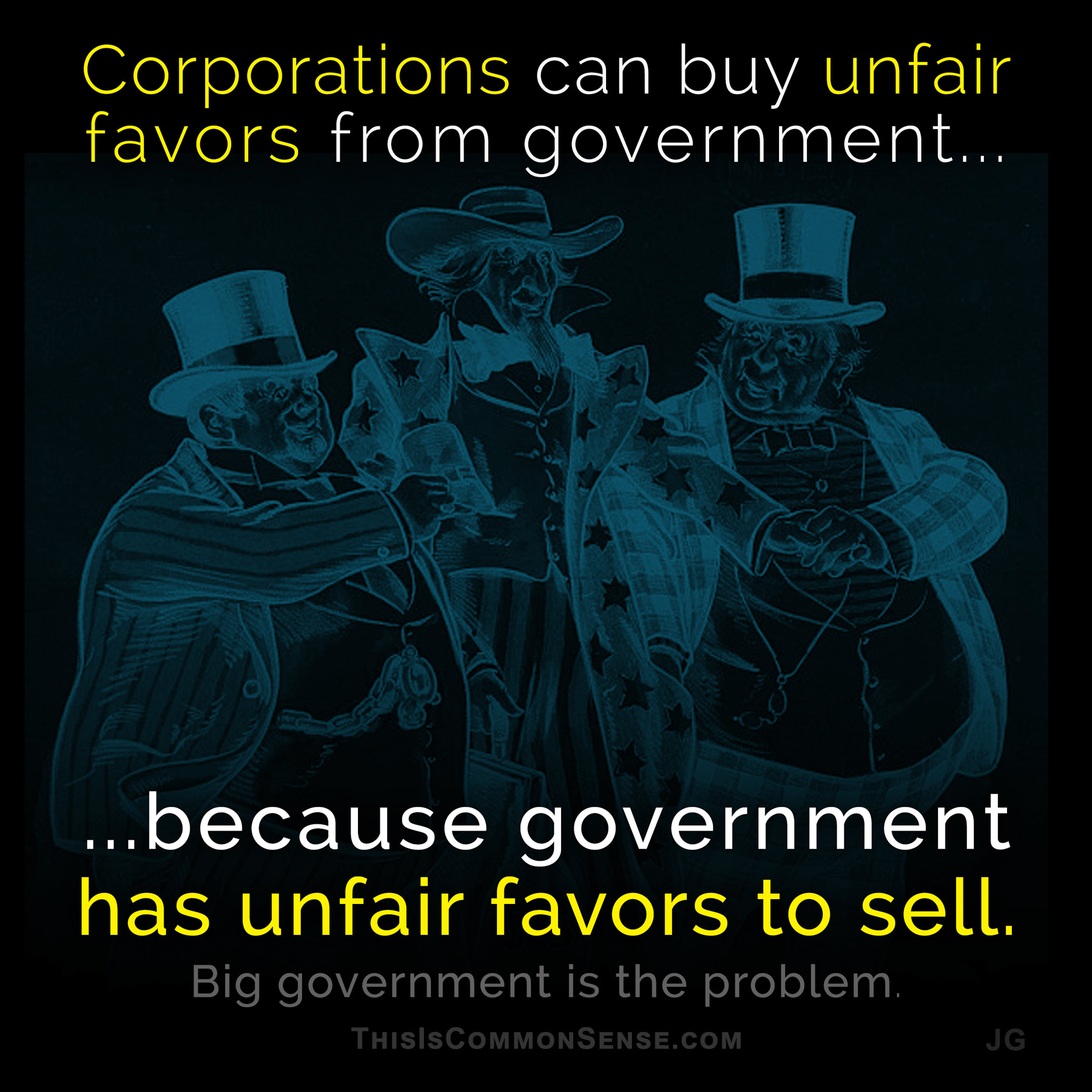
Corporations can buy unfair favors from government…because government has unfair favors to sell.

Big Government is the problem.


Click below for a high resolution version of this image:

corporations, influence, corporation, democracy, power, government, big government, meme, Common Sense, illustration


Categories
crime and punishment free trade & free markets general freedom meme moral hazard national politics & policies too much government

Which is more dangerous?

Corporations cannot and do not tax, conscript, and kill under claim of legal authority to do so.
Only governments do that. 

Click below for a high resolution version of the image:
corporations, government, power, danger, government vs. corporation, which is more dangerous, law, corruption, meme, illustration, Jim Gill, Paul Jacob, Common Sense
Categories
Accountability folly ideological culture national politics & policies

The Shadow of Incompetence and Racism

Just when you thought it was safe to ignore Hillary Clinton . . .

Out from the Land of Might Have Been blurps the “news from nowhere” as to what Mrs. Clinton’s cabinet would have been. Some are calling it the “ghost cabinet,” the sadder version of a shadow cabinet.

And top on the list? Secretary of State John Podesta!

Mrs. Clinton’s own recklessness regarding secrets and security protocols while she was Secretary of State was apparently not enough. It turns out she aspires to insecurity, for she had planned to give her old job to the man who protected his computer with the immortal, hard-to-guess password “p@ssw0rd.”

The sheer effrontery here — or is it just witless, callous incompetence? — is astounding.

And the insanity* gets better. At least, if the public source for this information, former Politico chief political reporter Mike Allen (now of start-up news source Axios) can be trusted, “The Environmental Protection Agency and/or the Department of Education were to go to an African-American candidate. . . .”

Ah, tokenism!

Notice what is not mentioned: who. Just the what. The only admitted qualification being: skin-color.

Democrats are obsessed with racism these days. They never tire of charging anyone they disagree with as racist. And yet selecting someone because of their race is . . . suspiciously close to being racist.

Of course, Democrats do not see it that way.

They live in a race-based bubble. But like the Podesta-Clinton security measures, it may have just been hacked — er, compromised.

This is Common Sense. I’m Paul Jacob.


* Other names have been leaked. Here is a list courtesy of The Daily Caller:

Attorney General — Current AG Loretta Lynch

Treasury Department — Facebook COO Sheryl Sandberg

Labor Department — Starbucks CEO Howard Schultz

Defense Department — Michèle Flournoy, a former Defense Department official

Health and Human Services — Center for American Progress executive director Neera Tanden


Printable PDF

Hillary Clinton, Podesta, list, quota, illustration


Categories
general freedom meme nannyism too much government

Government

You can’t feed a part of it without feeding the whole damn thing.


Click below for a high resolution version of this image:

big government, abuse, war, drug war, bureaucracy, libertarian, libertarianism, liberty, statism, statists, meme, illustration, Common Sense, James Gill, Paul Jacob


Categories
Accountability government transparency insider corruption local leaders moral hazard responsibility term limits

Politicians Bearing GIFs

Yesterday, we discovered that the biggest term limits opponent in Arkansas — former state senator Jon Woods — also allegedly led an elaborate legislative fraud scheme, whereby he and a state representative traded tax dollars for cash bribes.

For now, Woods is an unindicted co-conspirator. But last week, the representative involved pled guilty to a felony carrying a possible 20-year prison term and directly implicated Sen. Woods.

Woods’s alleged criminality involves the GIF program — General Improvement Funds. Legislators can personally direct GIF dollars to pet projects and favored cronies, taking political credit. The process is similar to congressional earmarks. And just as corrupting.

In an article entitled, “How a 1997 Power Grab is costing Arkansas taxpayers millions on pet projects,” the grassroots group Conduit for Action explains that the GIF rules changed just before our new millennium, when term limits first cleaned out the state House (1998). The old batch of legislators gave themselves unchecked control over this vote-buying slush fund.

And that is when even bigger corruption surfaced. “A Federal grand jury shook the Arkansas political establishment today with a long list of political corruption indictments that reaches to the apex of the state Legislature,” the New York Times reported in 1999.

Back then, Sen. Nick Wilson was Arkansas’s loudest term limits critic . . . until his three-decade-long career ended with a guilty plea to 133 counts of racketeering and other public corruption.

Interesting that top legislative enemies of term limits, both past and present, wear the Scarlet Letter “C” for corruption. Coincidence?

Term limits are no friend to corruption. And vice-versa.

This is Common Sense. I’m Paul Jacob.


Printable PDF

Arkansas, corruption, term limits, Jon Woods, GIF