Categories
Accountability folly national politics & policies

Weiner’s Place in History

As if to finalize the Great Derailment of 2016, disgraced former Congressman Anthony Weiner pleaded guilty in federal court to felony sexting: transferring obscene materials to a 15-year-old girl.

Prosecutors are asking he serve 21 to 27 months in federal prison, register as a sex offender and continue mental health therapy.

Also Friday, Huma Abedin, Weiner’s long-suffering wife, quietly filed an “Anonymous v. Anonymous” petition for divorce.

Though, apparently, not anonymously enough.

Personal train-wreck? Sure. But as I wrote yesterday at Townhall, because it so deeply affected last year’s presidential contest, the wreck is also very public.

Back in 2011, Anthony Weiner made Andrew Breitbart a hero, propelling Breitbart.com into the limelight. Weiner had tweeted a picture of his underwear-clad crotch to a woman . . . who was not his wife. Though quickly deleted from his Twitter account, a screenshot was shared with Breitbart, who ran with the story.

Weiner claimed a hack, challenging Breitbart’s credibility. This spurred Andrew Breitbart to commandeer a news conference called by Weiner — with more evidence to share. Soon, Rep. Weiner admitted his bad behavior and officially resigned his congressional seat.

Fast-forward to 2016, with wife Huma Abedin busy helping Hillary Clinton run for president. Weiner again becomes the subject of a sexting scandal — this time with an underage North Carolina girl. The FBI investigates, seizes Weiner’s laptop and discovers emails on it from Hillary Clinton to his wife, Huma. Then-FBI Director James Comey reopened his investigation of Hillary’s emails just ten days before Election Day.

Upshot? Trump is the 45th U.S. President, with Breitbart.com Editor Steve Bannon as key advisor.

Thanks to Weiner.

This is Common Sense. I’m Paul Jacob.


Printable PDF


Photo of “Anthony Weiner cut-out by the port-a-potties” by Katjusa Cisar on Flickr
 

Categories
ideological culture media and media people national politics & policies

No One Owns Anybody Else

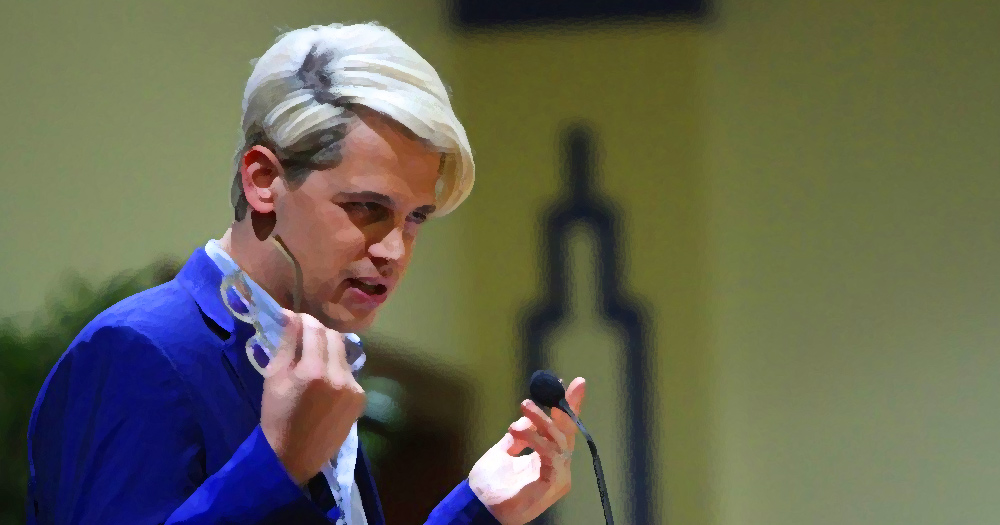
“The left does not own homosexuals anymore,” said Milo Yiannopoulos, to a crowd outside the Republican National Convention. And the crowd cheered.

I’ve talked about Milo before. He’s a controversial figure. So much so that Twitter just banned him for life. (That had something to do with his tweets about, of all things, the new Ghostbusters movie, and the racist tweets of his followers directed at one of its stars.)

Openly gay, he nevertheless has his priorities. “Donald Trump is best placed to end the tyranny of political correctness in this country. Many Trump supporters and Republicans have their challenges with the gay thing. But there’s a world of difference between refusing to bake a cake and opening fire” . . . at gay men and women in a nightclub.

There’s a lot to be said of Milo’s somewhat startling acceptance amongst conservative Republicans. Robby Soave deals with the important stuff at Reason.

What interests me is the basic contention: “The left does not own . . .”

The idea that people of certain races or sexual proclivities belong, naturally, to one side of the political spectrum is . . . itself racist or sexist.

The issues that divide left, right, center, today, are not primarily about race. Or sexual orientation/preference/display, etc. Balanced budgets, war, rule of law, taxation, redistribution — positions on these issues don’t adhere to people because of race or sex or what-have-you.

I wish gays and Republicans the best in coming to terms with this most obvious of truths. Let’s hope blacks, Asians, the homely and the beautiful also come to their senses. So we can all discuss politics rationally.

This is Common Sense. I’m Paul Jacob.


Printable PDF

DePaul University, Black Lives Matter , Social Justice Warriors, Dangerous Faggot Tour, Milo Yiannopoulis , provocative,


Categories
general freedom

Don’t Aid and Abet

Some countries are ratcheting up their regulation of foreign Internet companies. These efforts, a New York Times article explains, “increasingly” oblige firms like Google, Facebook and Twitter to mull “which laws and orders to comply with,” which to resist.

The juggling act is nothing new. Cyber-companies have always wrung their hands about which tyrannical demands to obey.

On the one hand, we have such praiseworthy examples as Google’s eventual decision, in 2010, to stop censoring its search results in China. In consequence, the Chinese government kicked Google off its Internet.

More recently, Turkey sought to prevent leaked documents from being distributed via Twitter, demanding that Twitter block posts providing access to those documents. When Twitter refused, the Turkish government blocked its service. But it then lost a court battle over the issue even as users found ways to skirt the ban.

Also heartening is the fact that, so far, American tech firms seem determined to reject a new Russian imperative that they store user information on Russian servers.

But the firms do sometimes obey demands — saying they must abide by laws that, however lamentable, are verifiably on the books — and such obedience does amount to abetting repressive efforts.

Here’s what I suggest, instead: always say No.

Never agree to help violate the rights of users, even if your services are formally banned as a result. Instead, use your ingenuity and resources to help people end-run the obstacles to free expression that governments keep imposing.

This is Common Sense. I’m Paul Jacob.

Categories
free trade & free markets

Tweet, Tweet, Zoom

Recently, Peter Thiel, a very interesting mover and shaker in today’s most vibrant markets, criticized the upshot of today’s technology: “We wanted flying cars, instead we got 140 characters.” That’s a slam at Twitter, a free service that somehow makes enough to stay afloat.

The lack of flying cars, though: Is that a problem?

Joshua Gans thinks we should ask ourselves whether we really want flying cars. You know, in our heart of hearts. After all, kids want to be Superman.

Markets only deliver the possible.

And much of what they deliver we hadn’t thought of before: iPods/iPhones/iPads weren’t really dreamed about much, outside of Dick Tracy/Star Trek fandom.

As for Twitter, Gans says it’s “a new communications protocol and more than just social media,” which makes it “more than merely trivial.” I’m sure he’s right. But I still keep kicking myself: whose time is worth so little that it’s worth complaining about free stuff?

Thiel’s focus is on technology, not markets — but it is the market that brings us stuff. Free markets are not “free” as in no price, they are free as in being unencumbered by busybody regulators, prohibitionists, and thieves. Such markets strike me as amazingly effective at providing a wide range of goods to the rich and the poor and everyone in-between. Hobbled, subsidized markets, on the other hand, exhibit Tweetable perversities — and usually serve the rich better than the poor.

Still, a lot of folks complain about what markets have to offer. I don’t get that, either. Hey, I reject most offers. So can they.

I say we stick to complaining about offers we can’t refuse.

This is Common Sense. I’m Paul Jacob.

Categories
First Amendment rights media and media people national politics & policies U.S. Constitution

Dick Durbin’s Dangerous Idea

Politicians think in terms of institutions. If you identify yourself as an individual, a mere citizen, pfft: you’re nothing. But say you are from a lobbying group, or a government bureau, or a news organization — suddenly you matter.

That’s even how they interpret the Constitution.

They are wrong.

Back in May, Illinois Sen. Dick Durbin expressed doubt whether “bloggers, or ‘someone who is Tweeting,’ should be given media shield rights.” He believes a big unanswered question looms:

What is a journalist today in 2013? We know it’s someone that works for Fox or AP, but does it include a blogger? Does it include someone who is tweeting? Are these people journalists and entitled to constitutional protection?

Durbin thinks he’s both clever and profound to ask “21st century questions about a provision in our Constitution that was written over 200 years ago.”

But he is actually missing the whole enchilada, the point of the Constitution.

First, our two-century old freedoms don’t have an expiration date. Second, individuals have rights, not “institutions.” And not because we belong to a group. Either everyone has a basic right, or no one does.

Glenn Harlan Reynolds countered Durbin’s institutional prejudice with a fine piece in the New York Post, where he takes a common sense position: “a journalist is someone who’s doing journalism, whether they get paid for it or not.”

Reynolds reminds us that, in James Madison’s time, “it was easy to be a pamphleteer . . . and there was real influence in being such.”

Just so for today’s Tweeters and bloggers.

Hey: as far as I’m concerned, you’re being a journalist just for commenting on this at ThisIsCommonSense.com.

I’m Paul Jacob.

Categories
crime and punishment general freedom

Thou Shalt Not Trespass

Some people are creeps.

On Independence Day, someone — or a group of someones — broke into Fox News’s Twitter account for politics and put out false notices about the death of the United States President. Apparently, they meant this to smear Fox News, which, though calling itself “fair and balanced,” is in truth a conservative counter to the vaguely-to-staunchly leftward bias of ABC/CBS/NBC/CNN/MSNBC. The popularity of Fox really bugs many folks; some become unhinged on the subject.

And they forget that they should obey the law. And principles of decency.

Now, I don’t know what law in particular was broken. I can’t name it. But, just as I need no city council ordinance number to tell a stranger to get out of my house, after he entered without permission (finding the key, perhaps, in its secret spot in the garden — and hey: what was he doing in the garden anyway?), just so no one needs a special law to know that logging in to Twitter and trying a bunch of obvious and not-so-obvious passwords to gain access to someone else’s account is wrong.

We know this by common law and common sense and simple, everyday morality.

I have a simple bit of advice for all political activists. Say you are angry and you want to really hurt your “enemy.”

First ask yourself: Is what I want to do unjust?

Lastly, you might want to consider: Is it tasteless?

This is Common Sense. I’m Paul Jacob.

Categories
First Amendment rights

Free Speech Assault Dropped

America has a relatively robust tradition of respecting freedom of speech. Nevertheless, our government officials often find criticism not only annoying but actionable.

But actionable how?

Campaign finance regulation offers officials one avenue to go after political critics. The CFR regime is so ambiguous and complex that it often seems to cover anything anybody might say at any time about anybody running for office. But the ever-metastasizing repressive power of campaign finance regulation was probably not what Pennsylvania Attorney General Tom Corbett was relying on when he subpoenaed Twitter, the micro-blogging company, to try to learn who was savaging his conduct as attorney general.

Corbett demanded names, street addresses and IP addresses of two Twitter subscribers who have been claiming that his investigation into public corruption was politically motivated. Twitter representatives were threatened with arrest if they failed to appear before a grand jury to “give evidence regarding alleged violations of the laws of the Commonwealth of Pennsylvania.”

Corbett’s office claims that the subpoena had nothing to do with aversion to political criticism but was related to a particular prosecution. Perhaps the angry tweeters were really a single disgruntled defendant, only pretending to be contrite in court?

Regardless, the attorney general was obviously on a fishing expedition, one that targeted First Amendment rights. The outcry from Twitter users, the ACLU, and others was swift and vehement, so Corbett has dropped his abusive subpoena.

Perhaps he should also drop his gubernatorial campaign.

This is Common Sense. I’m Paul Jacob.

Categories
Common Sense

Craigslist, eBay and Twitter

Could California’s budget crisis be solved by a triumvirate of Internet services, Craigslist, eBay and Twitter?

Gov. Arnold Schwarzenegger is raiding the state’s storage sheds to sell off unneeded items on eBay and Craigslist. His signature on a California fleet car adds, it is estimated, $400 to its auction value.

He got the latter idea from one of his million Twitter followers.

Wow. I have nowhere near a million Twitter followers. I’m told that I should envy the governor’s Twitter cred, but . . . I’m not the jealous type; I won’t seek any “Tweet” revenge. Still, I’d be happy if all my listeners joined, and I got some usable ideas for raising money.

Unfortunately, neither I nor my sponsor, Citizens in Charge Foundation, have a vast resource of unneeded inventory to sell off. Nor do I have the cachet of the actor-turned-governor: My signature won’t add much value to a Ford Focus.

Yep. Someone paid $1,625.01 for a state-owned Focus with over 110,000 miles on the odometer. The governor signed the visor.

That’s better than a car once owned by Jon Voight!

The only new thing here, really, is using Craigslist and eBay. This isn’t a singularity in the progress of civilization. From this no miracles follow. But it is a healthy sign of thinking slightly outside the proverbial box.

This is Common Sense. I’m Paul Jacob.

Categories
general freedom

Twitter Not Always Annoying

You’ve probably heard of Twitter, now that Oprah has. It is a “micro-blogging” tool that lets you keep in touch with people by sending messages of 140 characters or less, maybe 30 words. Senders are supposed to answer the question, “What are you doing right now?”

This sounds like a lot of people telling each other they’re hunting for a renegade sock or catching the bus. But people and imagination being what they are, savvy practitioners assure us that Twitter has been put to a very wide variety of uses, not all of them snooze-worthy.

I was sold as soon as I heard how it was used last year to help get innocent men out of jail.

James Karl Buck, an American grad student, was arrested in April 2008 while covering an anti-government protest in Egypt. So was his translator, Mohammed Maree. Conciseness being the better part of valor, Buck sent a one-word “tweet” to his “followers” on Twitter. To wit: “Arrested.”

Recipients knew that Buck was in Egypt covering a political demonstration. So comprehension was immediate, action swift. Soon, Buck’s college hired a lawyer to represent him. Soon thereafter he sent another message: “Released.”

His Egyptian translator, Mohammed Maree, was not so lucky. Buck worked hard to help his friend. Twitter was one of his tools. Three months later, Mohammed was free as well.

This is Common Sense. I’m Paul Jacob.