Categories
general freedom national politics & policies The Draft

Draft Winds Blowing

A month ago, the U.S. drone strike against an Iranian commander in Baghdad sparked enough public concern over military conscription to overwhelm the Selective Service System’s website. 

“With the ongoing military conflicts in Iraq and Afghanistan unlikely to end any time soon,” former Congressman Ron Paul writes, people are “right to be concerned about a return of the draft.”

“There is not going to be a draft,” SSS Director Don Benton emphatically declared. “At least, we don’t think so.”

The current context? Last February, a federal judge ruled male-only draft registration unconstitutional. On March 3, the Fifth Circuit will hear the government’s appeal of that ruling.*

A few weeks later, the National Commission on Military, National and Public Service will release their report to Congress on what to do with draft registration — jettison or keep and expand to young women — as well as the advisability of a year or two of compulsory government service after young people graduate from high school.

The issue is really very old unfinished business. “The U.S. draft proposal that no one supported,” reads the headline of a February 8, 1980, Canadian Broadcasting Corporation article on then-President Jimmy Carter’s proposal to register both men and women.

Back then, women were not permitted in combat units, and Carter’s proposal did not propose putting women into such positions. Still, as the CBC’s Washington correspondent at the time explained, “On Capitol Hill, the reaction was overwhelmingly negative.”

Especially because of a Catch-22. “Those who are for the draft are mostly against women being included,” he found. “Those who favor equal treatment for women are mostly against the draft.”

Nowadays, support for the draft is, if anything, even less enthusiastic.

This is Common Sense. I’m Paul Jacob.


* See National Organization for Men v. Selective Service System.

PDF For printing

draft, conscription, slavery, registration, force,

See all recent commentary
(simplified and organized)
See recent popular posts

Categories
national politics & policies The Draft

Five Days Left!

You may have noticed me take notice . . . repeatedly . . . of an otherwise little-noticed National Commission on Military, National and Public Service (NCMNPS). It was established by Congress in 2017 to look into the issue of extending draft registration to women or let the federal courts end registration for not including women.

While I protested the atavistic practice, loud calls could be heard to bring back military conscription partially or universally . . . or to impose a year or two of national “service” on all young people when they turn 18 — despite its utter lack of value.

The last day of the year — Dec. 31, 2019 — is your deadline to quickly and easily express your thoughts on the draft here

Thankfully, as the Commission is finishing its work (making its report in March — don’t forget to share your thoughts!), Rep. Peter DeFazio (D-Ore.) and Rodney Davis (R-Ill.) have introduced House Resolution 5492. “To repeal the Military Selective Service Act, and thereby terminate the registration requirements of such Act . . .”* 

“Today, with the introduction of H.R. 5492, the report of the NCMNPS due in March 2020, and Congress likely to be forced by pending legal cases to choose between ending draft registration and trying to expand it to women as well as men,” 1980s draft registration resister Edward Hasbrouck writes at AntiWar.com, “we are closer to ending draft registration than at any time since the requirement for all young men to register with the Selective Service System was reinstated in 1980.”

Speak loudly to the Commission now and let’s carry all the big sticks we can to Congress in the new year with one simple message: Pass H.R. 5492.  

This is Common Sense. I’m Paul Jacob.


* The legislation would also end what are sometimes lifetime penalties imposed by federal agencies and state governments against those who fail to register.

Draft Links of Note: https://thisiscommonsense.org////2019/01/01/paul-jacob-on-the-draft/

Archive of Posts on the Draft: https://thisiscommonsense.org////category/the-draft/

PDF for printing

draft, registration, slavery, war, freedom,

See all recent commentary
(simplified and organized)
See recent popular posts


Categories
The Draft

Attendant Loss of Life

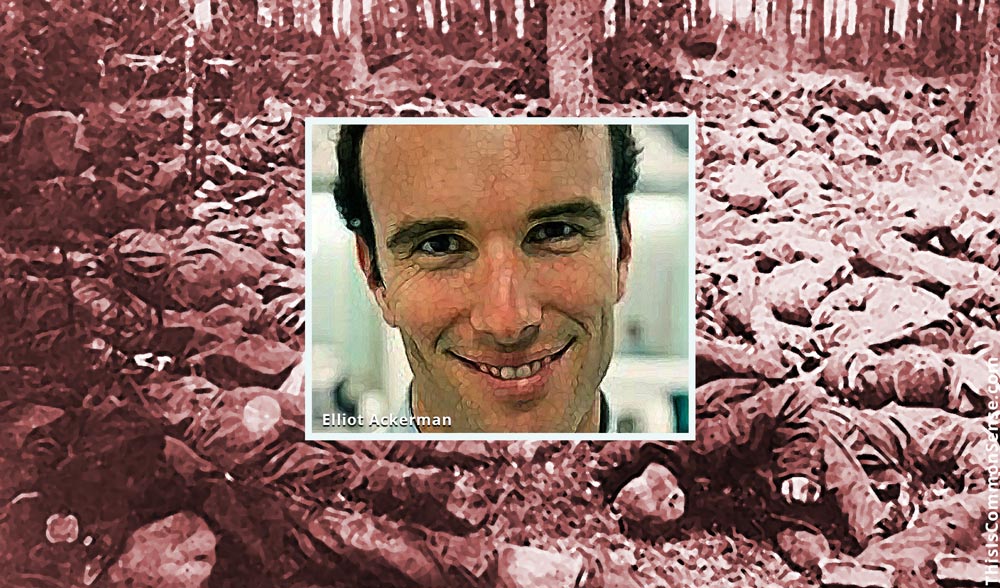
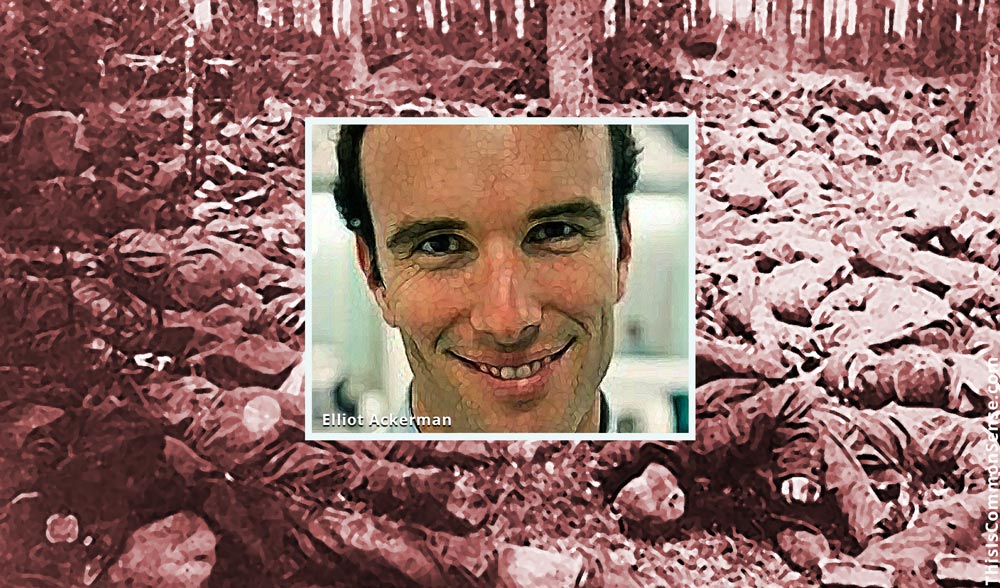
Is there an easy way to avoid the insanity of what author and decorated Marine vet Elliot Ackerman calls America’s “two-decade military quagmire”?

Yesterday, I took issue with Ackerman’s idea of a “reverse-engineered draft,” whereby each year about 65,000 young men and women — but only those with parents in the highest federal tax bracket* — would be forced into the military for two years of “service.” 

“A draft places militarism on a leash,” he argues. But in reality, select young people lose their freedom and politicians don’t relinquish any powers.

Still, Ackerman maintains that 

  1. “with a draft the barrier to entering new wars would be significantly higher” 
  2. placing these “kids” in jeopardy via military conscription would activate their wealthy and influential parents to lobby Congress and the White House 
  3. “could create greater accountability” 

ultimately resulting in a saner military posture around the globe, hopefully allowing us to “avoid . . . a major theater war, the continuance of our ‘terror wars,’ the attendant loss of life.”

Threatening to draft their kids would raise the eyebrows of parents. That’s why when Congress last voted on legislation mandating a draft, even the bill’s author voted NO.

But would having a small drafted force somehow actually save lives?

Let’s look at combat deaths when the United States used a military draft, post-World War II, and compare that to the time-period since 1973, when the draft ended and the All-Volunteer Force began. Those numbers are not close: 

  • Between 1946 and 1973, with the draft in place, nearly 100,000 American soldiers were killed overseas. 
  • Over the more than four decades since the draft ended, fatalities remain under 10,000.

That’s a heap-big correlation between the military draft and “attendant loss of life.”

This is Common Sense. I’m Paul Jacob.


* As I noted yesterday, targeting the draft to apply only to top income earners clearly violates the equal protection clause of the Constitution.

war, the draft, slavery, foreign policy, lottery

See all recent commentary
(simplified and organized)
See recent popular posts

Categories
Fourth Amendment rights national politics & policies The Draft

Rich Kids for Ransom

Elliot Ackerman wants peace so badly that he is willing to conscript our sons and daughters into the military in hopes of achieving it. 

“From Somalia to Syria, American forces are engaged in combat,” the author and decorated Marine veteran writes in Time. “With recent military posturing against Iran, against North Korea, it is also easy to imagine our country sleepwalking into another major theater war.”

Mr. Ackerman is not arguing the draft would help in current or future combat operations, or appreciably improve the military. In answer to the obvious question, “Why would you degrade the finest fighting machine the world has ever known?” he replies, “[W]e must move the issues of war and peace from the periphery of our national discourse to its center.”

How? 

Ackerman proposes a “reverse-engineered draft.” 

His idea is to call up 65,000 young men and women by lottery for two-year terms of servitude. This would represent roughly 5 percent of the armed forces. “And no one could skip this draft,” he claims . . . though obviously not everyone sent a “Greetings” letter will be physically able to serve. 

Lastly, he insists that “the only ones eligible” would be “those whose families fall into the top income tax bracket.”

In short, conscript the rich kids!

Of which Ackerman was one.*

Maybe his stance of theatrical class self-sacrifice distracted him from his proposal’s blatant violation of the 14th Amendment’s equal protection clause. 

All this to stir up more angst from allegedly influential high-income earners by turning their children into political hostages.

Doesn’t make Common Sense. I’m Paul Jacob.


* In the 1990s, I served with Peter Ackerman, Elliot’s father, on the board of directors of U.S. Term Limits.

PDF for printing

Elliot Ackerman, conscription, war, slavery, soldiers,

See all recent commentary
(simplified and organized)
See recent popular posts


Categories
education and schooling national politics & policies Popular too much government

Biden Under the Bed

Former Vice-President Joe Biden was put on the spot, again, about race. During last Thursday’s presidential candidates’ debate, ABC newscaster Lindsey Davis asked what responsibility Americans should “take to repair the legacy of slavery in our country?”

Triple, Biden said, “the amount of money we spend. . . .”

On “very poor schools, the Title I schools.”

From $15 to $45 billion a year.

Dodging the reparations question, he offered a four-part plan for educating poor children that was very . . . educational

Biden’s second solution is “make sure that we . . . help the teachers deal with the problems that come from home.” 

Send in more psychologists!

Step three is to “make sure that . . . 3-, 4-, and 5-year-olds go to school. School. Not daycare. School.”

Sounds like forcing every parent to put their 3-year-old into school. Or just “poor” 3-year-olds? Neither sounds good.

If my elementary school math still holds, next comes policy objective No. 4. 

And it’s a doozy. 

“We bring social workers in to homes and parents to help them deal with how to raise their children,” Sleepy Joe declared. Because as he explained “they”— wealth-challenged parents — “don’t know quite what to do.”

But Biden does. “Play the radio, make sure the television — excuse me, make sure you have the record player on at night, make sure that kids hear words.” 

The former VEEP explained that children from “a very poor background will hear four million words fewer spoken by the time they get [to school].”

Language skills matter. But do we really want the next president to station a social worker under every kid’s bed to make sure the record player isn’t skipping?

This is Common Sense. I’m Paul Jacob.


PDF for printing

Joe Biden, bed, monsters, record player, black child,

Illustration adapted from an image by Rusty Clark

See all recent commentary
(simplified and organized)
See recent popular posts
Categories
general freedom ideological culture Popular

Slavery Is Not Free-Market Capitalism

Tarring free-market capitalism and limited government with the brush of slavery is old hat. What is new is that prominent journals and major media figures now shamelessly slop that brush around.

Indeed, the argument is so often made that addressing it from several angles, as I have — twice in the last few outings of Common Sense — is important. Today I make an additional point.

The fact that human beings were treated as property, to be sold and mortgaged and disposed of at will, does not make slavery “free market.” If we legalized and institutionalized the market in stolen goods, that might make those markets legally above board — but not morally

It is this moral argument against stolen goods that undergirds the case against slavery. 

Always has.

For slavery is stealing the rightful property of the people enslaved — their property in their own bodies. 

Richard Overton called this “self-propriety” in 1646, and at about the same time John Locke, following Hugo Grotius, wrote of every man having “a property in his own Person.” This is the old liberal way to think about personal freedom when you are dealing with property: self-ownership. 

“Free market capitalism” rests on it just as slavery abridges it.

Unfortunately, there has been a successful campaign to muddy up this logic and its history. Teacher Lawrence Ludlow recently informed readers of American Thinker about the results of this indoctrination: today’s students have “somehow ‘learned’” that “slavery was isolated to the United States instead of practiced worldwide for ages” and that “Westerners were the most enthusiastic practitioners of slavery instead of being among the first to abandon it.”

Freedom is not slavery and the truth shall set us free.

This is Common Sense. I’m Paul Jacob.


See all recent commentary
(simplified and organized)
See recent popular posts

Categories
ideological culture media and media people Popular

The Fifth Century Begins

When socialists and woke scolds talk about slavery, you can almost hear the chains and smell the leather of the slaver’s whip — and not always in a good way.

Project 1619 is the New York Times effort to acknowledge 400 years of Africans in America. Thankfully, the project’s page is more coherent and forthright than Matthew Desmond’s New York Times Magazine farrago of August 14, “In order to understand the brutality of American capitalism, you have to start on the plantation.”

Indeed, that piece (like others in the series) is such a tangle that there is no hope to unravel it in this limited space. Just note that Desmond does his darnedest to help the enemies of liberty tie slavery into the idea of free markets, private property, and free association.*

Project 1619, on the other hand, accepts the complexity of slavery in America without being idiotically tendentious. It recognizes that the captured Africans brought to Virginia shores in August 1619 were treated as indentured servants. Unfortunately, unlike the Englishmen arriving under indentured servitude, the first Africans in Virginia lacked explicit contracts. So negotiating their way out was . . . problematic. Still, one African, arriving two years later, was soon freed and became a landowner. And it was he who was awarded another African as a slave for life, in civil court in 1655, marking the real start of chattel slavery in America.

Which is to say, slavery in America was not exclusively a matter of race.**

Why is this important? Because slavery is wrong not because racism is wrong (as wrong as that is), but because people have a right to freedom.

Could it be that socialists emphasize racism regarding slavery because they fear that focusing on freedom might scuttle their socialism?

This is Common Sense. I’m Paul Jacob.


* See my discussion of slavery yesterday.

** This becomes clear once you read Mark Twain’s Pudd’nhead Wilson, or learn how Thomas Jefferson’s wife was related to Sally Hemings

PDF for printing

slavery, 1619, freedom, chains,

See all recent commentary
(simplified and organized)
See recent popular posts

Categories
ideological culture Popular too much government

Slaves All?

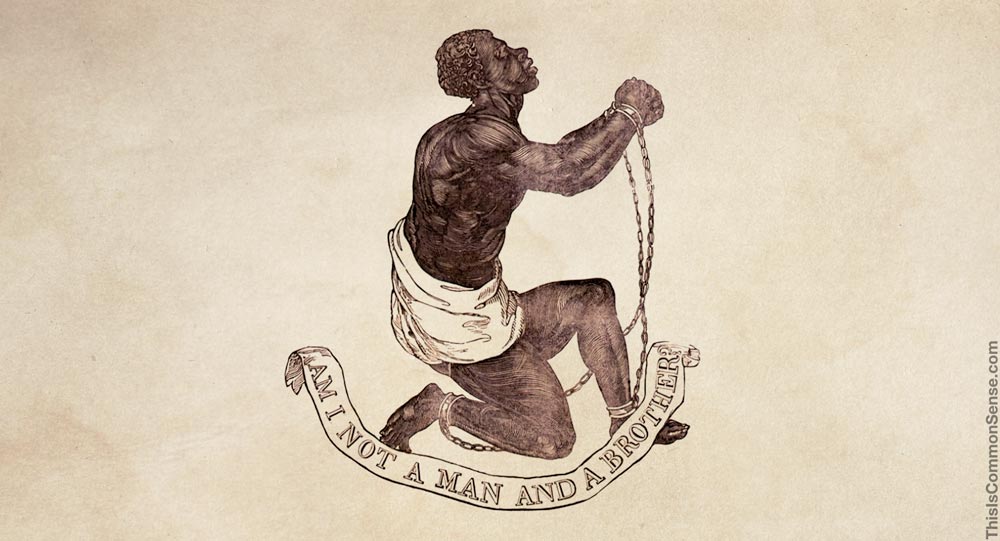
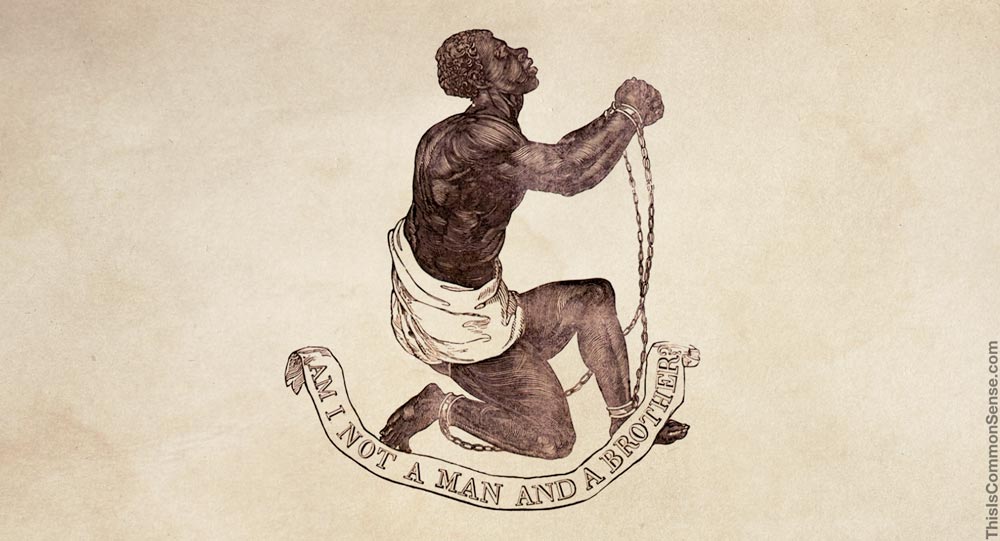
A bizarre argument is gaining popularity: the United States of America not merely allowed slavery in its first hundred years, it depended upon it, grew rich by it . . .  and, “therefore,” not only the federal government but also its constitutional principles and even capitalism are all tainted . . . and . . . “therefore” . . . we must have socialism!

Why long-dead chattel slavery requires political slavery now is hard to figure.

And no, you should not need to read George Fitzhugh’s Cannibals All! or Sociology for the South to see that socialism is slavery.*

But these days it is more common to link slavery with . . . freedom (this is hard even to type) in the form of free markets. 

Leftists who make this linkage are helped by some popular historians who argue that since the   antebellum South (1) grew faster, economically, than the North, (2) slavery was profitable for slaveholders, and (3) slaves became more productive in picking cotton, the “peculiar institution” was key to American success. Vincent Geloso, a visiting assistant professor of economics at Bates College, writing for the American Institute for Economic Research, ably shows that not one of these three theses hold up to scrutiny.

Most importantly, though, Geloso demonstrates that the slavery system was like all other interventionist systems, with some people (slavers) benefiting at the expense of others (slaves, of course, but also free people . . . through a variety of subsidies).

Geloso uses the term “deadweight loss” to make his case that slavery made America poorer.

He is certainly not wrong. But once you understand why freedom and prosperity are linked, not much economic jargon is necessary.

This is Common Sense. I’m Paul Jacob.


* This pro-slavery southerner did argue against the very idea of liberty and free labor on the grounds that freedom is bad and socialism is good. Indeed, “Fitzhugh disliked ‘political economy’ (as economics was then called), which he saw as ‘the science of free society,’” economist Pierre Lemeiux explains, “as opposed to socialism, which is ‘the science of slavery.’” That forthright appraisal is about all that’s good in Fitzhugh.

PDF for printing

slave, ancient, Roman, Rome, chains,

Photo by Jun on flickr

See all recent commentary
(simplified and organized)
See recent popular posts


Categories
national politics & policies The Draft

No Exceptions

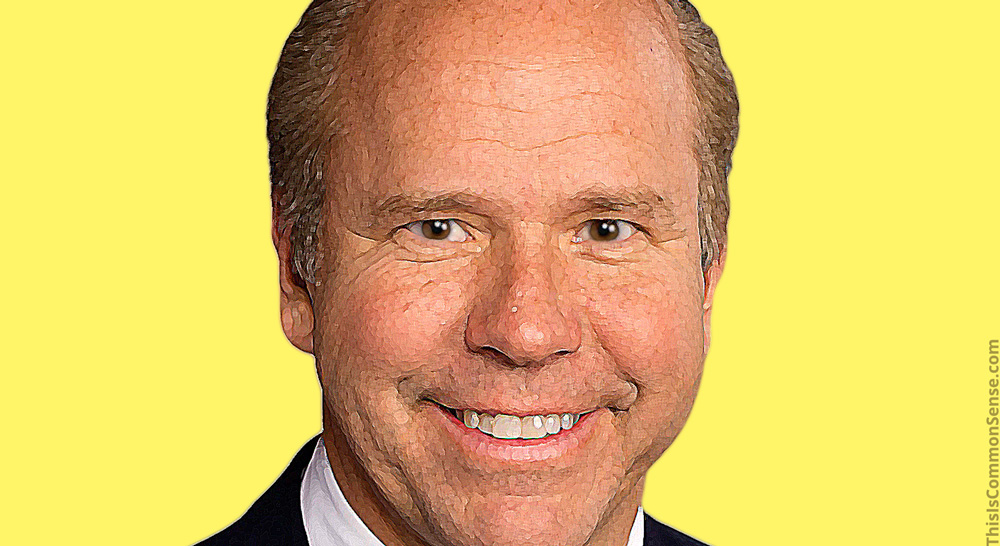
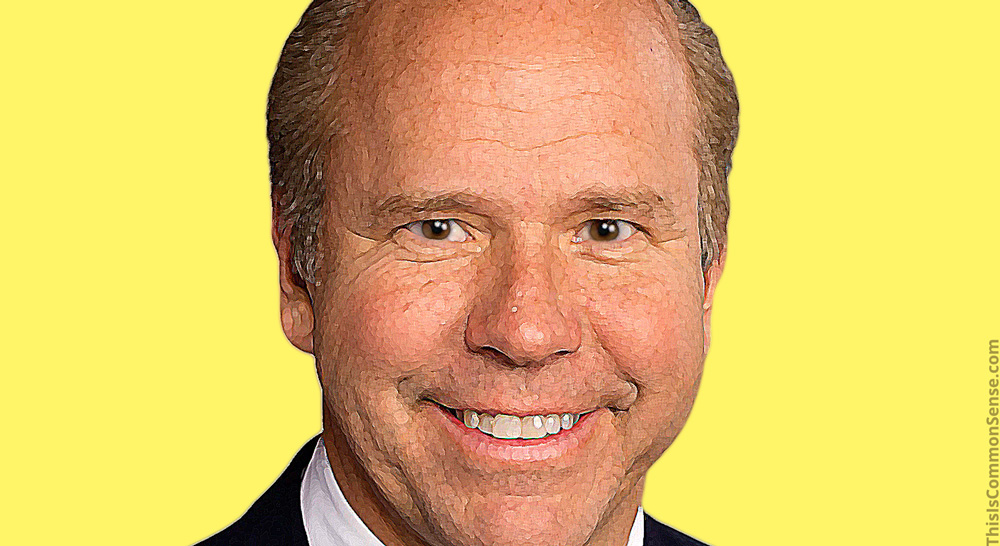
“It’s time to bring the country together,” says Rep. John Delaney (D-Maryland), aspiring to be our next commandeer-in-chief, “restore our sense of shared purpose and a common and inclusive national destiny.”

How? 

Forcibly: “John Delaney’s Plan for National Service” states that “Every American will complete a minimum of one year and a maximum of two years of mandatory national service when they graduate high school, or turn 18.”

Delaney joins other glassy-eyed statists in hallucinating that “mandating national service” will “build a future where young people begin their adult lives serving their country and working alongside people from different backgrounds.” 

That is, he explains, “Where people . . . who grew up in the suburbs, in farm towns, in coal country, in urban communities get to know each other, get to learn from each other, and get to see firsthand that we still have a lot in common.”

Except that young people won’t “get to,” they’ll “have to.” 

As a Delaney news release emphatically emphasizes about his forced national conscription: “No exceptions.”

If you’re a LeBron James type NBA prospect, forget that multi-million dollar contract for a year or two. You have streets to sweep. 

If you’re pregnant? Have a terminal disease? This time isn’t yours but the government’s.

And why is it always young people who “get to” be shanghaied? 

Never the politicians. 

No matter how many fifty-something politicians such as Delaney find their fellow middle-aged cohort to be disunited and non-cohesive, no one ever suggests that his own age group — that he himself — be enslaved into government service.

For their own good, of course.

And the nation’s destiny.

This is Common Sense. I’m Paul Jacob.


PDF for printing

John Delaney, conscription, selective service, slavery, involuntary, freedom,

See all recent commentary
(simplified and organized)
See recent popular posts


Categories
ideological culture Popular too much government

Cuban Slave Doctors

Did Cuba and Brazil just prove Sen. Rand Paul right . . . about socialism?

Eight years ago, the ophthalmologist-turned-politician raised progressive ire in a subcommittee hearing.

“With regard to the idea of whether you have a right to health care, you have to realize what that implies,” the junior senator from the state of Kentucky said. “It’s not an abstraction. I’m a physician. That means you have a right to come to my house and conscript me. It means you believe in slavery. It means that you’re going to enslave not only me, but the janitor at my hospital, the person who cleans my office, the assistants who work in my office, the nurses.”

To many, this seemed preposterous. Doctors would be paid! They wouldn’t be forced to work.

Well, consider Brazil’s socialized medical service. 

In his campaign for the presidency, Jair Bolsonaro promised to make “major changes to the Mais Médicos program, an initiative begun in 2013 when a leftist government was in power,” the New York Times explains. “The program sent doctors into Brazil’s small towns, indigenous villages and violent, low-income urban neighborhoods.” 

But there was a catch: “About half of the Mais Médicos doctors were from Cuba.” Brazil paid a hefty price tag for those doctors — to the Cuban government, not the doctors.

None too pleased with Bolsonaro’s talk of “freeing” the doctors, the Communist dictatorship pulled them out. 

Maybe Kentucky’s senatorial physician was right. When a government seizes the control of the means of production, as socialists want and communists demand, at some point somebody in charge will notice that labor is a means of production.

Slaves don’t set the terms of their own employment.

This is Common Sense. I’m Paul Jacob.


PDF for printing

Cuba, doctors, Brazil, freedom, slavery, slaves,

Photo credit (chain): Hernán Piñera

See all recent commentary
(simplified and organized)
See recent popular posts