
Categories
national politics & policies

Doubling Down on Time Jiggering

Daylight Saving Time was designed to trick us into spending more free time in daylight during summer. The trick? Set our clocks forward in the spring, meaning — if we keep to our old-clocked schedules — waking up and going to work earlier, leaving more recreational and home life (and shopping time) in sunnier late afternoons and evenings.

Kind of cheating.

Most folks find it a bother.* Switching one’s clocks back and forth means upsetting sleep rhythms, which can trigger negative health outcomes. 

Commonsensical people prefer to chuck the program — and several states have opted out, having no Daylight Saving Time at all. The program’s benefits — and negatives — often prove hard to find in actual statistics.

Enter Senators Patty Murray (D-Wash.) and Marco Rubio (R-Fla.). They want to get rid of all the Spring-Forward/Fall-Back nonsense.

And there’s a bill in the House to push the policy forward.

But they want to do it the Nixonian way, making Daylight Savings Time universal and year-long. This effectively shifts time zones permanently east by one hour. And ensures that no one will experience 12:00 at solar noon, with the Sun directly above.

Surely we can change our schedules to fit whatever sunlight we want and we don’t need Washington to tell us when to get up . . . even as they manipulate time.

Regardless, you can check out Murray’s and Rubio’s arguments in USA Today.

The switching has got to go. But the permanent evasion of astronomical timekeeping sure smacks of . . . the opposite of . . . 

Common Sense. I’m Paul Jacob.


* Daylight Saving Time was first instituted in wartime by Woodrow Wilson, but repealed by popular demand during peacetime; this was repeated under FDR for WWII. Richard M. Nixon pushed it in during the Seventies as an energy conservation program. It still exists federally, with 16 state exceptions.

Note: corrections made in the text after initial publication, with thanks to Thomas Knapp, below.

PDF for printing

See all recent commentary
(simplified and organized)
See recent popular posts
Categories
Fourth Amendment rights general freedom

Evicting Unjust Evictions

Good news: New York City businessmen can no longer be threatened with eviction and forced to forfeit their rights for the crime of . . . well, for no crime at all.

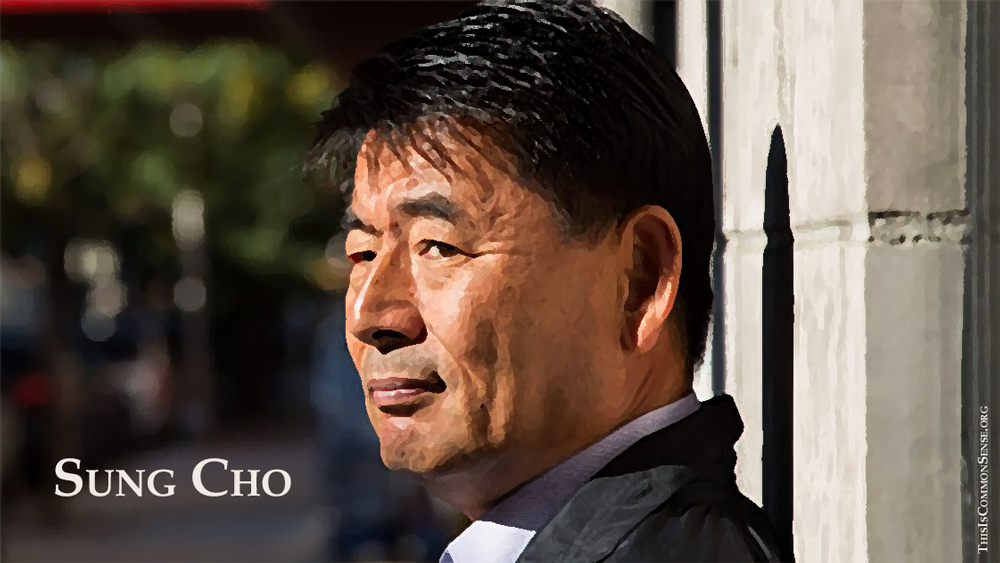
Sung Cho, owner of a Manhattan laundromat, is one of many victims of an eviction-and-extortion racket perpetrated by the city.

For years, business owners have faced eviction because of offenses that occurred on the premises of their business — even if the owner was ignorant of the alleged offenses before they were committed.

In 2013, police entered Cho’s laundromat to sell supposedly stolen goods. After a couple of people unconnected to the business accepted the offer, the NYPD threatened Cho with eviction. Even though neither Cho nor his employees were accused of doing anything illegal.

Cho felt he had no alternative but to waive his right not to be subjected to warrantless searches, and grant police access to his security cameras, and forfeit his right to a hearing if ever penalized for alleged criminal offenses in the future. To avoid eviction, he accepted those obnoxious terms.

But he didn’t leave it there. In 2016, Sung Cho teamed up with the Institute for Justice to sue the city.

After many ups and downs, the final result is that the law so often used as a club against innocent business owners has been changed. Also, the NYPD must obey a binding order that it “shall not enforce or seek to enforce” the terms of agreements imposed under the old law.

A big win for lots of small businesses against tyrannical actions by government.

This is Common Sense. I’m Paul Jacob.


PDF for printing

See all recent commentary
(simplified and organized)
See recent popular posts
Categories
Common Sense

The Price of Freelancing Is Eternal Vigilance

Californian voters have largely reversed an assault on “gig” workers in that state by passing Proposition 22.

Prop 22 is a response to Assembly Bill 5, enacted in California in 2019. The idea was to reclassify many freelancers so that companies could no longer treat them as independent contractors. Instead, to keep giving them work, companies would have to convert erstwhile freelancers to regular employees.

Doing so would mean paying additional costs. Instead, many companies simply stopped working with California-based freelancers. Freelancers of all ideological stripes protested the new law.

Rideshare firms Uber and Lyft were a major target of the legislation. Cabbies who work with them are contractors, not employees. Because of AB5, Uber and Lyft have been on the verge of leaving California — meaning a “victory” only for unions and others who hate market competition. 

Now these firms, and many freelancers, can apparently keep operating in the state.

Mission accomplished?

Not so fast. A national version of AB5 sits in Congress, lying in wait. It has been endorsed by House Speaker Nancy Pelosi, 215 Democratic co-sponsors, and Joe Biden, who may or may not be the next president of these not-so-United States. (Recounts are being conducted and allegations of election fraud are being investigated.)

If we end up with a President Biden, he may well push for a national version of AB5. Especially if the Democrats get at least 50 U.S. Senators after runoffs in Georgia are decided.

Stay vigilant. Protect our right to work.

This is Common Sense. I’m Paul Jacob.


PDF for printing

See all recent commentary
(simplified and organized)
See recent popular posts

Categories
too much government

Sweet Grape Victory of 2020

Raise a long-stemmed glass to the wineries of Minnesota. And to the Institute for Justice, which fought for their rights in court.

Minnesota wine makers may now make wine with whatever grapes they like! They may make wines that were illegal for them to make before.

Early in September, a federal judge struck down a 1980 Minnesota law which prevented Minnesota wineries from crushing grapes into wine unless most of the grapes being used had been grown in Minnesota. Winemakers were thus thwarted from producing popular varietals requiring grapes that can’t be grown in the state. Temporary exemptions from the law were possible but could not be counted on.

Judge Wilhelmina Wright’s ruling may well inspire challenges to similar prohibitions in other states. You know you’re a fifth of the way into the twenty-first century when dramatic modernistic advancements like letting wineries buy whatever grapes they wish have become possible.

You may be thinking: “Huh? I had no idea that wine makers in Minnesota were not allowed to buy grapes from other states. That’s painfully stupid!”

Of course, that is probably not the opinion of the proponents of the law. At least some Minnesota grape growers no doubt believe that persuading lawmakers to block out-of-state grapes was a smart move. 

But is it really so very wise to hobble business competitors for the sake of short-term advantages regardless of the long-term costs to the freedom — not to mention the palates — of all?

This is Common Sense. I’m Paul Jacob.


PDF for printing

See all recent commentary
(simplified and organized)
See recent popular posts

Categories
nannyism national politics & policies too much government

Regs to the Chopping Block

Donald J. Trump started his presidency with a flurry of activity. One of the things he did was sign an executive order to reduce Americans’ regulatory load.

This move may have been the most important initiative the new president advanced. It led to an economic boom that was not all just smoke and mirrors and “stimulus.” Real factors were involved in the resulting progress.

Now, however, the economy is in tatters. Massive unemployment, rising real poverty. 

But this is not a normal depression. It was the result of the reaction to the coronavirus — largely by the states, but at the recommendation of Trump himself, as advised by Dr. Anthony Fauci. Trump now wants what increasing numbers of Americans want: a return to business and normal life. But “re-opening the economy,” as it is called, is not going quickly or smoothly.

On Tuesday Trump signed an executive order to give his Cabinet secretaries broad permission to cut regulations, “instructing federal agencies to use any and all authority to waive, suspend and eliminate unnecessary regulations that impede economic recovery.”

“And we want to leave it that way.” 

Which is the most promising part of this. 

“Mr. Trump has made nixing regulations,” explains John T. Bennett in The Independent, “especially ones put in place by the Obama administration, a top priority during his over three years in office.”

We could call the nixing of the lockdown orders themselves a “freeing up” of the economy. To help ease over all the damage, also “freeing up” business from regulatory kludge could not hurt.

This is Common Sense. I’m Paul Jacob.


PDF for printing

chopping block, regulations,

See all recent commentary
(simplified and organized)
See recent popular posts
Categories
too much government

Unnatural Disaster

Just get rid of it.

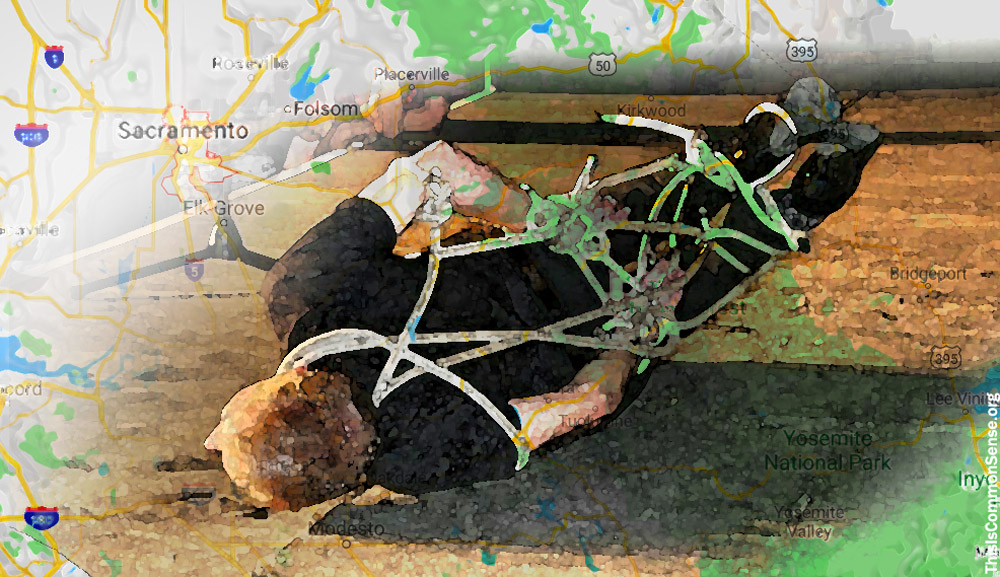
The “it” is AB-5, the absurd new law attacking California freelancers. 

And those articulating the good riddance are the “151 Ph.D. Economists and Political Scientists in California” who have signed an open letter to California Governor Gavin Newsom and the state legislature.

The lawmakers who last year foisted the measure on Californians pretended that they were doing gig workers a big favor by making it impossible, in many cases, for companies to hire them for regular short-term jobs.

After the legislation passed, many independent contractors quickly lost work — lots of work. For example, Rev, which produces transcripts and captions, said goodbye to all of its freelancers based in California. Many other companies — reluctant to be prosecuted for the crime of engaging in voluntary economic relationships between consenting adults — also ended relationships with freelancers.

Apparently, the anti-gig lawmakers did not realize that losing one’s means of paying for food and rent is not that helpful. 

Tornadoes, hurricanes, and pandemics have a way of highlighting the importance of the economic and other institutions that make human survival and civilization possible. 

AB-5 is like a natural disaster in its effects . . . but not natural.

“By prohibiting the use of independent contractor drivers, health care professionals, and workers in other critical areas,” the open letter explains, “AB-5 is doing substantial, and avoidable, harm to the very people who now have the fewest resources and the worst alternatives available to them.” 

The solution is “suspend AB-5.” 

It was always the solution, the obvious solution. 

But now it is even more obvious.

This is Common Sense. I’m Paul Jacob.


PDF for printing

California, gig, economy, regulations, freelancing, labor, employment,

See all recent commentary
(simplified and organized)
See recent popular posts

Categories
national politics & policies too much government

The Ratchet Racket

Various models and curves and soothsayers predict that the coronavirus will lay off as the summer sun waxes. And then rush back in the autumn.

So we should not look at just near-term threats, but also look at cycles of contagion month-to-month, year-to-year. 

Yet, it is not just the dreaded coronavirus that must be seen over time. “Crisis measures are often ineffective,” writes Matthew Feeney, at Cato Institute, “and can survive the crisis they are implemented to counter.”

Because government power and interference tend to ratchet up with each crisis, there is a whole lot of reason to suspect that we will not go back to normal. Indeed, “the new normal” is now a catchphrase.

The quarantine shutdown has been, if not total, totalistic. Feeney acknowledges such extremist (he didn’t use that word) measures may sometimes be justifiable. But warns of that ratchet, of new powers given to government not devolving after the crisis.

Ted Galen Carpenter, also at Cato.org, draws a “fundamental lesson” from the panic: “Americans need to resist the casual expansion of arbitrary governmental power in response to the current coronavirus crisis.”

The extreme measures of the shutdown — called by economist Gene Epstein “The Great Suppression” — should have been widely discussed before the contagion hit. Instead, they were discussed in meetings behind closed doors.

But most of us were already up to our necks in the political muck fighting off the everyday kludge of the old normal level of too-much-government.

You know, from the previous turn of the ratchet.

This is Common Sense. I’m Paul Jacob.


PDF for printing

ratchet, coronavirus, Covid, pandemic, epidemic, law, regulations, government,

See all recent commentary
(simplified and organized)
See recent popular posts


Categories
free trade & free markets too much government

The Exceptions Disprove the Rules

“I’ve instructed my prosecutors not to charge certain low-level nonviolent offenses to avoid people being held in jail unnecessarily,” Maryland’s Attorney General Marilyn Mosby informed the state’s Republican governor. She also urged the governor “to release all inmates in state prisons who are over 60,” explains The Washington Times, “approved for parole or scheduled to complete their sentences within the next year.”

This is all to avoid a prison pandemic. Meanwhile, the “Food and Drug Administration (FDA) announced Monday that it would permit states to create laboratories for designing COVID-19 tests,” Reason magazine tells us, adding that the FDA “has also decided to permit pharmacists to make their own alcohol-based hand sanitizers.”

Reason’s Robby Soave asks the obvious question: “Why do the people who are working hardest to fight the coronavirus have to ask a slow federal bureaucracy for permission to save lives?”

The New York Times reports that Dr. Helen Y. Chu, an infectious disease expert in Seattle, tried mightily to perform tests on subjects, early in the epidemic, to track how the virus was spreading. She was stymied every which way.

By bureaucracies.

The kludge of bad regulations and laws merely adds cost and annoyance during normal times; during emergencies they present major stumbling blocks to public health.

So, when our leaders make special exceptions, they demonstrate that the regulations were always bad — now just worse.

Real leadership would nix these rules, permanently.

And, for that matter, end the war on drugs — and prostitution and other victimless crimes.

One of the infractions Maryland’s AG decided to go lax on, however, is public urination. That crime has victims and ought to remain a public health violation.

Though perhaps not worth imprisonment.

This is Common Sense. I’m Paul Jacob.


PDF for printing

freedom, prohibition, rules, regulations, red tape, bureaucracy,

See all recent commentary
(simplified and organized)
See recent popular posts
Categories
property rights too much government

Zoned Out

There are ways of cultivating community standards without resorting to zoning and similar regulatory regimens by state and local governments. They have been studied, written about, and they can be found here and there around the country, though most famously in Houston, Texas.

But zoning’s the norm in urban and suburban communities.

Ask Marietta Grundlehner.

She had been running an online clothing boutique from her home in Fairfax County, Virginia, and has been forced to shut it down.

Well, a court has ruled that she must remove all her inventory from her home. You can have a home business in Fairfax, but not inventory of goods for sale.

Ms. Grundlehner had been earning, she said, about $30,000 a year as a “LulaRoe Fashion Retailer” in an industry billed by its online organizer as “social retail.” The ecommerce hub, lularoe.com, makes an enticing pitch for its business model: “Find your joy and fulfillment by creating a positive impact in your community.”

But it was a neighbor who turned her in and sicced the local government on her.

That Fairfax resident sure did not think she was having a “positive impact” in their community.

Grundlehner hopes for a regulatory change to save her business, but Christian Britschgi of Reason has a word for that battle: “uphill.”

Still, online businesses are on the ascendency. Too many run afoul of zoning laws. And online entrepreneurship being the wave of the future, local governments might want to forget their old gentrification utopianism and meet the real world, the place where people actually live. 

This is Common Sense. I’m Paul Jacob.


PDF for printing

zoning, regulations,

See all recent commentary
(simplified and organized)
See recent popular posts

Categories
paternalism too much government

Save Me, Good and Hard

The problem with making my own decisions? I might make a mistake.

That’s not good for me, is it?

So what you government boys ought to do is make me scrape and bow and beg for permission. Make me fill out more forms, struggle with invasive new privacy-invading requirements. Make it super-hard to comply — so I give up before I do anything . . . ill-considered.

That way, you prevent me from taking actions that might just possibly go badly — like investing my own hard-earned money the way I want to.

The SEC is seriously considering meeting this demand. 

Give it to me good and hard, SEC! 

But let me clarify. By “me” I mean every small independent investor. By “give it to me” I mean “don’t give it to me.”

Don’t do what Securities and Exchange Commission Chairman Jay Clayton and other SEC commissioners are considering: imposing a regulation to “effectively ban many middle-class investors from buying mutual funds and exchange-traded funds.”

Don’t make it lots harder to use the Robinhood app to make certain low-fee or no-fee purchases. Don’t prevent investors from buying funds through discount brokerages and apps like Robinhood unless they first fill out an intrusive questionnaire about their personal finances and pray for permission.

Don’t make us beg to invest.

Don’t. 

Stop mulling whether to further harass Americans who want to be free to make their own choices and live their own lives. 

Don’t enslave. 

Liberate. Laissez nous faire, you condescending thugs.

This Common Sense. I’m Paul Jacob.


PDF for printing

SEC, Security and Exchange Commission,

See all recent commentary
(simplified and organized)
See recent popular posts