Categories
Accountability First Amendment rights folly media and media people moral hazard national politics & policies too much government U.S. Constitution

Our Royals Are Not Amused

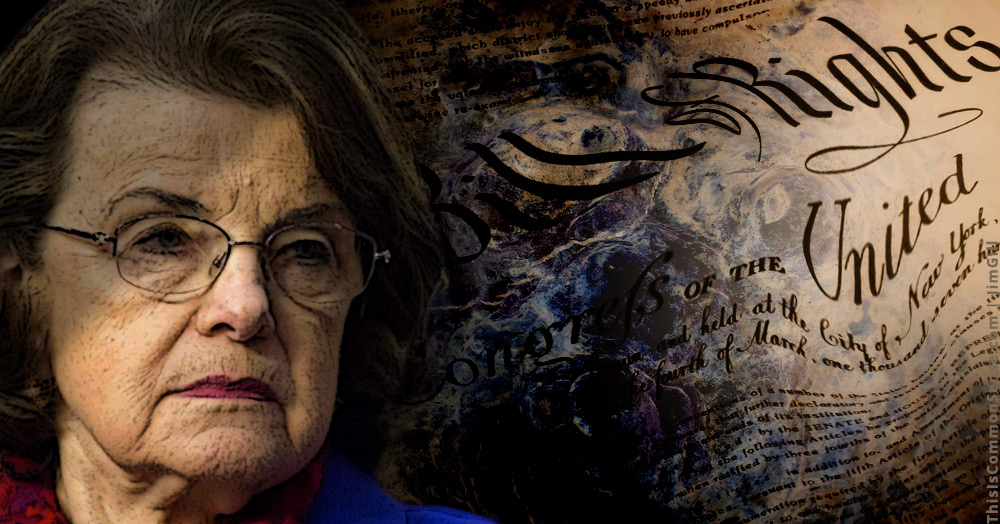
“You created these platforms,” Sen. Dianne Feinstein (D-CA) informed the top legal minds at Facebook, Twitter, and Google, “and now they’re being misused.”

“And you have to be the ones who do something about it — or we will.”

Take that as a threat.

But also take it as the grand moment when the Establishment showed its hand.

Consider: Facebook, Twitter, and YouTube (a Google product) are “media platforms.” So are books, libraries, newspapers and newsstands. Imagine being a king right after Johannes Gutenberg invented the printing press. Very quickly, the world changed.

People thought differently. And they began demanding change from government. The sovereigns had to make room for subjects-turned-citizens.

Royalty and aristocracy did try to regulate the new platforms of information and opinion. Censorship was all-too-common. The rulers killed upstarts for writing the wrong things, saying the wrong things.

So, which side would you be on, Mrs. Feinstein?

That is Scott Shackford’s basic take on this. I’m with him.

I just wish to expand: in my lifetime the media platforms of newspapers and television were regulated. Heavily. Mergers and business purchases were subject to government permission; the electromagnetic spectrum was licensed rather than treated as private property, and the actual content of radio and TV shows were regulated by the FCC.

And the Feinsteins of Washington got awfully secure in their positions. Had the regulation of American media done its trick?

Enter new media, uncorking the bottle of opinion.

No wonder the Establishment is scared.

We shouldn’t let them regulate political content on the Internet. Demand, instead, the opposite: a complete repeal of the regulation of business management — and non-criminal content regulation — of all media platforms

This is Common Sense. I’m Paul Jacob.


PDF for printing


Categories
crime and punishment folly general freedom ideological culture media and media people national politics & policies

Shadow Boxing with “Nazis”

Voltaire’s prayer, “make my enemies ridiculous,” has been granted to Ben Shapiro.

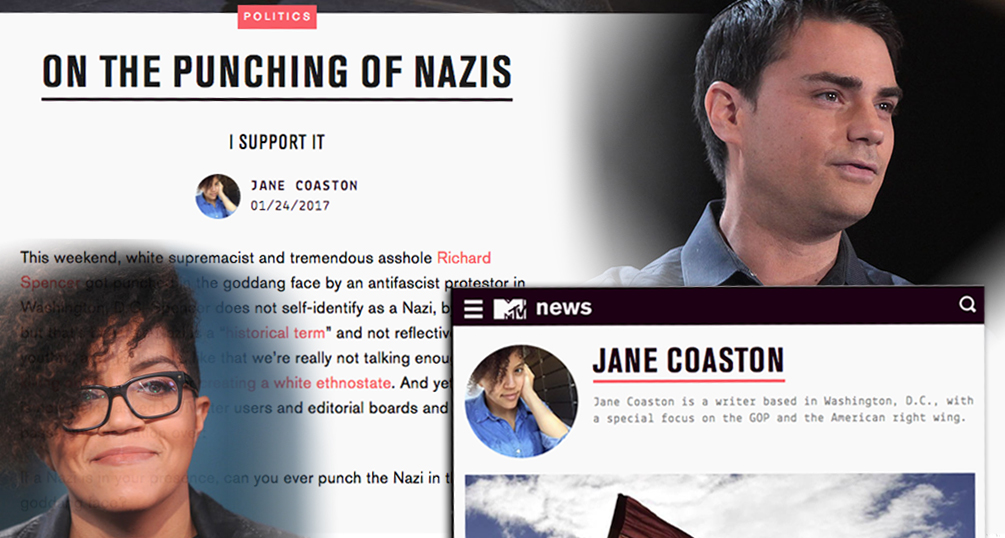
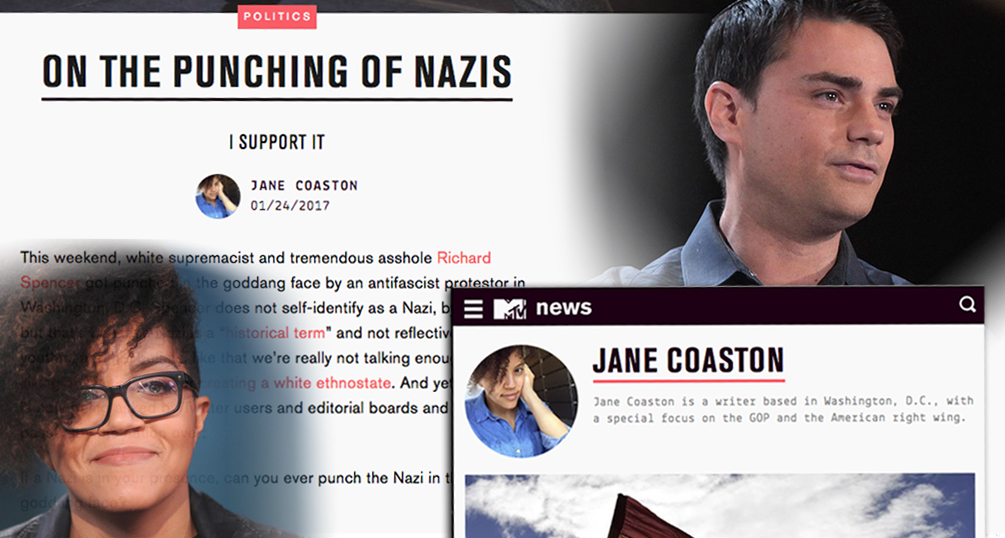
The New York Times has graced its pages with the writings of one Jane Coaston, who, in “The Hollow Bravery of Ben Shapiro,” accuses the brilliant intellectual pugilist Mr. Shapiro for “shadow boxing meant to pander to his conservative fans.”

And while she admits the truth that “campuses tend to be hostile places to conservatives like Mr. Shapiro, Charles Murray and Heather Mac Donald,” she insists that “the notion that they are the cultural underdogs is bogus.”

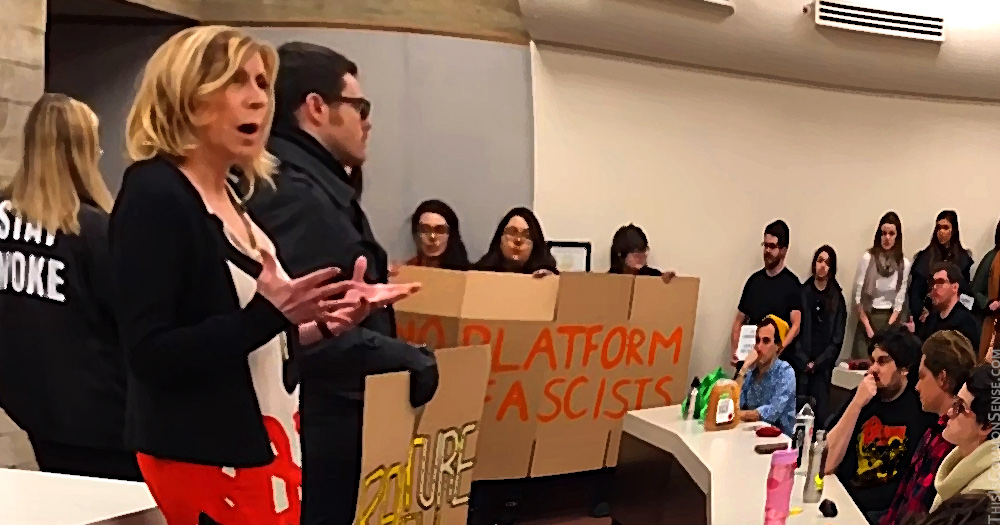
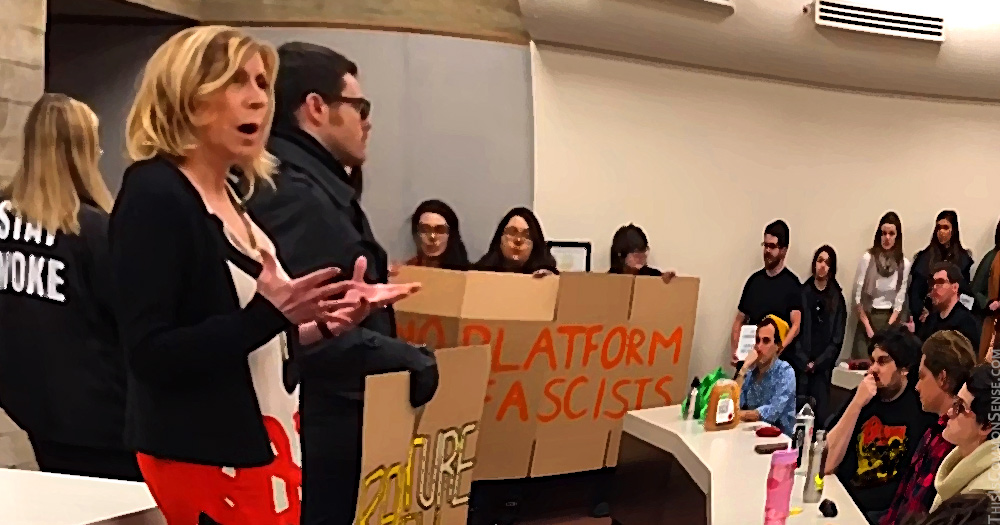
Failing to back up her “cultural underdog” thesis in any way, Coaston’s essay wanders off, evading the street and campus violence by leftist activists who, until recently, were given de facto license by mayors and college administrators to shout down, beat up and “de-platform” people they called “fascists.”

By just glossing over all this, Ms. Coaston is pandering to her audience — certainly not challenging it, which is precisely what she accuses Mr. Shapiro of doing.

Amusingly, I noticed this journalist arguing earlier this year that “you should punch Nazis in the goddang face.”

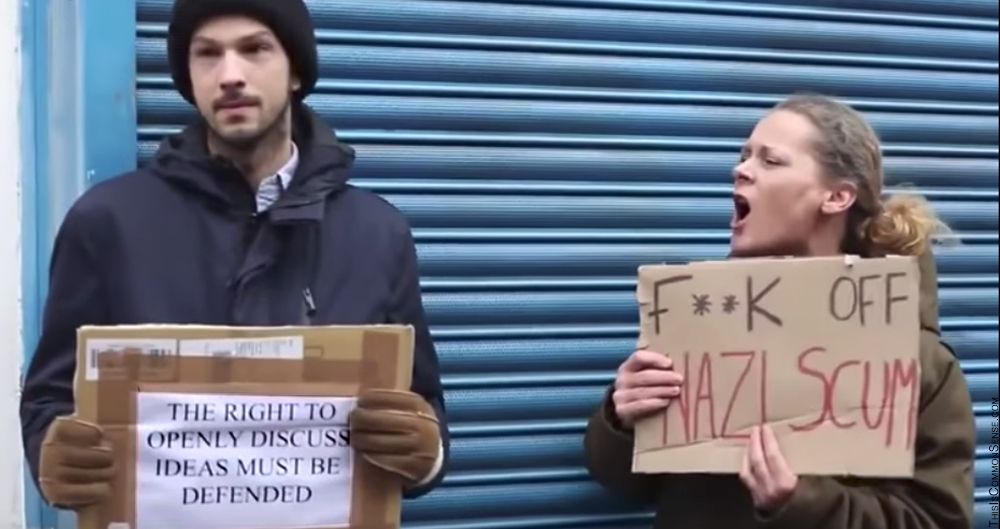
But Antifa and other “Nazi-punchers” aren’t in the habit of sending out questionnaires before planting fist to face or bike lock to noggin.

Which brings us to the ridiculous. She minimizes the extent to which Ben Shapiro and others have been threatened (and their fans violently attacked) by mobs shouting against “fascism” and “Nazis.” And yet she provided not merely the intellectual ammunition for this practice, she provided the declaration of war.

Maybe she has a career in politics.

This is Common Sense. I’m Paul Jacob.


PDF for printing


Categories
folly general freedom ideological culture media and media people moral hazard nannyism national politics & policies Popular Regulating Protest U.S. Constitution

Force Over Persuasion

Today’s campus radicals assert that free speech is bad because it “gives voice” to people with hateful, dangerous views.

Does that argument seem at all familiar? It is the old RightThink rationale for censorship.

A recent Spiked “Unsafe Spaces” event at Rutgers (“Identity Politics: the New Racialism”) was interrupted by now-too-famiar shouts and out-of-turn questions and invective. Kmele Foster, one of the panelists, had been explaining how important free speech rights were to the civil rights protesters in the 1960s, and to Martin Luther King in particular.

At “that precise moment,” as Reason’s Matt Welch puts it, the shouts of “Black lives matter!” began. And continued.

But more interesting than this bullying? Some of the more coherent theses articulated by the interrupters. One woman, CampusReform relates,

yelled in response to the panelists that she doesn’t “need statistics,” later complaining that “the system” controls facts.

“It’s the system. It’s the institution,” she said. “Don’t tell me about facts. I don’t need no facts.”

Well, the moment you prove immune to any fact is the exact point in time that you’ve given up on rationality, free inquiry, and maybe even civilization itself.

It’s so 1984-ish.

And it demonstrates the old idea that, when you can no longer reason or allow others to express different opinions . . . or even discuss the factuality of this or that contention, you have only one other option: force.

Become bully.

Or tyrant.

Civilization is the triumph of persuasion over force. Being against free speech is to reverse that.

The acme of barbarism.

This is Common Sense. I’m Paul Jacob.


PDF for printing


Categories
Accountability general freedom ideological culture media and media people moral hazard nannyism national politics & policies

Off the Field

At last Friday’s event to rally support* for Sen. Luther Strange, the Mitch McConnell-financed establishment candidate in today’s GOP runoff in Alabama, President Donald J. Trump veered — as he is wont to do — off topic: the NFL players refusing to stand for the national anthem.

Wouldn’t you love to see one of these NFL owners,” the commander-in-chief asked the crowd, “when somebody disrespects our flag, to say, ‘Get that son of a bitch off the field right now. Out! He’s fired!’?”

Trump’s trash-talking touched off bigger protests before Sunday’s games. Some argued the president was undermining freedom of expression. But, of course, the president was freely expressing himself.

And no doubt speaking for many others.

Polling conducted last year, after former San Francisco 49ers quarterback Colin Kaepernick first took a knee during the pregame anthem — which started this trend — found a majority opposed to his actions.

“NFL ratings are down massively,” the President correctly remarked.

The National Football League’s television ratings dropped 8 percent last year, and so far 2017’s ratings are down an additional 15 percent. Moreover, in a massive JD Power survey, the protests during the anthem were the top reason given for not watching the NFL.

Of course, Kaepernick was making a political statement, not trying to maximize his dollar-value in the marketplace. The now mysteriously unemployed quarterback said a year ago, “If they take football away, my endorsements from me, I know that I stood up for what is right.”

Whether one agrees with Kaepernick or not, he is paying a steep price to make a point. Firing folks won’t silence the message.

This is Common Sense. I’m Paul Jacob. 


* The president oddly quipped of his Strange endorsement: “There is something called loyalty, and I might have made a mistake and I’ll be honest, I might have made a mistake.” Trump added that Strange and his GOP opponent, Judge Roy Moore, were “both good men” and he would campaign hard for either Republican.


PDF for printing


Categories
Accountability crime and punishment government transparency moral hazard responsibility too much government

Half a Win Is Better than None

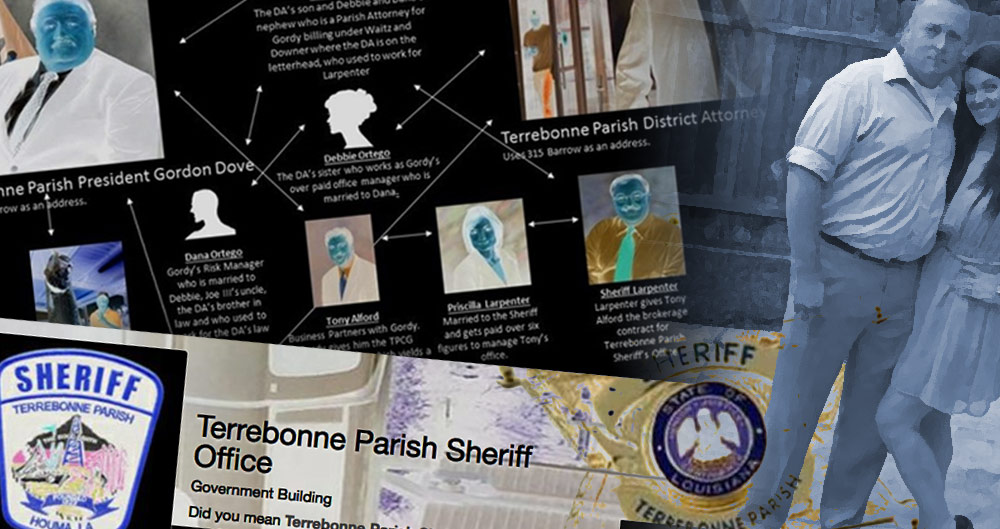
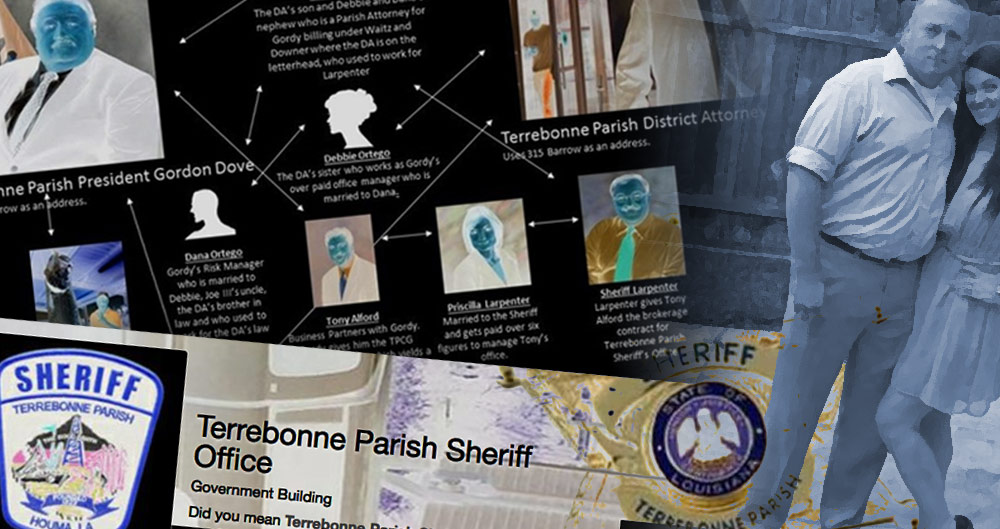
Jennifer Anderson criticized her local sheriff. Her family’s home was raided in 2016 by the sheriff as a result.

Terrebonne Parish Sheriff Jerry Larpenter’s reaction to criticism was ugly and unconscionable, but it hasn’t been allowed to stand. On the other hand, the sheriff hasn’t been adequately punished, either.

Jennifer Anderson’s pseudonymous blog ExposeDAT criticized various public figures in Terrebonne Parish, Louisiana, including with respect to the business relationships between Larpenter and others. Bridling at the criticism — which had to do with assessment of publicly available facts — the sheriff submitted warrants to Facebook and AT&T to track down the identity of the blogger. Then he sent men to raid the Andersons’ home and grab computers and cell phones.

The Andersons fought back, suing in federal court. They wanted the raid and seizure and search of their private stuff to be declared unconstitutional.

Finally, this September, the Andersons reached an undisclosed settlement with Larpenter out of court. According to its terms, the Andersons aren’t allowed to discuss it any detail. But their attorney says the settlement is “a victory for citizens’ right to be critical of their elected officials without fear of retribution.” U.S. District Court Judge Lance Africk has said that “Jennifer Anderson’s speech [in her blog] falls squarely within the four corners of the First Amendment.”

All that’s fine, but why hasn’t this sheriff also at least been kicked out of his job for his blatant abuse of power?

This is Common Sense. I’m Paul Jacob.


PDF for printing


Categories
Accountability crime and punishment folly general freedom ideological culture local leaders media and media people moral hazard national politics & policies political challengers property rights Regulating Protest responsibility

Alt-Comparisons

“There is no comparison,” concluded Washington Post columnist Margaret Sullivan, after spending her entire column doing just that, i.e. comparing Antifa, the so-called “alt-left,” with Nazis and white supremacists, the so-called “alt-right.” 

When Trump spoke about Charlottesville violence on both sides, Sullivan argued, “He was comparing things that aren’t the least bit equal, neither in scale nor in intent.”

Sullivan trumpeted statistics compiled by the Anti-Defamation League. The U.S. had 372 politically motivated murders between 2007 and 2016, with 74 percent committed by right-wing extremists and only 2 percent by left-wing extremists.*

Yet, those perpetrating 2 percent of such slayings can legitimately be compared to those perpetrating 74 percent — and also likened to thugs who beat down opponents in the street (thankfully without murdering them).  

All of the above use violence to achieve political goals.** Some are more deadly than others, but the violent actions of all should be condemned. 

Sullivan acknowledged that “it’s safe to say that most news consumers, if they know anything about antifa, know what the president has told them, and what they’ve gleaned from the club-wielding protesters shown endlessly on TV . . .”

Are citizens not supposed to take note of the violence in living color right before their eyes?

And why are folks uninformed? Could the mainstream media’s failure adequately to cover, say, previous Antifa rioting at Berkeley and elsewhere have something to do with it?

Lastly, Sullivan called on the media “to resist conflating [Antifa] with liberal groups.” Agreed. And let’s have the same fairness in not conflating Nazis and the KKK with conservatives.   

This is Common Sense. I’m Paul Jacob. 


*  By the process of elimination, “moderate extremists” are apparently committing close to a quarter of all political killings.

** I’ve not drilled down into these stats, or figured out what, precisely, qualifies as “political.”


PDF for printing


Categories
Accountability general freedom initiative, referendum, and recall local leaders political challengers Regulating Protest too much government

Know Your BS

“Help me get my B.S. in the voters pamphlet,” read the subject-line of Tim Eyman’s email

Eyman is a practitioner of the art of the voter initiative, foremost in his state, Washington, and one of the most effective nationwide.*

This particular call to action concerns the voter pamphlet statements about a tax increase placed on Washington State’s November ballot by the mayor and city council in Tim’s hometown of Mukilteo.

“In the pro statement,” Eyman explained, “they wrote that the need for the tax increase was ‘indisputable.’” Which his rebuttal countered with: “Politicians always say the need for higher taxes is ‘indisputable.’ We call B.S. on that.”

It is rather to the point.

But soon he received word from the city that, “The Auditor feels the language is inappropriate and would like you to choose different wording.” Rather than “We call B.S. on that,” it was suggested that he might use: “We call foul.”

Eyman objected. He pointed out that B.S. is used ubiquitously; he sent the city examples.

“I called the ACLU,” his email noted, and “they thought it was B.S. for the government to say you can’t say B.S.”

Eyman’s own attorney, Stephen Pidgeon, sent the city a detailed letter pointing out that this is exactly the speech protected under the First Amendment.**

The City of Mukilteo has yet to announce a final decision. Tim Eyman invites all of us to send an email to encourage the city to Let Eyman Keep his B.S. in the Voters Pamphlet.

This is Common Sense. I’m Paul Jacob.


* He was once even dubbed “America’s No. 1 freedom fighter” — by me.

** Pidgeon also offered, “While the pious may construe the inference of these two alphabetic avatars as meaning something crude, my client may very well have been referencing an ancient Latin phrase ‘Bubulum Stercus’ which no average voter would ever find inappropriate.”


PDF for printing


Categories
Accountability folly general freedom ideological culture media and media people moral hazard nannyism national politics & policies too much government U.S. Constitution

Statues and Limitations

“Should they take down the Jefferson Memorial?”

That is what PBS’s Charlie Rose asked Al Sharpton. Now, the “Reverend” is not my go-to source for political insight, but his answer* caught my attention.

“I think that people need to understand that, when people that were enslaved and robbed of even the right to marry and had forced sex with their slave masters, this is personal to us,” replied Rev. Sharpton. “My great-grandfather was a slave in South Carolina . . . Our families were victims of this.”

Asked if this precluded “public monuments” for “everyone associated with slavery,” Sharpton argued: “When you look at the fact that public monuments are supported by public funds, you are asking me to subsidize the insult to my family.”

One can attack the messenger, Sharpton, sure. But what if we instead think of him as our neighbor? I certainly wouldn’t want to insult a neighbor, much less make him pay for the privilege.

Notably, the Reverend embraced privatization, suggesting, “You have private museums.” Privatizing controversial monuments would certainly solve Sharpton’s stated problem.

Of course, the logic behind taking down statues or dismantling the Jefferson Memorial — or merely privatizing them — might also lead to changing the names of cities, counties and states, rivers and mountains. And it’s not just Washington and Jefferson — twelve presidents were slave owners, including Union General U.S. Grant.

Who knows how many are undeservedly memorialized?

Frankly, I’ve never liked the name of my Virginia county: Prince William. A liberty-loving people ought not be stuck with such a monarchial brand.

Let the people decide.

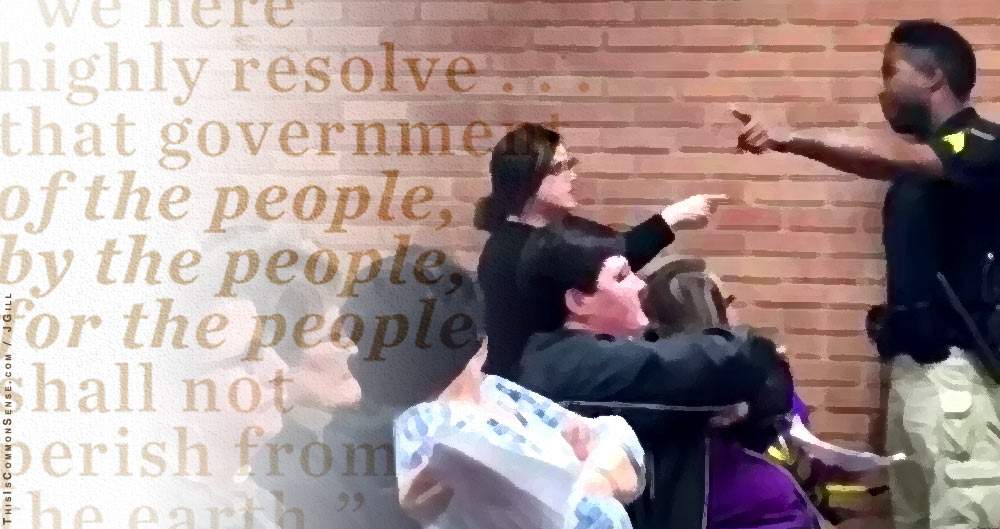
But by vote, not street brawl.

This is Common Sense. I’m Paul Jacob.


* This exchange begins at the 15:22 mark in the interview.


PDF for printing


Categories
Accountability First Amendment rights incumbents local leaders Regulating Protest U.S. Constitution

Homer’s Recall Odyssey

Freedom of speech isn’t a free pass to avoid the consequences of what one says. Or does. Tell that to three members of the Homer, Alaska, city council — Donna Aderhold, David Lewis and Catriona Reynolds — who are the subject of a recall petition.

Well, a superior court judge just did.

Represented by the ACLU, the trio sued to block a recall petition with more than enough voter signatures. Their lawsuit challenged the city attorney’s acceptance of the legal rationale for the recall, claiming the recall attempt punishes the politicians for their speech.

“To conclude that anytime a recall petition is based in part or in whole on what a politician said is protected by the First Amendment,” Superior Court Judge Erin Marston ruled, “would be to eviscerate the recall statute to such an extent that the populace would almost never be able to seek recall of any of their elected officials.”

Now the recall moves forward.

In most of this Land of the Free, citizens lack the ability to recall their elected officials. In places that do have the process, it is rarely used. When it is used, it is often portrayed as voters throwing a temper tantrum.

Or an unfair election do-over.

Or mean-spirited ‘vendetta politics.’

Not so. The petition requirements make recalls very difficult. Recalls don’t happen without some serious problems with the current officeholder(s). And once a recall is triggered, there follows a democratic vote to decide whether citizens want to keep the sitting hireling or find someone new.

Seems pretty reasonable.

When politicians are recalled and removed, they deserve it.*

This is Common Sense. I’m Paul Jacob.


* The problem seems never to be that good politicians are being recalled, but that too many politicians who should be recalled are not. Back in 2003, the governor of California was recalled. He deserved it. In 2011, a whopping 88 percent of Miami-Dade County voted to recall Mayor Carlos Alvarez. He earned it, too.


Printable PDF


Categories
crime and punishment First Amendment rights general freedom ideological culture moral hazard national politics & policies Regulating Protest U.S. Constitution

Thorns in the Parade

Portland, Oregon, styles itself as “The City of Roses.” For over a century, this Pacific Northwest city has held an annual Rose Festival, complete with multiple parades.

This year, there will be at least one parade less.

“The annual 82nd Avenue Rose Parade and Carnival scheduled for Saturday have been canceled because of threats against the Multnomah County Republican Party, a longtime participant in the parade,” we learn from the Portland Tribune. “In a Tuesday afternoon email, the 82 Avenue Business Association, which sponsors the Rose Festival-sanctioned event, said it canceled the entire event because [it] could not guarantee the safety of the community.”

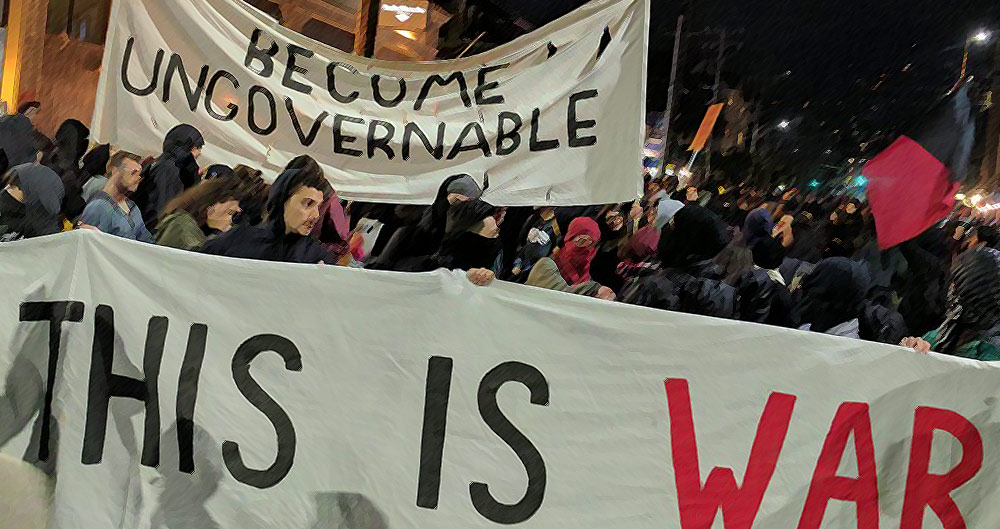
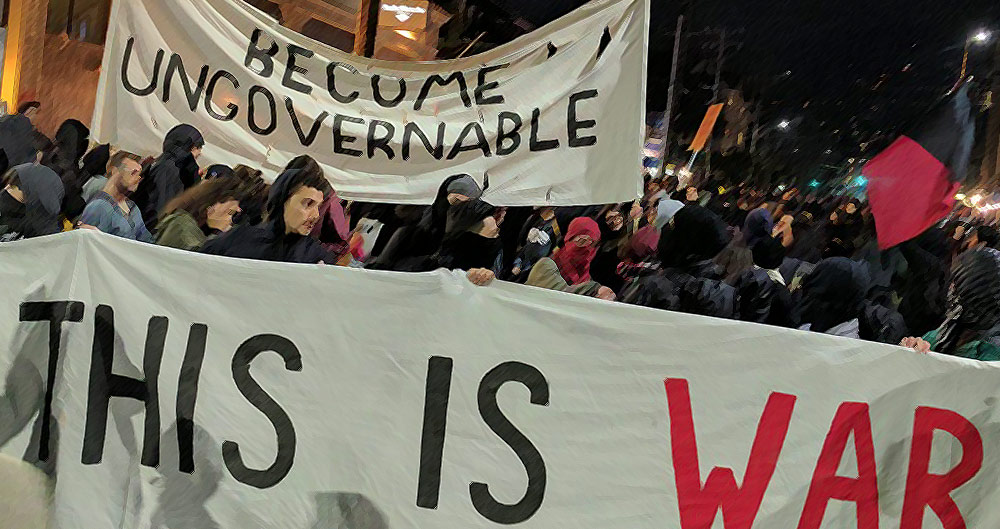
KOIN-6 News reported that the threats came from the Direct Action Alliance, an “antifa”-styled group that “created a Facebook event called ‘Defend Portland from Fascists at the Avenue of Roses Parade.’ The group wanted to disrupt the march because of ‘Nazis and fascists’ participating.”

Now, what you regard as “white supremacist” and what young pseudo-antifascists think of as “white supremacy” are probably very different. I doubt that many real Nazis and fascists would have marched on Saturday.

But the identification issue is irrelevant. If fascists want to peacefully parade, let them.

What is objectionable? Those who engage in violence to suppress views of which they disapprove.

Also objectionable? The organizers and the City of Roses police, who, by caving in, let free speech and assembly be squelched.

Spontaneous marches did occur on parade day, corralled to the left and right sides of the street. Literally and figuratively. Three violent activists were arrested but not identified by affiliation.

Portlanders used to worry that the clouds would rain on their parades. Now, it is ideological violence casting a dark shadow.

This is Common Sense. I’m Paul Jacob.


Printable PDF