Categories
Accountability general freedom

Pandemic Turning Point

While reading an article in The Hill, about the loss of life that the lockdowns will cause — “millions of years of life” — I saw news anchor Judy Woodruff, on PBS News Hour, put on a dour face to intone the latest U.S. coronavirus death count: over 98,000.

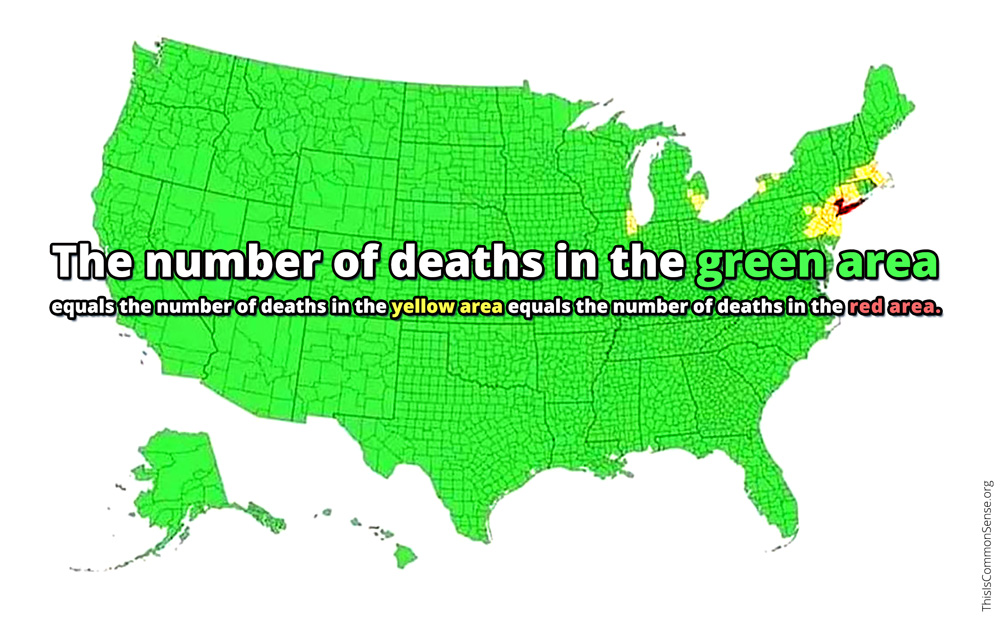
But the United States is not just one unit. The United States are … very different. Fifty different. Most states have had few coronavirus deaths. Indeed, the map of mortality shows only a few hot spots, with New York City the worst. 

Why? One key factor appears to be population density, particularly housing density and living quarters crowding. Lots of that goes on in New York City — and, PBS tells us, on Navaho lands.

Yet not all crowded conditions are as worrisome as once thought. Many were much exercised about Florida’s Spring Break beachgoers, but no major outbreaks occurred there.

This may be the result of the virus not being spread as experts initially thought: by asymptomatic carriers — as “A study on infectivity of asymptomatic SARS-​CoV‑2 carriers” indicates.

Japan’s prime minister, Shinzō Abe, has withdrawn the nation’s state of emergency … with less than 900 dead. Back in the U.S., the states are responsible for the lockdowns, but President Trump urges an end to them, and the other day even Dr. Fauci acknowledged that lockdowns also kill.

Emile Phaneuf, writing at FEE​.org, makes clear what has been foggy in popular discourse: it’s not “lives versus ‘the economy’” but “lives versus lives.” Mr. Phaneuf explains the economic logic of better policy regarding contagions.

Will our “leaders” listen in time for Round Two of the virus expected in the Fall?

This is Common Sense. I’m Paul Jacob.


PDF for printing

See all recent commentary
(simplified and organized)
See recent popular posts
Categories
general freedom ideological culture national politics & policies

Masks Work

Early in this pandemic, experts — including CDC officials — told us that if you aren’t a medical worker dealing with infected patients, wearing a mask is ineffective in protecting yourself and others.

Many reversed themselves, though without honestly explaining why they had ever downplayed the value of masks to begin with. Masks are even now mandatory some places.

But we still hear naysayers who declare masks to be pointless.

One blithely declares: “The main transmission path is long-​residence-​time aerosol particles (< 2.5 μm), which are too fine to be blocked.” That’s less than 2.5 micrometers. A micrometer is one millionth of a meter. Yes, small.

But “too fine to be blocked”?

A properly worn mask need not be 100% effective to block tiny particles. Viruses do not fly unerringly through holes and gaps in the mask. They have no guidance system and no little legs enabling them to scamper to a hole if it hits fabric. 

Nor is the virus invariably unattached to larger particles. 

Obviously, the better the filtering, the more effective the mask.

Suppose you go to a supermarket and 

  1. wear a mask, 
  2. try to keep your distance from others, 
  3. go when fewer people tend to be shopping, and 
  4. leave fast. 

All pointless?

Short of wearing a hazmat suit or never leaving a one-​resident home, no protective measure will be 100 percent effective all the time, infallibly. This doesn’t mean that partly effective measures should be dismissed as entirely ineffective. 

A part of something is, well, not zero.

This is Common Sense. I’m Paul Jacob.


PDF for printing

mask, filter, coronavirus, Covid, pandemic, epidemic,

See all recent commentary
(simplified and organized)
See recent popular posts

Categories
nannyism national politics & policies too much government

Regs to the Chopping Block

Donald J. Trump started his presidency with a flurry of activity. One of the things he did was sign an executive order to reduce Americans’ regulatory load.

This move may have been the most important initiative the new president advanced. It led to an economic boom that was not all just smoke and mirrors and “stimulus.” Real factors were involved in the resulting progress.

Now, however, the economy is in tatters. Massive unemployment, rising real poverty. 

But this is not a normal depression. It was the result of the reaction to the coronavirus — largely by the states, but at the recommendation of Trump himself, as advised by Dr. Anthony Fauci. Trump now wants what increasing numbers of Americans want: a return to business and normal life. But “re-​opening the economy,” as it is called, is not going quickly or smoothly.

On Tuesday Trump signed an executive order to give his Cabinet secretaries broad permission to cut regulations, “instructing federal agencies to use any and all authority to waive, suspend and eliminate unnecessary regulations that impede economic recovery.”

“And we want to leave it that way.” 

Which is the most promising part of this. 

“Mr. Trump has made nixing regulations,” explains John T. Bennett in The Independent, “especially ones put in place by the Obama administration, a top priority during his over three years in office.”

We could call the nixing of the lockdown orders themselves a “freeing up” of the economy. To help ease over all the damage, also “freeing up” business from regulatory kludge could not hurt.

This is Common Sense. I’m Paul Jacob.


PDF for printing

chopping block, regulations,

See all recent commentary
(simplified and organized)
See recent popular posts
Categories
too much government

Cure and Consequences

“As the nation enters a third month of economic devastation, the coronavirus is proving ruinous to state budgets,” the Associated Press reports, “forcing many governments to consider deep cuts to schools, universities, health care and other basic functions that would have been unthinkable just a few months ago.”

Notice the breezy attribution to the pandemic of the devastation caused by governments’ reactions to the pandemic.

Official tallies have it that COVID-​19 has killed over 80,000 Americans. And it will kill more. But state government revenue is nose-​diving “because government-​ordered lockdowns have wiped out much of the economy and caused tax collections to evaporate.” 

Why make much of this fine distinction between the disease and the response?

Because it is easier to control our response than it is a disease.

The people we elect are supposed to understand such things. 

But, do they?

The fact that this is a political as opposed to medical predicament is clear: “Now state finances are in peril regardless of the actual number of infections.”

And note: a few states aren’t going to experience the problem nearly so badly: Arkansas, Iowa, Nebraska and the Dakotas. Why? These states have done pretty much what Sweden has done: avoided lockdown orders and treated the disease like a health problem and not a political opportunity to flex their “leader” complexes.

No matter how we reacted, the pandemic was going to be devastating. But generally cures shouldn’t be worse than the disease, and we should wonder whether our politicians’ lack of understanding here is indicative of a co-​morbidity … of the “body politic.”

This is Common Sense. I’m Paul Jacob. 


PDF for printing

body politic, Covid, corona virus, epidemic, pandemic,

See all recent commentary
(simplified and organized)
See recent popular posts
Categories
crime and punishment general freedom too much government

The Wisdom of Freedom

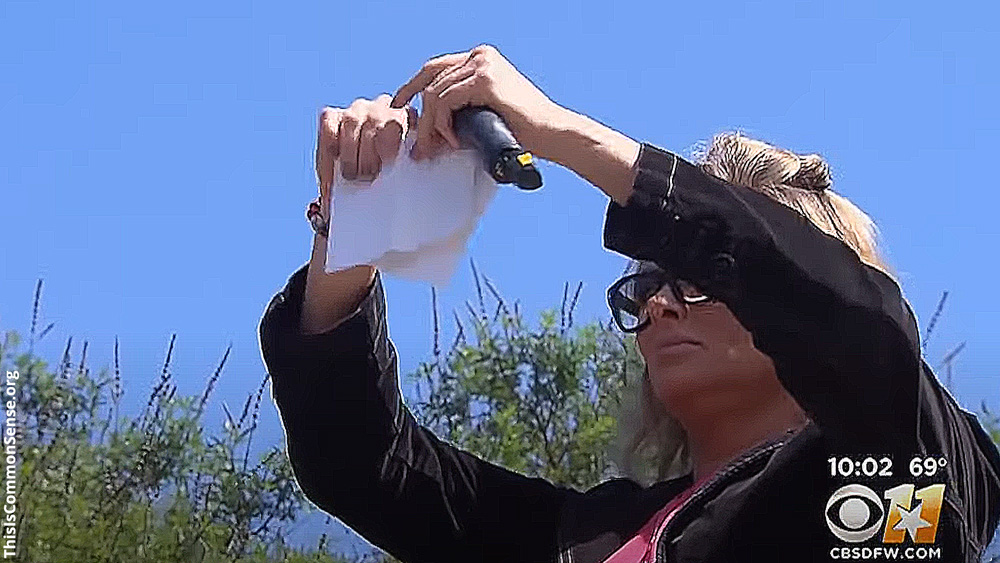
“Salon À la Mode owner Shelley Luther was sentenced to seven days in jail for criminal and civil contempt and a $7,000 fine,” the Dallas-​Ft. Worth CBS affiliate reported Tuesday, “for defying Governor Greg Abbott’s stay-​at-​home rules.”

She dared to open her beauty salon … and tore up a county judge’s related and official-​looking cease and desist order.

Another judge offered to spare her jail if she would confess that her “actions were selfish” and, the judge lectured, “putting your own interest ahead of those in the community in which you live.” Luther responded decisively: “Feeding my kids isn’t selfish.”

Calling for Luther’s “immediate release,” Attorney General Ken Paxton articulated smart policy: “The judge should not put people in jail like her who are just trying to make a living.”

That should be written in law — sans the “like her” part.

The agile Governor Abbott, the rule’s originator, ducked responsibility with “surely there are less restrictive means to achieving [public safety] than jailing a Texas mother.”

Then, governor, why the command

“I am modifying my executive orders,” Abbott declared yesterday, “to ensure confinement is not a punishment for violating an order.” 

The Lieutenant Governor paid her fine.

Shelley Luther was “free” — and on Fox News last night.

But have we learned anything? 

Why not provide the public with the best information available and allow people to make their own decisions? No orders. Businesspeople would be free to do what they think is best. At-​risk folks would be free to be very careful. 

Obviously, governments can help. But best through persuasion, remembering they work for us

Free people.

This is Common Sense. I’m Paul Jacob.


Note: In The Wisdom of Crowds (2004), James Surowiecki posited that “a diverse collection of independently deciding individuals” can make complex decisions better than the experts. Exactly.

PDF for printing

See all recent commentary
(simplified and organized)
See recent popular posts

Categories
crime and punishment general freedom

Action Ensued

New York City Mayor Bill de Blasio seemed proud of his new initiative. To fight coronavirus, he thinks — and he is joined by a whole lot of other people — that everyone should stay at home indoors. And wear masks, gloves, etc., when going out for essentials only. 

But since not everyone will cooperate, what to do? Apply social pressure, such as eye-​rolls and a few tsk-tsks? 

Well, not this Big Apple mayor.

Better get the police power involved!

De Blasio’s notion has been called a “snitch hotline.” In the spirit of “see-​something/​say-​something,” he asked New Yorkers to snap photos of the scofflaws:

Text the photo to 311 – 692
and action will ensue.

And boy, did he get responses!

Immediately.

The U.K.’s Daily Mail explains that “the service was inundated with prank calls, pictures of genitalia and memes likening de Blasio to Adolf Hitler.”

My favorite “meme” sports a photo of the Führer captioned “TO THOSE TURNING IN THEIR NEIGHBORS AND LOCAL BUSINESSES /​ YOU DID THE REICH THING.”

And while Stalin analogies might be more apt for the quasi-​commie mayor, Hitler references sting more.

John Nolte at Breitbart, referencing George Orwell’s 1984, called the responses “glorious” and “freakin’ awesome.”

The city closed down the hotline for a while to set up a filtering service before sending out leads to the police departments.

In New York City, as in most places in America, if you attempt to establish a Big Brotherish snitch-​line, you will get a free-​wheeling re-action.

Is this a great country or what?

This is Common Sense. I’m Paul Jacob.


PDF for printing

snitch, DeBlasio, New York,

See all recent commentary
(simplified and organized)
See recent popular posts
Categories
international affairs media and media people

Soft on China

Last Saturday’s Washington Post editorial blasted both President Donald Trump and his presumptive Democratic challenger Joe Biden for a “sleazy stratagem” — namely, “accusing the other of being a stooge for Communist China.”

At issue are dueling advertisements from each campaign and a pair of SuperPACs.

The Trump ad features Fox Business’s Stuart Varney declaring that “Biden’s son inked a billion-​dollar deal with a subsidiary of the Bank of China,” followed by Biden telling an audience that the Butchers of Beijing “aren’t bad folks, folks.” 

“For 40 years, Joe Biden has been wrong about China,” warns the America First Actiom PAC spot. “I believed in 1979 and I believe now,” offers Biden, “that a rising China is a positive development.”

Biden’s campaign responded with an ad charging that “Trump rolled over for the Chinese” — uttering their praises “as the coronavirus spread across the world.”

“Trump trusted China,” claims an American Bridge PAC spot, noting that “everyone knew they lied about the virus.” 

While acknowledging “that China’s government contributed to the global spread of the coronavirus by covering up initial reports” and “has tried to use the pandemic to advance its authoritarian political model globally at the expense of democracy,” The Post nonetheless bemoaned the “irresponsible” “rhetoric” that “could complicate cooperation with China.” 

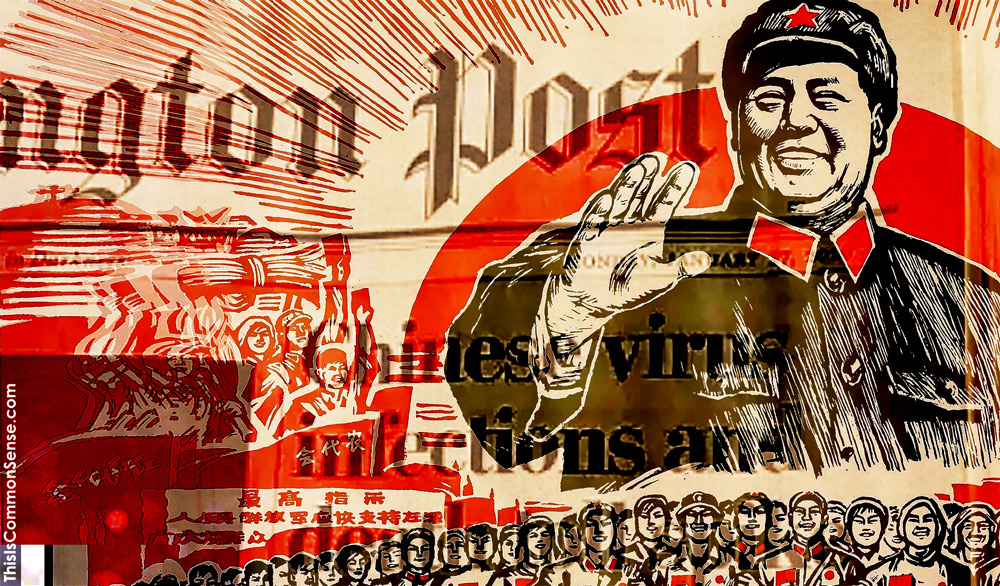
What the Post’s editors did not make clear — while explaining that China should be “pushed for greater transparency” and “its propaganda … rejected” — was the inconvenient fact that the paper has for a decade published reams of Chinese government propaganda.

For an undisclosed sum, likely in the millions, as I wrote last week.

So let the campaign heat up. Americans are far less interested in cooperating with totalitarian China than is our nation’s compromised newspaper of record. 

This is Common Sense. I’m Paul Jacob.


PDF for printing

China, Washington Post, virus, Covid, coronavirus, totalitarian, freedom,

See all recent commentary
(simplified and organized)
See recent popular posts
Categories
national politics & policies too much government

The Ratchet Racket

Various models and curves and soothsayers predict that the coronavirus will lay off as the summer sun waxes. And then rush back in the autumn.

So we should not look at just near-​term threats, but also look at cycles of contagion month-​to-​month, year-to-year. 

Yet, it is not just the dreaded coronavirus that must be seen over time. “Crisis measures are often ineffective,” writes Matthew Feeney, at Cato Institute, “and can survive the crisis they are implemented to counter.”

Because government power and interference tend to ratchet up with each crisis, there is a whole lot of reason to suspect that we will not go back to normal. Indeed, “the new normal” is now a catchphrase.

The quarantine shutdown has been, if not total, totalistic. Feeney acknowledges such extremist (he didn’t use that word) measures may sometimes be justifiable. But warns of that ratchet, of new powers given to government not devolving after the crisis.

Ted Galen Carpenter, also at Cato​.org, draws a “fundamental lesson” from the panic: “Americans need to resist the casual expansion of arbitrary governmental power in response to the current coronavirus crisis.”

The extreme measures of the shutdown — called by economist Gene Epstein “The Great Suppression” — should have been widely discussed before the contagion hit. Instead, they were discussed in meetings behind closed doors.

But most of us were already up to our necks in the political muck fighting off the everyday kludge of the old normal level of too-much-government.

You know, from the previous turn of the ratchet.

This is Common Sense. I’m Paul Jacob.


PDF for printing

ratchet, coronavirus, Covid, pandemic, epidemic, law, regulations, government,

See all recent commentary
(simplified and organized)
See recent popular posts

Categories
media and media people

Another Contagious Disease

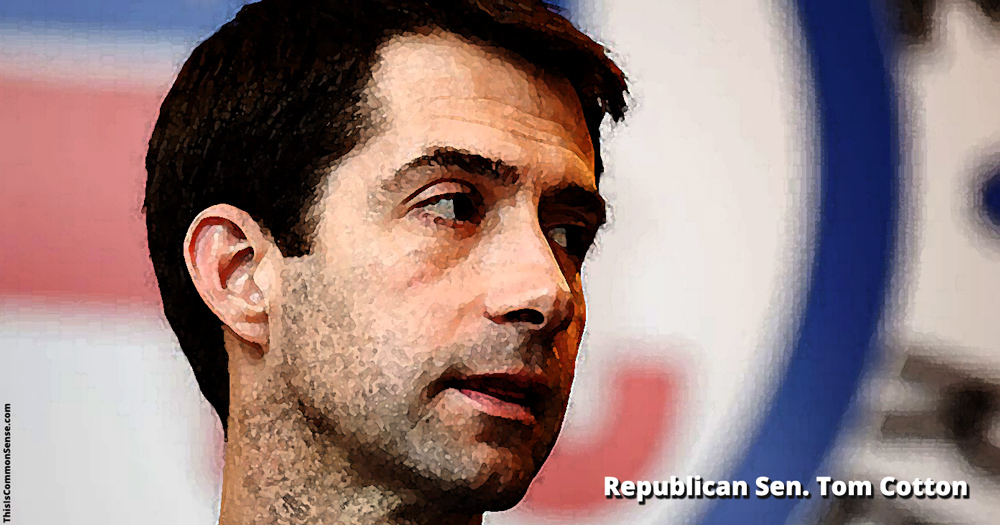
“When Republican Sen. Tom Cotton speculated that the coronavirus outbreak might have come out of a Chinese laboratory in Wuhan,” Timothy Carney wrote for the Washington Examiner on Friday, “he was roundly pilloried, mocked, and chastised by politicians and journalists.”

“Tom Cotton keeps repeating a coronavirus conspiracy theory that was already debunked,” declaredWashington Post headline. Only problem? What the Post’s “experts” debunked, if anything, was that COVID-​19 was man-made. 

That’s not what Sen. Cotton said at all. Cotton simply noted that the Wuhan lab did work with bats and coronaviruses and that this contagion may have come from that lab, possibly by accident.

“[I]t turns out that Cotton might have been correct,” informs Carney, “and the very expert the media used to attack Cotton as some kind of conspiracy theorist now admits as much.”

In his column last week for The Washington Post, David Ignatius quoted Rutgers University microbiologist Richard Ebright, the “biosafety expert” used in earlier stories blasting Sen. Cotton, explaining that “the first human infection … could have occurred as a laboratory accident, with, for example, an accidental infection of a laboratory worker” — even noting that the Wuhan lab “provides only minimal protection” against such a dangerous event.

As Carney points out, “the idea that the virus accidentally came out of that lab may seamlessly move from ‘fringe opinion’ to respectable — even to consensus.”

“The first question,” argues Carney, “should be whether the folks who attacked that notion in February” — including The Washington Post and the Huffington Post — “will explain why they were unwilling to consider it.”

Media narratives — which Carney skewers regularly — are easy to come by. 

Objective news? Not so much.

This is Common Sense. I’m Paul Jacob.


PDF for printing

Senator Tom Cotton, media, coronavirus, Covid, epidemic, China,

See all recent commentary
(simplified and organized)
See recent popular posts

Categories
government transparency national politics & policies responsibility

America Unmasked

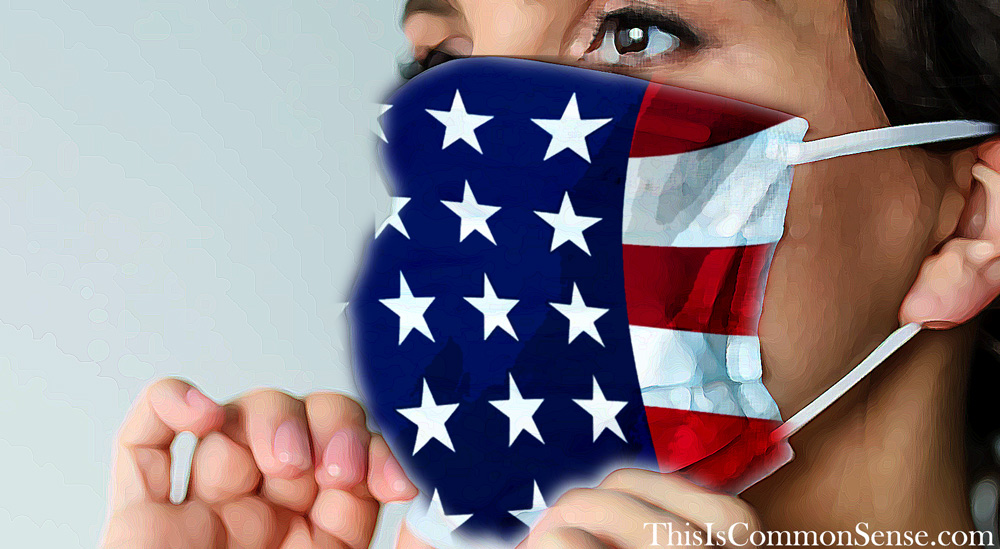
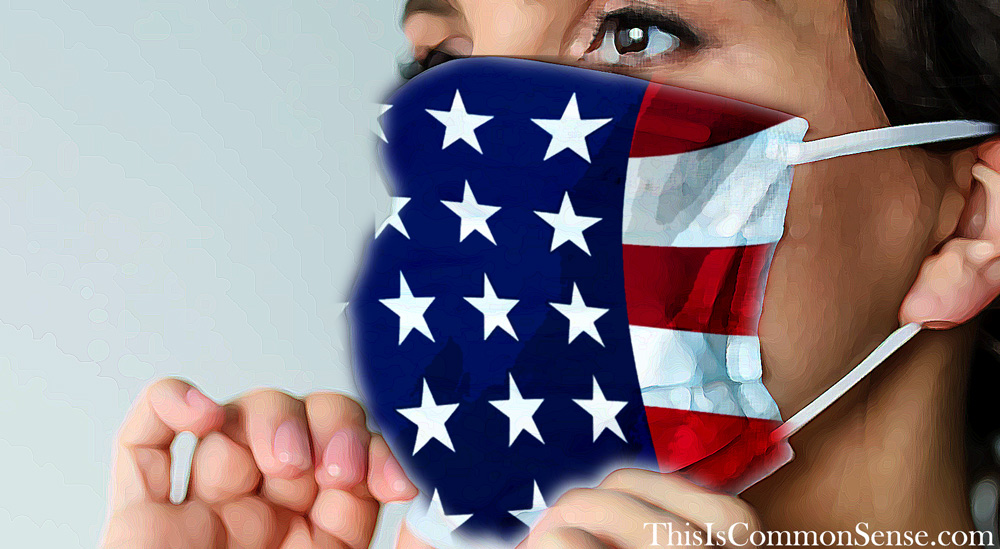
For weeks, the Centers for Disease Control and Prevention and the Department of Health and Human Services told us not to wear face masks. The Surgeon General even warned that mass use of masks could “increase the spread of the coronavirus.” 

“My nose tells me,” I posted on Facebook weeks ago, “that all the info about how we don’t need face-​masks is to cover up for the lack of face-masks.”

My family is very grateful to a Taiwanese friend, who mailed me masks — not the N95 masks, which the Taiwanese government is donating in large quantities, but masks of excellent non-​medical quality. 

Last Wednesday, CBS News anchor Norah O’Donnell noted that a large percentage of people spreading the virus are asymptomatic, meaning they don’t know they have it. She asked Dr. Anthony Fauci with the White House Coronavirus Taskforce: “Should we be advising people to wear masks?”

“The primary people who need masks are healthcare workers,” the doctor replied, before admitting that if supplies weren’t so limited, wearing a mask was “a potentially good way … you could have an impact with preventing transmission.”

Days later, President Trump passed on a CDC advisory to the same effect.

Americans had figured out the initial lie, and were already making their own and posting how to do so on social media. Now that’ll ramp up. 

Initially, our leaders didn’t level with us. They could have. Americans seem amazingly cooperative, to say the least.

Government folks need to stop masking the truth from the public. That way they might earn more public trust.

Which sure can be useful during a crisis.

This is Common Sense. I’m Paul Jacob.


PDF for printing

virus, coronavirus, pandemic, mask,

See all recent commentary
(simplified and organized)
See recent popular posts