Categories
media and media people regulation too much government

Submit to Our Plans, Shivering Peasant

How to defuse resistance to tyranny: helpful information.

Colorado now mandates that emissions from burning natural gas be cut, over the next ten years, by 41 percent — the perfect percentage, elsewise it would’ve been rounded to 40. 

No more natural gas emissions at all by 2050. 

“News that Colorado has set hard target dates for an end to burning natural gas in our daily lives prompted many ‘wait, what?’ questions from Colorado Sun readers,” says Sun columnist Michael Booth. He is here to help.

Propane tanks? These may not be banned by the current law, but do try to convert to electrical appliances. (If the power goes out, Coloradans can always use some other electrical thing as backup. Think batteries, lots of batteries!)

Also, the “new rules are not aimed at homeowners,” Coloradans will be relieved to know. Just at utilities … which serve homeowners. “Under current rules, no one is showing up at your door to rip out a gas water heater against your will.” 

Those helpful government agents will show up at your utility’s door with a court order forcing your utility to rip up natural gas lines, instead.

What if the switchover happens too slowly for regulators? 

Column for another day.

Any advice on reversing the ban? 

Mr. Booth might protest that it’s not his job to lead any rebel alliance, only to give information on things. Oh, sure. Well, he might have offered info on how to contact Colorado state legislators and the governor’s office

Not for any purpose but just to keep readers well-informed.

This is Common Sense. I’m Paul Jacob.


PDF for printing

Illustration created with Nano Banana

See all recent commentary
(simplified and organized)
See recent popular posts

Categories
ballot access election law ideological culture

The Colorado Gambit Crushed

The Supreme Court unanimously nixed the clever scheme to keep Donald Trump off the Colorado ballot. The court explained its actions in the second paragraph of its anonymously written March 4th ruling: “Because the Constitution makes Congress, rather than the States, responsible for enforcing Section 3 against federal officeholders and candidates, we reverse.”

That’s it. The 14th Amendment, which the Colorado gambit relied upon, does make Congress the instrument for preventing “an insurrectionist” from serving in office.

So Colorado’s ploy to rig the 2024 election out in the open has been stopped. And good thing, too, since the political repercussions could have been … harrowing. 

A lot of commentary and reporting on the ruling has been devoted to pushing what was not covered. Take the CNN article by John Fritz and Marshall Cohen, “Trump’s on the ballot, but the Supreme Court left key constitutional questions unanswered.” It is hard not to interpret such headlines as providing excuses to partisan Democrats — in this case those at CNN — who had put so much hope in Colorado’s (and other states’) taking of the Trump matter into their own hands. 

“But while the unsigned, 13-​page opinion the Supreme Court handed down Monday decisively resolved the uncertainty around Trump’s eligibility for a second term,” the article explains, “it left unsettled questions that could some day boomerang back to the justices.”

True enough, but so what? Take the first mentioned: “Could Democratic lawmakers, for instance, disqualify Trump next January when the electoral votes are counted if he wins the November election?”

Well, no. 

The 14th’s third section does not list presidents as barred by insurrection: “No person shall be a Senator or Representative in Congress, or elector of President and Vice-​President,” it says. Electors of. But not the President and VP.

I’m sure the Supreme Court would be happy to expedite an opinion to that effect should the Democrats attempt anything that stupid.

This is Common Sense. I’m Paul Jacob.


PDF for printing

Illustration created with PicFinder and Firefly

See all recent commentary
(simplified and organized)
See recent popular posts

Categories
crime and punishment folly too much government

Ban These Energy Bans

Several bills pending in the Colorado legislature target the state’s oil industry.

State Senator Kevin Priola, responsible for two of the bills, says he’s acting to stop climate change. To prevent the mass extinction of species, he claims.

One of his proposed statutes would outlaw new oil wells in Colorado after 2030. Another bill would, among other things, outlaw fracking from May through September unless drillers use special hard-​to-​get electric equipment. The same bill would also direct an agency to reduce the number of vehicle miles traveled.

Another lawmaker’s bill would make it harder to produce new wells.

Priola explains that since 50,000 wells already operate in Colorado, his legislation would not much impair production. But Dan Haley, president of Colorado Oil & Gas Association, observes that the highest production of oil wells comes in their first 18 months. Within two years of the 2030 ban, then, the state’s oil industry would sharply decline.

We’re seeing this more and more. Bans and plans to ban gas-​powered lawn mowers, gas-​powered cars, gas, coal, oil. Lawmakers working to shut down civilization. Not all at once, but via ever faster and bigger Interim Steps.

Don’t they see that they too will be harmed when things are no longer permitted to function? Do they imagine that if they achieve all their industry-​killing dreams, all the food, clothing, shelter, transportation, communication will continue just as smoothly and abundantly as ever?

Don’t they think about the day after tomorrow?

This is Common Sense. I’m Paul Jacob.


PDF for printing

Illustration created with PicFinder and Firefly

See all recent commentary
(simplified and organized)
See recent popular posts

Categories
initiative, referendum, and recall tax policy

Preparation HH Hornswoggle

Tonight, I’ll be anxious for election returns from Colorado on Proposition HH, a measure Democrats in the legislature placed on the ballot to both lower taxes and raise revenue. 

Huh?

Americans for Tax Reform President Grover Norquist wrote recently in The Denver Gazette, that the proposition “would result in the largest tax hike in Colorado history.”

Yet, the ballot title begins: “SHALL THE STATE REDUCE PROPERTY TAXES FOR HOMES AND BUSINESSES, INCLUDING EXPANDING PROPERTY TAX RELIEF FOR SENIORS … ?”

“Democrats have advertised Prop. HH primarily as a property tax cut that will save homeowners hundreds of dollars per year,” explains Colorado Public Radio’s Andrew Kenney, “which is true.”

But Kenney goes on to plainly present the rest of the story, that HH would also “raise the state spending limits created by TABOR, allowing the government to eventually keep hundreds of millions, and then billions, of dollars more tax money each year instead of refunding it.”

TABOR stands for the Taxpayer Bill of Rights, which voters passed by citizen initiative back in 1992. Under TABOR, government spending growth is limited, with excess revenue returned to taxpayers. Prop HH is designed to offer immediately small property tax relief attached to letting the legislature grab much bigger money from not providing refunds in the future.

Norquist correctly dubs it “a bait-​and-​switch tax hike scheme.”

It’s the usual stock-​in-​trade of the political class. The difference in Colorado, however, under the Taxpayer Bill of Rights, is that politicians are required to ask voters for permission … to hornswoggle them in this way. 

Politicians have been asking for higher taxes again and again for years. (Not to mention going to court in a failed attempt to overturn TABOR.)

But voters have the final say. Today.

This is Common Sense. I’m Paul Jacob.


PDF for printing

Illustration created with PicFinder and Firefly

See all recent commentary
(simplified and organized)
See recent popular posts

Categories
general freedom initiative, referendum, and recall

Voters Beware

The ballot title of Colorado’s Initiative 55 should refer to an amendment “to prevent you from using statewide initiatives to reduce property taxes.”

Instead, it talks about an amendment requiring any citizen-​initiated measure “that affects the property tax revenue of a local government by modifying the property tax assessment rate or mill levy rate to be decided only in a local election.”

The politicians hope that this somniferous wording will hide the true nature of the measure.

“Don’t be bamboozled by Initiative 55’s sly wording,” warns Natalie Menton, an anti-​tax, pro-​petition-​rights activist.

Proponents of Initiative No. 55 say they want citizen-​initiated changes in property taxes to be decided “only in a local election” without making clear that “under the current law, this is not possible for more than 90% of local situations.”

Menton gives examples of initiatives that would become impossible if Initiative 55 eludes voter skepticism.

One is any statewide measure to provide relief for owners of agricultural land, which “has a far higher tax assessment rate (300%-plus) than single-​family homes.” If 55 reaches ballot and passes, it would become unconstitutional for citizens to place a question on the statewide ballot to reduce this burden.

What we see here is an ancient strategy of politicians. In seeking to expand their power, they pretend that increased power isn’t the agenda at all! 

They engage in cover-up. 

Don’t let it succeed here, Coloradoans. Don’t sign a petition to put 55 on the November ballot. If it gets there, vote No.

This is Common Sense. I’m Paul Jacob.


PDF for printing

See all recent commentary
(simplified and organized)
See recent popular posts

Categories
too much government

Nixed Ski Trek App Flap

In Colorado, like other states, the people’s ingenuity often surprises. And in the Rocky Mountain State, like elsewhere, governments are known to worry about what free people do — and, unsurprisingly, often get in the way.

A popular new ride-​sharing app, called TreadShare, hit the market last month, designed to alleviate traffic on I‑70, the route from Denver to popular skiing destinations. The app makes the trip to the mountain slopes far cheaper than Uber of Lyft — not to mention easier on the environment.

So, of course, the State of Colorado has superciliously suppressed this innovation. Over safety worries, allegedly.

“The idea behind the app is for carpoolers to share the cost of gas and mileage, incentivizing the drivers to bring additional passengers and the passengers to get a cheap ride up to the mountains,” writes Taylor Sienkiewicz in Summit Daily. “Shortly following the launch, TreadShare received a ‘cease and desist’ letter from the Colorado Public Utilities Commission. This caused TreadShare to shut down operations and another similar app, Gondola, not to launch.”

Not receiving an apparently required $111,250 annual license, nor proof the company performs background checks on all drivers, the state government has “helpfully” squelched these two ride-​sharing services.

What about safety? The Colorado State Patrol, whose job is ostensibly to maximize highway traffic safety, might wish to work with the app-​makers to provide any useful security features.

But preventing organized carpooling through pricey up-​front licensing requirements and ridiculous red tape doesn’t seem like promoting safety, but more like typical high-​handed government regulatory overreach.

Thankfully, citizen activists have formed a group and are petitioning the legislature to join the rest of the Centennial State in the modern world. 

This is Common Sense. I’m Paul Jacob.


PDF for printing

Tread Share, regulations, Colorado, environmentalism,

See all recent commentary
(simplified and organized)
See recent popular posts


Categories
initiative, referendum, and recall tax policy

Blue Colorado Big Spenders

“The Trump years may have cemented Colorado’s blue-​state status — time will tell,” writes Alex Burness in the Denver Post, “but voters in the Centennial State continue to hold a hard line on anything that has even a whiff [of] new tax.”

Burness is talking about Proposition CC, a measure placed on Tuesday’s ballot by the state’s Democratic-​controlled legislature, which would have allowed state government to keep and spend $37 million annually coming into government coffers over the state’s constitutional spending cap, rather than refunding those dollars to taxpayers as required by the Taxpayer Bill of Rights passed back in the 1990s.

The elite supporters of Proposition CC devoted more than $4 million to promoting the measure, outspending opponents better than two-​to-​one and arguing that government desperately needed the money for education and transportation. Opponents cried foul over the official ballot summary voters read, which began with the words “Without a tax increase …”

 “But the measure lost,” Burness informs, “and it wasn’t close.”

“The measure’s failure amounts to a significant victory for supporters of the Taxpayer’s Bill of Rights,” Colorado Public Radio reports. “That constitutional amendment requires voter approval for all tax increases, sets a revenue limit for every government in the state and requires any surpluses be returned to taxpayers.”

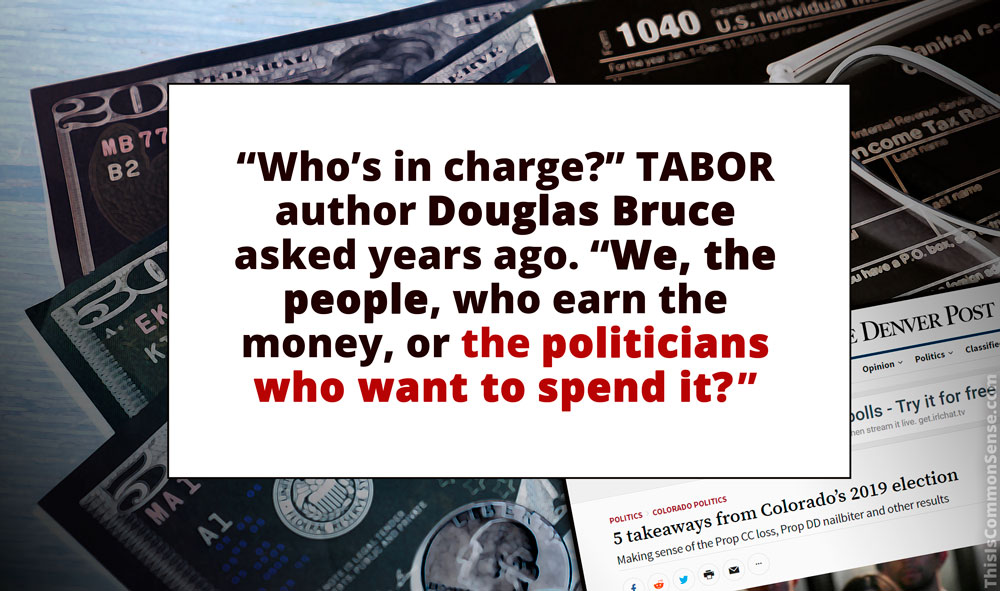
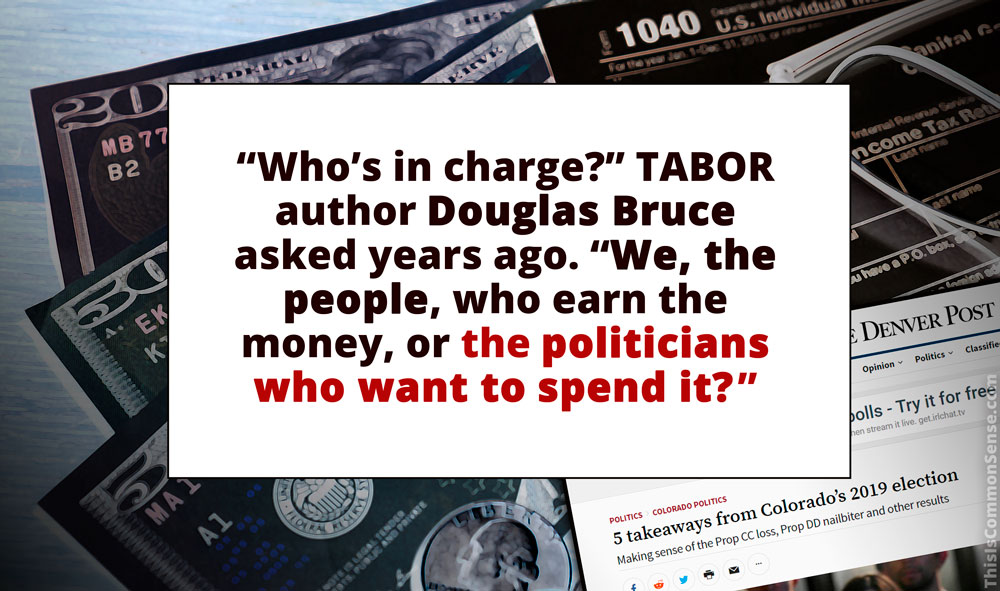
“Who’s in charge?” TABOR author Douglas Bruce asked years ago. “We, the people, who earn the money, or the politicians who want to spend it?”

The answer from supposedly blue-​leaning Colorado voters was unequivocal.

This is Common Sense. I’m Paul Jacob.


PDF for printing

Colorado, elections, taxes, Bruce,

Photo credit: Pictures of Money

See all recent commentary
(simplified and organized)
See recent popular posts

Categories
crime and punishment Second Amendment rights U.S. Constitution

Resisting Registration

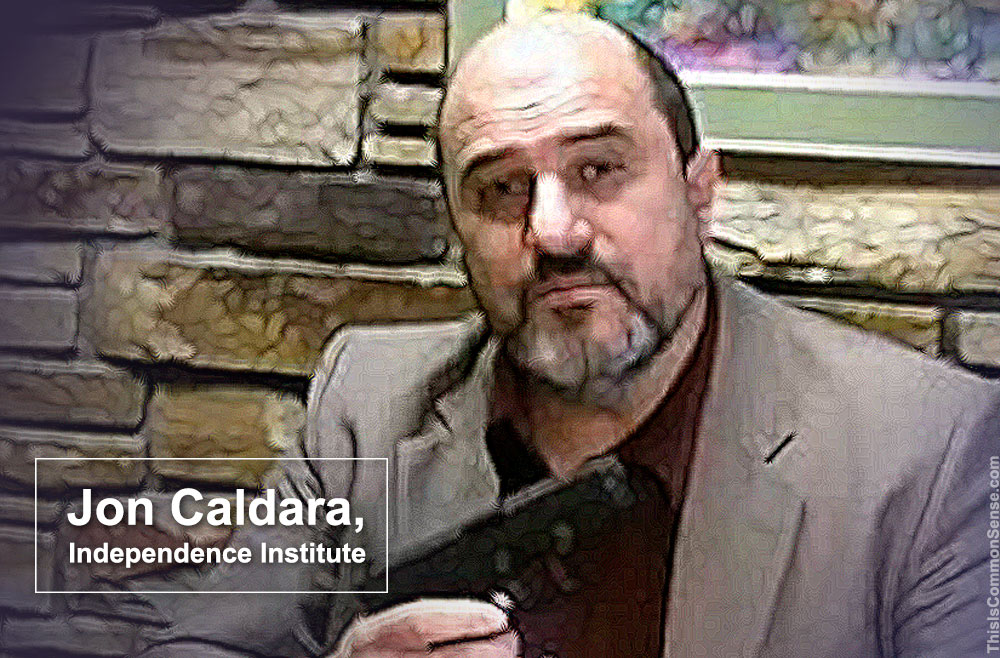
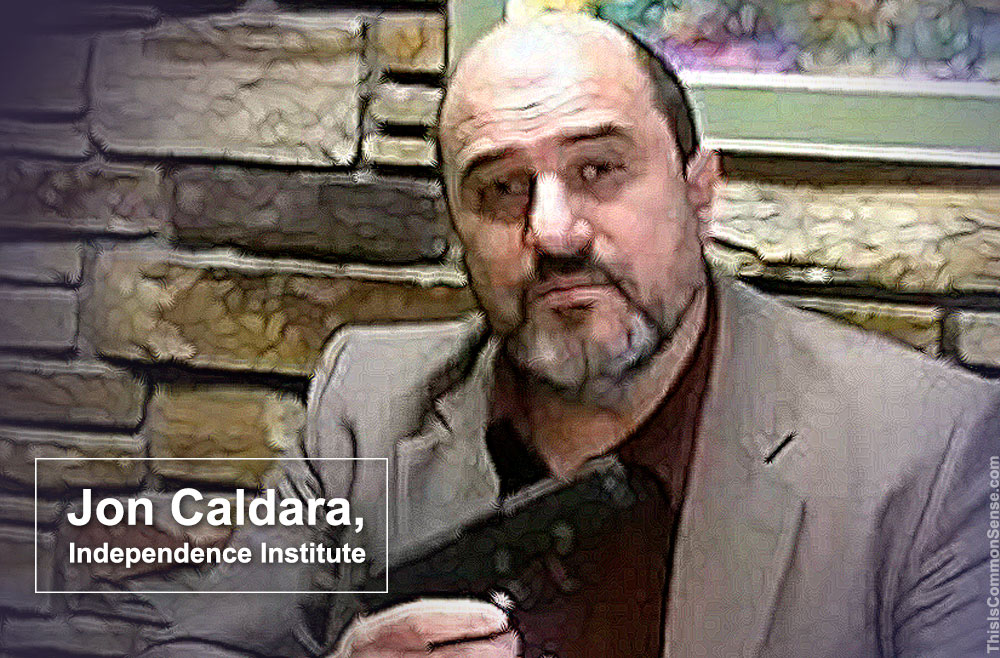
Jon Caldara won’t register his guns. He also won’t remain silent about his refusal.

He has lots of company in Boulder, Colorado, with respect to the former, if not the latter, form of resistance — his unwillingness to compromise his right to bear arms.

The town recently began requiring owners of “assault weapons” to either ditch them or register them with the Boulder police. Owners choosing registration must submit to background checks “to ensure that the weapon holder is legally able to be in possession of the firearm.” If you pass, you get certificates acknowledging rightful ownership.

But if you lose the certificates, apparently you lose your ownership rights.

The city defines an “assault weapon” as a “semi-​automatic center-​fire rifle” or a “semi-​automatic center-​fire pistol” with various characteristics. In short, the target is “ugly guns,” as foes of gun control sometimes put it. (“Non-​assault” weapon: papier-​mâché weapon.)

Many Boulder citizens are quietly refusing to comply with the mandates. They “see this as a registry,” according to Lesley Hollywood, executive director of Rally for Our Rights.

Caldara, head of the Independence Institute, is speaking out despite the risk. Why? Because “somebody has to.… In this town that spouts tolerance for alternative lifestyles … when it comes to a lifestyle they don’t like, there is no tolerance … Tolerance means tolerating things you dislike, that you find scary.”

This idea goes even deeper than tolerance, though. It’s about “freedom” and “rights.” 

There is nothing frightening about Mr. Caldara’s unregistered guns, but much to fear from Boulder officials assaulting his rights.

This is Common Sense. I’m Paul Jacob.


PDF for printing

Caldara, gun rights, 2nd Amendment, Colorado
Categories
Accountability initiative, referendum, and recall moral hazard nannyism responsibility

Whose Constitution Is It, Anyway?

Last November’s biggest mistake? Colorado voters passing Amendment 71. It makes the Rocky Mountain State’s constitution exceedingly more difficult for voters to amend through the initiative petition process.

And more like it may be in the offing. Legislation is moving in Florida to require a 66.7 percent vote to amend the state constitution. Already, a 60 percent vote is required, but legislators remain fearful voters can muster that.

The Ohio Modernization Commission, a legislatively created mix of legislators and insiders, is recommending a new constitutional amendment to — you guessed it — make it tougher for voters to pass amendments. Future voter-​initiated amendments must pass twice, by a 55 percent supermajority.

There are also efforts to weaken citizen initiatives in Arizona and Maine.*

The big money behind Colorado’s Amendment 71 told whopper after whopper to win. They pretended to love and revere the constitution. Finally, they put former Denver Broncos Super Bowl champion quarterback John Elway on television — spot after spot — telling voters the amendment “protects our constitution.”

But … from whom?

You see, politicians and special interests don’t have to amend the state constitution to spend money on themselves or their cronies. From their perch in the state capitol, they can do that with a simple statute.

But you and I need the ability to pass constitutional amendments. Why? Only through the constitution can we limit the power of those same politicians — the power of government. Legislators can overrule a mere statutory ballot initiative (and often do).

That’s what this battle is all about. Politicians mean to limit our power to limit theirs.

This is Common Sense. I’m Paul Jacob.


* Thankfully, South Dakota legislators defeated several bills aimed at making it tougher to place initiatives on the ballot.


Printable PDF


Categories
Accountability general freedom initiative, referendum, and recall local leaders media and media people nannyism national politics & policies

Are We Special?

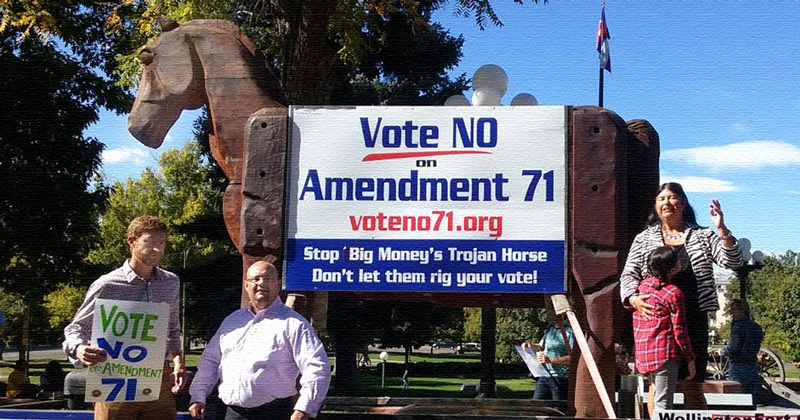
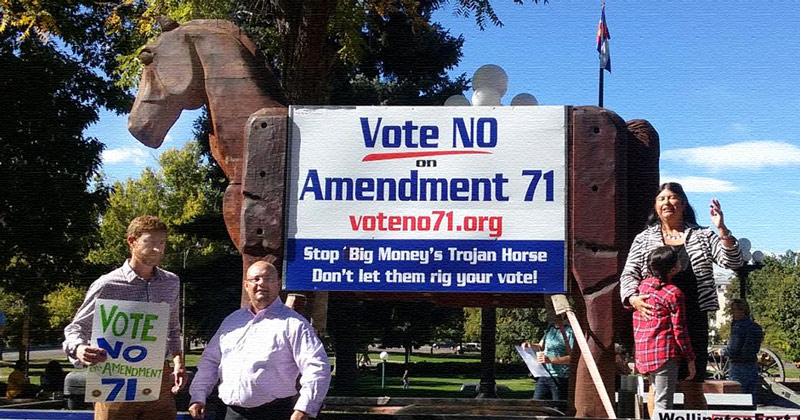
“Cringe-​worthy,” said Kyle Clark, co-​anchor of 9NEWS in Denver. He was mocking the 10-​foot tall, carved, wooden Trojan Horse replica that Amendment 71 opponents are wheeling around the Rocky Mountain State.

Clark admits that Amendment 71 “would make it harder to change Colorado’s constitution,” but doesn’t seem to have any clue just how much harder.*

“Those opponents with their Trojan Horse want to paint 71 as a sneaky power grab by big money interests from out of state,” Clark continued. “Funny, though, when you find out who paid for their horse.”

Wait … this is BIG: Who paid for the horse?

“It’s an in-​kind contribution from Citizens in Charge Foundation. They’re a group that protects the initiative process around the country.… based out of Woodbridge, Virginia,” replied an Amendment 71 opponent.

Hey, that’s my group!

“Amendment 71 might be a Trojan Horse funded by outside interests,” Clark concluded, but it’s “illustrated by the Trojan Horse funded by outside interests.”

Cute … but … ?

Does Mr. Clark seriously think that (a) an organization dedicated to making the ballot initiative process accessible to all, with no other interest or business before state government, providing a vehicle and a trailer to carry a wooden horse across the state is equivalent to (b) a multi-​million-​dollar paid media barrage funded largely by oil and gas interests with lucrative interests before state government?

Citizens in Charge Foundation is honored to work with Coloradans to save their initiative rights by defeating 71.

Speaking of interests and who’s paying … 9NEWS has received the better part of a million dollars in ad revenue from the interests supporting Amendment 71.

Compared to a peek at a wooden horse from opponents.

Kyle Clark didn’t mention that.

This is Common Sense. I’m Paul Jacob.


P.S. Please help save Colorado by making a contribution right now.


*Coloradans who have actually qualified ballot initiatives say Amendment 71 would kill the process for all but the wealthiest special interests.


Trojan Horse Trails in Colorado


Printable PDF

Trojan Horse, Colorado, Amendment 71, initiative, referendum, Citizens in Charge, Paul Jacob,