Categories
First Amendment rights general freedom ideological culture media and media people

The Opposite of Infowars

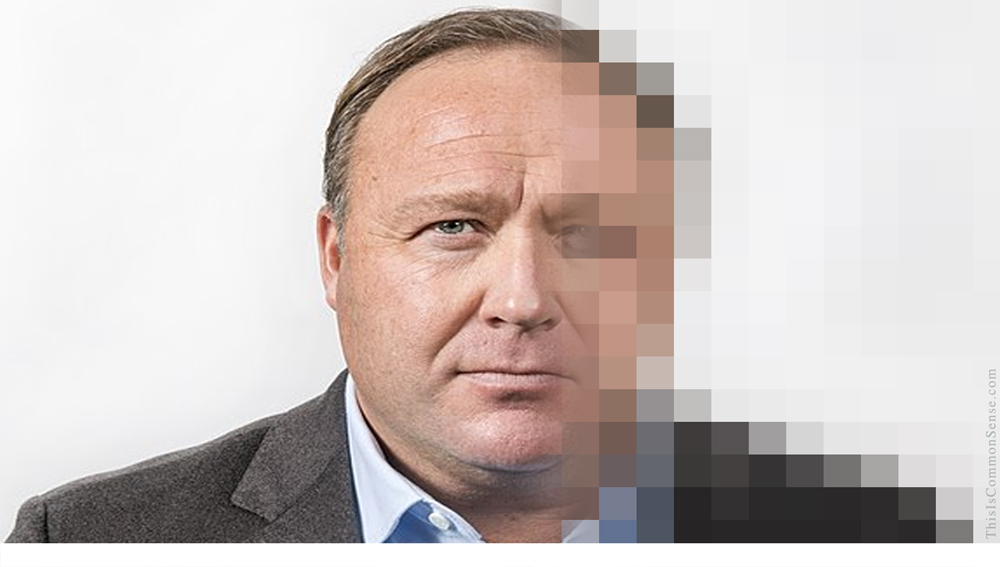
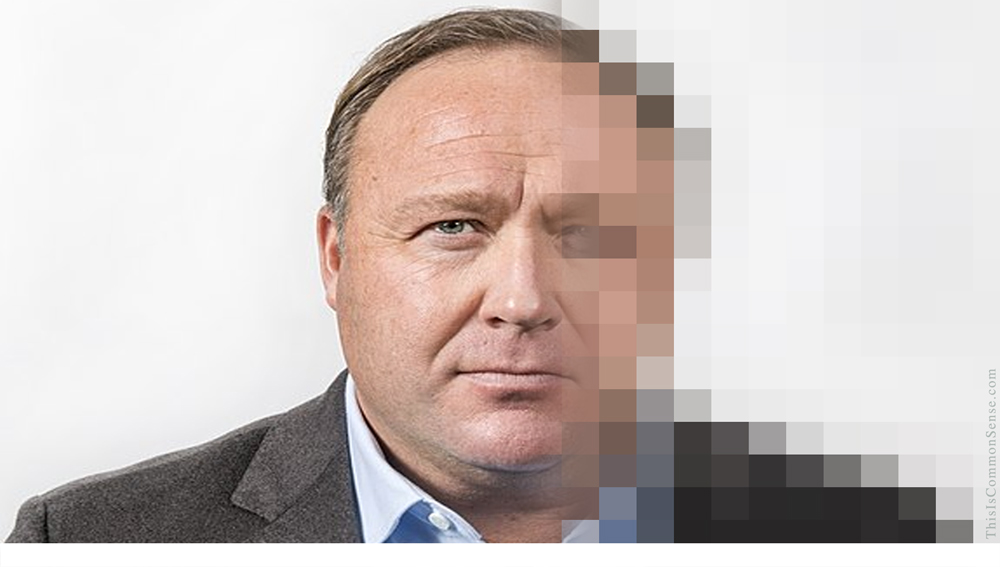
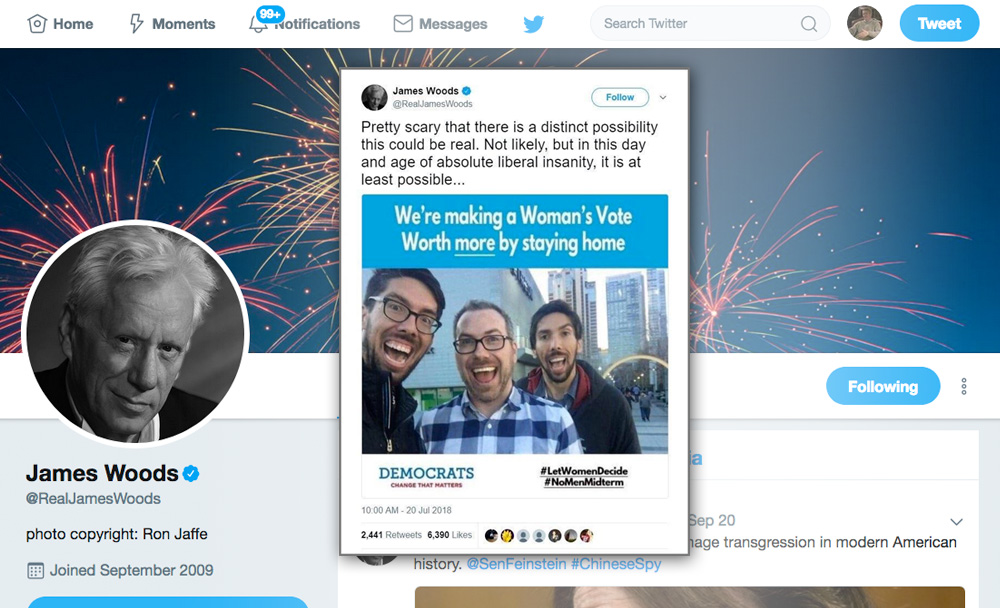
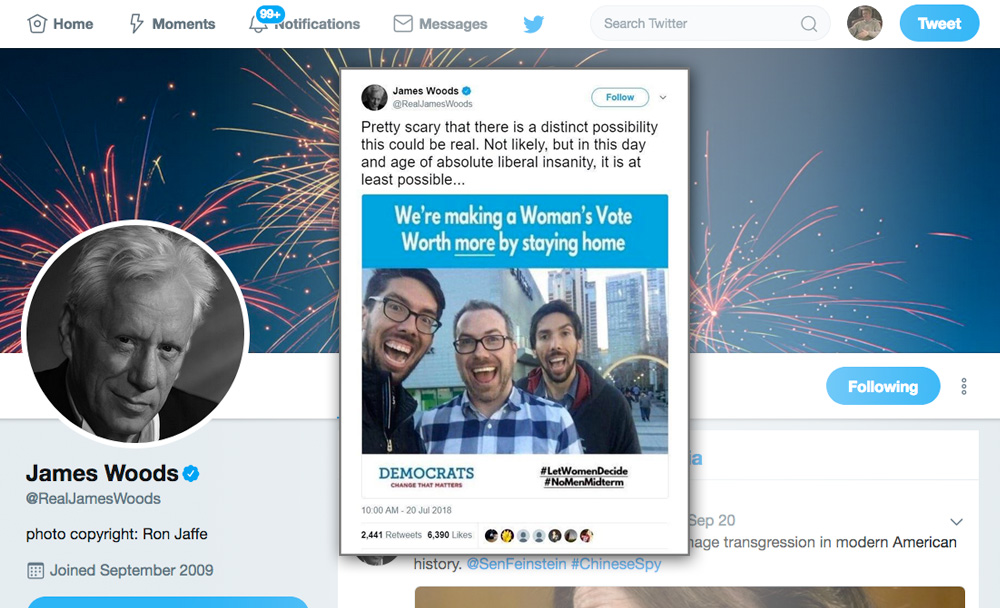
Yesterday’s big story? Several major social media platforms have de-platformed Alex Jones and his Infowars opinion (“information”?) show. 

Most commenters about this happening hasten to signal to their audiences that they do not approve of Alex Jones. Is this really necessary? When we consider a mass de-platforming event, do we need to belabor the obvious? 

I hazard that even most of Jones’s viewers and listeners agree with a small amount of what he says. Jones is more like Jon Stewart and Cenk Uygur, a performer whose rants entertain most of all. In his case, because he says things no one else will, Infowars makes for a bracing . . . alternative.

It should also go without saying that private platforms like Facebook, YouTube and Apple, who are the main players to kick Jones to the curb of the Information Super-Highway, have the right to include or exclude anyone they want. As Robby Soave at Reason put it, these “companies are under no obligation to provide a platform to Sandy Hook conspiracy theorizing, 9/11 trutherism, or any of the other insane ideas Jones has propagated.”

But Soave does worry about the goofy rationales provided for the exclusion.

As do I. And it is not just that the proffered reason, “hate speech,” is, as Soave explains, vague, unanchored to any offered specific offenses.

But it’s worse. This whole exclusionary move is not about hate speech. Everyone knows this.

It’s about suppressing ideas that are (a) popular and (b) despised by the dominant culture.

And these insiders seem at a loss to confront Jones’s farragoes with better ideas, failing to provide “counter info” in their war on Infowars. 

They strike below the belt.

This is Common Sense. I’m Paul Jacob.


PDF for printing


Categories
Accountability First Amendment rights folly general freedom ideological culture media and media people moral hazard nannyism national politics & policies Regulating Protest too much government U.S. Constitution

Freedom “Weaponized”

Justice Elena Kagan has a way with words. The conservative majority on the court, she said after two recent rulings, is “weaponizing the First Amendment.”

What a phrase! But what does it mean?

“Conservative groups, borrowing and building on arguments developed by liberals,” explains The New York Times, “have used the First Amendment to justify unlimited campaign spending, discrimination against gay couples and attacks on the regulation of tobacco, pharmaceuticals and guns.”

First: if “liberals” now find themselves not supporting the idea of particular freedoms, or freedom in general, are they really “liberal”?

Second: “borrowing arguments” is what we expect to happen. Logic isn’t partisan.

Third: the point of the Bill of Rights is to “weaponize” the defense of freedom.

Remember, it is freedom of speech; freedom of the press; freedom of association; freedom of exercising one’s religion. The First Amendment weaponizes their defense by disallowing Congress from legislating against them.

Now, it has long been a “problem” that these listed freedoms blend together. They all work together or don’t work at all. And each points to freedom more broadly.

Kagan wants to read freedoms narrowly — though liberals historically have, indeed, read them broadly.

She’s objecting to two recent rulings. The first prohibits states from requiring pregnancy centers to talk up abortion options to their clients. An obvious free speech issue. The second prohibits governments from backing unions in their extraction of “agency fees” from non-members. An incontrovertible issue of freedom of association.

Kagan and The New York Times apparently think that “liberalism” means defending some freedoms in some contexts, but denying freedom in others.

This is Common Sense. I’m Paul Jacob.


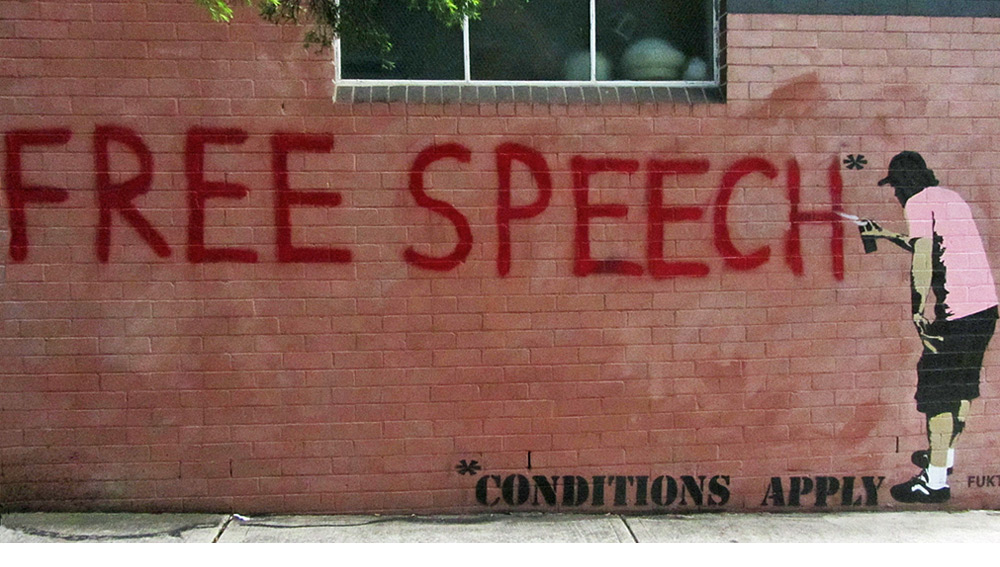
Illustration by Newtown grafitti


Categories
crime and punishment general freedom ideological culture moral hazard nannyism political challengers privacy Regulating Protest too much government

Don’t Enable Tyrants

If I deliberately help somebody to do evil things — and nobody is holding a gun to my head — I am thereby doing evil myself.

A person should not let himself be in that position. Not even if he’s “just doing my job” and looking for a non-evil job would be demonstrably inconvenient. To have a motive for doing a bad thing is not by itself exculpatory.

What provokes this observation is a newly amplified assault by the Venezuelan government on the rights of its citizens. The government is seeking to violate the right to peacefully read stuff on the Web by blocking Tor software, which allows users to elude government surveillance and reach banned websites.

Venezuelan dictators Chavez, now dead, and Maduro, still there, have never hesitated to stomp freedom in the name of a spurious greater good. Somebody like Maduro is certainly unscrupulous enough to go after Tor for thwarting censorship. So he fulfills that requirement. I doubt that he possesses very extensive programming ability.

Tor may not be perfect, but it’s pretty robust. You need substantial resources, such as those at the disposal of a government, to stop it. You also need to know what you’re doing. The coders on Venezuela’s stop-Tor team are probably smart enough to grasp the purpose of their work.

They and all other such collaborators should defect to the other side: that of programmers working to protect innocent people from government-sponsored cyber-assault.

This is Common Sense. I’m Paul Jacob.


PDF for printing


Categories
Accountability crime and punishment general freedom ideological culture media and media people moral hazard nannyism national politics & policies privacy Regulating Protest Second Amendment rights U.S. Constitution

Brownells Defends Itself

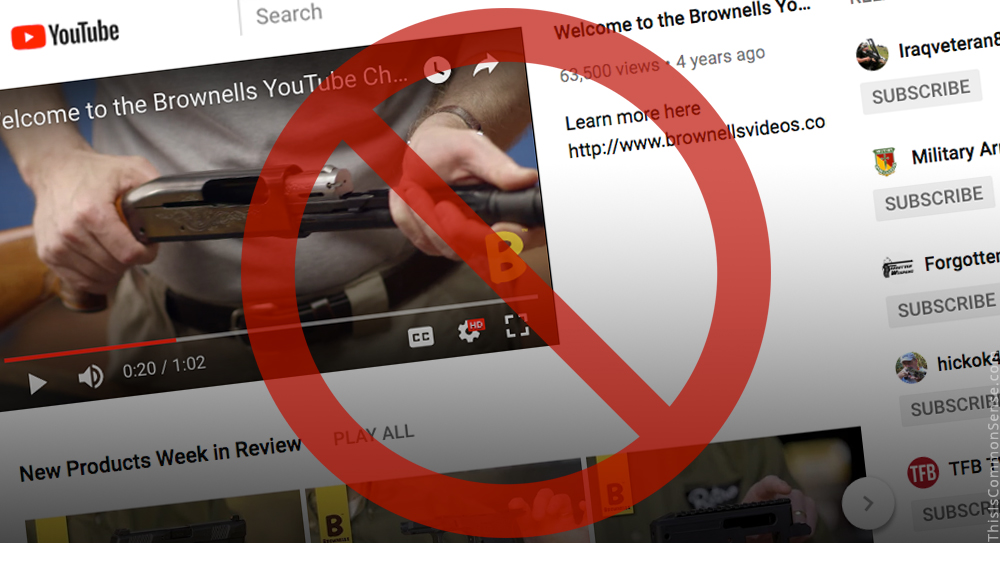
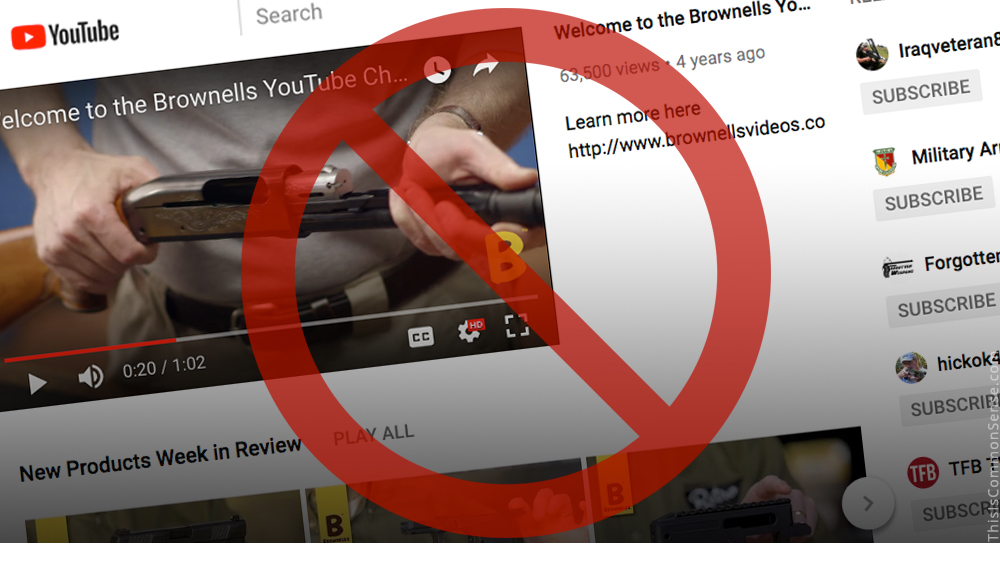
I’m glad to be able to say this: Brownells has, present tense, a YouTube channel. Especially glad because, on June 9, Google had shut that channel down without warning or explanation.

Brownells is a family-owned supplier of firearms, firearm parts and accessories, gunsmithing tools, and emergency gear. Well-known and well-regarded by shooters, hobbyists and gunsmiths, the company has a website and a YouTube channel that serves as a “portal to everything shooting and hunting,” as Pete Brownell explains.

Brownells’ YouTube channel is substantial, with almost 1,800 instructional videos and some 71,000 subscribers. Patrons stress that there’s nothing outré, radical, or offensive about the offerings — unless you’re reflexively anti-Second Amendment, I guess.

We’ve got no smoking gun in the form of an explicit admission from Google. But we may plausibly suspect that the firm terminated this YouTube channel for ideological reasons. Perhaps Google shot from the hip here in reaction to the recent spate of school shootings, without pausing to properly distinguish between promoting responsible gun ownership and promoting murder.

We may also never know whether Google expected Brownells to meekly accept the arbitrary snuffing of a resource it had spent so much time and energy developing. In any case, Brownells used Twitter and other forums to urge supporters to call Google and object.

The self-defense paid off. On June 11, Google undeleted the channel. The protests against injustice must have been too many to ignore.

YouTube is no longer a mere platform for video sharing. It has taken political controversy and complaints as excuses to editorialize.

Were it a government, I’d say “censor.”

This is Common Sense. I’m Paul Jacob.



PDF for printing


Categories
Accountability First Amendment rights general freedom local leaders media and media people

The Steps Beyond Argument

Rob Port’s job is to have an opinion. Opinions breed counter-opinions. Unfortunately, they sometimes conjure up concerted campaigns to pressure opinion-makers to shut up.

So, no surprise that his reporting — on his radio talk show and in print — on the doings and not-doings of North Dakota’s junior U.S. Senator, Heidi Heitkamp, a Democrat, has riled up nasty “feedback.”

Earlier this month, Mike McFeely, a “left of center” columnist at the Fargo Forum, where Port also writes, published a column calling Port’s “obsession” with Heitkamp “suffocatingly limited and boring” and acknowledging, “I have often voiced my concerns about the one-trick-pony nature of Port to my bosses.”

Port notes that McFeely’s criticisms are based on subject matter, not content, and suggests that journalism doesn’t spend too much time holding politicians accountable.

It gets nastier, though. Senator Heitkamp’s brother, Joel, is also in the radio business, managing a competing station and hosting one of its morning programs. Mr. Heitkamp got his mitts on Mr. Port’s divorce papers and tweeted out, “The #FargoForum is paying him 71K for part time work! What do the full-time employees get? #Wow #790KFGO #wishicould.”

Meanwhile, here comes the Senate Leadership Fund, associated with Senate Majority Leader Mitch McConnell (R-Ky.), to suggest the FCC remove Heitkamp’s station’s license due to his advocacy for his sister’s campaign.

Port, for his part, objects to the corrupt “help.”

“The FCC really has no grounds for getting involved,” he argues. “Free people should be allowed to speak freely.”

In the chaos of our current political battles, Rob Port stands on principle, offering equal freedom to his sleazy opponent.*

This is Common Sense. I’m Paul Jacob.



* For the complete story, check out this weekend’s Townhall column, and the links at the column’s splash page.

PDF for printing


Categories
Accountability crime and punishment education and schooling First Amendment rights general freedom ideological culture moral hazard Regulating Protest

The Shallow State

Amidst all the talk of The Deep State, we are in danger of losing track of a parallel problem: the Shallow State — which, despite lack of depth, is very wide.

I am referring to government employees who increasingly abandon any pretense of impartiality. And the public institutions that protect them.  

Consider the case of the University of Illinois at Urbana-Champaign and its 39-year-old lecturer Tariq Khan, who is a member of an Antifa-affiliated group called the Black Rose Anarchist Federation. Mr. Khan had been angrily shouting and chanting at a campus anti-Trump rally when he was mildly challenged by a non-nut student journalist. Khan went on a rampage, screamed at and pushed the young journalist, and deliberately broke the smartphone of a fellow journalist who had been recording the fracas.

Khan was charged with destruction of property. But the story doesn’t stop there.

“I was told that if I wanted the ‘situation to improve,’” wrote a third journalist, “that I should stop writing about Khan.”

The university placed a restraining order on the three, to squelch news and dissent.

So the trio sued on First Amendment grounds.

Here we have a teacher willing to abridge free speech the old-fashioned way, by playing the bully. And a public institution ready and willing to defend him, to take his petty criminality and raise it to a conspiratorial, Big Brother level.

Not only does this rob Americans of rights, taxpayers are being forced to fund what they might justifiably regard as the destruction of the republican form of governance.

Root out the infamous Deep State?

Sure.

But limit and make transparent the Shallow State, too.

This is Common Sense. I’m Paul Jacob.


PDF for printing


Categories
Accountability crime and punishment folly free trade & free markets general freedom media and media people moral hazard nannyism national politics & policies property rights Regulating Protest too much government U.S. Constitution

That Something You Do

Congress grilled Facebook CEO Mark Zuckerberg, last week, and as usual ended up roasting itself.

“Zuckerberg has already experienced the worst punishment of all,” quipped comedian Trevor Noah on The Daily Show. “He had to spend four hours explaining Facebook to senior citizens.”

Utah Sen. Orrin Hatch, retiring after his 42nd consecutive year in Washington, asked, “How do you sustain a business model in which users don’t pay for your service?”

“Senator,” Zuckerberg incredulously replied, “we run ads.”

Inc. magazine reported the obvious: “several of our elected leaders asked questions that were highly uninformed, or in some cases just plain weird.”

Uninformed. Weird. That’s them, alright.*

Still, the Washington establishment seems to seriously think these same congressmen ought to be re-writing privacy rules.

“Elected officials know the public wants them to do something to protect their privacy,” announced Chuck Todd, host of NBC’s Meet the Press. “The question now turns to what is that something?”

“Americans are largely together on this issue,” Todd said, citing a recent poll where a similar “66 percent of Democrats and 68 percent of Republicans say they want more control over the information companies have about them.”

But Democrats and Republicans are together on something else: Only 21 percent of Democrats and a tiny 14 percent of Republicans “trust the federal government” to act on the issue.

The senators, though obviously “confused about basic topics,” Emily Stewart wrote at Vox,  “seem to agree they want to fix something about Facebook. They just have no idea what.”

Please Congress: DON’T “do something.” Don’t do that thing you do.

This is Common Sense. I’m Paul Jacob.

 

* Reason TV has a very funny video on the Zuckerberg hearing.


PDF for printing


Categories
crime and punishment general freedom media and media people moral hazard nannyism national politics & policies privacy too much government U.S. Constitution

Unlovely Congress

If you recently tried to post a personal ad on Craigslist, the popular classified-ad site, you were in for a shock. Craigslist has suddenly discontinued all personals. You can still sell your used rototiller, but forget about telling the world you’re lost in Louisville looking for love.

The company doesn’t want to be prosecuted for helping people find each other en route to becoming partners in outlawry.

Congress has just passed legislation subjecting site publishers to criminal and civil liability when their users “misuse online personals unlawfully.” The president’s signature is expected. Craigslist doesn’t want all that open-ended liability. “Any tool or service can be misused,” it observes.

Indeed. If the principle underlying this law were consistently applied, any good or service that facilitates communication (or other human activity!) would expose providers to liability for any illegal conduct abetted by their products. Would curtain manufacturers be exempt? We all know how bad guys plotting evil pull their curtains. Freedom of speech, freedom of casual encounters, freedom of curtain-trafficking, it’s all at risk.

What about Congress’s goal of discouraging prostitution?

Will all U.S. prostitutes now retire?

Not if the last several thousand years are any clue. Especially as other sites follow Craigslist’s lead, prostitutes who had escaped the streets thanks to online means of client-hunting will tend to return to those streets. If so, neighborhoods less seedy and less dangerous thanks to Craigslist etc. will now tend to reacquire such unlovely qualities.

Thanks to (unlovely) Congress.

This is Common Sense. I’m Paul Jacob.

PDF for printing


Categories
education and schooling First Amendment rights folly ideological culture media and media people moral hazard national politics & policies

The Critique of Pure Intolerance

If you are older than 50, you probably remember when “liberal” meant free speech advocacy to the point of absolutism. “I may disagree with what you say,” stalwart liberals pledged back in the Sixties, “but I’ll defend to the death your right to say it.”

Nowadays, if you are under 30 and have gone to college, you may not even have encountered this saw.

Which has consequences.

Nine student groups protested, last week, the Federalist Society’s invitation of writer Christina Hoff Sommers to speak at Lewis & Clark Law School. The groups called it an “act of aggression and violence” and smeared the philosopher and Democrat as “a known fascist.”

Bari Weiss, writing in The New York Times, calls this “the moral flattening of the earth,” the “main effect is that these endless accusations of ‘fascism’ or ‘misogyny’ or ‘alt-right’ dull the effects of the words themselves. As they are stripped of meaning, they strip us of our sharpness — of our ability to react forcefully to real fascists and misogynists or members of the alt-right.”

While this “flattening” does prevent the flatteners (bullies) from even seeing any gradations of threat or error, let’s not pretend to be surprised. Their techniques do not merely echo, but replicate exactly, neo-Marxist postmodernist philosopher Herbert Marcuse’s proposal, in “Repressive Tolerance,”* to censor writing and speech “from the right.”

Ideas have consequences. Just as Marxian socialism led to Lenin, Stalin and Mao, these tyrants led to Marcuse, whose thinking set much of today’s Academia into full tyranny mode.

It’s time for liberals “on the left” to repudiate explicitly the methods of tyrants . . . to their left.

This is Common Sense. I’m Paul Jacob.
 

* See Herbert Marcuse and Robert Paul Woolf, A Critique of Pure Tolerance (1965). My college political theory professor, a proud communist, was a big fan of Marcuse.


PDF for printing


Categories
First Amendment rights general freedom media and media people moral hazard nannyism national politics & policies too much government

Why They Hate the First Amendment

Does banning Facebook in the weeks leading up to an election sound like freedom?

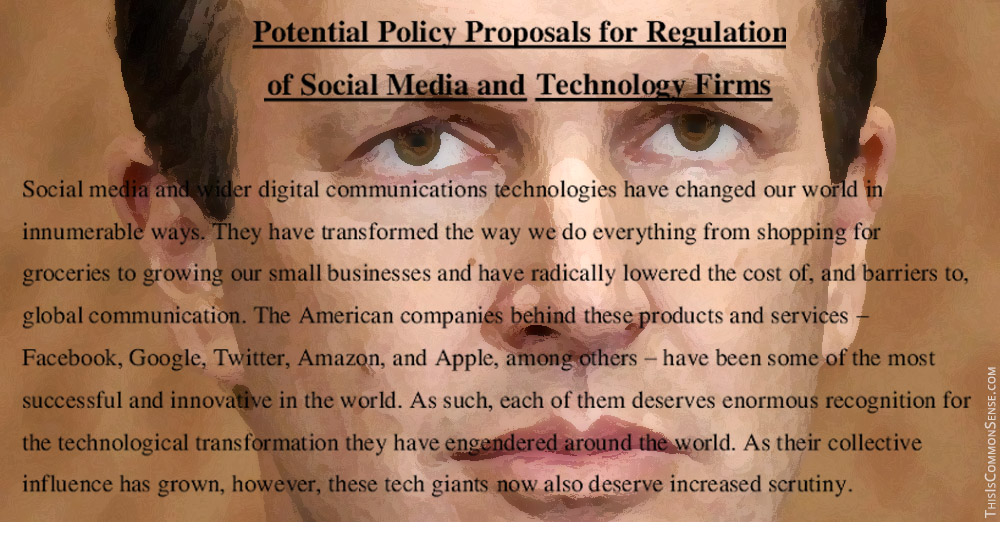
“The corrosive effect of social media on democratic life,” writes The New Republic’s Jeet Heer, “has led both French President Emmanuel Macron and Canadian Prime Minister Justin Trudeau to make the same threat to Facebook: self-regulate or be regulated.”

But Macron doesn’t go far enough. “If fake news truly poses a crisis for democracy, then it calls for a radical response,” Heer insists.

“Many countries have election silence laws, which limit or prohibit political campaigning for varying periods of time ranging from election day alone to as early as three days before the election.” And Heer sees little reason not to apply such regulations to social media.

“What if you weren’t allowed to post anything political on Facebook in the two weeks before an election?”

This exactly parallels the prohibition of political spending “by corporations” before an election, as in the McCain-Feingold campaign finance regulation. Except here we have it directly affecting normal citizens.

The current excuse, “fake news,” appears to be defined by partisans almost entirely as the errors and lies and spin of their opponents’ side(s).

But since lying about one’s political enemies is at least as old as the Election of 1800, why is this different now?

Because, I submit, Facebook is just another area the folks pushing such obvious breaches of the First Amendment — politicians and most of the media — do not yet control.

Competition mustn’t be tolerated.  

This is Common Sense. I’m Paul Jacob.

PDF for printing


Photo credit: by John Nakamura Remy