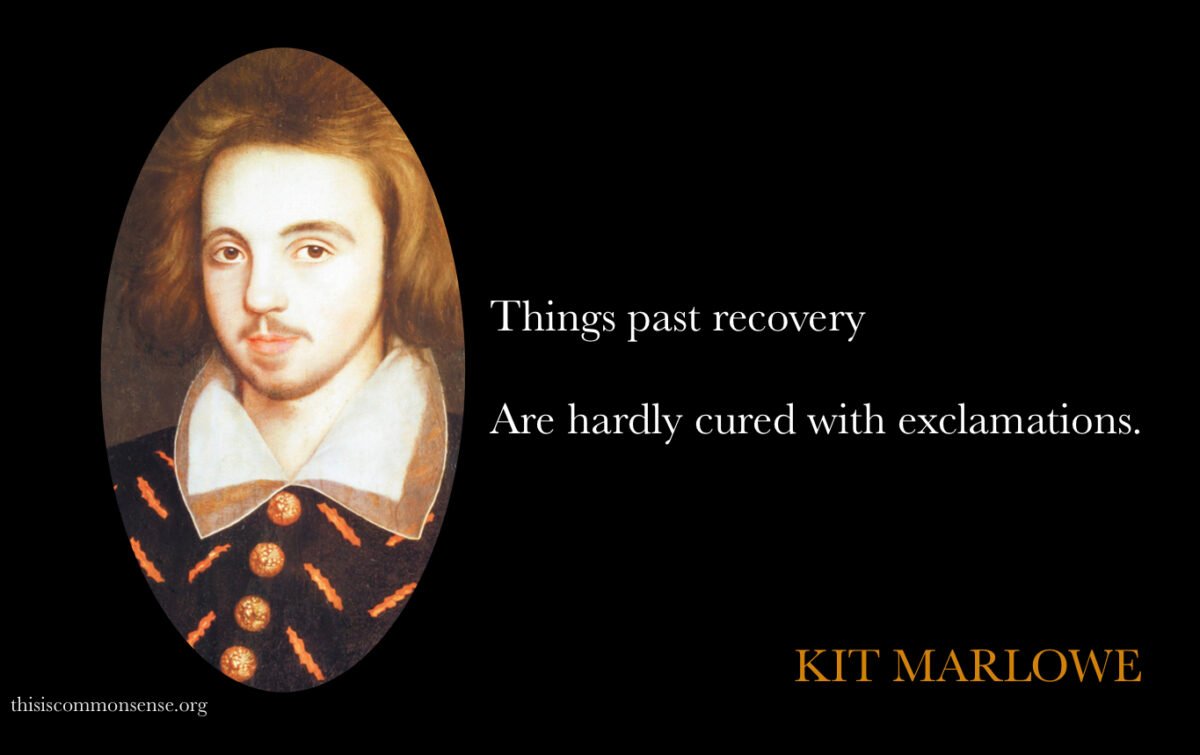
Fate laughs at probabilities.
Edward Bulwer-Lytton, Eugene Aram (1832).
Bulwer-Lytton
Fate laughs at probabilities.
Edward Bulwer-Lytton, Eugene Aram (1832).
On January 23, 1860, the Cobden-Chevalier Treaty was signed between France and Great Britain. The treaty was named after the two main proponents of the agreement, Richard Cobden (in England) and economist Michel Chevalier (in France). The treaty had been suggested the year earlier, in British Parliament, by Cobden’s colleague John Bright, who looked upon the policy as a peace measure, an alternate to a military build-up.
“Cultural”?
Dr. Oz clarified at length: it’s about the cover-up. Minnesota’s fraud network? Bureaucrats knew. But when a whistleblower tried to toot on the proverbial whistle, these folks, Oz explained, were “culturally … dissuaded, intimidated, from speaking up.”
This would happen “any time people raised the possibility that, for example, the Somalian subpopulation, who have different cultural mores than the folks who have historically been in Minnesota, might be taking advantage of systems that were built for Minnesota nice people.”
The “cultural” aspect is the pseudo-niceness of political correctness. “So you have well-meaning people trying to be nice, trying not to ruffle any feathers. If you do ruffle feathers, you get outed.” The auditors lacked the temperament to actually audit, with those daring few speaking up systematically prevented — shuffled away — from doing any actual work.
“Although you may still have a job there, you don’t get to do anything in that job.”
While Oz claims not to know how high up cover-for-fraud goes, I’ve a hunch that the smart ones in government know all-too-well what they are doing. They certainly know the fear. And use it.
It’s suffused throughout: “cultural.”
This story is not unrelated to the grooming gangs in Britain, Finland and elsewhere, allowed for years by police to carry on what we used to call “white slavery” because the cops feared being called racist.
You cannot have watchdogs too “nice” to bark.
This is Common Sense. I’m Paul Jacob.
Illustration created with Nano Banana
See all recent commentary
(simplified and organized)
See recent popular posts
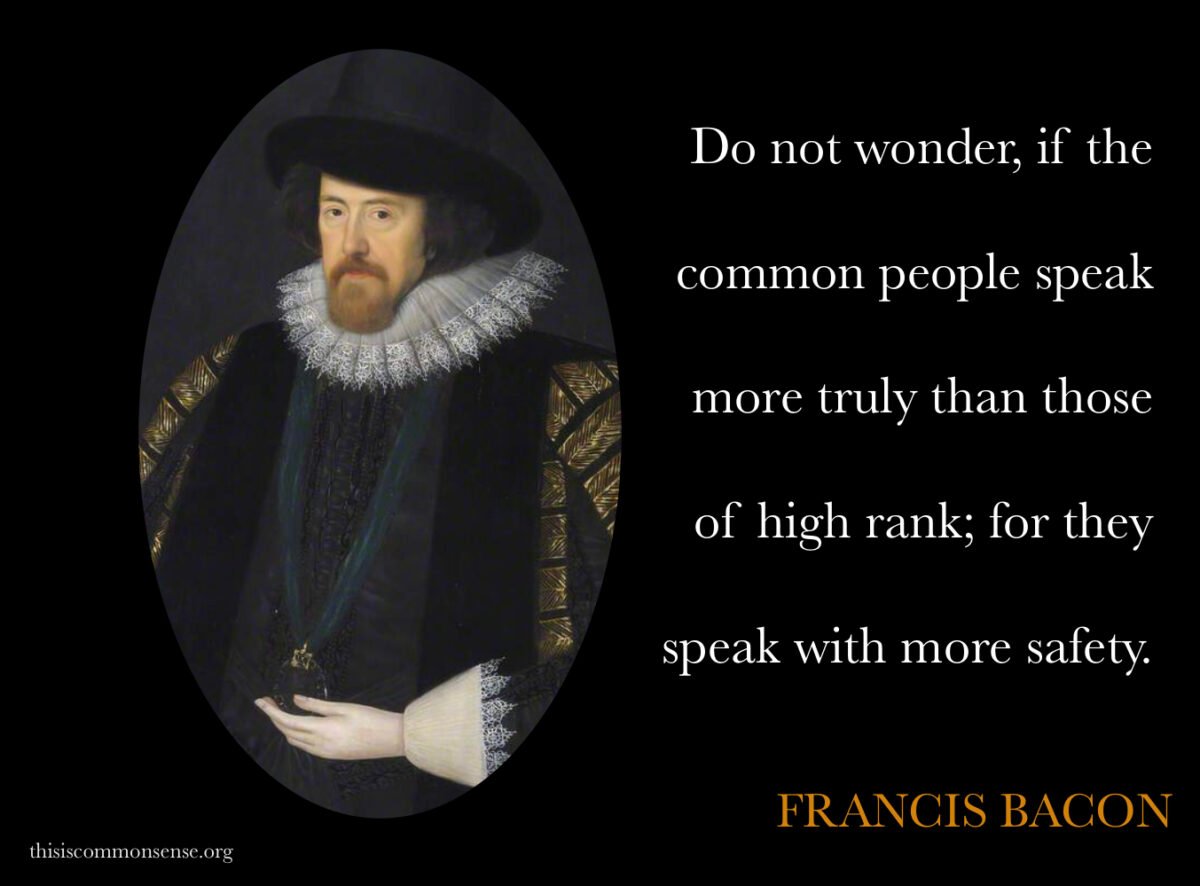
We live in a dangerous world, never knowing where our next meal may come from. Learn a little botany in case you’re ever marooned on a jungle island.
“Franklin W. Dixon,” in The Hardy Boys’ Guide to Life (2002), cited as if from the sixth Hardy Boys’ mystery, The Shore Road Mystery (1928; 1964), not confirmed.
On January 22, 1863, the January Uprising broke out in Poland, Lithuania and Belarus. The aim of this nationalist movement was to regain the Polish-Lithuanian-Ruthenian Commonwealth from occupation by Russia. The uprising was not a success, completely crushed the next year.
Beyond subsidized daycare? Health care, home health care, Medicaid.
Fraud, fraud, fraud.
But it wasn’t just a lone Reason scholar saying it. “What we’re seeing in Minnesota … is dwarfed by what I saw in California,” The Epoch Times quotes Dr. Mehmet Oz, administrator of the Centers for Medicare and Medicaid Services.
Minnesota, Dr. Oz said, “is just the tip of the iceberg.”
Just in California’s hospice and home health care, Oz figures, fraud rockets up to at least $4 billion.
Add a few billion here and there and soon you’re talking real money.
I titled my commentary quoting Ms. de Rugy “The Tip of the Socialism-berg.” Remember Mr. Socialism? Karl Marx? He introduced to the world a complicated, rather magical theory of exploitation in market society focusing on “surplus value.” While I have trouble making heads or tails of his theory — seems utterly nuts — I do know something about its origin.
Marx nabbed it from classical liberal French scholars who preceded him. But they said the exploitation was through government mechanisms: it’s those who skim off of taxes who exploit the masses.
Marx turned it upside down.
So let’s turn things right-side up: we all know that when it comes to policy, good intentions don’t make up for bad consequences. And those who de-fraud the taxpayers don’t have “good intentions.”
They’re thieves.
This is Common Sense. I’m Paul Jacob.
Illustration created with Nano Banana
See all recent commentary
(simplified and organized)
See recent popular posts

Men who can succeed in deceiving no one else will succeed at last in deceiving themselves.
Anthony Trollope, Miss Mackenzie (1865).
On January 21, 1950, Alger Hiss was convicted of perjury, with Whittaker Chambers being the main witness in Hiss’s prosecution. Chambers confessed to having been a Soviet spy, and accused Hiss as an accomplice, which Hiss denied to his dying day. Chambers gave a fascinating account of all this in his bestselling 1952 memoir, Witness.
I see one brewing between the new communist mayor of New York City and those judges who respect law and the U.S. Constitution.*
Some say that Zohran Mamdani, though on record admitting his goal of seizing the means of production, is technically not a communist. Well, if allowed to fully impose all he wants on New Yorkers, maybe that would amount to going straight to a fascist model of totalitarian governance — bypassing the Maoist-Stalinist stage.
Giving him the benefit of the doubt.
But we do know that Mamdani was quick to hire such advisors as housing czarina Cea Weaver, who has lamented home ownership as a “weapon of white supremacy” and declared property as such to be something regrettably long treated as “an individualized good” that now must be treated as a “collective good.”
If you don’t own your house as an individual and have a spare room (or half a room), and somebody needs a place to live, could a Mamdani-and-Weaver-run Big Apple compel you to give space to a stranger that you don’t want around? If property becomes a “collective good” and all must cuddle in the warm bosom of the state-managed collective, the answer must be: yes.
But New Yorkers may not be quite doomed.
Not, anyway, if there are enough judges like David Jones, who recently interfered with an attempt by the Mamdani administration to interfere in the sale of many rental properties owned by Pinnacle Group.
Mamdani’s office says they’ll keep trying.
Of course they will.
This is Common Sense. I’m Paul Jacob.
* Or the New York State Constitution, for that matter: see §7 (a), which clearly states that “Private property shall not be taken for public use without just compensation.”
Illustration created with Nano Banana
See all recent commentary
(simplified and organized)
See recent popular posts
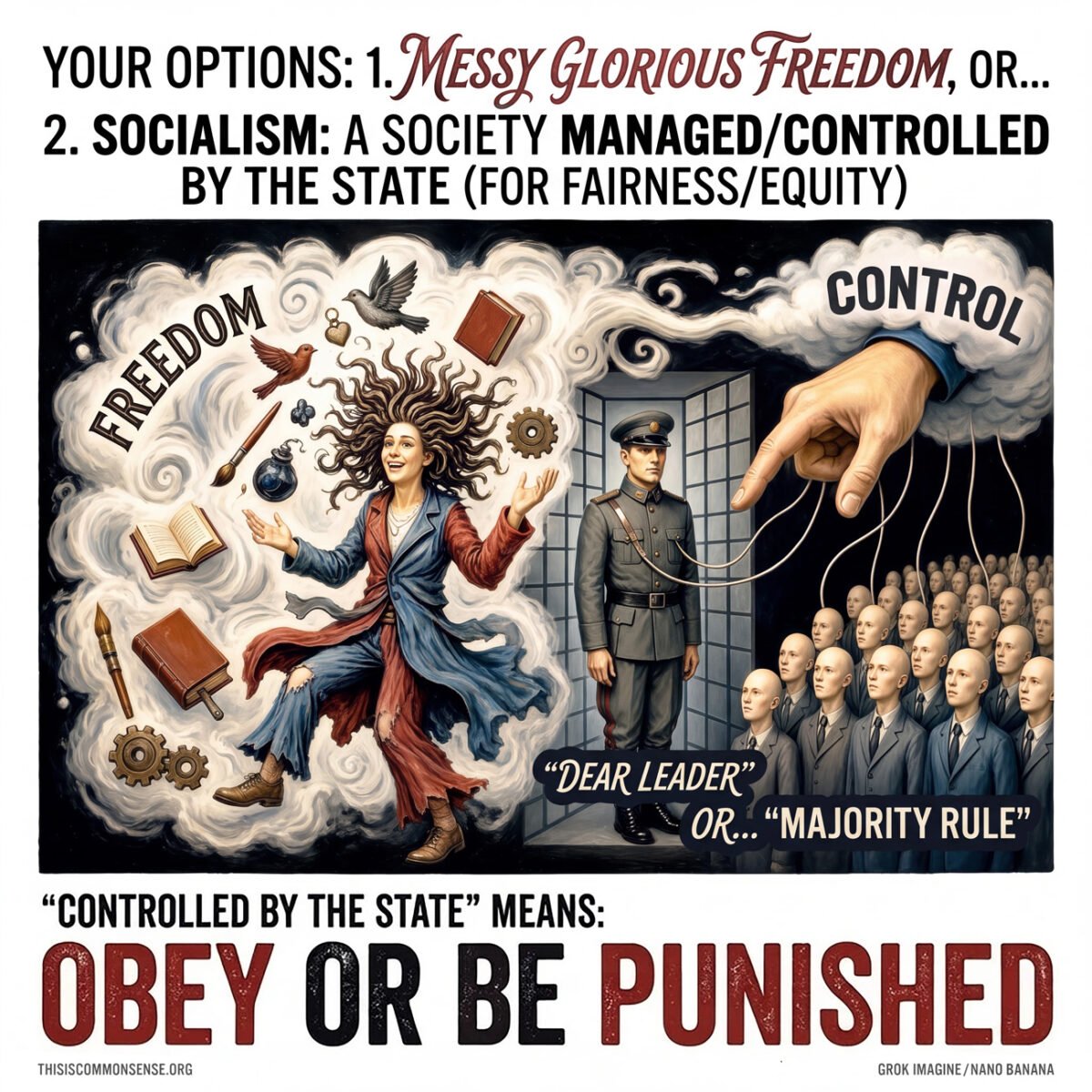
Make sure your plan is foolproof before going ahead with it.
“Franklin W. Dixon,” in The Hardy Boys’ Guide to Life (2002), cited as if from the 18th Hardy Boys’ mystery, The Twisted Claw (1939; 1969), not confirmed.