We meant to include a link to this short talk Paul made for activists in North Dakota in the Common Sense commentary on Thursday (“They Shoot Horses, Don’t They?”). But we forgot. So here it is now:

We meant to include a link to this short talk Paul made for activists in North Dakota in the Common Sense commentary on Thursday (“They Shoot Horses, Don’t They?”). But we forgot. So here it is now:
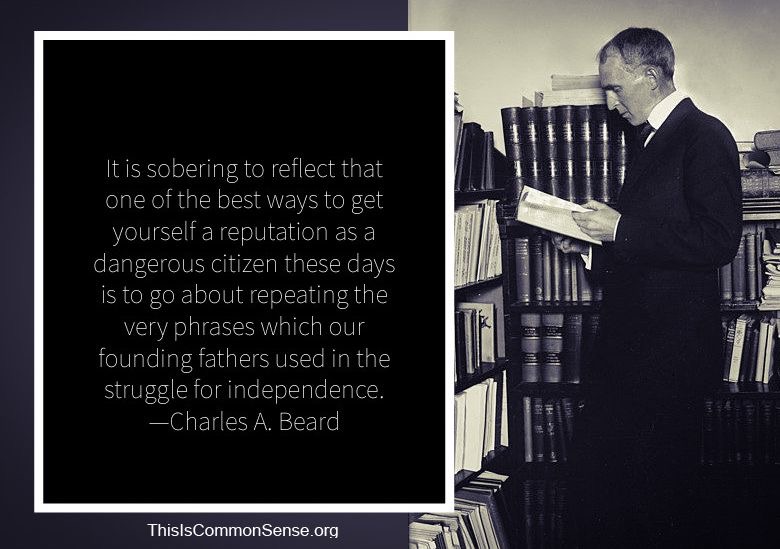
It is sobering to reflect that one of the best ways to get yourself a reputation as a dangerous citizen these days is to go about repeating the very phrases which our founding fathers used in the struggle for independence.

On March 5, 1616, Nicolaus Copernicus’s book, De revolutionibus orbium coelestium, was placed on the Catholic Church’s Index of Forbidden Books. This censorship notwithstanding, the Earth continued to revolve around the Sun.
The book had been first published in 1543 in Nuremberg.
| In 1770, the Boston Massacre took place on March 5.
| Joseph Stalin, the longest serving leader of the Soviet Union, died at his Volynskoe dacha in Moscow on this date in 1953, after a cerebral hemorrhage.
| March 5 is magician Penn Jillette’s birthday.

North Dakota. This is instructive for what we are up against in all (or at least most) states of the union. Not just this specific north mid-western state. But the state provides a lot of interesting data for the great political challenge of our time.

Moral restraints which arise from custom are one thing; legal restraints which are supported by the force of law are quite another.
Seth D. Merton, “Where Philosophy Fails,” The Monist (July 1904).
Illustration created with PicFinder.ai

On March 4, 1933, newly inaugurated President Franklin Delano Roosevelt gave his customary address. The speech “brought a decidedly favorable reaction in the Italian press, especially his declaration that he will seek extraordinary powers to deal with the situation if necessary,” wrote The New York Times the next day. The Times went on to quote “Premier Mussolini’s Milan newspaper, Popolo d’Italia,” which stated that “The American people place their hope in decisive action by the new President and his speech truly satisfied public opinion.”
The Italian newspaper “said the bank moratorium in New York contributed perhaps more than any other factor in convincing even the most reluctant of the urgent necessity for the whole nation to rally around Mr. Roosevelt.” A Turin paper succinctly stated its appreciation for FDR: “Mr. Roosevelt is following the great principles established by the Fascist revolution and the genius of Il Duce.”
On March 4, 1789, the first bicameral Congress of the United States met in New York, New York, in accordance with the new Constitution.
Two years later on the same date, Vermont was admitted as the fourteenth state of the union.
In a twist in World War II allegiances, Finland declared war on Nazi Germany on March 4, 1945, beginning the Lapland War.

While I enthusiastically support the bill he and Mike Braun (R-Ind.) introduced, the COVID-19 Origin Act of 2023, may I be excused if I get caught up on that term “prudent skeptic”?
Apparently Hawley means “skeptics” such as himself. But who are the imprudent skeptics?
What would Hawley say should they be vindicated?
The bill, unanimously passed the Senate, would require the Biden administration to “immediately declassify all intelligence reports pertaining to the origins of COVID-19 and the Wuhan Institute of Virology.” Hawley insists that we, the people, “deserve to know the truth.”
But is it a mere curiosity that neither he, in his above-quoted statement, nor The Epoch Times, in its article on the bill, finger any likely entity other than the Wuhan Institute for Virology and the Chinese government?
For, as noted here many times, the evidence of culpability for conducting dangerous gain-of-function bat coronavirus research in China does not point merely to the Chinese.
It points to the U.S. Government, the offices of Dr. Anthony Fauci, specifically.
Hawley doesn’t mention that evidence, nor does The Epoch Times.
This is not to let China off the hook for the pandemic, a Debacle At Best. (I’m not known for being “soft on China.”) I bring this up because of the implication: we skeptics of the Zoonotic Origin Theory have not been pointing only to the Chinazis, but also to our own governmental conspirators.
Surely it’s not imprudent to be skeptical of our own government.
This is Common Sense. I’m Paul Jacob.
Illustration created with PicFinder.ai
See all recent commentary
(simplified and organized)
See recent popular posts
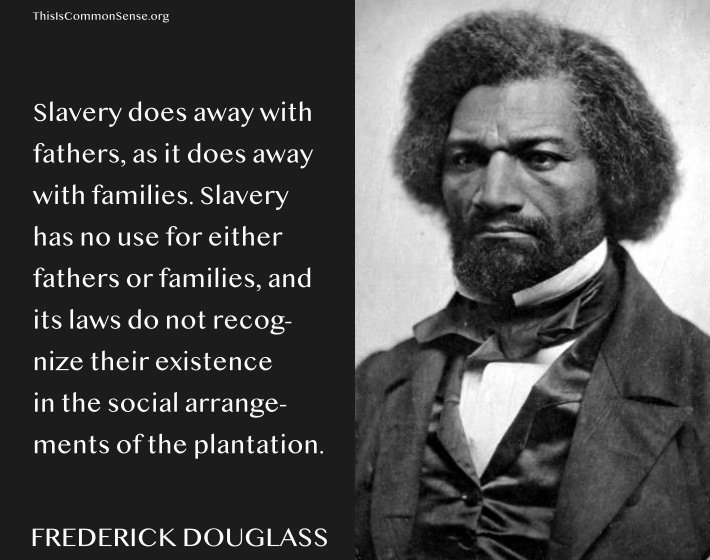
I say nothing of father, for he is shrouded in a mystery I have never been able to penetrate. Slavery does away with fathers, as it does away with families. Slavery has no use for either fathers or families, and its laws do not recognize their existence in the social arrangements of the plantation.
Frederick Douglass, My Bondage and My Freedom (1855), Chapter 3.

On March 3, 1924, the 407-year-old Islamic caliphate collapsed when Caliph Abdülmecid II of the Ottoman Caliphate was deposed. The last remnant of the old regime gave way to the reformer Kemal Atatürk.
On the same day, the Free State of Fiume was annexed by the Kingdom of Italy.
On March 3 of 1931, the United States adopted The Star-Spangled Banner as its national anthem.
Mohandas K. Gandhi began his hunger strike in Bombay to protest at the autocratic rule in British India on this day in 1939.
Belgian economist Gustave de Molinari (pictured above) was born on March 3, 1819. Associated with French laissez-faire economists Frédéric Bastiat and Yves Guyot, he was the longest-serving editor of Guillamin’s Journal des économistes. While today chiefly known in the English-speaking world for his authorship of one article, “The Production of Security” (1849), he was, as Ludwig von Mises described, the most productive economist in his school. Despite this, and his worldwide recognition, only one of his many books was translated from the French into English during his lifetime, The Society of To-morrow (1904), his final book.
In the book he advanced the idea of “the free constitution of nationality.”
Molinari died on January 28, 1912.

Very unhappy.
They have no use for the Ethics Commission that voters established back in 2018 by passing a constitutional amendment initiated by citizen petition. State legislators reacted by trying to — ahem — “fix” the horse the ethics measure “rode in on.”
That is, wreck the state’s ballot initiative process, to prevent citizens from making such reforms happen . . . without any “help” from politicians.
Legislators placed a constitutional amendment on the ballot to require that any citizen-initiated amendment be approved not merely by North Dakota voters, but then by both chambers of the state legislature. Their amendment, amid uproar, was finally amended so that if legislators voted the initiative down, voters would get a second vote on it.
Still, 62 percent of voters said, “No, thanks!”
Then, in 2022, the state Chamber of Commerce and other special interests attempted to use the citizen petition process, which they always say is way too easy. Yet, these insiders failed to gather enough signatures to qualify their measure requiring a 60 percent supermajority to pass an initiative.
Meanwhile, term limits supporters gathered enough signatures* and, last November, North Dakotans said, “Yes!”
Seems politicians in Bismarck, the state capital, are even less fond of term limits. They’ve introduced a raft of bills designed to kill the citizen petition process:
North Dakota legislators prove the case for term limits. And the horse it rode in on: citizen initiative.
This is Common Sense. I’m Paul Jacob.
* Though term limits supporters had to fight the 30-year incumbent Secretary of State’s attempt to block the petition all the way to the state’s highest court, which ruled unanimously to place term limits before the voters.
Illustration created with PicFinder.ai
See all recent commentary
(simplified and organized)
See recent popular posts